Oatly Review: Is It Actually Worth It? (2026)
Excellent foam. Ultra-processed label. Here is what the barista test and UPF audit actually found.
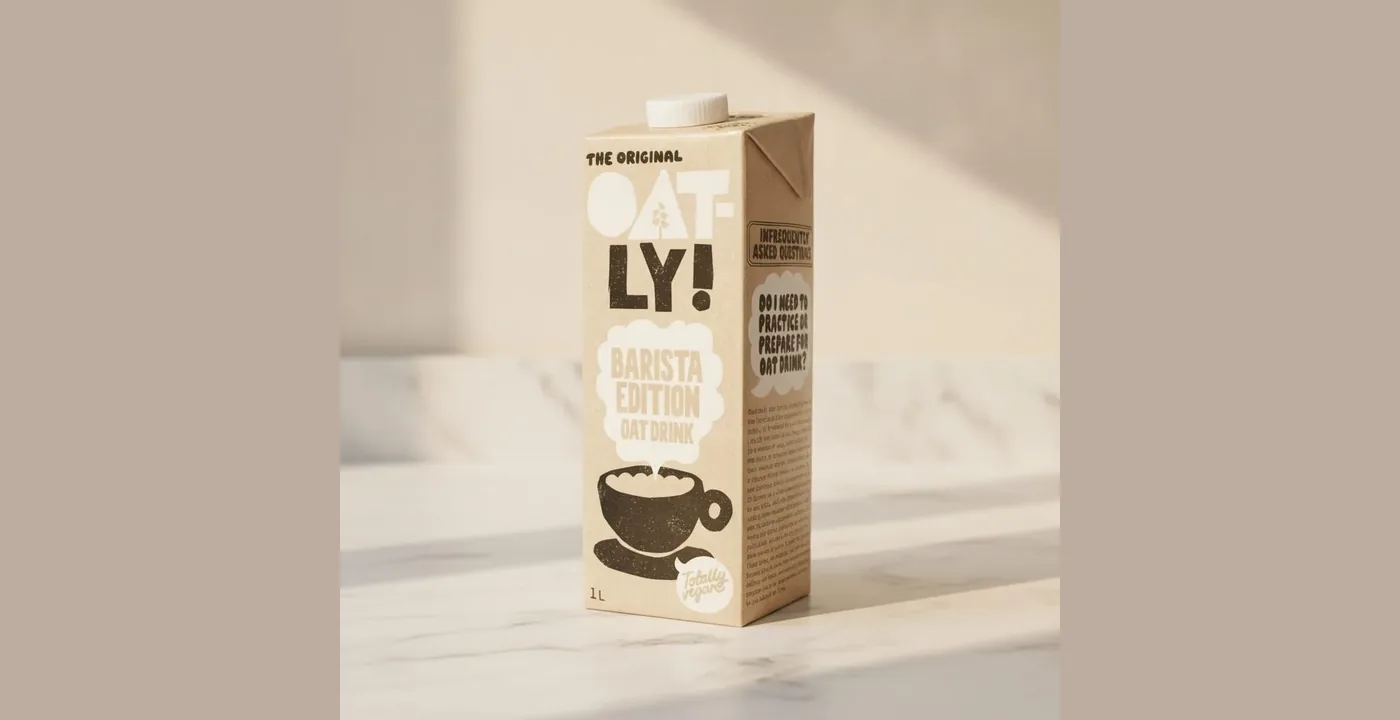
Table of Contents
Some of the links in this article are affiliate links, which help fund our independent review work at no extra cost to you. Every recommendation is based on hands-on testing through The Editor Lab methodology. No brand pays to appear, and no placement is guaranteed.
Oatly is the oat milk most of us defaulted to before we started reading the back of the carton. After reviewing every carton in the range and putting the Barista Edition ingredient list through a nutritionist's lens, the verdict is more nuanced than most reviews suggest: excellent foam, but not the clean-label product the branding implies, and the organic version is a fundamentally different product hiding in the same family.
That distinction matters. This review covers all five products in the Oatly UK range, the foam evidence, the full ingredient and ultra-processed food (UPF) audit, the brand controversy, and how Oatly stacks up against Minor Figures, Alpro, and Plenish at the price points you will actually find on the shelf.
The Verdict in 30 Seconds
Oatly Barista Edition is the best-foaming oat milk most people can buy at a mainstream UK supermarket. It is formulated to stretch into microfoam readily, it is a long-standing latte art staple in UK cafes, and its mild sweetness is unlikely to overpower the espresso in a flat white.
The trade-off is what makes the foam work: rapeseed oil and dipotassium phosphate. By the Nova classification system used in nutritional epidemiology, the Barista Edition is an ultra-processed food (UPF). For a daily-use milk in a health-forward diet, that is a relevant fact, not a niche concern.
Oatly Organic resolves this. Its ingredient list reads: oat base (water, oats), salt. No oil, no phosphate additives. It does not foam as well as the Barista Edition, but it is a genuinely minimal product.
Score: 7.5/10. Best for: any flat-white drinker who wants the best supermarket foam and is comfortable with the processing trade-off. Caveat: if UPF status matters to you, buy the Organic instead, with the understanding that the foam will be thinner.
Who Is Oatly?
Oatly was founded in Sweden in the 1990s by researchers at Lund University who were working on how to convert oats into liquid without the digestive enzymes involved in dairy digestion. The patent that emerged from that research, an enzyme process that converts oat starch into natural sugars, is still the core of every Oatly product.
The brand entered the UK market in the 2010s and grew via the specialty coffee scene, where baristas were looking for a dairy alternative that could survive steam wand treatment without breaking. By the early 2020s, Oatly had become the default oat milk in a large proportion of UK independent cafes.
Oatly operates under Oatly Group AB, a Swedish public company listed on the Nasdaq. The company has faced investor scrutiny over profitability and received significant private-equity backing from Blackstone in 2020, which became a public-relations flashpoint (more on that in Section 7).
The Oatly Range Decoded
Not all Oatly cartons are the same product. Understanding the range is the first step to making the right purchase.
| Product | Key ingredients | UPF status | Best for |
|---|---|---|---|
| Barista Edition | Oat base, rapeseed oil, dipotassium phosphate, calcium | UPF (Nova 4) | Steaming, flat whites, lattes |
| Whole | Oat base, rapeseed oil, calcium, vitamins | UPF (Nova 4) | Cereal, cooking, hot drinks |
| Semi | Oat base, rapeseed oil (lower), calcium, vitamins | UPF (Nova 4) | General everyday use |
| Organic | Oat base (water, oats), salt | Not UPF (Nova 1-2) | Clean-label choice, light foam |
| Chocolate | Oat base, cocoa, sugar, rapeseed oil | UPF (Nova 4) | Cold drink, oat hot chocolate |
Which is for coffee? The Barista Edition is the only product in the range formulated specifically for espresso-based drinks. The rapeseed oil and dipotassium phosphate in the Barista Edition serve a technical function: they stabilise the emulsion under heat and pressure, producing a more consistent microfoam. The Organic version lacks these additives and behaves more like a standard oat milk under the wand.
Secondary keywords to note: if you are searching for oatly barista review specifically, the Barista Edition section below is the focus. For oatly oat milk review covering the full range, the table above gives the overview.
Barista Performance: Froth, Steam, and Taste
This section draws on the Barista Edition's formulation and its long track record in UK cafes, following the Balance Journal Editor Lab methodology (for a standalone frothing option, see our guide to the best milk frother).
Microfoam and stretch: The Barista Edition is formulated to stretch well, and baristas widely use it for a fine-bubbled microfoam suitable for basic latte art. It is generally placed in a reliable middle tier: not as silky as the best dairy-alternative barista milks, and well ahead of a standard oat milk, which tends to produce large bubbles that collapse quickly.
Latte art: Suited to a simple rosette or tulip pour.
Taste in a flat white: The Barista Edition carries a mild sweetness from the oat base. With a medium-roast espresso, that sweetness should sit behind the coffee; with a lighter-roast espresso, expect it to be more prominent.
The filter friction: Added cold to filter coffee, the rapeseed oil can separate slightly and show as a faint sheen on the surface. It is a visual point worth knowing if you drink filter coffee.
Pairing note: the Oatly Barista's mild sweetness suits a bold, bright-roast espresso where the coffee can stand up to the oat. Balance Coffee Darkfire Energy (see disclosure note) is a punchy Brazil/Colombia roast that holds its own in a flat white rather than disappearing under the oat base. This is a pairing note, not a ranking; Balance Coffee sells coffee, not milk.
Ingredient and UPF Audit
As a BANT-registered Nutritional Therapist, the first thing I reach for is the ingredient list, not the carton design.
Oatly Barista Edition (full ingredient list, UK, 2026): Water, oats (10%), rapeseed oil (2%), tricalcium phosphate, calcium carbonate, dipotassium phosphate, iodised salt, riboflavin (B2), vitamins D2 and B12.
This is a Nova Group 4 ultra-processed food by the classification system developed by researchers at the University of Sao Paulo, which categorises foods by their level of processing and the presence of industrial ingredients not typically used in domestic cooking. The markers are: rapeseed oil (an industrial extraction process, not found in unprocessed oats), dipotassium phosphate (a food additive used as a stabiliser and pH buffer), and the fortification package (vitamins D2, B12, riboflavin added back after processing removes natural nutrients).
Is this a serious health concern? Population-level evidence linking UPF consumption to negative health outcomes has strengthened considerably in recent years. A 2024 umbrella review published in the BMJ covering 9,888,373 participants found associations between UPF consumption and 32 harmful health outcomes, including cardiovascular disease, type 2 diabetes, and all-cause mortality. The mechanism under study includes the effects of specific additives, not only the processing itself.
For the majority of adults consuming Oatly Barista Edition occasionally in their morning coffee, this is a contextual risk, not an immediate concern. For those building a health-conscious coffee routine, pairing it with a lower-input roast is one lever to reduce overall dietary load - our guide to best healthy coffee beans covers the category. For someone drinking 300-400ml daily as their primary milk - which is the pattern of many flat-white drinkers - the UPF classification becomes more relevant as part of an overall dietary UPF load.
Nutritional Profile per 100ml (Barista Edition)
| Nutrient | Per 100ml |
|---|---|
| Energy | 67kcal |
| Fat | 3.5g |
| of which saturates | 0.4g |
| Carbohydrates | 7.5g |
| of which sugars | 4.0g |
| Fibre | 0.3g |
| Protein | 1.0g |
| Salt | 0.1g |
| Calcium | 120mg (15% NRV) |
By comparison, Oatly Organic contains approximately 46kcal per 100ml, 0.5g fat, 8.8g carbohydrates (of which 4.3g sugars), 1.0g protein. No fortification. No additives. The lower calorie and fat count reflects the absence of rapeseed oil.
The British Dietetic Association notes that not all plant-based alternatives to dairy are fortified with calcium, and that organic products are not fortified and contain little calcium. By that measure, the Barista Edition (120mg calcium per 100ml) is better fortified than the Organic version, which is not fortified at all.
The honest summary: the Barista Edition is fortified (useful for calcium), ultra-processed (relevant if you are managing overall UPF load), and well-designed for its technical function. The Organic version is the clean-label choice at the cost of foam performance and fortification.
Why Is Everyone Ditching Oat Milk?
This is a genuine question in the SERP, and it deserves a direct answer rather than a defensive deflection.
The shift away from oat milk among health-aware consumers tracks three concerns. First, the carbohydrate and sugar profile: oat milk is higher in carbohydrates than nut milks, with the natural oat sugars (from the enzymatic conversion of starch) producing a glycaemic response that some people find relevant, particularly those managing blood sugar. For most people without blood sugar conditions this is not a meaningful concern, but for those with insulin resistance or type 2 diabetes it is worth considering.
Second, the seed oil conversation: rapeseed oil has become a point of contention in wellness communities, driven largely by social media commentary about oxidation and inflammatory potential at high temperatures. The evidence on rapeseed oil at culinary use levels does not support strong concern for most people, and the FSA regards it as safe. The concern is amplified disproportionately online, but it is understandable why a consumer who reads ingredient lists carefully would prefer to avoid it where a clean alternative exists.
Third, and most directly: the UPF classification. As awareness of the Nova system has filtered from academic nutrition into mainstream media, more consumers are applying it as a rough filter. Oatly Barista Edition fails that filter. Oatly Organic does not.
None of these reasons is irrational. They are calibrated differently depending on your health context, and a nutritionist's job is not to dismiss them but to help you weight them correctly for your situation.
The Oatly Controversy, Honestly
A complete Oatly review should not step around the brand's non-product history.
In 2020, Oatly sold a 10% stake to a consortium led by Blackstone Inc., the US private-equity firm. Blackstone's portfolio includes investments in companies with significant deforestation associations, which created a vocal backlash from environmental advocates who saw a conflict between Oatly's sustainability positioning and its major shareholder. Oatly defended the investment as a route to scale its sustainable product globally. The debate reflected a genuine tension in impact investing that has no clean resolution.
On advertising: the UK Advertising Standards Authority (ASA) has upheld complaints against Oatly advertisements on two occasions relating to environmental claims. In 2021, claims about Oatly generating 73% lower greenhouse gas emissions than cow's milk were upheld as misleading due to methodological ambiguity in the comparison. In 2023, a separate ASA ruling on Oatly's "Post Milk Generation" campaign upheld complaints about the impression given that oat milk is environmentally better than all dairy in all circumstances. The ASA ruled these claims were not substantiated.
This does not make Oatly an irresponsible brand. It makes it a brand that over-reached on environmental claims in its advertising - a common pattern in the plant-based food category. The oat milk product itself has a lower carbon footprint than cow's milk under most credible lifecycle analyses. The problem was the strength and universality of the claims, not the underlying direction.
Knowing this does not change whether the Barista Edition foams well. It does inform whether you want your food spend to be a vote for a company that has made these choices. That is a personal decision, and a nutritionist's role is to give you the information, not make the choice for you.
Oatly vs the Rivals
For anyone weighing up oatly vs alpro oat milk or looking at the wider alternative milks shelf, here is how Oatly Barista Edition compares to the three most commonly discussed UK alternatives at the same price point.
Minor Figures Barista Oat Milk is the specialist's choice. Founded in London, designed specifically for espresso in third-wave cafes, it uses a different formulation - sunflower oil rather than rapeseed, with a more neutral fat profile - and is built for a microfoam that many baristas find marginally silkier. It has a higher price point (typically £1.85-£2.10 per litre vs Oatly Barista at £1.50-£1.70 at major supermarkets). It is also Nova 4 UPF. Baristas often place it marginally ahead of Oatly Barista for taste in a flat white; for availability, Oatly wins clearly.
Alpro Oat Not Milk Barista is the budget option. At around £1.20 per litre, it foams acceptably but does not match either Oatly or Minor Figures on microfoam quality. It is also UPF. For a cost-led decision, it is a reasonable choice; for quality, it does not match this tier.
Plenish Oat M*lk Barista is the premium clean-label attempt. It removes the dipotassium phosphate but retains sunflower oil, putting it in a mid-position between Oatly Barista and Oatly Organic on the processing spectrum. Foam performance is slightly below Oatly Barista. At around £2.10-£2.30 per litre, the price is hard to justify unless the additive difference is meaningful to you.
Oatly Organic as an internal comparison: no additives, no oil, costs roughly the same as the Barista Edition at around £1.40-£1.60. Foam is thinner. Clean-label.
Price Per Litre: Worth It?
| Brand | Product | Price per litre (UK supermarkets, July 2026) | UPF status | Foam (barista reputation) |
|---|---|---|---|---|
| Oatly | Barista Edition | £1.50-£1.70 | UPF (Nova 4) | Excellent |
| Oatly | Organic | £1.40-£1.60 | Not UPF | Light |
| Minor Figures | Barista Oat | £1.85-£2.10 | UPF (Nova 4) | Excellent |
| Alpro | Oat Not Milk Barista | £1.10-£1.25 | UPF (Nova 4) | Acceptable |
| Plenish | Oat M*lk Barista | £2.10-£2.30 | Partial (no DKP) | Good |
Value verdict: Oatly Barista Edition sits at a competitive price for what it delivers. Minor Figures edges it on foam quality and charges more for it. Alpro is cheaper and noticeably lower quality. Plenish is priced as premium without delivering premium foam.
If you are buying purely on foam performance per pound spent, Oatly Barista Edition is the rational choice. If clean-label matters, Oatly Organic is the rational choice at nearly the same price.
Where to Buy
Oatly Barista Edition is stocked at Tesco, Sainsbury's, Waitrose, Ocado, and most mid-size Co-op branches. The 1-litre carton is the standard format; a 6-pack case is available via Ocado and Amazon UK.
Oatly Organic is less consistently stocked and more readily found at Waitrose, Planet Organic, and online via Amazon UK and Ocado.
Online: the most reliable UK route for multiple cartons is Amazon UK, which carries the full Oatly range including multipacks.
Prices verified at major UK supermarkets, July 2026. Prices vary and should be confirmed at time of purchase.
Oatly Barista Edition Oat Drink 1L
£1.50-£1.70 per litre- + Formulated to stretch into microfoam for latte art
- + Neutral sweetness that does not overpower the espresso in a flat white
- + 120mg calcium per 100ml (15% NRV)
- + Stocked at Tesco, Sainsbury's, Waitrose and Ocado
- - Ultra-processed (Nova 4): contains rapeseed oil and dipotassium phosphate
- - Oatly Organic is the non-UPF option but foams less well
The best-foaming oat milk on a mainstream UK supermarket shelf, as long as you accept it is an ultra-processed food.
See Oatly Barista Edition - £1.50-£1.70 per litreFrequently Asked Questions
Is Oatly good or bad for you?
Oatly's health profile depends on which product you buy. Oatly Barista Edition is a Nova Group 4 ultra-processed food, containing rapeseed oil and dipotassium phosphate, with 120mg calcium per 100ml through fortification. For occasional use it is unlikely to cause harm, but for a health-conscious person consuming 300ml or more daily as their primary milk, the UPF classification is worth factoring into overall dietary UPF load. Oatly Organic - made from oats, water, and salt - is a clean-label alternative at a similar price, though it is not calcium-fortified.
Is Oatly better than normal milk?
Oatly and cow's milk serve different dietary needs rather than one being straightforwardly better. Cow's milk provides a naturally complete amino acid profile, more protein per 100ml (approximately 3.4g vs 1g in Oatly), and calcium in a form with well-established absorption data. Oatly Barista Edition is fortified with calcium to comparable levels, is lower in saturated fat, and suits people avoiding dairy. For those without dairy sensitivities, the nutritional case for switching is not strong. For those who prefer a plant-based option, Oatly Barista Edition is among the better-performing alternatives for coffee use specifically.
Why is everyone ditching oat milk?
Three main reasons surface in nutritionist practice and online discussion as of 2026. First, the carbohydrate and natural sugar content is higher than nut milks, which matters for some people managing blood sugar. Second, the presence of seed oils (rapeseed in Oatly Barista) has attracted concern in wellness communities, though the FSA considers rapeseed oil safe at dietary use levels. Third, the Nova Group 4 UPF classification has become more widely understood, prompting consumers who prioritise minimally processed foods to switch to Oatly Organic or other lower-processing alternatives.
Is Oatly ultra-processed?
Oatly Barista Edition, Whole, Semi, and Chocolate are all Nova Group 4 ultra-processed foods, as classified by the Nova food processing system developed at the University of Sao Paulo. The presence of rapeseed oil (an extracted industrial fat not present in whole oats), dipotassium phosphate (an additive used as stabiliser and pH buffer), and added vitamins that replace nutrients lost during processing are the markers. Oatly Organic is the exception: made from oats, water, and salt, it does not carry UPF markers under the Nova system.
Is oat milk good for you? What does the NHS say?
The NHS advises that plant-based milks can be a suitable alternative to cow's milk, particularly when they are fortified with calcium, iodine, and vitamin D. The NHS specifically notes that oat milk is naturally higher in carbohydrates than most other plant milks, and recommends choosing unsweetened varieties. Oatly Barista Edition meets the fortification criteria (calcium at 120mg per 100ml, vitamins D2 and B12). The NHS guidance does not address the UPF classification of specific products, which is a separate nutritional framework.
Which is better, Oatly or Alpro?
For coffee specifically, Oatly Barista Edition is built for better microfoam than Alpro Oat Not Milk Barista, and baristas generally rate it higher for bubble size, stability and latte art. Alpro is typically £0.30-£0.50 per litre cheaper. Both are Nova 4 UPF products with broadly similar ingredient structures. If foam quality is the priority, Oatly Barista wins. If price is the primary factor and foam quality is acceptable rather than excellent, Alpro is a reasonable alternative.
Does Oatly Barista froth better than other oat milks?
Oatly Barista Edition foams better than standard oat milks (including Oatly Whole and Oatly Organic) because of the rapeseed oil and dipotassium phosphate in its formulation, which stabilise the emulsion under heat. Compared to specialist barista oat milks, it is competitive with Alpro Barista and slightly behind Minor Figures Barista Oat in microfoam quality, though Minor Figures carries a higher price. Among oat milks available in a standard UK supermarket, Oatly Barista is reliably the best-foaming option.
Final Verdict and Score
Overall score: 7.5/10. The score reflects formulation, UPF status, price and published barista feedback rather than our own tasting.
Oatly Barista Edition does what it says. It is built to foam reliably, its mild sweetness is unlikely to overpower the espresso in a flat white, and costs a reasonable amount for what it delivers. For anyone buying oat milk in a UK supermarket specifically for coffee use, it remains the default recommendation.
The honest qualification is on the label: it is a Nova 4 ultra-processed food, and if that classification matters to your diet, Oatly Organic is the better choice at a nearly identical price, with the trade-off that it foams less well and lacks calcium fortification. Neither option is wrong. The decision depends on what you are optimising for.
For the full picture on how Oatly compares across the broader category, see our guide to the best oat milk for coffee in the UK, and for those exploring beyond oat, our review of the best alternative milk for coffee covers the full category including nut and seed milks. If you are thinking about which coffee works best with oat milk specifically, our guide to best coffee for oat milk covers roast style, strength, and origin pairings.
“Best supermarket foam, but read the label first: Oatly Barista Edition is UPF, Oatly Organic is not.”Clemmie Rose, BANT-registered Nutritional Therapist
Editor's Note
Clemmie Rose is a BANT-registered Nutritional Therapist. Her work on alternative milks for Balance Journal includes the alternative-milks cluster covering oat, almond, cashew, hemp, and soy milk. She reads ingredient panels and Nova/UPF status as part of every product assessment, not as an afterthought. Her interest in the Oatly range came directly from client questions about whether their daily oat milk was consistent with a lower-UPF diet.
Balance Coffee, an independent UK specialty coffee roaster, is the company founded by James Bellis in 2020, who reviewed this article. Where a Balance Coffee product is mentioned, we say so. Methodology: barista performance draws on each milk's formulation and published barista feedback. Nutritional data is taken from UK packaging as of July 2026.
A registered Nutritional Therapist and member of BANT, Clemmie blends science with a holistic approach to wellbeing.