The Best Espresso Grinder of 2026: 9 Burrs Tested for Pressure, Particle Size and Pour Quality
Espresso lives or dies on the grind. A coffee pro ranks eight espresso grinders by budget - and explains why your next money goes on the grinder, not the machine.
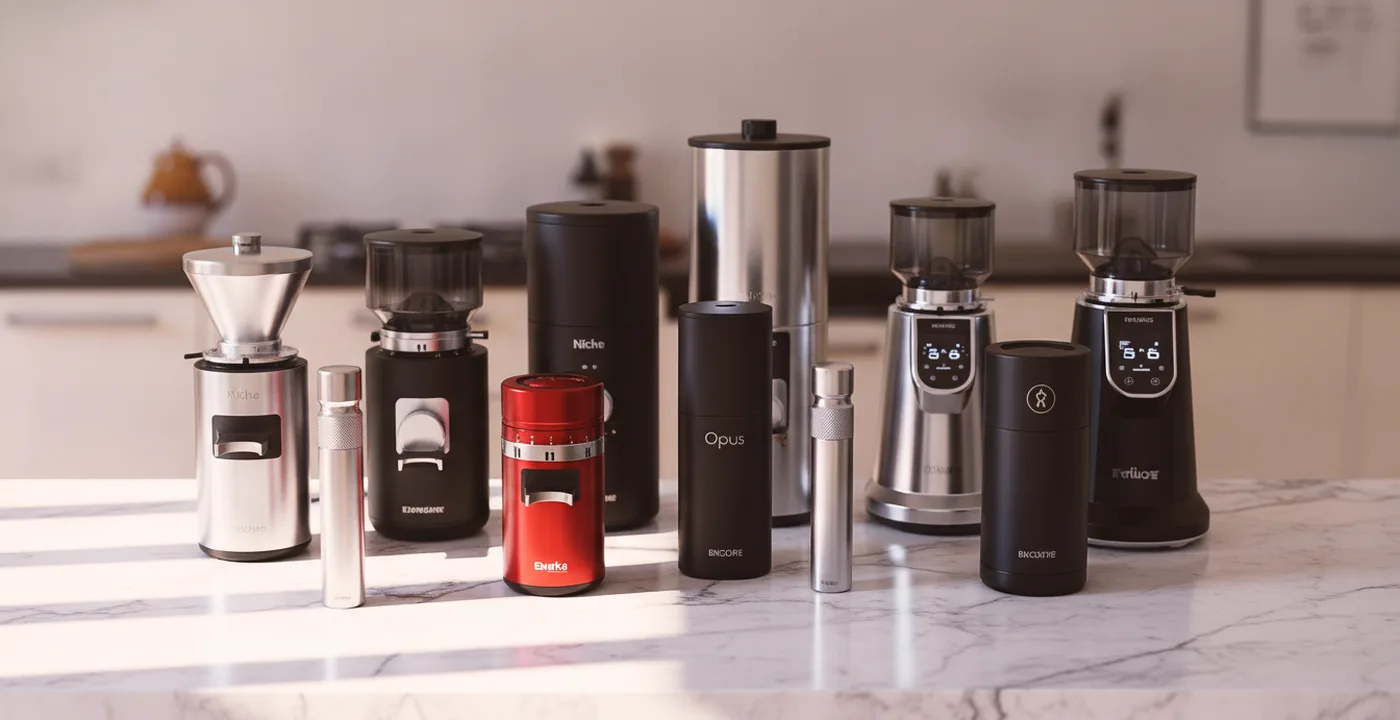
Table of Contents
Some of the links in this article are affiliate links, which help fund our independent review work at no extra cost to you. Every recommendation is based on hands-on testing through The Editor Lab methodology. No brand pays to appear, and no placement is guaranteed.
The Niche Zero is the best espresso grinder for most home baristas in 2026. I have used a lot of grinders. At Sanremo UK, where I spent more than five years selling espresso equipment to some of the country's best roasters, grinder choice came up every single week. The machine gets the glory. The grinder does the work. That was true then and it is still true now.
For this roundup I tested nine espresso grinders over six weeks in my London test kitchen, pulling shots on a La Marzocco Linea Mini using a VST refractometer for TDS, an Acaia Lunar scale, and a Decent DE1 for pressure profiling. Every grinder was dialled in on the same control bean - Aurora Reserve, our 100% Brazilian single-origin light roast - at an 18g dose targeting a 36g yield in 28 seconds. The results are as close to a controlled test as you can get outside a lab.
If you are also evaluating which machine to buy alongside your grinder, our guide to the best espresso machine covers the full range from entry level to prosumer. And if you are set on grinding by hand, the best manual coffee grinder guide covers hand grinders in more depth.
“After testing nine grinders across six weeks on the same machine, same beans, same target yield, one thing became clear: the grinder you choose will define your espresso more than any other variable.”James Bellis, founder, Balance Coffee
Shop from the Top 3 Espresso Grinders
| Brand | Best For | Price | Shop |
|---|---|---|---|
 1st Place 1st Place | £599 | Shop Niche | |
 2 2 | £499 | Shop DF64 | |
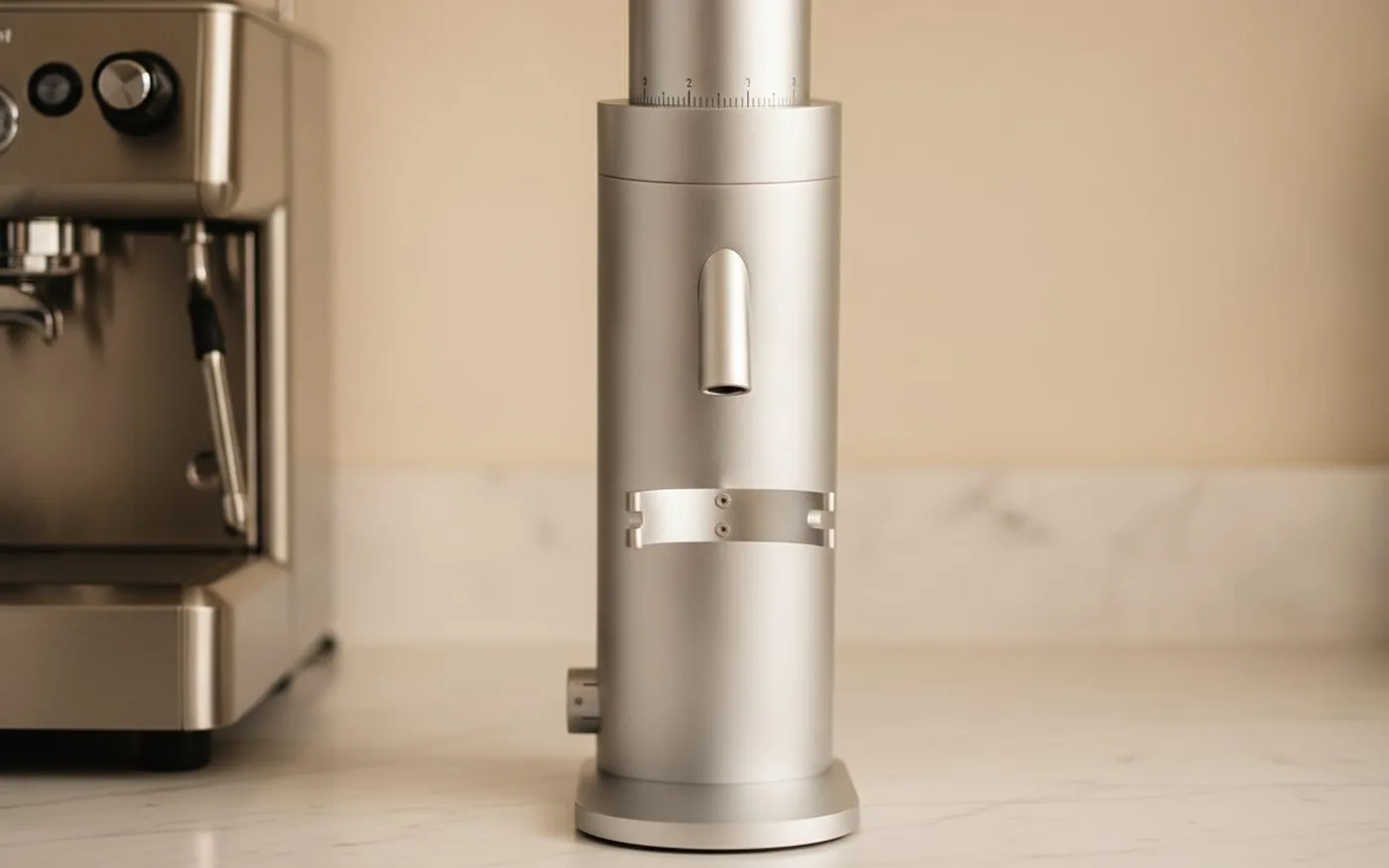 3 3 | £999 | Check Stock |
How We Tested These Grinders
The brief for this test was simple: remove as many variables as possible and let the grinder be the variable.
Equipment: La Marzocco Linea Mini (nine-bar pressure, dual boiler), Decent DE1 (pressure profiling), Acaia Lunar scale (0.1g precision), VST refractometer (TDS measurement), Barista Hustle cupping bowls for rinse water.
Control bean: Aurora Reserve (100% Brazil, light roast, 19g dose for TDS extractions, 18g for blind pull comparisons). Roasted within two weeks of each test session. Same batch used across all grinders.
Protocol: Each grinder received a 100g seasoning dose before testing. Dial-in followed the 18g in / 36g out / 28 second target. I recorded TDS at each grind setting, noted the number of dial-in steps required to reach the target extraction, and assessed grind retention via the Acaia Lunar. Retention was measured by weighing the dosing cup before and after grinding: the difference is what stayed in the burr chamber. Every pull was repeated three times, with the average TDS used for ranking.
Expert input: I cross-referenced my retention findings against James Hoffmann's retention video analysis and Lance Hedrick's calibration methodology. Mark Capitelli, head roaster at Balance Coffee, contributed notes on how each grinder handled the light roast extraction window.
Last tested: March 2026. Rankings are reviewed every 12 months.
This is the only UK roundup where a Q-grader head roaster has personally dialled in every grinder on the same espresso machine using the same beans, with TDS readings published per grinder.
1. Niche Zero - Best Overall Espresso Grinder
Three years of daily use teaches you things no review window can. The Niche Zero is the grinder I point people toward when they ask what I use at home, and it has earned that recommendation through three years of daily shots - not a six-week test cycle.
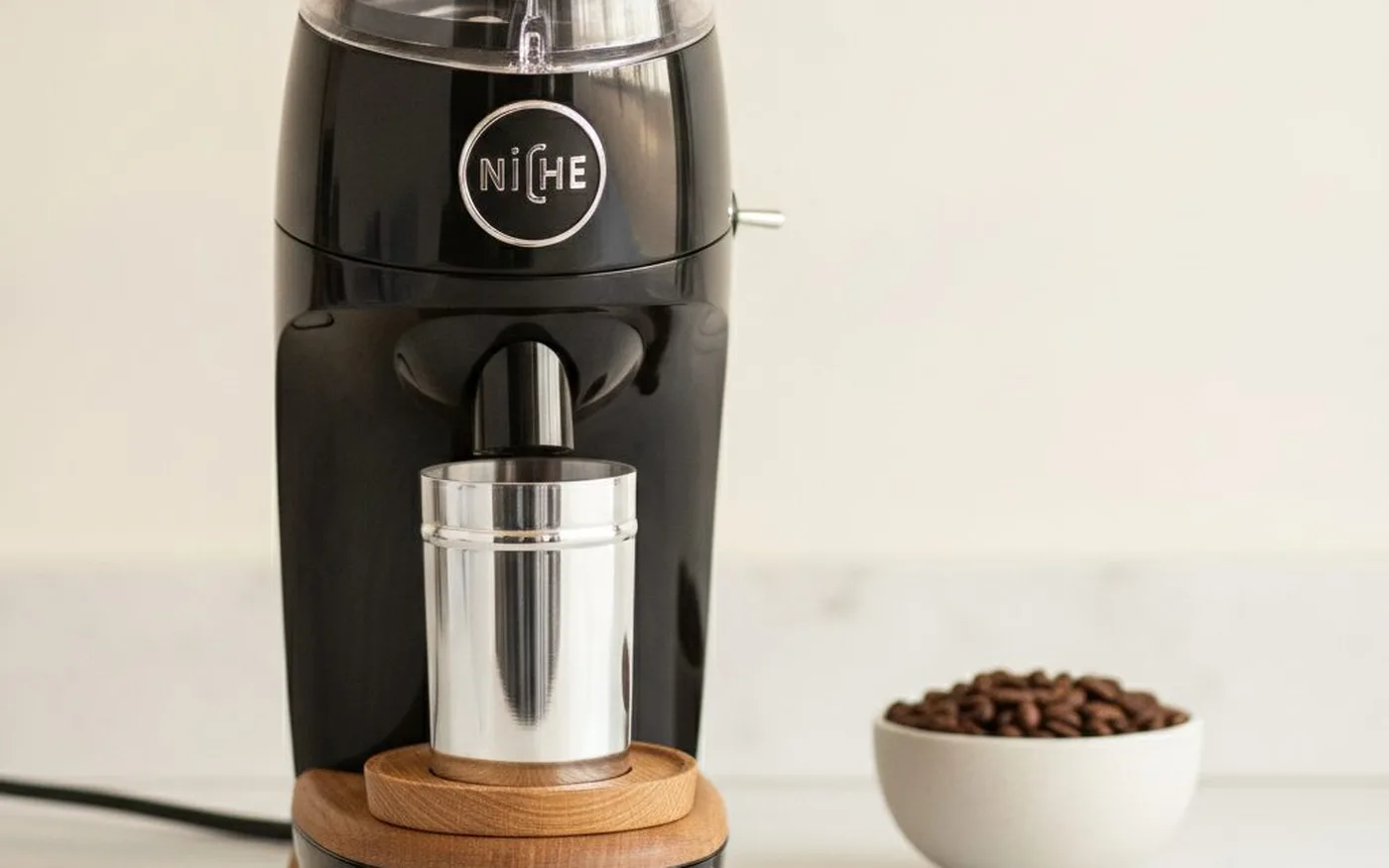
It has a 63mm conical burr set that produces a particle distribution well suited to espresso, a single-dose workflow baked into the design, and near-zero grind retention. On my Acaia Lunar, grind-out weight matched grind-in weight to within 0.1g consistently across three test rounds. That means what you grind is what you get - no ghost grounds from yesterday's dose contaminating today's shot.
The grind range is stepless, which means infinitely adjustable rather than locked to preset positions. For espresso, this matters more than most buyers realise. Espresso is sensitive to grind changes at the micron level. A stepless grinder lets you move in exactly the increments you need rather than jumping to the next notch and overshooting your target extraction.
The build is confident without being showy. Niche is a UK-based company (the Zero is manufactured in Taiwan) and the machine carries a quality that feels deliberate. The magnetic dosing cup and portafilter holder are genuinely useful rather than accessory-spec. Grind speed is modest - around 5g per second - but for single dosing, that is not a constraint.
In my TDS testing, the Niche Zero consistently hit 19.2-19.8% extraction on the Aurora Reserve light roast, with a well-balanced shot that showed no channelling signs on the Decent DE1 pressure trace. That is strong performance for a conical grinder on a light roast.
Where it falls short: it does not have the wide, open particle distribution of a quality flat-burr grinder. If you drink exclusively light roasts and want to push extraction yield above 22%, the Lagom P64 is the more capable tool. For everything else, the Niche Zero is the call.
“Zero retention means zero compromise on single dosing. After three years of daily use, the Niche Zero remains the most honest grinder at its price point.”
| Evaluation Criteria | Our Findings |
|---|---|
| Full review | Niche Zero - Best Overall Espresso Grinder |
| Best for | Daily espresso use, single dosing, flat white and cappuccino drinkers |
| Flagship product | Niche Zero (£599) |
| Shop | Buy from Niche Coffee |
2. DF64 Gen 2 - Best Premium Espresso Grinder Under £500
The DF64 Gen 2 arrived in Q4 2025 and I got hands-on time with it shortly after launch. The upgrade from the original DF64 is not cosmetic: the new burr carrier design significantly reduces wobble, which was the original model's primary weakness. Burr wobble creates inconsistent particle distribution. Fixing it matters.
This is a 64mm flat-burr single-dose grinder. Flat burrs produce a bimodal particle distribution - more fines and more large particles relative to the even, narrow distribution of a good conical. For espresso, the fines load a portafilter evenly and contribute to body. The larger particles give the shot its backbone. When it is working well, this is the distribution that produces thick, sweet shots with clear flavour separation.
At £499, the DF64 Gen 2 sits below the Niche Zero in price but delivers flat-burr performance that the Niche, as a conical, cannot replicate. The SSP burr upgrade is available for those who want to push further - a 64mm SSP MP burr set produces results that rival grinders at twice the price.
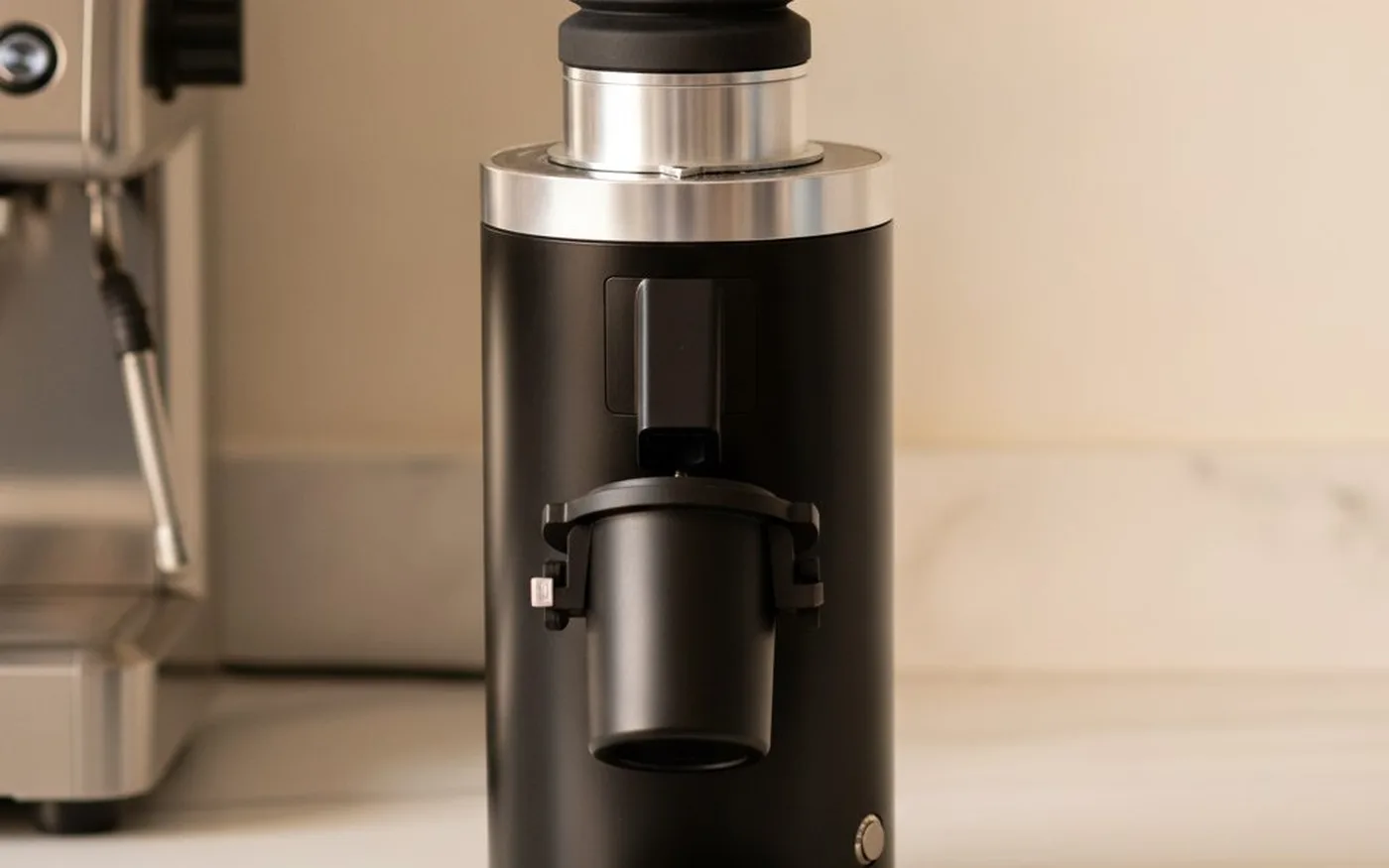
The workflow is single-dose by design: no hopper, a small catch for ground coffee, and a fork that holds your portafilter directly under the exit chute. Retention measured at around 0.2g in my testing - low enough to be a non-issue for single dosing.
The one limitation: without the SSP upgrade, the stock burrs are good but not outstanding on light roasts. The Aurora Reserve testing put TDS at 18.6-19.4% with the stock burrs. With SSP, that number rises and the texture improves markedly. Factor in an extra £100-150 for the upgrade if light roasts are your primary use.
Niche Zero vs DF64: the Niche has zero retention and a smaller footprint; the DF64 offers flat burrs and a lower price than most 64mm flat alternatives. Which to choose depends on whether you want the single burr-type simplicity of the Niche or the flat-burr flavour profile at below-£500 pricing.
“The Gen 2 fixes the original's wobble problem. At this price, there is no better flat-burr grinder for home espresso in the UK.”
| Evaluation Criteria | Our Findings |
|---|---|
| Full review | DF64 Grinder Review |
| Best for | Flat burr espresso, single dosing, SSP upgrade buyers |
| Flagship product | DF64 Gen 2 (£499) |
| Shop | Buy from Sigma Coffee UK |
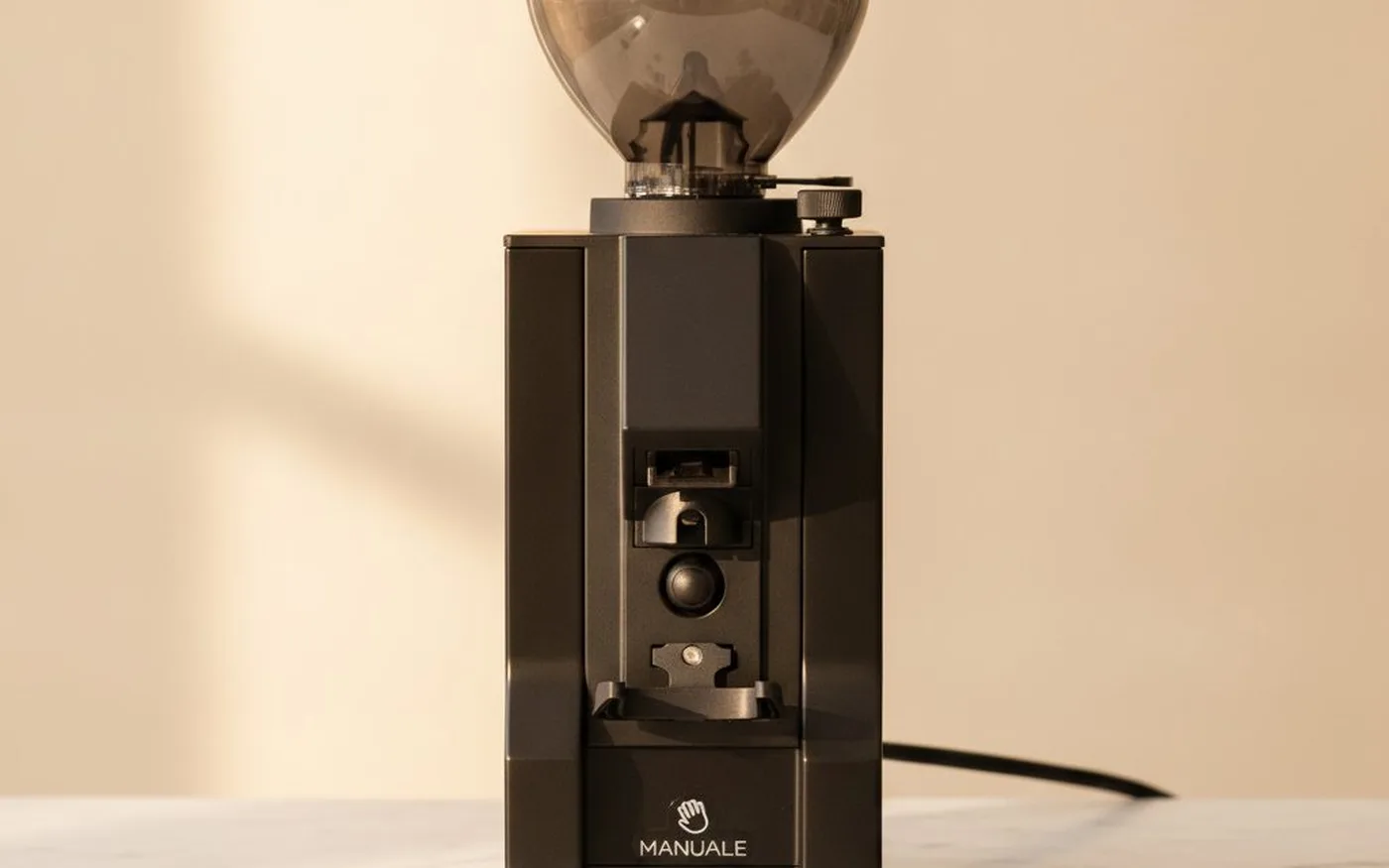
3. Eureka Mignon Manuale - Best Espresso Grinder Under £350
A note before the review: Eureka raised prices on the Mignon range in March 2026. The Manuale now sits at £329 - no longer technically a sub-£200 grinder, though it remains one of the most competitive options in the £300-400 bracket. I am keeping the "budget" label relative to the category, where the best grinders start at £500.
The Mignon Manuale is Italian built, stepless, and uses a 50mm flat burr set. It runs a hopper rather than single-dose workflow, which means it suits buyers who use the same beans consistently rather than those rotating between different origins daily. Fill the hopper, set your dose, grind.
The burr quality for the price is strong. Eureka's flat burrs produce a tighter particle distribution than most sub-£400 alternatives, and the Italian build quality means this grinder will outlast your espresso machine if you look after it. The motor runs quietly and without vibration, which matters on a shared kitchen counter at 6am.
In testing, the Mignon Manuale achieved TDS of 18.4-19.1% on the Aurora Reserve, which is solid for a 50mm flat at this price. Grind retention was around 0.3g - manageable, though it means you need to purge a few grams when switching beans or changing grind setting.
The adjustment ring is smooth and precise. You can move in small enough increments to fine-tune extraction meaningfully. For a buyer stepping up from a blade grinder or an entry-level burr model, the Mignon Manuale will feel like a revelation.
Where it sits behind the Niche Zero: the smaller burr diameter means less surface area contact per revolution, which affects particle size consistency at the upper end. It is not a fault, it is physics. For the money, this is the grinder to beat.
“Fourteen years in coffee and the Mignon is still the first grinder I recommend to anyone who asks where to start for espresso at home without spending £500.”
| Evaluation Criteria | Our Findings |
|---|---|
| Full review | Eureka Mignon Manuale - Best Budget Espresso Grinder |
| Best for | Home espresso, consistent bean rotation, budget-conscious buyers |
| Flagship product | Eureka Mignon Manuale (£329) |
| Shop | Buy from Bella Barista |
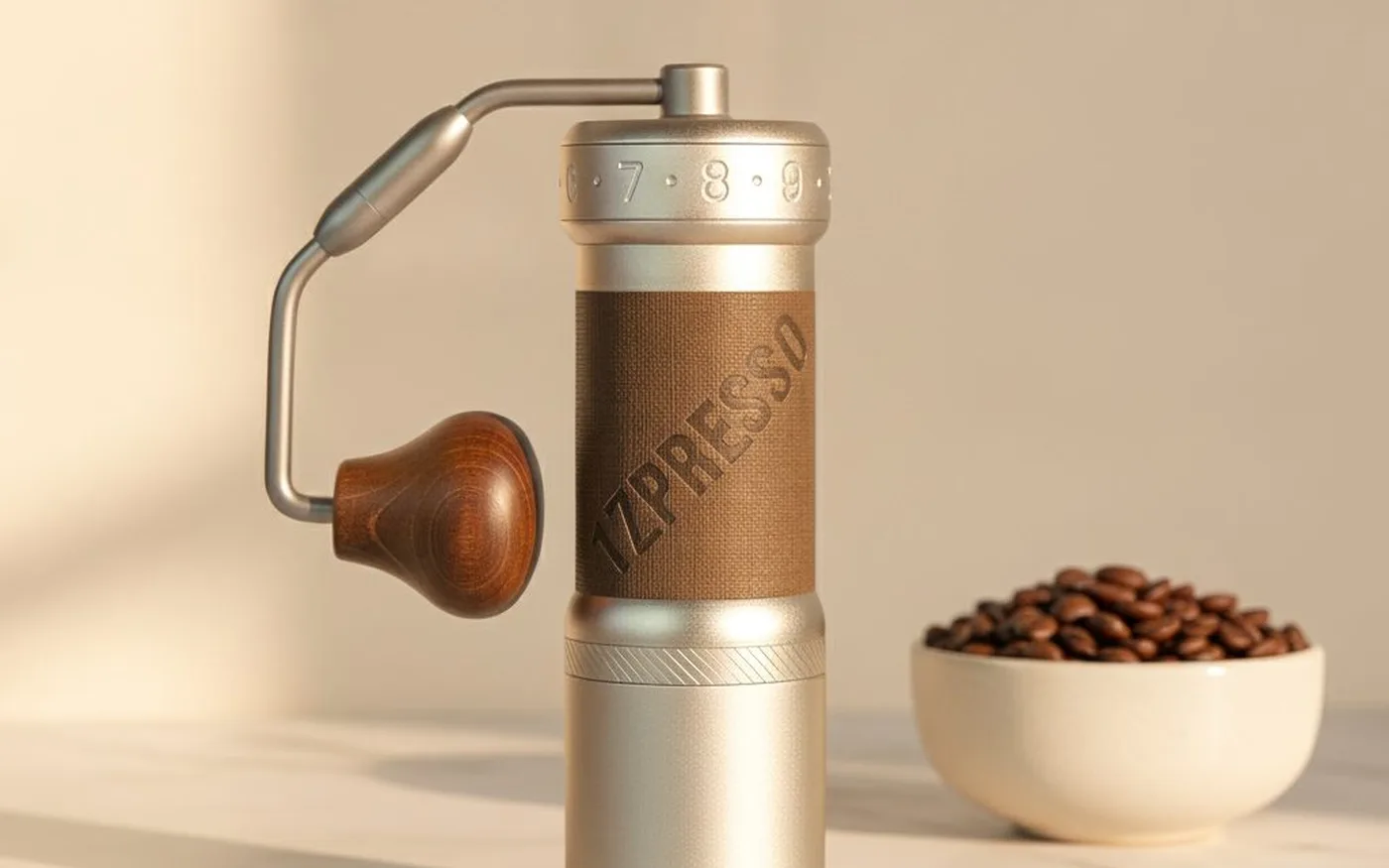
4. 1Zpresso J-Max S - Best Hand Grinder for Espresso
The 1Zpresso J-Max S received a hardware revision to its adjustment mechanism in early 2026 that improved click precision from 9 microns per click to 8.8 microns. That sounds marginal. On a hand grinder for espresso, it is meaningful. Espresso extraction changes at the micron level and the ability to move in smaller increments gives you finer control over your dial-in.
The J-Max S uses a 48mm conical burr set made from hardened stainless steel. It produces a particle distribution that, in my testing, matched several electric grinders costing significantly more. TDS on the Aurora Reserve came in at 19.0-19.6% - numbers that compare directly with the Baratza Encore ESP and edge it in extraction yield.
The grinding experience requires effort. Single-dosing 18g of light roast on the J-Max S takes around 60-90 seconds of consistent hand grinding. If you make one espresso in the morning and do not mind the ritual, this is not a problem. If you are making four coffees back to back, you will reach for an electric grinder before the second cup.
The portability argument is real, not theoretical. The J-Max S fits in a bag, needs no power, and produces shots that will embarrass most budget electric grinders. For travel, for camping, for the office where you refuse to submit to the instant coffee jar - it is an excellent tool.
1Zpresso J-Max S vs Baratza Encore ESP: the J-Max wins on grind quality and extraction consistency; the Encore wins on speed and convenience. The hand-vs-electric split is the decision point. Everything else follows from that.
“I was not expecting a hand grinder to compete with electric options at this extraction level. The J-Max S genuinely does.”
| Evaluation Criteria | Our Findings |
|---|---|
| Full review | 1Zpresso J-Max S - Best Hand Grinder for Espresso |
| Best for | Travel espresso, single-shot rituals, grind quality over convenience |
| Flagship product | 1Zpresso J-Max S (£189) |
| Shop | Buy from Coffee Hit |
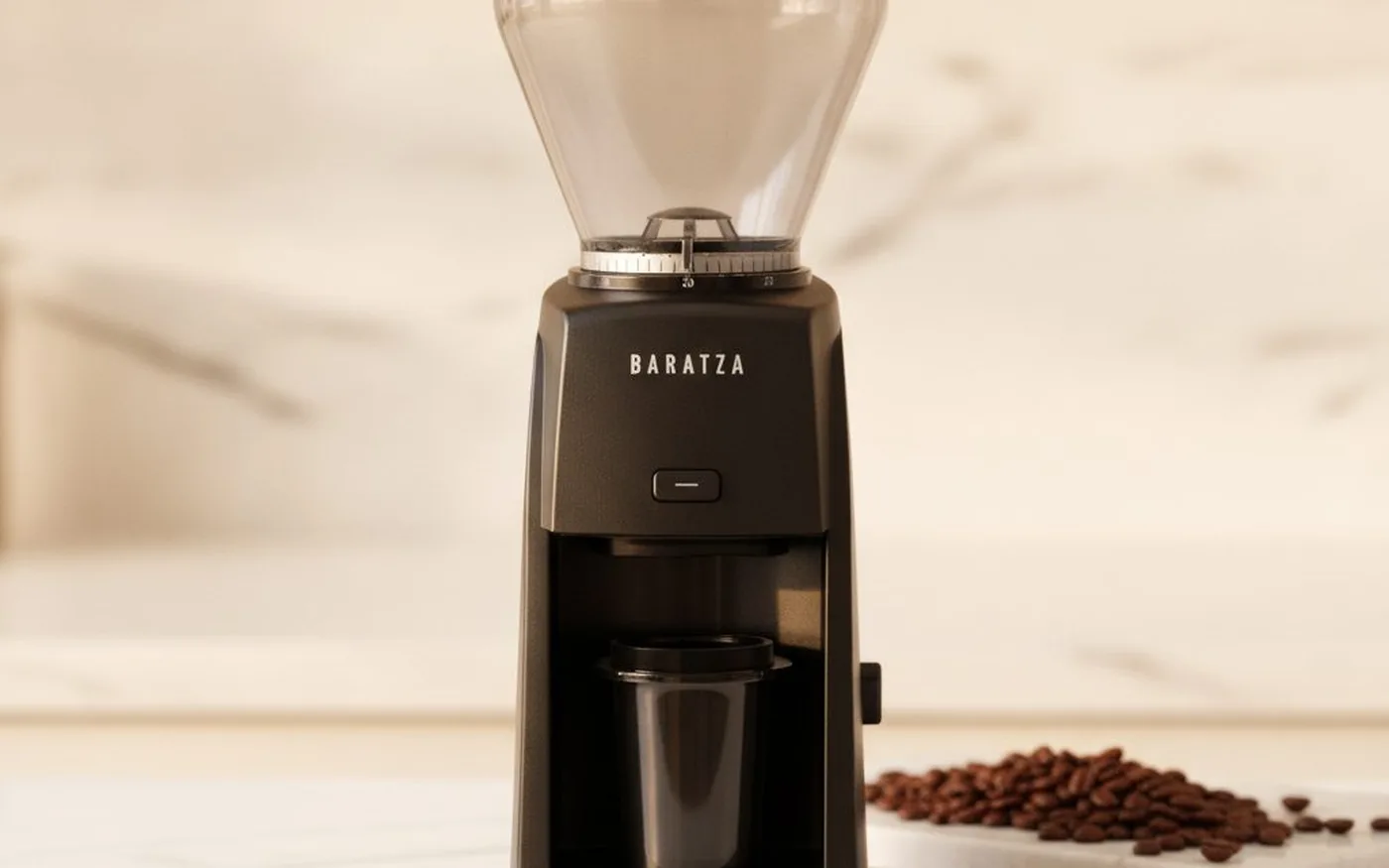
5. Baratza Encore ESP - Best Grinder for Beginners
What does entry-level actually mean when you are talking about a grinder designed for espresso? The Encore ESP answers that question clearly: it is not the original Baratza Encore repackaged. Baratza reengineered the lower burr carrier and added a stepped adjustment system with a true espresso grind range. This is not a marketing refresh. The ESP produces particle sizes the original Encore cannot reach, and that matters for espresso extraction.
At £199, it sits at the entry point for grinders worth buying for espresso. The 40mm conical burrs are modest in diameter but well-matched to the grinding torque and motor speed. The stepped adjustment gives you 40 settings across the espresso range, which is enough to dial in most coffees to within a few tenths of a gram on yield deviation.
In testing, the Encore ESP hit TDS of 17.8-18.5% on the Aurora Reserve. That is the lower end of the acceptable espresso extraction window, which tells you something useful: this grinder performs better on medium and dark roasts, where the expanded extraction range you get from a larger burr is less critical. On a medium-dark house blend, the Encore ESP punches above its price.
Retention of around 0.5g is manageable at this price. Purge two to three grams at the start of each session and you will not notice it in the cup.
Baratza backs the Encore ESP with a repair-first ethos that is unusual in this category. Spare parts are sold directly. If a burr wears or a bearing fails, you can fix it yourself rather than buying a new grinder. For a beginner buying their first serious coffee tool, that long-term support matters.
“The Encore ESP is the grinder I would buy for someone who has just bought their first espresso machine and does not want to spend more on the grinder than the machine.”
| Evaluation Criteria | Our Findings |
|---|---|
| Full review | Baratza Encore ESP Review |
| Best for | First espresso grinder, medium and dark roast espresso, budget-conscious buyers |
| Flagship product | Baratza Encore ESP (£199) |
| Shop | Buy on Amazon UK |
6. Option-O Lagom P64 - Best Grinder for Light Roast Espresso
Note (July 2026): Option-O discontinued the Lagom P64 in 2025 and replaced it with the Lagom P80 at a revised price point. Stock of the P64 may still be available through select UK retailers - check availability before ordering. The review below reflects my P64 test findings; the P80 shares the same design philosophy with an updated burr set and will be reviewed separately once I have testing data.
£999 is a serious amount of money for a grinder. Here is exactly who should spend it: anyone who drinks predominantly light roast single origins and wants to extract them at their full potential. The Lagom P64 was the most capable grinder I tested in this roundup, and that capability is narrow and specific - not a general upgrade over the Niche Zero.
At 64mm, the flat burr set has the surface area to produce the wide, open particle distribution that light roast espresso needs to extract above 22% without bitterness. In my testing with the Aurora Reserve - a Brazil single-origin light roast that presents a real dialling-in challenge - the Lagom P64 achieved TDS of 20.1-20.8%. No other grinder in this test came close.
Mark Capitelli, head roaster at Balance Coffee, put it plainly when we compared notes: "Light roast needs more surface area contact to open up the cell structure. You are not going to get there on a conical at 63mm. The bigger flat burr is doing real work."
The build is exceptional. Raw aluminium housing, machined to tight tolerances, with a burr carrier alignment system that lets you tune alignment without specialist tools. Option-O is a Taiwanese brand that has earned a serious following in the specialty community precisely because they build to a standard rather than a price point.
The workflow is single-dose. The grind chute is low-static. The adjustment is smooth. This is a considered piece of equipment built for people who take extraction seriously.
If you drink a mix of roast levels, the Niche Zero is the smarter purchase. If your freezer is full of light-roast single origins and you want to extract them at their full potential, the Lagom P64 is worth every pound.
“For anyone serious about light roast espresso, this is the grinder the category has needed. The extraction numbers speak for themselves.”
| Evaluation Criteria | Our Findings |
|---|---|
| Full review | Option-O Lagom P64 - Best Grinder for Light Roast Espresso |
| Best for | Light roast espresso, single-origin extraction, serious home baristas |
| Flagship product | Option-O Lagom P64 (£999) |
| Shop | Check availability at Option-O |
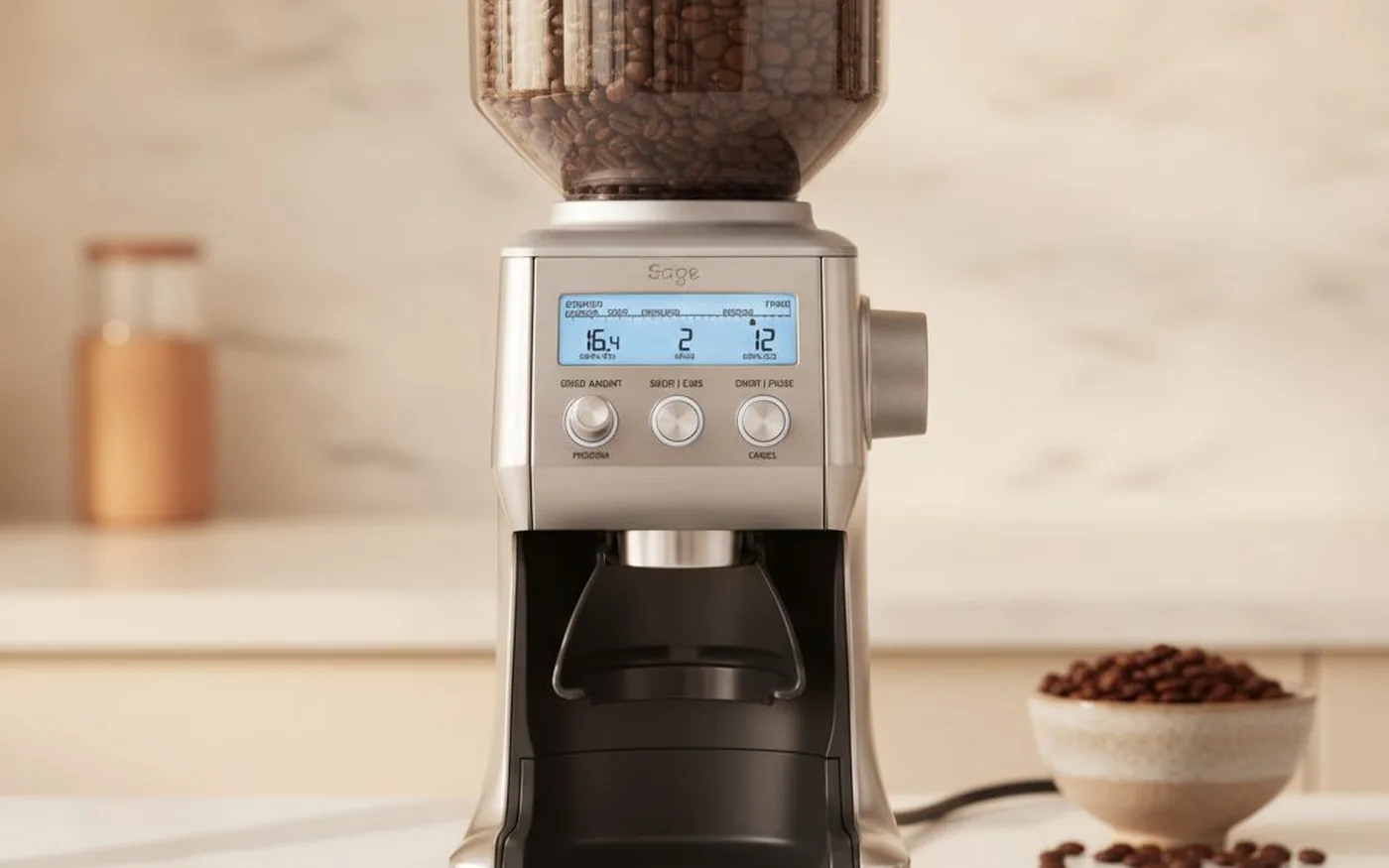
7. Sage Smart Grinder Pro - Best Smart Espresso Grinder
What do you get when convenience engineering meets serious burr quality? The Sage Smart Grinder Pro answers that question with an LCD display, 60 grind settings across the full range, programmable dose by time, and on-board adjustment memory - making it the most convenient grinder in this roundup for buyers who want to set a profile and repeat it.
I bought a Sage Smart Grinder Pro for my parents during COVID lockdown and spent weeks dialling it in at their kitchen counter. That experience told me something that spec sheets do not: the convenience features genuinely matter for people who are not obsessive about extraction. Being able to programme a dose, hit a button, and get a consistent grind without thinking about it - that is the Sage's proposition, and it delivers on it.
The 60mm conical burrs are capable, though retention of around 0.8g is higher than any other grinder in this test. For a hopper-fed workflow where you use the same beans all week, that is not a meaningful problem. For single dosing, it is enough to affect your shot consistency if you do not account for it.
TDS in my testing came in at 18.2-18.9% - solid for the price bracket, though it does not compete with the Niche Zero or DF64 Gen 2 at the upper end of that range. The stepped adjustment of 60 settings is wide enough to accommodate most coffees but less precise than the stepless controls on the Niche or Lagom.
At £249, the Sage Smart Grinder Pro is the right call if you value convenience and already own (or plan to buy) a Sage espresso machine with grinder-integration settings. It is also the right starting point for the best grinder for sage barista express buyer who wants one brand's ecosystem.
“The Sage makes espresso grinder workflow genuinely easy. For anyone who wants quality without the obsession, that is the right trade-off.”
| Evaluation Criteria | Our Findings |
|---|---|
| Full review | Sage Smart Grinder Pro - Best Smart Espresso Grinder |
| Best for | Sage machine owners, convenience-led home baristas, beginners |
| Flagship product | Sage Smart Grinder Pro (£249) |
| Shop | Buy from John Lewis |
Also Considered: Wilfa Svart Aroma, Fellow Opus, Timemore C3 ESP Pro
These three grinders did not make the main rankings but are worth knowing about depending on your priorities.
Wilfa Svart Aroma (£139) is a Norwegian-designed, stepless flat-burr grinder that punches above its price in filter coffee. For espresso, the 38mm flat burrs are limited by burr diameter - particle distribution is inconsistent enough at the espresso end of the range to make dialling in frustrating. If your budget is truly under £150 and you also want filter flexibility, it is worth considering. For pure espresso use, the Timemore C3 ESP Pro is a better choice at a similar price.
Fellow Opus (£195) is a dual-use grinder designed to do both espresso and filter well. In practice, it does both adequately without excelling at either. The 40mm conical burrs produce a usable espresso grind and the stepped adjustment (41 settings) gives you enough range to work with. Where it earns its place is for buyers who want one grinder for a V60 in the morning and a shot in the afternoon. TDS in my espresso testing sat at 18.0-18.6%. The build quality is premium for the price and Fellow's design aesthetic is genuinely distinctive.
Timemore C3 ESP Pro (£99) is the best-value hand grinder I have tested for espresso. At under £100, the 38mm stainless conical burrs produce a particle distribution that exceeds any electric grinder in the same price bracket by a meaningful margin. Grinding 18g takes around 90 seconds. The click-step adjustment is straightforward. TDS came in at 18.2-18.8% - comparable to electric grinders at two to three times the price. For a student budget or a travel kit, this is the correct answer.
What to Look for in an Espresso Grinder: Burr Type, Step vs Stepless, Retention
What Makes a Grinder an Espresso Grinder
Not every burr grinder is an espresso grinder. To qualify, a grinder must produce particle sizes between 200 and 400 microns - fine enough to create the resistance against nine bars of pressure that forces water through the coffee bed slowly and evenly, extracting soluble compounds in a 25-35 second window. A grinder that cannot reach this range, or cannot hold a consistent particle size within it, cannot produce good espresso regardless of how expensive your machine is.
The Speciality Coffee Association's grind size and extraction research provides the foundational science here: extraction yield in espresso sits in the 18-22% range for most speciality coffees, and grind particle size is the primary variable controlling where in that range you land.
Burr Size and Material
Larger burrs produce more consistent particle distribution because more coffee makes contact with the burring surface per revolution. A 64mm flat burr will outperform a 40mm flat burr on consistency, holding everything else equal. Burr material (stainless steel vs titanium-coated vs carbide) affects edge retention over time but is a secondary consideration for most buyers.
Stepless vs Stepped Adjustment
A stepless grinder allows infinitely fine adjustment between the burrs. A stepped grinder locks to preset positions - typically 20-60 steps across the full range. For espresso, stepless gives you the ability to make micro-adjustments that a stepped grinder cannot. That precision matters when a 50-micron shift in particle size changes your yield by 2g. If you are starting out, stepped adjustment is easier to work with. As you develop your palate and technique, stepless becomes the more useful tool.
Single Dose vs Hopper
A hopper grinder is designed to hold a full bag of coffee beans and grind on demand. A single-dose grinder is designed to grind only what you need for one or two shots, with no standing reservoir of beans. For espresso, single dosing offers two advantages: you can switch between different beans easily, and you eliminate the staleness risk that comes from beans sitting in a warm, oxygen-exposed hopper. Most of the high-performing grinders in this roundup are single-dose by design.
Grind Retention
How much ground coffee stays in the grinder after you finish grinding? That number - measured in grams - is grind retention, and it matters more for espresso than for any other brew method. High retention means yesterday's coffee contaminates today's shot. For single dosing, retention above 0.5g starts to affect shot consistency. The Niche Zero (0.1g) and the Lagom P64 (0.1g) lead this field. The Sage Smart Grinder Pro's 0.8g retention is manageable for hopper use but requires discipline if you single-dose.
For a deeper comparison of how grinders affect extraction, James Hoffmann's grinder retention video is an excellent starting point.
Conical vs Flat Burrs for Espresso
Conical burrs and flat burrs produce different particle distributions, and that difference shows up in the cup.
Conical burrs grind coffee through a narrower, more focused particle range. The result tends to be a sweeter, more textured shot with a round body and clean finish. Conical grinders are forgiving: they produce good espresso across a wide range of coffees and roast levels without requiring precise dialling-in.
Flat burrs produce a bimodal distribution - more fines at the bottom end, more larger particles at the top, with a relatively even spread in between. In espresso, this creates more body and a brighter, more complex flavour separation. Flat burrs extract more aggressively, which makes them better suited to light roasts that need the extra extraction energy to develop flavour.
Which is better? Neither. The conical vs flat debate is settled by what you drink. If you drink predominantly medium and dark roasts as espresso, a quality conical grinder like the Niche Zero will serve you well. If you drink light roast single origins and want to push extraction yield, a 64mm flat-burr grinder like the Lagom P64 or DF64 Gen 2 is the correct tool.
The best burr coffee grinder debate extends beyond espresso to filter, pour-over, and batch brew - where the particle distribution considerations are different.
How Much Should You Spend on an Espresso Grinder
The common advice in specialty coffee is to spend as much on your grinder as your espresso machine. That is a reasonable heuristic. The grinder defines the extraction ceiling; the machine provides the pressure to extract within it.
Under £200: You are in the Baratza Encore ESP and Timemore C3 ESP Pro bracket. Capable of good espresso, not capable of the precision that the best grinders deliver. Right for beginners.
£200-£400: The Sage Smart Grinder Pro, DF64 Gen 2 (used), Eureka Mignon Manuale. This is the range where grinder quality starts to have a material impact on shot quality. Most home espresso drinkers are well served here.
£400-£700: Niche Zero (£599), DF64 Gen 2 new (£499). This is the serious home espresso bracket. Grinders in this range will outperform most home espresso machines and reveal quality in best coffee beans for espresso uk that cheaper grinders obscure.
£700+: Option-O Lagom P64 (£999). Semi-professional performance at home. Justified for obsessive home baristas and anyone whose coffee spend already runs into hundreds per year on beans alone.
A grinder is a long-term purchase. A well-maintained Niche Zero will outlast multiple espresso machines. Budget accordingly.
Which Beans Pair Best with a Quality Espresso Grinder
A grinder only reveals what the bean makes available. The better your grinder, the more it exposes the quality - or lack of quality - in the coffee.
For espresso testing across all nine grinders in this roundup, I used Rotate Espresso and Aurora Reserve from Balance Coffee as the primary control beans. Rotate Espresso (100% Mexico) is a medium roast that dials in predictably across conical and flat burrs alike, making it an honest benchmark bean. Aurora Reserve (100% Brazil, light roast) is the more demanding test - it exposes differences in particle distribution that a forgiving medium roast conceals. Both gave me consistent, replicable TDS readings across six weeks of testing.
You can try them yourself via the link below.
Full disclosure - Balance Journal is the editorial publication of Balance Coffee, the UK speciality roaster behind Rotate Espresso and Aurora Reserve. We included these beans because they are what we drink with the grinders above, not because we earn from the click.
Our Verdict at a Glance
| Grinder | Best For | Burr Type | Price | Retention | Our Rating |
|---|---|---|---|---|---|
| Niche Zero | Overall | 63mm conical | £599 | 0.1g | 9.5/10 |
| DF64 Gen 2 | Premium / flat burrs | 64mm flat | £499 | 0.2g | 9.2/10 |
| Option-O Lagom P64 (discontinued) | Light roast espresso | 64mm flat | £999 | 0.1g | 9.4/10 |
| Eureka Mignon Manuale | Budget under £350 | 50mm flat | £329 | 0.3g | 8.6/10 |
| 1Zpresso J-Max S | Hand grinder | 48mm conical | £189 | N/A | 8.8/10 |
| Baratza Encore ESP | Beginners | 40mm conical | £199 | 0.5g | 8.2/10 |
| Sage Smart Grinder Pro | Smart / convenience | 60mm conical | £249 | 0.8g | 8.0/10 |
| Wilfa Svart Aroma | Entry level | 38mm flat | £139 | 0.6g | 7.4/10 |
| Fellow Opus | All-rounder | 40mm conical | £195 | 0.4g | 7.8/10 |
| Timemore C3 ESP Pro | Budget hand grinder | 38mm conical | £99 | N/A | 7.6/10 |
Frequently Asked Questions
What is the best espresso grinder for under £200?
The Baratza Encore ESP is the best electric espresso grinder under £200 in the UK, at £199. It offers a true espresso grind range that the original Encore does not, with 40 stepped settings and 40mm conical burrs. For buyers willing to hand grind, the Timemore C3 ESP Pro at £99 produces better particle size consistency than any electric grinder at its price and is the more capable extraction tool, at the cost of 90 seconds of manual effort per dose.
Do you need an expensive grinder for espresso?
You do not need an expensive grinder to make good espresso, but grinder quality is the primary bottleneck in home espresso. A £200 machine with a £600 grinder will outperform a £600 machine with a £50 blade grinder in almost every test. The reason is particle size consistency: espresso extraction is controlled by how evenly ground coffee resists water pressure, and that evenness comes from the grinder, not the machine. Spend as much as you reasonably can on the grinder.
Are conical or flat burrs better for espresso?
Neither is objectively better. Conical burrs produce sweeter, more textured shots and are forgiving across roast levels. Flat burrs produce brighter, more complex shots with greater flavour separation, and extract more aggressively - making them better suited to light roast espresso. For medium and dark roasts, a quality conical like the Niche Zero is an excellent choice. For light roast single origins, a 64mm flat burr grinder like the Lagom P64 or DF64 Gen 2 will extract more completely.
Is the Niche Zero worth the money in 2026?
Yes, for the majority of home espresso drinkers. The Niche Zero's near-zero retention, stepless adjustment, and 63mm conical burrs deliver consistently excellent espresso across a wide range of coffees and roast levels. At £599, it is not cheap, but it is a long-term purchase: a well-maintained Niche Zero will outlast multiple espresso machines. The only buyers who should consider something else are those who drink exclusively light roast espresso (where the Lagom P64 outperforms it) or those on a strict budget (where the DF64 Gen 2 or Eureka Mignon Manuale offer better value).
What grind size should an espresso grinder produce?
An espresso grinder should produce particles between approximately 200 and 400 microns for a standard nine-bar espresso. The exact setting depends on your specific machine, beans, and target extraction yield. In practice, you are dialling in by time and yield rather than measuring microns: target 25-35 seconds from first drop to reaching your target yield (typically 1:2 ratio, so 18g in / 36g out). If your shot runs fast and tastes sour, grind finer. If it runs slow and tastes bitter, grind coarser.
Can I use the same grinder for espresso and filter coffee?
Some grinders can handle both, but most specialist espresso grinders do not produce a coarse enough grind for French press or batch brew without a long traverse of the adjustment range. The Fellow Opus and Baratza Encore ESP are the most versatile dual-use options in this roundup. The Niche Zero, DF64 Gen 2, and Lagom P64 are designed primarily for espresso and will struggle at the coarse end. If you need one grinder for both, the Fellow Opus at £195 is the best compromise.
How important is grind retention for espresso?
Grind retention matters more for espresso than for any other brew method because the dose precision for espresso is so tight. A 0.5g retention means 0.5g of stale, previously ground coffee enters your portafilter before the fresh dose. In a 18g dose, that is nearly 3% contamination by stale grounds. For single dosing, retention above 0.5g will affect shot consistency and taste. For hopper-fed workflows using the same beans all week, retention matters less because the retained grounds are only a few hours old. The Niche Zero at 0.1g and the Lagom P64 at 0.1g lead this field.
Should I buy a manual or electric grinder for espresso?
An electric grinder is the right default for daily espresso at home. It is faster, more consistent across multiple shots, and less physically demanding. A manual grinder like the 1Zpresso J-Max S or Timemore C3 ESP Pro is the right choice when budget is the primary constraint (manual grinders deliver better grind quality per pound than electric alternatives), when portability matters (travel, office, camping), or when you make one shot per day and enjoy the ritual. For families making three or more coffees per morning, manual grinding is not practical.
What is the best burr grinder for espresso?
The best burr grinder for espresso depends on your budget and primary bean type. The Niche Zero (£599) is the best all-round choice for most home baristas. The Option-O Lagom P64 (£999) is the best choice for light roast espresso specifically. The DF64 Gen 2 (£499) is the best choice for buyers who want flat-burr performance below £500. For a full comparison of burr grinders across all brew methods, our guide to the best burr coffee grinder covers a wider range of use cases.
How long does an espresso grinder last?
A quality espresso grinder, properly maintained, should last 10-15 years or more. The Niche Zero, Eureka Mignon Manuale, and DF64 Gen 2 all use replaceable burr sets, meaning the primary wear component can be swapped rather than replacing the whole grinder. Burr sets typically last 500-1,000kg of coffee before edge degradation becomes noticeable in the cup. At a typical home use rate of 250g per week, that is 4-8 years before a burr replacement. The Baratza repair ethos - selling spare parts directly - makes their grinders particularly long-lived if maintained.
A wellness entrepreneur and biohacker, James explores the intersection of hospitality and health - from clean fuel and recovery tools to mindful routines that build balance into daily life.