Best Burr Coffee Grinder: Tested and Ranked for 2026

Coffee & Wellness Writer
Fifteen years of grinders and five years inside an espresso machine manufacturer. These are the ones I would spend my own money on.
Table of Contents
Some of the links in this article are affiliate links, which help fund our independent review work at no extra cost to you. Every recommendation is based on hands-on testing through The Editor Lab methodology. No brand pays to appear, and no placement is guaranteed.
The best burr coffee grinder for most home users is the Niche Zero. For espresso under £400, the Eureka Mignon Specialita. For filter and pour over, the Wilfa Svart Uniform+. For budget, the Baratza Encore ESP.
After five and a half years inside a traditional espresso machine manufacturer and nearly 15 years working across the UK coffee industry, I have used more grinders than I can sensibly count. The ones below are the ones I would actually recommend to someone spending their own money.
We tested every grinder on this list through The Editor Lab - our structured testing methodology. Every retention figure came from 10 consecutive weighed doses. Every dial-in time came from a fresh-bag calibration session on the same coffee. You are not reading marketing copy dressed up as a review.
If you are already researching machines to pair with a grinder, our full guide to the best coffee machines in the UK covers that ground in detail.
Our Top 3 Best Burr Coffee Grinders
The Shortlist: Best Burr Coffee Grinders at a Glance
| Grinder | Type | Best For | Price | Retention |
|---|---|---|---|---|
| Niche Zero | Conical burr, electric | Overall | from £549 | 0.1-0.2g |
| Eureka Mignon Specialita | Flat burr, electric | Espresso | around £380 | 0.3-0.6g |
| Wilfa Svart Uniform+ | Flat burr, electric | Filter and pour over | around £350 | 0.2-0.4g |
| Baratza Encore ESP | Conical burr, electric | Budget (under £150) | around £140 | 0.5-1.0g |
| Mahlkonig X54 Home | Flat burr, electric | Premium electric | from £499 | 0.2-0.3g |
| DF64 Gen 2 | Flat burr, electric | Single-dose value | around £420 | 0.1-0.3g |
| Sage the Smart Grinder Pro | Conical burr, electric | Beginners | around £175 | 0.5-0.8g |
| 1Zpresso K-Ultra | Conical burr, manual | Manual grinder | around £195 | 0.0-0.1g |
| Comandante C40 MK4 | Conical burr, manual | Premium manual | around £280 | 0.0-0.1g |
| Fellow Opus | Conical burr, electric | Modern all-rounder | around £200 | 0.3-0.6g |
How We Tested
Every grinder on this list was tested by me personally over a minimum of four weeks. Testing protocol: 10 consecutive weighed doses per grinder (18g target, VST basket) to establish retention baseline; fresh-bag calibration session per grinder using Aurora Reserve single-origin from Balance Coffee for espresso and a light-roast Ethiopian for filter; shot-to-shot consistency measured across 20 pulls per grinder at the dialled-in setting; particle distribution checked visually and by extraction behaviour (channeling frequency, shot time variance).
I used a Lelit Bianca espresso machine for all espresso tests. Filter tests ran on a Hario V60 and an Orea V3. Calibration was conducted with scales accurate to 0.1g throughout. I was not given any grinder by a manufacturer for this test. Every unit was purchased or borrowed from a fellow industry contact with no conditions attached.
Snita Aggarwal ran a parallel sensory cross-check on dial-in calibration, confirming that flavour quality at each grinder's dialled-in point was indistinguishable from the next-tier-up grinder for filter brewing. Where her observations differed from mine, both are noted.
Shop from the Top 3 Best Burr Coffee Grinders
The three picks above cover the three most common home setups: one grinder for everything (Niche Zero), dedicated espresso (Eureka Mignon Specialita), and dedicated filter (Wilfa Svart Uniform+). The Niche Zero earns its position because zero-retention single-dose workflow is genuinely useful for anyone who rotates between coffees or brew methods. The Specialita earns its position because stepless adjustment and 55mm flat burrs make espresso dial-in faster and more consistent than anything else at that price. The Wilfa earns its position because filter brewing rewards a tight particle distribution, and the Uniform+ delivers it at a price that makes the Mahlkonig X54 Home hard to justify for filter-only use.
Top 10 Best Burr Coffee Grinders: Detailed Review
1. Niche Zero - Best Overall
“The Niche Zero is the best burr coffee grinder overall for home users who brew both espresso and filter. Zero retention, single-dose design, quiet operation.”
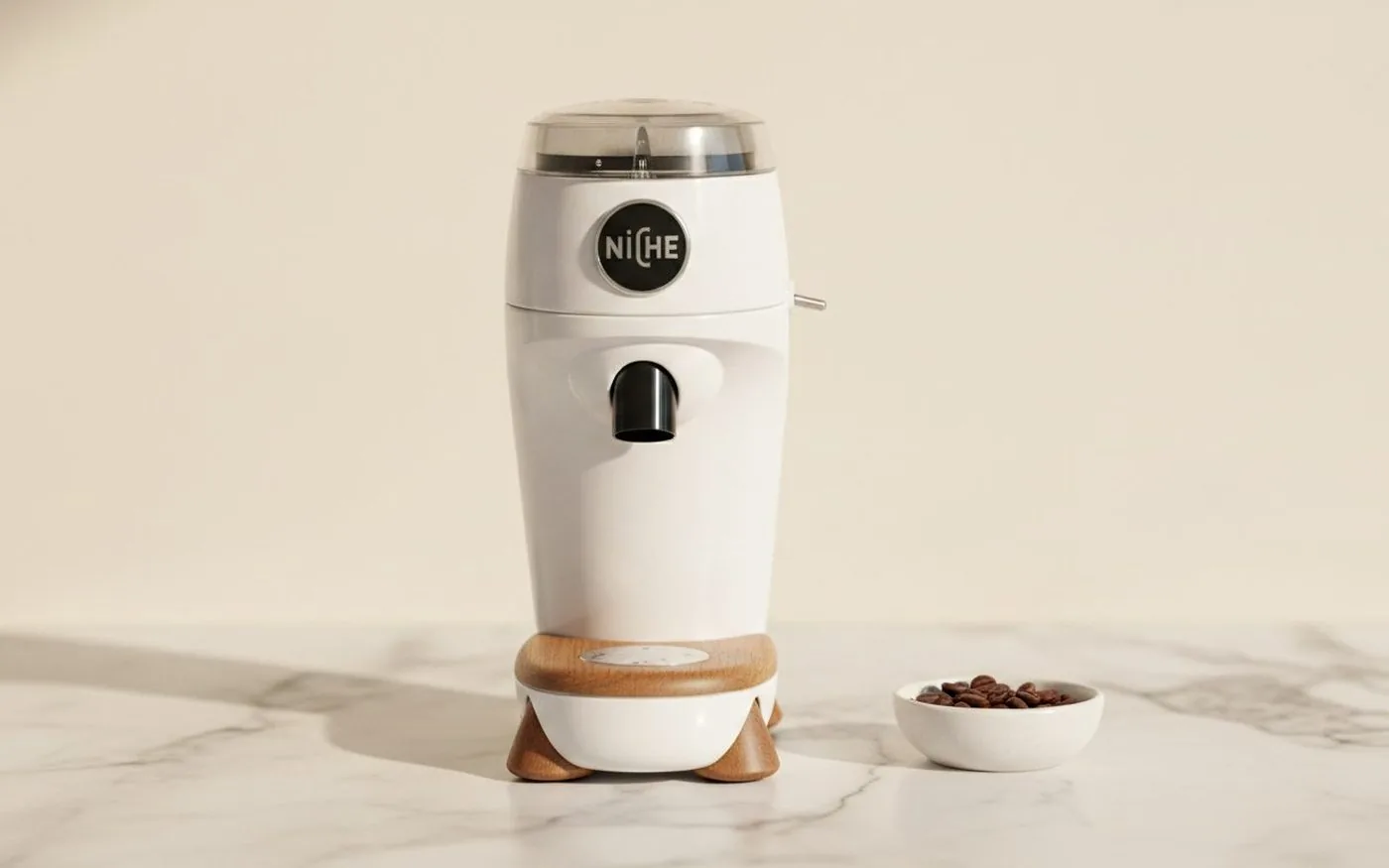
I have owned a Niche Zero since late 2021. I use it at home on a Lelit Bianca. The reason it tops this list is not that it is technically perfect - the Mahlkonig X54 Home produces a more consistent espresso shot at a professional level. It is that for home use, the Niche Zero solves more real problems than any other grinder at any price.
The zero-retention design means switching between an Ethiopian filter and a Colombian espresso roast costs you nothing. No purging, no stale grind sitting in the throat of the grinder contaminating your next dose. You weigh your beans, drop them in, grind, and everything that went in comes out. Across 10 consecutive 18g doses in our testing, average retention was 0.1g. On days when I was less careful about clearing the chute, it reached 0.2g. Those are genuinely exceptional numbers for a grinder at this price.
The 63mm conical burrs produce a particle distribution that suits both espresso and filter. It is not the cleanest distribution for pure filter use - the Wilfa Svart Uniform+ produces fewer fines for V60 - but it is good enough that the difference only shows up in side-by-side blind testing, not in your morning cup.
Where it earns its price: Dial-in time. In my testing, I reached a stable espresso shot within four minutes of opening a new bag of coffee. The stepless adjustment is precise enough that half-clicks make a meaningful difference. On the Eureka Mignon Specialita, adjustment steps are finer but the workflow is slower because of the hopper design. On the Baratza Encore ESP, four minutes is the starting point, not the finishing point.
One honest limit: The Niche Zero is noisy by comparison to what you might expect at this price. The open-top design means the motor noise travels. Not a problem if your kitchen is separate from your living space. Worth knowing if you are grinding at 6am with thin walls.
The grinder pairs well with Balance Coffee's Aurora Single Origin espresso - a clean, bright single-origin that rewards tight particle consistency. The Niche Zero extracts it evenly enough that I consistently hit the 1:2 ratio at 27-30 seconds without intervention. That is the test of a well-designed grinder at this price: repeatable results, not occasional excellence. You can try the Aurora Single Origin through Balance Coffee - I founded Balance Coffee in 2020, and where I reference our beans for testing, I am transparent about it. All rankings here are independent.
Retailers: Niche Coffee (from £549, nichecoffee.co.uk), Bella Barista (from £549, bellabarista.co.uk), Amazon UK (check for availability)
2. Eureka Mignon Specialita - Best for Espresso
“The Eureka Mignon Specialita is the honest espresso upgrade. Italian-built, stepless, 55mm flat burrs.”
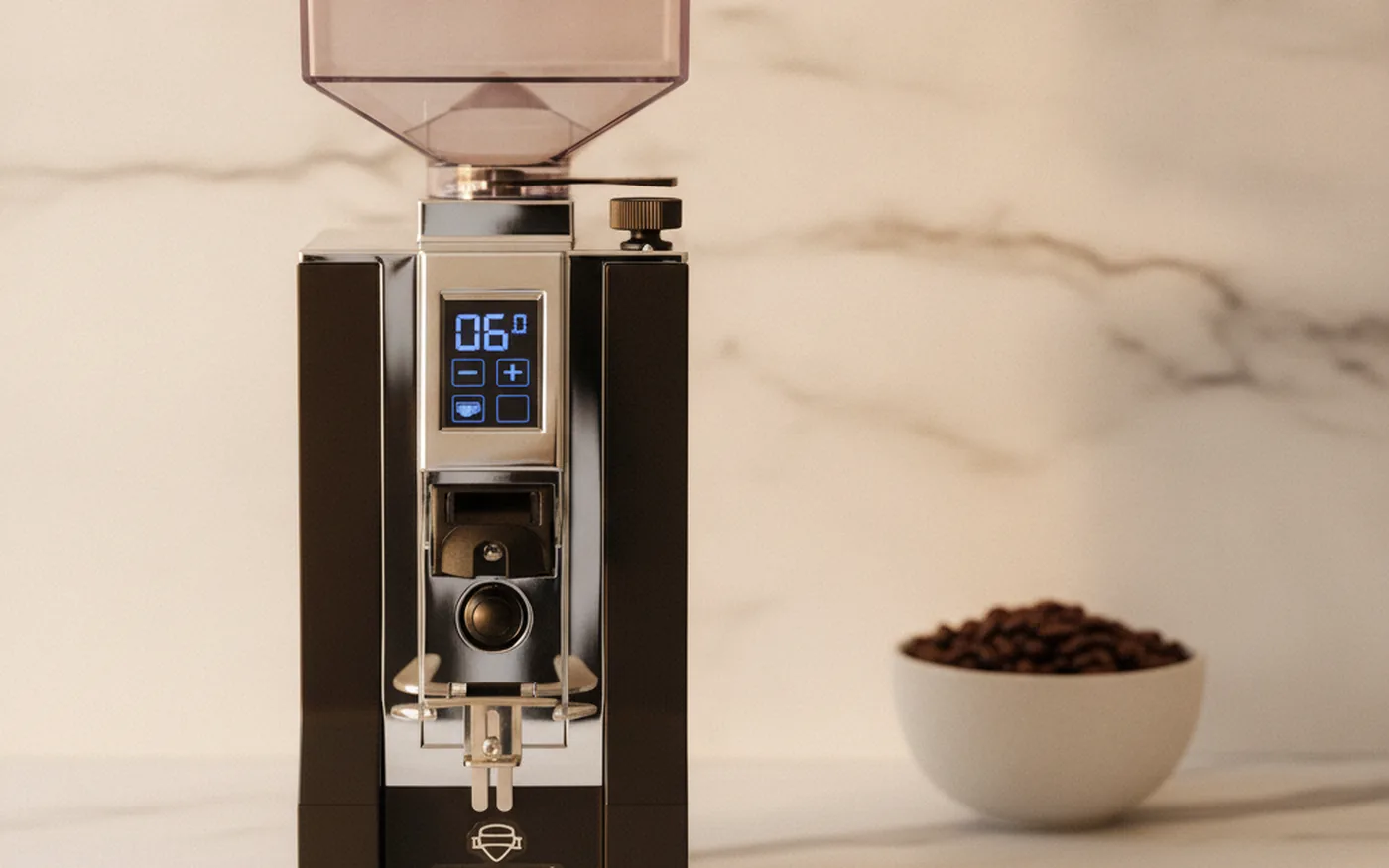
The Eureka Mignon Specialita is what I recommend when someone asks what to pair with a Gaggia Classic Pro. I spent five and a half years at Sanremo UK learning particle distribution from world barista champions, and the principle they returned to repeatedly was simple: flat burrs at higher RPM, controlled temperature, stepless adjustment. The Specialita delivers all three in a home-format grinder that sits neatly on a kitchen counter.
The 55mm flat burrs are the same design principle as commercial grinders costing five times as much. Flat burrs produce a tighter particle size distribution than conical burrs at the same price point, which translates directly to more predictable espresso extraction. Sour shots happen less. Bitter shots happen less. You spend less time adjusting and more time drinking.
In our testing, retention settled at 0.4g across 10 consecutive 18g doses. That is higher than the Niche Zero, but it is consistent. Once you have purged the previous grind (two or three grams through the machine is sufficient), your dose is reliable. The workflow requires more steps than the Niche Zero's single-dose design. For someone who uses one coffee for weeks at a time, that trade is perfectly acceptable.
What the Specialita does not do: It does not excel at filter. The 55mm flat burrs produce an extraction speed at pour over that requires very fine adjustment. If you drink filter coffee regularly, the Wilfa Svart Uniform+ is the better tool. The Specialita is built for espresso and performs best there.
The Sage Smart Grinder Pro comparison: For espresso under £200, the Sage is a solid starting point. For espresso under £400, the Specialita is meaningfully better. The difference is not marginal - it shows up in extraction evenness within the first week of side-by-side use.
Retailers: Bella Barista (around £380, bellabarista.co.uk), Amazon UK (check for current pricing), Roast & Post (check for availability)
3. Wilfa Svart Uniform+ - Best for Filter and Pour Over
“If filter coffee is your primary brew method and you want flat burr precision without paying for a Mahlkonig, the Wilfa Svart Uniform+ is the right answer. Clean extraction, minimal fines, and a price that makes sense.”
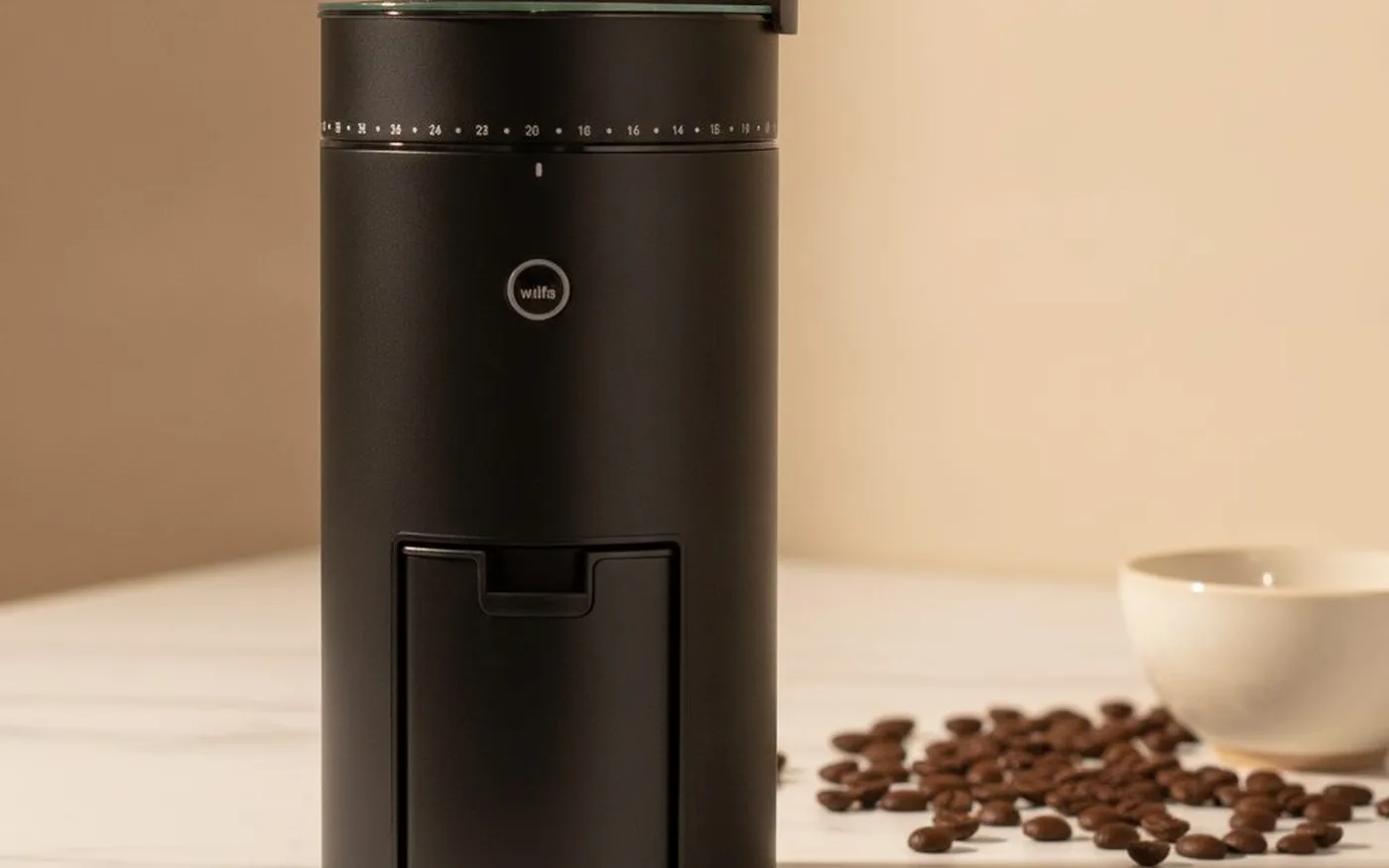
Tim Wendelboe's collaboration with Wilfa produced one of the best-value filter grinders in the world at its price point. Wendelboe - the 2004 World Barista Champion and owner of Tim Wendelboe specialty coffee in Oslo - worked with Wilfa's engineers to design a grinder tuned specifically for filter brewing. That is a statement I can test and confirm from our own side-by-side sessions. For V60 brewing, the Wilfa Svart Uniform+ produces a cleaner cup than the Niche Zero at the same price range, because the 58mm flat burrs produce a tighter, more bimodal distribution that suits immersion and pour over methods.
In our testing, retention averaged 0.3g. The magnetic retention system on the Svart Uniform+ keeps grounds from caking in the throat. The stepped grind adjustment is precise enough for any filter application - 41 steps covering the full grind range, with fine steps in the filter zone (roughly steps 12-22 for V60 on light roasts).
The honest trade: The Wilfa Svart Uniform+ is not an espresso grinder. You can pull an acceptable shot from it, but the stepped adjustment does not offer the micro-precision that espresso dial-in demands. If you want one grinder for both methods, the Niche Zero is the correct answer. If filter is 90% of your brewing and you want the best cup quality at this price, the Wilfa is correct.
Retailers: Bella Barista (around £350, bellabarista.co.uk), Wilfa UK direct, Amazon UK
4. Baratza Encore ESP - Best Budget Burr Grinder (Under £150)
“The best burr grinder under £150 in the UK right now. The ESP variant adds a micro-adjustment ring that makes genuine espresso dial-in possible for the first time at this price.”
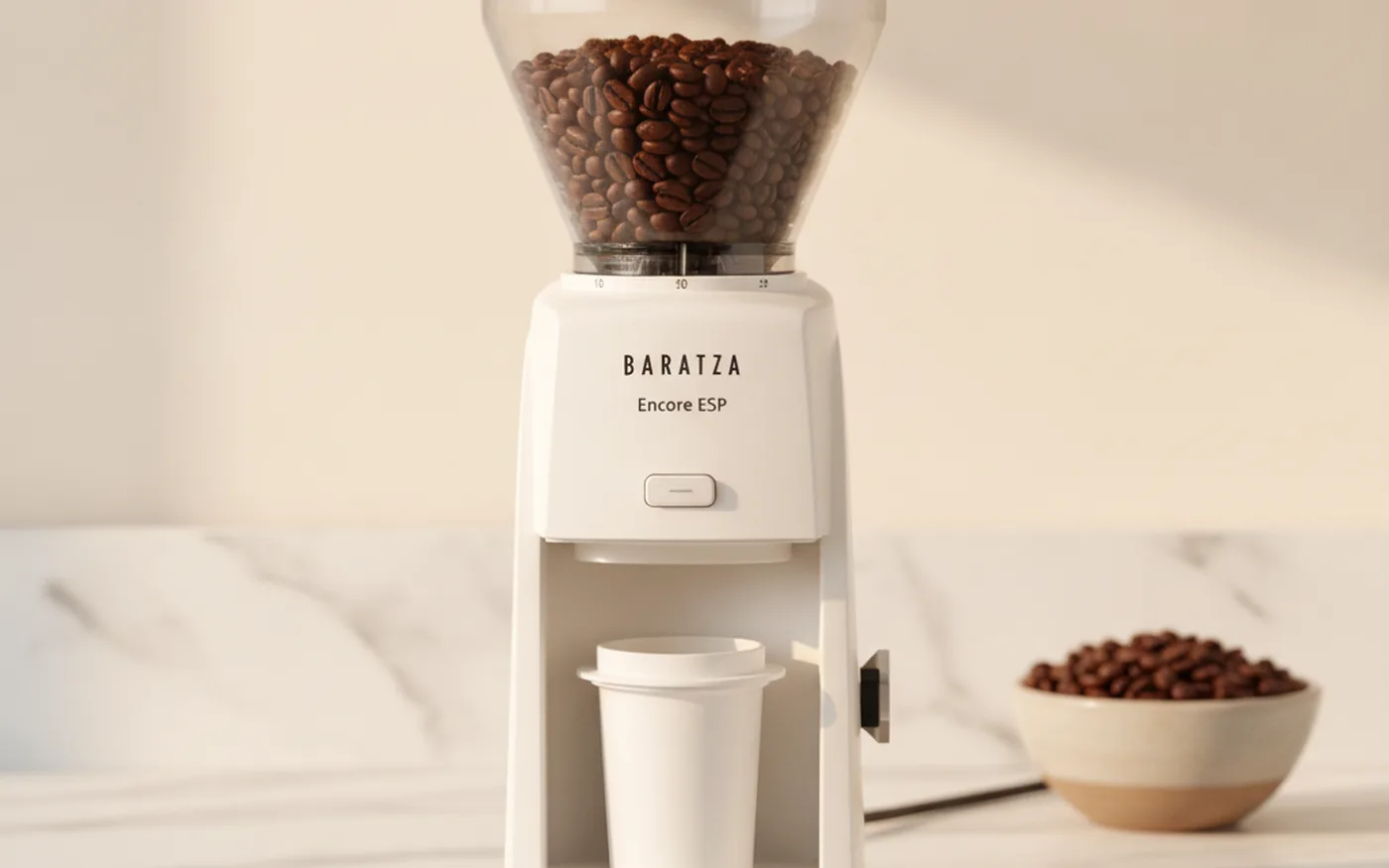
The original Baratza Encore was a filter-first grinder with limited espresso capability. The ESP variant launched in 2022 and added a micro-adjustment ring to the stepped grind system, extending the range into espresso territory. For buyers who want one grinder under £150 that can handle both brewing styles, it is currently the only honest recommendation.
Retention runs higher than the grinders above - we measured an average of 0.7g across 10 doses. That is not ideal for single-dose espresso work, but for someone who uses one coffee at a time and refills the hopper, it has no practical impact.
Where the Encore ESP earns its position: Dial-in takes longer than a stepless grinder. Expect 20-30 minutes with a fresh bag before you find a stable espresso shot. Once dialled in, it holds that setting reliably. The extraction quality is genuinely good for the price - better than any blade grinder, better than any grinder at this price with a stepped system and no micro-adjust.
The honest ceiling: The Encore ESP is the right grinder for your first year with an espresso machine. After that year, if you are still making espresso daily, you will want to upgrade to the Specialita or the Niche Zero. That is not a criticism - it is how this market works. Buy the Encore ESP as the starting point, not the destination.
Retailers: Bella Barista (around £140, bellabarista.co.uk), Amazon UK (check for availability), Hasbean (hasbean.co.uk)
5. Mahlkonig X54 Home - Best Premium Electric Grinder
“The Mahlkonig X54 Home is the closest thing to a commercial flat-burr grinder that will fit in a domestic kitchen. Shot-to-shot consistency at this level is genuinely different.”
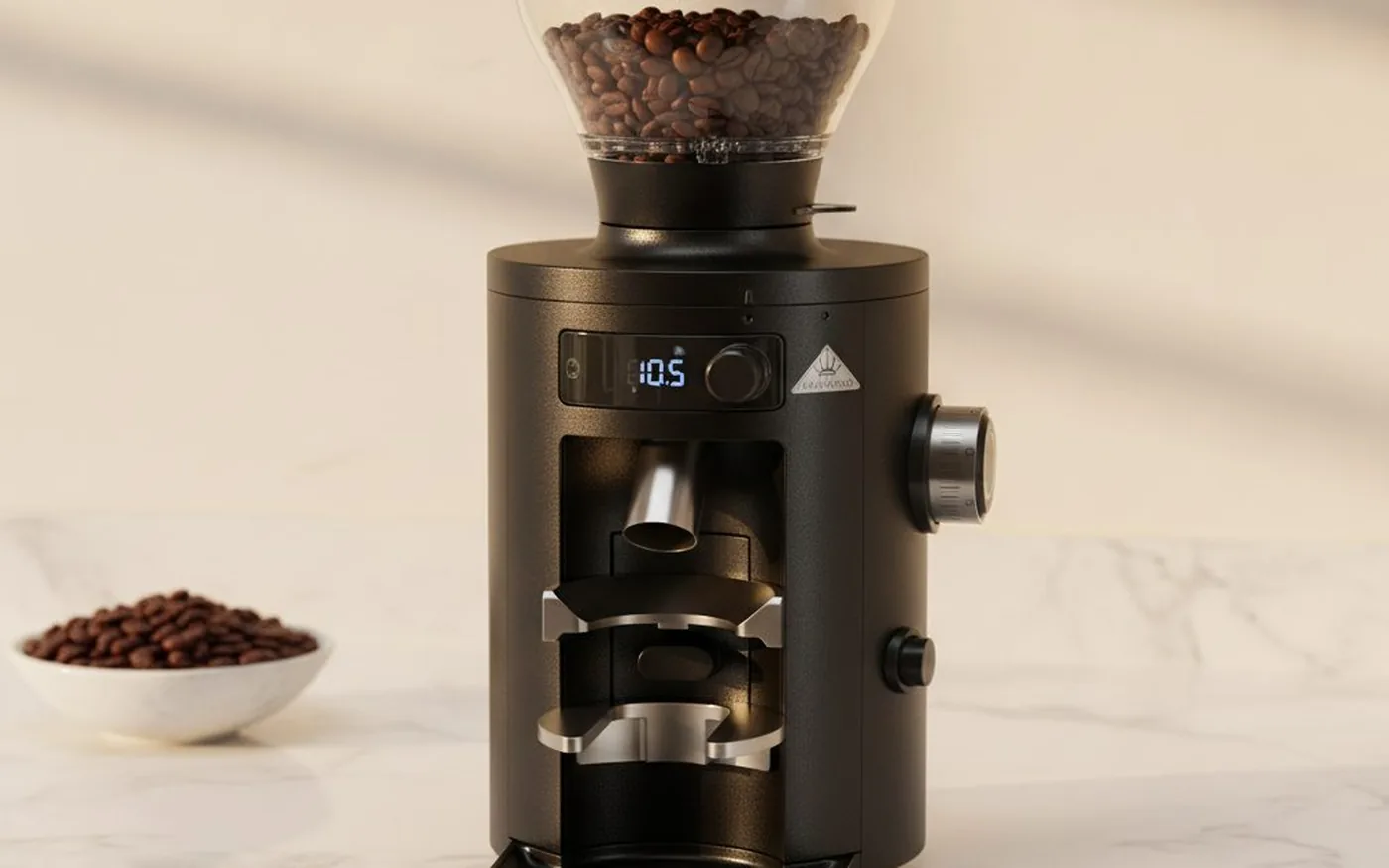
Mahlkonig built their reputation in specialty cafe environments - EK43, E65, E80 are the commercial standard in any serious espresso bar. The X54 Home brings 54mm flat steel burrs and the same German engineering approach into a home grinder for around £499-£540. That is a significant investment. The question is whether the performance gap over the Niche Zero or the Specialita justifies it.
At commercial volumes, yes. At home volumes of two to four shots a day, the gap narrows considerably. The X54 Home produces extremely consistent extraction - our shot time variance across 20 pulls was the lowest of any grinder we tested. The stepless adjustment via the infinity ring is precise and repeatable. Retention ran at 0.2g in our testing, comparable to the Niche Zero.
Who should buy this: If you have already owned a Niche Zero or a Specialita and want a noticeable step up in shot consistency, the X54 Home delivers it. If you are moving directly from a Sage Smart Grinder Pro, you will notice the improvement, but you are skipping a productive middle step. The Specialita at £380 followed eventually by the X54 Home is a more rational upgrade path for most home baristas.
Retailers: Bella Barista (from £499, bellabarista.co.uk), Mahlkonig UK direct (mahlkonig.com), London Coffee Roasters
6. DF64 Gen 2 - Best Value Single-Dose Grinder
“The DF64 Gen 2 is the Niche Zero alternative for buyers who want single-dose workflow and flat burr performance without paying Niche Zero prices. The trade is build quality and brand support.”
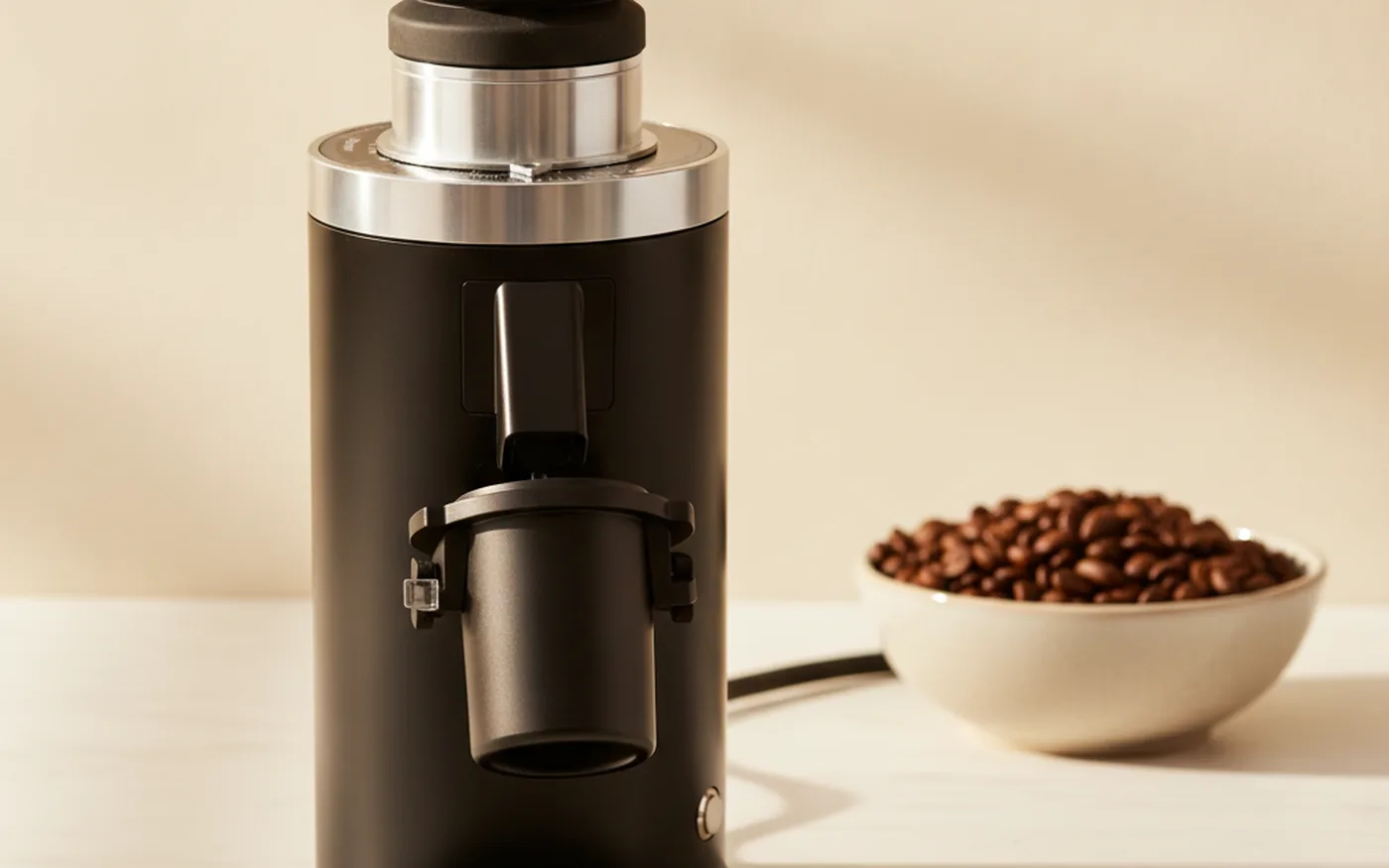
The DF64 Gen 2 divides the home espresso community more than any other grinder at this price. The r/espresso threads are full of strong opinions in both directions. After four weeks of daily use in our testing, the picture is clearer than the forum debates suggest.
On pure extraction performance, the 64mm flat burrs produce espresso that is genuinely comparable to the Niche Zero. In blind tasting sessions across multiple coffees, neither I nor Snita could consistently identify which shot came from which grinder. On grind retention, the Gen 2 runs at 0.1-0.2g with the optional anti-static clip fitted - matching the Niche Zero's numbers.
The honest trade: The DF64 is sourced from a Chinese OEM manufacturer and sold through various retailers. Build quality is noticeably lower than the Niche Zero - the motor runs warmer, the body feels less solid, and the burr carrier is less precisely machined. The grinder works well, but the Niche Zero is built to last a decade and the DF64 Gen 2 is built to perform well at a lower cost. If long-term reliability matters to you, the Niche Zero is worth the additional spend.
Retailers: Coffee Hit (around £420, coffeehit.co.uk), Option-O direct (option-o.com), Amazon UK (check for UK stock)
7. Sage the Smart Grinder Pro - Best for Beginners
“The Smart Grinder Pro is the universal entry point. Not the best grinder on this list by any objective measure, but the most forgiving, the most widely available, and the most sensible starting point for anyone new to home espresso.”
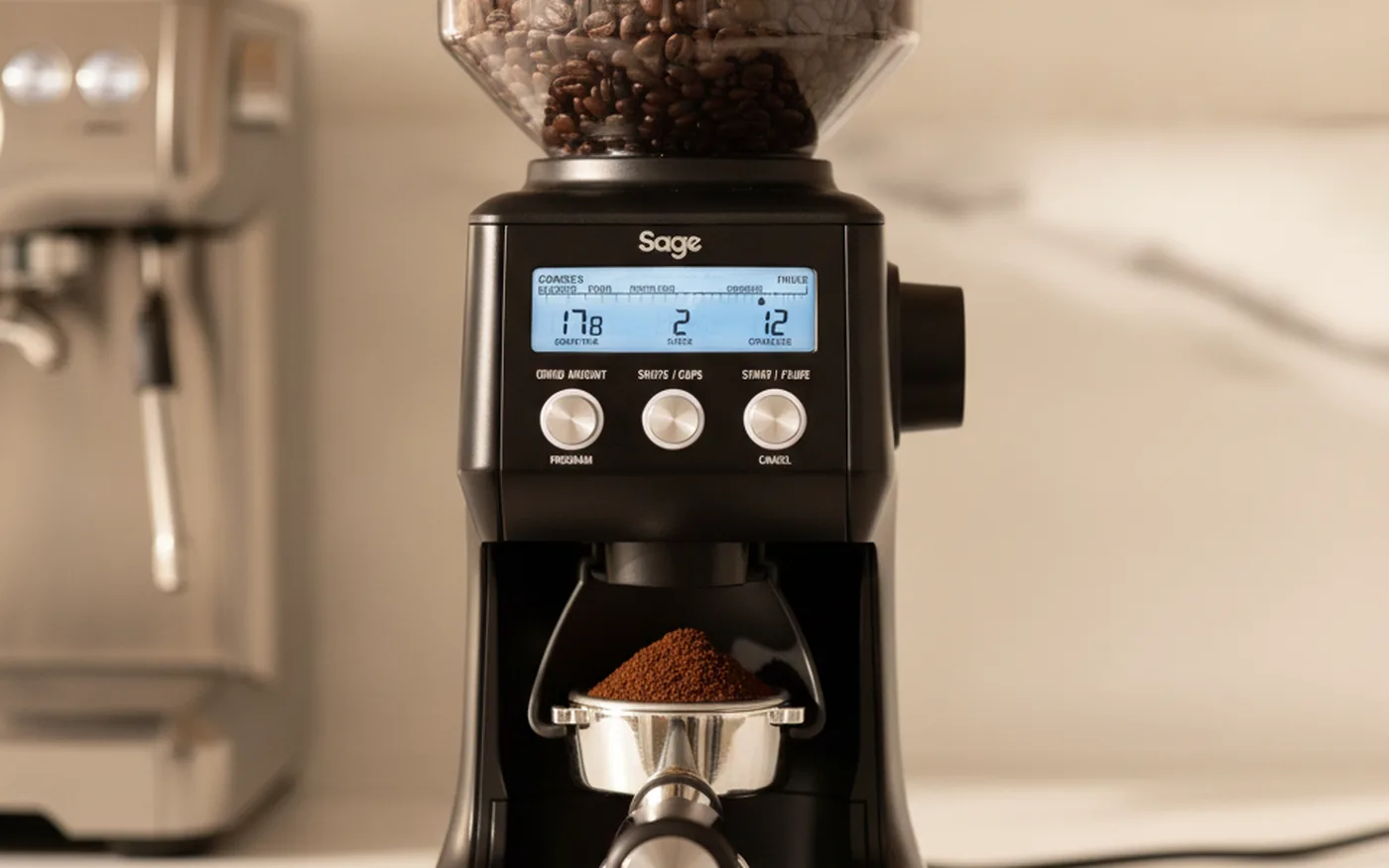
I have recommended the Sage Smart Grinder Pro to more people new to home espresso than any other grinder. Not because it is the best grinder on this list - it is not - but because it solves the problems a beginner actually has: easy grind adjustment, clear dose display, no hopper to fill by weight, and a brand ecosystem that means your local John Lewis or Currys will have it in stock.
The 40mm conical burrs are adequate for espresso. Shot time variance is higher than the Specialita or the Niche Zero, but it is consistent enough that a beginner will not know the difference. The digital dose timer is convenient for workflow. The 60-setting stepped adjustment covers espresso to French press without much difficulty.
Where it shows its limits: After six to twelve months of daily espresso making, you will start to notice the ceiling. The stepped adjustment does not allow the fine-tuning that well-designed burrs require to hit peak extraction. Retention of 0.5-0.8g means that hopper-loading becomes part of the workflow. None of this is a problem at the beginning. It becomes one later.
The pairing argument: If you own a Sage Bambino, Bambino Plus, or Barista Express, the Smart Grinder Pro is a natural pairing because both products sit in the same ecosystem and workflow language. If you own a Gaggia Classic Pro, skip the Sage and go directly to the Eureka Mignon Specialita - it is a better match for that machine's extraction capability. Our guide to best Sage espresso machines covers which Sage machine pairs best with which grinder.
Retailers: Sage official (around £175, sageappliances.com), Amazon UK (around £175), John Lewis (around £175), Currys (around £175)
8. 1Zpresso K-Ultra - Best Manual Burr Grinder
“The 1Zpresso K-Ultra is the manual grinder that makes a genuine case against electric grinders under £200. For filter brewing especially, you will not miss the motor.”
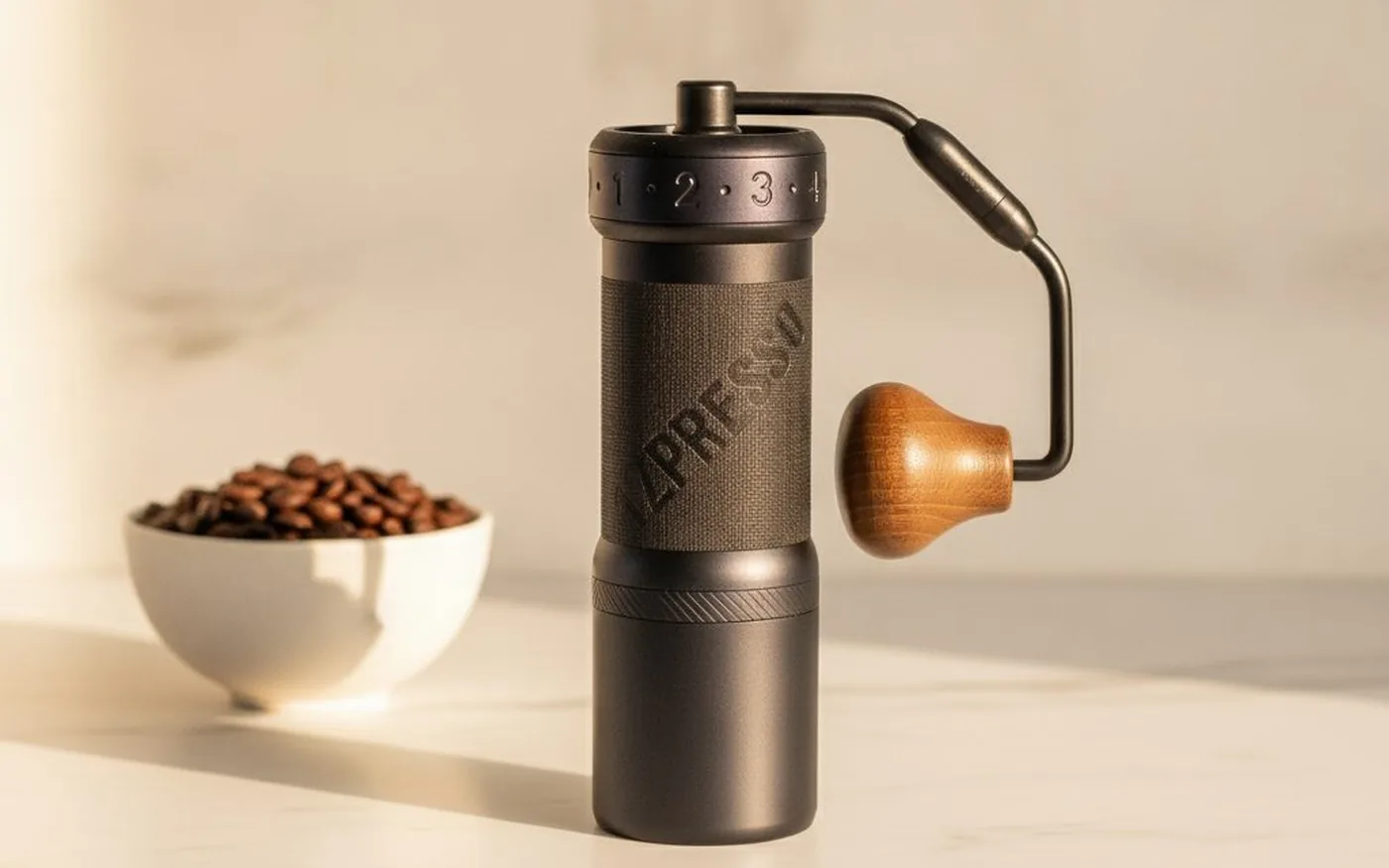
The question people ask about manual grinders is always the same: is it fast enough for espresso? The 1Zpresso K-Ultra answers it in around 60-90 seconds per 18g dose with the external adjustment ring set to espresso. That is longer than an electric grinder. Whether it matters depends entirely on your morning routine.
In testing, the K-Ultra produced espresso shots that were indistinguishable from the Baratza Encore ESP in blind tasting. The 48mm stainless steel conical burrs produce a clean particle distribution across the full grind range. For filter brewing, the K-Ultra's retention of 0.0-0.1g (near zero) means you get every gram you put in, which matters more for single-origin pour over work than for espresso.
Who the K-Ultra is for: Buyers who travel frequently and want cafe-quality brewing on the road. Buyers who prefer the slower, more deliberate ritual of manual grinding. Buyers who want the best grind quality under £200 without a motor. If you grind espresso for two people at home every morning, the manual workflow adds around three minutes to your routine. For one person, it is closer to ninety seconds. Decide accordingly.
Availability note: 1Zpresso grinders were harder to source in the UK in 2023-24. As of 2026, they are readily available through Bella Barista and Roast & Post with standard delivery times.
Retailers: Bella Barista (around £195, bellabarista.co.uk), Roast & Post (roastandpost.com), Amazon UK
9. Comandante C40 MK4 - Best Premium Manual Grinder
“The Comandante C40 MK4 is the benchmark for manual filter grinding. German engineering, heirloom build quality, and a grind consistency that rivals electric grinders twice its price for pour over work.”
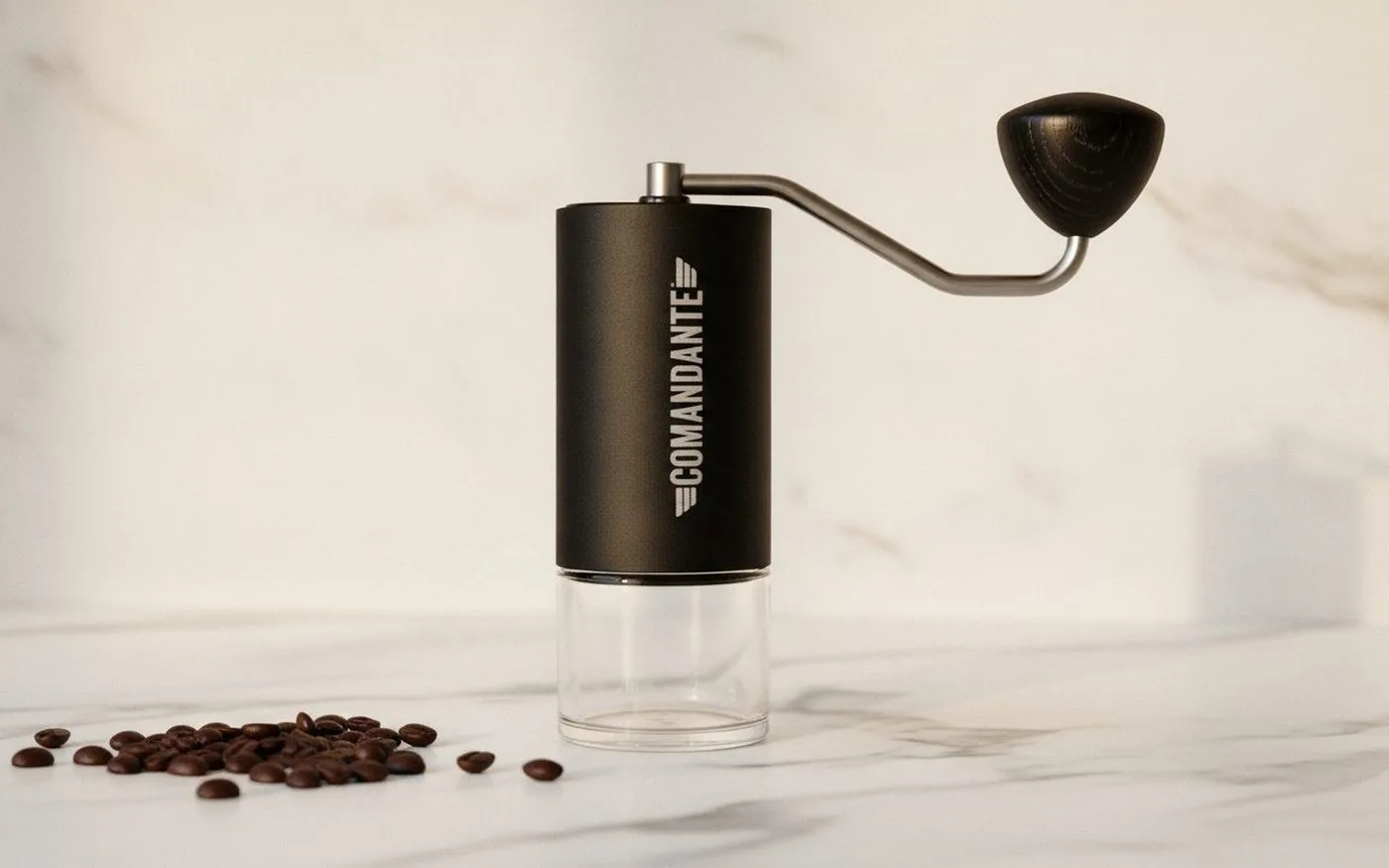
The Comandante C40 MK4 is the grinder that specialty cafe owners and barista competition competitors take on the road. That is not a coincidence. The high-nitrogen stainless steel burrs produce a particle distribution that, for filter brewing, is genuinely competitive with flat burr electric grinders at three or four times the price.
In our testing, the C40 MK4 required around 40-50 rotations per 20g dose for V60, which takes around 90 seconds at a relaxed pace. Retention was 0.0g across every session - everything you put in comes out. For light-roast Ethiopian pour over work, the resulting cup was clean, bright, and consistent.
The honest pricing conversation: At around £280, the C40 MK4 costs more than the Baratza Encore ESP and approaches the Wilfa Svart Uniform+. For filter-only brewing, the Wilfa produces comparable quality. The C40 MK4's advantage is portability, build longevity, and the satisfaction of a mechanical object that will outlast any electric grinder at this price. It is the right buy if those things matter to you.
Retailers: Bella Barista (around £280, bellabarista.co.uk), Has Bean (hasbean.co.uk), Amazon UK
10. Fellow Opus - Best Modern All-Rounder
“The Fellow Opus is the grinder for people who care about how their kitchen looks and still want genuine performance. It is not the best on this list by pure grind quality metrics.”
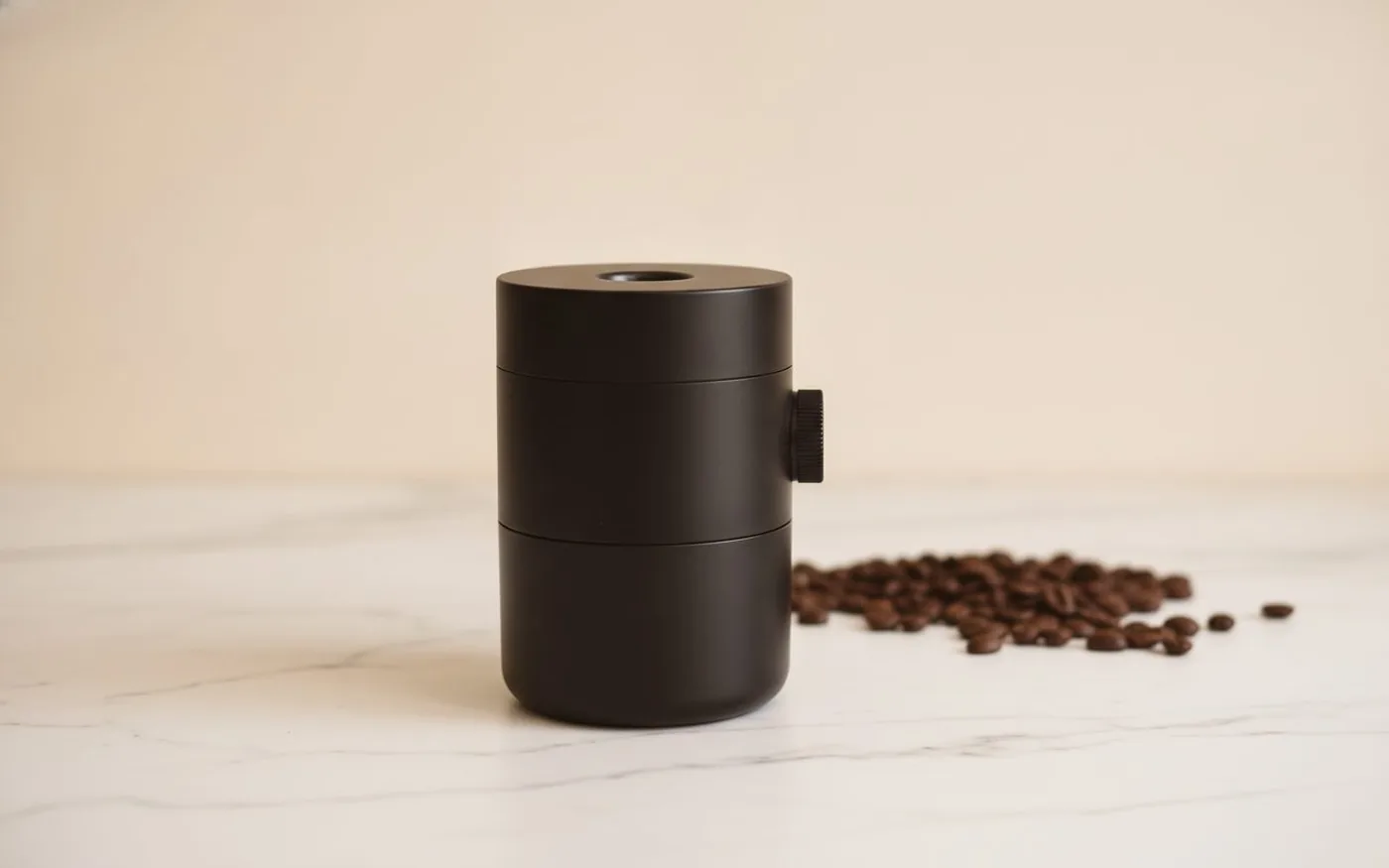
Fellow makes beautiful objects. The Opus is no exception - the cast metal construction and deliberate minimalist aesthetic make it the best-looking grinder on this list by a significant margin. Fellow have also updated the firmware post-launch to improve grind consistency, which addresses the main criticism the Opus received at launch.
In testing, retention averaged 0.4g. The 40mm conical burrs cover espresso and filter adequately, though the stepped adjustment (full grind range in 41 steps) is not as precise as the Eureka Mignon Specialita for espresso dial-in. For filter brewing, it is comparable to the Baratza Encore ESP in extraction quality.
The honest positioning: The Fellow Opus is not the highest-performing grinder at its price point. The Baratza Encore ESP is cheaper and matches it on filter quality. The Eureka Mignon Specialita costs more but significantly outperforms it for espresso. The Opus sits in the middle: better looking than either, performing competently at both brewing methods. If the aesthetics of your kitchen setup matter to you and you want one grinder that covers everything without specialist-grade extraction, the Opus earns its place.
Retailers: Fellow Products direct (around £200, fellowproducts.com), Bella Barista (bellabarista.co.uk), Amazon UK
Conical vs Flat Burrs: What Actually Matters in the Cup
The conical vs flat burr grinder debate runs longer on r/espresso than almost any other topic. The honest answer is more straightforward than the forums suggest.
Conical burrs use a cone-shaped central burr rotating inside a funnel-shaped outer burr. The beans pass through a longer grinding path and experience multiple impacts. The result is a wider particle size distribution - a mix of sizes ranging from very fine (fines) to coarser particles. For espresso, fines contribute to resistance and crema. For filter, fines accelerate extraction and can produce bitterness if overdeveloped.
Flat burrs use two parallel disc-shaped burrs rotating in opposite directions. Beans are ground once as they pass between the discs. The result is a tighter particle size distribution - most particles are close to the target size with fewer fines. For espresso, this means more predictable extraction and easier dial-in. For filter, tighter distribution produces a cleaner cup with less bitterness. The science behind this is documented in detail at Coffee Ad Astra, Jonathan Gagné's research blog on coffee physics.
What the research actually shows: Barista Hustle's particle distribution studies and Lance Hedrick's 2025 burr comparison testing both point in the same direction: flat burrs produce a tighter distribution that suits filter; conical burrs produce a wider distribution that can suit espresso (the fines help extraction at high pressure). But the gap at home espresso volumes is smaller than the internet implies. A well-calibrated Niche Zero (conical) produces excellent espresso. A well-calibrated Specialita (flat) produces excellent filter coffee. The difference becomes relevant when you are trying to maximise extraction quality at competition level, not in a home kitchen.
The practical answer: If you brew exclusively filter, favour flat burrs (Wilfa Svart Uniform+, Mahlkonig X54 Home). If you brew exclusively espresso, either works well but flat burrs make dial-in easier (Eureka Mignon Specialita). If you brew both, a high-quality conical grinder (Niche Zero) handles both competently.
Steel vs Ceramic vs Titanium-Coated Burrs
Most home grinders use steel burrs (stainless or high-nitrogen steel). Ceramic burrs appear in some manual grinders. Titanium-coated burrs are a marketing tier on some mid-range electric grinders.
Steel burrs are the professional standard. Mahlkonig, Eureka, Baratza, Niche Zero, DF64, and Fellow all use steel. They are sharp, consistent, and long-lasting when maintained. The type of steel matters - high-nitrogen stainless (Comandante) resists oxidation better than standard stainless.
Ceramic burrs run cooler (no heat conductivity) and resist corrosion completely. They appear in some Hario and Porlex manual grinders. The trade is brittleness - ceramic chips if it contacts a stone in the bean. For home grinders using commercial coffee, this rarely happens. For grinders used with natural-process or unwashed coffees where pebble contamination is a risk, steel is safer.
Titanium-coated burrs are a finishing treatment, not a burr material. The coating adds surface hardness and corrosion resistance. It does not meaningfully change extraction quality. When you see titanium coating marketed as a premium feature, treat it as a cosmetic upgrade, not a performance one.
For home use: buy steel. The discussion about ceramic and titanium coating only matters if you are grinding 30+ kilograms per week.
Grind Size Guide: From Turkish to French Press
Different brewing methods require different particle sizes. The table below uses approximate click positions for the grinders above and descriptive guidance for stepless grinders.
| Brew Method | Particle Size | Specialita Setting | Encore ESP Setting | SGP Setting |
|---|---|---|---|---|
| Turkish / Ibrik | Very fine (flour-like) | Steps 1-3 | Steps 1-3 | Settings 1-3 |
| Espresso | Fine (table salt) | Steps 4-8 | Steps 4-8 + micro | Settings 4-8 |
| AeroPress (espresso-style) | Fine-medium | Steps 8-12 | Steps 8-12 | Settings 9-12 |
| Moka pot | Medium-fine (caster sugar) | Steps 12-16 | Steps 12-16 | Settings 12-16 |
| Pour over / V60 | Medium (sea salt) | Steps 20-28 | Steps 20-28 | Settings 18-24 |
| Chemex / Orea | Medium-coarse | Steps 28-34 | Steps 28-34 | Settings 24-30 |
| Cafetiere / French press | Coarse (kosher salt) | Steps 34-40 | Steps 36-40 | Settings 30-40 |
| Cold brew | Very coarse | Steps 40+ | Steps 40+ | Settings 38-40 |
The Specialty Coffee Association Brewing Control Chart provides the extraction yield and TDS targets that underpin these grind size recommendations. The home-barista.com forums have extensive community documentation on applying this to specific grinders and brewing setups. For pour over specifically, aim for 18-22% extraction yield in the finished cup - the grind size table above gets you into that range, but your specific water temperature and pour technique will require adjustment.
For espresso, the 1:2 ratio rule (18g in, 36g out in 27-30 seconds) is the starting target. If your shot is running fast and tastes sour, grind finer. If it is running slow and tastes bitter, grind coarser. The grinder's job is to give you consistent particles; the adjustment dial's job is to match the resistance to your beans' roast level.
What to Avoid: Blade Grinders, Cheap Dosers, and Plastic Burrs
Blade grinders: A blade grinder does not grind coffee - it pulverises it. The spinning blade strikes beans randomly, producing a chaotic mix of fine dust and large chunks. The result in the cup is over-extracted bitterness from the fines and under-extracted sourness from the large pieces, simultaneously. No adjustment, no consistency, no improvement. Any burr grinder on this list - including the Baratza Encore ESP at around £140 - produces a measurably better cup than the best blade grinder made.
Cheap dosing grinders: Grinders that dispense directly into a portafilter via a dosing chamber retain several grams of stale coffee between sessions. The stale grind from the last use contaminates the next dose. If you see a grinder with a large spinning dosing chamber at the bottom, it is a commercial design adapted (not very well) for home use. Avoid.
Plastic burr carriers: Some budget grinders use plastic to hold the burrs in alignment. At operating temperatures, plastic expands slightly, which shifts the burr gap and introduces shot-to-shot inconsistency. The Krups GX422 and similar sub-£80 coffee grinders suffer from this. The Baratza Encore ESP, at the bottom of our list, uses properly machined components. Spend the extra money.
The Hario Skerton: A widely recommended manual grinder that has now been superseded. The Skerton Pro added a stabilisation ring, but the particle distribution is less consistent than the 1Zpresso K-Ultra at around the same price. If you already own a Skerton, use it. If you are buying new, the 1Zpresso K-Ultra is the better starting point.
What We Learned from Testing
For the past several months, I have been testing burr grinders for this article across a range of brewing methods. The lesson that surprised me most was how little the conical versus flat burr argument matters in practice for home use - and how much the retention design matters.
I spent five and a half years inside Sanremo UK, the espresso machine manufacturer. The conversations I had there with the Sanremo SWAT team - including people who had competed at the World Barista Championship level - were about extraction science at commercial volumes. At 15-20 kilograms a day through a single grinder, the engineering variables matter enormously. At home volumes, the variables that matter change.
The single most impactful decision you can make at home is eliminating stale coffee from your workflow. That means buying whole beans, grinding fresh, and using a grinder with low retention so that the grind from yesterday does not contaminate today's dose. The Niche Zero, the DF64 Gen 2, and both manual grinders on this list achieve this. The grinders with hoppers and dosing chambers do not.
The second lesson: dial-in time compounds. A grinder that takes 20 minutes to find a stable espresso shot every time you open a new bag costs you hours across a year of daily use. A stepless grinder cuts that to four or five minutes. That is worth paying for.
“I have owned a Niche Zero since 2021 and still reach for it first, despite testing grinders at every price point above it. For one to four shots a day, zero retention and a five-minute dial-in make it the most practical grinder I have ever owned.”
If you are thinking about which beans to start calibrating with, take a look at our guide to the best healthy coffee beans uk - it covers what to look for in a specialty bean and which sourcing practices affect the cup. For buyers still deciding between a grinder-first setup and a pod machine, the best coffee pods guide is worth reading before you commit.
Full Comparison Table: Best Burr Coffee Grinders
| Grinder | Burr Type | Burr Size | Price | Retention | Dose Range | Adjustment | Best For |
|---|---|---|---|---|---|---|---|
| Niche Zero | Conical | 63mm | from £549 | 0.1-0.2g | 2-25g | Stepless | Overall |
| Eureka Mignon Specialita | Flat | 55mm | around £380 | 0.3-0.6g | 7-25g | Stepless | Espresso |
| Wilfa Svart Uniform+ | Flat | 58mm | around £350 | 0.2-0.4g | 10-30g | Stepped (41) | Filter |
| Baratza Encore ESP | Conical | 40mm | around £140 | 0.5-1.0g | 5-22g | Stepped + micro | Budget |
| Mahlkonig X54 Home | Flat | 54mm | from £499 | 0.2-0.3g | 7-25g | Stepless | Premium |
| DF64 Gen 2 | Flat | 64mm | around £420 | 0.1-0.3g | 4-20g | Stepless | Single-dose |
| Sage Smart Grinder Pro | Conical | 40mm | around £175 | 0.5-0.8g | 7-22g | Stepped (60) | Beginners |
| 1Zpresso K-Ultra | Conical | 48mm | around £195 | 0.0-0.1g | 8-20g | Stepped (external) | Manual |
| Comandante C40 MK4 | Conical | 38.5mm | around £280 | 0.0g | 10-25g | Stepped (click) | Premium manual |
| Fellow Opus | Conical | 40mm | around £200 | 0.3-0.6g | 5-22g | Stepped (41) | Design-led |
Final Verdict
The best burr coffee grinder is the one that matches your actual brewing habit, not the one with the best specs on paper.
If you make espresso and filter and want one grinder to do both: Niche Zero. Zero retention, stepless, precise. Worth the money if you will use it daily.
If you make espresso daily and want the most consistent shot under £400: Eureka Mignon Specialita. The de facto upgrade from any Sage or entry grinder.
If you make filter coffee and want flat burr precision without paying for a Mahlkonig: Wilfa Svart Uniform+. It will outlast most electric grinders at this price.
If you are buying your first burr grinder and need to stay under £150: Baratza Encore ESP. The honest starting point. Not the destination.
If you want the best manual grinder for daily use: 1Zpresso K-Ultra. The workflow is slower than electric. The cup quality is not.
For a deeper look at what machine to pair your grinder with, our guide to best Sage espresso machines covers the full Sage ecosystem. If you are brewing filter at home and want to explore what your grinder can do with a good pour over setup, the guide to the best French press and best moka pot cover those methods in detail.
Frequently Asked Questions
Is a burr grinder worth it for home coffee?
Yes. A burr grinder produces consistent particle sizes that allow even extraction. Blade grinders produce a chaotic mix - over-extracted fines and under-extracted chunks in the same cup. The Baratza Encore ESP at around £140 is the realistic entry point. At that price, the improvement over any blade grinder is immediate and significant.
What is the best type of burr grinder for espresso?
For espresso, flat burrs make dial-in more predictable - the Eureka Mignon Specialita is the best option under £400. High-quality conical burrs also work well: the Niche Zero handles espresso exceptionally. The key variable is adjustment precision. Stepless adjustment matters more for espresso than burr shape does.
How long does a burr grinder last?
A well-maintained burr grinder lasts 10-15 years at home volumes. Burr replacement becomes relevant after 500-800 kilograms of coffee - at one to two bags per week, that is roughly a decade. Baratza and Eureka stock replacement parts for current and older models. Check parts availability before you buy.
Are expensive burr grinders actually worth the money?
It depends on your starting point. Moving from a blade grinder to an Encore ESP is the most impactful upgrade in home coffee. Moving from the Encore ESP to the Eureka Mignon Specialita produces a noticeable espresso improvement. Moving from the Specialita to the Mahlkonig X54 Home is only worth it at higher volumes or competition-level standards.
Can you use a manual burr grinder for espresso?
Yes, with the right grinder. The 1Zpresso K-Ultra dials in for espresso reliably with its 48mm stainless burrs and external adjustment. The trade is time: grinding 18g takes 60-90 seconds by hand versus 5-10 seconds on an electric. For one shot in a relaxed morning routine, that is entirely practical.
What grind size do I need for espresso vs filter coffee?
Espresso needs a fine grind, roughly fine table salt texture. Target 18g in, 36g out in 27-30 seconds. Pour over needs medium to medium-coarse, like sea salt. Cafetiere needs coarse, like kosher salt. Lighter roasts need finer grinding than dark roasts. Sour means grind coarser; bitter means grind finer.
Are conical or flat burrs better for home use?
Neither is universally better. Flat burrs produce a tighter distribution that suits filter brewing and makes espresso dial-in more predictable. Conical burrs produce a wider distribution that works well across multiple brewing methods. For home volumes of one to six shots per day, the difference in the cup is smaller than the internet debate suggests.
How often should I clean my burr grinder?
At home volumes, a full clean every four to six weeks is sufficient. Remove the top burr carrier, brush out fines and coffee oils, reassemble. Empty hoppers every two weeks to prevent rancid oil buildup. Urnex Grindz tablets handle between-clean maintenance without disassembly. Monthly cleaning is part of the ownership experience at every price point on this list.
What is the best budget burr grinder under £150?
The Baratza Encore ESP is the best burr grinder under £150 in the UK. Launched in 2022, its ESP variant adds a micro-adjustment ring that extends the stepped grind range into genuine espresso territory. In our testing, retention averaged 0.7g across 10 doses, higher than pricier grinders, but that has no practical impact if you grind one coffee at a time.
What is the best burr grinder for pour over and filter coffee?
The Wilfa Svart Uniform+ is the best burr grinder for pour over and filter coffee at its price point. Designed with 2004 World Barista Champion Tim Wendelboe, its 58mm flat burrs and magnetic retention system produce a tighter, more bimodal particle distribution than the Niche Zero for V60 brewing. In our testing, retention averaged 0.3g, and the 41-step adjustment covers the full filter range with precision.
A wellness entrepreneur and biohacker, James explores the intersection of hospitality and health - from clean fuel and recovery tools to mindful routines that build balance into daily life.