SiS Creatine Review UK 2026: Science in Sport Tested by a Nutritionist
Hands-on nutritionist verdict on Science in Sport: dose, sourcing, taste and whether it earns its price.
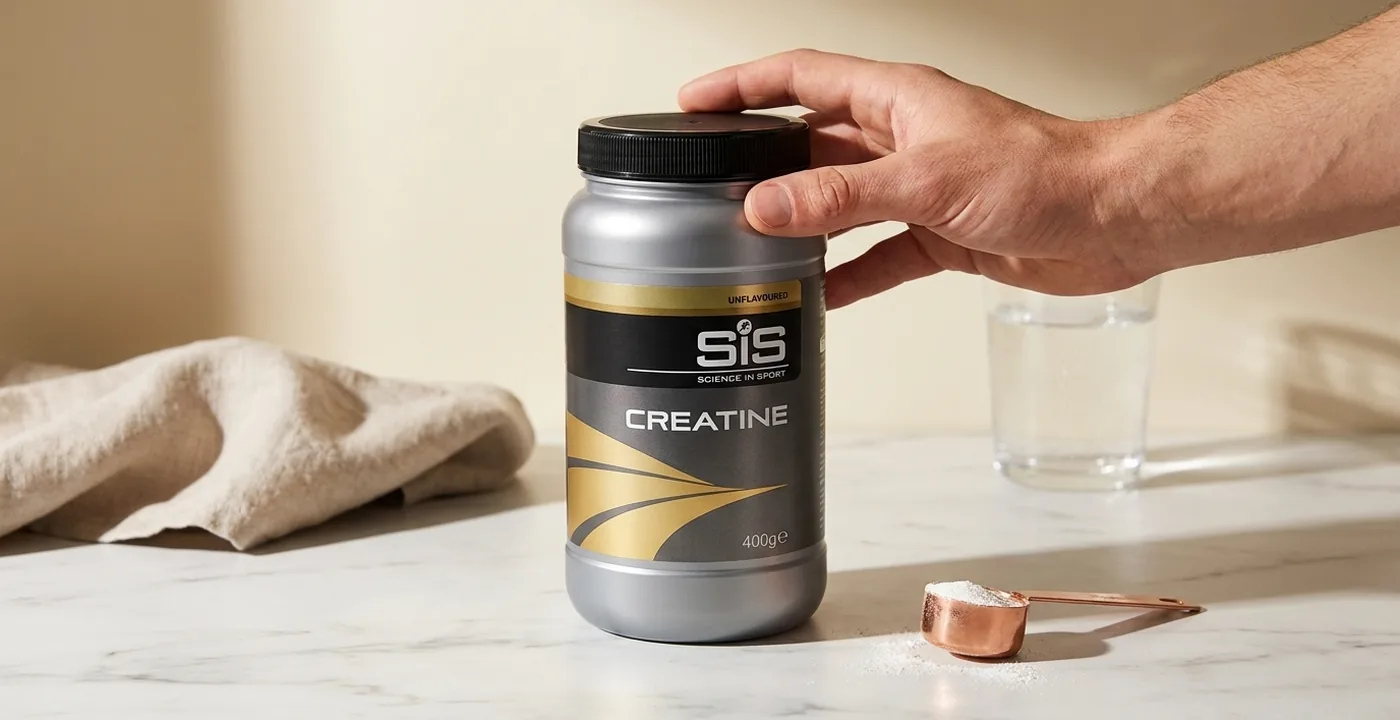
Table of Contents
Some of the links in this article are affiliate links, which help fund our independent review work at no extra cost to you. Every recommendation is based on hands-on testing through The Editor Lab methodology. No brand pays to appear, and no placement is guaranteed.
Science in Sport creatine monohydrate is a product I would reach for in clinic without needing to justify the choice. The dose is correct, the form is correct, and it carries Informed Sport certification - the three things that separate a supplement worth recommending from one that is not. This SiS creatine review explains what those certifications mean in practice, where the brand earns its premium, and the one scenario where a plain-tub monohydrate saves you money without sacrificing results.
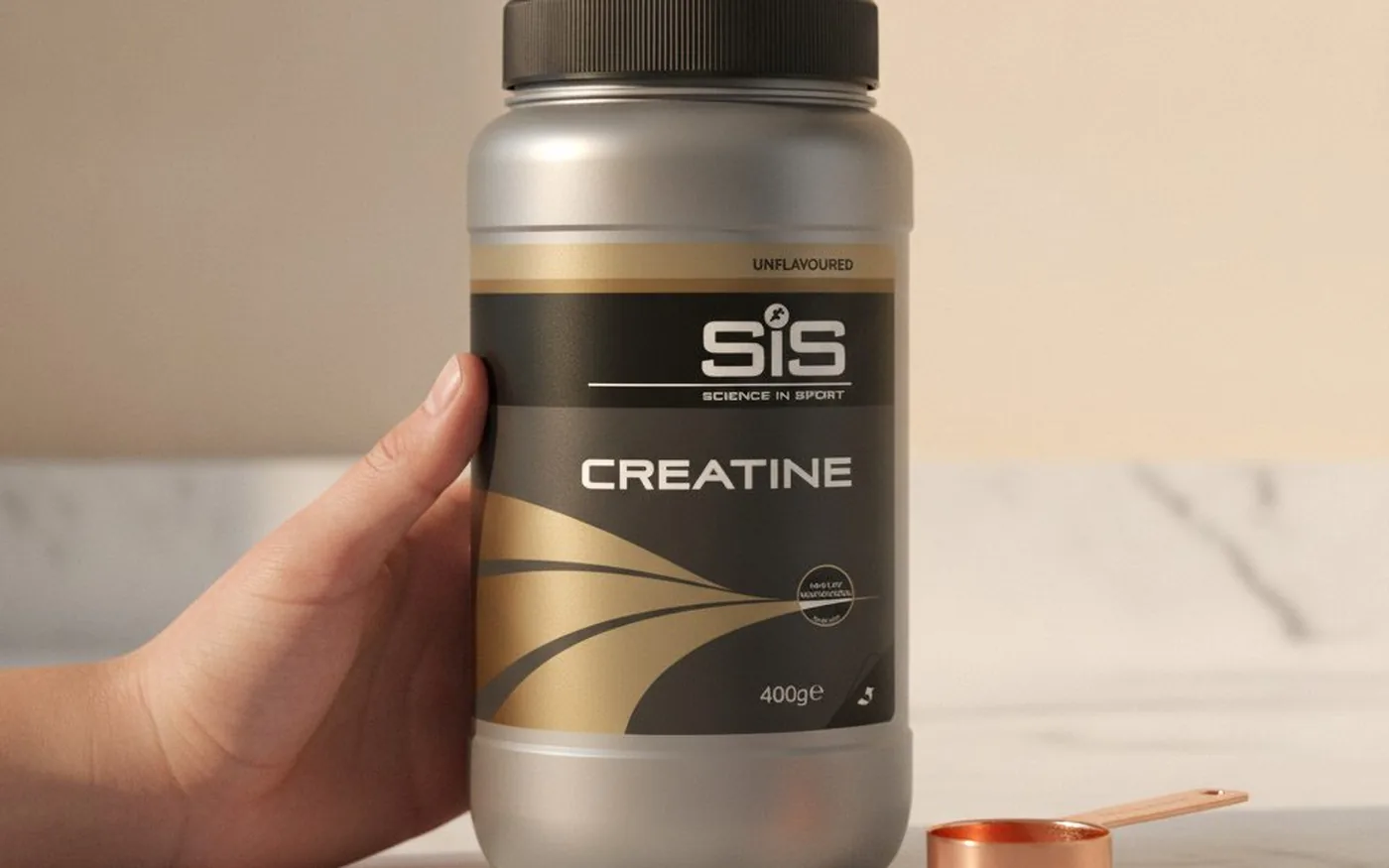
Science in Sport (SiS) is a UK sports nutrition brand with a long track record in professional cycling and athletics. Their creatine monohydrate product - 400g, unflavoured, 133 servings at 3g per serving - sits within a range designed for serious athletes and recreational gym-goers alike.
Clemmie Rose is a qualified nutritional therapist with clinical training from CNM, who has led nutrition clinics at the Kyros Project at Google DeepMind. Her reviews focus on dose accuracy, third-party testing credentials, and what the clinical evidence actually supports. In clinic, she regularly sees endurance runners and recreational gym-goers asking about creatine for the first time - the most common sticking point is whether the dose on the label is actually enough to work.
Is Science in Sport creatine worth buying? Yes, for athletes training in a tested sport or for anyone who wants a verified-clean product. The Informed Sport certification is meaningful, and the price per serving is reasonable at around £0.17. The 3g dose sits at the lower end of the evidence-supported 3-5g maintenance range - it is within the studied window, but not the standard 5g maintenance dose most protocols recommend. The premium over own-brand monohydrate is justified if batch-tested certification matters to you. If it does not - if you are a recreational gym-goer with no sport-testing requirement - a plain monohydrate from a reputable bulk supplier costs less for a higher-dose product.
Science in Sport Creatine: The Verdict
Science in Sport creatine monohydrate delivers 3g per serving of pure creatine monohydrate. The evidence-supported maintenance range is 3-5g per day, so 3g is within the studied window - but it is at the lower end, not the standard 5g dose most protocols recommend. Users who want to saturate at the upper end of that range will need to take a larger serving or accept a longer saturation timeline. What differentiates this product is Informed Sport batch-testing certification, which means every batch is tested for substances banned by the World Anti-Doping Agency (WADA). That matters to competitive athletes, and it matters to anyone who wants to know their supplement has been independently verified rather than just self-declared clean.
Overall score: 8/10
| Evaluation Criteria | Our Findings |
|---|---|
| Dose accuracy | 3g creatine monohydrate per serving - within the 3-5g evidence range, but at the lower end; not the standard 5g maintenance dose |
| Form | Pure creatine monohydrate - the only form with an ISSN-endorsed evidence base |
| Third-party testing | Informed Sport certified - WADA-screened, batch-tested |
| Mixability | Dissolves adequately in water; expect minor grittiness at room temperature |
| Price per serving | Around £0.17 per 3g serving (based on £23/133 servings per 400g tub) |
| Value vs alternatives | Premium justified for tested athletes; dose trade-off vs standard 5g products worth factoring |
Who it is for: Competitive athletes in tested sports; gym-goers who want verified-clean certification; anyone buying from a brand whose third-party testing claim they can verify.
Who should buy cheaper: Recreational gym-goers with no testing requirement, anyone buying in bulk who is comfortable with a brand that does not carry batch-testing certification but sources pure monohydrate.
How We Rated It
The scoring rubric for this review is based on the five factors a nutritional therapist uses when recommending a creatine supplement:
- Dose: Does the product deliver a dose within the clinically studied 3-5g daily maintenance range? Is it at the standard 5g, or at the lower end?
- Form: Is it creatine monohydrate? Other forms (HCL, ethyl ester, buffered creatine) carry weaker evidence.
- Third-party testing: Has the product been independently tested by a recognised body - Informed Sport, NSF Certified for Sport, or Labdoor?
- Taste and mixability: Creatine monohydrate is not designed to taste of anything. The question is whether it mixes cleanly enough that daily use does not become a chore.
- Price and value: Price per serving versus verified alternatives, accounting for serving size. Not price per tub.
This is a nutritional verdict, not a marketing audit. Brand partnerships, ambassador endorsements, and packaging design do not feature in the scoring.
Dose and Form
The clinical evidence for creatine is among the most robust in sports nutrition. The International Society of Sports Nutrition (ISSN) has published a position stand confirming that creatine monohydrate is safe and effective for increasing muscle creatine stores, improving high-intensity exercise performance, and supporting lean mass during resistance training. The EFSA has assessed creatine and found the evidence sufficient to support a health claim for strength athletes.
The operative dose from the evidence base is 3-5g per day as a maintenance dose, following an optional loading phase of 20g per day for five to seven days. Science in Sport creatine delivers 3g per serving - the lower end of that maintenance range. It is within the studied window, and most users will see the expected creatine benefits at 3g with consistent daily use. However, research protocols most commonly use 5g for maintenance, and users wanting to match that standard dose will need to take a larger serving. This is a genuine trade-off worth knowing before you buy.
The form matters as much as the dose. Creatine monohydrate vs HCL is a comparison worth understanding if you are undecided on form: monohydrate is the only form with a peer-reviewed, replicated evidence base from independent research. HCL is marketed as more soluble and easier on digestion, but the comparative evidence does not show superior efficacy at lower doses. For the purposes of creatine supplementation, monohydrate is the default recommendation in nutritional therapy practice.
Science in Sport uses creatine monohydrate. There is nothing exotic in the formulation - and that is the correct decision. The evidence cluster around the best creatine monohydrate form, not derivative forms. A product that includes novel forms or proprietary blends is adding complexity without adding benefit.
On weight gain: Creatine increases intramuscular water retention during the first one to two weeks of supplementation. This is not fat gain - it is a physiological response to elevated muscle creatine stores drawing water into the cell. A scale increase of one to two kilograms in the first two weeks is normal and not a reason to stop. The water weight stabilises; the performance and strength gains persist.
Contraindications: Individuals with pre-existing kidney disease should consult a doctor before using creatine. The NHS notes that kidney disease can be affected by high-protein and supplement intake, and creatine may cause the kidney biomarker creatinine to appear elevated in blood tests - this is a metabolic artifact of creatine supplementation, not evidence of kidney damage in healthy individuals. Healthy adults without pre-existing kidney conditions have no documented long-term safety concern from creatine at the studied maintenance doses.
Sourcing and Third-Party Testing
Informed Sport is the most recognised batch-testing certification for sports supplements in the UK. Every batch of a certified product is tested against the WADA prohibited substances list before it reaches consumers. This is not a one-time facility audit - it is batch-level verification. A batch that fails does not ship.
Science in Sport creatine monohydrate carries Informed Sport certification. You can verify this directly on the Informed Sport database by searching the product name - the certification is product- and batch-specific, not blanket brand certification.
This is the part of the review that answers a question many SiS creatine reviews do not address: why pay more than own-brand monohydrate? The answer is the testing. If you compete in a sport under WADA or UK Anti-Doping jurisdiction, you carry the burden of strict liability - you are responsible for what you consume, regardless of what the label says. Informed Sport certification reduces that risk. It does not eliminate it entirely, but it is the most credible mitigation available on the consumer supplement market.
If you do not compete in a tested sport, the certification has a different value: it confirms the product contains what the label claims. Supplement adulteration - products containing undisclosed ingredients or incorrect doses - is a documented problem in the UK market. Informed Sport certification addresses both risks.
On sourcing: Science in Sport does not publish the geographic origin of their raw creatine monohydrate. This is common across the market - the supply chain for creatine monohydrate is heavily concentrated in a small number of global producers, primarily in Germany and China. The Informed Sport certification is the practical verification mechanism available to consumers. Sourcing provenance in the absence of third-party testing is a marketing claim; third-party testing in the absence of sourcing detail is a meaningful quality signal.
Taste, Mixability, and Everyday Use
Creatine monohydrate does not taste of anything meaningful. The question is texture and dissolution, not flavour profile.
Science in Sport creatine monohydrate is unflavoured. In cold water at room temperature, it partially dissolves - there is residual grittiness, particularly as you approach the bottom of the glass. This is standard behaviour for creatine monohydrate. The compound has limited water solubility at low temperatures; the particle size and source affect how pronounced this is.
Mixing tip that works: dissolve in a small amount of warm water first (not hot - excessive heat may degrade the compound over time), then top with cold water or juice. Alternatively, add it to a protein shake or morning smoothie where the blending process breaks up the particles. This is not a product limitation specific to SiS - it applies to creatine monohydrate universally.
If the grittiness is a genuine barrier to daily compliance - and compliance is the variable that determines whether creatine works - consider whether a flavoured creatine product, or a different delivery method, would serve you better. Best creatine for women is a useful reference if you are looking at formulations designed specifically around tolerance and compliance preferences.
The everyday use case for this product is straightforward: one scoop into whatever you are already drinking, once per day, preferably around your training window. There is no meaningful timing advantage for creatine that requires a dedicated protocol - consistency over weeks and months is what produces saturated muscle creatine stores, not the specific minute you consume it.
Price and Value vs Alternatives
Science in Sport creatine monohydrate is priced at around £23 for 400g (133 servings at 3g each). That works out to approximately £0.17 per 3g serving.
For context, the bulk monohydrate market in the UK sits at around £0.10-0.15 per serving for unflavoured, unbranded product from reputable bulk suppliers - though those products typically deliver 5g per serving. On a cost-per-gram basis, the gap narrows: SiS at 3g/serving works out to around £0.056 per gram versus bulk at around £0.02-0.03 per gram. The SiS premium reflects the Informed Sport certification, not just a better value-per-gram equation.
The question is whether that premium is justified. The honest answer depends entirely on your reason for buying:
- Pay the premium if: you compete in a tested sport under WADA/UKAD jurisdiction; you want batch-tested, verified-clean certification from a recognised third party; you value a UK brand with a documented track record in professional sport; you are buying for a young or elite athlete where contamination risk matters.
- Save and buy bulk if: you are a recreational gym-goer with no testing requirement; you are comfortable choosing a reputable bulk supplier whose sourcing and quality controls you can research independently; your primary metric is cost-per-gram of creatine monohydrate, and batch-level WADA testing is not a requirement.
The comparison is not between Science in Sport and a low-quality product. It is between Science in Sport and a well-regarded bulk supplier selling the same compound at a lower price. The difference is the testing layer and the brand accountability that comes with it.
Pros and Cons

- Pro: Informed Sport certified - WADA-screened batch testing
- Pro: 3g dose within the evidence-supported maintenance range
- Pro: Unflavoured - no artificial sweeteners or flavouring agents
- Pro: 133 servings per tub (over 19 weeks of daily use at 3g/day)
- Pro: Established UK brand with documented professional sport usage
- Pro: Clear, verifiable certification - searchable on the Informed Sport database
- Con: 3g per serving is below the standard 5g maintenance dose used in most research protocols; users wanting 5g will use 1.67 scoops per day
- Con: Price premium over bulk monohydrate is significant if Informed Sport certification is not a requirement
- Con: Standard creatine monohydrate grittiness in cold water
- Con: No sourcing transparency beyond the Informed Sport certification
- Con: Unflavoured only - no flavoured product options
What to Avoid
Creatine myths that cost money or undermine compliance:
Loading is not mandatory. A five to seven day loading phase (20g/day) saturates muscle creatine stores faster, but starting at 3-5g/day produces the same saturation within three to four weeks. If the loading phase causes digestive discomfort - common at 20g/day - skip it. Results are identical at a longer horizon.
Do not pay a premium for flavour if you have an Informed Sport requirement. Flavoured creatine products often carry a higher price per serving for the same base compound. If you need the Informed Sport certification, confirm it applies to the specific product SKU, not just the brand.
Do not confuse proprietary blends with superior efficacy. Creatine HCL, kre-alkalyn, and buffered forms are marketed as more effective or gentler than monohydrate. The independent evidence does not support superior efficacy for any alternative form. The ISSN position stand supports monohydrate specifically. Paying more for a novel form is paying more for marketing.
Do not use an unverified discount code. Science in Sport runs promotional codes through their website and newsletter. Do not use codes from third-party aggregation sites - these are frequently expired or invalid. Check the Science in Sport website directly for current offers.
For a broader look at the functional morning stack, best lions mane coffee uk covers how cognitive adaptogens pair with your pre-workout routine.
Frequently Asked Questions
Is Science in Sport creatine good?
Science in Sport creatine monohydrate delivers a 3g dose within the evidence-supported maintenance range, carries Informed Sport batch-testing certification, and contains no unnecessary additives. The 3g serving is at the lower end of the standard 3-5g range, so users wanting the commonly studied 5g dose will need to adjust. For competitive athletes in tested sports, it is among the more defensible UK options. For recreational gym-goers, the Informed Sport premium is only fully justified if batch-tested certification is relevant to your situation.
Is Science in Sport the most trusted creatine brand?
Science in Sport is among the more credible UK sports nutrition brands, backed by professional sport partnerships and Informed Sport certification. Other certified options include Optimum Nutrition, MyProtein’s Informed Sport range, and Bulk’s certified products. Credibility rests on three verifiable things: correct dose, correct form, and batch-level third-party testing searchable on the Informed Sport database - not brand recognition alone.
Does creatine cause weight gain?
Yes - typically one to two kilograms in the first one to two weeks. This is water retention within muscle cells, not fat gain. Creatine draws water into muscle tissue as intramuscular stores saturate. The effect is transient and stabilises after the initial loading period. Long-term creatine use in healthy adults has not been associated with fat gain or unhealthy water retention.
Why do some experts advise against creatine?
The primary clinical caution concerns individuals with pre-existing kidney impairment. Creatine metabolism raises serum creatinine, which can be misread as kidney dysfunction in routine blood tests. This is a measurement artefact, not evidence of harm in healthy adults. The EFSA has assessed creatine monohydrate and supports its use in strength athletes. Speak to your GP before starting creatine if you have any renal conditions.
Is Science in Sport creatine Informed Sport certified?
Yes. Science in Sport creatine monohydrate carries Informed Sport certification, meaning each batch is tested against the WADA prohibited substances list before release. You can verify the batch-specific certification directly on the Informed Sport website by searching the product name. The certification is batch-level, not a blanket brand endorsement - the batch you receive has been independently screened.
Is Science in Sport creatine better value than cheaper alternatives?
The value comparison depends on your use case. Bulk creatine monohydrate costs around £0.10-0.15 per serving at 5g versus approximately £0.17 for SiS at 3g per serving. On a cost-per-gram basis the gap narrows, but bulk still comes out cheaper while delivering a higher dose. The SiS premium reflects Informed Sport batch-testing certification and brand accountability. If you compete in a WADA-tested sport, that certification justifies the cost. For recreational gym-goers without a testing requirement, a well-sourced bulk monohydrate delivers equal or greater dose at lower cost.
Is Science in Sport creatine worth the money?
For tested athletes: yes. The Informed Sport certification directly addresses contamination risk under strict liability rules. For recreational gym-goers: the dose and form are correct and would produce identical results to a plain bulk monohydrate. The premium is for assurance, not performance. Whether that assurance is worth the cost depends on your sport, your risk tolerance, and your budget.
Where can I find a Science in Sport discount code?
Science in Sport offers promotional discounts via their official website and email newsletter. Check the SiS website directly for active offers. Third-party voucher aggregation sites frequently list expired or invalid codes - do not rely on them. Signing up to the SiS newsletter is the most reliable route to a valid science in sport discount code when promotions are running.

A registered Nutritional Therapist and member of BANT, Clemmie blends science with a holistic approach to wellbeing.