Best Creatine UK 2026: 9 Monohydrates Compared for Purity, Mixability and Value
Nearly every tub is the same molecule. So why does a serving cost 4p or 40p?
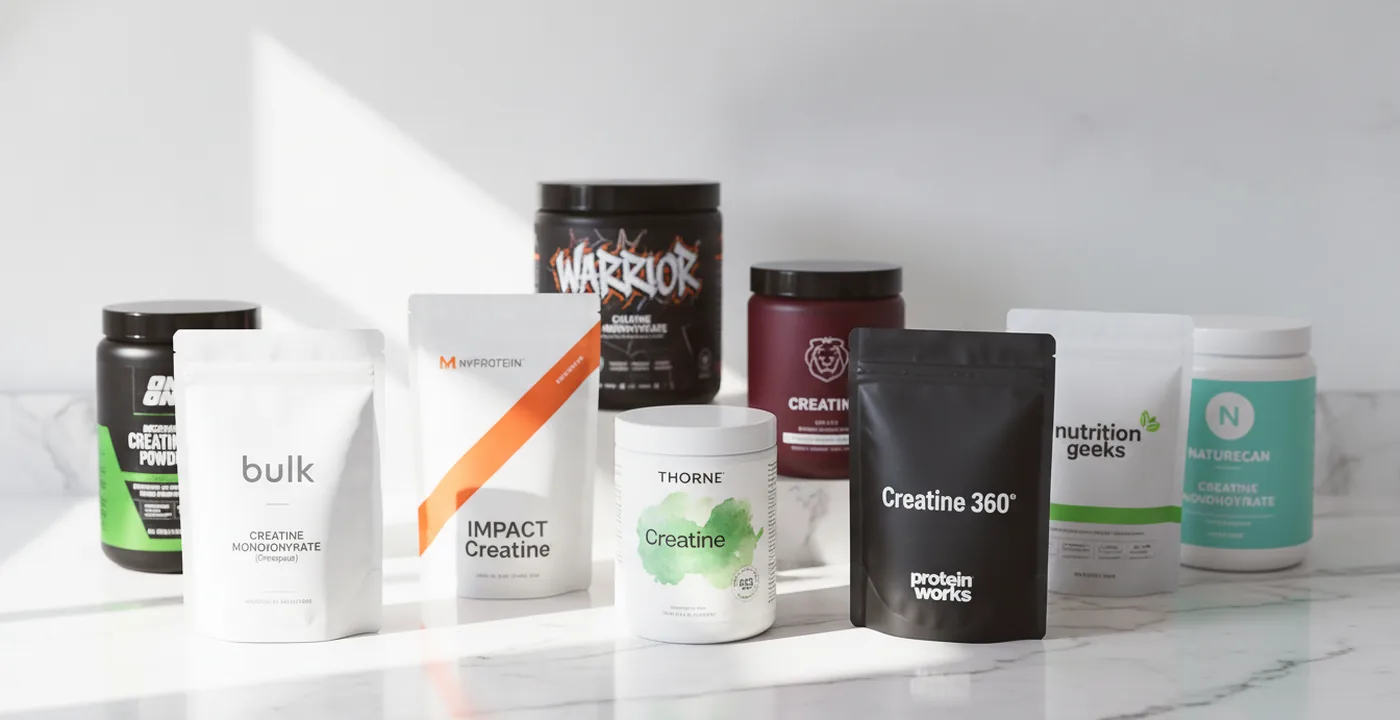
Table of Contents
Some of the links in this article are affiliate links, which help fund our independent review work at no extra cost to you. Every recommendation is based on hands-on testing through The Editor Lab methodology. No brand pays to appear, and no placement is guaranteed.
I know the feeling. You stood in front of a supplement shelf - or scrolled through Amazon for twenty minutes - and found yourself confronted by dozens of near-identical white tubs, each claiming to be the "most bioavailable", "ultra-micronised", or "scientifically formulated" version of the same molecule. Then you closed the tab.
The thing is, creatine monohydrate is one of the most studied supplements in sports nutrition. The molecule does not change between brands. What does change is purity, third-party testing, price-per-serving, and whether you are being charged a premium for packaging rather than product. That is what I evaluated across nine UK-available options.
If you are looking for the short answer: Optimum Nutrition Micronised Creatine is the best overall. If budget is the constraint, Bulk Creatine Monohydrate is the most straightforward value pick. I have ranked the rest below.
Our Top 3 Creatine Picks
How We Ranked
Every tub in this guide was assessed across five criteria: purity (Creapure certification or comparable third-party testing), dose per serving (minimum 3g, with preference for 5g), micronisation (which affects how easily it mixes), price-per-serving at standard UK retail pricing, and label transparency (absence of artificial sweeteners, fillers, and proprietary blend obfuscation).
I evaluated this roster as a registered Nutritional Therapist and BANT member, whose clinical practice has included The Kyros Project with Google DeepMind and The Wellness Clinic at Harrods. The full methodology framework used across Balance Journal supplement reviews is available at The Editor Lab.
I should be honest about what this review cannot tell you: I cannot independently verify that every batch of every brand matches the label claim. That is why third-party certification matters. Creapure certification and NSF Certified for Sport testing are the two markers I weighted most heavily, because they involve external auditing rather than in-house claims.
One honest note before the ranked list: brand-owned guides for these products frequently rank their own tub at number one. We do not. The molecule is identical across quality manufacturers. I ranked on purity, third-party testing, price-per-serving, and label transparency - not on who had the better marketing team.
The Best Creatine in the UK, Ranked
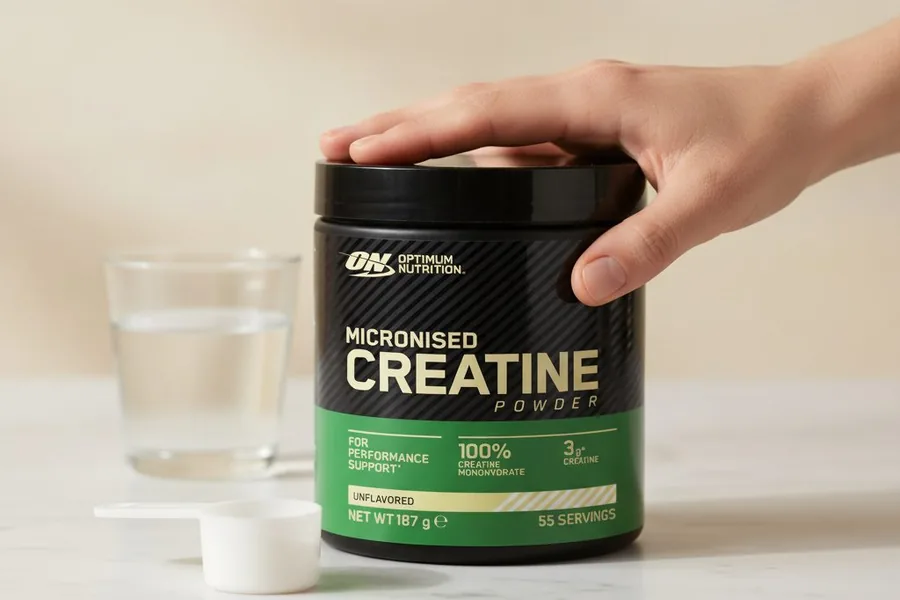
Optimum Nutrition Micronised Creatine
around 35p per serving- + Clean label
- + Fine mixability
- + Consistent quality
- + Widely stocked in UK retail
- - Not Creapure-certified on this SKU
- - Informed Sport testing not across all batches
The place to start if you want a reliable, well-tested monohydrate without overthinking it.
Shop Optimum Nutrition - around 35p per servingOptimum Nutrition has been one of the standard-bearers in sports nutrition for decades, and its micronised creatine monohydrate is the version of this product I recommend to most clients who ask where to start. The particle size is genuinely fine - it dissolves cleanly in water with a brief stir, and in coffee or best greens powders with no visible graininess.
The dose is 5g per serving. The label is clean: creatine monohydrate and nothing else. No proprietary blend, no sweeteners, no filler. At around £22 for 317g (approximately 63 servings), you are paying around 35p per serving - competitive for a product this established.
Optimum Nutrition does not publish Creapure certification on this SKU, but the micronisation process and purity consistency are well-documented in the independent lab community, and manufactured at an Informed-Sport registered facility in Middlesbrough, England. The standard micronised creatine SKU is not a registered Informed Sport product (the Elite Series SKU carries that certification). If Creapure certification is a hard requirement for you, see Bulk or Thorne below.
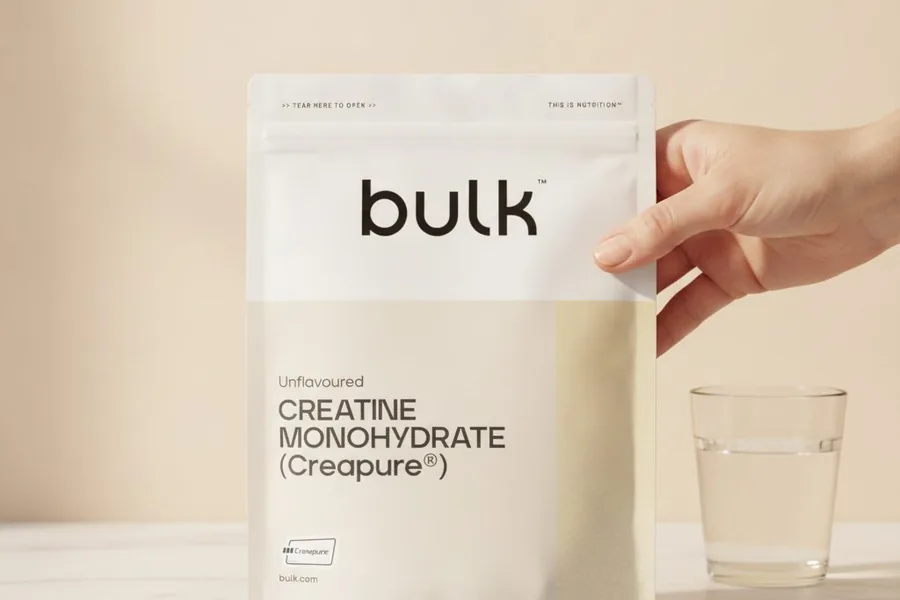
Bulk Creatine Monohydrate (Creapure Variant)
6p-12p per serving depending on bag size- + Creapure certified
- + Exceptional value
- + Clean label
- + Available in multiple sizes
- - Coarser texture than fully micronised alternatives
- - Standard (non-Creapure) version also sold - check the label
The best value Creapure-certified monohydrate available in the UK. Buy the Creapure variant specifically.
Shop Bulk Creapure - 6p-12p per serving depending on bag sizeHere is where I tell you something that most supplement guides skip: there are two versions of Bulk creatine monohydrate. The standard version uses generic monohydrate. The Creapure variant - which you can identify by the Creapure logo on the product page - uses German-manufactured creatine that has been independently tested for purity and certified to meet the Creapure standard. These are not the same product at the same price.
The Creapure variant from Bulk is the value recommendation in this roundup. At entry pricing from £3.99 for a starter bag and around 6p-12p per serving depending on bag size, it is the most affordable access point to certified creatine in the UK. The dose is 5g. The label contains nothing beyond creatine monohydrate.
In coffee, it dissolves with a brief stir. In cold water, a shaker bottle is easier than a spoon.
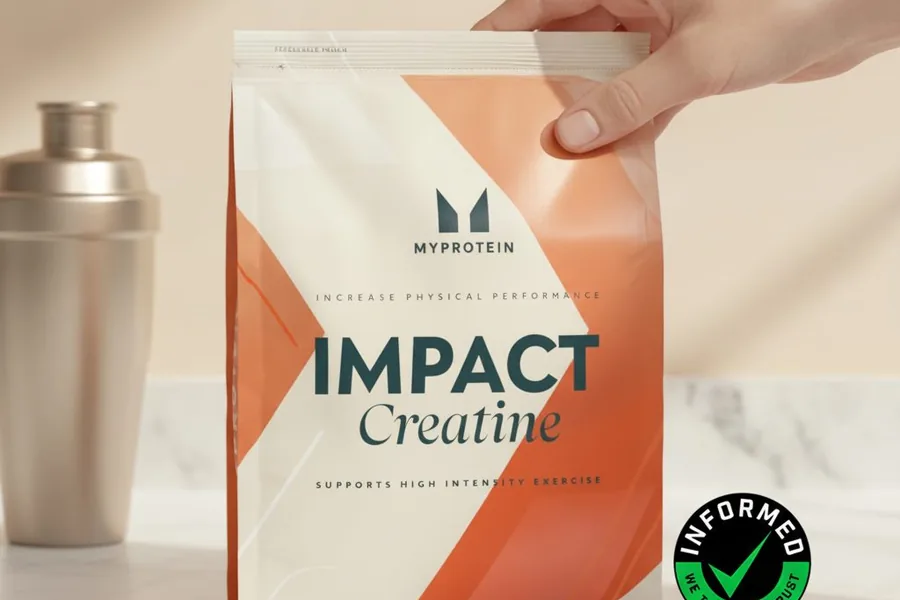
Myprotein Creatine Monohydrate
approximately 28p per serving- + Widely available in UK retail and online
- + Familiar brand
- + Acceptable price-per-serving
- - No Creapure certification
- - No third-party testing listed
- - Flavoured variants often under-dosed
A solid starting point if you are new to supplementation and want a frictionless purchase. Upgrade to Bulk Creapure when you are ready to go further.
Shop Myprotein - approximately 28p per servingMyprotein is the entry point for a significant proportion of UK supplement buyers, and its creatine monohydrate earns its place on this list not through certification credentials but through accessibility and price. At around £8.50 for 150g (approximately 30 servings), the cost-per-serving sits at roughly 28p - more expensive per gram than Bulk, but available from a brand you can buy in most UK gyms and with a returns process most people are familiar with.
The formulation is unflavoured monohydrate with a 5g dose. No Creapure certification, no third-party testing currently listed. What Myprotein offers is convenience and brand familiarity for buyers who are not yet ready to research further.
A note worth making here: Myprotein also offers flavoured creatine variants. If you are considering those, read the label carefully. Flavoured tubs at this price point frequently under-dose the scoop versus unflavoured options, and often contain sucralose or artificial sweeteners. If results are the goal rather than taste, unflavoured monohydrate is the correct choice.
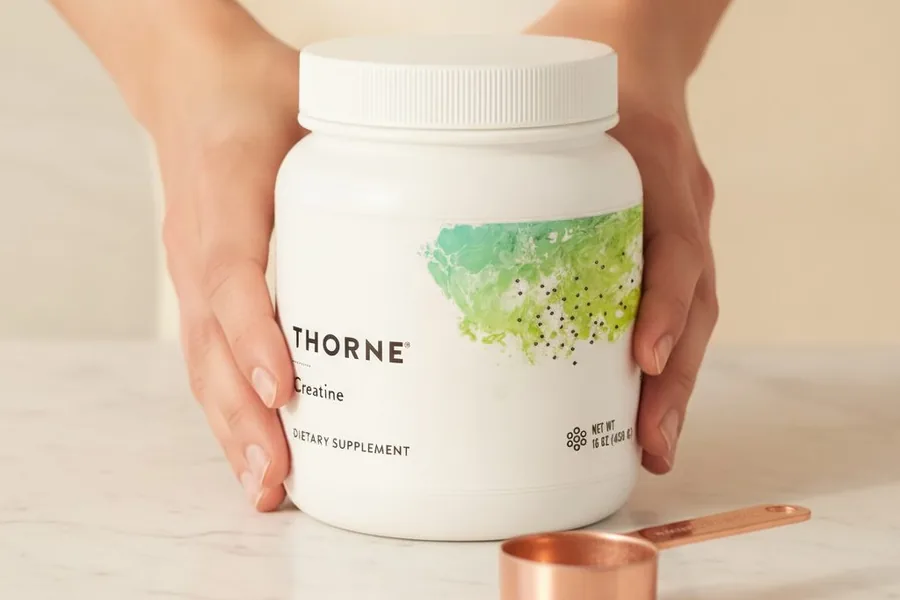
Thorne Creatine
approximately 33-39p per serving- + NSF Certified for Sport
- + Clean label
- + Excellent label accuracy
- + International reputation
- - Most expensive per serving on this list
- - Premium may not be necessary for recreational users
The right pick if third-party testing for prohibited substances is the priority. Worth every penny of the premium in that context.
Shop Thorne - approximately 33-39p per servingNSF Certified for Sport is the standard that matters most when you want independent verification that what is on the label is in the tub - and nothing else. Thorne creatine is one of the few UK-available creatines that carries this certification, which tests for prohibited substances as well as label accuracy. That matters most for competitive athletes, but it also matters for anyone who takes supplement contamination seriously.
The dose is 5g. The label contains creatine monohydrate and nothing else. Mixability is good. At around £30-35 for 90 servings (approximately 33-39p per serving), it is the most expensive option on this list per serving, but the NSF certification premium is real - independent auditing costs money, and you are paying for the assurance, not the molecule.
If you are not a competitive athlete and contamination testing is not a priority, Bulk Creapure delivers equivalent purity at a fraction of the cost. If you train professionally, compete, or are subject to anti-doping testing, Thorne is the correct choice.
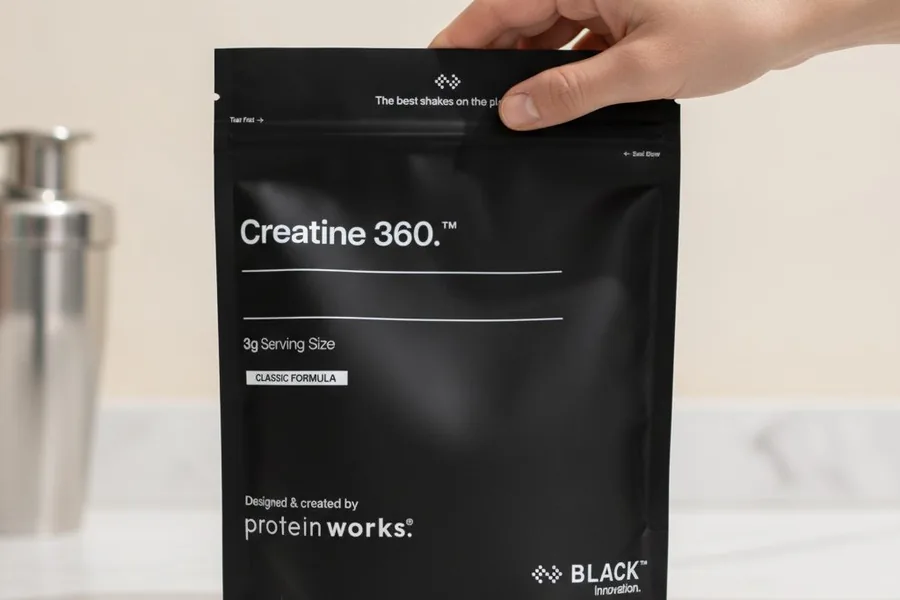
Protein Works Creatine Monohydrate
approximately 40-50p per serving- + Natural flavouring (no sucralose or artificial sweeteners)
- + Full 5g dose
- + Good mixability
- - Premium over unflavoured options
- - Flavour may not suit everyone
The flavoured option with the cleanest label. A genuine recommendation for buyers who need taste to sustain consistency.
Shop Protein Works - approximately 40-50p per servingFlavoured creatine is a category I approach with some caution. Most flavoured options involve one or more artificial sweeteners, and recent research suggests that long-term use of sweeteners such as sucralose may affect gut microbiome composition in ways that are not yet fully understood. I flag this not to alarm you but because it is the kind of formulation detail that most guides skip.
Protein Works stands out in this category because its flavoured creatine uses natural fruit-based flavouring rather than synthetic sweeteners, and the scoop delivers a full 5g dose - which is not a given across flavoured options. It remains the flavoured option I would recommend if taste is genuinely a barrier to consistent dosing.
If you take your creatine in a plain glass of water and do not struggle with compliance, unflavoured creatine from Bulk or ON will deliver better value. Protein Works flavoured creatine is for the buyer who has tried unflavoured and consistently skipped days.
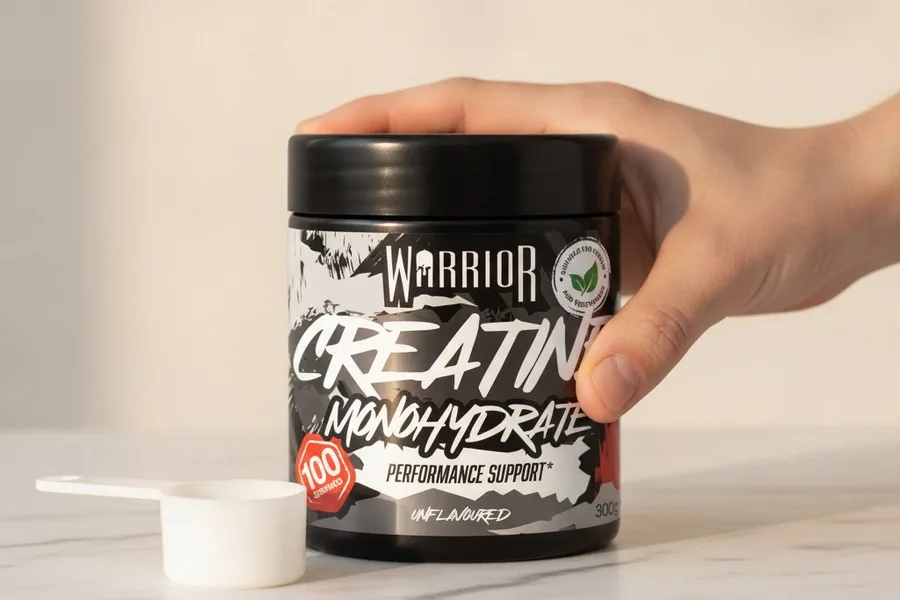
Warrior Creatine Monohydrate
approximately 20-25p per serving- + Standard dose
- + Unflavoured
- + Widely available in UK gyms and retail
- - No Creapure certification
- - No independent third-party testing listed
- - Frequently self-ranked #1 in brand-owned content
A reasonable budget option, but not the best value or the cleanest certification story at its price point.
Shop Warrior - approximately 20-25p per servingI want to be transparent about something with this entry, because it is an example of the kind of thing that affects how rankings work across the supplement industry. Brand-owned content from Warrior frequently appears high in search results for "best creatine UK" and ranks their own product first. That is not a neutral editorial decision - it is a marketing outcome dressed as editorial content.
Warrior creatine monohydrate is a reasonable product. The dose is 5g, the label is clean, and the price is competitive. It does not hold Creapure certification or independent third-party testing that matches Thorne or Informed Sport-certified alternatives. In a blind purity comparison, there is no evidence it outperforms Bulk Creapure at a lower price.
It earns a place on this list because it is genuinely UK-available at accessible retail pricing, and it is unflavoured monohydrate with a standard dose. It does not earn a higher ranking because the molecule does not warrant premium positioning over certified alternatives.
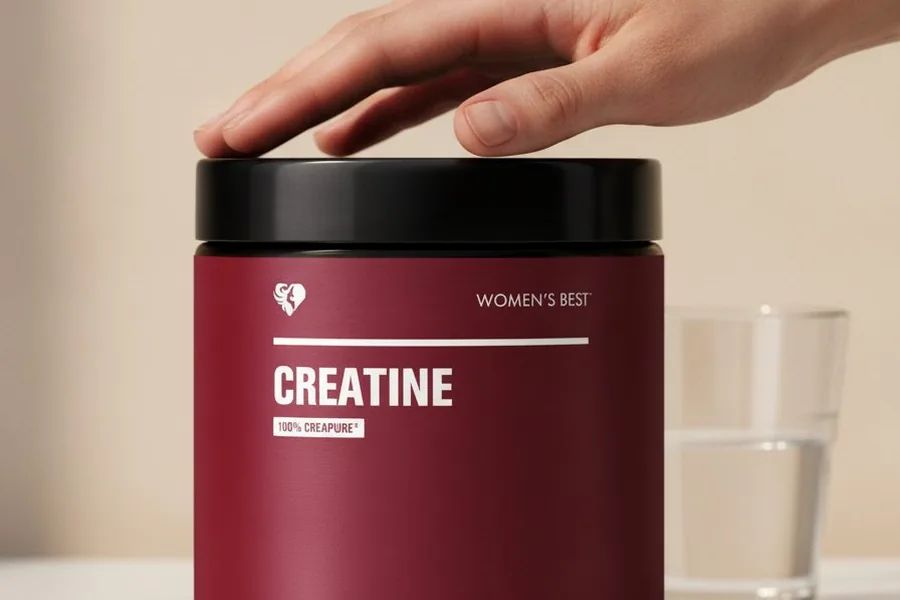
Women's Best Creatine (100% Creapure)
approximately 30-40p per serving- + 100% Creapure certified
- + Clean label
- + No artificial sweeteners or fillers
- - Higher price-per-serving than Bulk Creapure for the same certification
- - "For women" positioning is a marketing distinction, not a physiological one
A genuinely good product with Creapure certification. Buy it if you prefer the brand; buy Bulk Creapure if you prefer the value.
Shop Women's Best - approximately 30-40p per servingBefore I describe this product, I need to address what the "for women" label actually means in the context of creatine. Creatine monohydrate works identically regardless of biological sex. There is no female-specific formulation, no adjusted dosing profile, and no physiological reason a woman needs a different product. The molecule is the same. The dose is the same. The mechanism is the same.
Women's Best Creatine earns a place on this list not because women need a different product, but because it is 100% Creapure-certified, well-dosed at 5g per serving, and it is a product some buyers will specifically search for. If you found this through a "best creatine for women" search, the recommendation is identical to the rest of this list: Creapure-certified monohydrate, 5g per day, consistency over cycling.
The product itself is a clean label - creatine monohydrate sourced from Creapure, no fillers, no artificial sweeteners. Mixability is good. Pricing is slightly above Bulk Creapure on a per-serving basis, which is the only genuine trade-off.
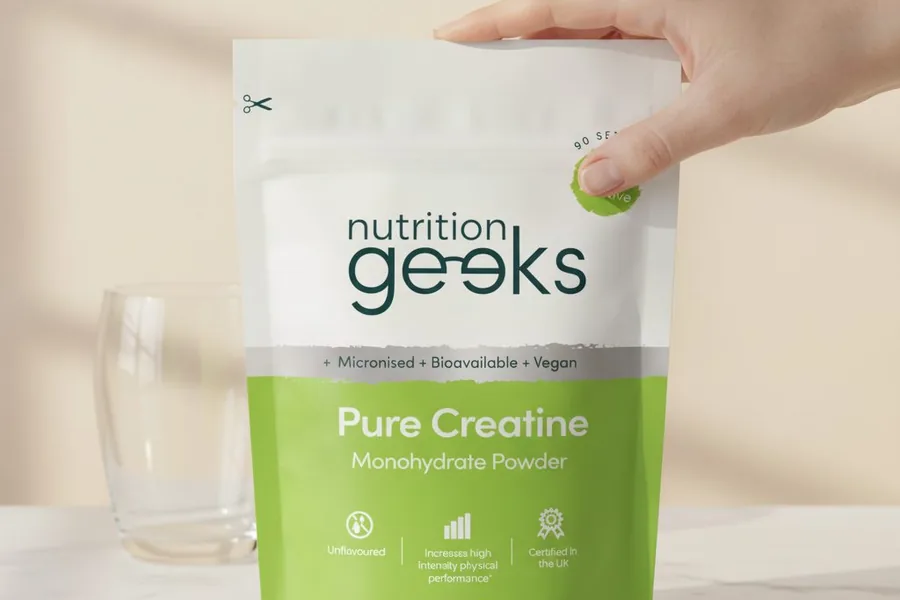
Nutrition Geeks Micronised Creatine
approximately 12-18p per serving- + Micronised for clean mixability
- + Among the lowest price-per-gram in the UK
- - No Creapure certification
- - No third-party testing listed
- - 3.5g serving (not the standard 5g)
A price-first choice for buyers who have decided the molecule is the molecule and want the lowest cost access point. If certification matters at all, Bulk Creapure remains the better value proposition.
Shop Nutrition Geeks - approximately 12-18p per servingNutrition Geeks Micronised Creatine is a no-frills generic monohydrate at one of the lowest price-per-gram points in the UK. The product is micronised, which means fine particle size and clean dissolution in water. It does not carry Creapure certification or third-party testing from Informed Sport or NSF. What it offers is the same base molecule at a lower cost than certified alternatives.
The dose per serving is 3.5g - slightly below the 5g standard used by most brands on this list, which is worth noting if you want to match the dosing most studies use. The label is unflavoured monohydrate. The brand is less widely stocked than Bulk or ON, so you are typically purchasing online rather than in retail.
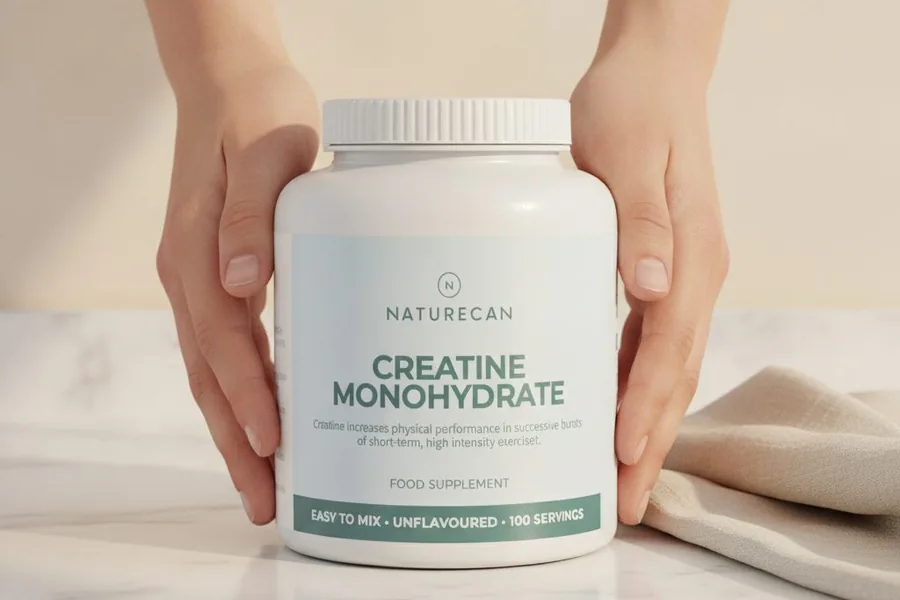
Naturecan Creatine Monohydrate
approximately 23-25p per serving- + Third-party tested (CoA and GMP-certified EU facilities)
- + Clean label
- + Reputable UK clean-label brand
- - Not Creapure certified
- - Not Informed Sport tested
- - Higher cost-per-serving than Bulk for an uncertified monohydrate
A clean, transparently tested option from a credible UK brand. Third-party CoA and GMP manufacturing is meaningful quality assurance - just not equivalent to Creapure certification.
Shop Naturecan - approximately 23-25p per servingNaturecan is a UK clean-label supplement brand, and its creatine monohydrate is consistent with the brand's positioning around ingredient transparency. The product is third-party tested - Naturecan publishes a Certificate of Analysis and all manufacturing takes place in GMP-certified facilities in Europe. What it does not carry is Creapure certification or Informed Sport registration. The creatine is standard monohydrate, not the German-sourced Creapure ingredient.
The dose is 5g per serving. The label contains creatine monohydrate and nothing else. At current UK pricing (£22.99 for 500g), it sits at a comparable per-serving cost to Optimum Nutrition. For buyers who are already purchasing other Naturecan products and want to consolidate their supplement stack with one trusted brand, the convenience argument is real. For buyers purchasing creatine in isolation, Bulk Creapure delivers Creapure certification at a lower price per serving.
Does the Brand Actually Matter? Creapure vs Generic Monohydrate
This is the question most supplement buyers are actually asking when they search for the best creatine. It deserves a direct answer.
Creatine monohydrate is a commodity molecule. The chemical structure of creatine does not vary between manufacturers. What does vary is manufacturing quality control, purity consistency, and third-party testing. That is where Creapure earns its premium.
Creapure is a brand name for creatine monohydrate manufactured by AlzChem AG in Trostberg, Germany. It is not a different form of creatine - it is the same monohydrate molecule, produced in a facility that submits to independent purity auditing. The Creapure certification means you are paying for documented manufacturing standards, not a different chemical.
Generic monohydrate from a reputable manufacturer with visible third-party testing (Informed Sport, NSF, Labdoor) is chemically equivalent. Generic monohydrate from a supplier with no third-party verification carries a small but real risk of contamination or under-dosing, depending on the source. The supplement industry is not uniformly regulated in a way that eliminates this risk.
My honest position: if budget is genuinely constrained, a well-priced generic from a UK brand with visible quality processes is a reasonable choice. If budget allows, the Creapure certification or equivalent third-party testing is worth the modest premium. The cost difference between the cheapest Creapure option and generic monohydrate from a quality UK brand is typically a few pounds per month - a genuine marginal cost, not a meaningful financial decision.
What is never worth the premium: flavoured creatine formulations that sacrifice dose size for taste, proprietary blends that include creatine alongside stimulants or underdosed amino acids, and gummies or ready-to-drink creatine products that typically deliver under 3g per dose for a significant price premium. Gummies and creatine-plus-electrolyte blends usually deliver under 5g per dose - that is a convenience tax on an ingredient that costs less than 10p per dose in powder form.
Creatine for Women and Over-40s
Interest in creatine outside the traditional male bodybuilding demographic has grown significantly over the past two years, and for good reason. The evidence base covers more than muscle synthesis.
For women, particularly those approaching perimenopause, the data on creatine and muscle mass maintenance is increasingly compelling. Oestrogen decline accelerates skeletal muscle loss, and creatine's role in supporting phosphocreatine resynthesis in muscle tissue means the supplement is addressing one of the direct consequences of this hormonal shift. A 2021 systematic review and meta-analysis in the journal Nutrients found significant positive effects of creatine supplementation on muscle strength and lean mass in older adults across sexes.
For over-40s more broadly, there is growing interest in creatine's potential role in cognitive function - specifically, the brain's use of phosphocreatine as an energy substrate. The evidence here is earlier-stage than the muscle data, but it is moving in an interesting direction. I will not overstate it, because the current data does not yet support a strong clinical recommendation on cognition alone. What it does support is the existing muscle and strength evidence, which is well-established.
The practical message: if you are a woman or over 40 and you have avoided creatine because it felt like a supplement for a different demographic, the evidence does not support that distinction. The same 3-5g per day, the same Creapure-certified monohydrate, the same absence of loading requirement.
There is no female-specific dose. There is no age-specific formula. The molecule works the same way.
How to Take Creatine: Dose, Loading, and Timing
The ISSN position stand on creatine supplementation is the most thorough independent review of the evidence, and its conclusions on dosing are worth stating plainly.
Standard dose: 3-5g per day. Most products in this guide deliver a 5g scoop. This is the dose supported by the preponderance of the research.
Loading phase: Optional, not mandatory. A loading protocol (20g per day in four divided doses for 5-7 days) saturates muscle phosphocreatine stores faster. A maintenance dose of 3-5g per day reaches the same saturation point in 3-4 weeks. The loading phase produces faster initial results; the maintenance dose produces identical long-term results. Unless you have a specific reason to saturate quickly (a competition date, a targeted training block), the maintenance dose is the simpler and more gut-friendly approach.
Timing: The research does not show a consistent advantage to a specific timing window. Taking it consistently every day matters more than taking it at a precise moment. A practical habit is to take it at the same time as a meal that includes carbohydrates, which some research suggests may marginally support uptake - though the effect size is small.
Cycling: There is no research basis for creatine cycling in healthy adults. You do not need to stop and restart. Consistent daily use is appropriate.
Liquid: Creatine dissolves in water, coffee, a protein shake, or best plant-based protein blend. Temperature does not significantly affect the molecule's stability. It is flavourless in unflavoured form.
Who Should Be Cautious
Creatine monohydrate has an exceptional safety profile in healthy adults. The EFSA authorised health claim for creatine and muscle function reflects decades of research at standard supplementation doses.
However, certain groups should consult a clinician before supplementing. Based on guidance from Cedars-Sinai and clinical evidence:
Pre-existing kidney disease: Creatine is not harmful to healthy kidneys, and there is no evidence it causes kidney damage in healthy adults. However, creatine supplementation increases creatinine output (creatinine is a metabolic byproduct of creatine breakdown), which can affect the interpretation of standard kidney function tests. If you have pre-existing kidney disease or impaired kidney function, speak to your GP or nephrologist before supplementing.
Pregnancy and breastfeeding: There is insufficient research on creatine supplementation during pregnancy and breastfeeding. The absence of evidence is not evidence of absence. Until more data exists, I recommend not supplementing without medical guidance during these periods.
Nephrotoxic medications: Some medications affect kidney function or interact with creatine metabolism. If you are taking any nephrotoxic drug, discuss supplementation with your prescribing clinician.
Children and adolescents: Creatine is not studied in children to the degree it is in adults. Most sports nutrition bodies recommend against supplementation below age 18 without medical supervision.
What the evidence does not support: the claim that creatine damages healthy kidneys. This is one of the most persistent myths in sports nutrition, and it is not supported by the independent research literature. The ISSN position stand addresses it directly.
Never stop a prescribed medication to take a supplement. If you have a medical condition, supplement decisions belong in a conversation with your clinician.
Full Comparison Table
| Brand | Form | Creapure Certified | Third-Party Tested | g per Serving | Price per Serving | Flavours Available |
|---|---|---|---|---|---|---|
| Optimum Nutrition Micronised | Monohydrate (micronised) | No | Informed-Sport registered facility (not product-level) | 5g | around 35p | Unflavoured only |
| Bulk (Creapure variant) | Monohydrate (Creapure) | Yes | Not independently listed | 5g | 6p-12p | Unflavoured only |
| Myprotein | Monohydrate | No | Not listed | 5g | around 28p | Unflavoured + flavoured |
| Thorne | Monohydrate | No (NSF certified) | NSF Certified for Sport | 5g | 33-39p | Unflavoured only |
| Protein Works | Monohydrate | No | Not listed (99.9% purity, 200 mesh filtration) | 5g | 40-50p | Natural flavours |
| Warrior | Monohydrate | No | Not listed | 5g | 20-25p | Unflavoured + flavoured |
| Women's Best | Monohydrate (Creapure) | Yes | Not independently listed | 5g | 30-40p | Unflavoured only |
| Nutrition Geeks | Monohydrate (micronised) | No | Not listed | 3.5g | 12-18p | Unflavoured only |
| Naturecan | Monohydrate | No | Yes (CoA + GMP-certified EU facility) | 5g | 23-25p | Unflavoured only |
Frequently Asked Questions
What is the best creatine brand in the UK?
The best overall creatine brand in the UK is Optimum Nutrition Micronised Creatine for consistency, availability, and value. For the best value Creapure-certified option, Bulk Creatine Monohydrate (Creapure variant) is the strongest recommendation. For the highest level of third-party testing, including prohibited substance screening, Thorne Creatine with NSF Certified for Sport accreditation is the right choice. Most buyers will be well served by either Optimum Nutrition or Bulk Creapure.
What brand of creatine is the most effective?
No brand of creatine monohydrate is more effective than another at the molecular level - it is a commodity ingredient, and the chemical structure does not change between manufacturers. Effectiveness differences come from dose accuracy, purity, and third-party testing. On those criteria, Thorne (NSF Certified for Sport) and Bulk Creapure are the strongest performers.
What are the top 3 creatine brands?
Based on this evaluation: Optimum Nutrition Micronised Creatine (best overall balance of price, purity, and availability), Bulk Creatine Monohydrate Creapure variant (best value for Creapure-certified monohydrate), and Thorne Creatine (best for independent third-party testing and prohibited substance verification). All three deliver 5g per serving with clean labels.
Who should not take creatine?
People with pre-existing kidney disease should not take creatine without GP or nephrologist guidance, as it affects creatinine readings used in kidney function tests. Pregnant or breastfeeding people should avoid supplementation until more research exists. Anyone on nephrotoxic medications should check with their prescribing clinician first. Under-18s should not supplement without medical supervision. Healthy adults are well-supported by the evidence.
What should you avoid when taking creatine?
Avoid very high caffeine doses on the same day - some early, contested research suggested caffeine may blunt creatine uptake, though the effect at moderate coffee intake appears minimal. Avoid under-dosing below 3g per day, which weakens the phosphocreatine saturation effect. Avoid flavoured products delivering under 5g per serving, and avoid gummy or ready-to-drink formats, which typically deliver under 3g per dose at a premium price.
Is Creapure worth it over generic monohydrate?
For most buyers, yes - but the gap is smaller than the marketing suggests. Creapure is the same creatine molecule made in a certified facility with independent purity auditing. A reputable brand selling generic monohydrate with visible third-party testing delivers equivalent assurance for less. Creapure is worth it when buying from an unfamiliar brand or when purity documentation matters to you.
Do you need a loading phase?
No. A loading phase (20g per day for 5-7 days) saturates muscle phosphocreatine stores faster than a maintenance dose, but both reach the same endpoint. Loading suits a specific short-term performance target; otherwise 3-5g per day is equally effective and easier on digestion. Most bloating or gastrointestinal discomfort from creatine happens during loading, not on a standard maintenance dose.
Does creatine cause bloating or water retention?
Creatine draws water into muscle cells as part of its mechanism - this is intramuscular, not subcutaneous, so it increases muscle fullness rather than a puffy appearance. Some people see a small scale increase (0.5-2kg in the first few weeks) from this water shift, not fat gain. Bloating is more common during loading phases or a concentrated dose on an empty stomach.
Is creatine safe for women and people over 40?
Yes. There is no female-specific dose or age-specific formula - the molecule works the same way. A 2021 systematic review in Nutrients found significant positive effects of creatine on muscle strength and lean mass in older adults across sexes, which matters as oestrogen decline accelerates muscle loss in perimenopause. The same 3-5g daily dose applies, with no loading phase required.
What is the best time of day to take creatine?
There is no consistent research advantage to a specific timing window - taking it every day matters more than when. A practical habit is pairing it with a meal containing carbohydrates, which some research suggests may marginally support uptake, though the effect is small. Creatine dissolves in water, coffee, or a protein shake, and there is no basis for cycling it.

A registered Nutritional Therapist and member of BANT, Clemmie blends science with a holistic approach to wellbeing.