Bulk Creatine Review UK 2026: Tested and Rated by a Nutritionist
Hands-on nutritionist verdict on Bulk: dose, sourcing, taste and whether it earns its price.
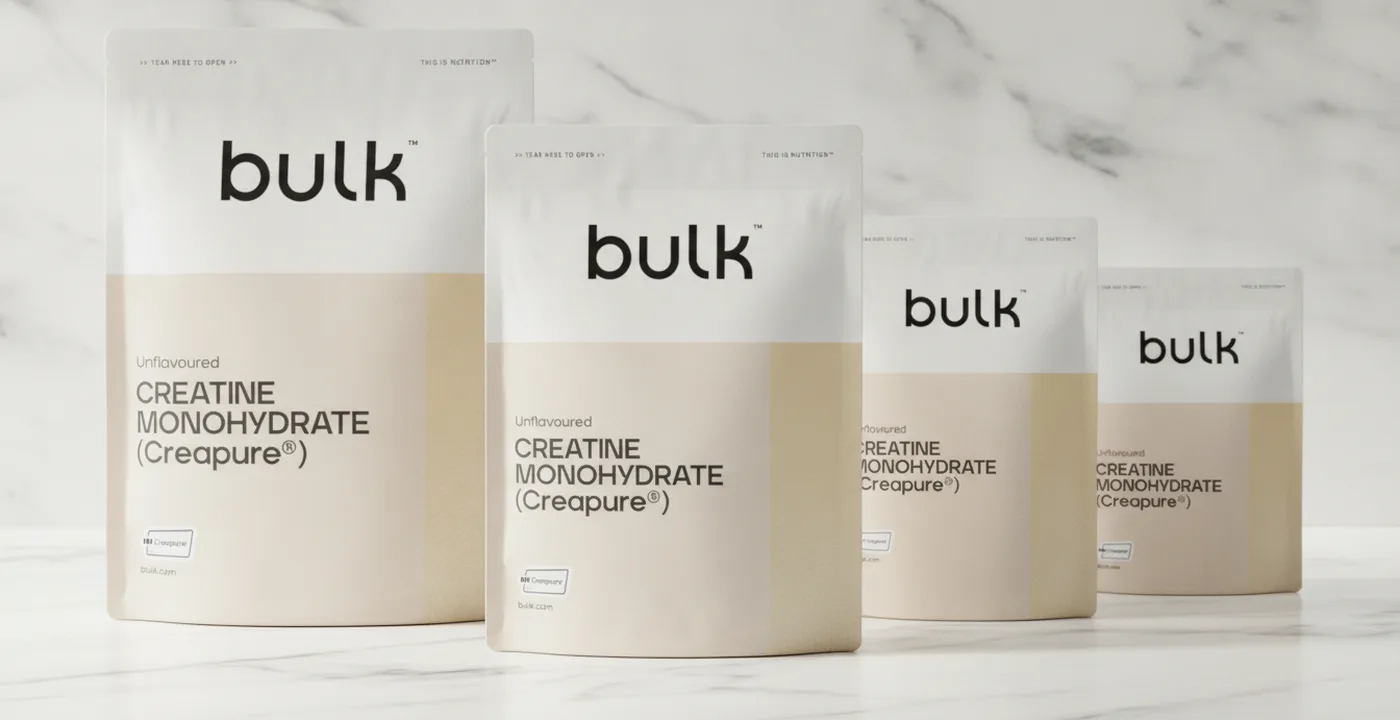
Table of Contents
Some of the links in this article are affiliate links, which help fund our independent review work at no extra cost to you. Every recommendation is based on hands-on testing through The Editor Lab methodology. No brand pays to appear, and no placement is guaranteed.
Bulk creatine monohydrate is a solid budget pick - at around £0.09 to £0.11 per serving depending on pack size, it sits at the cheaper end of the UK supplement market. That cost-per-serving figure is the right place to start a bulk creatine review, because value is the brand’s core claim and the only meaningful way to test it is against a named competitor at a normalised serving cost.
I am a registered Nutritional Therapist whose qualification is backed by BANT registration, with clinical experience running nutrition clinics through The Kyros Project at Google DeepMind and at The Wellness Clinic at Harrods. I have assessed creatine across multiple forms and sourcing grades. What follows is my assessment of Bulk’s creatine monohydrate - what it is, what it is not, and whether the value claim holds up.
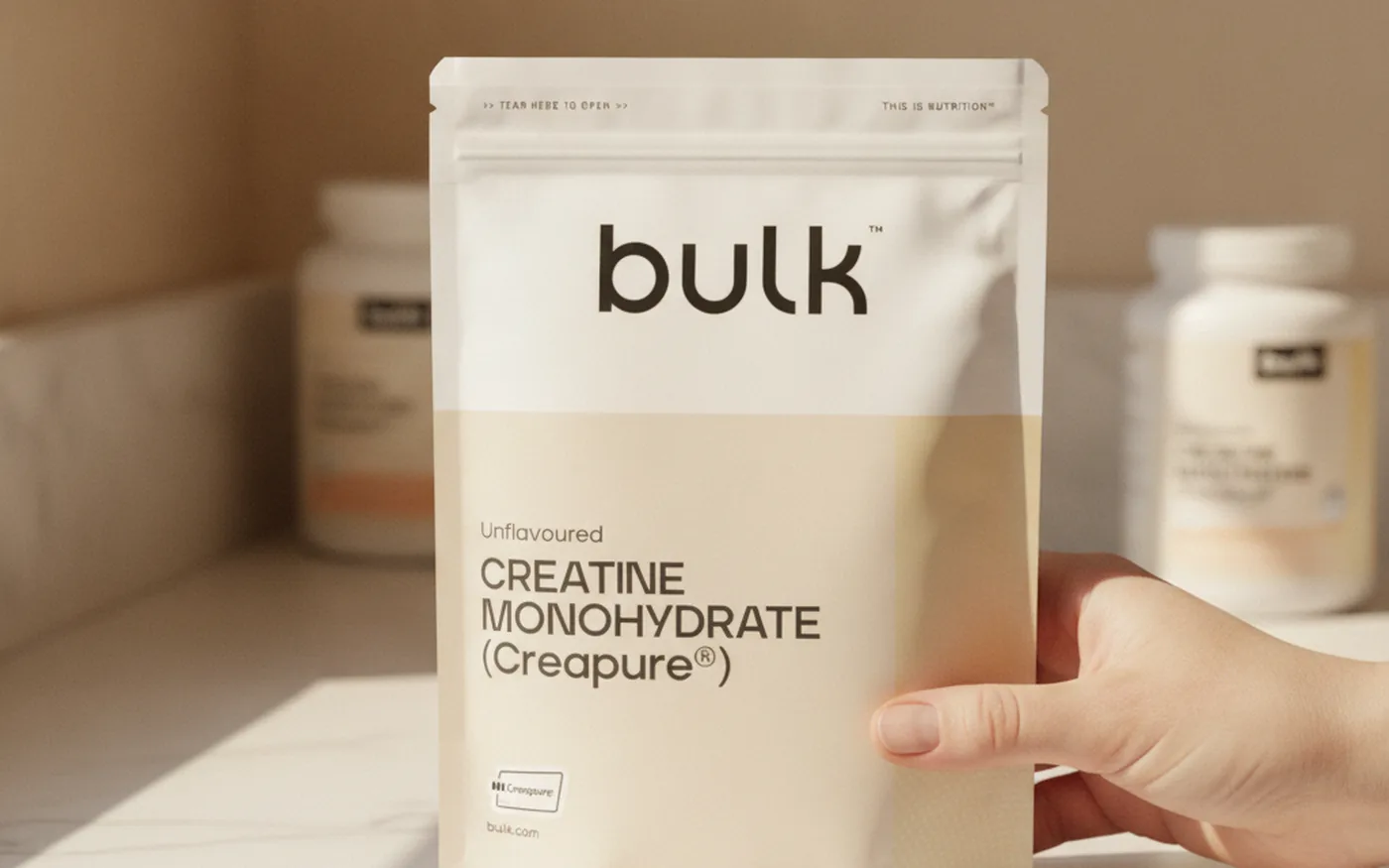
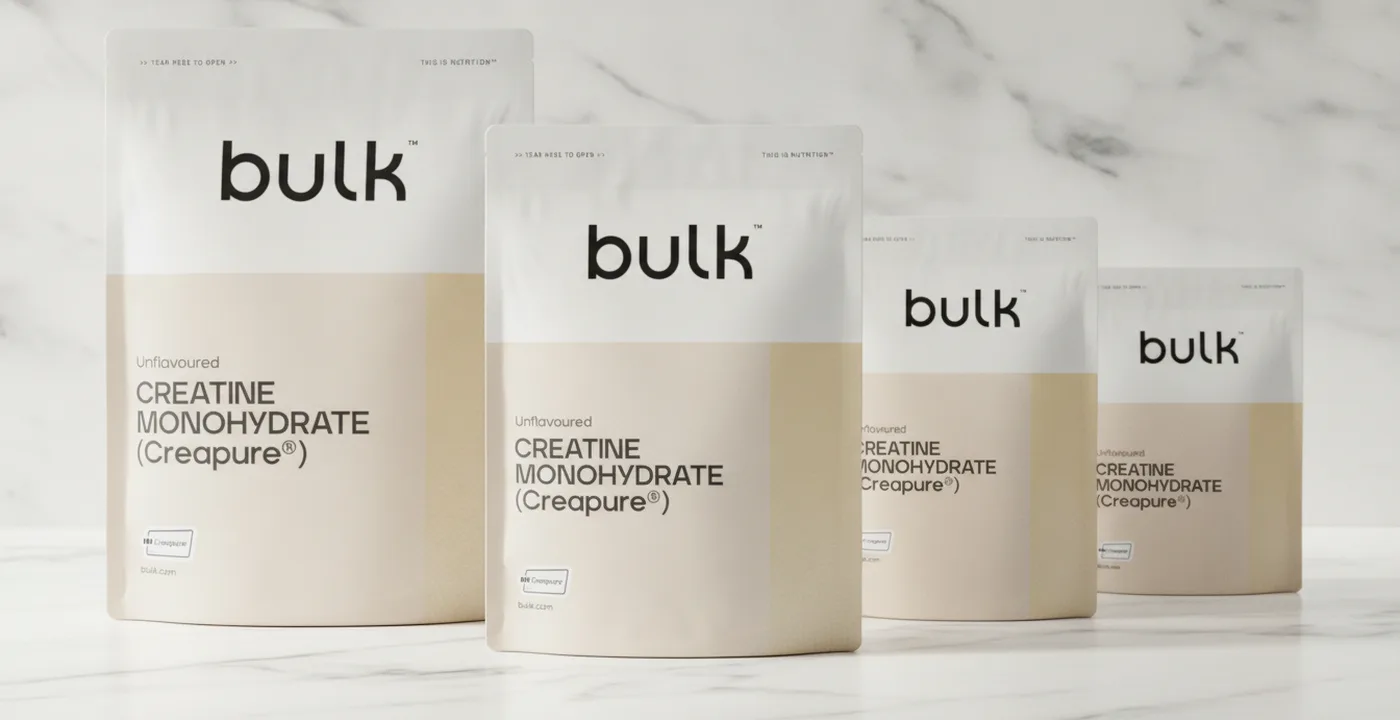
Note before buying: This review covers Bulk’s standard creatine monohydrate (bulk.com). The brand also sells a Creapure-labelled line and a creatine HCL option - these are different products at different price points, and the analysis below distinguishes them clearly.
Quick Verdict
Bulk creatine monohydrate is a solid budget pick. The product delivers 4.4g of creatine per 5g serving at 99.9% stated purity, mixes acceptably in water, and undercuts most comparable UK options on price per serving.
The qualification: Bulk’s standard creatine monohydrate is not Creapure. Creapure is a trademarked, German-manufactured creatine grade with third-party verification that the batch you receive matches label claims for purity. Bulk’s standard monohydrate meets a comparable purity specification at 99.9%, but without the Creapure mark and without equivalent third-party batch testing on the standard line. If independent certification is your threshold, you are looking at Bulk’s Creapure product, which costs more.
For most UK gym-goers who want micronised creatine monohydrate at a low cost-per-serving and are comfortable with a brand-level quality assurance rather than an independent batch mark, Bulk is a sound choice.
Rating: 4.0 / 5
| Criterion | Score |
|---|---|
| Purity and form | 4.5 / 5 |
| Value per serving | 5 / 5 |
| Mixability | 3.5 / 5 |
| Third-party testing | 2.5 / 5 |
| Transparency | 4.0 / 5 |
What Is Bulk and What Does Its Creatine Range Cover?
Bulk (formerly Bulk Powders) is a UK-based sports nutrition brand selling primarily through its own website (bulk.com). It built its market position on high-volume, low-margin supplement pricing - closer to raw ingredient cost than to the brand premium carried by smaller, premium-positioned rivals.
Bulk sells three creatine products that matter for this review:
| Product | Form | Key feature | Typical price (500g) |
|---|---|---|---|
| Creatine Monohydrate | Standard monohydrate | 99.9% purity, micronised | Around £12-£13 |
| Creapure Creatine Monohydrate | Creapure-grade monohydrate | Trademarked, third-party verified | Around £17-£19 |
| Creatine HCL | Creatine hydrochloride | Higher solubility, smaller dose | Around £17-£20 |
The default product most people land on when searching "Bulk creatine" is the standard creatine monohydrate. That is the product reviewed in depth here. The Creapure and HCL options exist at different price points and for different buyer priorities - I address those in context below.
Bulk’s creatine monohydrate is stocked on Amazon UK (ASIN B00SP2ZKW8), where it carries over 10,000 reviews at 4.5 stars. The Amazon listing and the bulk.com PDP are the same product.
Form, Purity, and Dose
What you are actually buying: micronised creatine monohydrate ground to a finer particle size than standard creatine powder. Micronisation improves dispersal in liquid - the particles do not clump as severely, and dissolution time is shorter.
Purity: Bulk states 99.9% purity for its standard creatine monohydrate. This is a common specification across budget-tier monohydrate in the UK market. It means the powder is predominantly creatine monohydrate with minimal impurities - the 0.1% remainder is not a meaningful concern at normal supplementation doses.
Dose per serving: 4.4g of creatine per 5g serving. The 5g serving is the scoopable measure; the 4.4g is the active creatine content. This is slightly below the 5g serving that many competing brands print on label (Myprotein, for example, lists 3.5g creatine per 4g serving, which is actually a comparable ratio). The practical effective dose is within the 3-5g daily range supported by the evidence.
The creatine supplement guide covers the evidence base for this dose range in detail. The short version: the International Society of Sports Nutrition position stand supports 3-5g per day as an effective maintenance dose for athletic performance, with no demonstrated benefit from exceeding 5g in most populations.
| Criteria | Our Findings |
|---|---|
| Full review | Bulk Creatine Monohydrate (standard, unflavoured) |
| Form | Creatine monohydrate, micronised |
| Purity | 99.9% stated (not Creapure certified) |
| Creatine per serving | 4.4g per 5g serving |
| Servings per 500g | 100 servings |
| Cost per serving (500g) | Around £0.12-£0.13 |
| Third-party tested | No independent batch testing on standard line |
| Creapure | No (separate Creapure SKU available) |
The friction moment to address: ‘Creatine monohydrate’ and ‘Creapure’ are not the same tier. Creapure is a specific, patented form of creatine monohydrate manufactured by AlzChem in Germany, subject to regular third-party purity and safety testing. Any brand can sell 99.9%-pure creatine monohydrate - that specification is a manufacturer’s self-declaration. Creapure adds an independent certification layer. Bulk sells both; the standard line does not carry the Creapure mark.
Whether that distinction matters depends on your risk tolerance and whether you are competing in a tested sport. For recreational gym-goers, the practical difference in effect is zero - creatine monohydrate is creatine monohydrate at 99.9% purity. For those in tested sport, third-party certification matters for contamination liability, and the standard Bulk line does not provide it.
Does It Work and How to Dose It?
Creatine monohydrate is one of the most well-evidenced performance supplements available. The European Food Safety Authority authorised a health claim linking creatine supplementation to increased physical performance in successive bursts of short-term, high-intensity exercise - a relatively rare approval from a regulatory body known for caution on supplement claims.
The International Society of Sports Nutrition position stand on creatine summarises the evidence: creatine monohydrate is the most effective ergogenic nutritional supplement for increasing high-intensity exercise capacity and lean body mass in combination with resistance training.
Bulk’s creatine monohydrate delivers the same active compound at the same dose. There is no mechanism by which a budget-priced creatine monohydrate at 99.9% purity would perform differently from a premium-priced one.
Dosing for most people: 3-5g per day, taken consistently. Timing is not critical - with food, post-workout, or in water at any point during the day. The how much creatine per day guide covers the loading phase option and the evidence on timing in more detail. Loading is optional and not necessary for most recreational users.
One note for women: the evidence base on creatine dosing has historically skewed male. The best creatine for women literature suggests that 3g per day may be sufficient for women who are smaller in body mass, with the same daily consistency principle applying. See best creatine for women for the full analysis.
Taste, Mixability, and Flavour Options
Unflavoured is the only option here - and for a monohydrate product, that is the right call. Flavoured creatine tends to mask the powder with sweeteners that add calories and often cause gastrointestinal discomfort at higher doses.
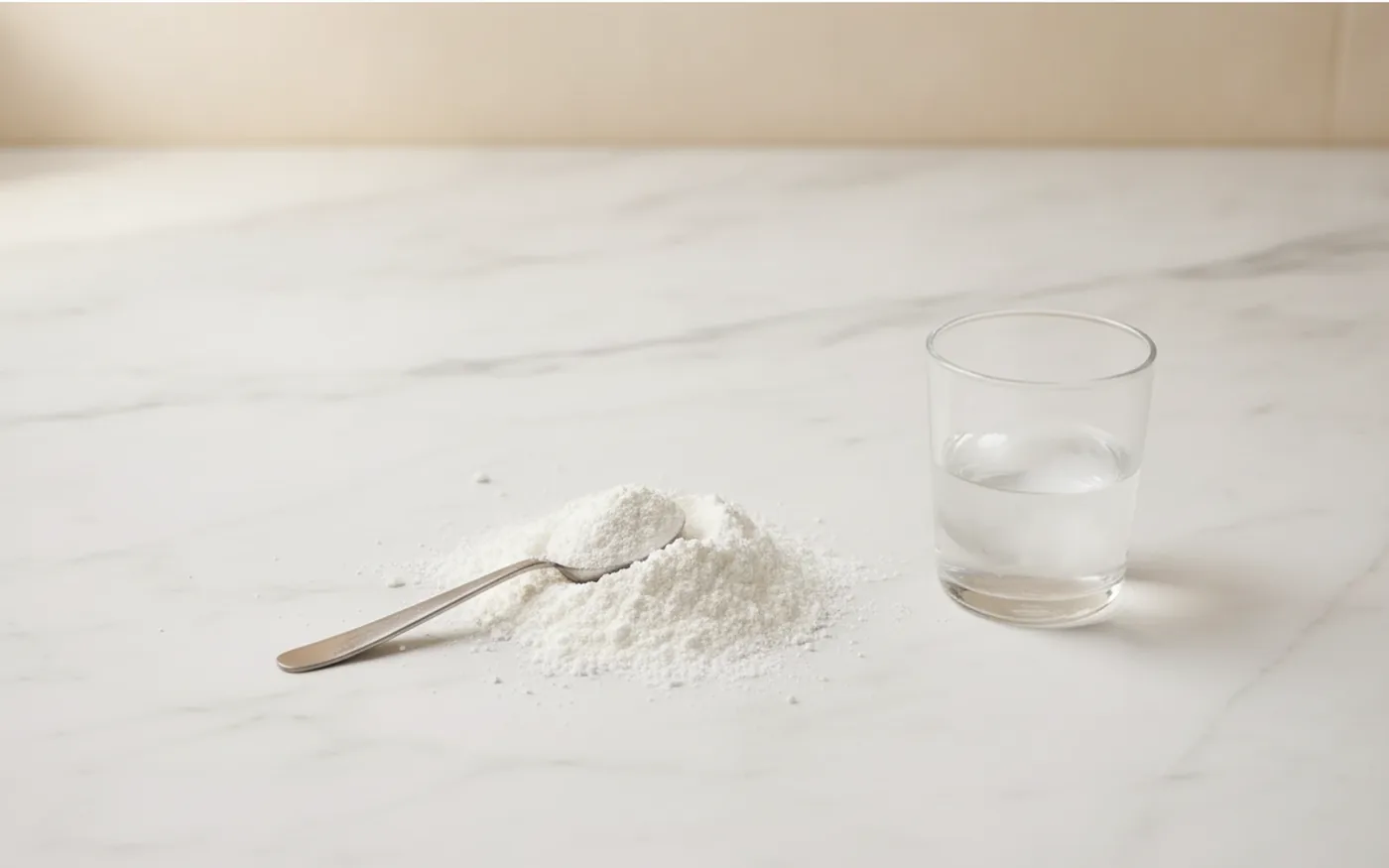
Mixability: adequate, not excellent. In 250ml of cold water, the powder disperses reasonably well with 30 seconds of stirring. There is a very slight gritty residue at the bottom of the glass if left to stand - this is typical of micronised monohydrate and is not a quality defect. It dissolves more completely in warm water or a shaken container.
Taste: negligible. There is a faint mineral note in plain water that most people find easy to ignore. Mixed into a protein shake or juice, it is undetectable.
Practical notes from assessment: the 5g scoop included is accurate. The powder clumps slightly in high-humidity environments - this is a property of creatine monohydrate generally, not a quality issue. Keep the tub sealed between uses.
Price and Value Versus Alternatives
This is where Bulk makes its strongest case.
Cost-per-serving comparison (UK market, verified at time of writing):
| Brand | Form | Price | Servings | Cost per serving |
|---|---|---|---|---|
| Bulk (standard monohydrate, 500g) | Monohydrate 99.9% | Around £12.99 | 100 | Around £0.13 |
| Myprotein (creatine monohydrate, 500g) | Monohydrate | Around £10.99-£13.99 | 100 | Around £0.11-£0.14 |
| Bulk Creapure (500g) | Creapure-grade monohydrate | Around £18.99 | 100 | Around £0.19 |
| Optimum Nutrition (creatine powder, 300g) | Monohydrate | Around £14.99 | 60 | Around £0.25 |
At full price, Bulk standard sits level with Myprotein on cost-per-serving. Myprotein regularly runs discounts that push its standard monohydrate to around £0.08-£0.10 per serving - at those sale prices, Myprotein is cheaper. Bulk’s 1kg and 5kg options reduce the Bulk per-serving cost further, making it consistently competitive at bulk pack sizes.
The key distinction from a value perspective: Bulk’s standard monohydrate and Myprotein’s standard monohydrate are effectively equivalent products. Both are 99.9%-pure micronised monohydrate without Creapure certification. At standard pricing, Bulk is not meaningfully cheaper than Myprotein. Where Bulk wins on value is at the 1kg and 5kg pack sizes, and when you account for the fact that Myprotein’s headline prices are often pre-discount and the discount cadence can be unpredictable.
The real cost comparison to make: Bulk standard monohydrate at around £0.13 per serving versus Bulk Creapure at around £0.19 per serving. You are paying around 46% more for the Creapure mark. That premium buys you the trademarked sourcing, the AlzChem manufacturing standard, and the Informed Sport certification eligibility. For recreational training, that premium is hard to justify. For competitive sport with drug testing, it is the rational choice.
Final Verdict
Bulk creatine monohydrate does what a budget supplement should do: it delivers a well-dosed, adequately pure form of the most evidence-backed performance supplement on the market, at a cost-per-serving that is competitive with the closest UK alternatives.
The ceiling is equally clear. The standard product is not Creapure, does not carry third-party batch testing, and sits in a category where the gap to Creapure-grade alternatives is around £0.06 per serving - a small absolute cost that may matter for some buyers.
Buy it if: you want creatine monohydrate at a low cost-per-serving, train recreationally, and are comfortable with brand-level quality assurance rather than independent batch certification.
Look elsewhere if: you compete in a tested sport, want Creapure certification, or prioritise independent third-party batch testing over price. Bulk’s own Creapure SKU, or a verified Creapure product from another brand, addresses those requirements.
For the wider competitive landscape across UK creatine brands, see best creatine UK.
Frequently Asked Questions
Is Bulk creatine a good brand?
Yes, for value. Bulk’s creatine monohydrate is refined to 99.9% purity, micronised for better mixability, and delivers approximately 4.4g of creatine per 5g serving at one of the lowest costs-per-serving in the UK market. It is a budget-positioned product rather than a premium Creapure-certified one - confirm which grade you need before buying, particularly if you train in a tested sport.
Is Bulk creatine safe?
Yes. Creatine monohydrate is one of the most extensively researched supplements in existence and is generally recognised as safe for healthy adults at three to 5g per day. The NHS notes that side effects at normal doses are typically limited to mild water retention or gastrointestinal discomfort if taken in excess. Consult a GP before supplementing if you have a kidney condition or existing health concerns.
How pure is Bulk creatine?
Bulk states its standard creatine monohydrate is refined to 99.9% purity and is micronised for faster dispersal. This is standard monohydrate purity rather than the Creapure-trademarked grade, which carries additional third-party verification from AlzChem. Bulk also sells a separate Creapure-labelled product for buyers who require that certification level. Check the specific product page to confirm which grade you are ordering.
Is Bulk creatine monohydrate micronised and third-party tested?
Bulk’s standard creatine monohydrate is micronised, meaning it is ground to a finer particle size for better mixability and dispersal in liquid. It is not independently batch-tested to Informed Sport or equivalent standard on the standard line. Bulk does sell a Creapure SKU that carries the AlzChem manufacturer’s certification. If third-party contamination testing is a requirement, the standard line does not meet it.
What is the most trusted creatine brand in the UK?
The most trusted designation in UK creatine is the Creapure mark, which certifies German-manufactured creatine monohydrate produced to AlzChem’s purity standard with regular third-party testing. Multiple brands sell Creapure-grade creatine in the UK, including Bulk’s own Creapure product. The certification provides more reliability than any brand name alone, since it verifies the manufacturing source rather than just the selling brand.
Is Bulk creatine worth it in the UK?
For most UK gym-goers, yes. Bulk creatine monohydrate offers 99.9%-pure micronised creatine at a cost-per-serving that competes closely with Myprotein at standard pricing and beats most alternatives at the 1kg and 5kg pack sizes. Choose it if price and simplicity matter most. Pay the small premium for Bulk’s Creapure SKU if you want independent third-party certification, or are training in a context where batch provenance matters.
What is the difference between Bulk creatine monohydrate and creatine HCL?
Creatine HCL (creatine hydrochloride) is a different form that dissolves more easily in water and may cause less gastrointestinal discomfort at lower doses. The evidence base for creatine monohydrate is substantially larger - monohydrate has decades of trial data behind it, while HCL lacks equivalent long-term research. For most people, the performance outcomes of creatine HCL versus monohydrate are not meaningfully different, but monohydrate at a comparable or lower cost-per-serving is the evidence-backed default. See creatine monohydrate vs HCL for the full comparison.
Do I need to do a creatine loading phase with Bulk creatine?
No. A loading phase (typically 20g per day for five to seven days, split across four doses) saturates muscle creatine stores faster than the standard 3-5g daily dose - roughly one week versus three to four weeks to the same saturation point. The end-state is identical. Most recreational users do not need to load; the standard daily dose achieves the same result with fewer short-term side effects such as bloating. If you want to reach saturation faster, loading is safe at the doses described.

A registered Nutritional Therapist and member of BANT, Clemmie blends science with a holistic approach to wellbeing.