Plant-Based Protein: The Complete Guide

Qualified Nutritionist
Does plant protein really build muscle like whey - and why is it so chalky in your coffee? An honest UK guide to getting enough, without the grit or the gas.
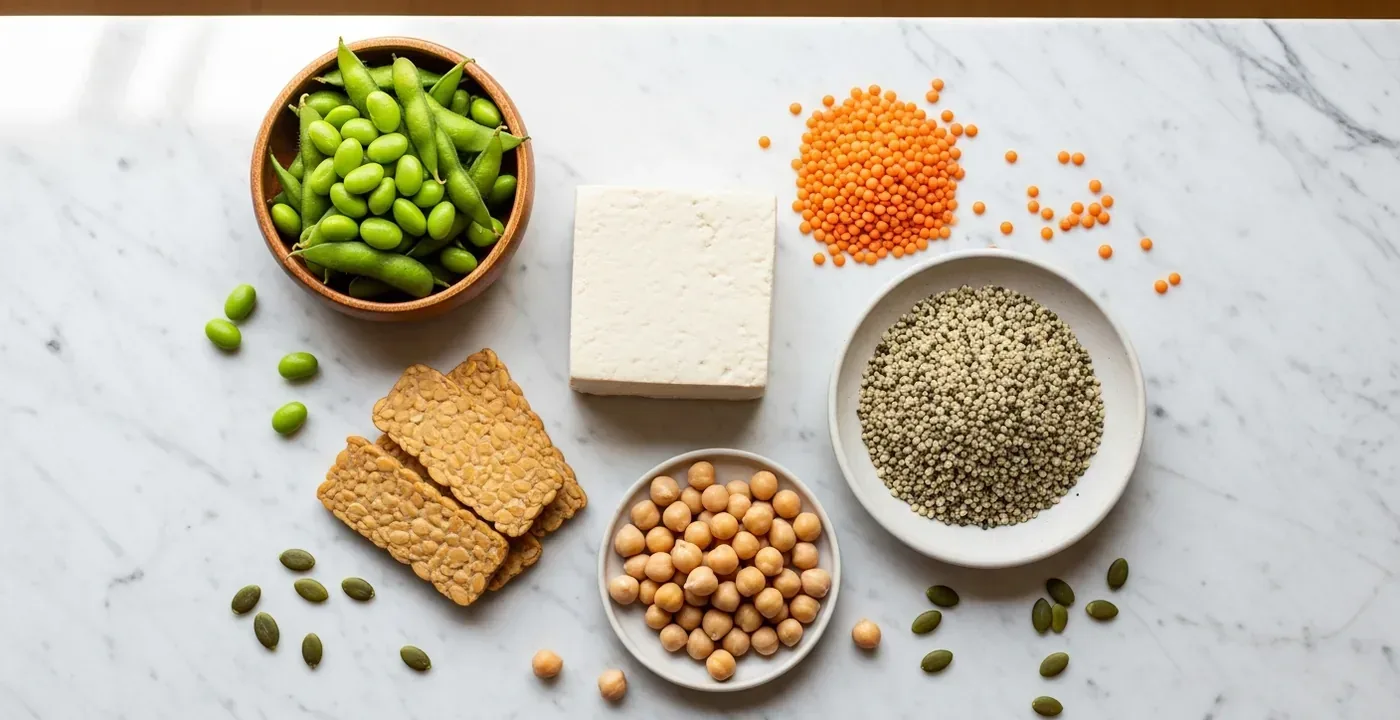
Table of Contents
Some of the links in this article are affiliate links, which help fund our independent review work at no extra cost to you. Every recommendation is based on hands-on testing through The Editor Lab methodology. No brand pays to appear, and no placement is guaranteed.
When I first started working with clients who wanted to cut out animal protein, I assumed we would spend the whole consultation managing the compromise. That was the story I had absorbed: plant protein is less complete, less absorbable, and you will always be chasing a deficit you cannot quite close.
Then I started reading the muscle-synthesis trials, not the brand claims, and the picture looked quite different. I have been advising clients at my private practice, through my clinical work with Google’s Kyros Project, and at The Wellness Clinic at Harrods for several years now, and what I see repeatedly is this: the people who struggle on plants are not struggling because plants are inadequate. They are struggling because nobody told them two practical things - which sources to stack, and how to fix the texture problem that causes them to abandon their protein shake by week three.
This guide covers both. We checked protein requirements and the plant-vs-whey muscle-synthesis evidence against the British Dietetic Association, NHS, and peer-reviewed trials, not brand claims, and had it reviewed by our nutrition team.
What Plant-Based Protein Is
Plant-based protein is protein derived from plants rather than animals. That covers a wide range: legumes (lentils, chickpeas, edamame), grains (oats, quinoa), soy foods (tofu, tempeh), seeds (hemp, pumpkin), and protein powders made from extracted plant sources such as pea or rice.
The word you will see most often attached to plant protein is ‘incomplete’, which sounds more alarming than it is. What it means is that most plant sources are lower in one or more essential amino acids compared to animal protein. Soy and hemp are the exceptions - both contain all nine essential amino acids in meaningful quantities, making them ‘complete’ proteins in the same way that eggs and whey are.
For every other plant source, the fix is straightforward: combine them. You do not need to do this at every single meal (the old “complementary protein at every sitting” advice has been revised). Eating a varied plant diet across the day gives your body the full amino acid profile it needs. A dinner of lentils and rice, followed by a snack of pumpkin seeds, covers the bases without requiring a nutrition spreadsheet.
The practical upshot: plant protein is nutritionally complete across the day if your sources are varied. The ‘incomplete’ label applies to individual foods in isolation, not to a well-planned plant diet.
The Balance Journal wellness section covers broader topics in supplements, adaptogens, and functional nutrition.
How Much Protein You Actually Need
The British Dietetic Association recommends 0.75g of protein per kilogram of body weight per day for the average sedentary adult. For someone weighing 70kg, that is 52.5g daily - achievable on plants without supplements.
If you train with any regularity, that number moves. The evidence (and a good summary is available from Examine.com’s protein intake review) puts the optimal range for people doing resistance exercise at around 1.6-2.2g per kilogram of body weight. At the lower end of that range, a 70kg person needs around 112g per day. That is the number that trips people up on plants - it is achievable, but it does not happen by accident.
The most common thing I see in clinic is people eating plenty of vegetables and assuming the protein is covered. A large salad with roasted chickpeas is a good lunch. It is not a protein-rich lunch. Chickpeas give you around 9g of protein per 100g cooked weight. You would need about 300g - a generous portion - to hit 27g of protein from one meal.
This is not a problem with plants. It is a planning problem, and one that is easy to fix once you know which sources are genuinely high in protein per serving rather than just ‘a source of protein’.
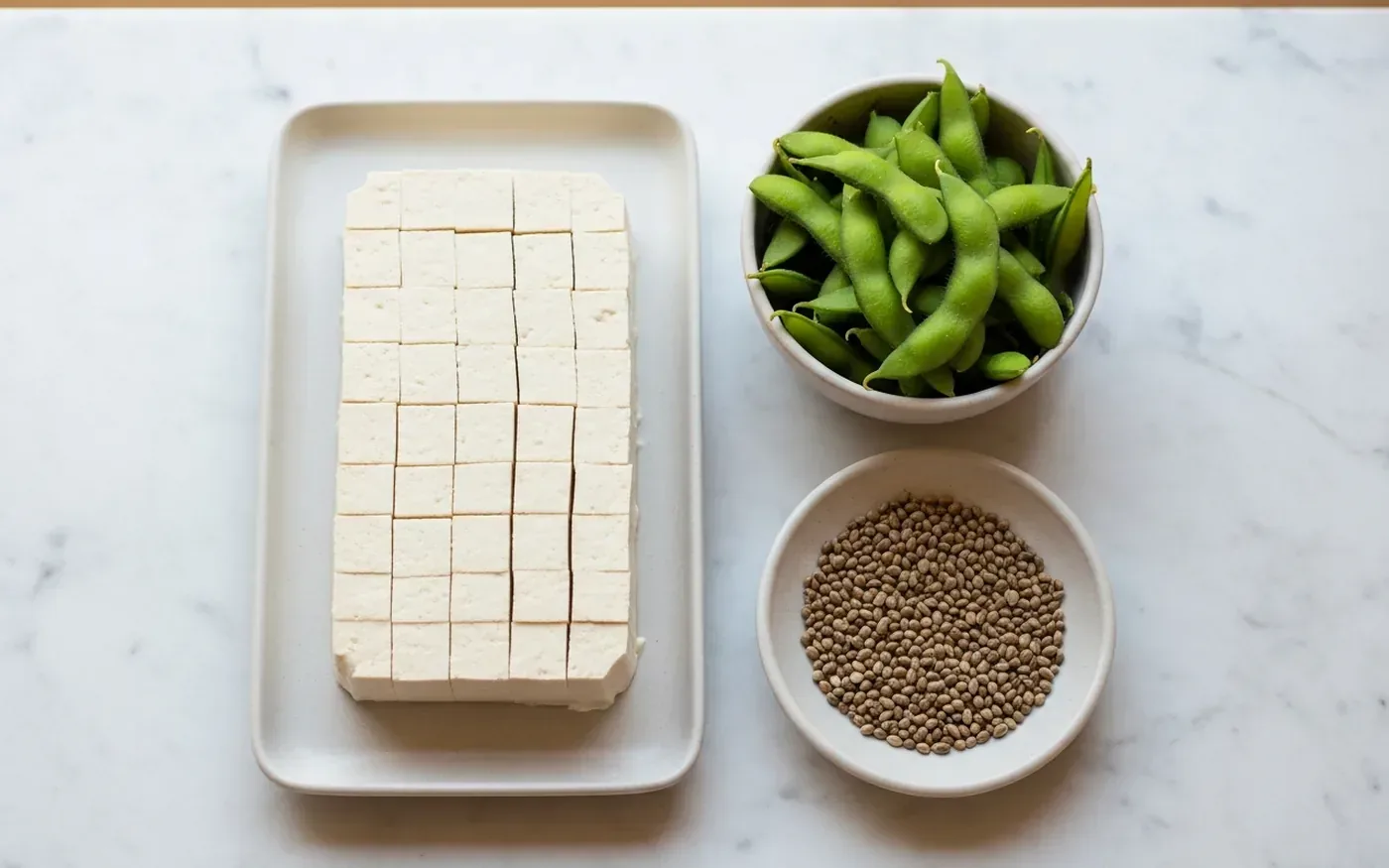
How to hit 30g of protein without meat at one meal: Stack sources. A scoop of pea-rice protein powder (around 20g protein) blended with 150g of soy yoghurt gives you close to 30g before you have added anything else. Alternatively: 200g firm tofu (around 16g protein) plus a generous portion of edamame (around 12g per 100g shelled) gets you there across a meal without a supplement.
The Best High-Protein Plant Foods
Not all plant foods are equal on protein density. Below are the best sources by protein per 100g cooked weight (or per serving for seeds and powders), verified against NHS nutritional reference data and the British Heart Foundation’s protein-without-meat guidance.
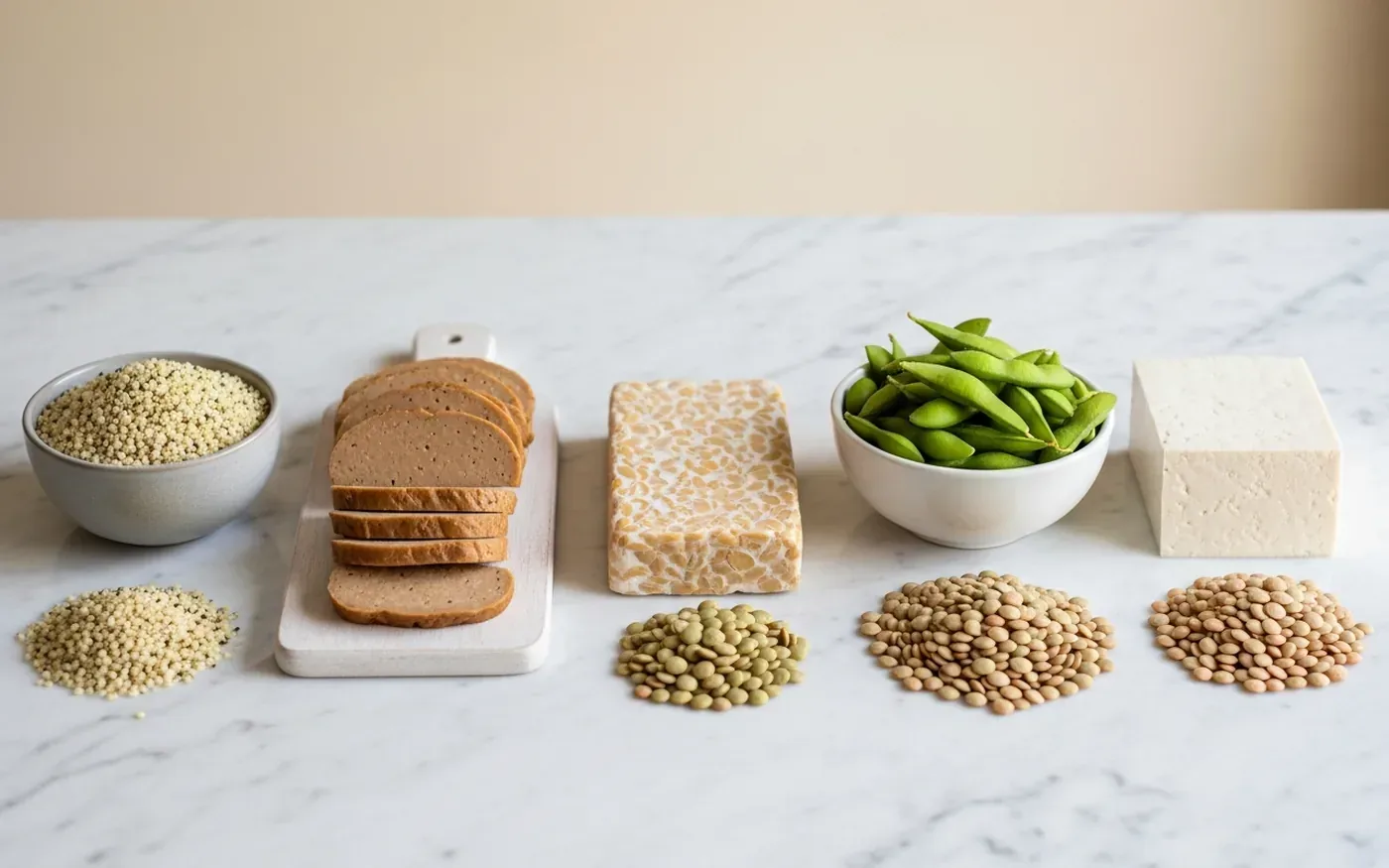
| Food | Protein per 100g (cooked) | Notes |
|---|---|---|
| Tempeh | 19g | Fermented soy - also easier to digest than tofu |
| Edamame | 12g | Young soy beans - complete protein |
| Lentils | 9g | All colours similar; red lentils slightly lower |
| Chickpeas | 9g | Dried and cooked; tinned slightly lower |
| Black beans | 8g | Good leucine content for muscle synthesis |
| Tofu (firm) | 8g | Protein content varies by firmness |
| Hemp seeds | 32g per 100g dry | Complete protein; good fatty acid profile |
| Pumpkin seeds | 19g per 100g dry | High zinc; good as a snack or topping |
| Quinoa | 4g | Complete protein grain; lower density but versatile |
| Seitan | 25g | Wheat gluten - avoid if coeliac or gluten-sensitive |
| Pea protein powder | 20-24g per scoop (25g) | Isolate form; high leucine; the dominant supplement choice |
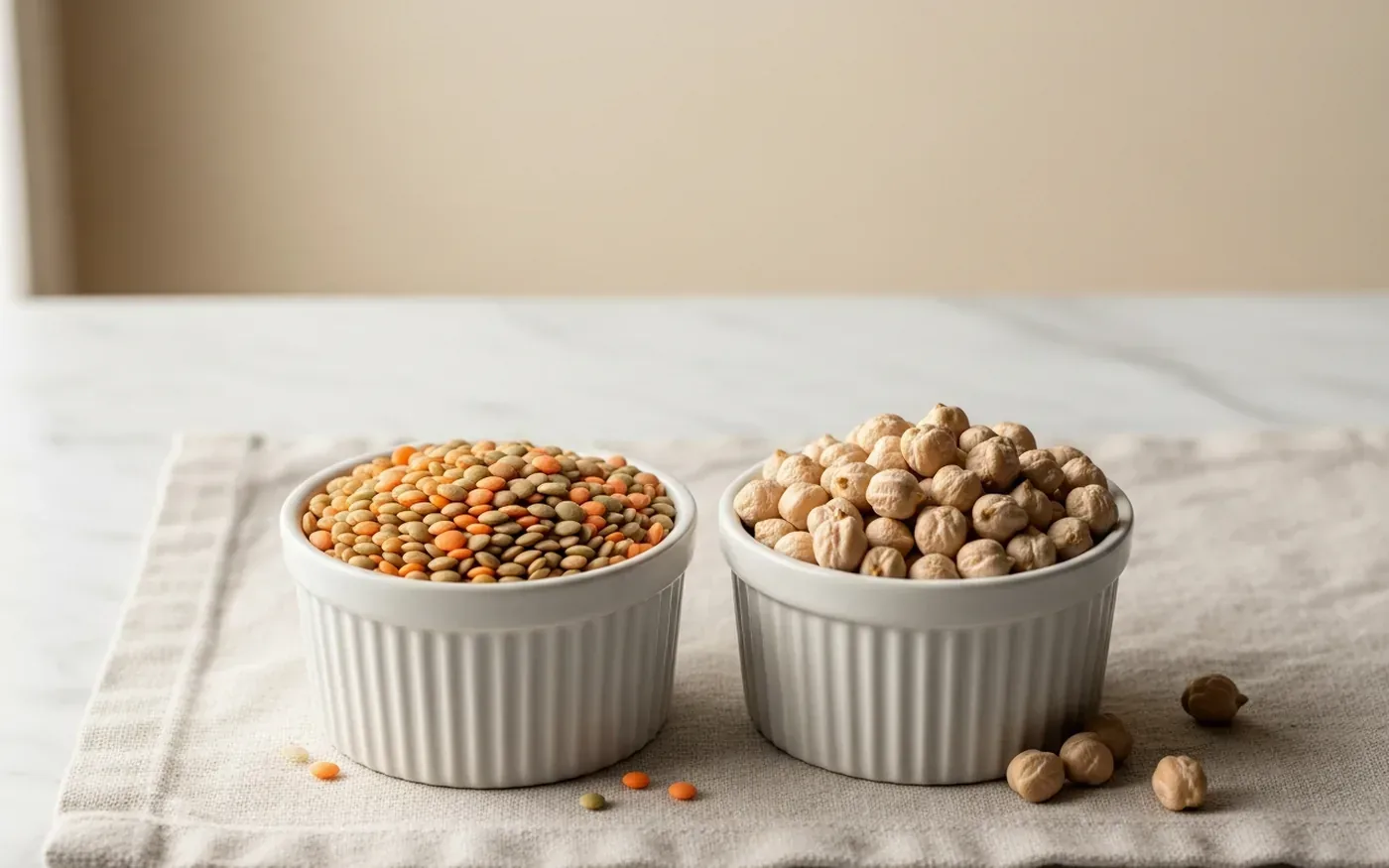
The cheapest high-protein plant foods: Lentils and other pulses have earned the nickname ‘poor man’s protein’ for good reason. A 500g bag of red lentils costs around £1.20 and delivers 18g protein per cooked cup. They are shelf-stable, quick to cook, and work in soups, dahls, and salads. For clients who find protein targets expensive to hit on plants, I always start here.
The healthiest high-protein plant snack: Roasted edamame, roasted chickpeas, or a handful of pumpkin seeds. All three are whole-food, fibre-rich, and deliver 7-17g of protein per serving without added sugar or synthetic ingredients.
Does Plant Protein Match Whey for Muscle Building?
This is the question I hear most often in clinic, and it is the one where the evidence has shifted most clearly in the last few years. The short answer is yes, when total protein intake and leucine are matched.
The landmark trial here is Babault et al. (2015), published in the Journal of the International Society of Sports Nutrition, which found that pea protein produced comparable increases in muscle thickness to whey when matched for total protein intake over 12 weeks of resistance training. More recent meta-analyses have largely confirmed this finding.
The nuance matters, though. Single-source pea protein is lower in methionine than whey, and single-source rice protein is lower in lysine. Neither deficiency is catastrophic - you can compensate through diet - but a pea-plus-rice blend closes the amino acid gap that single-source pea has alone. That is why you will see ‘pea and rice blend’ on the labelling of most of the better-quality plant powders (Form Nutrition, Vivo Life, Innermost, and others in the premium tier use this combination).
I want to be honest about the friction here, because most plant-protein guides either ignore it or bury it. Plant protein is not nutritionally inferior for building muscle when total intake and leucine are matched - but single-source pea or rice alone is lower in some amino acids, so a blend matters. Anyone selling ‘plant beats whey full stop’ is overstating the evidence.
For most people eating a varied diet and supplementing with a pea-rice blend, there is no meaningful gap. For competitive athletes with precision protein requirements, the amino acid profile is worth a closer look, and that conversation is best had with a registered dietitian or nutritional therapist.
Fixing Chalky Texture and Bloating
This section exists because the evidence on plant protein and muscle can be as good as it wants to be - if your protein shake tastes like wet cement and causes three hours of bloating, you will stop taking it by week two. That is what the forums are actually talking about, and it is what most nutrition guides skip.
Why plant protein tastes chalky and gritty: The chalky, gritty texture in plant protein powders comes from the fibre and starch that remain after extraction, particularly in lower-grade pea concentrates. Isolates (where more of the fibre and starch have been removed) mix considerably smoother than concentrates. The £9 tubs are usually concentrates. The £25-30 tubs are usually isolates. That price difference is largely what you are paying for.
Why plant protein causes bloating: The fibre content that remains in concentrates ferments in the lower gut, producing gas. This is not an allergic reaction or intolerance - it is the same mechanism behind the gas and bloating that pulses cause for some people. Pea isolates cause significantly less of this than pea concentrates, and most people who switch from a budget concentrate to a pea-rice isolate find the digestive response much gentler.
- Choose a pea-and-rice isolate, not a concentrate
- Blend rather than stir - stirring leaves undissolved particles that create gritty pockets; a blender disperses them evenly
- Start with a smaller dose (half a scoop for the first week) if you are sensitive to fibre changes
- Avoid the budget tubs until you have established which powder your gut handles well - you are more likely to quit entirely after a bad experience than to find a budget option that works
Budget and mid-range options (Bulk, Myprotein Vegan) use concentrate forms that mix adequately in a shaker but do not compare to isolate blends on texture. Premium options (Form Nutrition, Vivo Life, Innermost) use isolate blends and tend to score significantly higher on taste and texture in independent testing.
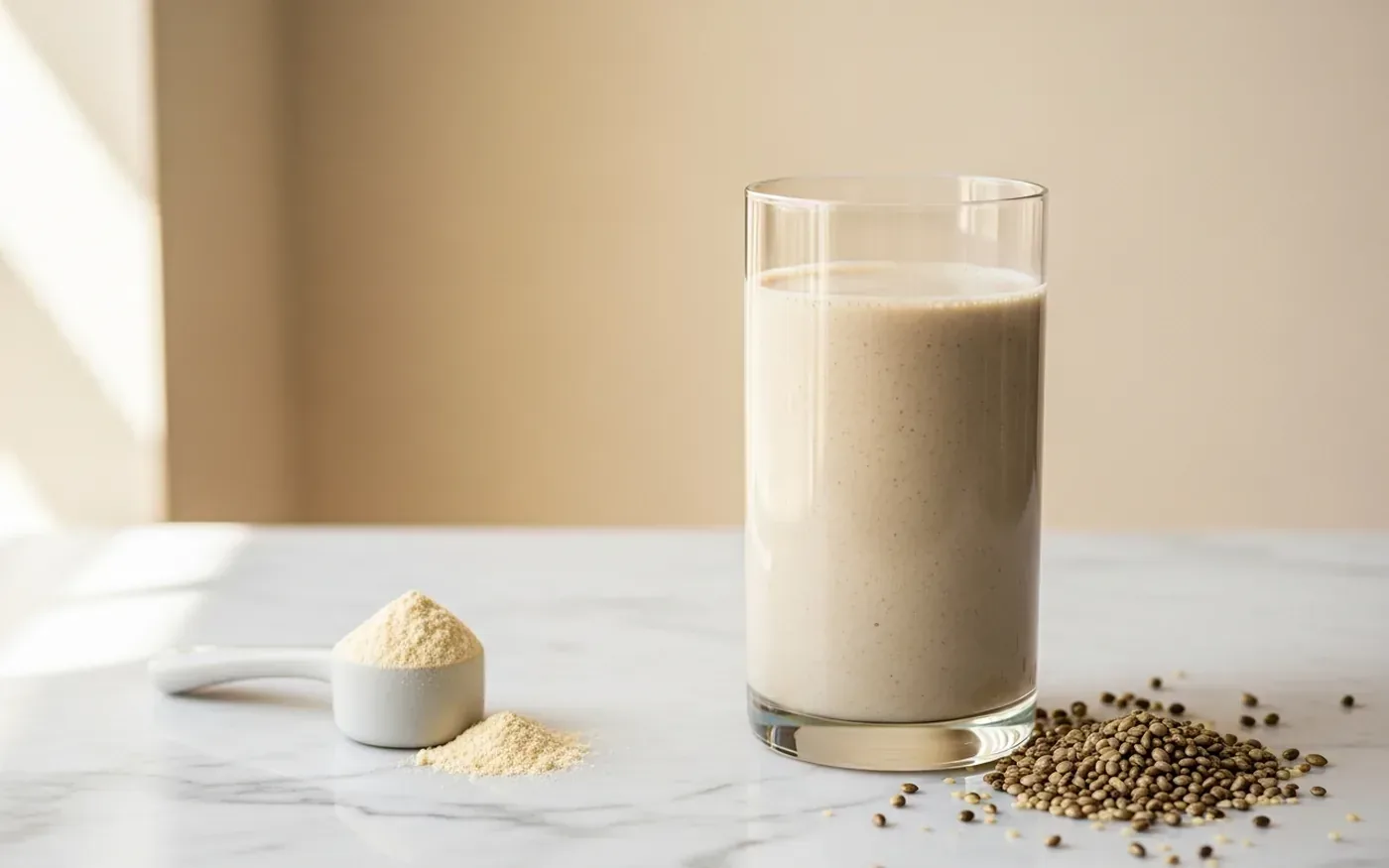
Protein in Your Coffee (Proffee) - Why It Clumps and How to Fix It
The protein-in-coffee trend - ‘proffee’ - has moved from gym-account content into genuinely mainstream morning-routine territory. The appeal is obvious: hit your protein target and your caffeine fix at the same time. The problem is that most plant proteins clump badly in hot coffee, and the texture issue causes people to give up on it entirely.
Why plant protein clumps in coffee: Heat accelerates protein denaturation - the proteins unfold and bond with each other rather than dispersing in the liquid. This is worse with plant protein than whey because the fibre and starch in plant powders create an additional binding matrix. The result is protein that “tends to ball up into little clumps... no matter how much you stir,” as one frustrated user on a cooking forum described it. This is not a mixing-technique problem. It is chemistry.
- Use cold or room-temperature coffee, not hot. Cold brew or iced coffee mixed with a pea-rice isolate is the smoothest combination by a significant margin.
- If you want hot proffee, add the protein to a small amount of cold water or plant milk first, mix until smooth, then add to the hot coffee. Never add powder directly to hot liquid.
- Use a blender, not a spoon or shaker. A quick blend after adding to coffee disperses any remaining particles.
- Use an isolate blend specifically marketed as ‘barista-friendly’ or ‘instant-mixing’ if you drink protein coffee daily - these use modified starch carriers that reduce clumping in heat.
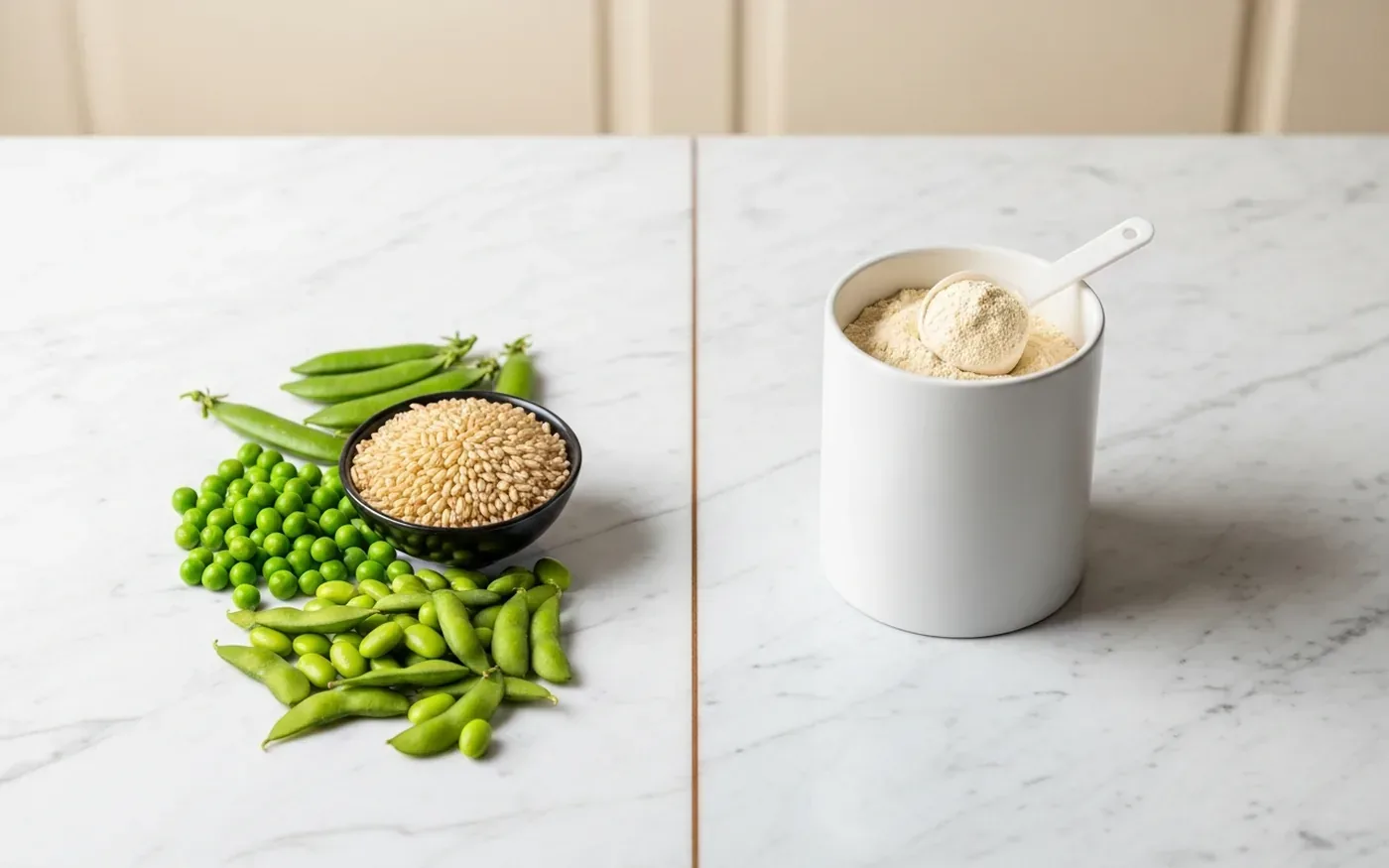
Balance Coffee is our sister publication’s brand - they sell coffee, not protein powder, so this guide has no product to push on the coffee side. The pairing of a clean, best healthy coffee beans uk with a pea-rice isolate is, however, one of the better morning-routine combinations I have seen clients use consistently. Clean coffee + clean protein, no proprietary supplement stack required.
Choosing a Plant Protein Powder
If you have read this far, the decision framework is simpler than the supplement market makes it look.
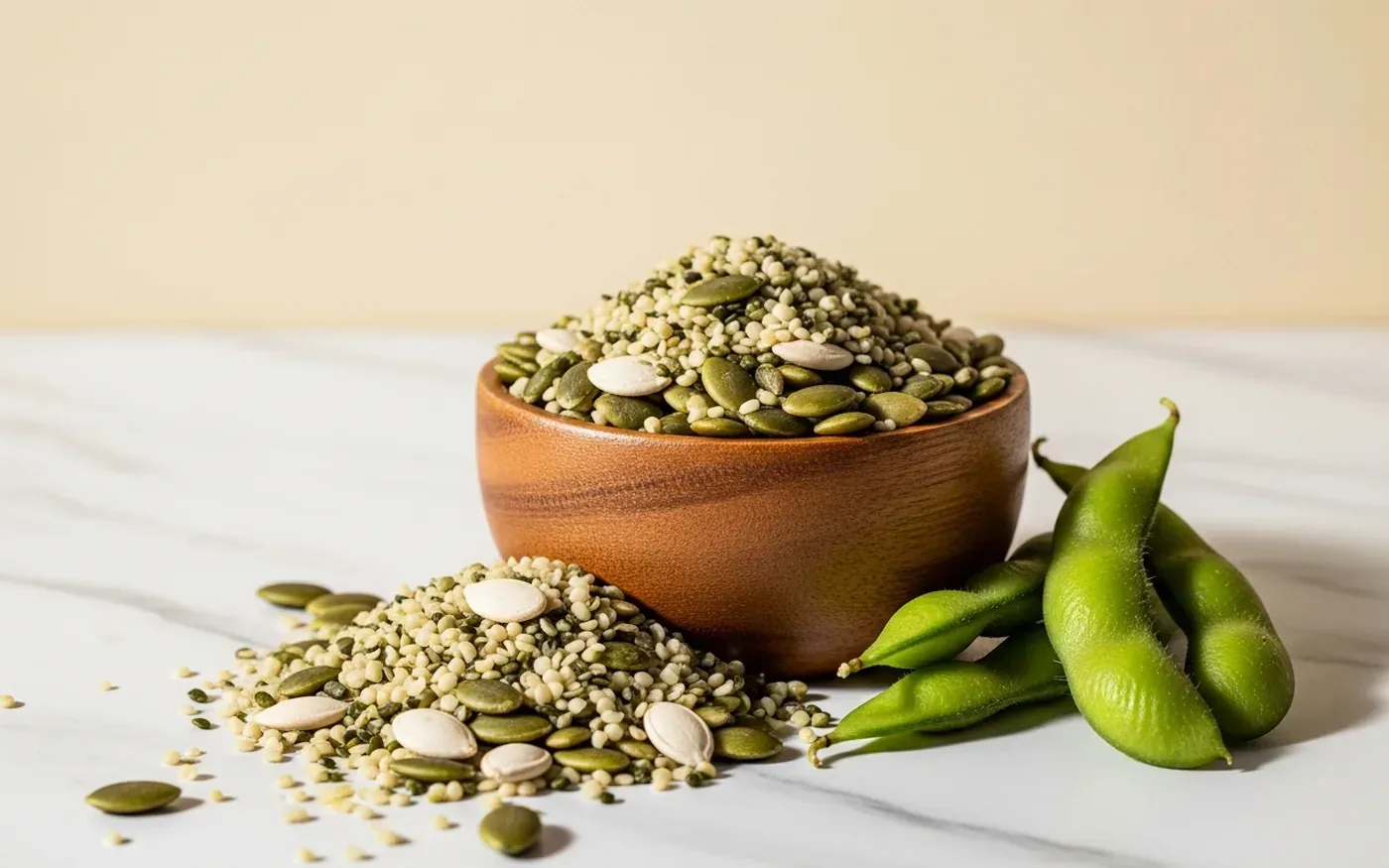
- Form: Choose a pea-and-rice blend over single-source pea or rice
- Processing: Isolate over concentrate for texture and digestion
- Protein per scoop: Look for 20g+ per 25-30g serving
- Additives: Shorter ingredient list is generally better; avoid artificial sweeteners if gut sensitivity is a concern (new research suggests some artificial sweeteners may alter gut microbiome composition)
- Third-party testing: Particularly important for competitive athletes subject to anti-doping rules
At the premium end (Form Nutrition, Vivo Life, Innermost - typically £25-35 per bag): pea-rice isolate blends, minimal additives, third-party tested, and smooth-mixing. These are the tubs that people stick with.
At the mid-range (Huel, PhD Plant, The Protein Works Vegan - typically £18-25): reasonable protein profiles, variable texture depending on formulation, often concentrate-based.
At the budget end (Bulk, Myprotein Vegan - typically £9-15): serviceable protein delivery, grittier texture, more likely to cause digestive discomfort. Fine for someone who has already found a powder they tolerate and is optimising on cost. Less ideal for someone first switching to plant protein who needs a good first impression.
The full ranked roster, with taste and amino-completeness scores per brand, is in our dedicated guide to the best vegan protein powder UK. This section is the overview; that page is where the detailed brand-by-brand comparison lives.
For anyone also exploring mushroom coffee uk or best lions mane coffee uk as part of a functional morning-nutrition stack, plant protein and adaptogenic coffee pair well - both are cleaner formats than a traditional supplement stack.
Frequently Asked Questions
What is the best source of plant-based protein?
Soy foods (tofu, tempeh, edamame), lentils, chickpeas, and seitan deliver the highest protein per serving among whole plant foods. Soy is the only whole food source that provides a complete amino acid profile on its own. Among powders, a pea-and-rice blend is the most nutritionally complete plant-based option, providing all essential amino acids without relying on a single source that may be lower in methionine or lysine.
How do I get 30g of protein without meat?
Stack two or three sources at a meal. A practical example: one scoop of pea-rice protein powder (20g protein) combined with 150g of soy yoghurt takes you close to 30g before adding anything else. Alternatively, 200g of firm tofu (16g) with a generous portion of shelled edamame (12g per 100g) across a meal achieves the same. The key is treating protein as a deliberate stacking exercise rather than assuming plant foods will cover it passively.
Which plant is highest in protein?
By protein density, seitan (wheat gluten) leads among whole plant foods at around 25g per 100g cooked, but it is not suitable for anyone coeliac or gluten-sensitive. Among seeds, hemp delivers around 32g per 100g dry weight and is also a complete protein. Among legumes, edamame (12g per 100g cooked) and lentils (9g per 100g cooked) are the most practical daily sources given their versatility and cost.
What are plant-based proteins?
Plant-based proteins are proteins derived from plant sources rather than animals - this includes legumes (lentils, chickpeas, black beans), soy foods (tofu, tempeh, edamame), grains (oats, quinoa), seeds (hemp, pumpkin), and extracted forms such as pea protein powder or rice protein powder. Most plant proteins are described as ‘incomplete’, meaning they are lower in one or more essential amino acids when consumed alone. Eating varied plant sources across the day provides the full amino acid profile the body needs.
What is poor man’s protein?
‘Poor man’s protein’ is a common name for lentils and other pulses - cheap, shelf-stable, high-protein plant staples that have sustained populations around the world for millennia. A 500g bag of red lentils costs around £1.20 in most UK supermarkets and delivers around 18g of protein per cooked cup. They are not glamorous, but they are among the most cost-effective protein sources available on any diet, plant-based or otherwise.
What is the healthiest plant protein snack?
Roasted edamame, roasted chickpeas, and pumpkin seeds are the three strongest options. Roasted edamame delivers around 17g of protein per 100g serving with a complete amino acid profile. Roasted chickpeas offer around 9g per 30g portion with significant fibre. Pumpkin seeds provide around 9g per 30g serving alongside zinc and magnesium. All three are whole-food formats with no added sugar, making them materially better choices than most commercially packaged ‘protein snacks’.
Is plant-based protein as good as whey for muscle building?
Yes, when total protein intake and leucine are matched. Pea protein has been shown in peer-reviewed trials, including the Babault et al. (2015) study in the Journal of the International Society of Sports Nutrition, to produce comparable muscle thickness gains to whey over 12 weeks of resistance training. A pea-and-rice blend is the most complete plant option for muscle building, as it closes the amino acid gap that single-source pea protein has alone. The key variable is total daily protein intake: plant protein works when intake is adequate, not when it is low and you are hoping the quality compensates.
Why does plant protein taste chalky and cause bloating?
The chalky texture and clumping come from the fibre and starch that remain in plant protein concentrates after extraction. These same fibres ferment in the lower gut, producing gas and bloating in people who are sensitive to rapid changes in fibre intake. The reliable fix is a pea-and-rice isolate (not concentrate) blended rather than stirred. Isolates have more of the fibre and starch removed in processing, which produces a smoother texture and a gentler digestive response. The £9 tubs are typically concentrates; the £25-30 options from brands like Form or Vivo Life are typically isolates.
Reference Tables
High-Protein Plant Foods: Full Reference
| Food | Protein per 100g | Complete protein? | Notes |
|---|---|---|---|
| Seitan | 25g | No (low lysine) | Avoid if coeliac or gluten-sensitive |
| Hemp seeds (dry) | 32g | Yes | Also a source of omega-3 fatty acids |
| Tempeh | 19g | Yes | Fermented; more digestible than tofu |
| Pumpkin seeds (dry) | 19g | No (low lysine) | Good zinc and magnesium source |
| Edamame (cooked) | 12g | Yes | Versatile; fresh or frozen |
| Lentils (cooked) | 9g | No (low methionine) | Pairs with grains to complete profile |
| Chickpeas (cooked) | 9g | No (low methionine) | Inexpensive; widely available |
| Black beans (cooked) | 8g | No | Good leucine content |
| Tofu, firm (cooked) | 8g | Yes | Protein varies by firmness |
| Quinoa (cooked) | 4g | Yes | Lower density; complete grain protein |
Pea Protein vs Whey: Amino Acid Comparison
| Amino acid | Pea protein | Whey protein | Notes |
|---|---|---|---|
| Leucine | High | Very high | Primary muscle synthesis trigger |
| Isoleucine | High | High | Similar levels |
| Valine | High | High | Similar levels |
| Methionine | Lower | High | Gap in single-source pea |
| Lysine | High | High | Pea is adequate |
| Overall BCAA | Moderate-high | High | Pea+rice blend closes the gap |
Related Guides
- Best Greens Powders 2026: Nutritionist Tested, Tasted, and Honestly Reviewed
- The Best Matcha Brands UK 2026: Tested, Ranked and Reviewed
- Best Mushroom Tinctures UK 2026 - 7 Brands Tested and Compared
- Best Mushroom Coffee UK 2026: 10 Brands Ranked by Dose
- Best Lions Mane Coffee UK 2026 - Tested and Compared
A registered Nutritional Therapist and member of BANT, Clemmie blends science with a holistic approach to wellbeing.