Swiss Water Decaf Explained: How It Works and Compares


Solvent free on the bag does not mean caffeine free in the cup.
Table of Contents
Some of the links in this article are affiliate links, which help fund our independent review work at no extra cost to you. How we assessed these products is explained in this article and our Editor Lab methodology. No brand pays to appear, and no placement is guaranteed.
Swiss Water decaf is coffee that had its caffeine removed with water and carbon filters instead of a chemical solvent, which is what forum posters mean when they tell you to buy the 'chemical free' one. The label is mostly right about the method and wrong if you read it as 'caffeine free'. You should know both halves before you pay the premium.
Swiss Water decaf is coffee decaffeinated by the Swiss Water Process, which soaks green (unroasted) beans in a caffeine-free green coffee extract so only the caffeine moves out, then strips that caffeine from the extract with carbon filters. No solvent such as methylene chloride or ethyl acetate is used. Swiss Water says the process takes about 8 to 10 hours and removes 99.9% of the caffeine, so the coffee you drink is low in caffeine but not caffeine-free.
This guide reviewed Swiss Water's and Descamex's own process descriptions, the UK extraction-solvent and coffee-extract rules, and independent sources including a peer-reviewed review of decaffeination methods, and it separates each company's claims from independent facts. The caffeine and pregnancy lines were reviewed by nutritional therapist Clemmie Rose. If you are ready to buy rather than read, the best decaf coffee beans guide holds the tested shortlist.
Editor's Note
I have spent nearly fifteen years in and around speciality coffee, starting as a barista trainer at UCC Coffee in 2012, and I visited almost 300 UK roasteries in my Sanremo years. I have not run my own Swiss Water trial, so everything below rests on published sources, and I label every company claim as the company's so you can see what each rests on.
What Is Swiss Water Decaf?
Swiss Water decaf is decaf made by one specific, branded method. Swiss Water Process is a registered trade name, so a bag that carries it, or the company's logo, tells you exactly how the caffeine came out. A bag that only says 'water processed' tells you less, and we come back to that in the label section.
The word 'Swiss' is history, not geography. Coffee Review says the Swiss firm Coffex S.A. developed a commercially viable decaffeination process using water only in the 1980s. Today the process is run by the Swiss Water Decaffeinated Coffee Company, whose address is Delta, British Columbia, in Canada, so your beans did not take a trip through the Alps.
Decaffeination happens to green beans, before roasting. That matters for you in two ways. The roaster you buy from then roasts the decaf like any other coffee, and the method on the bag describes the green bean, not the roast.
How the Swiss Water Process Works, Step by Step
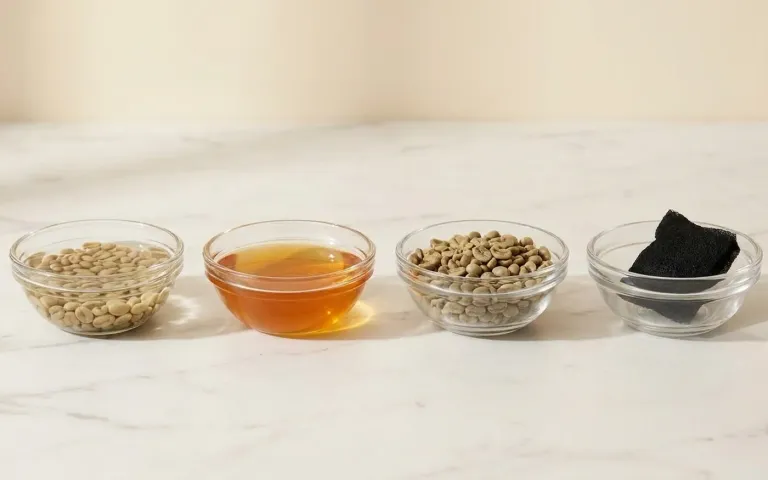
Swiss Water describes the process in four steps on its own process page, and the company says it uses only water, temperature, and time. Here is that sequence in plain English, so you can picture what happens to your beans.
- Preparation and hydration. The green beans are prepared and hydrated, so the caffeine inside them is able to move.
- Caffeine migration. The beans meet a liquid called Green Coffee Extract, or GCE, and diffusion lets only the caffeine move outward.
- Drying. Once the caffeine is out, the beans are dried.
- Filtration and renewal. The caffeine-saturated extract passes through carbon filters that trap the caffeine, and the refreshed extract goes back into the cycle as a closed loop.
GCE is the clever part, and you can think of it as water that already holds everything soluble in coffee except caffeine. Because the extract is already full of those compounds, only caffeine has somewhere to go when the beans soak. The company says the whole process takes about 8 to 10 hours, which is a company figure and not an independent measurement.
If you would like a mental picture, imagine a tea bag steeping in tea that is already full of flavour, so the only thing left to leave the bag is the caffeine. The carbon filter then cleans the liquid so the next batch of beans meets extract that can take up caffeine again. You can see why the company calls it a closed loop.
Is Swiss Water Decaf Solvent-Free and Safe?
Yes, in the sense that matters to you: Swiss Water uses no extraction solvent. The company calls its method 'chemical-free' and says its facility never uses solvents. I write 'solvent-free' instead, because 'chemical-free' is a marketing phrase and everything, water included, is a chemical.
You also need the other side of the argument, because solvent decaf is legal and regulated in the UK. The retained Annex I of Directive 2009/32/EC lists ethyl acetate and carbon dioxide as permitted extraction solvents under good manufacturing practice, and it caps dichloromethane, also called methylene chloride, at 2 mg/kg in roasted coffee. Solvent decaf is therefore not dangerous because of the method alone, and Swiss Water is simply the route for readers who want no extraction solvent at all.
Here is how the company's own claims compare with what independent sources support, so you can weigh each one.
| Claim | Who says it | What the evidence supports |
|---|---|---|
| Removes 99.9% of caffeine | Swiss Water | A company figure, no independent test found |
| Chemical-free | Swiss Water | No extraction solvent is used, so 'solvent-free' is accurate |
| Preserves chlorogenic acids and polyphenols | Swiss Water | A company claim, not tested here |
The process removes caffeine and nothing else. It does not remove pesticide residue or mould toxins already in the green bean, so a clean method on a poor bean is still a poor bean for you. That is why you should look for lab-tested coffee and read about mycotoxins in coffee and pesticides in coffee alongside the decaf method.
If you want the health evidence for decaf in general, that belongs to a separate guide on is decaf coffee bad for you.
How Much Caffeine Is Left in Swiss Water Decaf?
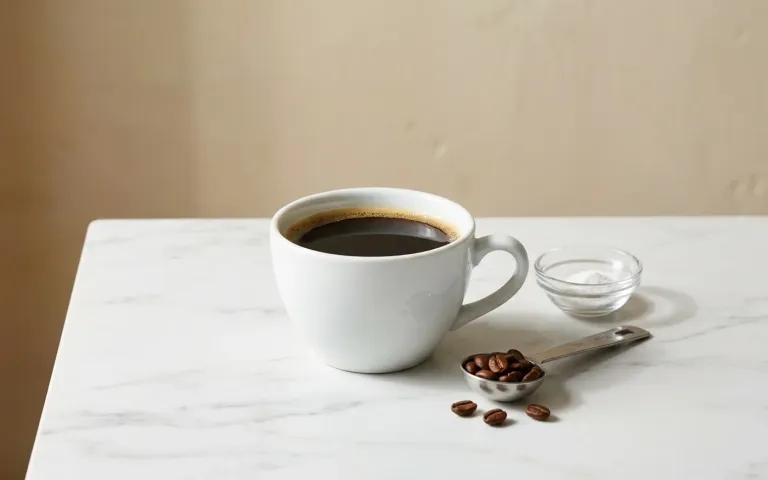
Swiss Water says its process removes 99.9% of the caffeine, which leaves a small amount in your cup. For decaf of any method, the British Heart Foundation says decaf has about 93 per cent less caffeine than regular coffee, with around 7 mg per 200 ml cup compared with 100 mg in a regular cup.
Real cups vary. A 2006 study by McCusker and colleagues in the Journal of Analytical Toxicology measured 10 shop-bought decafs at 0 to 13.9 mg per 16 oz serving, and Starbucks decaf espresso at 3.0 to 15.8 mg per shot. That study was not about Swiss Water specifically, so treat it as the spread you can expect from decaf as a whole.
UK law uses a different yardstick if you buy instant. Under the Coffee Extracts and Chicory Extracts (England) Regulations 2000, an extract may be called 'decaffeinated' when its residual caffeine does not exceed 0.30 per cent of its coffee-based dry matter. That rule covers instant, and I found no UK legal caffeine limit for decaf roasted beans, so I do not quote one.
If you are pregnant, count every cup. The NHS says you should not have more than 200 mg of caffeine a day, and decaf adds to that total. To judge what several cups add up to, compare them with the figures for how much caffeine in coffee a regular cup holds.
Swiss Water vs CO2 vs Mountain Water vs Solvent Decaf
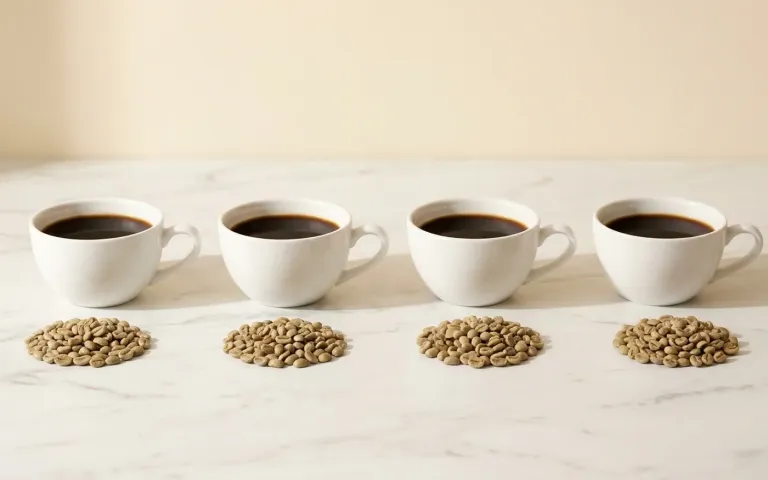
Four families of decaf sit on the shelf next to each other, and the label rarely explains them. A peer-reviewed review by Ramalakshmi and Raghavan sorts decaffeination methods into organic solvents, water, and supercritical carbon dioxide. Here is what each means for the bag in your hand.
Solvent decaf uses methylene chloride or ethyl acetate to remove caffeine. Both are permitted under the UK rules above, and the UK caps methylene chloride residue at 2 mg/kg in roasted coffee. Sugarcane decaf is the ethyl acetate version, using a compound derived from sugarcane, so you should call it a solvent method and never a chemical-free one.
Supercritical CO2 uses compressed carbon dioxide, which Coffee Review says behaves partly like a gas and partly like a liquid and combines selectively with caffeine. The caffeine is removed from the CO2 through charcoal filtering, and the flavour components stay in the bean. The UK list does name carbon dioxide as a permitted extraction solvent, so you should keep the plain label 'solvent-free' for the water methods.
Mountain Water is a different water-based process, run by Descamex in Cordoba, Veracruz, Mexico. Descamex says it was founded in 1980, patented its water-based method in 1987, and reaches more than 97% extraction. The company also lists organic certifications including USDA NOP and the EU-equivalent standard, so you may see a claim that Swiss Water is the only certified organic decaf method, and Descamex's own listing contradicts it.
| Method | Extraction solvent | UK position | Run by |
|---|---|---|---|
| Swiss Water Process | None | No solvent to regulate | Swiss Water, Delta, Canada |
| Mountain Water | None (water-based) | No solvent to regulate | Descamex, Veracruz, Mexico |
| Supercritical CO2 | Compressed carbon dioxide | Permitted, good manufacturing practice | Described by Coffee Review |
| Sugarcane (ethyl acetate) | Ethyl acetate | Permitted, good manufacturing practice | Described by Halcyon's product page |
| Methylene chloride | Dichloromethane | Capped at 2 mg/kg in roasted coffee | Described by Annex I |
Swiss Water and Mountain Water are both water-based, but they are different processes at different companies, so 'mountain water' on a bag does not mean Swiss Water. If you take one fact from this table, take that one.
Taste and Price: The Trade-Offs
Here is the friction in the story, and you should hear it before you buy. Coffee Review says many coffee professionals contend that the Swiss Water Process blurs flavour more than the competing solvent processes. In its decaffeination methods and flavour page, Kenneth Davids writes that Swiss Water "tends to emphasize body, de-emphasize acidity and high notes, and occasionally (but not always) alter or blur flavor."
The same page tells you a solvent method "tends to preserve acidity, nuance, and high notes, but may reduce body." On CO2, Davids writes "I have tasted some excellent samples, but not enough." Coffee Review's pages are undated reference material, so read this as one respected taster's view and not as a current consensus.
If you want to ask whether any decaf tastes like real coffee, the honest answer is that method is one factor and your roaster is another. I would judge a decaf by who roasted it and how clearly they name the method before I judged it by the method alone. A blurred flavour is a risk with any decaf, and you can only find out by tasting.
Price is the second trade-off you will meet. Coffee Review says Swiss Water costs more than solvent processes because the separated caffeine cannot be recovered from the charcoal and sold. Shelf prices do not follow the process neatly, though: RAVE Coffee's Swiss Water Decaf Blend No 11 costs £8.95 for 250g, while Balance Coffee's Halcyon Decaf, a solvent decaf, costs £16.49 for 250g.
How to Tell if Your Decaf Is Swiss Water
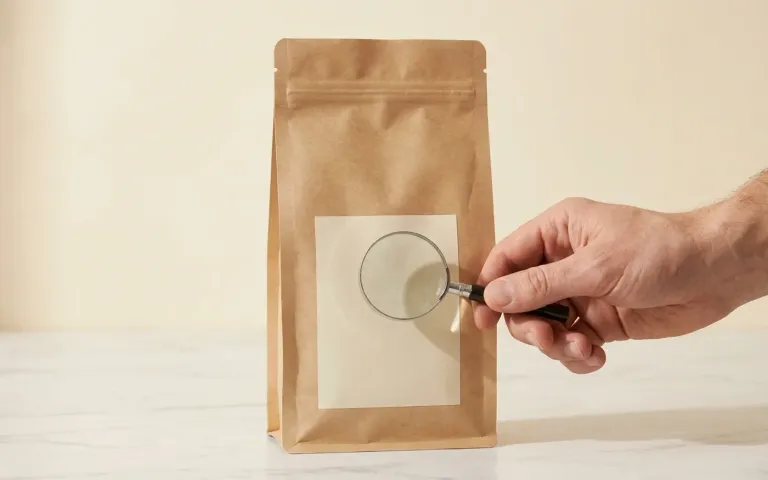
You can read any decaf bag with a short rule. Look for the words 'Swiss Water Process' or the Swiss Water logo, and you have your answer. 'Water process' on its own may mean Mountain Water, 'natural decaf' or 'sugarcane' usually means ethyl acetate, and a bag with no method named means you should ask the roaster.
Swiss Water decaf comes in beans, instant and pods. If you drink instant, keep best decaf instant coffee in mind, and for capsules the guide to decaf coffee pods covers the choices. In a supermarket you should check the pack wording or the logo, because I will not tell you a particular Tesco product is Swiss Water without seeing it on the pack.
For UK examples you can check, RAVE Coffee sells Swiss Water Decaf Blend No 11 in whole bean, cafetiere, filter, and espresso grinds. Decadent Decaf is a UK Swiss Water specialist, and our Decadent Decaf review looks at it properly. The Swiss Water company itself is based in Canada, so UK roasters sell the method rather than run it.
I founded Balance Coffee in 2020, and its Halcyon Decaf is not Swiss Water decaf. It uses the Sugarcane EA method, which removes caffeine with ethyl acetate, a compound derived from sugarcane, so it is a solvent decaf. Ethyl acetate is a permitted solvent in the UK, and Balance Coffee says each batch is third-party lab tested, which tells you about contaminants and not about the method.
Is Swiss Water Decaf Better? Who It Suits
Swiss Water decaf is better if you want no extraction solvent at all, and no study shows it is healthier than other decaf. Buy it if the thought of a solvent bothers you and you accept the flavour trade-off. Skip it if you prize bright acidity, because the taste critique above is aimed straight at that.
CO2 and Mountain Water are also routes away from methylene chloride, and sugarcane decaf can taste sweeter to some drinkers, so you have options. All of them are legal and capped by regulation, and none of them removes every milligram of caffeine. Organic is a separate label from the method, so a bag can be one, both, or neither, and the same label habit applies to organic coffee beans.
If you want to cut caffeine without coffee at all, matcha is one route, but check caffeine in matcha before you treat it as a swap. If you want market data rather than method, there is more in UK decaf coffee statistics. For wider buying advice across the whole range, start at the best coffee beans in the UK hub.
The Bottom Line
Swiss Water decaf means water and carbon filters, no extraction solvent, and a small amount of caffeine left. CO2 and Mountain Water are also gentle, and sugarcane decaf is a solvent method. Check the bag for 'Swiss Water Process' or ask the roaster, then pick from a list you trust, and you will not need to take anyone's word for it.
Frequently Asked Questions
Is the Swiss Water decaffeination process safe?
Yes. The process uses water, green coffee extract and carbon filters, with no extraction solvent. Like all decaf, it still leaves a little caffeine in the cup, and the process removes caffeine only, so it does not clean up pesticide residue or mould toxins in the bean. If you are pregnant, count decaf towards the NHS limit of 200 mg a day.
Is Swiss Water decaf better?
It is better if you want no extraction solvent at all, and some people also prefer it for organic reasons. No study shows it is healthier than other decaf. Some tasters, including Coffee Review's Kenneth Davids, say it mutes acidity and high notes, so you are weighing a solvent preference against a possible flavour trade-off.
What is the healthiest decaf coffee you can buy?
No single bag wins, because no study ranks decaf methods for health. A sensible approach is to choose a named solvent-free method and a roaster that publishes lab tests for contaminants. Our decaf beans guide, linked in the introduction, shortlists UK options so you can compare them.
Is there any downside to drinking decaffeinated coffee?
Decaf still holds a small amount of caffeine, and some people notice a flavour trade-off, depending on the method and roast. Beyond that, the wider health evidence on decaf has its own guide on is decaf coffee bad for you. If you are sensitive to caffeine or pregnant, count each cup.
Which decaf coffees do not use methylene chloride?
Swiss Water and Mountain Water decaf use no extraction solvent, and CO2 decaf uses compressed carbon dioxide instead. Sugarcane decaf avoids methylene chloride but uses ethyl acetate, a permitted solvent. Check the bag for the method name, and if the bag does not name one, ask the roaster before you buy.
Which Swiss Water decaf coffee is considered the best in the UK?
There is no ranking here, because the answer depends on roast, origin and budget. RAVE Coffee and Decadent Decaf are two UK examples that sell Swiss Water decaf. The decaf beans guide linked in the introduction holds the tested shortlist, so start there when you are ready to buy.
Is Swiss Water decaf coffee healthy?
It is ordinary decaf made without an extraction solvent. No study shows it is healthier than decaf made another way, and it is not caffeine-free. Swiss Water says its process keeps most of the chlorogenic acids and polyphenols, which is a company claim and not independent evidence.
What are some popular Swiss Water decaf coffee brands?
UK examples include RAVE Coffee Swiss Water Decaf Blend No 11 and Decadent Decaf. Look for the words 'Swiss Water Process' or the Swiss Water logo on the pack, because a brand can sell several decafs made by different methods. If you cannot find either, ask the roaster directly.
Which decaf coffee is Swiss Water processed in the UK?
The Swiss Water company is based in Delta, British Columbia, Canada, so the process is not a UK one. UK roasters such as RAVE Coffee and Decadent Decaf sell coffee made by that method, and the pack should say so. Use the logo or the words 'Swiss Water Process' as your check.
Is Mountain Water decaf the same as Swiss Water?
No. Both are water-based and use no extraction solvent, but Mountain Water is a separate process run by Descamex in Mexico, while Swiss Water is run by a company in Canada. A bag that says only 'water processed' could be either, so look for the method name.
How long does the Swiss Water Process take?
About 8 to 10 hours, according to Swiss Water. That is the company's own figure for the whole process, from preparing the green beans to the final filtration, and it is not an independent measurement. The beans are decaffeinated green and roasted afterwards.

A wellness entrepreneur and biohacker, James explores the intersection of hospitality and health - from clean fuel and recovery tools to mindful routines that build balance into daily life.