Siemens EQ700 Review: Is It Worth It?
Reviewed by a coffee machine specialist with five years at Sanremo. Siemens EQ700 review - which model to buy, and the truth about milk temperature.
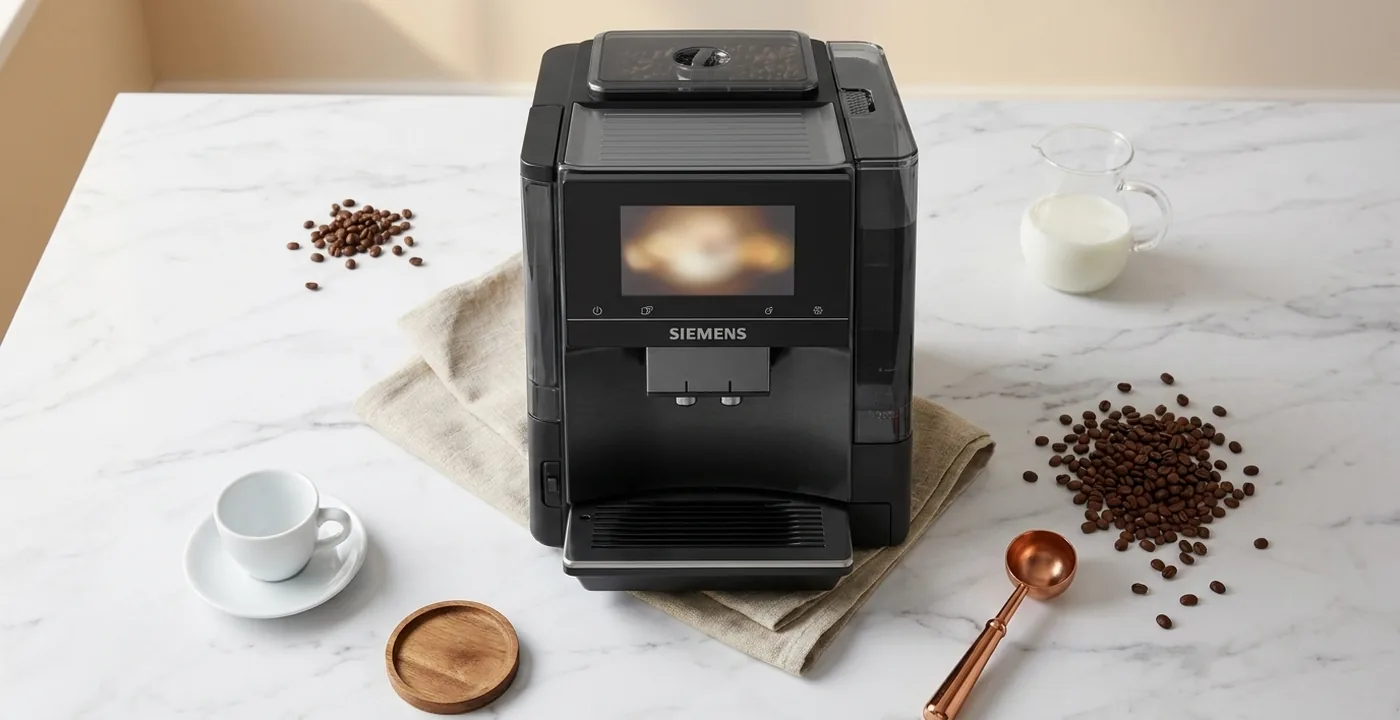
Table of Contents
Some of the links in this article are affiliate links, which help fund our independent review work at no extra cost to you. Every recommendation is based on hands-on testing through The Editor Lab methodology. No brand pays to appear, and no placement is guaranteed.
Every genuine owner review of the Siemens EQ700 worth reading says the same thing before it says anything else: the milk drinks come out warm, not hot. That is the first fact this Siemens EQ700 review needs to state plainly, because it is the detail that decides whether the machine suits you if a flat white or a latte is your daily drink. At £579 to £649 for the standard TP713GB9 (verified across UK retailers, 8 August 2026), the EQ700 gets almost everything else right: a genuine touchscreen menu, thirty-plus drinks, and a ceramic disc grinder that holds up to daily use. The verdict here is buy it, but buy it at a discount rather than RRP, and only once you know which of the six machines sold as "EQ700" in the UK you are actually buying.
I assess every machine against the same standard I used specifying espresso equipment professionally for five years and seven months at Sanremo Coffee Machines UK: extraction consistency, milk performance, and how a machine behaves once the fortnight-one shine wears off. This review combines that background with a structured read of 32 verified Feefo owner reviews, John Lewis owner reviews and four owner forum threads, full method at the Editor Lab. No Siemens sample or payment was involved in this review, and I want to be upfront that Balance Journal has not put a unit through a full bench test yet. Everything below is built from documented specification and a wide, named sample of owner evidence, not from my own hands-on time with this specific machine.
Siemens EQ700 Review: The Verdict
Score: 3.5 out of 5. Coffee quality holds up well against machines costing considerably more, and the touchscreen menu genuinely works once you learn it. Milk is the weak link, and it is the one score below that should stop you before you click buy if hot milk drinks are the whole reason you are shopping.
| Category | Score |
|---|---|
| Coffee quality | 4/5 |
| Milk drinks | 2.5/5 |
| Ease of use | 3.5/5 |
| Build | 3.5/5 |
| Value | 4/5 |
| Overall | 3.5/5 |
| Buy It If | Skip It If |
|---|---|
| You drink black coffee or a short milk splash, not a full flat white | Your daily order is a proper hot flat white or cappuccino |
| You want app control and a genuine touchscreen without paying EQ900 money | Two of you need saved, personalised drink profiles day to day |
| You can find it at £579 to £649, not near the RRP | You are only willing to buy at full list price |
Which EQ700 Are You Actually Buying? The UK Model Numbers Explained
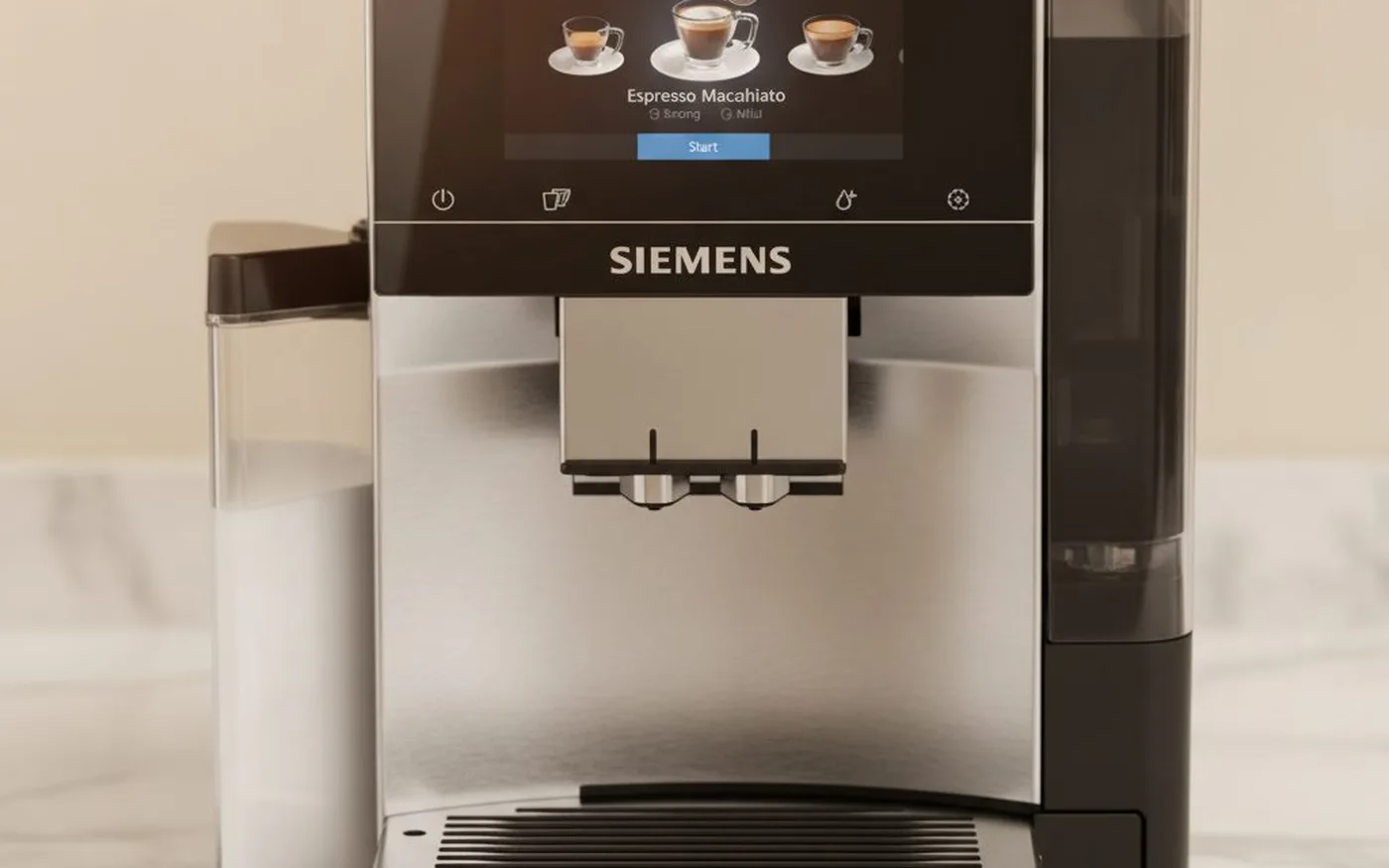
Six different names sell as "EQ700" in the UK, and no page-one review currently untangles them for you. That gap is the single biggest reason to read this review before you buy, because the machine coffeedant.com reviews under the EQ700 name is the Integral, benchmarked there as a freestanding super-automatic against the Jura E8, the De'Longhi Dinamica Plus and the Philips 5400 LatteGo. It is a genuinely freestanding machine, just one with a different milk system to the Classic most UK searchers picture when they type "EQ700 review."
| Model | Finish | What It Is |
|---|---|---|
| TP713GB9 | Black, "smart" badge | The Currys and John Lewis volume seller, Home Connect Wi-Fi included, freestanding countertop machine, tube-fed automatic milk system |
| TQ713GB3 | Silver or black | The EQ700 Integral, the listing most commonly sold on Amazon UK, removable integrated milk container |
| TQ717GB3 | Stainless steel | The EQ700 Integral, premium finish variant, removable integrated milk container |
| TP715GB1 | Black | Appears as a distinct query in Google's UK related searches, same core machine, tube-fed automatic milk system |
| EQ700 Classic | Black, freestanding | Simplified badge name, same underlying appliance, tube-fed automatic milk system plumbed to the machine |
| EQ700 Integral | Black, freestanding | Freestanding countertop machine with a removable, integrated milk container instead of a tube-fed system. This is the model coffeedant.com reviews |
If you take one thing from this section, take this: every EQ700 variant in that table, Classic and Integral alike, is a freestanding countertop machine. None of them install into a cabinet. What actually separates the Integral from the rest is the milk system: a removable container you lift out and refill or store in the fridge, rather than the tube-fed automatic system every other EQ700 variant uses. Choose between them on which milk-handling method suits your kitchen routine, not on installation type.
How The Siemens EQ700 Performs On Espresso
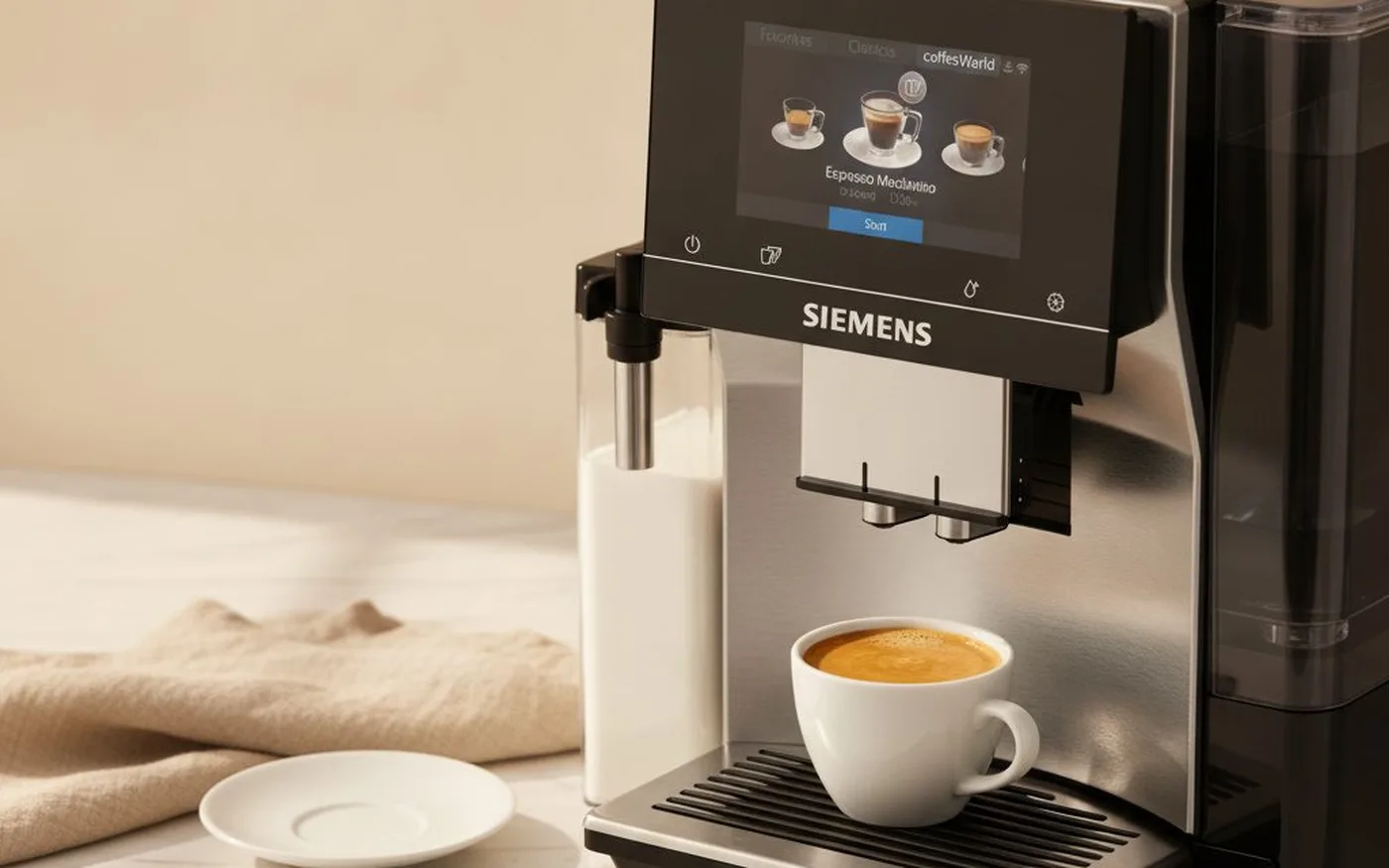
A 19-bar pump and an integrated ceramic disc grinder sit behind the EQ700's 5-inch iSelect touch display, and you get aromaSelect's three aroma profiles plus aromaDoubleShot when you want a stronger extraction on demand. Five years spent matching Sanremo equipment to UK roasters taught me one real lesson about grinders like this: a ceramic disc grinder is built for consistency across tens of thousands of cycles, not for chasing the fine particle-size distribution a speciality roaster dials a standalone burr grinder to.
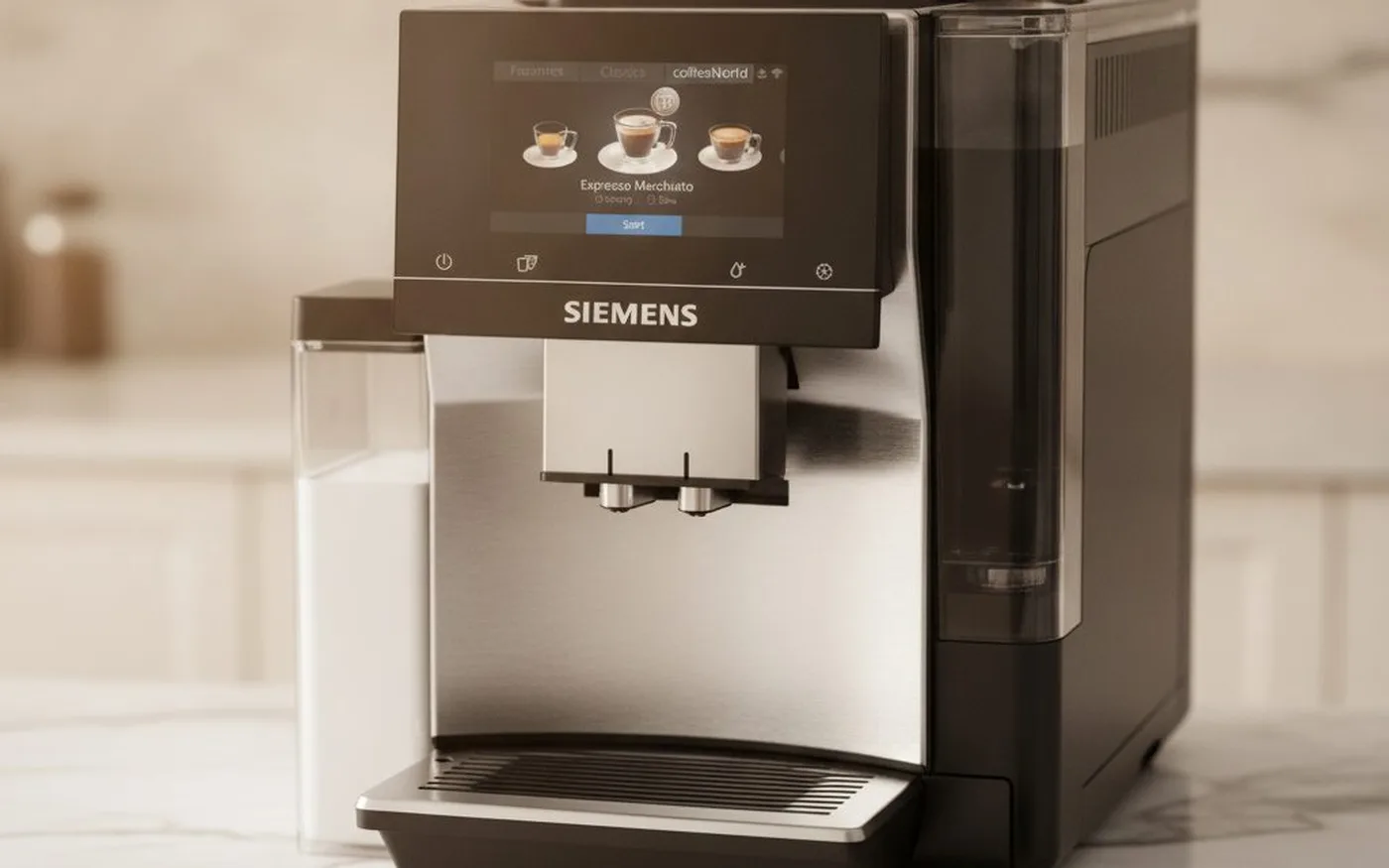
What that means in the cup is a solid, repeatable shot with decent crema, closer to a well-run commercial bean-to-cup than to a manually dosed espresso machine. If you already own a dedicated burr coffee grinder and a separate espresso machine, the EQ700 will not out-extract that setup. Against every other super-automatic in this price band, it holds its own on the coffee side of the machine.
The Milk Temperature Question, Answered Properly
Milk is drawn cold from the container and steamed in a single short automated pass, and that mechanism, not a fault, is why it lands warm rather than piping hot. An AVForums owner puts it plainly: "when brewing milk based coffees, the coffees are not piping hot, they are warm." Feefo reviewers aggregated through Currys go further, one writing "Milk temperature control is not great unfortunately" and another blunter still: "If you want milk coffee do not buy" and "very cold coffee with no options."
I trained baristas across contract catering accounts at UCC Coffee before I moved into equipment, BaxterStorey, Wetherspoons, Greggs and McDonald's among them, and milk texture and temperature were always the two things a new starter took longest to get right by hand. What you are up against with the EQ700 is the same physics, automated: a short automated milk pass cannot match a barista holding a jug under a steam wand for the extra fifteen seconds that actually gets the temperature up. There is no settings fix that solves this for you. The honest workaround, if hot milk matters more to you than convenience, is a separate milk frother run alongside the machine, or the Jura alternative covered further down this review.
The Problems Worth Knowing Before You Buy
"The eq700 is a nice machine but for me the user interface is unnecessarily slow for the price it sells for. It's like interacting with a ticket..." That r/superautomatic line sums up the second real complaint you will hit after milk temperature: the touchscreen and menu feel slower than a machine at this price should.
The housing is plastic where the step-up EQ900 uses metal, and at street prices approaching £700 for the higher-spec variants that is a legitimate grievance rather than a nitpick. At 46.7cm deep, the EQ700 also needs a genuinely deep worktop, deeper than most compact bean-to-cup machines. One further data point is worth naming proportionately rather than ignoring: a single John Lewis reviewer reported theirs "blew up after less than 6 months, causing my electricity switchboard to trip." One review inside a sample of dozens is not a pattern, and I am not treating it as one, but it sits on page one of Google and you will likely have seen it before landing here, so it deserves an honest mention rather than a silent omission.
Build, Footprint And What You Actually Get For The Money
You will find the EQ700 feels solid in daily use despite the plastic housing, with a control layout that puts the touchscreen and bean hopper within easy reach for your morning routine. Thirty-plus drinks are available from the menu, more than most competitors at this price offer, and the aromaDoubleShot function is a genuinely useful extra if you want a stronger black coffee without buying a second machine.
Where your money visibly goes is the display and the Wi-Fi module, not the casing. Compare it against a De'Longhi Dinamica, and the Siemens wins on screen size and drink range; compare it against the step-up EQ900, and the plastic-versus-metal gap becomes the deciding factor if you are weighing whether to spend more.
Living With It: Cleaning, Descaling And The Home Connect App
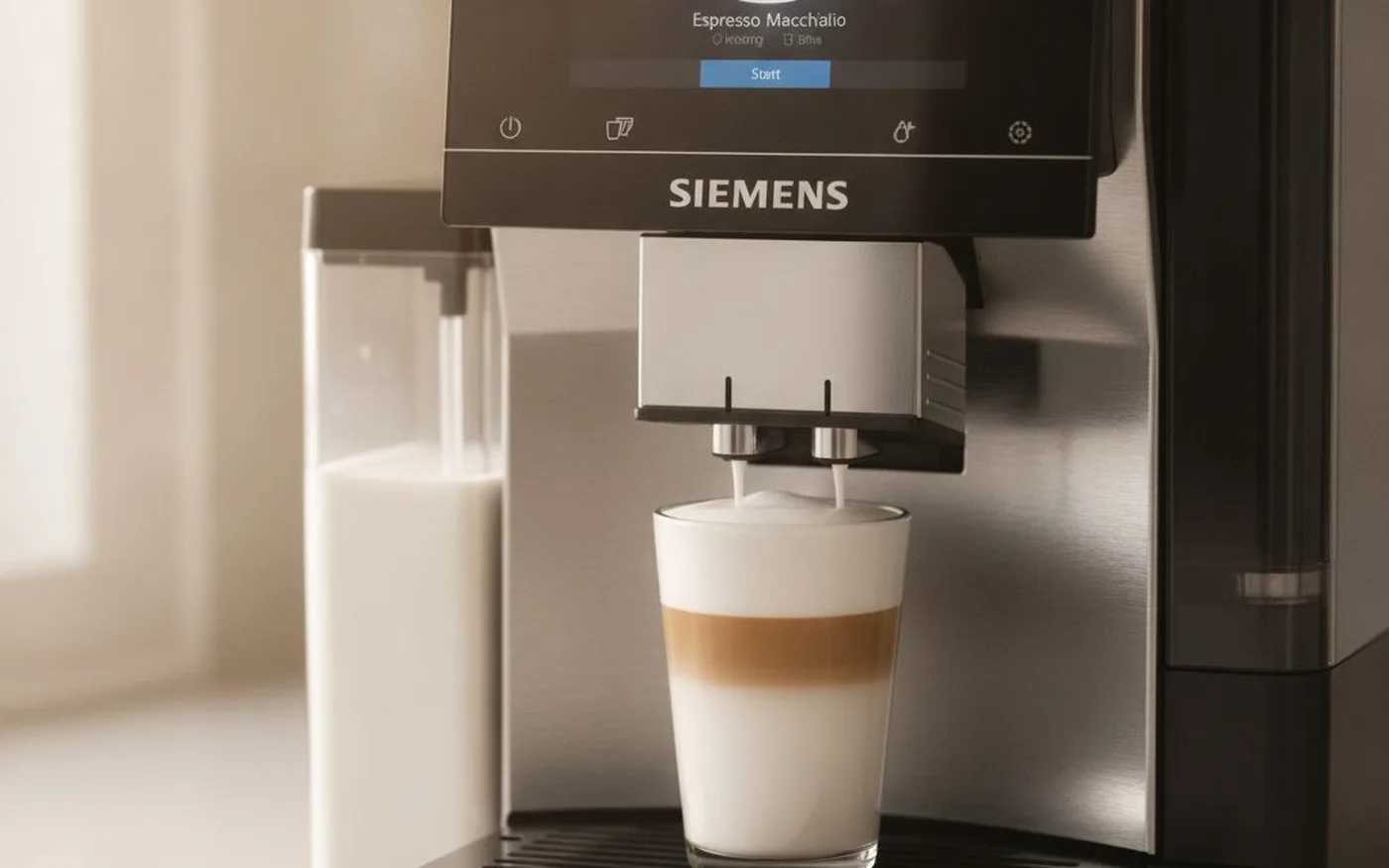
autoMilk Clean runs an automatic rinse after every milk drink, and the machine prompts its own descale cycle on a schedule tied to water hardness and use. UK water hardness varies significantly by region, so the actual descaling interval you will hit in London or the South East will come round faster than it will in Scotland or the North West. Set the machine's water hardness setting correctly at first use rather than leaving it on a default, since that single step does more for descaling frequency than any other maintenance habit.
The Home Connect app lets you start drinks remotely and monitor descale and cleaning status from your phone, which is a genuine convenience rather than a gimmick bolted onto the spec sheet. The 2026 model-year refresh adds an XL drip-tray flap for large travel mugs and a pot-brewing function for filter-style batches, both new for this generation and both absent from every English-language review currently on page one.
EQ700 vs EQ900: Is The Step Up Worth It?
The Siemens EQ700 has one bean hopper and one grinder; the EQ900 has two of each, and that is the main reason you would pay the difference. If you step up, you also get an eGrinder with finer adjustment, a dedicated Barista Mode, saved user profiles for personalised drinks, and a metal rather than plastic finish.
| EQ700 | EQ900 | |
|---|---|---|
| Bean hoppers | 1 | 2 |
| Grinder | Ceramic disc | eGrinder, finer adjustment |
| Barista Mode | No | Yes |
| Saved user profiles | No | Yes |
| Finish | Plastic | Metal |
| Typical UK price | £579-£649 | Meaningfully higher |
"The menu on the 700 is not as good as the 900 where you can save customised drinks," one r/superautomatic poster wrote, and that single feature is the one worth weighing hardest. In a two-person household with genuinely different tastes, not being able to save a personalised drink is a small daily friction rather than a spec-sheet footnote. If two bean hoppers, a metal finish and saved profiles matter to you, the EQ900 earns its higher price. If you are one person with fairly consistent taste, the EQ700 delivers the same coffee for meaningfully less.
Is Siemens A Brand Worth Buying?
Siemens publishes an average service life of 22,500 cups and guarantees spare-part availability for up to 10 years after purchase, figures worth knowing before you commit to the brand. Those are real, checkable numbers, not marketing filler, and they are worth citing precisely because no editorial review currently on page one for this keyword mentions either one.
What that guarantee does and does not promise is worth being precise about. A published service life is a manufacturer's average, not a warranty on your individual unit, and spare-part availability means Siemens will still sell you a new brew group or pump in 2036, not that your specific machine will never need one before then. During the Sanremo years I saw the inside of more UK roastery cupping rooms than most baristas see in a lifetime, almost 300 of them, sixty as direct clients, Scotland to Devon, and the machines that lasted were the ones descaled on schedule, not the ones with the best spec sheet. Treat the 22,500-cup figure as a sign Siemens designs for longevity, and treat your own descaling discipline as the thing that actually determines whether you see it.
What Else To Consider At This Price
Against the Jura E6, the Siemens EQ700 offers more drink options and app control, but the Jura delivers hotter milk drinks, which is the exact complaint this review has spent two sections on. If milk temperature is your dealbreaker, the E6 is the machine to shortlist instead.
The Philips 5400 LatteGo is the cheaper alternative with the easiest milk system to clean of any machine in this comparison, no pipework to descale inside the milk carafe itself. Against the De'Longhi Dinamica, the Siemens EQ700 has a larger touchscreen and Wi-Fi, while the De'Longhi Dinamica is usually the cheaper buy of the two. If you want a step up in build quality without moving to the EQ900, the De'Longhi PrimaDonna is worth a look too, and our De'Longhi Rivelia review covers De'Longhi's newest flagship if metal build is the priority. Still deciding between a bean-to-cup machine and a manual setup at all, our guide to bean to cup vs espresso machine is the place to start. We cover every super-automatic, espresso machine and coffee maker at every price point in our full best coffee machine UK guide.
Which Beans Get The Best Out Of It
A super-automatic's enclosed brew unit and ceramic disc grinder both clog faster on very oily dark-roast beans, so a medium roast with lower surface oil rewards this machine more than a dark Italian-style roast will. I founded Balance Coffee in 2020, and its Stability Blend, a Uganda and Mexico medium roast, is the pairing I would point you to here specifically because it is a bean-pairing recommendation, not a competing product; Balance Coffee does not sell coffee machines, and no payment was received for this review. You can buy it directly through Balance Coffee's Stability Blend, or explore the wider field in our best coffee beans UK guide if you want to compare it against other roasters first.
Price, Where To Buy And What A Fair Price Looks Like
£579 to £649 is the verified street-price range for the TP713GB9 across UK retailers as of 8 August 2026, sitting meaningfully below the machine's RRP. Do not anchor to a single number, since the spread between retailers on the same day was real and worth checking before you buy.
November and December are the discount months to wait for if your purchase is not urgent: search volume for this machine more than doubles in that window, from around 210 searches a month in the quieter months to 480, and retailers discount harder to capture that demand. Check the current Amazon UK price for the TQ713GB3 before deciding, since Amazon, Currys and John Lewis moved independently of each other in the same week of research.
Full Specifications
Every figure below is sourced from the Siemens UK product listing and cross-checked against Currys and John Lewis SKU pages for the UK-specific model numbers, verified 8 August 2026.
| Specification | Detail |
|---|---|
| Display | 5-inch iSelect touchscreen |
| Pump pressure | 19 bar |
| Grinder | Integrated ceramic disc grinder |
| Drink range | 30-plus drinks |
| Aroma profiles | aromaSelect (3 profiles), aromaDoubleShot |
| Connectivity | Home Connect Wi-Fi |
| Depth | 46.7cm |
| Housing | Plastic |
| Milk cleaning | autoMilk Clean, automatic rinse cycle |
| 2026 model-year additions | XL drip-tray flap, pot-brewing function |
| Sources | Siemens Home UK product listing |
Frequently Asked Questions
Is the Siemens EQ700 good?
Yes, with one significant condition. Coffee quality and drink range are genuinely strong for the price, and the touchscreen menu is a real step up on cheaper machines. Milk temperature is the weak point, scoring 2.5 out of 5 against 4 out of 5 for coffee quality, so buy it if your daily drink is black or lightly milky, not a full hot flat white.
What are the common problems with Siemens EQ700?
Three problems recur across owner reviews: milk drinks land warm rather than hot, the touchscreen and menu feel slow for the price, and the housing is plastic where the step-up EQ900 uses metal. A single isolated John Lewis report describes a unit failing within six months, which is not a pattern across the wider review sample but is visible on page one of Google.
What is the difference between Siemens EQ700 and EQ900?
The EQ700 has one bean hopper and one ceramic disc grinder; the EQ900 has two of each, plus an eGrinder, Barista Mode, saved user drink profiles, and a metal rather than plastic finish. The EQ700 typically costs £579 to £649, meaningfully less than the EQ900, for essentially the same espresso quality.
Are Siemens coffee machines any good?
Yes. Siemens publishes an average service life of 22,500 cups and guarantees spare parts for up to 10 years after purchase, both genuine, checkable claims rather than marketing language. The EQ700 specifically performs well on coffee quality and drink range, with milk temperature as the honest, documented weak point across owner sources.
Which Siemens coffee machine is considered the best?
The EQ900 sits above the EQ700 in Siemens' bean-to-cup range, adding a second bean hopper, an eGrinder, Barista Mode and saved user profiles. It is the better machine on paper for a two-person household with different tastes, but the EQ700 remains the better value choice for one person with fairly consistent daily orders.
What is the lifespan of a Siemens coffee machine?
Siemens publishes an average service life of 22,500 cups and guarantees spare-part availability for up to 10 years after purchase. That figure is a manufacturer average rather than an individual warranty, and in practice, machines that are descaled on schedule and set to the correct local water hardness last considerably longer than ones that are not.
Which coffee machine is better, De'Longhi or Siemens?
It depends on what you are optimising for. The Siemens EQ700 has a larger touchscreen, Home Connect Wi-Fi and a wider drink range, while the De'Longhi Dinamica is usually the cheaper buy of the two machines. Neither brand solves the milk-temperature limitation completely, so check that specific complaint against your own daily order before choosing between them.
Why is my Siemens EQ700 coffee not hot enough?
Milk is drawn cold and steamed in a single short automated pass, which is a design limit rather than a fault, and it is why milk drinks land warm rather than piping hot. Black coffee and the brew temperature itself are not affected in the same way. There is no settings fix for the milk system; a separate milk frother is the honest workaround if hot milk matters to you.
What is the difference between the EQ700 Classic and the EQ700 Integral?
Both are freestanding countertop machines, so installation type is not the difference despite what the name suggests. The EQ700 Classic uses a tube-fed automatic milk system plumbed to the machine, functionally the same appliance sold under the standard TP713GB9 and related badges. The EQ700 Integral swaps that for a removable, integrated milk container you lift out and refill yourself.

A wellness entrepreneur and biohacker, James explores the intersection of hospitality and health - from clean fuel and recovery tools to mindful routines that build balance into daily life.