Light Roast vs Dark Roast: The Real Differences Explained

Coffee & Wellness Writer
Nearly 15 years in coffee. Here is the one thing most drinkers get completely wrong about roast and caffeine.
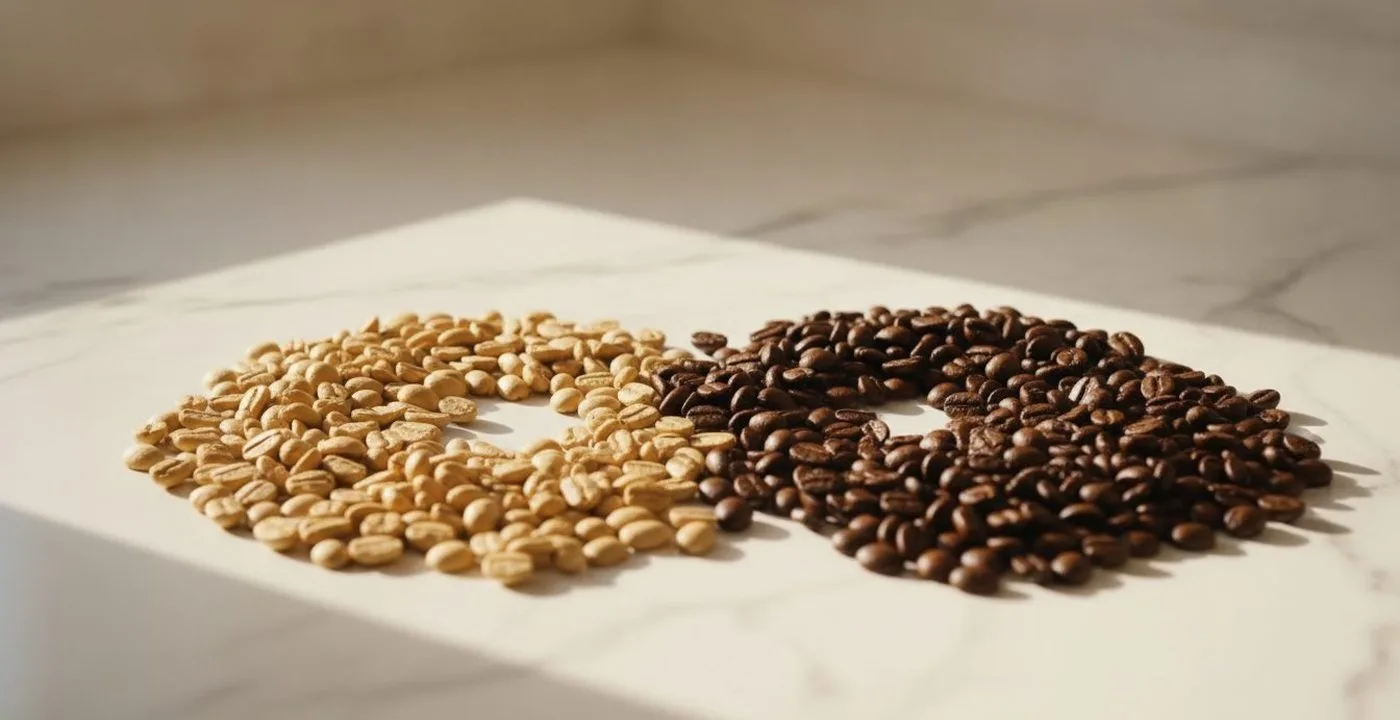
Table of Contents
Some of the links in this article are affiliate links, which help fund our independent review work at no extra cost to you. Every recommendation is based on hands-on testing through The Editor Lab methodology. No brand pays to appear, and no placement is guaranteed.
Most people who drink dark roast assume they are getting a stronger hit of caffeine. They are not - and that single misunderstanding shapes a lot of bad bean-buying decisions. Light roast vs dark roast is genuinely one of the most misread topics in coffee, which is why I want to clear it up properly here. Having spent nearly 15 years in the coffee industry and visited close to 300 roasteries across the UK, here is what actually separates them in the cup - and what does not.
The short version: light roast is brighter, more acidic, and preserves more of the bean's original character. Dark roast is bolder, lower in acidity, and carries more roast-driven flavour. Caffeine? Almost identical by weight. I will explain why below.
Light Roast vs Dark Roast: The Quick Answer
Light roast and dark roast are the same coffee bean at different stages of heat application. A light roast stops early, preserving the origin character - the fruit, floral notes, and natural acids the bean developed in its growing region. A dark roast continues well past that point, burning off the delicate origin flavours and replacing them with the bold, caramelised, sometimes smoky character that most of us associate with a strong cup of coffee.
The key differences at a glance:
- Flavour: Light roast is fruit-forward and floral, often tea-like in body. Dark roast is bold, chocolatey, and bittersweet.
- Acidity: Light roast has higher perceived acidity (brighter on the palate). Dark roast is lower in acidity and often smoother on the stomach.
- Body: Light roast is lighter-bodied. Dark roast is fuller and heavier.
- Caffeine: Almost identical by weight. Marginally higher in light roast by volume (more on this below).
- Origin character: Light roast = the bean. Dark roast = the roast.
For a full guide to choosing the right beans, see our best coffee beans in the UK guide.
What Roast Level Actually Means
Roast level describes how far a green coffee bean is developed during the roasting process - and development time is everything.
Green coffee beans contain hundreds of chemical compounds: sugars, acids, proteins, and lipids. When heat is applied, a cascade of reactions begins. The Maillard reaction (the same browning process that gives bread its crust and steak its sear) converts sugars and amino acids into hundreds of new flavour compounds. Moisture evaporates. Gases build up inside the bean until it cracks.
First crack is the moment a coffee bean pops audibly - like popcorn - as water vapour and CO2 force their way out. This marks the threshold of a light roast. The bean is drinkable now; its origin flavours are intact and the acidity is bright. The Specialty Coffee Association (SCA) defines light roasts as stopping at or just after first crack, preserving maximum origin character.
Second crack happens as the bean's cellular structure begins to break down further. This is the dark roast territory. The oils migrate to the surface (which is why dark roast beans often look shiny), the sugars caramelise more deeply, and the delicate origin flavours - the Rwandan berry, the Ethiopian blueberry, the Guatemalan stone fruit - are largely burned off. What you taste now is the roast itself, not the origin.
Development time is the window between first crack and the end of the roast. A skilled roaster uses this window deliberately. A long development time at lower temperatures produces a very different cup to a fast push through the same window at higher heat, even if both end at the same external colour. Roast level is not just a colour reading - it is a map of the flavour decisions made during those final minutes.
Taste and Body: How They Differ in the Cup
Pull a light roast and a dark roast side by side and you will immediately notice two things: the light roast looks noticeably paler in the cup, and it smells more fragrant - almost perfumed. The dark roast smells bolder, roastier, more like the coffee smell most people grew up with.
Light roast delivers brightness. The acidity is forward - you notice it on the tip of the tongue and along the sides. Flavour notes tend to be fruity (cherry, citrus, berry), floral, or sometimes tea-like. The body is lighter, closer to a black tea in texture than a heavy espresso. For specialty coffee drinkers, this is where origin storytelling lives: you taste the soil, the altitude, the processing method.
Dark roast delivers depth and weight. The acidity is muted, the sweetness is caramelised rather than fruity, and the body is full. You get chocolate, dark sugar, sometimes a woody or smoky edge. The bitterness - which many people interpret as "strength" - comes from the extended heat exposure degrading chlorogenic acids into bitter compounds. This is coffee that cuts through milk, which is why dark roasts have historically dominated espresso-for-milk-drinks.
Medium roast sits between them and is the most commercially popular for a reason: it balances brightness with body, making it accessible without being as challenging as a very light or as intense as a very dark roast.
Here is the friction moment worth naming: light roast's current reputation as the "better" coffee in specialty circles is a preference, not an objective ranking. A well-developed dark roast from quality beans is a genuinely excellent cup. If you find light roast too acidic, too tea-like, or lacking the body you want from coffee - that is not a failure of palate. It is the roast doing exactly what it is supposed to do for someone who prefers the other profile.
Does Light or Dark Roast Have More Caffeine?
This is the most common coffee myth, and it persists because the sensory experience of dark roast genuinely does feel stronger. But "strong" in the sense of intense, bold flavour is not the same as "strong" in the sense of caffeine content.
Caffeine is one of the most heat-stable compounds in coffee. It does not significantly degrade during the roasting process. A study reviewed by the British Coffee Association confirmed that roasting has minimal impact on caffeine content across the roast spectrum. The bean goes from green to dark, losing water, CO2, and some mass along the way - but the caffeine molecule itself largely survives intact.
By weight, light and dark roast contain almost the same caffeine. Weigh out 18 grams of light roast beans and 18 grams of dark roast beans, brew them identically, and the caffeine difference is negligible.
By volume (scoop or tablespoon), light roast has marginally more caffeine. This is where the measurement method matters. Dark roast beans lose more mass during roasting - moisture and cellular material burn off - making them physically less dense. So a tablespoon of dark roast beans contains fewer individual bean cells than the same volume of light roast. Fill a scoop with dark roast and you have less total bean matter - and therefore marginally less caffeine - than the same scoop filled with light roast.
This is counterintuitive because it runs directly against the "dark = stronger" instinct. But the instinct comes from flavour intensity, not caffeine chemistry. The bold, roast-forward, bitter character of a dark roast registers in the brain as "strong." The caffeine content is not the driver of that perception.
So: if you brew by weight (which a scale-using home barista does), the two are essentially equivalent. If you brew by volume (a heaped tablespoon, a pre-loaded pod, a supermarket pod), light roast edges ahead marginally. Neither difference is large enough to notice in daily use.
Which Roast Is Healthier? Antioxidants and Acidity
Both light and dark roast coffee contain beneficial compounds. The balance between them shifts with roast level - and the right answer depends on what the individual is optimising for.
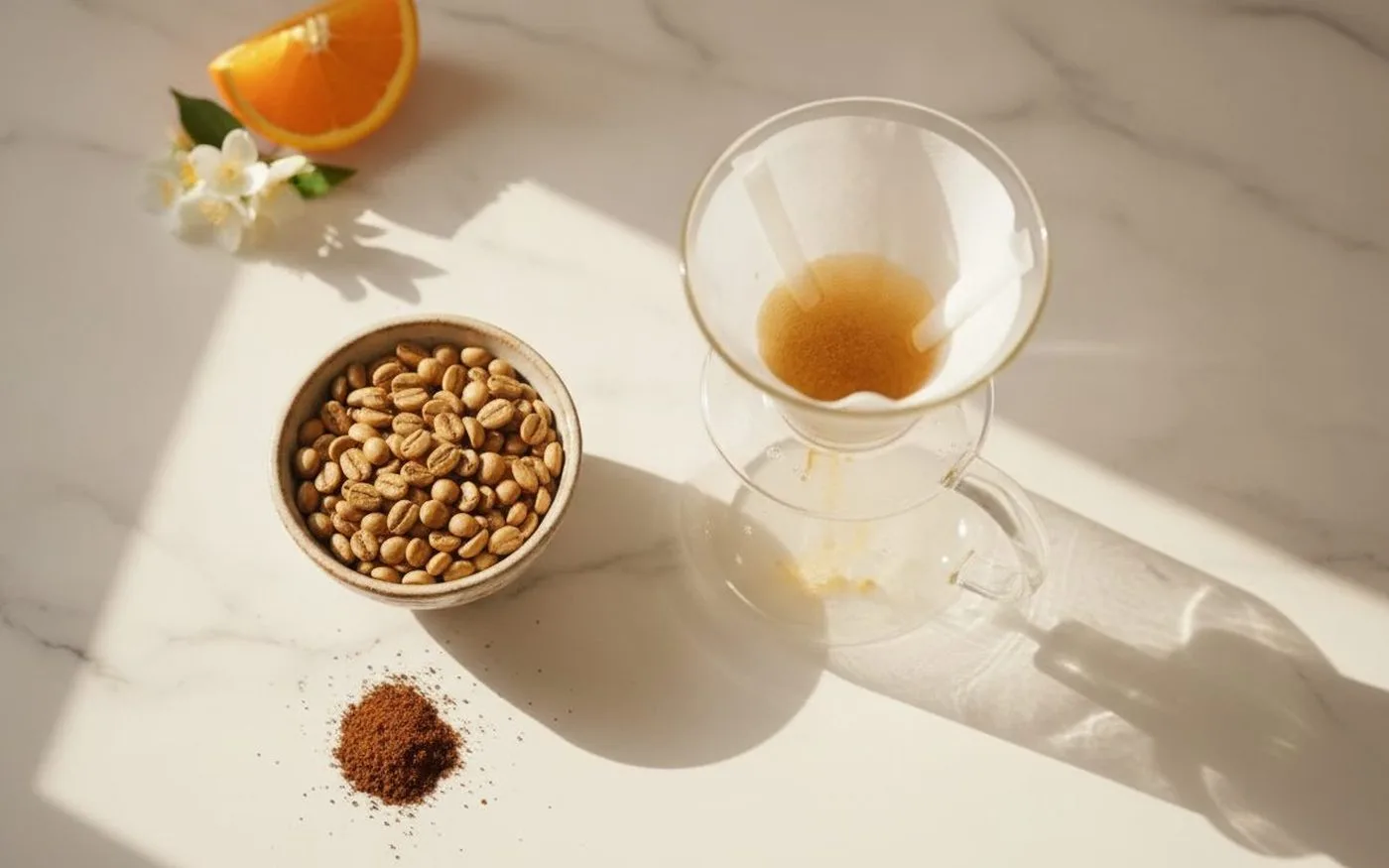
Antioxidants: light roast has more. Coffee is one of the richest dietary sources of chlorogenic acids - a class of antioxidants associated with anti-inflammatory effects and metabolic health benefits. Roasting degrades these compounds: the longer and hotter the roast, the more chlorogenic acids are lost. Light roast retains more of them. This is supported by data reviewed by Coffee & Health (ISIC - Institute for Scientific Information on Coffee), which documents the relationship between roast degree and antioxidant retention across multiple coffee varieties.
Stomach comfort: dark roast often wins. Here is the counterbalancing finding. Darker roasts contain elevated levels of N-methylpyridinium (NMP), a compound formed during extended roasting. Research presented at the American Chemical Society by Somoza et al. (2010) found that NMP appears to reduce the stomach's secretion of hydrochloric acid - effectively making dark roast gentler on the stomach than light roast, despite light roast's higher antioxidant content. For people with acid reflux, sensitive stomachs, or who notice discomfort after their morning cup, a darker roast - or a naturally low-acid coffee - is often the better fit.
The honest summary: light roast is the antioxidant leader; dark roast is often kinder to sensitive stomachs. Neither is categorically the "healthiest" choice. The best roast is the one you will enjoy drinking daily - health benefits only follow if the cup gets finished.
A note on framing: nothing in this section should be read as medical advice. If you have a diagnosed GI condition, speak to a GP before making coffee a therapeutic variable.
Best Brewing Methods for Each Roast
Roast level and brew method interact directly. The wrong pairing does not break the cup - but the right one amplifies everything the roaster worked to achieve.
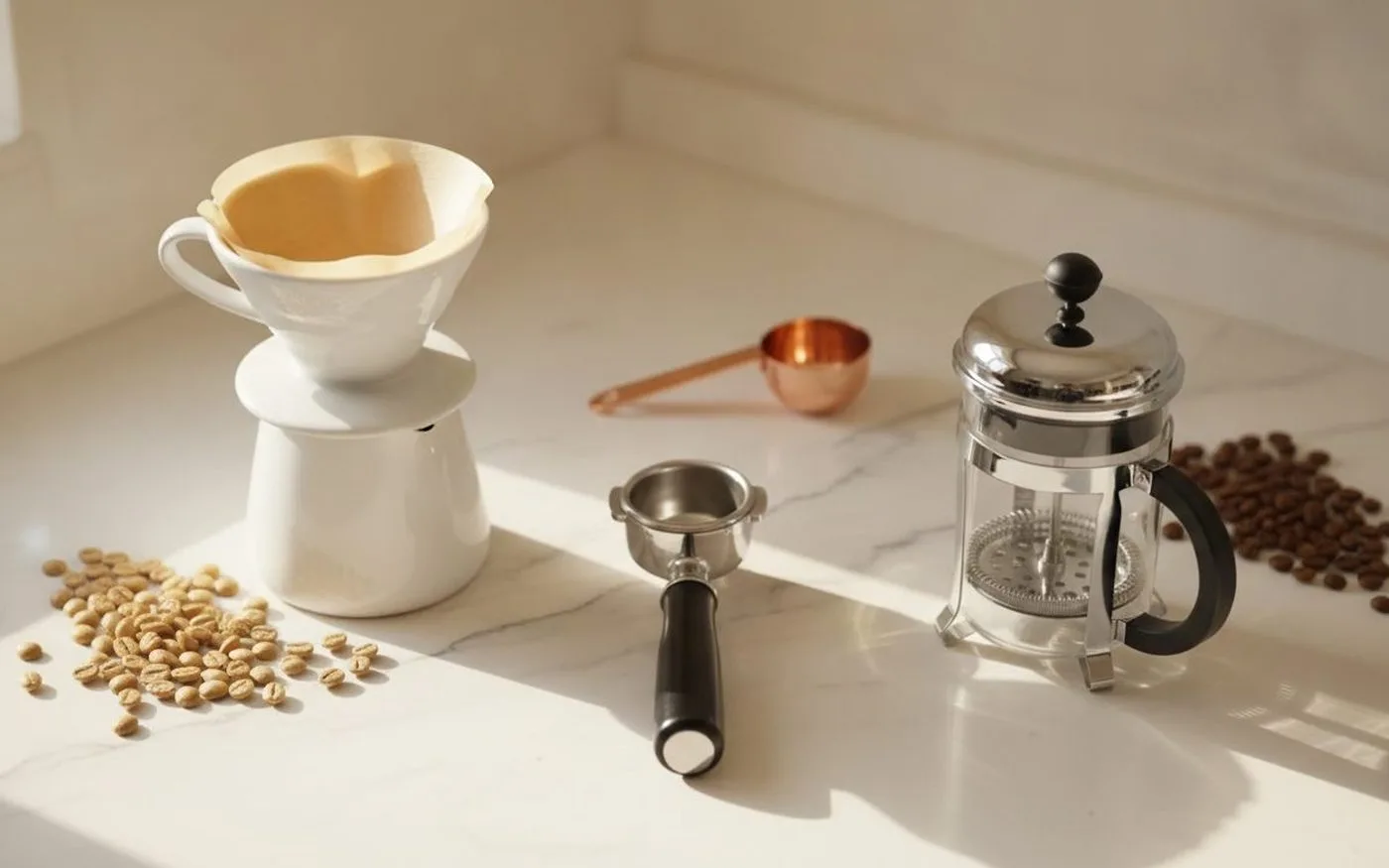
Light roast performs best in brewing methods that allow the delicate origin flavours to express without being muddied by extraction pressure or immersion time. Filter brewing is the natural home for light roasts: a V60, Chemex, or drip machine extracts the bright acids and floral notes cleanly. If you are buying a new brewer for exploring lighter roasts, our guide to the best pour-over coffee makers covers the best options.
Medium roast is the most versatile. It works across almost every method - AeroPress, drip, V60, and espresso - which is why it dominates specialty subscriptions and cafe menus. It is the safest starting point if you are unsure which direction to go.
Medium-dark roast suits espresso well. The lower acidity plays better with pressure extraction, the body holds up through milk, and the caramelised sweetness is what makes a flat white taste like a flat white rather than a citrus experiment. For beans specifically built for espresso, see our guide to the best coffee beans for espresso.
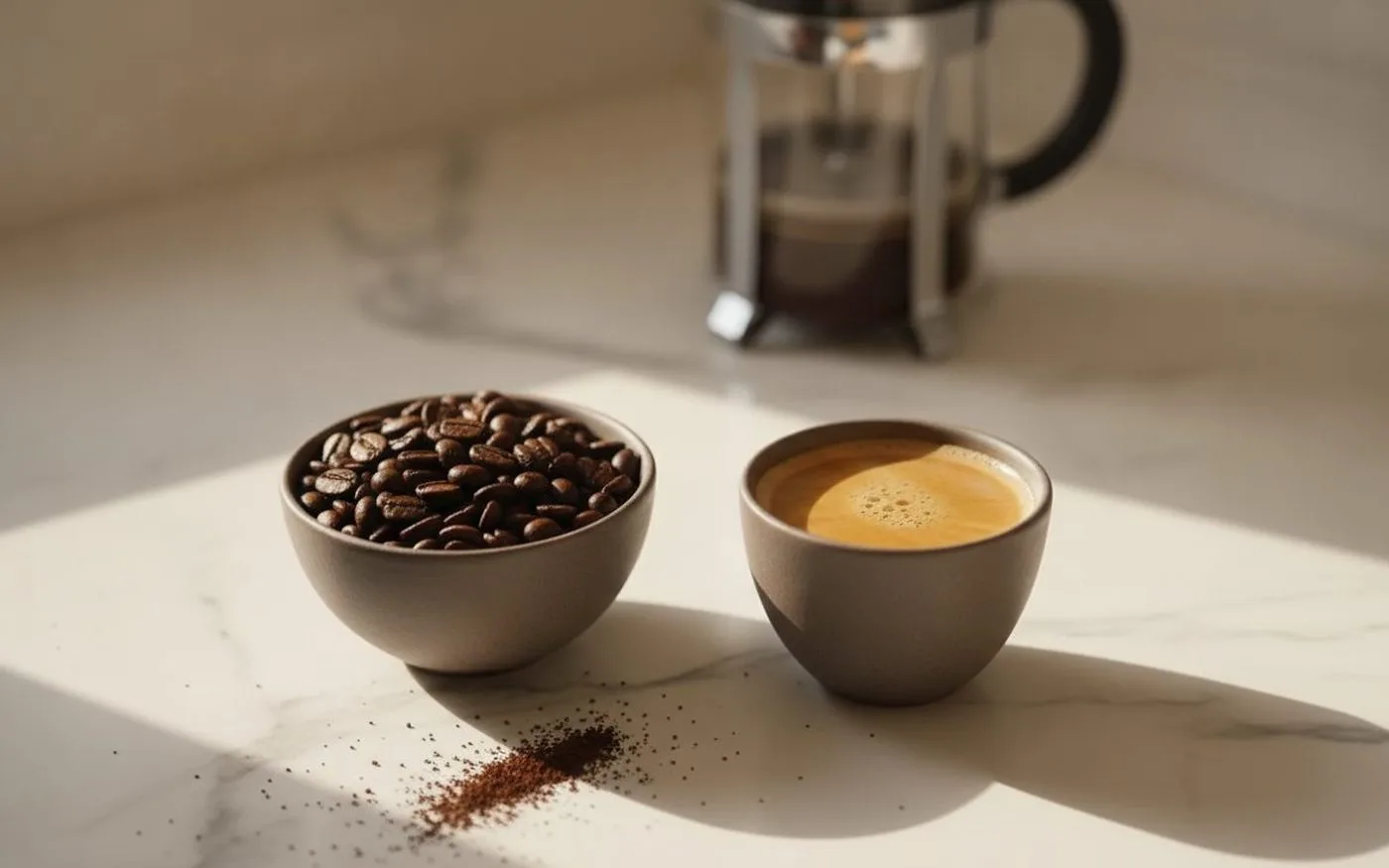
Dark roast belongs in immersion brewing: a cafetiere (French press) or a moka pot, where the extended contact time lets the bold, roasty character fully develop. Milk drinks made with dark roast - a long black, an Americano with oat milk - are where this roast level was historically most at home. For moka pot-specific beans, see our guide to the best coffee for a moka pot. For the cafetiere, our best cafetiere guide has the top picks.
Roast Spectrum Reference Table
| Light Roast | Medium Roast | Medium-Dark Roast | Dark Roast | |
|---|---|---|---|---|
| Flavour | Fruity, floral, bright | Balanced, sweet, approachable | Rich, caramelised, low-acid | Bold, roasty, bittersweet |
| Acidity | High | Medium | Low-medium | Low |
| Body | Light | Medium | Medium-full | Full |
| Caffeine (by weight) | Near-identical | Near-identical | Near-identical | Near-identical |
| Caffeine (by volume) | Marginally highest (denser beans) | Medium | Medium-low | Slightly lower (less dense) |
| Best brew method | Pour-over, V60, filter drip | AeroPress, drip, versatile | Espresso, bean-to-cup | Moka pot, cafetiere, milk drinks |
| BC example | Aurora Single Origin | Stability Blend, Level Up | Rotate Espresso, Balance Gold | Darkfire Energy |
Why Is Light Roast Often More Expensive?
Light roast coffees are frequently priced higher than dark roasts from the same retailer, and the reason runs deeper than scarcity or trend.
A light roast is only worth making if the underlying green coffee is excellent. The whole point of stopping early is to preserve origin character - but if the green bean has no interesting character to preserve, a light roast just produces a sour, underdeveloped cup. This is why specialty roasters who use light profiles tend to source from smaller, traceable farms: single-origin lots with documented processing methods and elevations, from producers who can command a premium because their beans are worth showcasing.
Dark roast, by contrast, can tolerate (and has historically accommodated) lower-grade green coffee. The extended heat development masks defects, rounds out sourness, and produces a consistent, bold cup regardless of origin quality. This is not a criticism - it is a practical quality-management tool that made commercial-scale coffee possible. But it means the raw material cost is typically lower.
You are also paying for a smaller market. The specialty light-roast segment remains a niche within the broader coffee market. Lower volume, more careful handling (lighter roasts are more sensitive to grind freshness and water temperature), and higher sourcing expectations all feed into a higher per-bag cost.
The honest friction moment here: higher price does not guarantee a better experience for every palate. If you reliably prefer the bold, chocolatey depth of dark roast, a premium light roast is not a better cup for you - it is just a more expensive one that does something different.
Light, Medium or Dark: Which Should You Choose?
The decision comes down to three variables: what you like to taste, how you brew, and how your stomach responds.
Choose light roast if: you drink your coffee black or with minimal milk, you brew with a pour-over or filter, you enjoy fruit-forward and floral flavours, and your stomach handles acidity well. Light roast rewards a slow, attentive brew and repays curiosity about origin.
Choose medium roast if: you want the most versatile option - something that works across methods, suits most palates in the household, and sits between the brightness of a light and the intensity of a dark. For most people buying their first specialty coffee or building a household routine, medium roast is the practical starting point.
Choose medium-dark roast if: you drink espresso, you pull shots through milk, or you want low acidity without going full dark. Most of the world's most popular espresso blends sit here.
Choose dark roast if: you love a bold, intense cup, you brew in a cafetiere or moka pot, you prefer coffee with milk, or your stomach is sensitive to acidity. Dark roast is not an inferior choice - it is the right choice for a specific flavour and stomach profile.
Full disclosure - I founded Balance Coffee in 2020, so I will use our own beans as examples here, but the roast principles apply to any roaster. At Balance Coffee, Aurora Single Origin sits at the light end - a single-origin bean where we keep the roast short deliberately to let the origin speak. Stability Blend and Level Up are medium roasts: balanced, approachable, and the most versatile in our range. Rotate Espresso and Balance Gold are medium-dark - built for espresso and low-acid drinking. Darkfire Energy is our dark roast, with the bold, full-bodied profile that suits cafetiere brewing and milk drinks.
Whatever roast you land on, the fuller picture - which specific beans to buy within that category - is in our guide to the best coffee beans in the UK.
Frequently Asked Questions
Which is stronger, dark roast or light roast coffee?
It depends what "stronger" means. For caffeine, light and dark roast are nearly identical by weight - and light roast is marginally higher by volume because the beans are denser. For bold, intense flavour and body, dark roast tastes undeniably stronger. So dark roast is stronger in taste and perceived intensity; light roast is not weaker in caffeine, and by a strict measurement it is fractionally higher.
Does dark roast have more caffeine than light roast?
No - this is the most common coffee myth. Caffeine is heat-stable and barely changes during roasting. By weight the two are almost identical; measured by volume (scoop or tablespoon), light roast has slightly more caffeine because the beans are denser. Dark beans lose more mass during extended roasting, so a level scoop contains less total bean matter and therefore marginally less caffeine.
Is dark or light roast better for your stomach?
Dark roast is often gentler on sensitive stomachs. Darker roasts contain more N-methylpyridinium (NMP), a compound formed during extended roasting that research has linked to reduced stomach acid secretion. They also have lower perceived acidity. If you experience acid reflux or stomach discomfort after coffee, a darker roast - or a naturally low-acid variety - is worth trying before cutting coffee out entirely.
Why does light roast taste better?
It does not taste better for everyone - it is a preference, not a universal quality ranking. Light roast preserves more of the bean's origin character: fruity, floral, and bright notes that many specialty coffee drinkers love. Others find it too acidic, too light-bodied, or too unfamiliar compared to the bold cup they grew up with. Neither preference is wrong. The right roast is the one that matches your palate.
Why is light roast more expensive than dark roast?
Light roasts are typically made with higher-grade, single-origin beans whose delicate origin flavours are worth showcasing - and those beans cost more to source. Dark roast can work with lower-grade green coffee because extended heat development masks defects and produces a consistent result regardless of raw material quality. You are paying for better sourcing, greater origin transparency, and a smaller, quality-focused market segment.
What is the healthiest roast of coffee to drink?
There is no single healthiest roast. Light roast retains more chlorogenic-acid antioxidants because the roasting process degrades them - shorter roasts mean more survive. Dark roast contains more NMP and tends to be gentler on the stomach. Both are fine within normal daily intake. The healthiest roast is whichever one you enjoy and tolerate well - coffee you drink regularly is more beneficial than the theoretically optimal cup you avoid.
Which roast is easier on the stomach, light or dark?
Usually dark roast, for the reasons above: higher NMP levels and lower perceived acidity. If acidity from coffee bothers your stomach, a darker roast - or a coffee specifically processed to be low-acid - is the practical first step before eliminating coffee. See our guide to low acid coffee options for specific picks.
Is light or dark roast better for espresso?
Traditionally espresso uses medium-dark to dark roasts for a bold, sweet, low-acid shot that cuts through milk in a flat white or latte. Light roast espresso exists - and in the right hands it produces an extraordinary, fruit-forward shot - but it is less forgiving to dial in. The extraction window is narrower, the flavours shift faster with small grind changes, and the result is more variable. For experienced home baristas who want to experiment, light-roast espresso is genuinely exciting. For most people pulling daily shots, a medium-dark roast is the more reliable and consistent choice.
A wellness entrepreneur and biohacker, James explores the intersection of hospitality and health - from clean fuel and recovery tools to mindful routines that build balance into daily life.