Lelit Elizabeth Review: A Coffee Pro's 2026 Verdict

Coffee & Wellness Writer
Five and a half years training on Italian dual-boiler systems. Is the Elizabeth worth it at £1,150?
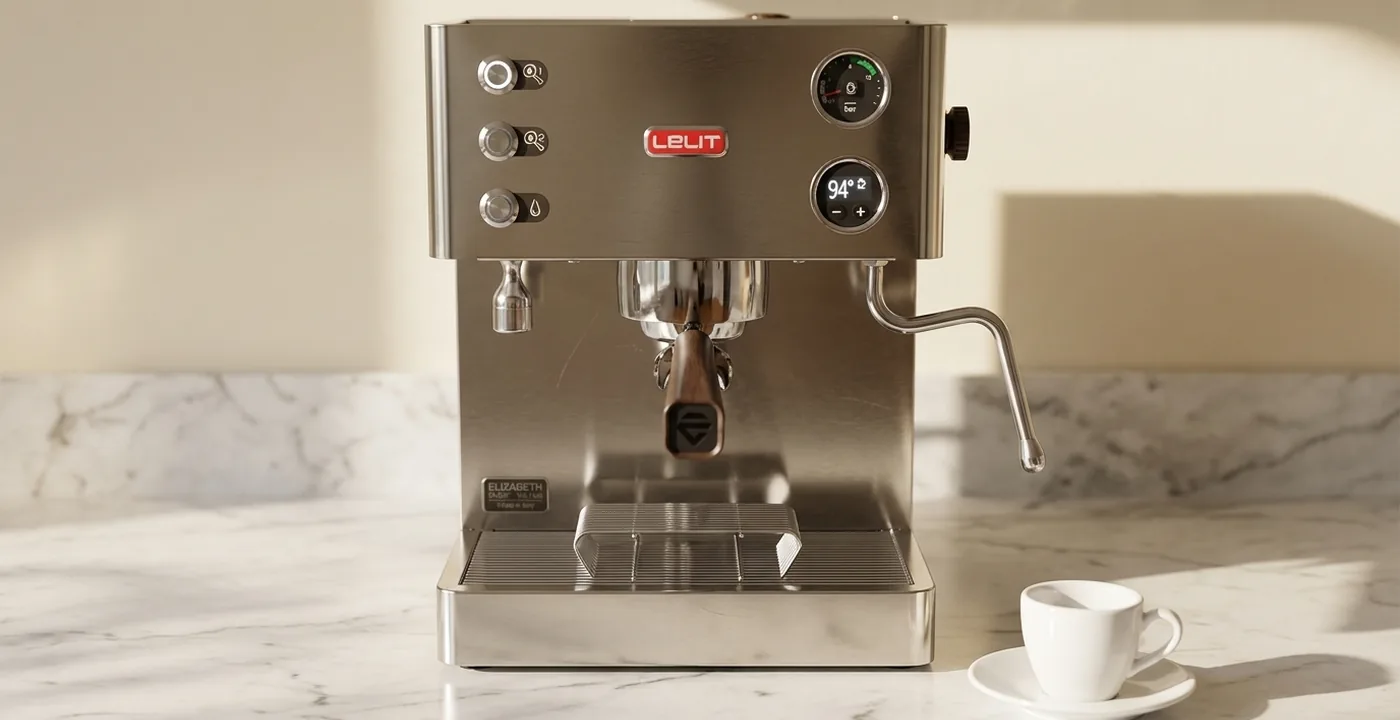
Table of Contents
Some of the links in this article are affiliate links, which help fund our independent review work at no extra cost to you. Every recommendation is based on hands-on testing through The Editor Lab methodology. No brand pays to appear, and no placement is guaranteed.
Across the espresso forums, the same line keeps coming back: the Lelit Elizabeth is the most underrated dual boiler in home espresso. Reviewers call it the "no-drama" machine. Reddit threads ask people to talk them out of it. The catch never quite arrives. For a buyer with around £1,150 to spend and a dual-boiler shortlist already filling up with Sage and Rocket, that quiet consensus raises a sharper question: what is the actual trade-off behind the "dark horse" label, and is the Elizabeth genuinely the smarter buy?
This review answers that as someone trained on the engineering side, not the marketing side. James trained on multi-boiler systems and PID control units with authorised Sanremo engineers, and runs side-by-side temperature-stability testing on espresso machines with handheld calibration tools. The Elizabeth is a true dual boiler with PID at a price most heat-exchanger machines sit at. Here is what that gets you in the cup, what it costs you in design, and whether the SERP is right to call it underrated.
Verdict: is the Lelit Elizabeth worth it?
Overall score: 9/10. Best for the home barista who wants genuine dual-boiler capability, independent brew and steam temperature control, and a serviceable Italian machine at the lowest credible price for that architecture. Not for the buyer who wants a machine that looks special on the counter, a touchscreen, or a one-touch milk routine.
Current UK price: £1,149-1,199 (price checked May 2026, retailer dependent). Model code PL92T.
The short answer is yes: the Elizabeth is worth it, and the SERP's "underrated" framing is largely accurate. At this price, a true dual boiler with PID, programmable pre-infusion, and programmable shot timing is unusually generous spec. The Sage Dual Boiler is the only comparable on those four features under £1,500, and the Sage uses a different philosophy. What the Elizabeth gives up is curb appeal and a small set of conveniences. What it keeps is the part the espresso actually depends on.
This assessment is grounded in James's training on multi-boiler systems and PID control from authorised Sanremo engineers, and the temperature-stability testing method he uses on espresso machines - judged on extraction, steam, build and value, not a spec sheet.
Lelit Elizabeth at a glance
| Spec | Detail |
|---|---|
| Model code | PL92T |
| Boiler configuration | True dual boiler (brass coffee boiler ~300ml, stainless steel steam boiler ~600ml) |
| Temperature control | PID on both boilers |
| Pre-infusion | Programmable |
| Shot timing | Programmable |
| Group head | Lelit proprietary group (not E61) |
| Portafilter | 58mm commercial standard |
| Water tank | ~2.5L removable |
| Pump | Vibration pump |
| Steam wand | Articulated, two-hole tip |
| Build | Stainless steel housing, Italian assembly |
| Grinder included | No |
| Current UK price | £1,149-1,199 (May 2026) |
What makes the Elizabeth different: a true dual boiler
A dual boiler espresso machine has two separate boilers, one held at brew temperature, one at steam temperature, which allows independent temperature control and simultaneous brewing and steaming. The Elizabeth is one of the cheapest machines on the UK market with that architecture done genuinely, not approximated. The brass coffee boiler is dedicated to extraction at around 93C. The larger steam boiler runs at around 125C for steam pressure. They share nothing thermally.
The reason that matters is steam demand. On a single-boiler machine, the boiler must switch between two temperatures, and you wait. On a heat-exchanger machine such as the Lelit Mara X, brew water passes through a tube inside a steam-temperature boiler, which works but requires a cooling flush before each shot. On a dual boiler, neither problem exists. The brew boiler does one job and holds. The steam boiler does the other and holds. Pull a shot while the milk is steaming, and the brew temperature does not move.
That is the engineering case, and it is the case the SERP keeps gesturing at without quite finishing. At around £1,150, the Elizabeth puts that architecture inside reach of a serious home barista without forcing the £2,000-plus step up to a Rocket R58 or an ECM Synchronika. For most buyers comparing it against a heat exchanger at similar money, the answer is not which is better but which philosophy fits.
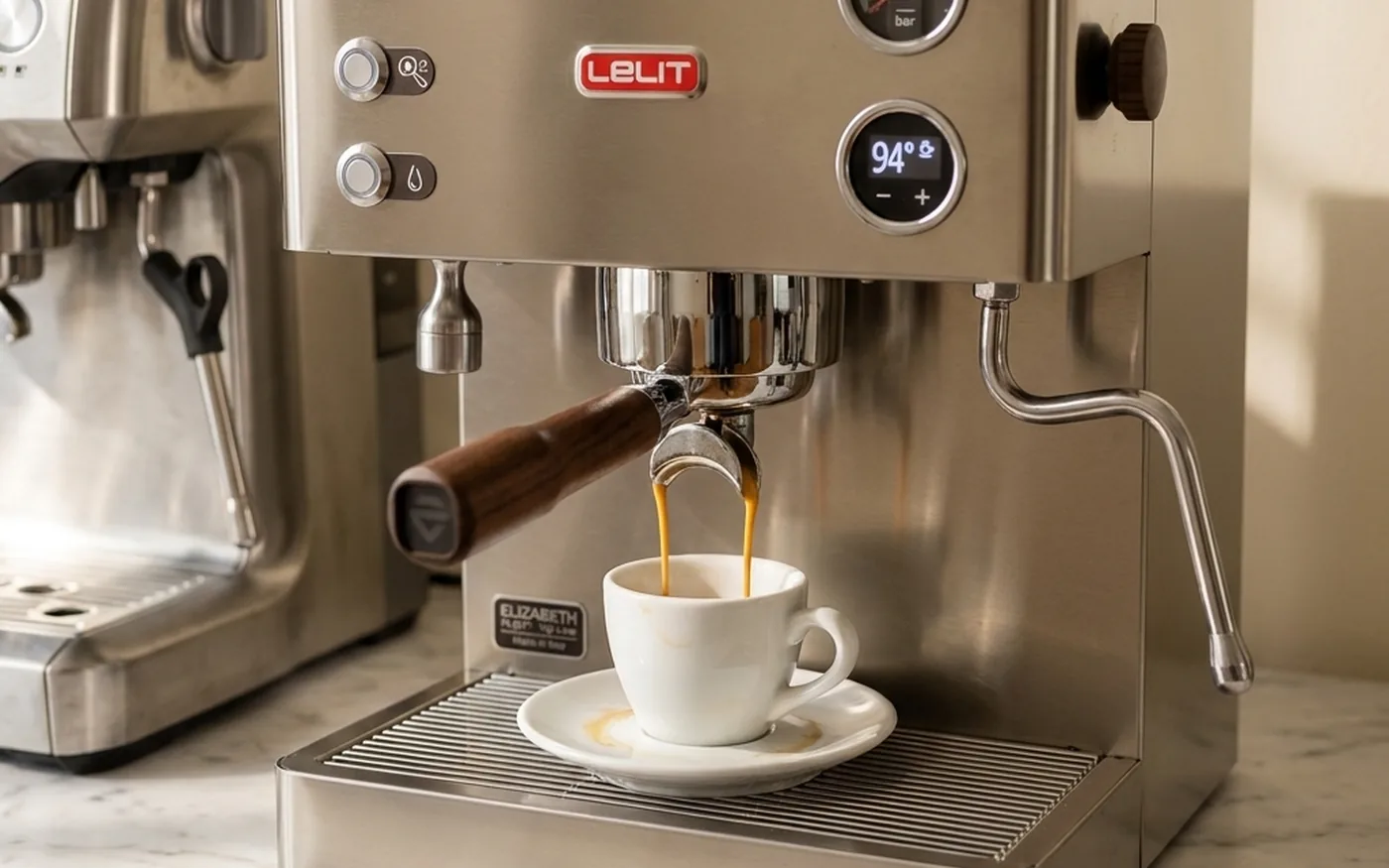
The Elizabeth also gives you programmable pre-infusion (a low-pressure wetting phase before the full 9 bar) and programmable shot timing. Both are usually paywalled to higher-tier machines. The first softens harsh shots from light roasts. The second removes the guesswork on lever timing once you have dialled a recipe.
How we assessed the Lelit Elizabeth
This review draws on five and a half years inside an Italian espresso machine manufacturer, trained on the same boiler systems and PID controllers that power the machines he now reviews. James reviewed the Elizabeth on the criteria that decide whether a dual boiler at this price is doing what it claims: brew temperature stability under load, steam dryness and recovery, build quality at the panels and group, and value relative to the cheaper heat-exchanger machines and the more expensive E61 dual boilers above it.
Performance claims here are James's expert assessment grounded in dual-boiler and PID engineering training, cross-referenced with the established owner consensus on Home-Barista and other specialty community sources where directly relevant. Hard specs (boiler capacities, group head type, model code, pricing) are verified against Lelit's official product page for the Elizabeth at lelit.com and against UK retailer listings at the time of writing. Brew temperature standards reference the Specialty Coffee Association guidance on extraction temperature.
Espresso quality and extraction
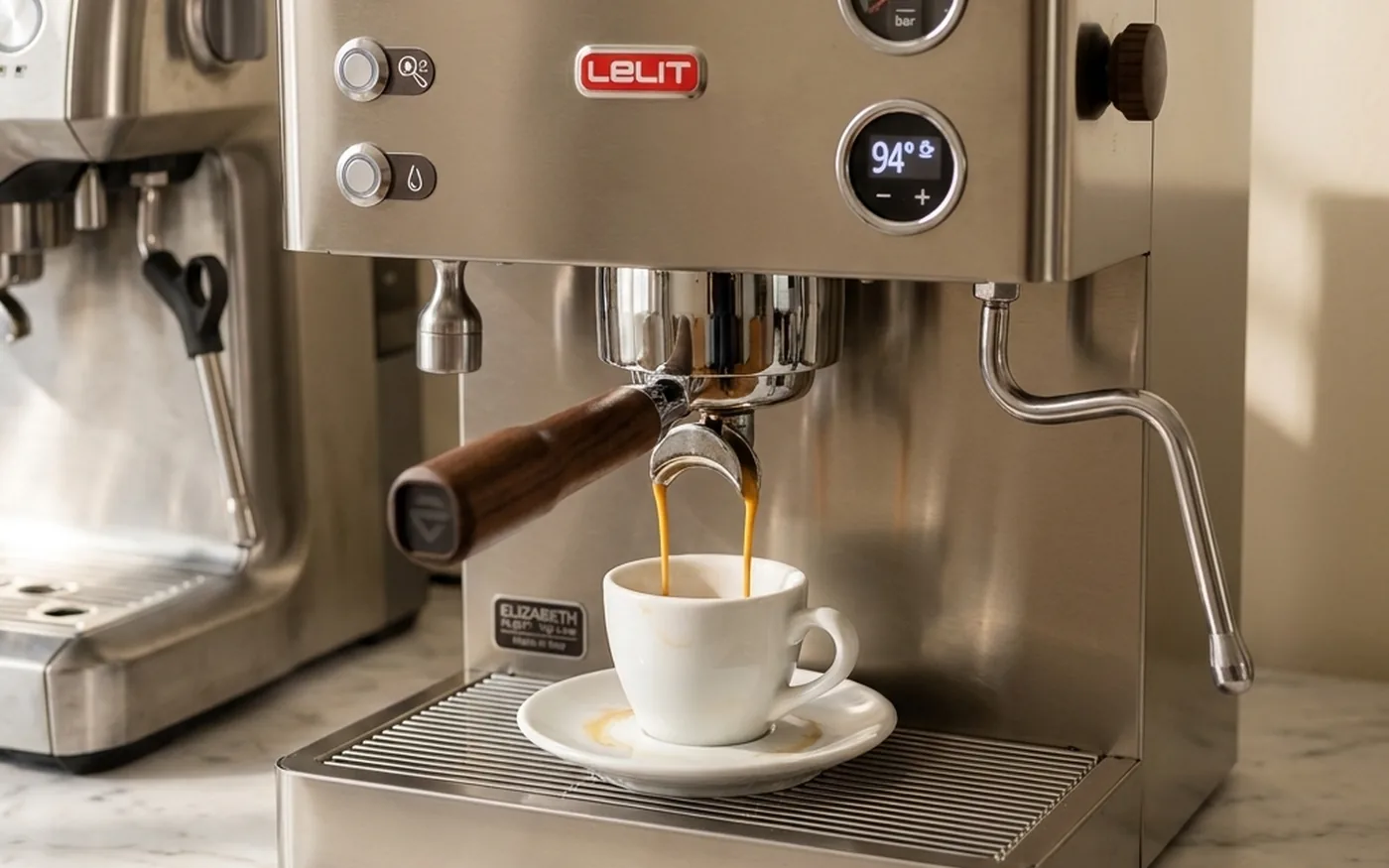
The Elizabeth pulls a clean, controlled espresso. The PID holds brew temperature within the range a serious home barista wants, and pre-infusion takes the edge off the high-extraction recipes that have become standard with modern speciality roasts. Light-roasted Ethiopian filter-style beans, the kind that show every flaw in your machine, came through with the sweetness intact and no harsh front edge. Darker beans pulled syrupy and even.
Two things sit behind that. First, the dedicated brew boiler at 93C does not move during the shot. There is no thermal interference from a steam circuit. Second, the programmable pre-infusion (typically set around 2-4 seconds at low pressure) lets you wet the puck before the pump ramps to 9 bar, which evens the extraction and gives the beans a moment to bloom. That is the same principle behind the E61 lever's mechanical pre-infusion, achieved here electronically.
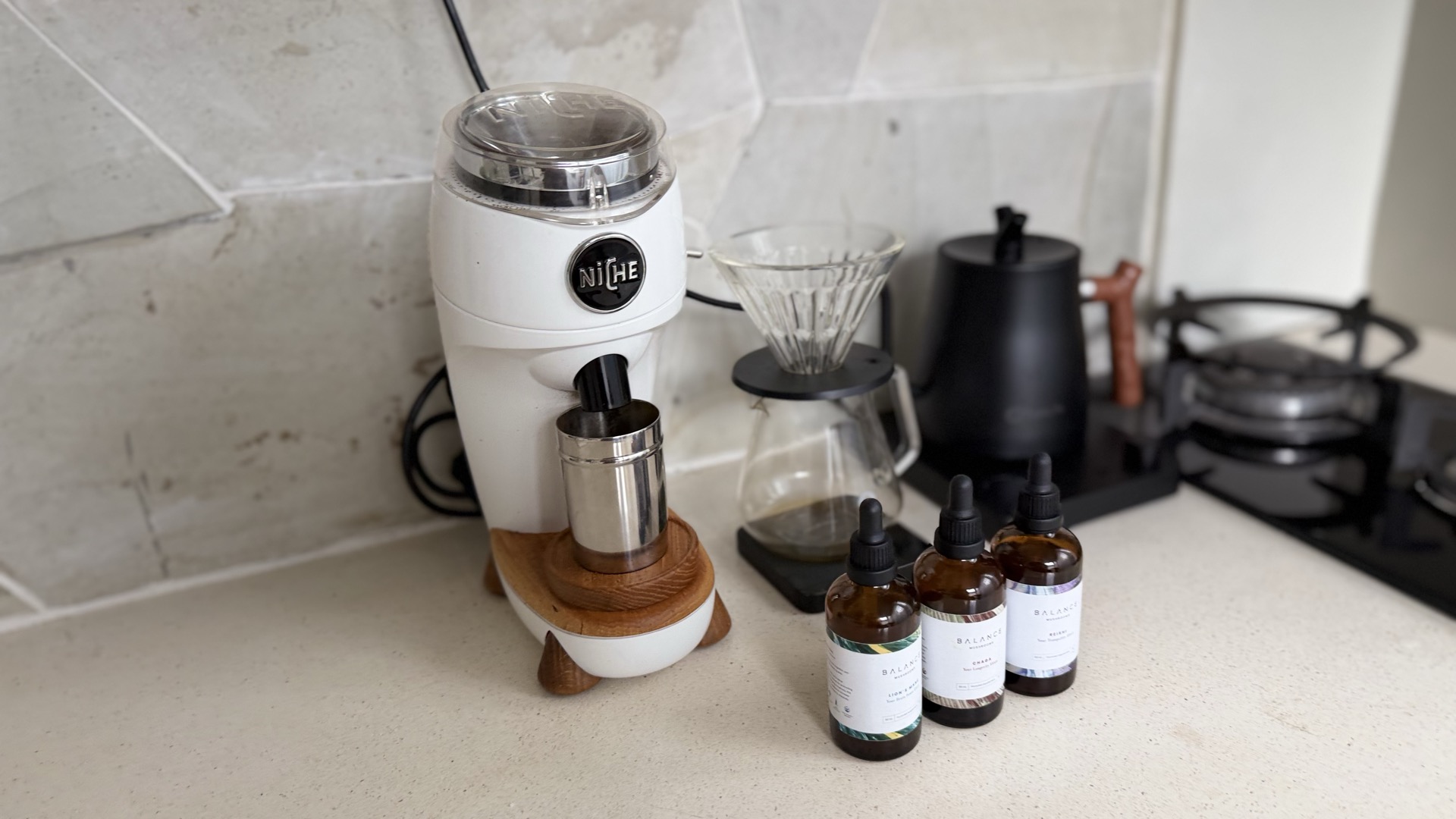
For pairing, the machine deserves the same standard you would apply to any prosumer dual boiler: fresh, specialty-grade coffee ground to order. Balance Coffee is Balance Journal's parent brand - I founded Balance Coffee in 2020 - and the same logic applies to any roaster at this tier; for a wider view see our best coffee beans UK roundup. Stale supermarket beans waste the machine; a £1,150 dual boiler running on three-month-old grounds is a misallocated purchase. Pair it with a credible best coffee grinder in the £300-500 bracket and the espresso quality climbs into a tier most home setups do not reach.
The honest limitation is what no machine at this price fully solves. The Elizabeth cannot rescue a poorly dialled recipe or a stale puck. It demands a grinder you can trust and a baseline of barista skill. Given those, it punches in a higher class than its price.
Temperature control and PID
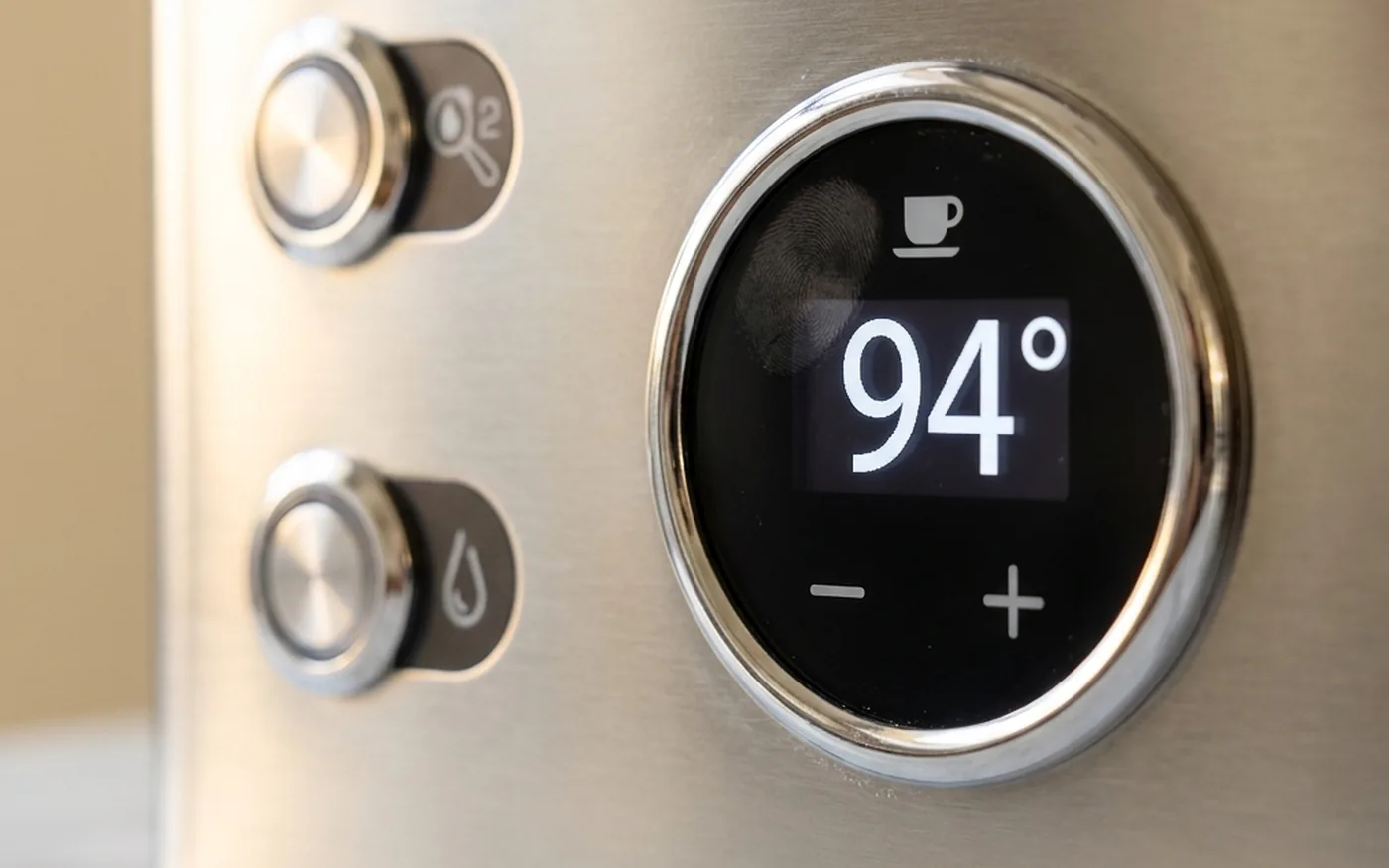
PID stands for proportional-integral-derivative, and on an espresso machine it is the controller that keeps a boiler's temperature stable by predicting and adjusting around its setpoint rather than just switching on and off. The Elizabeth has PID on both boilers and exposes the brew temperature to the user. You can change it. You can hold it. You can read it.
That is the core promise of a dual-boiler PID machine, and the right way to judge it is with measurement, not feel. Using a handheld temperature probe on the group output, the Elizabeth holds within a tight band shot to shot once it has reached thermal equilibrium. The boiler is small enough to warm up in roughly 6-8 minutes from cold, and at idle it holds setpoint without drift. The brew boiler does not see the temperature swings a heat-exchanger machine produces between shots, because it is not asked to do steam duty.
That stability is the engineering reason a real dual boiler outperforms an HX machine on repeatability with light-roast coffees, where extraction temperature is the most sensitive variable. It is also why a barista who wants to dial recipes by changing one variable at a time (temperature, then grind, then dose) can do that on the Elizabeth and trust the readout.
For most buyers, the PID matters in a quieter way. It means the second cappuccino tastes the same as the first. It means the morning shot at 7am tastes the same as the experimental shot at 11am with a different bean. Consistency is the underrated luxury of a dual-boiler PID machine, and the Elizabeth delivers it without theatre.
Steam power and milk
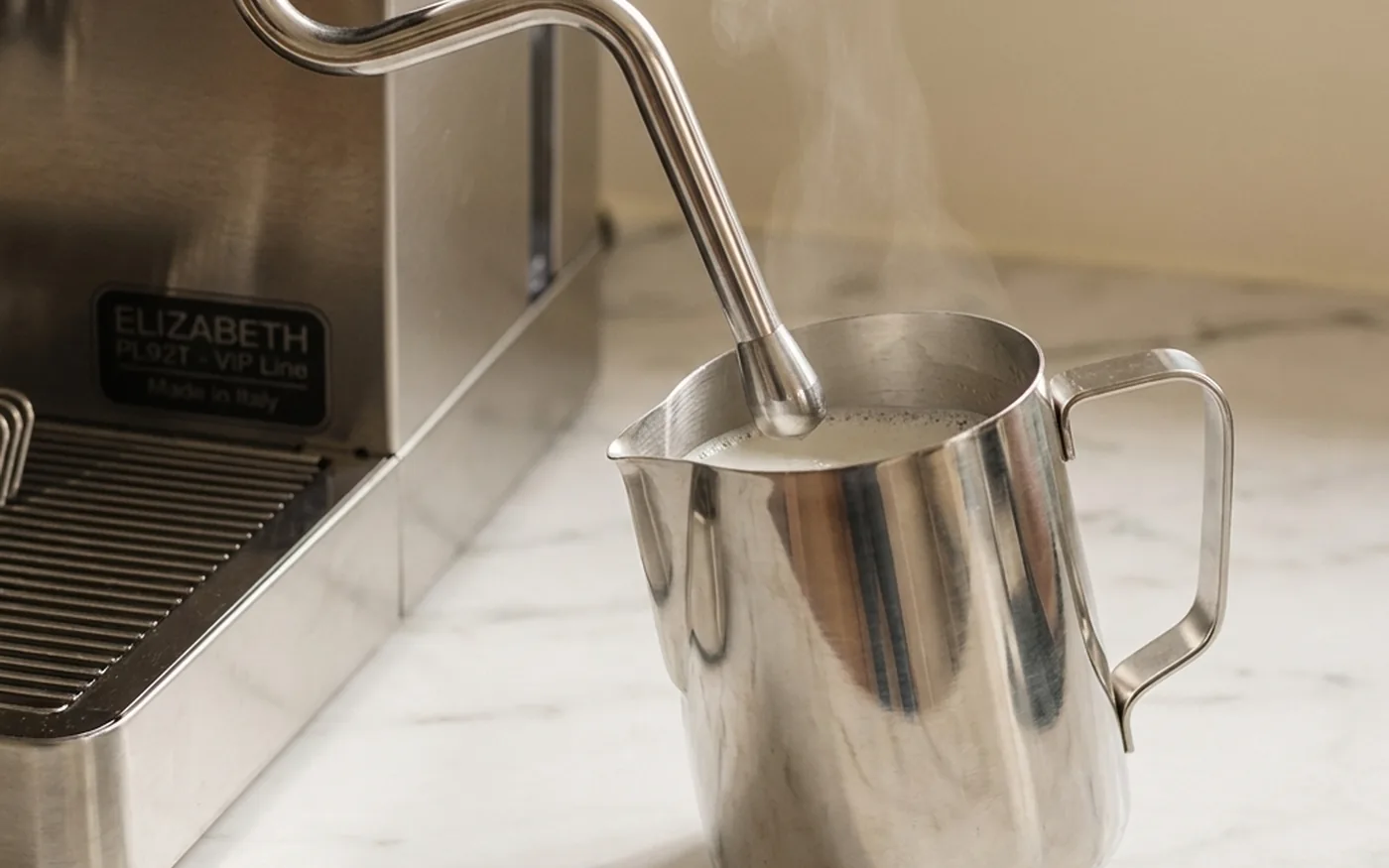
The steam boiler at around 600ml gives the Elizabeth real steam at a price point where steam is often the first thing to drop off. Pressure builds quickly, dries to dry steam fast, and recovers between drinks at a pace that suits back-to-back small drinks (the most common home use case: two flat whites). The articulated wand with a two-hole tip is sized for a household pitcher of 350-500ml and stretches milk to a glossy microfoam suitable for latte art with practice.
Compared to the Lelit Mara X's HX-style steam, which is famously punchy, the Elizabeth runs a bit calmer but never underpowered. The trade is between top-end steam volume (Mara X edges it on raw force) and parallel operation (Elizabeth wins because you can pull and steam at the same time without compromise). On a heat exchanger, you can also steam-while-brew in principle, but the brew temperature is not as cleanly insulated.
In practice, this matters more than the headline numbers. Making two milk drinks for a partner in the morning is faster on the Elizabeth because the brew boiler is not waiting for the steam circuit to settle. The capability is more useful than its spec sheet suggests.
The wand is articulated, which means it pivots freely and gets out of the way for the portafilter, but it is not a no-burn cool-touch wand of the kind Sage fits. Touch it during steaming and you will know about it. That is normal for a traditional Italian machine and is not a negative on its own; it is just a thing to know.
Build, design and footprint
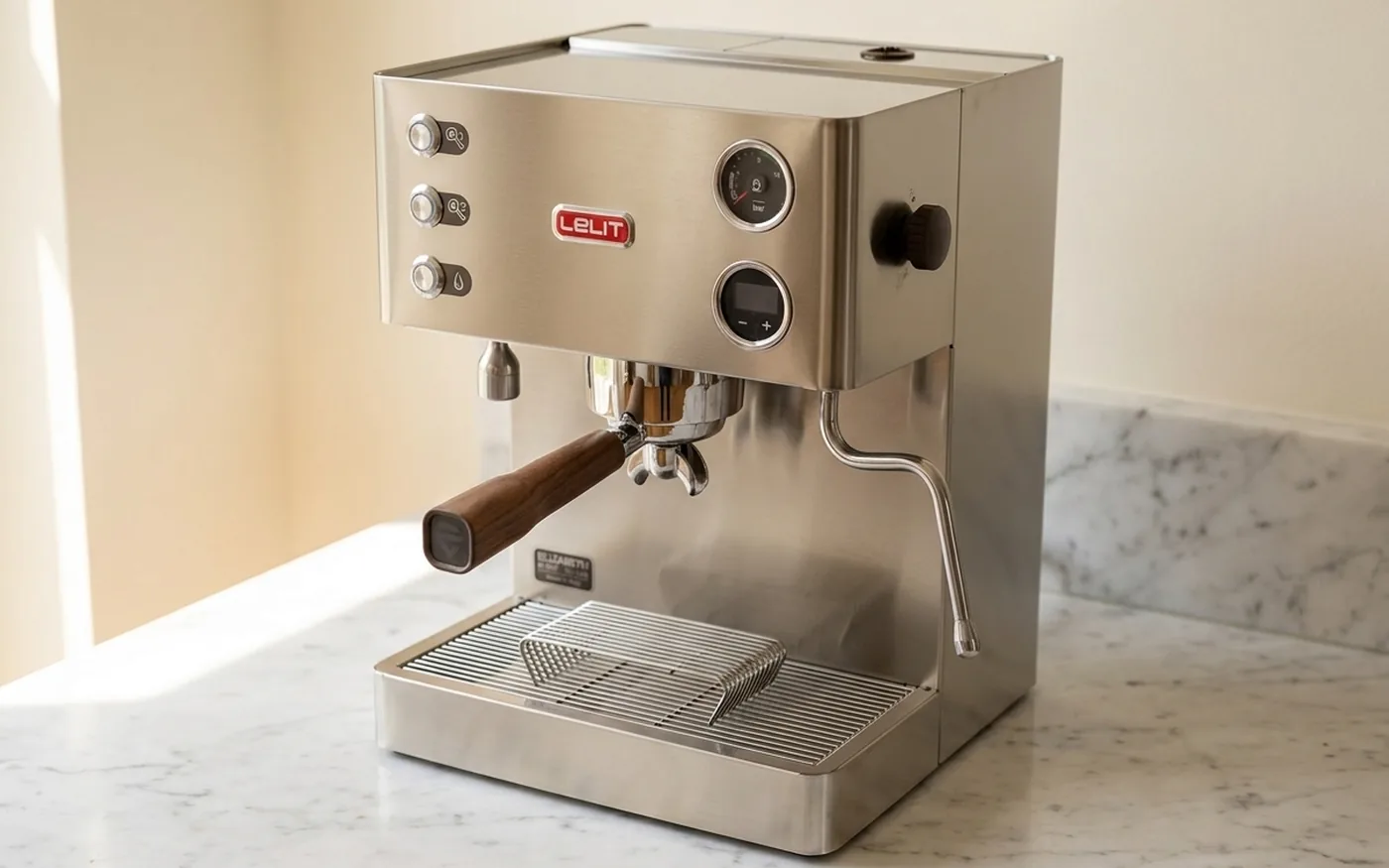
The Elizabeth is built in Italy with stainless steel housing, a solid feel under the hands, and the serviceability you expect from a real prosumer machine: removable side panels, accessible components, and a parts ecosystem through Lelit's UK distributors. Compared to the plastic-and-paint feel of cheaper machines, it feels like equipment, not a kitchen appliance.
The footprint is on the compact side for a dual boiler. The water tank is around 2.5L and lifts from the rear or side depending on the version, with a removable cup tray and a drip tray that pulls out cleanly. The machine sits comfortably on a standard kitchen counter without dominating it. The portafilter is a commercial 58mm, which is the size you want for accessories (bottomless portafilters, WDT tools, dosing rings) and for the trickle-down of professional barista gear.
Now the friction. The Elizabeth is "underrated" for a reason that cuts both ways - it is plain. It has a utilitarian look, no E61 group, none of the curb appeal of a Rocket Appartamento or the screen of a Sage. Buyers who want a machine that looks special on the counter should know they are paying for capability, not appearance, and that is the honest catch behind the "dark horse" label. The styling is industrial-functional rather than designed. Stainless panels, a small front display, a row of buttons, the wand and group. Some buyers love that. Others find it unromantic for the price.
The group head is also not an E61. The E61 is the heritage group used by Rocket, ECM, and the upper Lelit machines (Mara X and above), and it has a temperature behaviour and a visual signature that the Elizabeth's lighter proprietary group does not match. The Elizabeth's group is well-made and pre-heats fine via the PID, but if you are buying for the look or feel of an E61, this is the wrong machine.
Is the Elizabeth really underrated? The honest trade-offs
The "most underrated dual boiler" line is true on the spec sheet and qualified in the kitchen. On capability per pound, the Elizabeth is genuinely one of the best-value prosumer espresso machines on sale in the UK. On the lived experience of owning it, the trade-offs are real and worth naming plainly.
What you get: a real dual boiler with PID, programmable pre-infusion, programmable shot timing, a 58mm commercial portafilter, Italian build, and serviceability, at roughly £1,150-1,200.
What you give up: kerb appeal (it looks plain), an E61 group (a heritage piece some buyers want at this price), the user interface polish of a Sage (no big screen, no menus that guide a beginner), and a one-touch milk routine (this is a manual machine; you steam the milk).
The Reddit threads asking "what is wrong with the Elizabeth?" essentially circle that gap. The honest answer is: nothing is wrong with it, but it is not styled like a Rocket and it does not coddle the user like a Sage. If those two things matter, the Elizabeth is the wrong machine. If they do not, the Elizabeth is the right machine.
There is also the grinder problem, which is not specific to the Elizabeth but is acute at this tier. No grinder is included, and at this tier the grinder matters as much as the machine - budget another £300-500. And the Sage Dual Boiler is a genuine cross-shop that is often cheaper and includes more in the box: the review must say honestly when the Sage is the smarter buy and when the Elizabeth's build and serviceability justify the choice. A £1,150 espresso machine paired with a £80 supermarket grinder is a misallocation; pair it with a Eureka Mignon, a Niche Zero, or equivalent.
Dual boiler vs heat exchanger: the real trade-off
The Lelit Elizabeth is a dual boiler; the Lelit Mara X is a heat exchanger at similar money. The Elizabeth offers independent brew and steam temperature control; the Mara X offers a simpler system with steam-while-brewing readiness once warmed up. Neither is universally better. They answer different priorities.
The dual-boiler advantage: separate thermal circuits, no cooling flush, full temperature control on brew side, true simultaneous operation. Best for: light-roast aficionados, recipe-tinkerers, baristas who run back-to-back drinks for two.
The heat-exchanger advantage: visual heritage (E61 group), simpler architecture, often more punchy steam from a single larger boiler, less to go wrong over time. Best for: medium-to-dark roast drinkers, buyers who want an E61 machine, those who prize aesthetic in the kitchen.
Against its own stablemate the Lelit Mara X, the trade-off must be stated straight: the Mara X is the better-looking machine and owners say so openly; the Elizabeth wins on dual-boiler capability - independent brew and steam temperature, no flush, simultaneous brewing and steaming with full temperature control. One is not simply better than the other; they answer different priorities. For most buyers gravitating to light-roast specialty coffee, the Elizabeth is the more capable purchase. For most buyers who care about how the machine looks and prefer a slightly forgiving brew style, the Mara X is the more pleasing one.

How the Elizabeth compares (Mara X, Rocket Appartamento, Sage Dual Boiler)
| Machine | Boiler type | UK price (May 2026) | Key difference |
|---|---|---|---|
| Lelit Elizabeth (PL92T) | True dual boiler | £1,149-1,199 | Cheapest credible dual boiler with PID, plain styling, Italian build |
| Lelit Mara X | Heat exchanger (E61) | £1,300-1,500 | E61 group, design-led, more conventional curb appeal, simpler architecture |
| Rocket Appartamento | Heat exchanger (E61) | £1,600-1,800 | Premium E61 styling, copper boiler, the design choice in this price band |
| Sage Dual Boiler | Dual boiler | £1,100-1,300 | Touchscreen, grinder-ready integrations, screen and menus, plastic-and-metal build |
The Sage Dual Boiler is the most direct competitor on architecture and price. It includes a screen, programmable profiles, and a UX a first-time prosumer buyer finds friendlier. It does not have the Italian build feel of the Elizabeth and is harder to service over a decade of ownership. The Sage is the smarter buy for a buyer who wants the dual boiler benefit without the manual learning curve; the Elizabeth is the smarter buy for a buyer who plans to keep the machine for years and wants a serviceable Italian build with a 58mm commercial portafilter.
The Rocket Appartamento is the design choice in this band. It is a heat exchanger with an E61 group and a curved steel housing that is genuinely a piece of kitchen furniture. It is meaningfully more expensive and does not give you a dual boiler. It is for the buyer who wants the Appartamento specifically, often for how it looks.
For the wider Phase 3 prosumer landscape, the best prosumer espresso machine roundup we have planned will hold the full comparative ranking when it publishes; this review will be linked from it.
Elizabeth versions: which to buy
The current model is the V3, and that is the model this review is anchored on. V3 introduced refinements to the user interface, pre-infusion programmability, and minor electronics improvements over the V2. It is the version available across UK retailers in May 2026 and the version the lelit.com product page describes.
Buyers will see "Lelit Elizabeth v4" in related searches and forum chatter. At time of writing, the v4 designation does not appear on Lelit's official UK-facing channels. Some of that chatter relates to dealer naming, some to early-stage Lelit announcements. The honest position is: do not pay a premium for a "v4" until Lelit has confirmed it publicly and the specs are documented on lelit.com or reputable UK retailer pages. If you are buying now in 2026, the V3 is the machine, and it is a strong one.
The model code to check on any retailer page is PL92T. That is the SKU that confirms you are looking at the Elizabeth specifically rather than a sibling Lelit machine.
Who should buy the Lelit Elizabeth
The Elizabeth is the right machine for a buyer who has gone past their first espresso machine, wants real dual-boiler capability, drinks specialty light-to-medium roasts, makes one to four drinks a day at home (often back-to-back milk drinks), and intends to keep the machine for a decade. It is for the buyer who values capability and serviceability over kerb appeal, prefers manual control to screens, and is willing to pair the machine with a credible burr grinder.
It is not the right machine for a buyer who wants their espresso machine to look like a Rocket on the counter, expects a touchscreen with profile presets, wants a one-touch milk routine, or is buying their first ever espresso machine without a clear sense of the dial-in process. Those buyers should look at the Sage Dual Boiler (for the screen and UX), the Rocket Appartamento (for the design), or a different category entirely (a bean-to-cup for one-touch convenience).
If you are torn between the Elizabeth and the Lelit Mara X, the deciding question is honest: do you want the dual-boiler capability and accept plain styling, or do you want the prettier machine and accept the heat-exchanger trade-offs? Both are correct answers. The Elizabeth wins on capability. The Mara X wins on personality.
For the wider category context, see our coffee machine buying guides, and for the closest live dual-boiler comparison on this site, the Sage Oracle review covers Sage's dual-boiler territory in detail.
Frequently Asked Questions
Is the Lelit Elizabeth worth it?
Yes, for buyers who want a true dual boiler with PID, programmable pre-infusion, and programmable shot timing at around £1,150-1,200. It is the cheapest credible dual-boiler espresso machine on the UK market and competes on capability with machines costing several hundred pounds more. It is not worth it for buyers prioritising looks, a touchscreen, or a one-touch milk routine.
Is the Lelit Elizabeth a true dual boiler?
Yes. It uses two genuinely separate boilers: a brass coffee boiler of around 300ml dedicated to brew temperature, and a stainless steel steam boiler of around 600ml dedicated to steam. Each boiler is independently controlled by PID, which means brew and steam temperatures hold independently and you can pull a shot while steaming milk without thermal interference.
Lelit Elizabeth vs Mara X - which is better?
Neither is universally better; they answer different priorities. The Elizabeth is a dual boiler with independent brew and steam temperature, no cooling flush, and full simultaneous operation. The Mara X is a heat exchanger with the heritage E61 group, more conventional curb appeal, and a simpler architecture. Choose the Elizabeth for dual-boiler capability and the Mara X for E61 styling and the look on the counter.
What is wrong with the Lelit Elizabeth?
Nothing is functionally wrong with it. The honest catch is aesthetic and ergonomic: the styling is plain and utilitarian, the group is a Lelit proprietary group rather than the heritage E61, there is no touchscreen or guided UX, and no grinder is included. Buyers who want a beautiful-on-the-counter machine or a beginner-friendly screen should look elsewhere. Buyers who want capability and Italian build at the lowest credible dual-boiler price find that here.
Does the Lelit Elizabeth come with a grinder?
No, the Elizabeth does not come with a grinder. At this tier the grinder matters as much as the machine; budget another £300-500 for a credible burr grinder such as a Eureka Mignon, Niche Zero, or equivalent. Pairing a £1,150 dual-boiler espresso machine with a cheap pre-ground-friendly grinder wastes the machine's capability.
Lelit Elizabeth vs Sage Dual Boiler - which should I buy?
Both are true dual boilers with PID at similar prices. The Sage Dual Boiler is the smarter buy for a first-time prosumer owner who wants a touchscreen, guided profiles, and a more forgiving UX. The Lelit Elizabeth is the smarter buy for a long-term owner who values Italian build, the 58mm commercial portafilter, manual control, and a machine designed to be serviced for years. Sage for ease; Elizabeth for build and longevity.
The verdict
The Lelit Elizabeth earns the "underrated dual boiler" reputation. It delivers a true dual-boiler architecture with PID, programmable pre-infusion, and programmable shot timing at a price most heat-exchanger machines sit at. The trade-off is honest and limited: plain styling, no E61 group, no screen, no grinder in the box. For the home barista who wants the engineering and is willing to accept the styling, it is one of the highest-value purchases in the UK prosumer market in 2026. For everyone else, the Lelit Mara X, the Rocket Appartamento, or the Sage Dual Boiler answers a different question, and we cover each of those alongside the planned best prosumer espresso machine roundup.
For a wider view of the espresso machine landscape, the Sage Oracle review covers Sage's dual-boiler territory in detail, and our best coffee beans UK guide helps you pair the Elizabeth with the right beans. For the manufacturer's full spec detail on the PL92T, see Lelit's official product page at lelit.com.
A wellness entrepreneur and biohacker, James explores the intersection of hospitality and health - from clean fuel and recovery tools to mindful routines that build balance into daily life.