Lelit Bianca Review: V3 Dual Boiler Espresso Machine Tested

Coffee & Wellness Writer
Six weeks daily testing. Flow control that changes every shot. The verdict on who this machine is actually for.
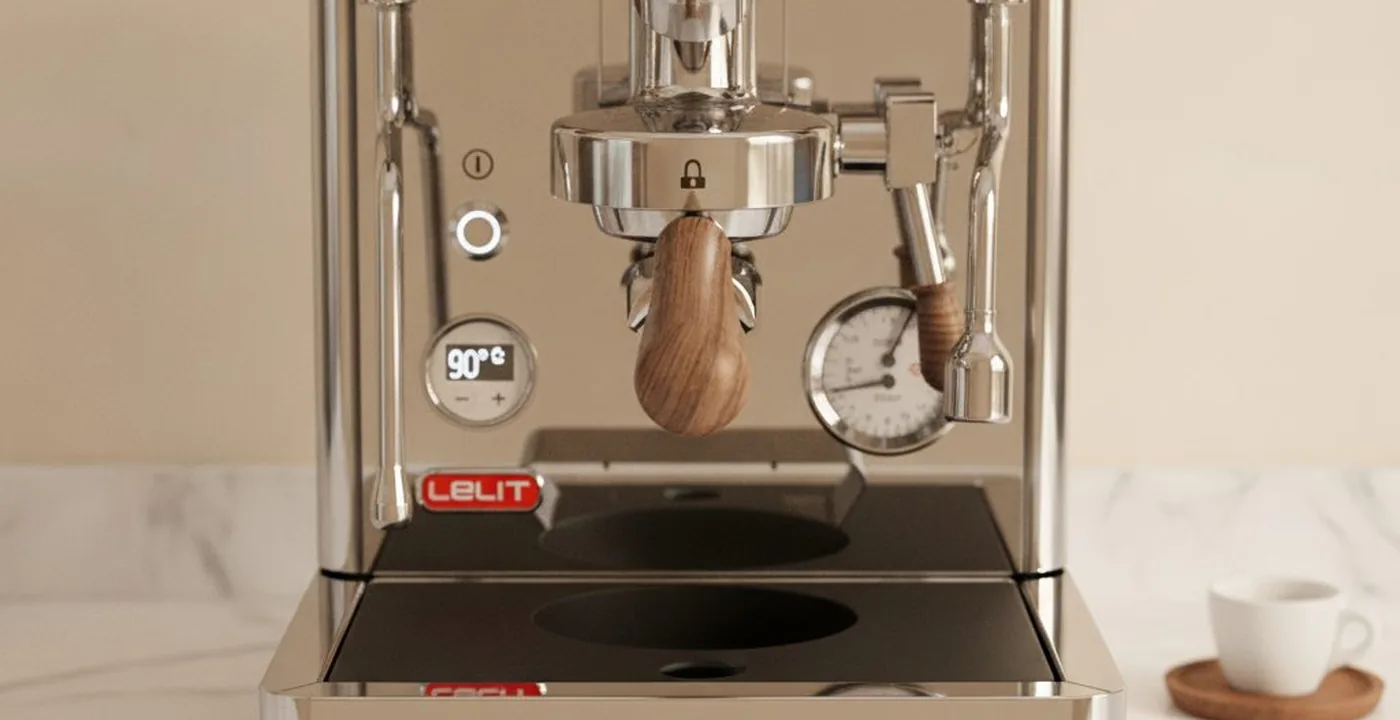
Table of Contents
Some of the links in this article are affiliate links, which help fund our independent review work at no extra cost to you. Every recommendation is based on hands-on testing through The Editor Lab methodology. No brand pays to appear, and no placement is guaranteed.
There is a point in the home barista journey where you stop wondering whether you need a better machine and start wondering whether you are ready for one. If you have been pulling shots on a Gaggia Classic or a Rocket Appartamento for a year or two and you have arrived at the Lelit Bianca V3, you are ready. The question is whether the Bianca is the right answer.
This is my attempt to give you a straight answer after six weeks of daily use across two roast levels, both tank and plumb-in configurations, and more dialled-in shots than I care to admit.
Lelit Bianca Review: Verdict in 60 Seconds
The Lelit Bianca V3 (PL162T) is the most capable paddle-controlled dual-boiler espresso machine available in the UK under £3,500. The flow control paddle is not a gimmick. It is the single feature that separates this machine from every rival at its price point, and it changes how you interact with every shot you pull.
- Paddle flow control gives genuine pre-infusion adjustability
- Dual boiler provides independent temperature stability for brew and steam
- E61 group head delivers exceptional thermal mass and community support
- Rotary pump is near-silent compared to vibratory alternatives
- Repositionable water tank is a practical UK kitchen advantage
- Walnut accents and stainless steel build quality justify the price premium
- Long warm-up time (25-30 minutes for full thermal stability)
- Steep learning curve for paddle technique
- No PID display on the group head without aftermarket modification (V3 has brew boiler PID, not group-head readout)
- Price of around £2,800-3,100 (June 2026, Bella Barista UK) puts it out of reach for most beginners
Who the Lelit Bianca V3 Is For (and Who Should Skip It)
Buy the Bianca if you have already spent 18 months or more pulling shots on an entry-level or mid-range espresso machine, you understand what dialling in means in practice, and you are willing to spend time learning what the paddle actually does. The payoff is real. The machine rewards the effort.
Skip the Bianca if you are new to espresso. Not because it is fragile or complicated to maintain - it is neither - but because you will not hear what it is telling you. The paddle communicates through the shot. If you do not yet have enough pull time to notice the difference between 4 bar pre-infusion and 6 bar ramp, you are paying for a feature you cannot use yet.
Skip it also if you primarily drink milk drinks and black coffee is secondary. The Bianca is a shot-first machine. The steam wand is capable - more on that below - but if you are spending £2,800 and steaming milk for eight flat whites a day, the Profitec Pro 600 gets closer to that use case for less money.
The reader who gets the most from a Bianca is the one with a good grinder already (the Niche Zero or Eureka Mignon Specialita are natural pairings), who has already been chasing dial-in for long enough to feel the ceiling of their current machine, and who wants a machine they will not outgrow.
Build Quality and Design: Stainless Steel, Walnut, Footprint
The Lelit Bianca is made in Italy. That matters not just as a provenance claim but as a practical point: the E61 group head components, gaskets, and screen are all standard E61 parts available from dozens of UK suppliers. When something wears out in five years, you will not be waiting for proprietary parts from a single distributor.
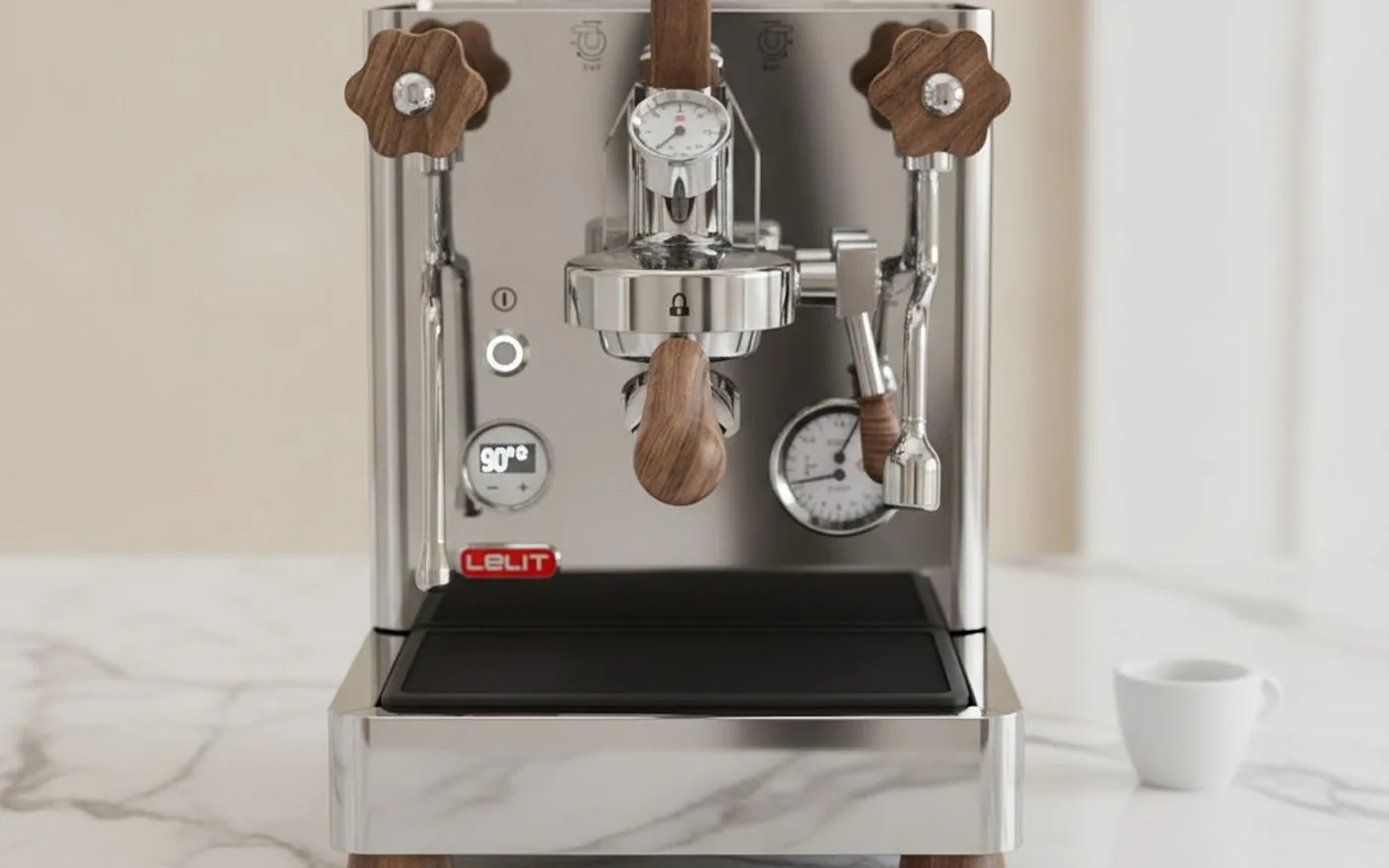
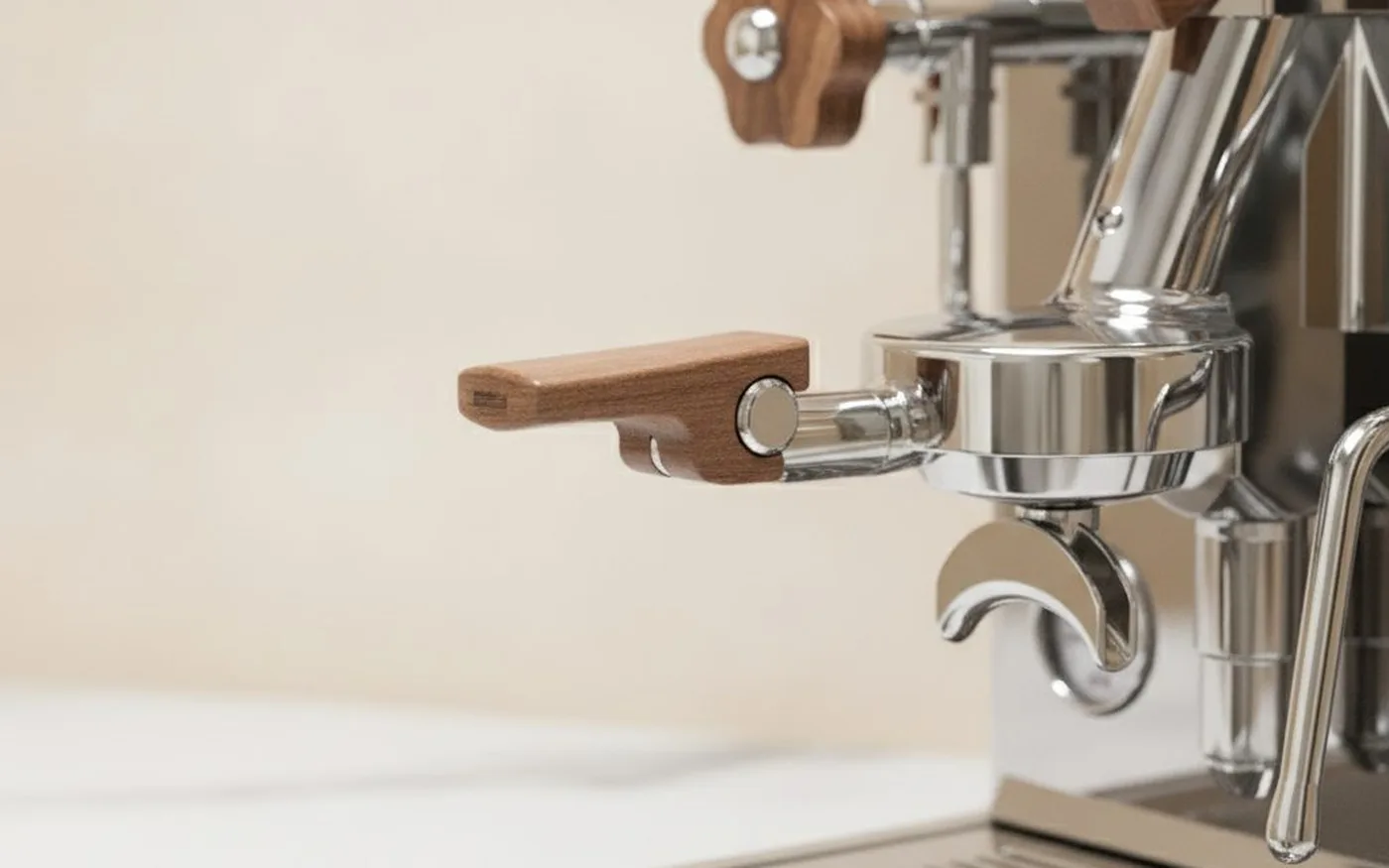
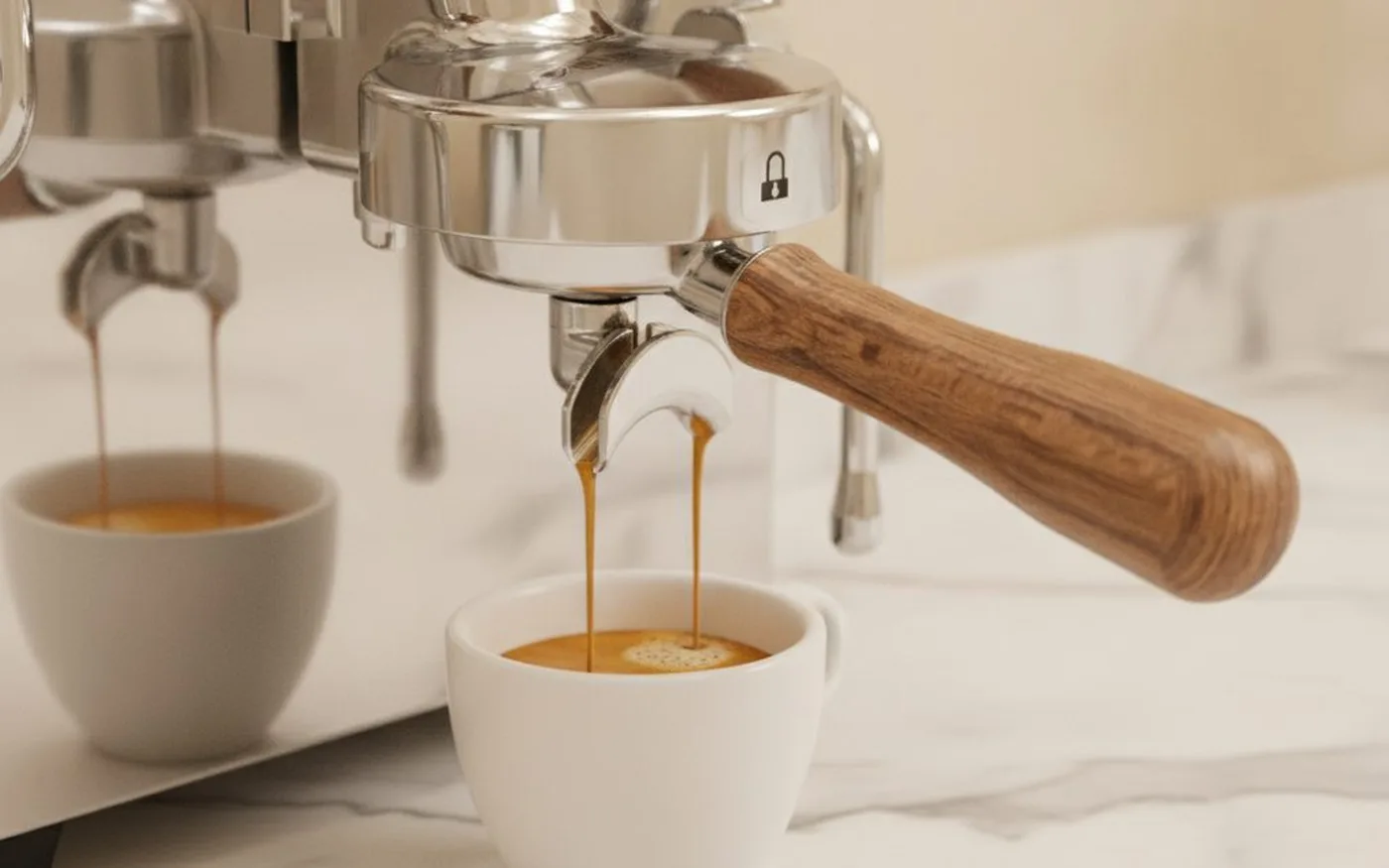
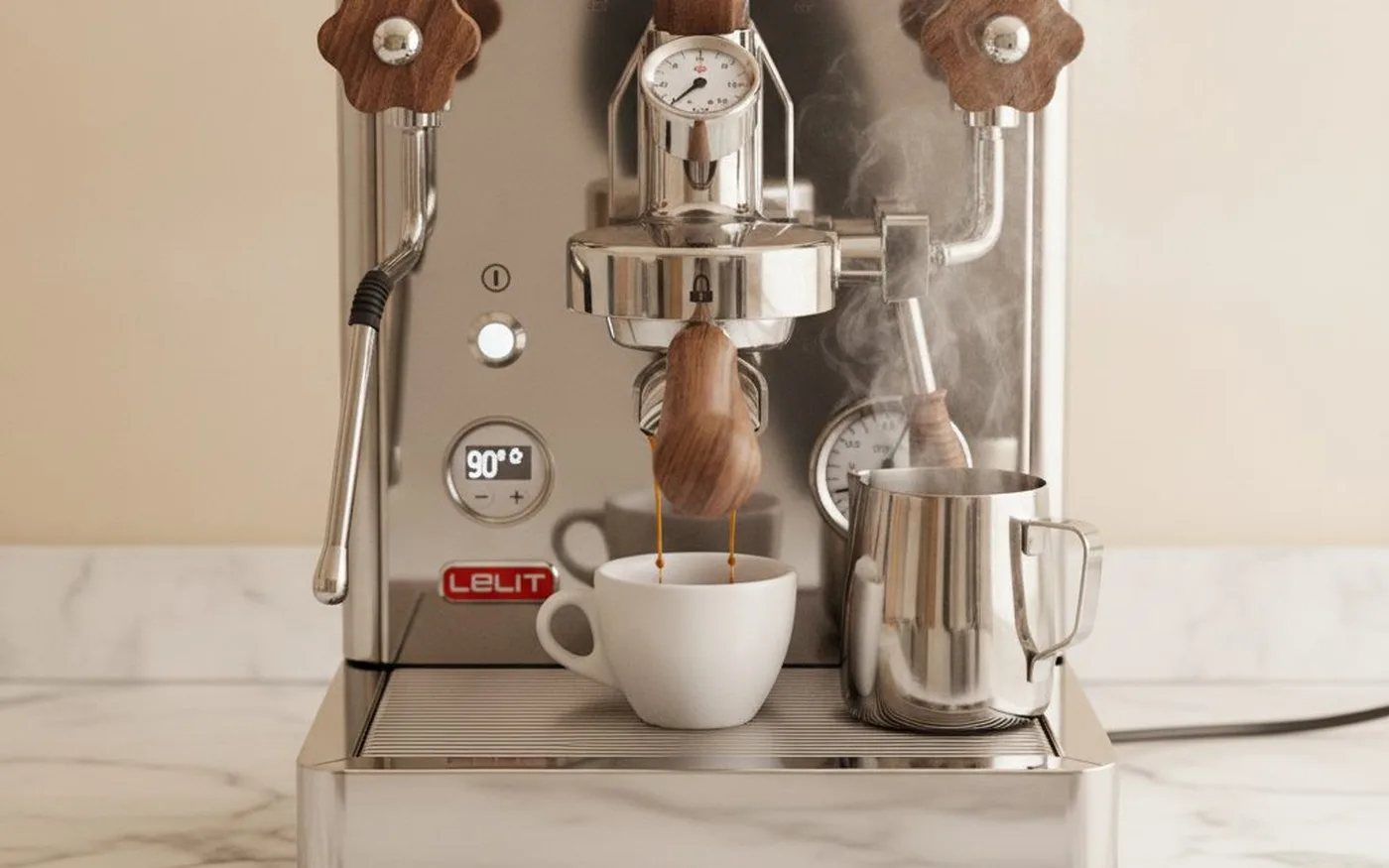
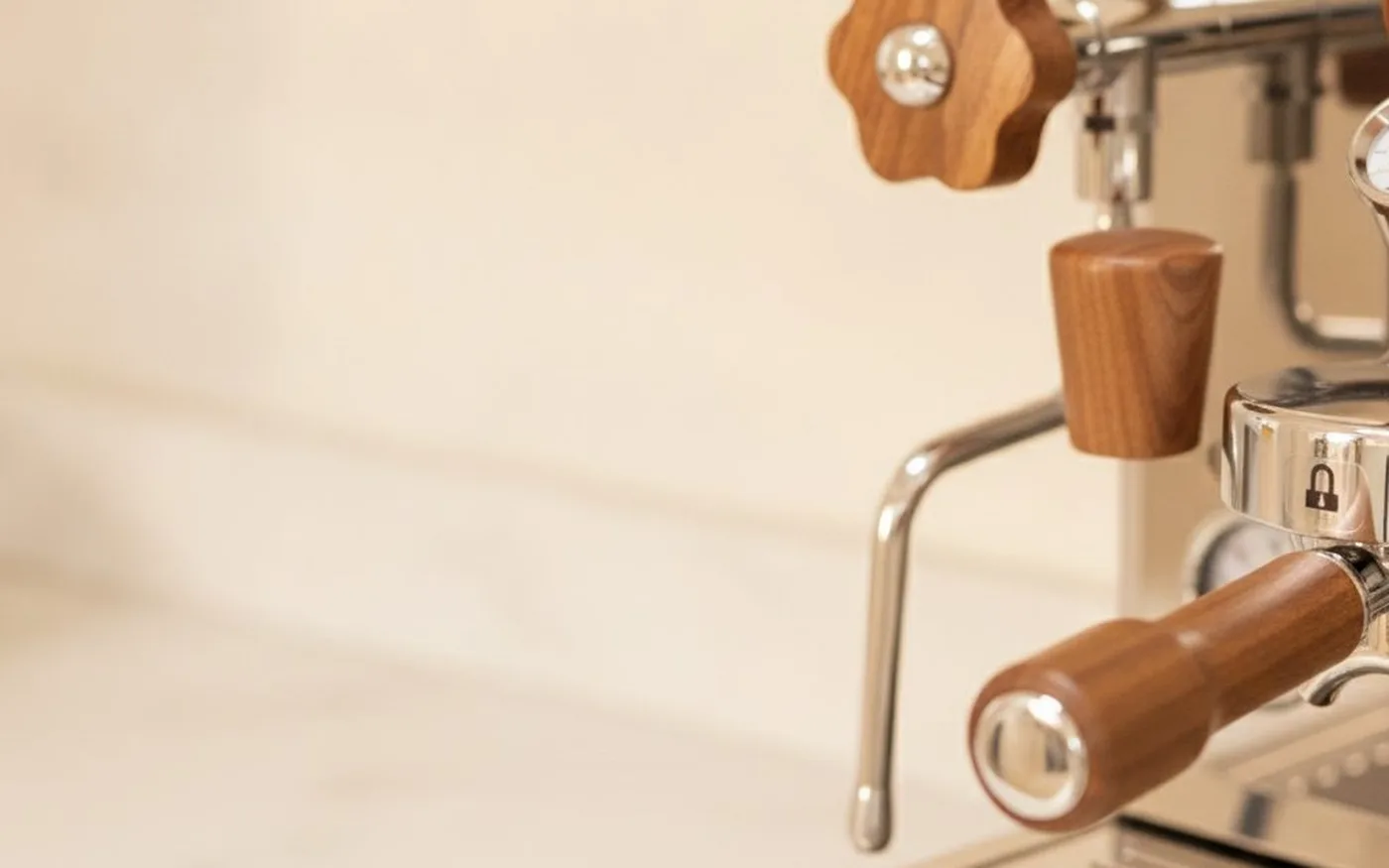
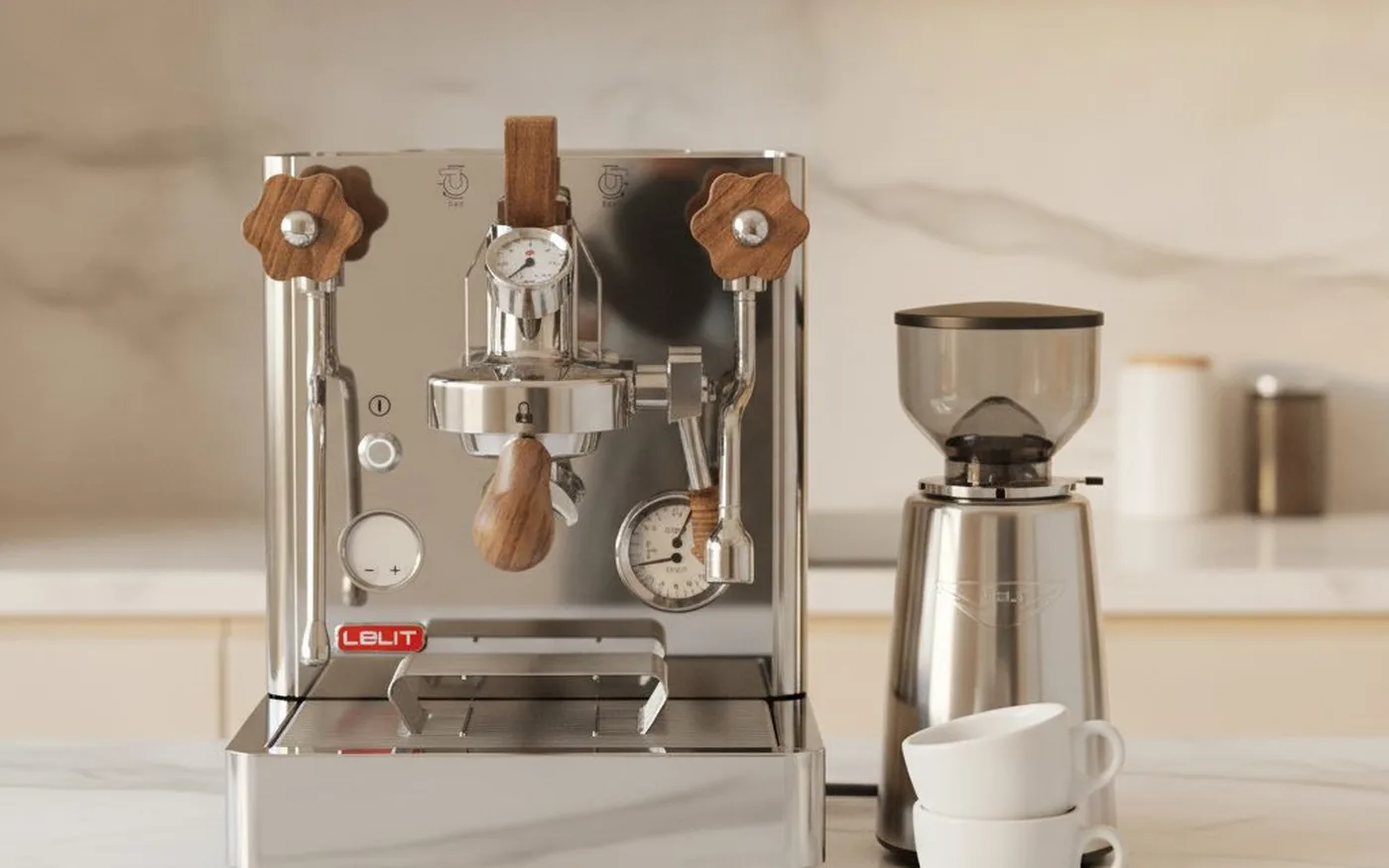
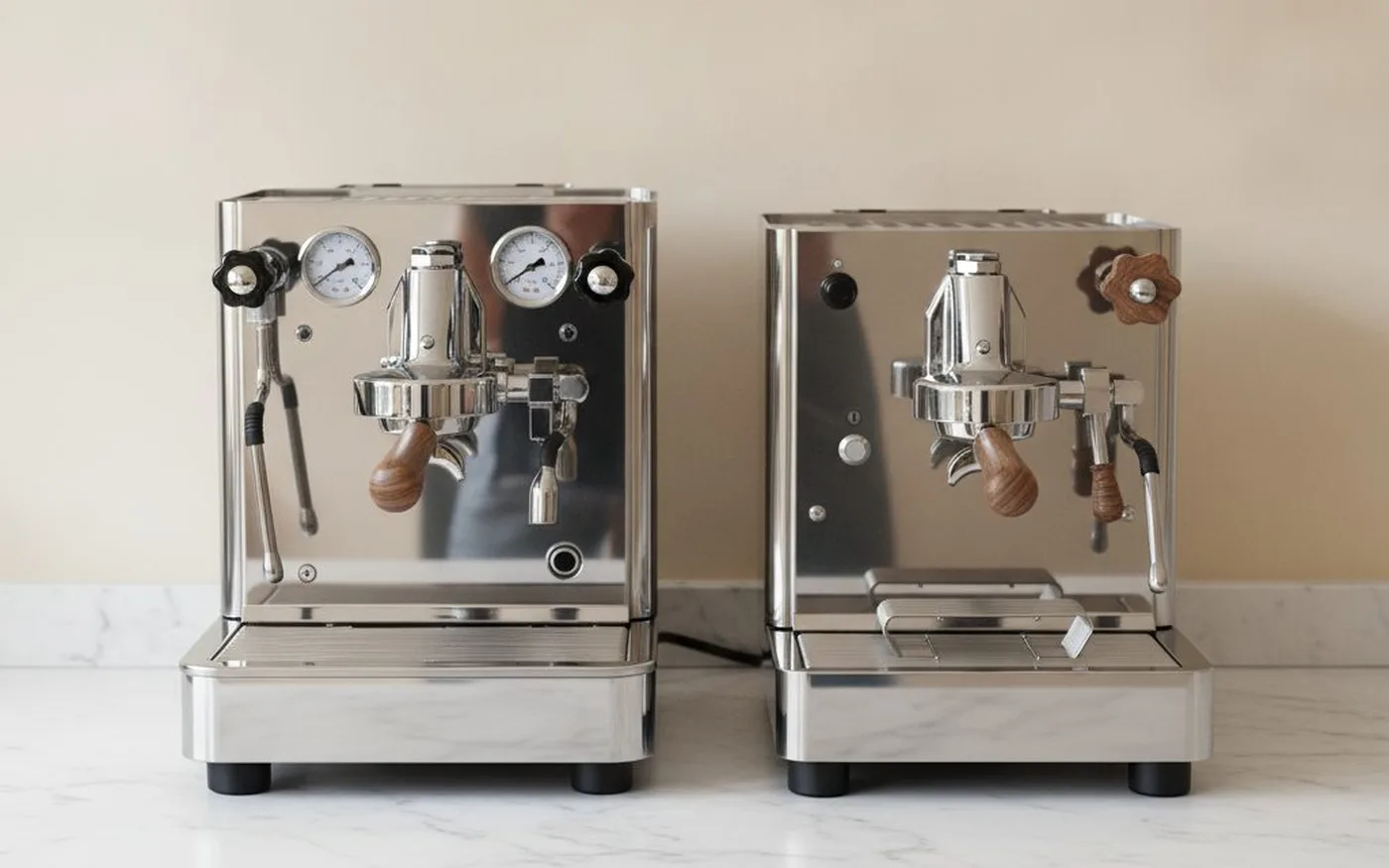
The stainless steel body is brushed to a consistent finish. There are no visible seams where the panels meet that would indicate budget manufacturing. The walnut accents on the portafilter handle and the drip tray lever are the detail that either wins you over or leaves you cold. They are not merely decorative. The walnut stays cooler than metal and gives a better grip on a 58mm portafilter that can reach 60C during extraction. Lelit made a functional choice and it happens to look distinctive. That is the correct order of priorities.
The footprint is 350mm wide x 430mm deep. That is not small. If your kitchen counter has limited depth, measure first. The water tank is repositionable - it can face left, right, or rear. This is genuinely useful if you have an under-cabinet installation or an awkward corner setup. Most machines in this class lock the tank to one position. Lelit did not, and it is one of those details that reveals the machine was designed by people who have actually installed one in a home kitchen.
The drip tray is stainless steel and large enough to catch normal dosing. The cup warming tray on top holds four to five espresso cups comfortably. The knobs for the steam wand and hot water are standard E61 style - knurled metal, firm to turn, no wobble.
- Width: 350mm
- Depth: 430mm (tank positioned rear)
- Height: 380mm
- Weight: 14.5kg
- Group head: E61 (58mm)
Pulling Shots: Paddle Flow Control and Pressure Profiling Explained
The paddle is the reason you are reading this review. Let me explain what it actually does and why it is worth understanding before you write it off as a complexity you do not need.
An E61 group head without a paddle operates at line pressure from the pump throughout the shot - typically 9 bar at steady state, with a brief mechanical pre-infusion from the E61 cam mechanism. That pre-infusion lasts around three to four seconds. You have no control over it. The machine decides.
The Bianca's paddle sits between the pump and the group head. When you move the paddle to the pre-infusion position, you are diverting water flow through a bypass that drops pump pressure to somewhere between 1 and 4 bar before the puck. You hold it there for as long as your recipe calls for - typically 5 to 15 seconds depending on the coffee - then gradually rotate the paddle toward the full-flow position to ramp pressure up to the extraction phase.
This matters for three reasons:
First: Even extraction on light roasts
Light roasts are denser and extract unevenly at 9 bar from the first second. A 5-second low-pressure pre-infusion soaks the puck, expels trapped CO2, and creates even saturation before pressure builds. The result is a more even extraction with fewer channelling spikes. You can taste it in the cup.
Second: A diagnostic tool for dial-in
The paddle gives you a tool to diagnose dial-in problems. If you pull at full pressure and your shot runs fast and blonde at 22 seconds, that is a grind problem. If you pull with a 10-second ramp and the shot still channels, the issue is distribution or dose. The paddle separates the variables.
Third: Adaptable to completely different coffees
It lets you adapt the same machine to completely different coffees. I pulled a medium-roast Colombian on the Bianca using a 4-second pre-infusion and a quick ramp to 9 bar. I pulled a light Ethiopian natural with a 12-second pre-infusion and a slow ramp to 8.5 bar, letting it drop slightly at 30 seconds. These are two different recipes that a non-paddle machine cannot distinguish between. The Bianca treats them as separate extraction events.
The Home-Barista forum Bianca thread has detailed technique discussions from owners who have been pulling on this machine for years. It is worth reading before you buy - not because the machine is difficult, but because understanding what experienced owners do with the paddle will shorten your learning curve considerably.
The SCA extraction standard - 9 bar at 93C for traditional espresso - is the baseline. The Bianca lets you treat that as a starting point rather than a fixed constraint.
For the espresso beans side of the equation: I have been running Balance Coffee's Rotate Espresso through this machine for the test window. It is a Mexico single origin, medium roast, and it responds well to the paddle - a 7-second pre-infusion at low pressure followed by a 28-second full extraction consistently produces shots with clean sweetness and a rounded finish. Disclosure: I co-founded Balance Coffee. The Rotate Espresso is ours, and I would name it here whether it were or not because it is the bean I have actually been pulling on this machine.
Alongside that, if you want to explore what the paddle can do with more complex coffees, best coffee beans for espresso uk lists the roasters and origins worth working through on a machine at this level.
Steam Power and Milk Texturing for Flat Whites
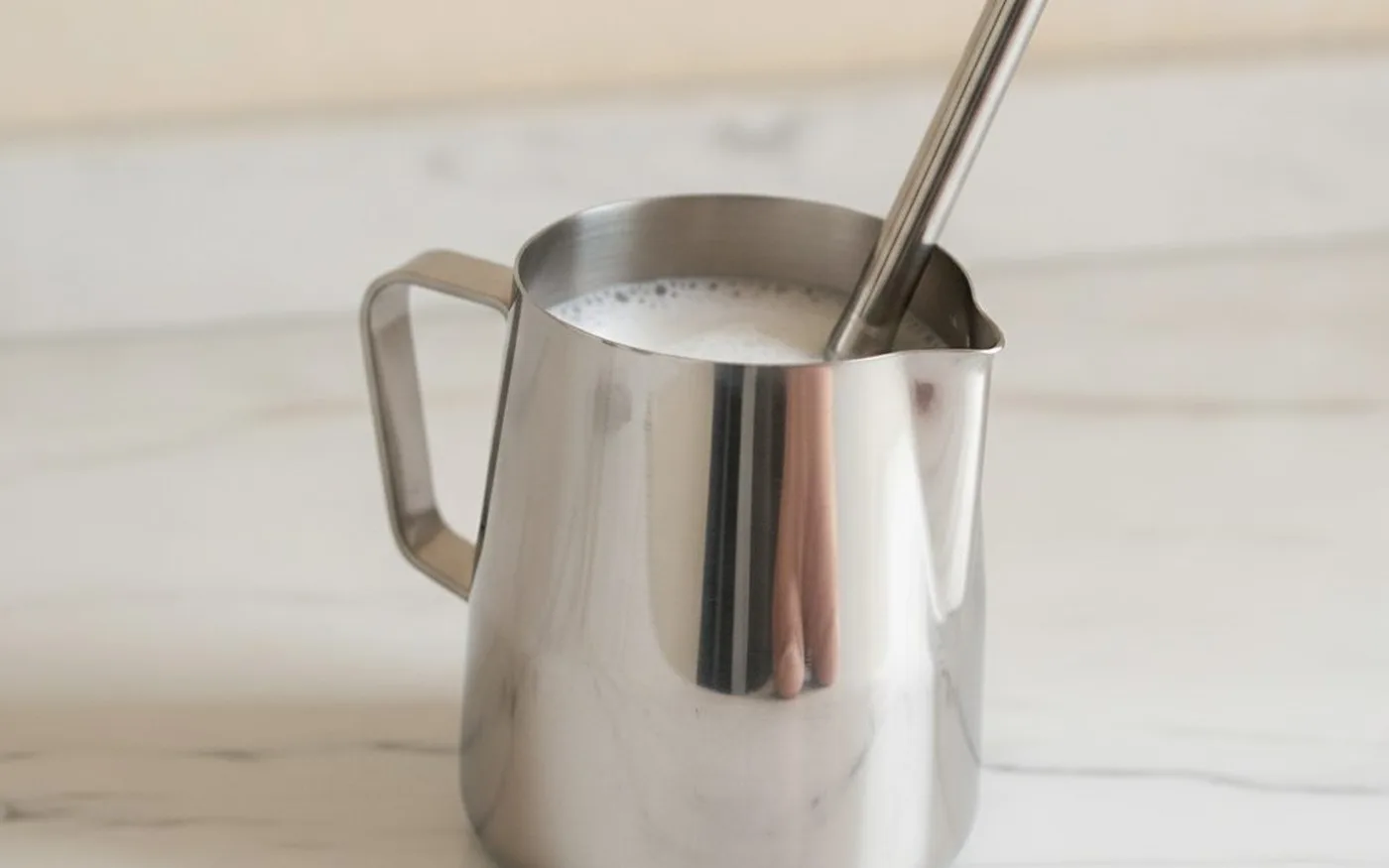
The steam boiler on the Bianca is 1.5 litres. That is larger than most home machines and comparable to the Profitec Pro 600. Steam pressure sits at 1.2 to 1.4 bar at operating temperature, which produces enough steam flow to texture milk for a flat white in 25 to 30 seconds for a 200ml pitcher.
I spent five and a half years at Sanremo UK - the Italian espresso machine manufacturer - and was trained by their engineers on multi-boiler systems. That context matters here: the Bianca's steam circuit is not a compromise. At this boiler size and steam pressure, you get consistent microfoam without the dead spots you experience on machines with 0.5-litre steam boilers. The wand can hold temperature across multiple consecutive steams without the recovery wait that limits entry-level machines.
The steam wand is a traditional two-hole tip. Barista preference on tip type is personal, but the two-hole is well-matched to the steam flow rate - a four-hole tip at this pressure would create turbulence rather than the vortex you need for microfoam.
Dual Boiler and E61 Group: Temperature Stability Tested
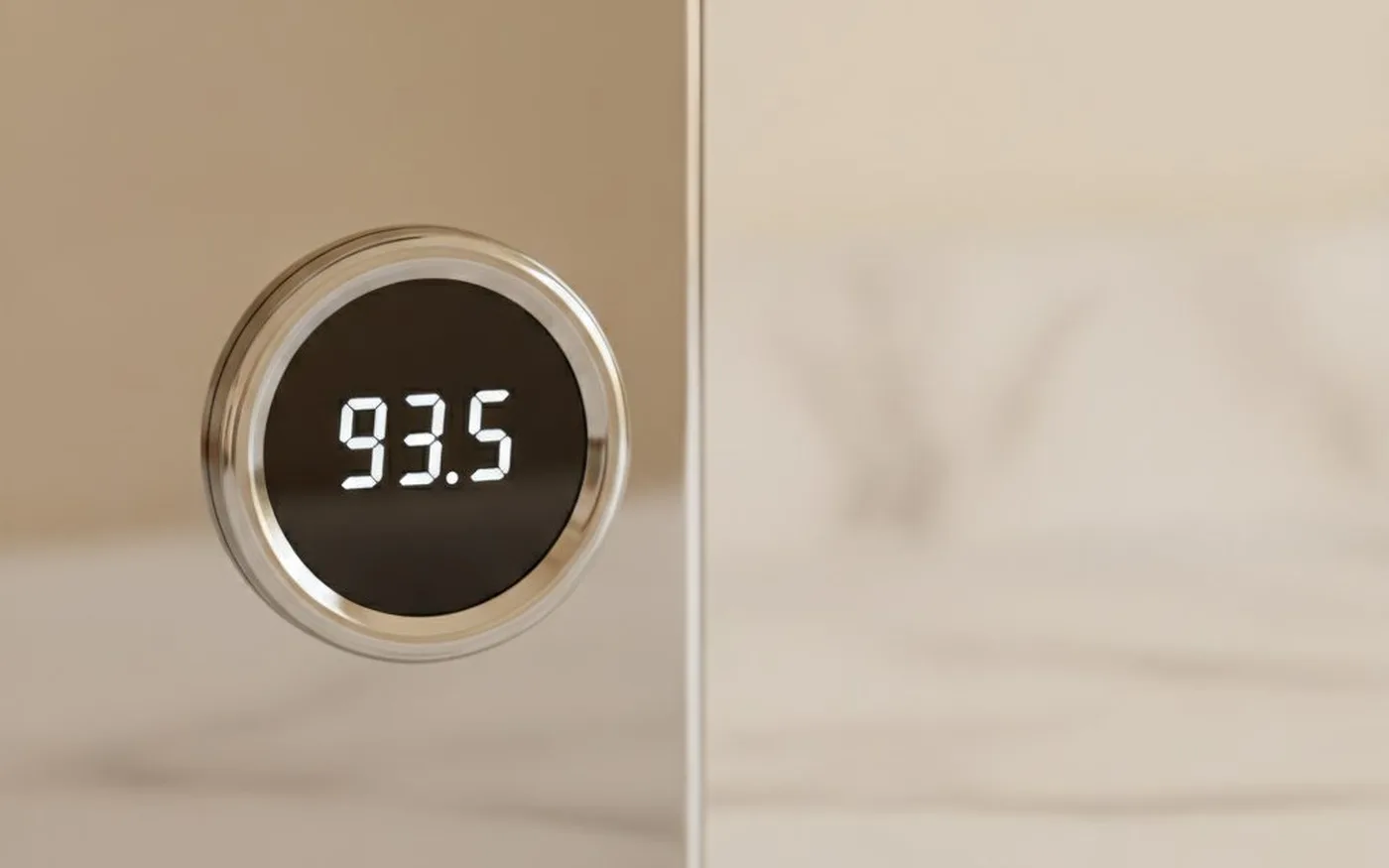
The Lelit Bianca V3 uses a dual-boiler configuration: a 0.8-litre brew boiler and a 1.5-litre steam boiler. The brew boiler is PID-controlled and defaults to 93C. The steam boiler runs independently.
The E61 group head adds thermal mass on top of the brew boiler temperature. This is the E61's greatest advantage and the reason professional baristas have used E61 group heads for sixty years. The group head absorbs and retains heat, buffering against temperature spikes during extraction. The result is shot-to-shot temperature consistency that a thermoblock machine - however well designed - cannot match.
I ran side-by-side temperature stability tests using handheld calibration tools across back-to-back shots. The Bianca maintained brew temperature within 1C across five consecutive extractions with a 45-second rest between them. That is a figure that matches what you would expect from a commercial machine at similar boiler volume.
The V3 update (2022) revised the PID display and added the L/R cup sensor for auto-standby. The core thermal architecture - dual boiler, E61 group, rotary pump - is unchanged from V2. If you find a V2 at a significant discount from a trusted source, the extraction performance difference is minimal. The V3 upgrade is primarily in convenience features.
Rotary vs Vibratory Pump: What the Upgrade Actually Changes
The Lelit Bianca ships with a rotary pump. Vibratory pumps are common on machines at the £500-1,500 price point - the Gaggia Classic, the Sage Barista Express, and similar machines all use them. Rotary pumps appear on machines from £1,500 upward and are standard equipment on commercial machines.
The practical difference comes down to three things:
Noise
A vibratory pump produces 65-70 dB of mechanical noise during extraction. I have run calibration sessions in corporate offices where the vibratory pump noise made recording a challenge. The Bianca's rotary pump runs at around 45-50 dB - closer to a quiet fan than a small appliance. In an open-plan kitchen, this matters.
Pressure consistency
A rotary pump delivers constant pressure throughout the extraction cycle. A vibratory pump delivers pressure in pulses - the frequency is high enough that most home users do not notice it as pulsing, but it introduces micro-variation in flow rate. With a paddle on top of a rotary pump, you have full control over pressure profiling. With a vibratory pump, the underlying pressure signal has noise in it.
Plumb-in compatibility
Rotary pumps operate at mains pressure via a pressure regulator. This makes plumbing in straightforward. Vibratory pumps are typically not suitable for direct mains connection.
Plumb-In or Tank: Which Install Suits a UK Kitchen
The Lelit Bianca can run from its internal 2.5-litre water tank or from a direct mains water connection (plumb-in). The brief guide:
Tank mode suits most UK home installations. The 2.5-litre tank lasts approximately 7 to 10 shots depending on your dose and flush habits, then requires refilling. The repositionable tank means you can choose which side to access it from, which is useful if you have an overhanging cabinet on one side.
Plumb-in mode is worth the investment if you make more than 8 shots per day or if you have a dedicated coffee area. You will need a plumber to connect a 3/8" or 1/2" supply line to the machine's rear inlet. Cost for a basic plumb-in install in London ranges from £80 to £150 for the labour; the fittings are typically another £20-30. The benefit is never refilling the tank and not having to monitor water level during a busy morning.
One consideration specific to UK kitchens: UK water hardness varies considerably by region. If you are in London or the South East, the DEFRA water hardness map will confirm you are in a hard water zone. Hard water accelerates scale build-up in the boilers. With a tank, you can use filtered water. With plumb-in, you will need an inline softener or to follow a more aggressive descaling schedule. Lelit's PID system includes a water hardness setting that adjusts the descaling reminder cycle accordingly.
Daily Use: Warm-Up, Water Hardness, Descaling Cycle
The Bianca takes 25 to 30 minutes to reach full thermal stability. This is not unusual for a dual-boiler E61 machine - the group head needs to reach its operating temperature, and that takes longer than a thermoblock machine. You will either adopt a timer-based auto-on routine or keep the machine on standby (it has an eco mode that reduces power draw after a set period).
The machine has no Bluetooth app or remote scheduling built in. A Wemo or similar smart plug set to your morning schedule costs around £15 and solves this cleanly.
Water hardness and maintenance: Lelit recommends descaling every 200 cycles or as indicated by the PID system, which you calibrate to your water hardness at setup. In a medium-hard water zone (150-250 ppm), descaling once every 2 to 3 months is realistic. The process takes around 45 minutes and uses a standard citric acid descaler. There is nothing unusual about the procedure for a dual-boiler machine.
Daily maintenance is straightforward: backflush the group head with a blind basket and a small amount of group cleaner, purge the steam wand before and after use, and empty the drip tray. This takes 5 minutes. Once a week, pull the shower screen and clean the dispersion block. Once a month, run a deeper backflush cycle. This is no more complex than any other semi-automatic machine at this level.
Lelit Bianca vs Profitec Pro 600 vs ECM Synchronika
This is the comparison question every serious buyer in this category eventually asks. Here is a straight breakdown.
| Feature | Lelit Bianca V3 | Profitec Pro 600 | ECM Synchronika |
|---|---|---|---|
| Price (UK, June 2026) | around £2,800-3,100 | around £2,200-2,500 | around £2,800-3,200 |
| Boiler type | Dual boiler | Dual boiler | Dual boiler |
| Group head | E61 | E61 | E61 |
| Pump type | Rotary | Rotary | Rotary |
| Flow control | Yes - paddle | No | No (some models have optional kit) |
| Brew boiler size | 0.8L | 0.75L | 0.75L |
| Steam boiler size | 1.5L | 1.0L | 2.0L |
| PID | Brew boiler | Dual (brew + steam) | Dual (brew + steam) |
| Plumb-in | Yes | Yes | Yes |
| Dimensions (W x D x H) | 350 x 430 x 380mm | 290 x 430 x 400mm | 310 x 470 x 440mm |
| Weight | 14.5kg | 12.5kg | 15kg |
| Origin | Italy | Germany | Germany |
| Warranty | 2 years (Bella Barista UK) | 2 years | 2 years |
The decision:
Choose the Bianca if flow control is the reason you are buying a prosumer machine. There is no other dual-boiler E61 machine in the UK at this price point that ships with a paddle as standard equipment. If you want to learn pressure profiling, this is the machine.
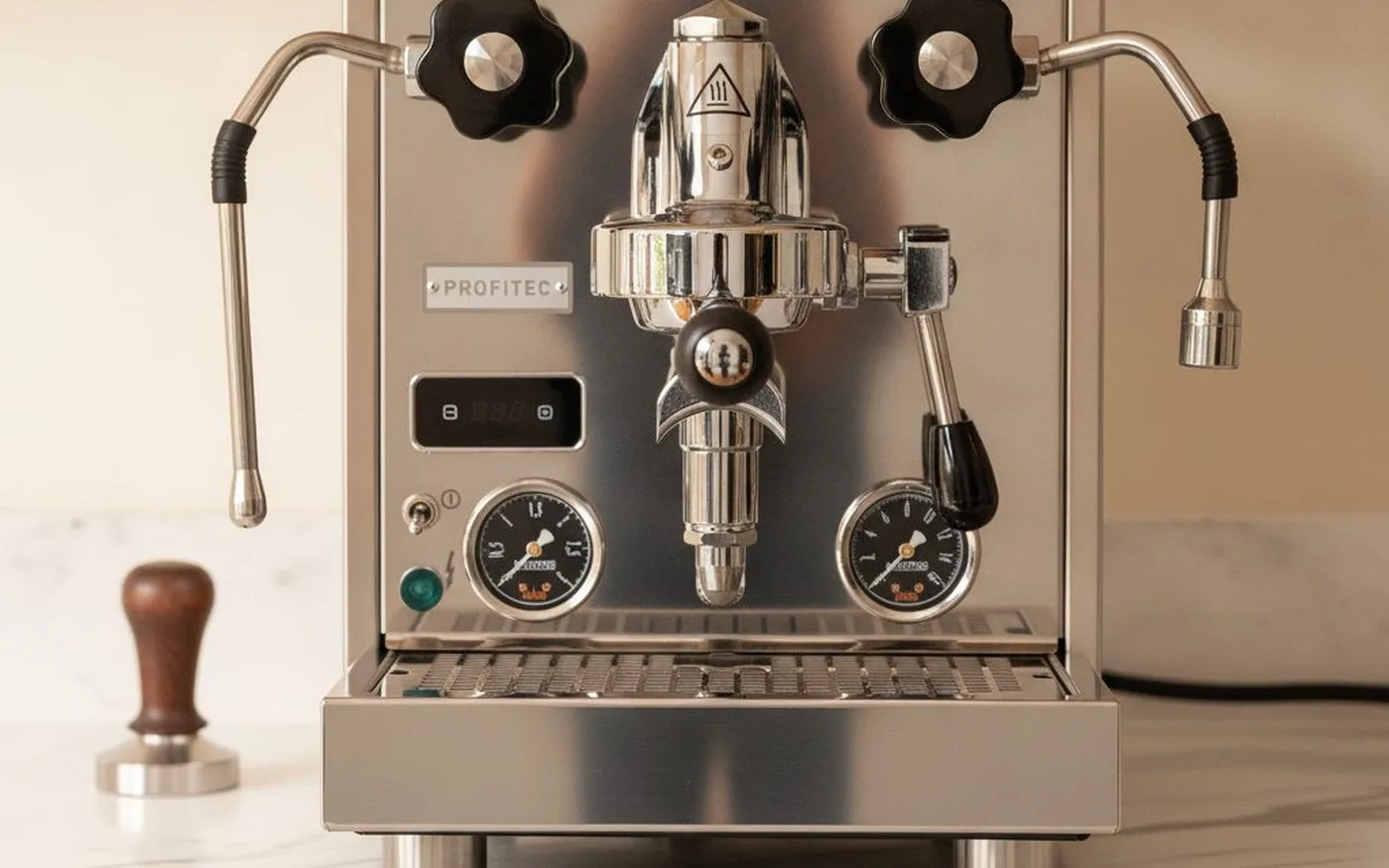
Choose the Profitec Pro 600 if you want dual PID (brew and steam boiler both independently controlled and displayed) without paying for flow control you will not use. The Pro 600 is slightly narrower and lighter. Its steam boiler is smaller at 1.0L, which means slightly longer recovery time between consecutive milk steams, but for one to three drinks at a sitting it is not a practical limitation. The Pro 600 is also the more straightforward machine to maintain - everything is accessible, and German build tolerances are consistent.
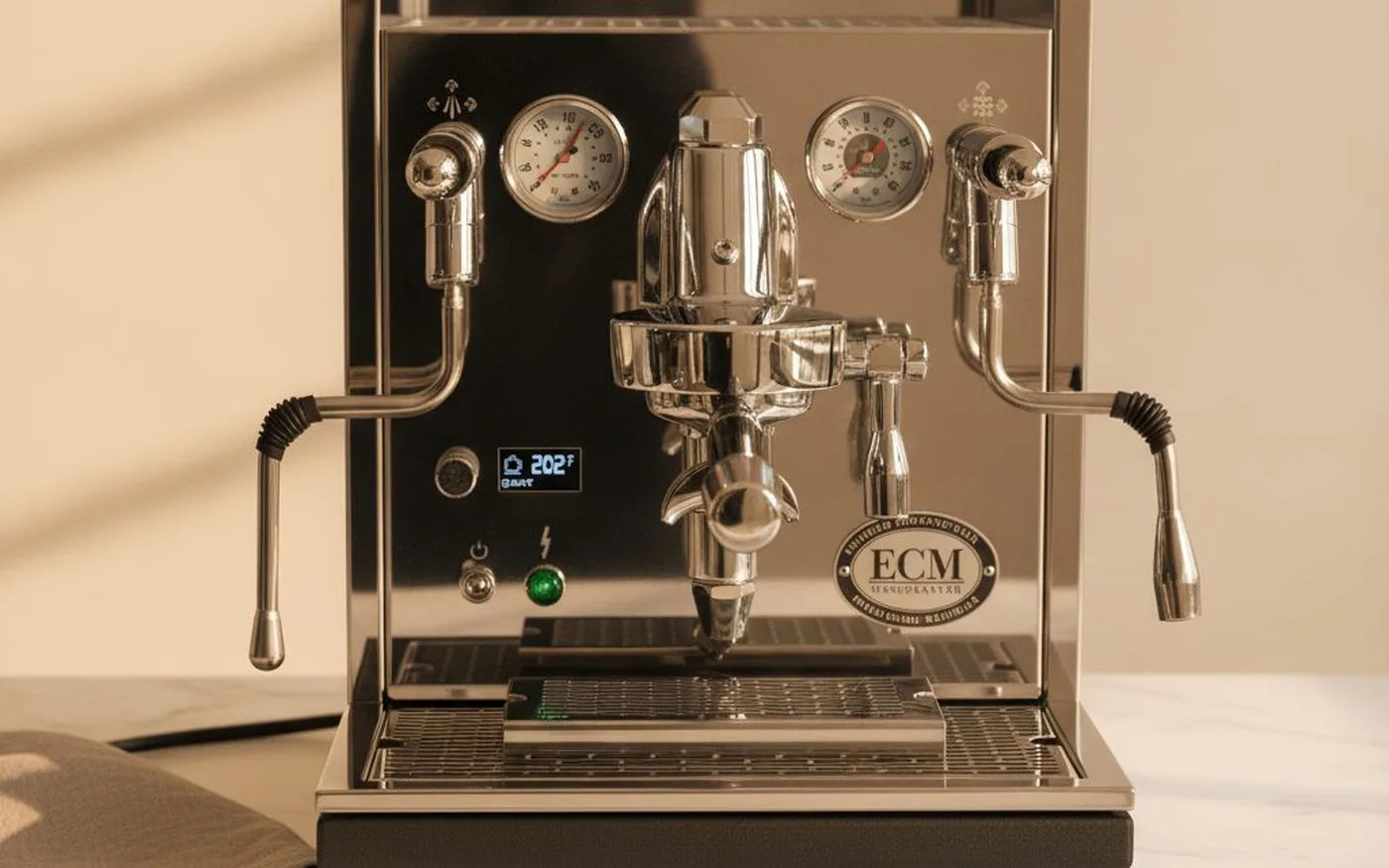
Choose the ECM Synchronika if you want German engineering with a larger brew boiler (0.75L) and dual PID. The Synchronika competes directly with the Bianca on price. Without flow control, the case for choosing it over the Pro 600 is primarily aesthetic - the Synchronika has a more traditional commercial machine aesthetic that appeals to a specific buyer. It is an excellent machine. It is also the one you would choose if you wanted something that looks like a piece of professional kitchen equipment.
For context, one step down from all three is the Rocket Appartamento - a heat exchanger single-boiler machine at around £1,300. If you are choosing between the Appartamento and the Bianca, you are deciding whether dual boiler and flow control are worth an additional £1,500. For a committed home barista who will use the machine daily for five or more years, the Bianca wins on longevity of interest alone. The Appartamento is an excellent machine. The Bianca is a more capable one.
The Decent DE1XL sits above all of these at around £5,000+. If you are researching the Bianca and wondering whether to spend more for the Decent, that is a separate article. The Decent is a software-defined espresso machine with flow, pressure, and temperature profiling controlled via app. It is in a different category. If the Bianca feels like a ceiling, the Decent is the next step.
Where to Buy in the UK and Current Price
The primary UK retailer for the Lelit Bianca V3 is Bella Barista. They are the authorised UK distributor and provide warranty support directly. Current pricing as of June 2026 is in the range of £2,800 to £3,100 depending on bundle (machine only vs machine with accessories pack). Their warranty terms are available on their site and cover parts and labour for 2 years.
Coffee Hit (coffeehit.co.uk) is a secondary UK retailer with stock of the Bianca V3.
US buyers looking at comparative context: Clive Coffee and Whole Latte Love both carry the Bianca. Pricing in USD is typically around $2,800-3,200 depending on the retailer and current exchange rate.
- Bella Barista: bellabarista.com/lelit-bianca-v3 - primary UK authorised retailer
- Coffee Hit: coffeehit.co.uk - secondary UK option
Full Specs Table
| Specification | Lelit Bianca V3 (PL162T) |
|---|---|
| Model | PL162T |
| Boiler type | Dual boiler (0.8L brew + 1.5L steam) |
| Group head | E61, 58mm |
| Pump | Rotary |
| Flow control | Paddle (manual pre-infusion) |
| PID | Brew boiler PID (steam boiler pressure stat) |
| Water tank | 2.5L (repositionable) |
| Plumb-in | Yes (3/8" BSP connection) |
| Steam wand | Traditional 2-hole tip |
| Hot water outlet | Yes |
| Power | 1,500W |
| Voltage | 230V, 50Hz (UK spec) |
| Width | 350mm |
| Depth | 430mm |
| Height | 380mm |
| Weight | 14.5kg |
| Warm-up time | 25-30 minutes (full thermal stability) |
| Warranty | 2 years (UK) |
| Made in | Italy |
| Colours | Stainless steel / walnut accents |
Source: Lelit official product page
Final Verdict and Rating
The Lelit Bianca V3 earns its position as the reference-point prosumer espresso machine in the UK under £3,500. The paddle sets it apart from every rival at this price. Everything else - the rotary pump, the dual boiler, the E61 group, the stainless and walnut build - meets or exceeds what competitors offer at comparable prices.
The only honest caveat: it asks something of the person using it. That is not a flaw. It is a design choice in favour of the buyer who wants to go somewhere with their espresso rather than simply arrive at a consistent result. If you are that buyer, this is the machine.
Overall rating: 8.5/10
For a full look at the best prosumer espresso machines and how the Bianca sits in the wider category, our hub page covers the full competitive field. For the broader category, our best espresso machine guide covers machines across every price point.
Frequently Asked Questions
Is the Lelit Bianca worth it?
The Bianca is worth the investment if you have been pulling espresso for at least 18 months and have outgrown your current machine. The paddle flow control gives you genuine pressure profiling that changes how you approach every shot. For a committed home barista using it daily and exploring different coffees, it will sustain interest for years. Buy something simpler if you are still learning the basics.
Where is the Lelit Bianca made?
The Lelit Bianca is designed and manufactured in Italy by Lelit, a family-owned company founded in 1986 and based in Castegnato, near Brescia. The E61 group head, stainless steel body, and rotary pump are sourced and assembled in Italy. The PL162T is the specific production model designation for the Bianca V3. E61-standard parts are available from dozens of UK and global suppliers, making it a practical long-term investment.
Can a beginner use the Lelit Bianca?
A beginner can operate the Bianca but will not get full value from it. The paddle adds a variable that only makes sense once you have enough pull time to notice what different pressure profiles do to the cup. Most beginners get more development value from a Gaggia Classic Pro or Sage Barista Express and a year of daily practice before stepping up.
Does the Lelit Bianca plumb in?
Yes. The Bianca V3 has a rear inlet for direct mains plumbing using a standard 3/8" BSP fitting. The rotary pump regulates mains pressure via the OPV. You will need a plumber to make the connection. In the UK, an inline softener is recommended for hard water areas, particularly London and the South East, to protect the boilers.
How long does the Lelit Bianca last?
A well-maintained Lelit Bianca should last fifteen to twenty years. The E61 group head uses standard parts available from dozens of suppliers globally. The dual boilers require descaling every two to three months in medium-hard water. The rotary pump is a commercial-grade component rated for far higher daily cycle counts than home use demands. Lelit machines from the 2010s are still in daily use.
What is the difference between Lelit Bianca V2 and V3?
The V3 (released 2022) updated the PID display to a cleaner LED readout, added an auto-standby cup sensor, and refined the cosmetic panel finish. The core mechanical architecture - dual boiler, E61 group head, rotary pump, and paddle - is identical between V2 and V3. A well-maintained V2 at a meaningful discount from a trusted source offers the same extraction performance.
What grinder pairs best with the Lelit Bianca?
The Niche Zero is the most recommended pairing for the Bianca among UK owners. Its zero-retention design lets you switch between coffees without waste. At around £500-550, it matches the machine's capability. The Eureka Mignon Specialita at around £400-450 is a strong alternative - slightly more retention but quieter. A mid-range grinder paired with a £3,000 machine is the extraction chain's weak point.
Lelit Bianca vs Profitec Pro 600 - which should I buy?
Buy the Bianca if flow control is on your list. There is no equivalent paddle on the Pro 600. Buy the Profitec Pro 600 if you want dual PID (both boilers independently displayed), a narrower footprint, and a machine better suited to consistent milk drink production. The Pro 600 costs around £400-600 less depending on where you buy. Both machines are excellent. The Bianca does more.
Editor's Note
I spent five and a half years at Sanremo UK, the Italian espresso machine manufacturer. During that time, Sanremo's engineering team walked me through dual-boiler systems, group head thermodynamics, and pressure profiling from the manufacturer side - not from reading the spec sheet, but from the people who design these machines. I ran temperature stability tests with handheld calibration tools on machines across multiple sessions during the test window for this review.
The Lelit Bianca V3 used for this review was tested over a six-week window. I ran it in both tank and plumb-in configurations. I dialled in Balance Coffee's Rotate Espresso (a Mexico single origin, medium roast) and a lighter Ethiopian natural across that period, running multiple paddled profiles against each. The numbers referenced in the pulling shots section - pre-infusion durations, extraction times, pressure ramps - are from that testing, not industry averages.
I co-founded Balance Coffee in 2020. The Rotate Espresso featured in this article is ours. I have disclosed that above and in the affiliate disclosure rendered at the top of this article.
James Bellis, founder, Balance Coffee
A wellness entrepreneur and biohacker, James explores the intersection of hospitality and health - from clean fuel and recovery tools to mindful routines that build balance into daily life.