Is Decaf Coffee Bad for You? What the Evidence Says


The UK writes the solvent worry into law, and the big studies lean the other way.
Table of Contents
Some of the links in this article are affiliate links, which help fund our independent review work at no extra cost to you. How we assessed these products is explained in this article and our Editor Lab methodology. No brand pays to appear, and no placement is guaranteed.
Decaf coffee is not bad for you if you are a healthy adult, and the worry that it is full of chemicals has a legal limit sitting behind it. You may have met that worry on a forum or in a warning about coffee-shop decaf, and it is a fair thing to check before you change what you drink, whether that is decaf or one of the best coffee beans in the UK.
Decaf coffee is not bad for most adults. It carries about 93% less caffeine than regular coffee but keeps coffee's other compounds, and large cohort studies, including two from UK Biobank, link it to similar or lower risk of heart disease, liver disease, and type 2 diabetes. The one qualifier is the solvent methylene chloride, which UK and EU law caps at 2 mg/kg in roasted coffee, so if you want no solvent at all, choose Swiss Water or CO2 decaf.
We read the UK and EU residue rules, the US FDA limit, and the large cohort studies that tracked decaf drinkers separately, and graded each health claim by study type. The article was reviewed by nutritional therapist Clemmie Rose.
Is Decaf Coffee Bad for You? The Short Answer
The short answer is no. If you are a healthy adult, drinking decaf is not a health risk, and the evidence that exists points the other way.
Three separate worries sit behind the question. The first is caffeine, because decaf is not caffeine-free, and the second is the solvent used to strip it out, which is where the 'full of chemicals' claim comes from. The third is whether years of decaf do anything to your heart, liver, or blood sugar.
On the third, the large studies lean reassuring for you. In UK Biobank, which followed 449,563 people for a median 12.5 years, those who drank 2-3 cups of decaf a day had a 14% lower risk of dying from any cause than non-drinkers.
Here is the catch. Every result in this guide is an association between what people reported drinking and what happened to them, and no trial shows that decaf causes any benefit. I label each study by type below so you can weigh it yourself.
How Much Caffeine Is Left in Decaf?
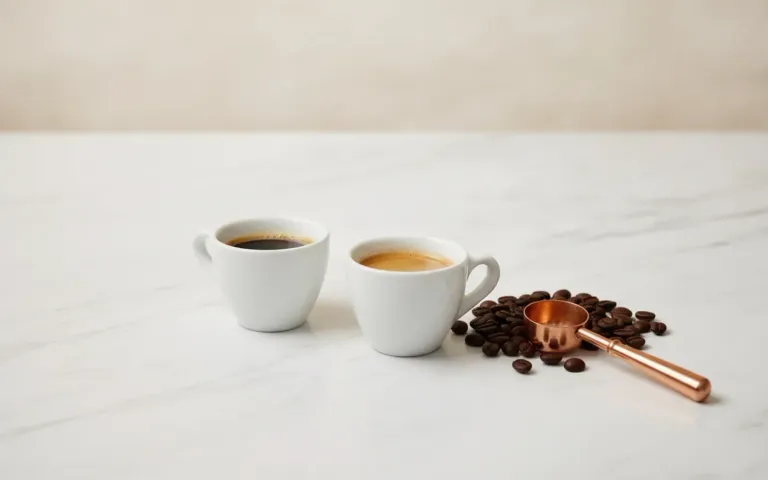
Decaf has some caffeine in it, and the amount is small. The British Heart Foundation puts a decaf coffee at around 7 mg of caffeine per 200 ml cup, against about 100 mg in a regular cup. You would need roughly 14 cups of decaf to match one regular coffee.
Your cup will not always match that figure. A 2006 study in the Journal of Analytical Toxicology (McCusker) tested decaf from 10 outlets and found 0-13.9 mg per 16 oz serving. One chain's decaf espresso measured 3.0-15.8 mg per shot, and its brewed decaf measured 12.0-13.4 mg per 16 oz.
If caffeine hits you hard, you may feel a cup of shop decaf, and that is a fair reason to count it. Decaf is lower, not zero.
| Drink | Caffeine | Source |
|---|---|---|
| Regular coffee, 200 ml cup | About 100 mg | British Heart Foundation |
| Decaf coffee, 200 ml cup | About 7 mg | British Heart Foundation |
| Decaf tea, 200 ml cup | About 2 mg | British Heart Foundation |
| Decaf espresso, one shot, coffee-shop chain | 3.0-15.8 mg | McCusker 2006 |
| Decaf from 10 outlets, 16 oz serving | 0-13.9 mg | McCusker 2006 |
How Decaf Is Made, and Why the Method Matters
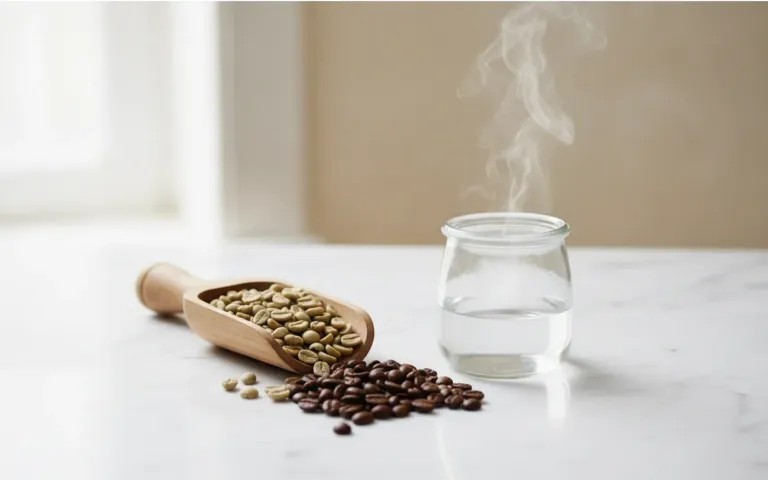
Every decaf has its caffeine removed by a process. What differs is what does the removing, and that is the part that matters most for the safety question you came with. There are four routes you will meet on a bag.
- Water (Swiss Water): Swiss Water describes its method as chemical-free and says its facility never uses solvents. That is the company's own description, so read it as a brand claim.
- CO2: this route uses carbon dioxide rather than a chemical solvent.
- Ethyl acetate, including sugarcane: ethyl acetate is a permitted extraction solvent under UK law. The 'sugarcane' versions use ethyl acetate derived from sugarcane, and it is still a solvent process.
- Methylene chloride (dichloromethane): this is the solvent behind most of the online alarm, and UK and EU law caps what a roasted bean may keep.
I keep process detail short here, because the buying guide to the best decaf coffee beans covers it for shoppers. For you, the question is simple: does the bag name a method, and is it a solvent method? The swiss water decaf process gets its own guide, because it is the one most readers ask about.
Methylene Chloride: What the Residue Limits Say
A residue limit is the most the law lets a roasted bean carry. It tells you what is allowed, and it does not tell you what any one bag holds. This guide does not report residue measurements for named brands.
The UK still applies the EU rules in Directive 2009/32/EC, and Annex I of that directive sets dichloromethane, the chemical name for methylene chloride, at 2 mg/kg in roasted coffee for decaffeination. You will find the US allows more: under 21 CFR 173.255, residue must not exceed 10 parts per million (0.001%) in decaffeinated roasted coffee and instant coffee. That is five times the UK figure.
| Rule | Limit | Source |
|---|---|---|
| UK and EU: methylene chloride in roasted decaf coffee | 2 mg/kg | Directive 2009/32/EC, Annex I |
| UK and EU: methyl acetate in coffee | 20 mg/kg | Directive 2009/32/EC, Annex I |
| UK and EU: ethylmethylketone in coffee | 20 mg/kg | Directive 2009/32/EC, Annex I |
| UK and EU: ethyl acetate, carbon dioxide, ethanol | Permitted under good manufacturing practice | Directive 2009/32/EC, Annex I |
| US: methylene chloride in decaf roasted and instant coffee | 10 ppm (0.001%) | 21 CFR 173.255 |
If you read US advice, check which country's limit it describes, because the two figures differ, and the US limit is also under review. A coalition including the Environmental Defense Fund filed a food additive petition in December 2023 to remove authorisation for methylene chloride and three other chemicals, and the FDA reopened comments on 28 May 2026. Comments closed on 29 June 2026, and no final FDA decision had been published at the time of writing.
The US National Coffee Association argues that decaf made with methylene chloride is safe under existing limits, as reported by Daily Coffee News. The EPA's methylene chloride rules cover workplaces and consumer products such as paint stripper, not food, so they tell you little about your cup.
What the Research Shows: Heart, Liver, and Type 2 Diabetes
Three studies carry most of the weight for you, and all of them are observational. A hazard ratio (HR) below 1 means lower risk in drinkers than in non-drinkers.
| Study | Type | What it found |
|---|---|---|
| Chieng 2022, UK Biobank, 449,563 people | Observational cohort | 2-3 cups of decaf a day: all-cause mortality HR 0.86 (CI 0.81-0.91). Ground HR 0.73, instant HR 0.89 |
| Kennedy 2021, UK Biobank, 494,585 people | Observational cohort | Coffee drinkers: chronic liver disease HR 0.79, death from it HR 0.51. Decaf, instant, and ground were each similar to all coffee combined |
| Ding 2014, 28 studies, 1,109,272 people | Meta-analysis of cohort studies | Type 2 diabetes risk per cup a day: relative risk 0.94 for decaf, 0.91 for caffeinated |
For your heart, Chieng and colleagues found every coffee type linked to lower cardiovascular disease, with the lowest risk at 2-3 cups of decaf a day. Here is the part decaf does not win. Ground and instant coffee, but not decaf, were linked to lower risk of an irregular heartbeat (arrhythmia).
Decaf is not better on every outcome. The liver and diabetes results look alike for decaf and regular, which hints that some of the pattern you see in coffee drinkers does not depend on caffeine.
I found no decaf-specific evidence on your kidneys for this guide, so I will not guess.
Decaf Side Effects: Reflux, Iron, and Cholesterol
The side effects are small. They are mostly about coffee and not decaf, and you can manage them.
Start with reflux. The NHS lists coffee among the foods and drinks that trigger heartburn, and decaf is still coffee, so it can still bother you. If that is you, a low acid coffee is worth a look.
Iron is next, and you can manage it with timing. In a small human trial (Morck, 1983), a cup of coffee cut iron absorption from a hamburger meal by 39%, and coffee an hour before the meal made no difference. Coffee an hour after blocked absorption to the same degree.
That trial used regular drip and instant coffee, with no decaf arm, so you should read it as a result for coffee in general.
Cholesterol depends on the brew more than the beans. A meta-analysis of 14 randomised trials (Jee, 2001) found that unfiltered coffee raised total and LDL cholesterol, while filtered coffee barely did. If you drink cafetiere coffee every day, switching to a paper filter matters more for you than whether the coffee is decaf.
Is Decaf Coffee Safe in Pregnancy?
If you are pregnant, the number to hold is the NHS limit. The NHS says you should not have more than 200 mg of caffeine a day, and it links too much caffeine to a higher chance of miscarriage and stillbirth.
Decaf counts toward that total, but it adds little. At about 7 mg a cup on British Heart Foundation figures, a cup barely moves your day, though coffee-shop decaf can run higher, up to 15.8 mg per espresso shot in the study above.
The solvent worry has an answer too: UK residue is capped at 2 mg/kg in roasted coffee. Your midwife or GP can tell you what suits your pregnancy, and they are the right people to ask.
Who Decaf Suits, and Who Should Still Be Careful
Decaf suits you if caffeine costs you sleep. The British Heart Foundation names poor sleep, jitteriness, and palpitations as reasons to switch, and it does not treat decaf as a diuretic.
Decaf is not an anxiety treatment, though. If caffeine hits you hard, you may still feel decaf, because the residue is small but not nil. If you give decaf to a child, remember it still holds some caffeine, and I am not citing a study on that.
If you take medication that caffeine affects, ask your GP before you change your habit. For everyone else, decaf is a calm default.
How to Choose a Cleaner Decaf
Here is the label rule. Look for the method on the bag. Swiss Water or CO2 means no chemical solvent, sugarcane or 'EA' means ethyl acetate, which is a permitted solvent, and no method named means you should ask the roaster before you buy.
Next, look for a roaster that publishes testing, because you can then check the claim yourself. I built Balance Coffee around independent third-party lab testing of every batch, so I read a roaster's lab page the way other people read a label. The guide to lab-tested coffee shows what to look for, and for pod machines there is a list of decaf coffee pods.
I founded Balance Coffee in 2020, and its Halcyon Decaf is a sugarcane ethyl acetate decaf made with third-party lab testing on every batch, from £16.49 for 250g. It is not solvent-free, because ethyl acetate is a solvent, so if you want no solvent at all, buy Swiss Water or CO2 decaf instead. How much caffeine your cup holds is a separate question, covered in how much caffeine in coffee as that guide arrives.
I am not ranking brands here. If you also worry about mycotoxins in coffee or pesticides in coffee, those have their own guides, and the same habit applies: pick roasters who show you their results.
The Bottom Line
Decaf is a safe, well-studied choice for most adults. If solvents bother you, buy water or CO2 decaf, and if caffeine bothers you, count the few milligrams it still holds.
Frequently Asked Questions
What are the side effects of decaf coffee?
For most adults, decaf has no meaningful side effects. You may still get heartburn, because the NHS lists coffee among common triggers. A cup also holds a few milligrams of caffeine, and coffee drunk with a meal reduces iron absorption, so you may want to keep it away from iron-rich food.
Is it safe to drink decaf coffee daily?
Yes, for most people. In UK Biobank, drinking 2-3 cups of decaf a day was linked to a 14% lower risk of death from any cause than drinking none. That is an observational finding, so it shows a pattern and not a proven cause, but it gives you no sign of harm from a daily cup.
What is the healthiest type of coffee?
Filtered coffee, decaf or regular, is the safest bet for you. Trials show unfiltered coffee raises LDL cholesterol while filtered barely does. In UK Biobank, ground caffeinated coffee had the strongest mortality link (HR 0.73), and only caffeinated coffee was linked to lower arrhythmia risk, so decaf is not better on every outcome.
Which decaf coffees do not use chemicals?
Swiss Water and CO2 decaf use no chemical solvent. Sugarcane decaf uses ethyl acetate, a solvent UK law permits, and some decaf uses methylene chloride, capped at 2 mg/kg in roasted coffee. Check the bag for the method, and ask the roaster if it is not named, so you know exactly what you are buying.
Is decaf coffee good for you while pregnant?
The NHS says you should not have more than 200 mg of caffeine a day while pregnant, and decaf counts toward that total. A cup adds little, at about 7 mg on British Heart Foundation figures, though coffee-shop decaf can run higher. Check with your midwife or GP about the right limit for you.
Can decaf coffee help with anxiety?
Switching can help if caffeine makes you jittery, because the British Heart Foundation names jitteriness and palpitations as reasons to cut down. Decaf is not a treatment for anxiety, though, and it still holds a little caffeine. If anxiety is a regular problem for you, talk to your GP about it.
Do doctors recommend decaf coffee?
The British Heart Foundation's dietitian says decaf can be part of a healthy diet, and suggests it if caffeine disrupts your sleep or causes palpitations. If you take medication that caffeine affects, ask your GP before you change how much coffee you drink, so you get advice that fits your own health.
Is there a downside to decaffeinated coffee?
There are two downsides. Decaf is not caffeine-free, with 3.0-15.8 mg in a coffee-shop decaf espresso shot in one study, and some decaf uses a solvent. The UK and EU cap methylene chloride at 2 mg/kg in roasted coffee, and water and CO2 methods avoid chemical solvents if you prefer that.
Is decaf coffee bad for acid reflux?
It can be. The NHS lists coffee among common heartburn triggers, and decaf is still coffee. If coffee brings on your reflux, decaf may not fix it, so a low acid coffee is worth trying, and a GP can help if the heartburn keeps coming back.
How many cups of decaf equal one regular coffee in caffeine?
Roughly 14. The British Heart Foundation puts a regular cup at about 100 mg of caffeine and a decaf cup at about 7 mg, and 100 divided by 7 is a little over 14. Shop decaf varies from cup to cup, so treat 14 as a guide for your own counting and not a fixed rule.

A wellness entrepreneur and biohacker, James explores the intersection of hospitality and health - from clean fuel and recovery tools to mindful routines that build balance into daily life.