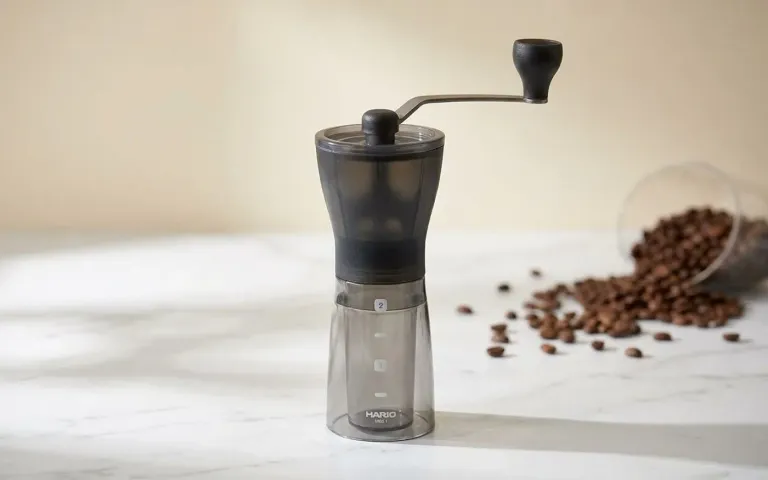
Whole coffee beans hold their aroma for weeks after roasting, while ground coffee loses that same protective carbon dioxide within minutes to hours of grinding, so beans ground just before brewing taste noticeably fresher. At UK speciality roasters the bag itself usually costs the same whether sold whole bean or ground, so the real cost in the coffee beans vs ground coffee decision is a grinder: a hand burr model from £29, an entry electric burr grinder from around £159. Pre-ground coffee remains a sound choice for a cafetiere, filter machine or moka pot if the bag is finished within about a week, and a poor fit for an unpressurised espresso basket.
The verdict, in short, is beans for flavour, provided a decent grinder comes with them. This comparison draws on published degassing and grinding research, UK roaster prices checked on 16 September 2026, and figures compared against more than 100 comments from home brewers on Reddit's r/Coffee.
Coffee Beans vs Ground Coffee: The Short Answer
The scorecard version, before the reasoning behind it:
Criterion
Whole Beans
Pre-Ground
Quality
5/5
3/5
Trust
4/5
3/5
Fit
5/5
2/5
Service
2/5
5/5
Value
3/5
4/5
The full weighting behind those numbers, and the two totals it produces, 80 against 64, sit further down this page. Beans are not automatically right for you: a cheap grinder producing an uneven particle size can do more damage to your cup than a few days of pre-ground staling. The honest upgrade is beans plus a decent burr grinder, not beans alone. If you run a cafetiere and finish a 250g bag within a week, the gap narrows a long way.
What Happens When You Grind a Coffee Bean
A roasted coffee bean is not inert. Roasting drives off moisture and builds carbon dioxide inside the bean's cell structure, and that gas escapes slowly for weeks afterwards, a process called degassing. While the bean stays whole, its surface area is small, so the CO2 escapes gradually and the aroma compounds trapped inside it are protected along with it. That is why your beans still smell like something weeks after roasting.
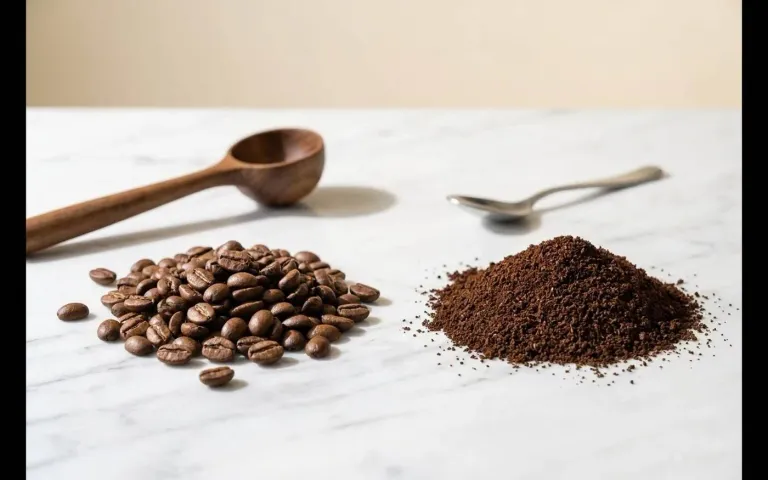
Grinding breaks that structure open. A burr or blade tears the bean into hundreds of small particles, multiplying the surface area exposed to air. The CO2 that would have taken weeks to leave a whole bean escapes in minutes, and oxygen moves in to take its place. The Specialty Coffee Association describes it directly: "Grind the coffee and all this happens in fast motion: the CO2 that is lost over weeks in whole bean coffee is lost in minutes after coffee is ground." Once oxygen replaces that CO2 layer, it starts reacting with the oils and aroma compounds on every particle's surface, and staling, technically oxidation, begins in your bag rather than in the roastery.
Ground coffee and coffee beans are the same roasted product in two physical states. Instant coffee is a different product: it is brewed like a normal cup, then dried into granules or powder, so comparing its shelf life to whole beans or fresh grounds compares two manufacturing processes, not two grind sizes.
How Fast Ground Coffee Goes Stale: What the Research Shows
By the measure researchers use, carbon dioxide loss, the gap between beans and grounds is not subtle. Peter Giuliano, the SCA's Senior Advisor for Scientific Communication, put a number on it in a July 2026 article: "if you use CO2 degassing as a guide, whole bean coffee can reasonably be considered 'fresh' within about three weeks of roasting. Since ground coffee loses CO2 much more quickly, it might be considered 'fresh' for about an hour after grinding." The SCA's article explains why: "as long as CO2 surrounds and permeates the beans, it keeps oxygen out. Once CO2 escapes, oxygen-rich air rushes in to take its place, and the coffee starts developing off-flavors."
That hour-versus-three-weeks figure is a degassing benchmark, not a taste cliff edge. A 2018 study in the Journal of Agricultural and Food Chemistry, from Zurich University of Applied Sciences' Coffee Excellence Center, used a gravimetric method on whole and ground beans and confirmed CO2 "is steadily released during storage or more abruptly during grinding and extraction" (Smrke et al., 2018). A 2003 study found grinding releases a burst of aroma "rich in nutty- and smoke-roast aromas" compared with coffee already ground (Akiyama et al., 2003): grinding fresh releases something pre-ground has already given up before it reaches you. Packaging matters too if you hold whole beans longer: a 2014 study found packaging with an aluminium layer "offer better protection", with whole beans monitored for up to a year in the right bag (Glöss et al., 2014).
None of that matches what home brewers describe from their own kitchens, and it should not: the SCA's hour figure measures gas, not the cup in front of you. On Reddit's r/Coffee, brewers report a slower, gentler decline: a day or two of near-identical flavour, then a flatter cup, then a noticeably dull bag by around a week. Both things are true at once. CO2 loss is fast and measurable within minutes. Taste decline is gradual, and depends on your brewer, your roast and how you store the bag, so it usually takes days, not hours, to notice.
Does It Taste Different? Flavour, Aroma and Grind Control
Freshly ground coffee smells different before you have poured a drop of water on it. That burst on grinding, confirmed by the Akiyama study above, is the same aroma that ends up in your cup: brighter top notes, more defined acidity, a cleaner finish. Pre-ground has already lost a share of that aroma by the time you open the bag, which is why it can taste flatter even on identical coffee.
Grind size is the other half of the difference, and it matters more than most buyers realise. Your cafetiere wants coarse, your filter machine wants medium, your espresso machine wants fine and consistently fine, or the shot channels and runs bitter in places, sour in others. Grinding to order means matching the grind to whichever brewer you use that morning. Pre-ground is fixed to whatever grind the bag was set to, which works well for the one method it was milled for and poorly for anything finer or coarser.
How pronounced this feels also depends on your roast. A light roast holds onto more volatile aroma and shows staling faster; a darker roast is more forgiving. The full breakdown sits in our light roast vs dark roast guide.
What Home Brewers Say About Pre-Ground
Reddit's r/Coffee has run this argument for years, across threads carrying more than 100 comments. Read enough of them and a pattern emerges: almost nobody argues pre-ground is inherently bad for you. The argument is about timing and grinders, and both line up closely with the research above.
“"...preground > grinding with a cheap grinder. Because the loss in taste from pre grinding isn't as much as the uneven extraction you get from..."”
JazzyScrewdriver, Reddit r/Coffee
A reply in the same thread put a rough clock on it, and reached the opposite conclusion on where to spend your money:
“"No it's not that bad, especially if you drink it within a week or so. I think putting money towards freshly roasted pre ground is better than..."”
blingboyduck, Reddit r/Coffee
A third reply agreed pre-ground has a window, and drew a sharper line on grinder quality:
“"If you have a bad grinder, at least in my taste I found that pre-ground was good out to about 2 days. I would much rather have coffee ground..."”
Hifi_Hokie, Reddit r/Coffee
On a separate thread asking whether whole bean from a supermarket even matters, one commenter argued the opposite, regardless of age:
“"I've had whole bean coffee that was 6 months old and still tasted significantly better than week-old grinds of the same type."”
Pun_Thread_Fail, Reddit r/Coffee
Back on the pre-ground thread, another reply put a similar clock on freshness but named grind control as the bigger factor:
“"...for at least the first day it's pretty alright! they start losing freshness after that and they don't really taste like anything after a week!..."”
RealAbd121, Reddit r/Coffee
On grinder quality specifically, one reply described the gap bluntly:
“"The difference between good beans through a blade grinder and good beans through a decent burr grinder was amazing to me."”
semibro, Reddit r/Coffee
A final reply, on the supermarket thread, summed up the freshness clock most home brewers land on:
“"I usually say its the same except the pre ground loose most of the aromatics in the first day or two. Beans are like a fresh bag every morning."”
Tornado2251, Reddit r/Coffee
The Grinder Question: When Pre-Ground Beats a Bad Grinder
I spent five and a half years at Sanremo UK, where grind distribution and particle size were the whole job, not a footnote to it. Working alongside the Sanremo SWAT team, I learned how much an uneven grind costs a cup: some particles over-extract and go bitter, the coarsest survive under-extracted and go sour, and the two cancel out into something flat rather than balanced. That is the honest case for pre-ground from a good roaster over a bad grinder at home: inconsistent particles do more damage to your cup than a few days of staling ever will.
A 2016 study in Scientific Reports, co-authored by Maxwell Colonna-Dashwood, the three-time UK Barista Champion, examined how bean origin and temperature affect grinding and found particle size distribution "is independent of the bean origin and processing method", and that grinding cold produces a narrower, more even distribution (Uman et al., 2016). The finding that matters most for you if you are choosing a grinder: a cheap blade grinder chops unevenly regardless of the bean, exactly the inconsistency several Reddit commenters above blame for a worse cup than good pre-ground.
The honest advice is not beans alone, it is beans plus a decent burr grinder. A hand burr grinder starts from around £29, an entry electric burr grinder from around £159, both checked 16 September 2026. Below that spend, on an old blade grinder or a bag ground to an unknown size, pre-ground coffee from a roaster that dates its bags is often the better cup for you. Our best coffee grinder and best manual coffee grinder guides cover the models worth that first spend.
Which Brew Methods Work Fine With Pre-Ground
Not every brew method is equally sensitive to a grind milled days ago. The table below is the fast answer; espresso gets its own section next.
Brew Method
Pre-Ground Verdict
Grind Needed
Why
Cafetiere / French press
Fine, if the bag is under a week old
Coarse
Long steep time and a metal filter forgive some staling and a wider particle spread
Filter / drip machine
Fine
Medium
Consistent water flow through a medium bed is forgiving of a few days' staling
Moka pot
Workable, less ideal
Medium-fine
Needs a tighter grind than cafetiere; a bag milled for filter runs too fast and tastes thin
AeroPress
Fine, short window
Medium-fine
A short brew time favours fresher grounds, but the method is flexible on grind size
Espresso, single-wall basket
Poor
Fine, freshly ground
Needs a precise, fresh, fine grind or the shot channels; covered in full below
Espresso, pressurised (dual-wall) basket
Workable
Fine to medium-fine
The dual-wall design compensates for a coarser, staler grind
The clearest failure case for you is buying a bag ground for one method and using it in another: a cafetiere grind through a moka pot passes water too fast and tastes thin, an espresso grind through a cafetiere turns muddy. Shop grinding can miss too: one Reddit commenter described a shop with "a weird idea of what qualified as french press grind", arriving too fine for the cafetiere it was meant for. This is the question behind most pre ground coffee beans for espresso machine searches, and it depends on which basket your machine has, covered next.
Pre-Ground Coffee in an Espresso Machine
Espresso is the brew method most sensitive to grind size and freshness, and the basket in your machine decides whether pre-ground coffee has any real chance. A pressurised, dual-wall basket is built to compensate: "the dual walled portafilter's single hole creates a bottleneck so that your brewing water cannot pass through your coffee bed as quickly," forcing enough resistance through a coarser, staler grind to pull something drinkable. It is a genuine workaround, and pre-ground milled for filter or cafetiere is exactly the coffee that basket was designed to rescue.
A single-wall basket has no such safety net. Fresh, finely ground coffee needs the resistance to come from the coffee itself; run pre-ground through it and water passes too fast, producing a thin, sour shot. Machines like the entry-level Sage Bambino Plus ship with both basket types: dual-wall for pre-ground and beginners, single-wall once you own a grinder. Getting grind size right is its own skill, covered in our espresso grind size guide.
If espresso is what you care about most, the bean matters as much as the grind. Our best coffee beans for espresso roundup covers which roasts hold up under nine bars of pressure.
Are Coffee Beans More Expensive Than Ground Coffee?
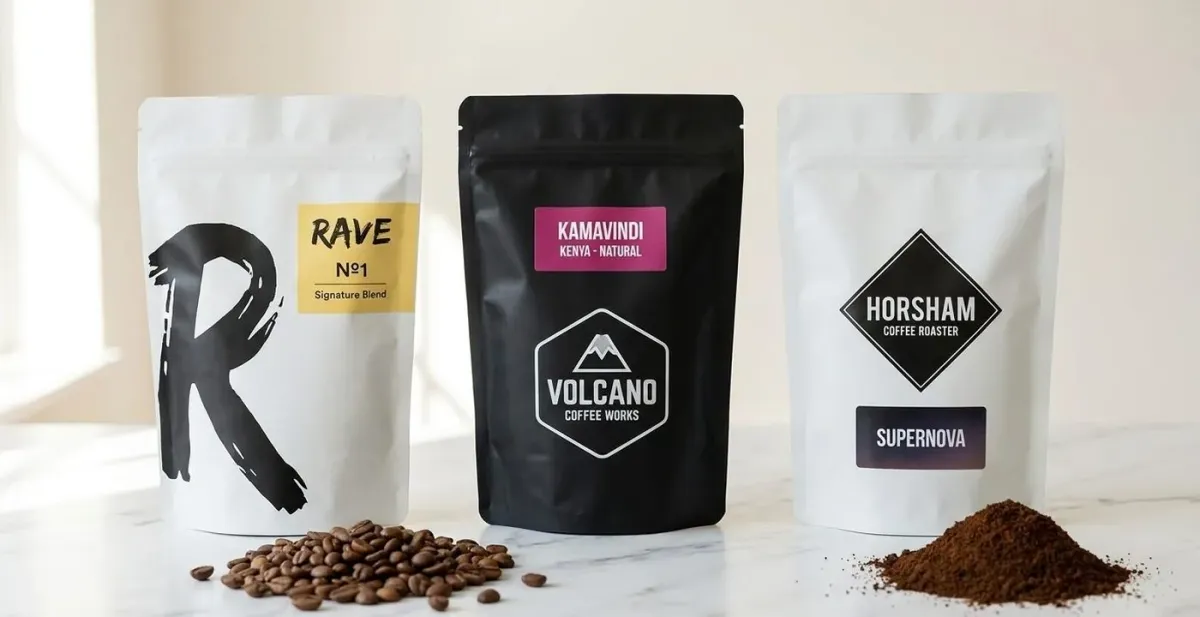
The price question has a short answer: at UK speciality roasters, no. The bag costs the same whether it is sold whole bean or ground, at every roaster checked.
Roaster
Coffee
250g Price (all grinds, same price)
Checked
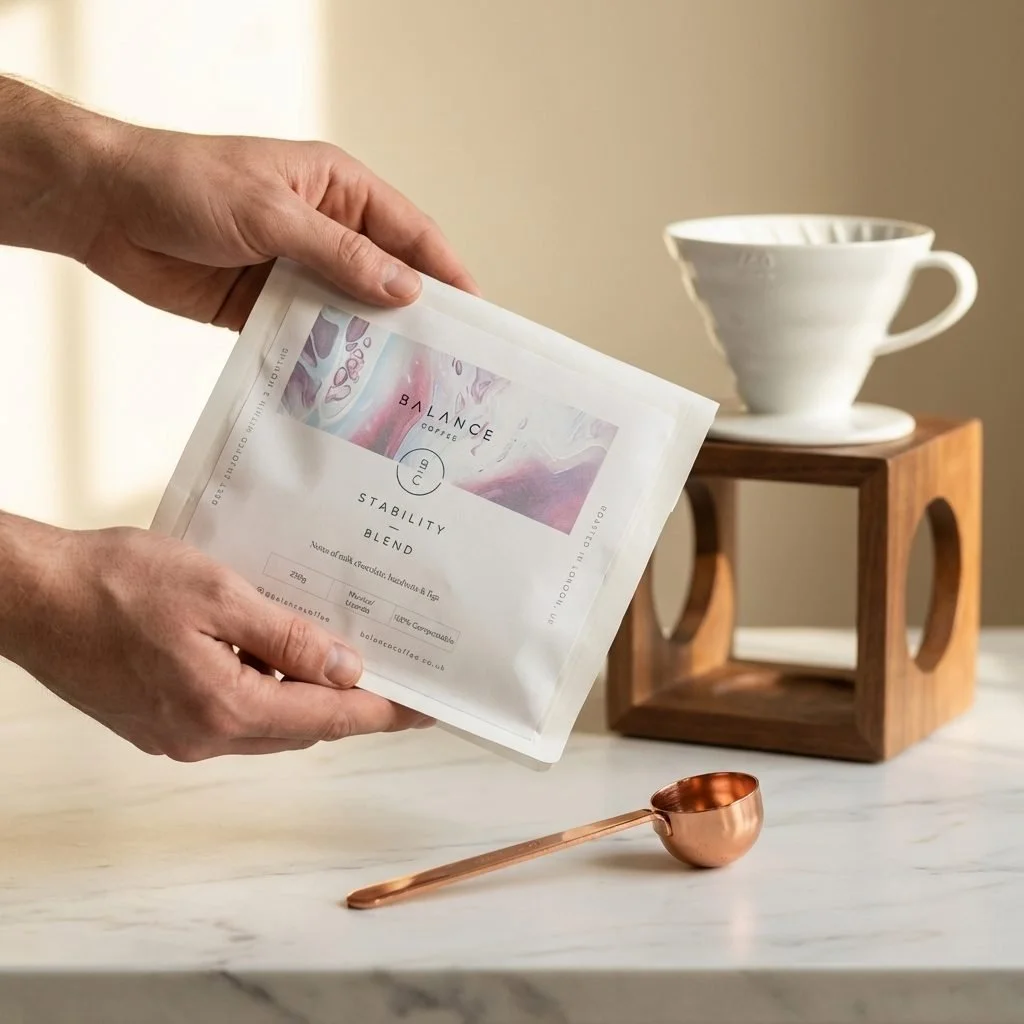
Balance Coffee
Stability Blend
£14.99
16 Sep 2026
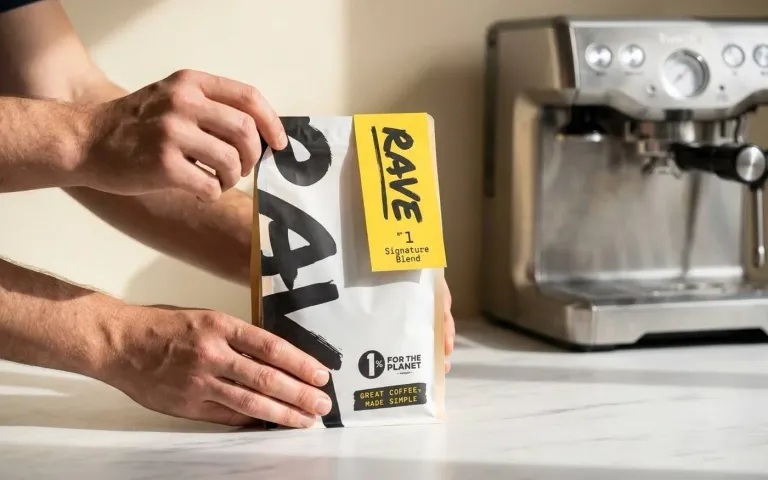
Rave Coffee
Signature Blend Nº1
£7.95
16 Sep 2026
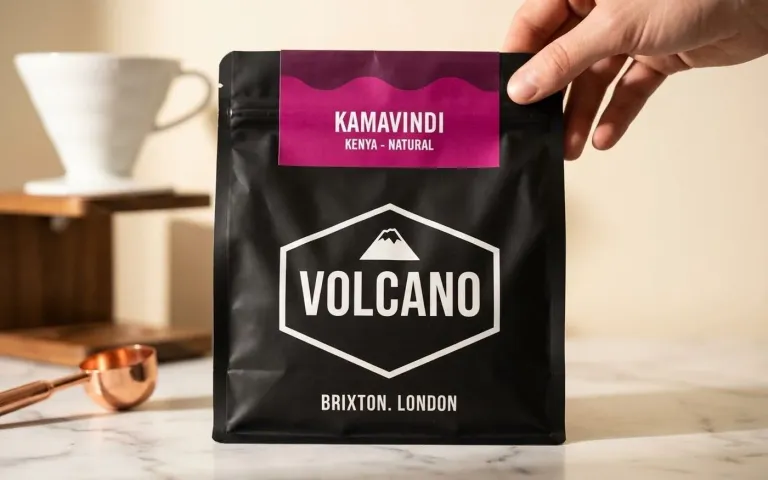
Volcano Coffee Works
Kamavindi (200g size)
£18.00
16 Sep 2026
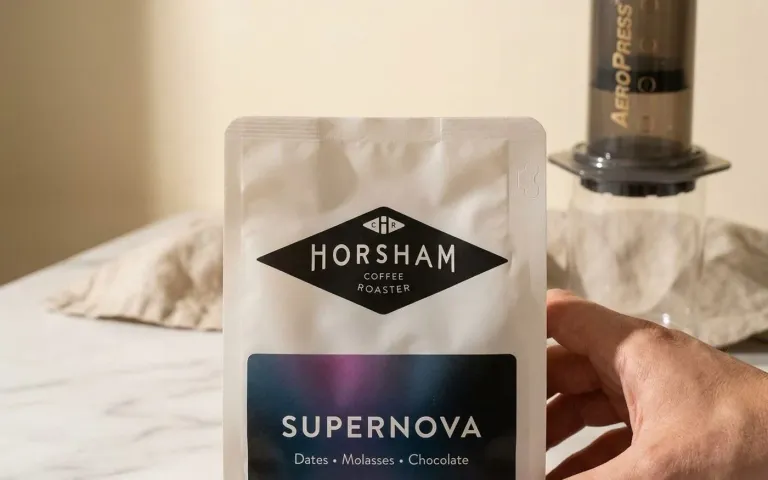
Horsham Coffee Roaster
Supernova
£10.50
16 Sep 2026
I founded Balance Coffee in 2020, and I can confirm this from the roasting side directly: every coffee we sell, including the Stability Blend priced above, goes out as Wholebean, Grind for Filter or Grind for Espresso, on the same bag, at the same price. Rave, Volcano Coffee Works and Horsham Coffee Roaster are three of many names worth knowing among the best coffee roasters in the UK, all pricing whole bean and ground identically too.
If the coffee is priced the same, your real cost in choosing beans over ground is the grinder. A hand burr grinder such as the Hario Mini Mill+ costs £29.00 at Horsham Coffee Roaster; an entry electric burr grinder, the Baratza Encore ESP, costs £159.00, both checked 16 September 2026. Spread over two years of daily use, an illustrative period rather than a lifespan claim, that is roughly £0.04 a day for the hand grinder and £0.22 for the electric one, background noise against a daily habit.
Grinding adds a step, a noise and something to clean. That is the convenience case for pre-ground, and it is real if you share a household or office bag, the kind more than one Reddit commenter above described splitting with a workmate. A shared bag gets used faster, narrowing the staling gap anyway, and a grinder is one more thing on a crowded counter.
Set against that: a decent burr grinder takes under a minute to dose and grind for one cup, and the routine becomes automatic within a week or two. The honest trade for you is a minute of extra effort against a noticeably fresher cup, not a hobby-level commitment.
Is Whole Bean Coffee Healthier Than Ground?
No published evidence says whole bean coffee is healthier than ground. The one study comparing formats found packaging, not physical state, drove the outcome. A 2025 study in Foods modelled polyphenol retention under accelerated storage at 40, 50 and 60C and found roasted ground coffee in a valved trilaminate foil bag had a modelled half-life at 25C of 40.2 months, against 3.2 months for vacuum-packed whole beans (Fernandez-Rosillo et al., 2025). That is not a case for ground coffee either: the study used one Peruvian blend, an accelerated-storage model rather than normal shelf conditions, and total polyphenols measured by the Folin-Ciocalteu method, a broad chemical assay rather than a direct measure of your cup. What it supports is narrower than either side wants: packaging quality matters more to nutrient retention than whether the coffee is whole or ground.
Format is not the lever worth pulling if health is your real question. Contaminant testing is. Our mycotoxins in coffee guide covers what varies by producer and testing regime, regardless of grind, and none of this is medical advice.
How the Two Formats Score
The scoring below runs on Balance Journal's WS-BEANS framework: five weighted criteria for the default reader, someone using filter, cafetiere or a mix including espresso, who finishes a 250g bag in one to two weeks and is willing to buy a burr grinder.
Criterion (WS-BEANS)
Weight
What It Measures Here
Whole Beans (+ Burr Grinder)
Pre-Ground
1. Quality
30%
Cup flavour and aroma retention over the life of the bag
5
3
2. Trust
20%
How verifiable freshness is (roast date, time since grinding, packaging evidence)
4
3
3. Fit
20%
Works across brew methods; grind adjustable
5
2
4. Service
10%
Convenience and effort each morning
2
5
5. Value
20%
Total cost including equipment (bag prices equal at speciality roasters; grinder is the premium)
3
4
Weighted total (out of 100)
100%
sum(score x weight) / 5
80
64
If you run a cafetiere-only household that finishes the bag inside a week and does not want a grinder, the Fit and Quality gaps narrow and Service decides it, so pre-ground is the sensible choice.
Who Should Buy Beans, and Who Should Buy Ground
Buy whole beans and a burr grinder if you drink espresso, use more than one brew method, or simply notice the difference and are willing to spend £29 upward once. The Fit and Quality gaps above are real and they compound every cup.
Buy pre-ground if you use one brew method, cafetiere or filter especially, finish a 250g bag within about a week, and do not want a grinder on your counter. Buy from a roaster that prints a roast date, not a best-before date, and it will beat a cheap grinder more often than not. A supermarket bag usually carries a best-before date rather than a roast date, so it can easily be older than a roaster's pre-ground bag milled last week: beans are not an automatic freshness win if the bag is undated.
Either way, brand and roast profile matter to you as much as format. Our best coffee beans UK guide ranks the roasters worth buying once you have decided on beans; a dedicated ranking for the best ground coffee UK covers the same decision for ground.
Reference: Freshness Timeline and Sources
Time Since Roasting or Grinding
State, by CO2 Measure
0-20 days after roasting (whole bean)
CO2 degassing occurs rapidly, then slows
Up to about 3 weeks after roasting (whole bean)
Reasonably considered fresh
About 1 hour after grinding
Reasonably considered fresh
1-2 days after grinding
Most home brewers report little difference in the cup
About 1 week after grinding
Noticeable decline reported by most home brewers
Up to 1 year (whole bean, aluminium-layer packaging)
Tracked as protected storage in packaging research
Sources: Specialty Coffee Association (Giuliano, 2026); Smrke et al., Journal of Agricultural and Food Chemistry, 2018; Akiyama et al., Journal of Agricultural and Food Chemistry, 2003; Glöss et al., Chimia, 2014; Uman et al., Scientific Reports, 2016; Fernandez-Rosillo et al., Foods, 2025; Méndez Harper et al., Matter, 2023.
Frequently Asked Questions
Are coffee beans better than ground coffee?
Yes, for flavour, when ground fresh on a burr grinder: whole beans hold their aroma for weeks, ground coffee for hours to days. Pre-ground from a good roaster, finished within a week, is a reasonable choice if you use a cafetiere or filter machine.
Is ground coffee the same as coffee beans?
Same roasted coffee, different physical state. Ground coffee is whole beans already broken into particles sized for your brewer, cafetiere, filter or espresso. Instant coffee is a different product, brewed into liquid coffee first, then dried into granules, so it does not compare directly to either format here.
Why do people buy coffee beans instead of grounds?
Freshness, aroma at the moment you brew, and grind control across different brew methods. Whole beans keep their protective carbon dioxide, and their aroma, for weeks, while ground coffee loses the same gas within minutes to hours, per the Specialty Coffee Association's July 2026 research.
Is whole bean coffee healthier than ground coffee?
No published evidence supports that claim. The one study that compared formats found packaging, not physical state, drove polyphenol retention, under accelerated storage conditions using a single specialty blend. The study's design limits what it can prove about normal shelf conditions, so it does not settle the question either way.
Which type of coffee is healthiest?
Format, whole bean or ground, is not the lever that matters most for your health. Contaminant testing and sourcing standards vary far more between producers than between grind types, regardless of format. See our mycotoxins in coffee guide for what to check before you buy.
Does 1 tablespoon of coffee beans equal 1 tablespoon of ground coffee?
Not reliably by volume. Grinding changes how coffee packs into your measuring spoon, not its weight, so a tablespoon of whole beans and a tablespoon of the same coffee ground will not weigh the same. Weighing your coffee in grams gives a far more consistent cup.
What is the 15-15-15 coffee rule?
A memorable shorthand rather than a strict rule: keep beans to about 15 days past the roast date, grind them within roughly 15 minutes of brewing, then drink the cup inside about 15 minutes of that grind. See our how to store coffee beans guide for the full method.
What do baristas spray on beans before grinding?
A few drops of water before grinding, a technique called the Ross Droplet Technique, cuts static and clumping in your grinder. A 2023 study in Matter found added moisture reduces the electrical charge produced during grinding and produces more consistent, more intense espresso.
How long does pre-ground coffee stay fresh once opened?
By the carbon dioxide measure researchers use, about an hour. In practice, home brewers on Reddit's r/Coffee report a noticeable decline after a day or two and a flat-tasting cup by around a week. Airtight, cool, dark storage slows the decline but will not stop it.
Can you use pre-ground coffee in an espresso machine?
Yes, with a pressurised, dual-wall basket, which compensates for a coarser or staler grind. A single-wall basket has no such compensation and needs fresh, finely ground coffee to extract properly. See our espresso grind size guide for dialling in a fresh grind.
A wellness entrepreneur and biohacker, James explores the intersection of hospitality and health - from clean fuel and recovery tools to mindful routines that build balance into daily life.

JazzyScrewdriver, Reddit r/Coffee