Best Gooseneck Kettle: A Coffee Pro's 2026 UK Picks
The Fellow Stagg EKG is the consensus best. The honest job is to tell you when to spend £150 and when to spend £35.
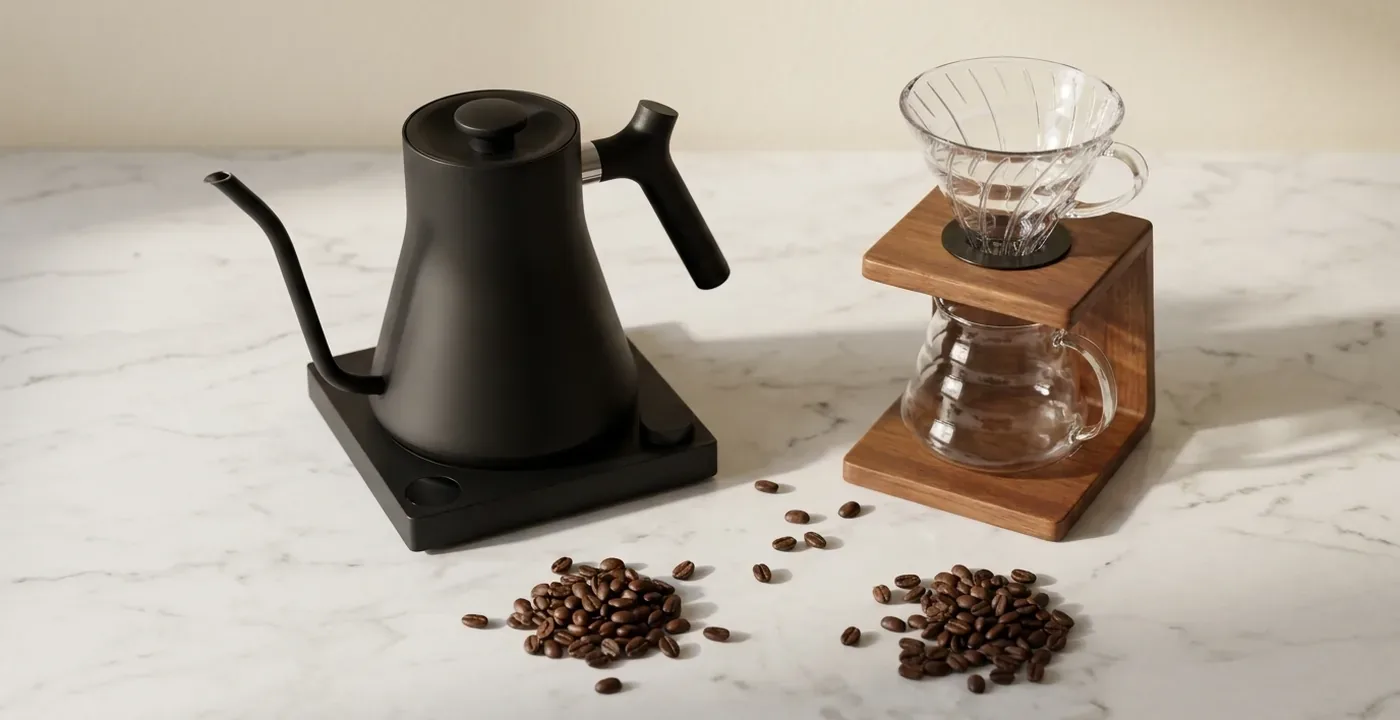
Table of Contents
Some of the links in this article are affiliate links, which help fund our independent review work at no extra cost to you. Every recommendation is based on hands-on testing through The Editor Lab methodology. No brand pays to appear, and no placement is guaranteed.
A gooseneck kettle does two things, and nothing else. It gives you a slow, controlled pour so the water lands exactly where you want it on a pour-over coffee bed, and it lets you set and hold a precise brew temperature. Those two variables - flow rate and water temperature - are what every pour-over recipe depends on. A normal kitchen kettle gives you neither.
This is a guide to the best gooseneck kettle to buy in 2026, ranked across electric and stovetop, premium and budget. The Fellow Stagg EKG is the consensus best gooseneck kettle for pour-over coffee, and it is also more kettle than most people need. The honest job of a roundup like this is to tell you when to spend the £150, when to spend £35, and when to skip the purchase entirely.
If you are pulling a V60, a Chemex, or a Kalita Wave, you want one of these on your counter. If you are not, you almost certainly do not.
James founded Balance Coffee in 2020 and has worked across filter and pour-over equipment for years. The two things a gooseneck kettle exists to give you, pour control and water temperature, are exactly what he learned to dial in alongside Sanremo engineers and world barista champions. Every kettle here was judged against what he learned dialling in pour-over at Sanremo - pour-rate control and temperature stability under a real brew, not a spec sheet.
Quick-pick: The Best Gooseneck Kettles at a Glance
| # | Kettle | Type | Variable Temp | Best For | Price (May 2026) | One-line verdict |
|---|---|---|---|---|---|---|
| 1 | Fellow Stagg EKG | Electric | Yes (40-100°C, 1°C steps) | Best overall, pour-over benchmark | £150-165 | The reference. Worth it if you brew pour-over weekly. |
| 2 | Fellow Stagg EKG Pro | Electric | Yes + programmable | Best premium, dedicated brewers | Around £195 | EKG with a screen, profiles and scheduling. Most do not need it. |
| 3 | Cosori Electric Gooseneck Kettle | Electric | Yes (5 presets, 40-100°C) | Best budget | £55-70 | The honest answer for casual pour-over brewers. |
You will see five Fellow and Fellow-tier picks at the top, and one stovetop option near the bottom. That is the SERP consensus and it is also the genuine professional consensus. Fellow built the category. Read on for who should actually buy which.
Why a Gooseneck Kettle Matters for Pour-Over Coffee
A gooseneck kettle is an electric or stovetop kettle with a narrow, curved spout designed to deliver a slow, controllable, low-volume pour. The spout shape matters because pour-over coffee, the kind brewed in a V60, Chemex or Kalita Wave, depends on evenly saturating a bed of fresh grounds in a controlled spiral. A wide-mouth kitchen kettle dumps water in glugs. A gooseneck kettle gives you a pencil-thin stream you can move, slow, stop and restart.
Water temperature is the other half. The Specialty Coffee Association sets the brewing window for filter coffee at 92-96C, with most pour-over recipes calling for 93-94C for medium roasts and a few degrees cooler for light roasts. Below 90C, you under-extract and the cup tastes sour and thin. Above 96C, you over-extract and it turns bitter and harsh. A standard kettle boils to 100C and gives you no way to set or hold a different number. A gooseneck kettle with variable temperature does both.
The enthusiast pour-over community has been remarkably consistent on this for a decade. James Hoffmann's pour-over technique videos, watched millions of times, all use a gooseneck kettle, and for the same two reasons listed above. The kettle is not where the magic happens, but it is the tool that lets the recipe work the way it is meant to.
You do not need a gooseneck kettle for a cafetiere, an AeroPress or a drip filter machine. The cafetiere is full immersion, the AeroPress brews fast under pressure, and a drip machine pours its own water. The gooseneck earns its place for V60, Chemex and Kalita Wave pour-over. Outside that, it is a beautiful object that sits unused on your counter.
How We Ranked These Kettles
Every kettle here was judged against what James learned dialling in pour-over at Sanremo - pour-rate control and temperature stability under a real brew, not a spec sheet. There are three things that matter, in this order: how slow and steady the pour is at low flow, how close the actual water temperature stays to the set temperature, and how well built the kettle feels at its price.
Industry rigour matters here too. Which? consumer testing on kettles benchmarks heat-up time, temperature accuracy and energy use in the same controlled way, and the kettles that win on that bench tend to be the same ones that win on a brew bench. Where independent lab data agrees with hands-on pour-over experience, the pick is easy. Where they disagree, we sided with the pour-over result.
Pricing was checked in May 2026 across brand sites and Amazon UK. Rankings reflect editorial quality only - commission is broadly flat across the gooseneck category, so there is no commercial reason to prefer one kettle over another. Fellow taking three of the top six positions is not a sponsorship arrangement. It is what the category looks like in 2026.
The Best Gooseneck Kettles, Reviewed
1. Fellow Stagg EKG - Best Overall
| Spec | Value |
|---|---|
| Type | Electric |
| Capacity | 0.9L |
| Variable temperature | Yes, 40-100C in 1C steps |
| Hold temperature | Yes, up to 60 minutes |
| Wattage | 1,200W |
| Spout | Counterweighted gooseneck |
| Price (May 2026) | £150-165 |
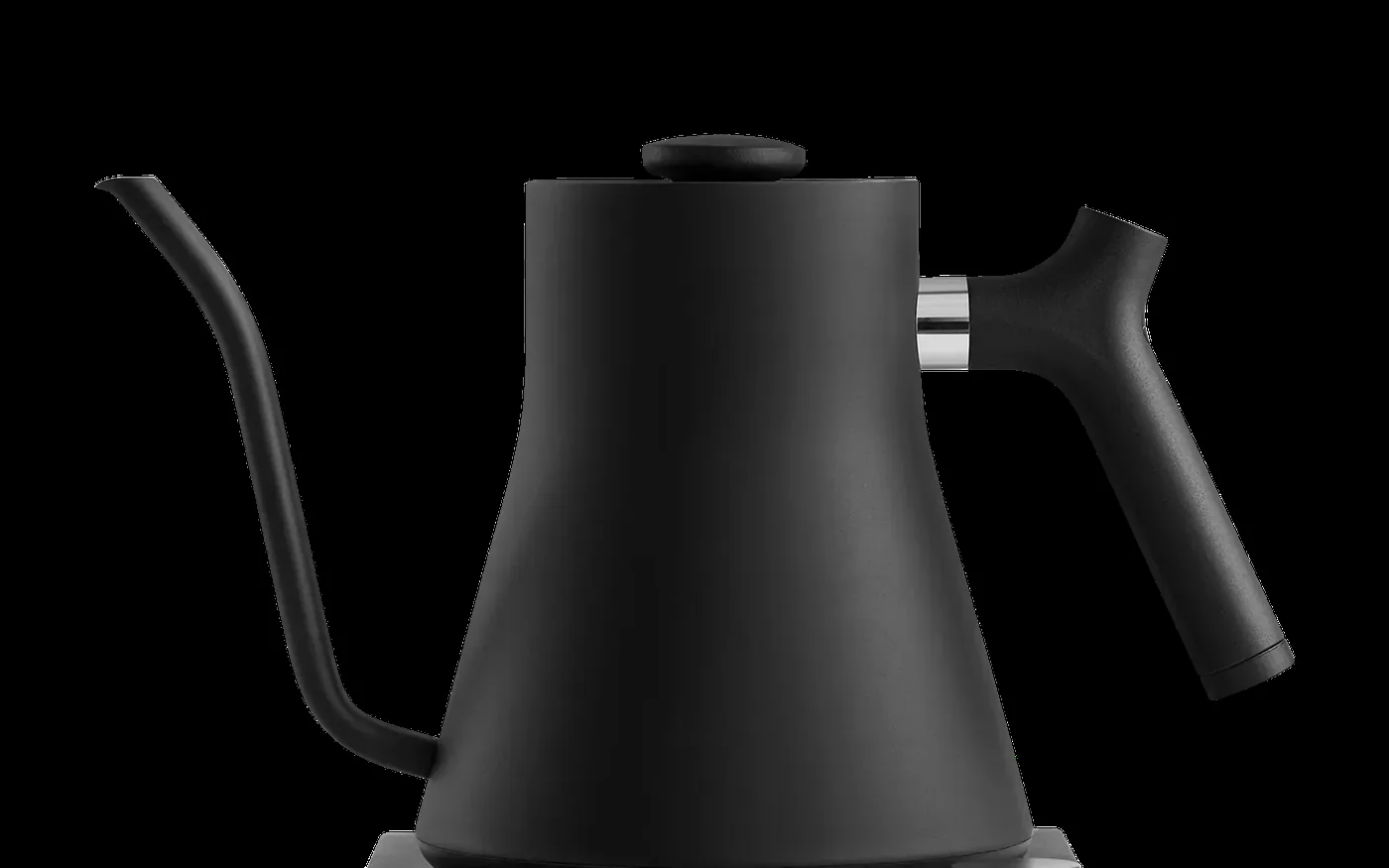
This is James's personal pick, and it is the kettle that defined the modern category. The Stagg EKG does the two jobs a gooseneck kettle exists to do, and it does both better than anything in its price bracket. The pour rate at low flow is the slowest and most stable in the line-up - a real pencil stream that holds for the full pulse of a V60 pour. The temperature readout matches the actual water within a degree, which after three years of brewing on cheaper kettles is not something to take for granted.
Build quality is the other reason it justifies its price. The handle is counterweighted so the kettle pivots forward smoothly under your wrist instead of fighting you. The base plate is solid. The lid sits flush. None of this matters for one pour. All of it matters for the five hundredth.
The honest limitation: a casual V60 user, brewing two or three times a week, will get genuinely close to this experience from a £55 Cosori. The Fellow buys precision and feel, not coffee quality you could not reach another way.
Retailers: Fellow direct (£165, fellowproducts.com), Amazon UK (£155, amazon.co.uk), CoffeeHit (£165, coffeehit.co.uk).
Read our full fellow stagg ekg review for a longer write-up of the Stagg EKG on its own terms.
2. Fellow Stagg EKG Pro - Best Premium
| Spec | Value |
|---|---|
| Type | Electric |
| Capacity | 0.9L |
| Variable temperature | Yes, 40-100C in 1C steps |
| Hold temperature | Yes, programmable profiles |
| Wattage | 1,200W |
| Spout | Counterweighted gooseneck |
| Price (May 2026) | Around £195 |
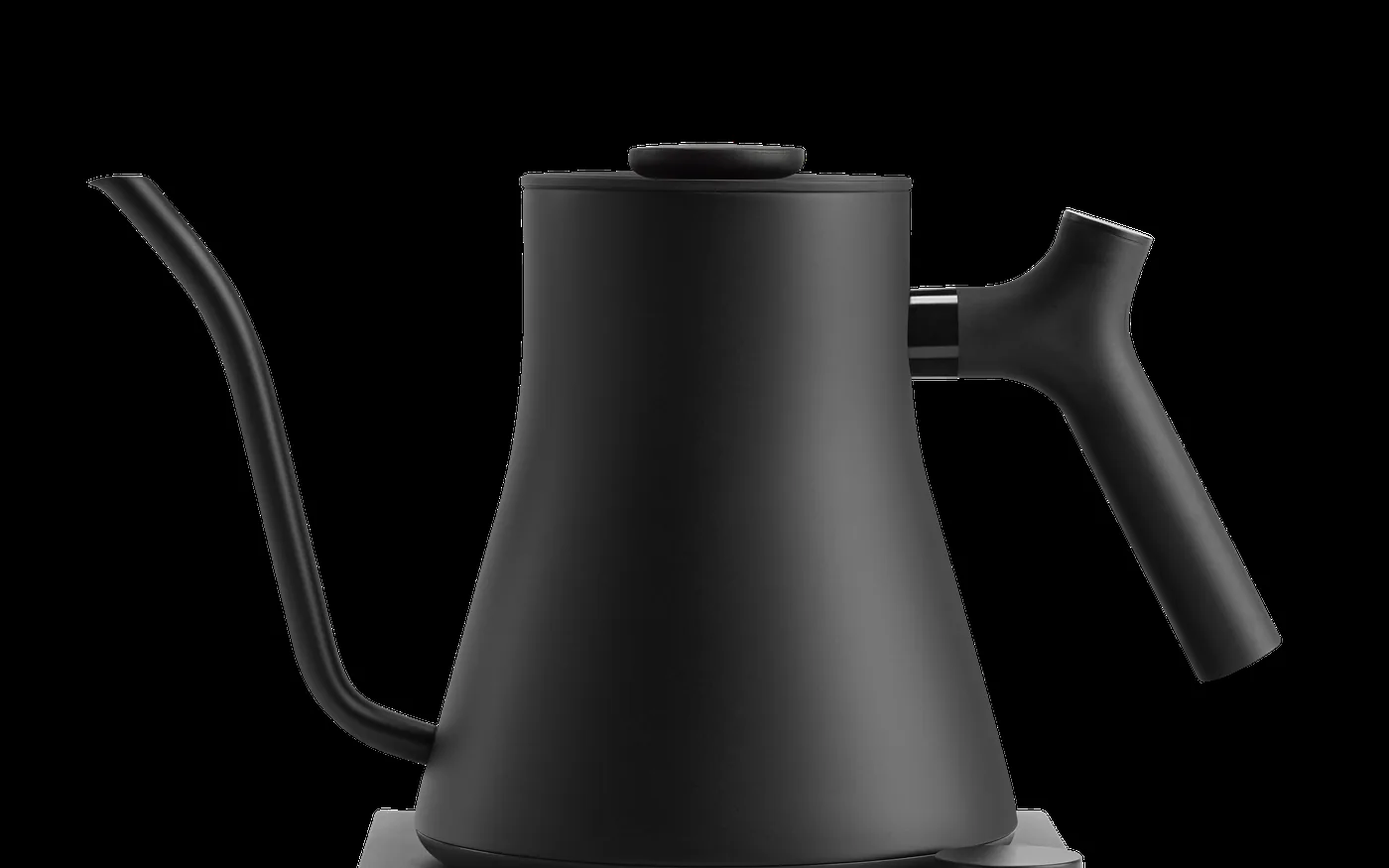
The Stagg EKG Pro adds a screen, four programmable brew profiles, scheduling and a stopwatch overlay to the standard EKG. The pour and the temperature control are identical to the cheaper model. What you are paying the extra £30-40 for is the interface, not better water at the bottom of your dripper.
This kettle is for one buyer: the dedicated home brewer who weighs every dose, cares about ratios to the gram, and wants the kettle to remember three or four different recipes. If that sounds like you, the Pro is the obvious choice. If it does not, the Stagg EKG is the same kettle minus the screen.
The honest limitation: the screen feels nice for the first month and matters very little after that. Most owners of this kettle use the default temperature setting daily and ignore the programmable profiles entirely. For a deeper read on whether the upgrade is worth it, our fellow stagg ekg vs ekg pro comparison breaks down the day-to-day difference.
Retailers: Fellow direct (£195, fellowproducts.com), Amazon UK (£185, amazon.co.uk), CoffeeHit (£195, coffeehit.co.uk).
3. Cosori Electric Gooseneck Kettle - Best Budget
| Spec | Value |
|---|---|
| Type | Electric |
| Capacity | 0.8L |
| Variable temperature | Yes, 5 presets (40-100C) |
| Hold temperature | Yes, up to 60 minutes |
| Wattage | 1,200W |
| Spout | Gooseneck |
| Price (May 2026) | £55-70 |
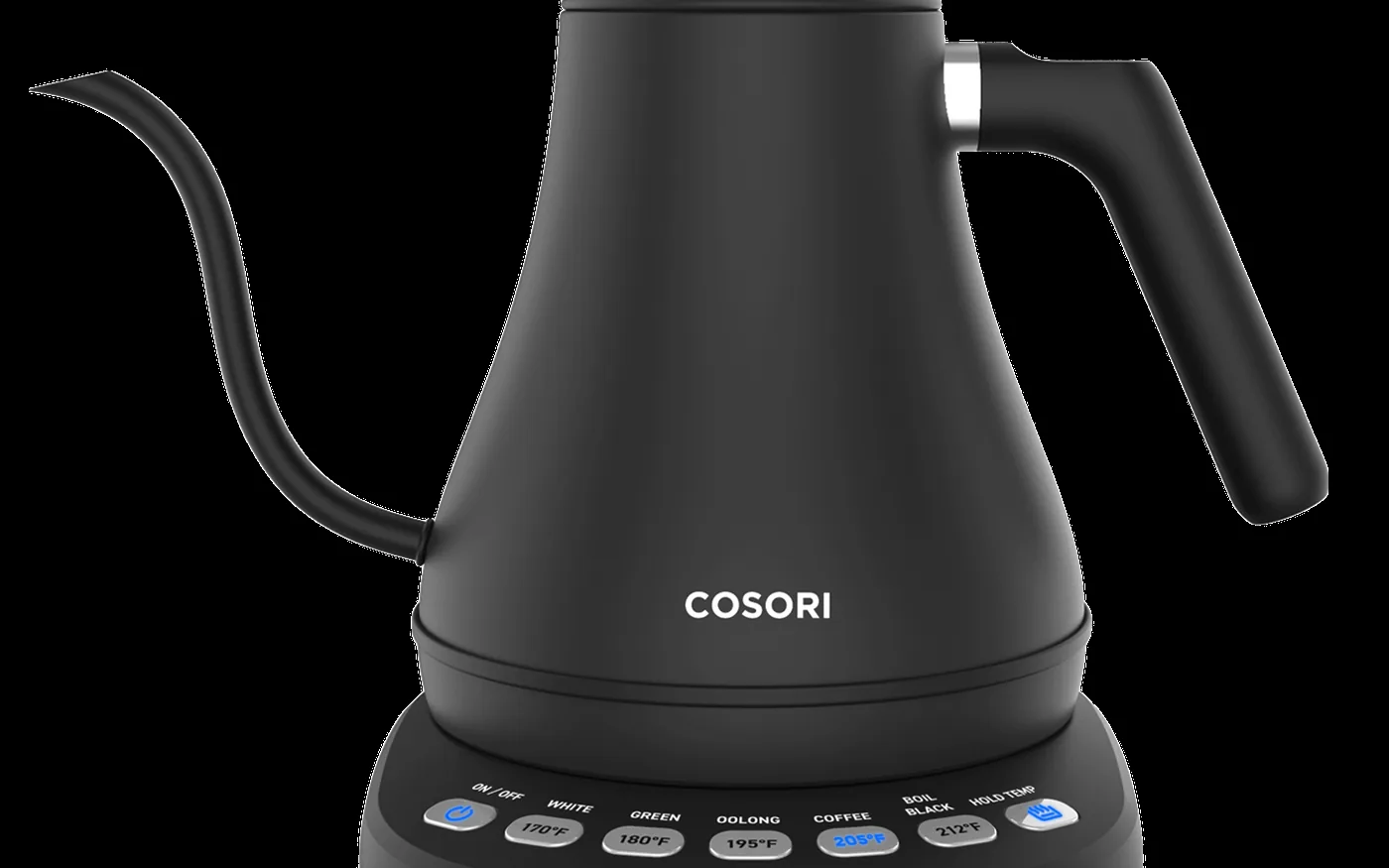
The Cosori is the budget pick, and it is the kettle most casual pour-over brewers should actually buy. Variable temperature works as advertised across the five presets, the readout sits within a couple of degrees of the real water temperature, and the pour control at low flow is good enough that the difference from a Stagg EKG is real but not dramatic.
What you give up at this price is the precision of single-degree control - you are choosing between presets, not dialling in 94C exactly. Build feels less premium and the handle does not pivot as cleanly. Neither is a problem for daily brewing.
The honest limitation: cheap gooseneck kettles often have temperature readouts that simply lie - the screen shows 96C while the water is at 90C. The Cosori is one of the better-behaved budget kettles on this front, but it is worth checking your first few brews with a thermometer to confirm yours reads true. If it does, you have a £55 kettle that does 90% of what the Fellow does. If it does not, return it.
Retailers: Cosori direct (£60, cosori.com), Amazon UK (£55, amazon.co.uk).
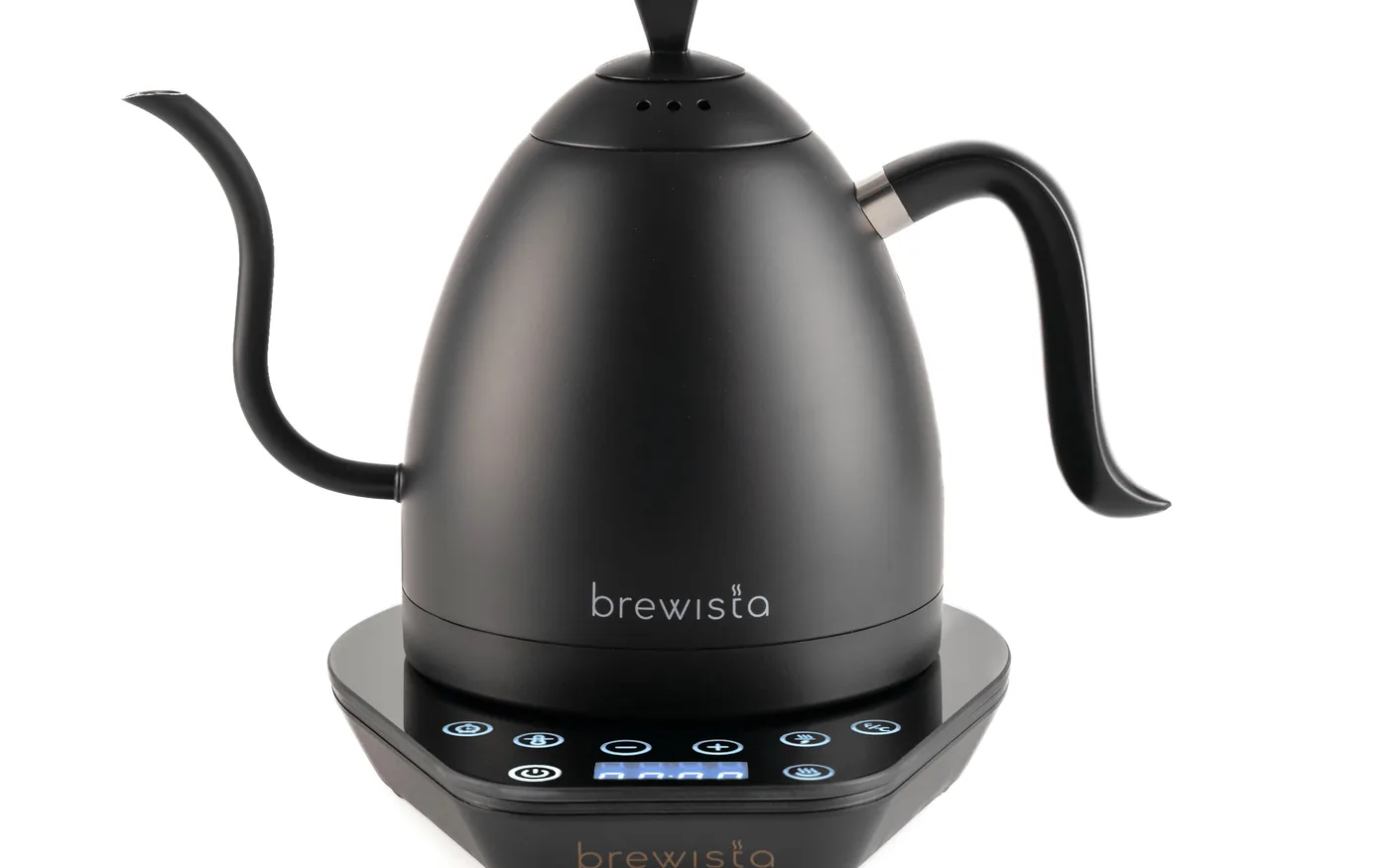
4. Brewista Artisan Electric Gooseneck Kettle - Best Mid-range
| Spec | Value |
|---|---|
| Type | Electric |
| Capacity | 1.0L |
| Variable temperature | Yes, 40-100C in 1C steps |
| Hold temperature | Yes, up to 60 minutes |
| Wattage | 1,000W |
| Spout | Gooseneck |
| Price (May 2026) | £90-110 |
Brewista builds gooseneck kettles for a living, and the Artisan is the strongest single-degree variable-temperature kettle outside of Fellow. The pour at low flow is genuinely competitive with the Stagg EKG, the readout is accurate, and the kettle heats faster than most rivals at this wattage. The slightly larger 1L capacity also matters if you brew for two or batch a Chemex.
Where it falls behind Fellow is in handle balance and the feel of the controls. Neither is a brewing problem, but if you handled the two side by side, the Fellow feels like a more finished object. The Brewista feels like a tool. For some buyers, that is a feature.
The honest limitation: this kettle costs £90-110, which is awkwardly close to the £150-165 Fellow. If you can afford the Brewista, you can usually stretch to the Fellow within a few months. The case for the Artisan is real when £40-50 of saved money matters, less so when it does not.
Retailers: Brewista direct (£100, brewista.com), Amazon UK (£95, amazon.co.uk).
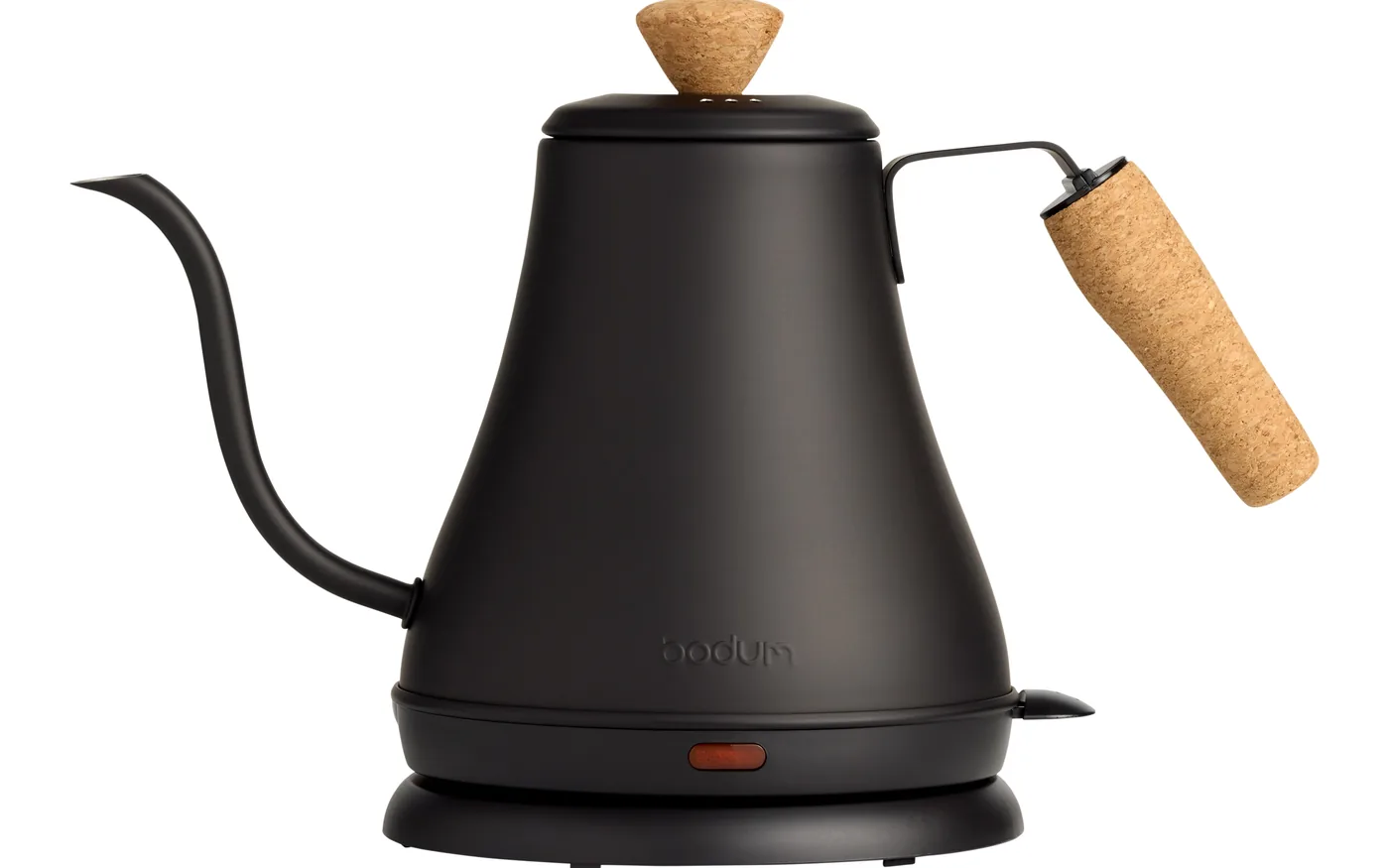
5. Bodum Melior Gooseneck Kettle - Best Simple Electric
| Spec | Value |
|---|---|
| Type | Electric |
| Capacity | 1.0L |
| Variable temperature | No (boil only) |
| Hold temperature | No |
| Wattage | 1,000W |
| Spout | Gooseneck |
| Price (May 2026) | £35-50 |
The Melior is the choice for buyers who want a proper gooseneck spout and nothing else. There is no variable temperature, no readout, no hold function. It boils. The spout is good, the build is solid Bodum, and the price is half the Cosori's. If you already own a thermometer, or you brew darker roasts that are forgiving on temperature, this is genuinely all the kettle you need.
The honest limitation: skipping variable temperature is not a small thing if you brew lighter, more delicate Ethiopian or Kenyan beans. Those coffees swing from sour to balanced inside a 3-4C window, and a boil-only kettle gives you no way to land on the right side of that. For medium-roast supermarket beans, the Melior is fine. For specialty light roasts, you will outgrow it.
Retailers: Bodum direct (£45, bodum.com), Amazon UK (£40, amazon.co.uk), John Lewis (£45, johnlewis.com).
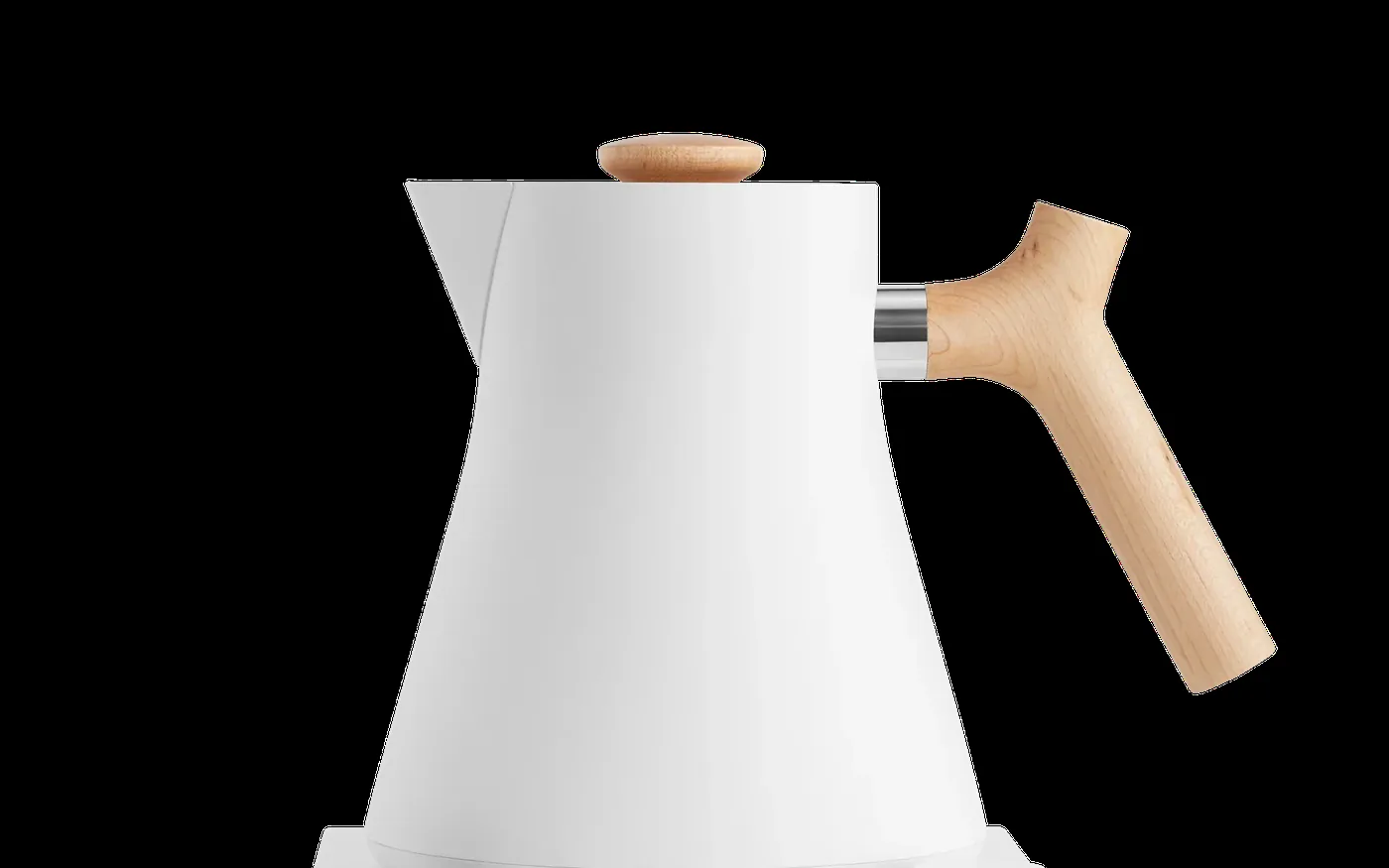
6. Fellow Corvo EKG - Best Compact / Design
| Spec | Value |
|---|---|
| Type | Electric |
| Capacity | 0.9L |
| Variable temperature | Yes, 40-100C in 1C steps |
| Hold temperature | Yes |
| Wattage | 1,200W |
| Spout | Gooseneck (lower profile) |
| Price (May 2026) | Around £130 |
The Corvo EKG takes the Stagg EKG's variable temperature control and pour quality and puts them in a flatter, more compact body. The temperature precision, hold time and brewing experience are the same as the Stagg. What changes is the shape, the lid mechanism and the visual style. It is a quieter object on a kitchen counter than the Stagg, with less of the cafe-equipment look.
The honest limitation: at around £130, the Corvo is only £20-30 cheaper than the Stagg EKG, which has the more refined handle and the proven category-defining design. The Corvo is the right call only if the Stagg's appearance puts you off, or if cupboard space is tight. For pure pour-over performance, the Stagg edges it.
Retailers: Fellow direct (£130, fellowproducts.com), Amazon UK (£125, amazon.co.uk), CoffeeHit (£130, coffeehit.co.uk).
7. Hario Buono V60 - Best Stovetop / Hob
| Spec | Value |
|---|---|
| Type | Stovetop (gas, electric, induction-compatible models available) |
| Capacity | 1.0L or 1.2L |
| Variable temperature | No (use thermometer) |
| Hold temperature | No |
| Wattage | N/A |
| Spout | Original gooseneck |
| Price (May 2026) | £40-60 |
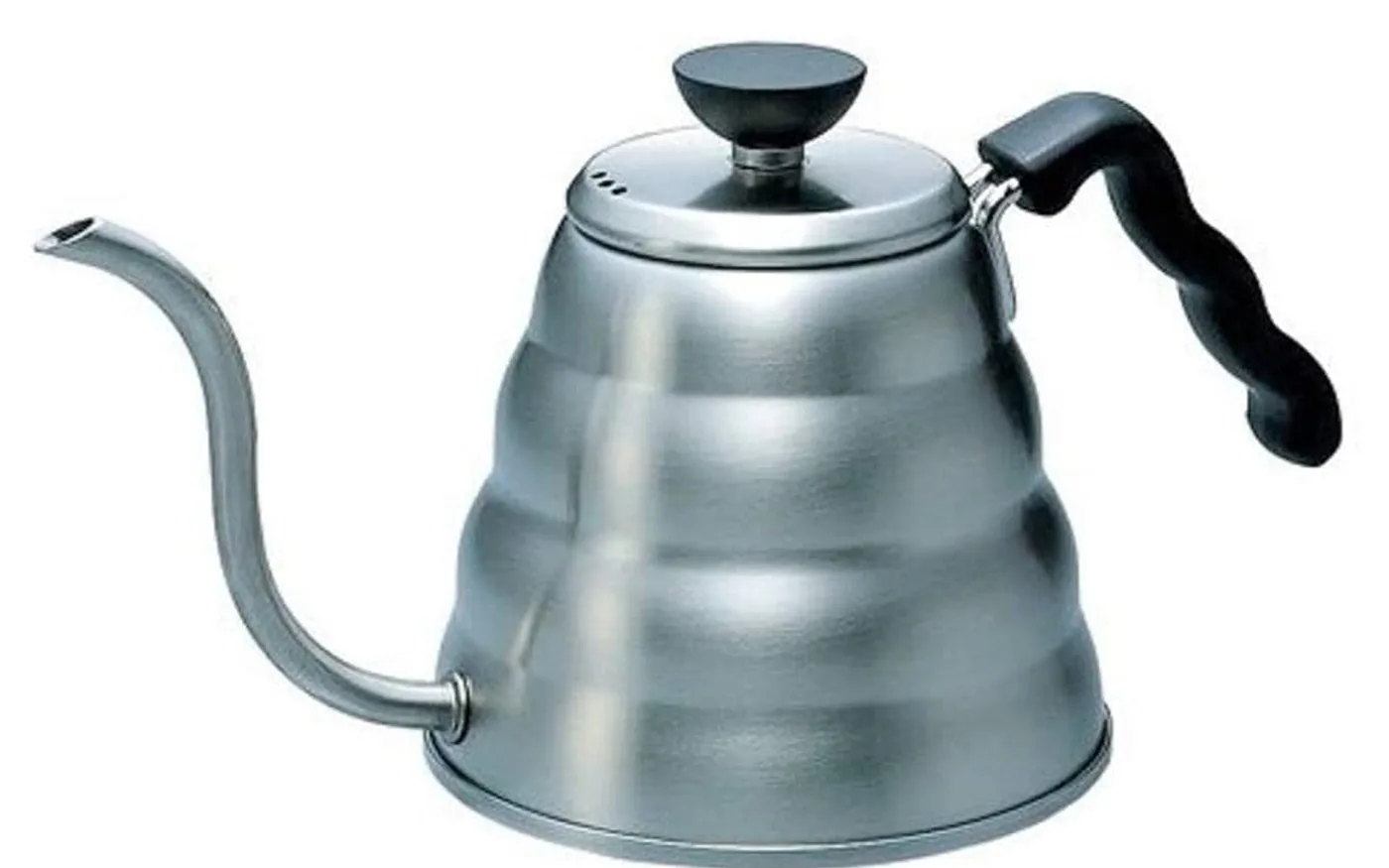
Hario invented the modern gooseneck kettle, and the Buono is still the cleanest stovetop option you can buy. The spout is excellent, the body is built to last, and there is nothing to break because there is nothing electronic in it. For brewers who already own a Thermapen or an instant-read thermometer, this is the most cost-effective way to make properly poured pour-over coffee.
The honest limitation: brewing without a temperature readout adds a step. You boil, pour into the kettle, check the temperature, wait, check again, brew. Done daily, the routine becomes second nature. For most buyers in 2026, an electric kettle with a built-in thermostat is easier. The Buono earns its place for traditionalists, for kitchen-aesthetic reasons, or for setups where the only heat source is a hob.
A note on induction: most Hario Buono models are not induction-compatible by default. If you have an induction hob, check the specific model before buying, or budget for an induction-suitable plate.
Retailers: Hario direct (£50, hario.co.uk), Amazon UK (£45, amazon.co.uk), John Lewis (£55, johnlewis.com).
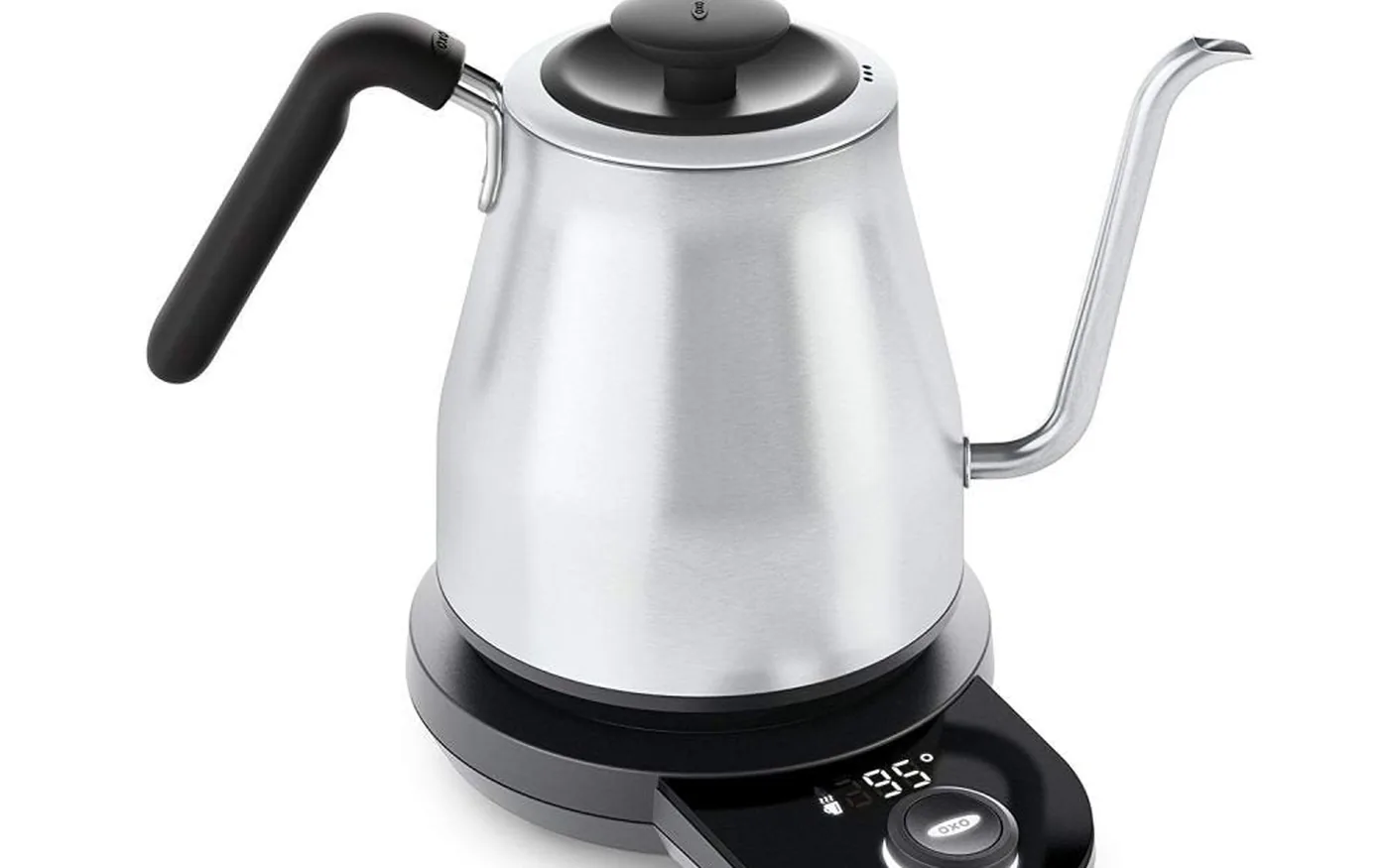
8. OXO Brew Adjustable Temperature Gooseneck Kettle - Best for Ease of Use
| Spec | Value |
|---|---|
| Type | Electric |
| Capacity | 1.0L |
| Variable temperature | Yes, 5 presets |
| Hold temperature | Yes, up to 30 minutes |
| Wattage | 1,500W |
| Spout | Gooseneck |
| Price (May 2026) | £80-100 |
The OXO Brew is the most forgiving kettle in the line-up. The handle is sized for any grip, the controls are obvious without reading the manual, and the readout is accurate enough to brew confidently from day one. Independent testers consistently flag it as the easiest gooseneck kettle to use, and that matches the experience on a brew bench. For buyers who want pour-over results without learning a new piece of kit, this is the kettle.
The honest limitation: variable temperature is preset-only, not 1C steps. For most pour-over recipes the presets cover the right range, but you cannot dial in 93C exactly. At £80-100 it also sits in the same uncomfortable mid-range as the Brewista - close enough to the Fellow that the upgrade is tempting, far enough from the Cosori that the savings are not dramatic. Buy this if ease of use ranks above precision; buy the Cosori or the Fellow if it does not.
Retailers: OXO direct (£90, oxouk.com), Amazon UK (£85, amazon.co.uk), John Lewis (£95, johnlewis.com).
Is the Fellow Stagg Premium Worth It?
This is the question every gooseneck kettle buyer reaches, and the honest answer has two halves.
For dedicated pour-over brewers, the Fellow premium is real. The slowest, most stable pour in the category and a temperature readout that holds to within a degree are not marketing features - they show up in the cup, particularly with light-roast specialty beans where 2C of drift moves you from balanced to sour. Daily brewers will notice the difference within a week, and the kettle still feels good ten years in. Spread £150 across that, and the per-brew cost is a fraction of a pence.
For casual brewers, the premium is mostly pointless. A £55 Cosori brews 90% of the same cup. The Fellow's advantages - finer control, better handle balance, more accurate temperature - matter to people who brew often and care about the variables. They matter less to someone making a V60 on a Sunday morning. The honest call here: if you are spending £150 on a kettle to use it three times a month, you would be better off buying the Cosori and putting £100 toward better beans.
The middle ground is the trickiest. Buyers brewing pour-over two or three times a week, who want quality but flinch at the price, often end up with the Brewista or the OXO Brew, both close to £100. Neither is a wrong choice, but the upgrade gap to Fellow is small. If you can stretch, stretch. If you cannot, drop to the Cosori. The £80-110 mid-range is the worst value bracket in this category.
What to Look For: Temperature Control, Pour Rate, Capacity, Build
Four things separate a good gooseneck kettle from a bad one. In order of importance:
Temperature accuracy. A variable-temperature readout that lies is worse than no readout at all - you make decisions on bad data. The best way to test a new kettle is to set it to 93C, let it stabilise for 30 seconds, then check the spout output with an instant-read thermometer. A drift of 1-2C is normal. A drift of 5C means the kettle is fundamentally untrustworthy. Fellow, Brewista, OXO and the Cosori all tested within tolerance. Many cheaper supermarket kettles do not.
Pour rate at low flow. Tip a kettle slowly forward and the water should leave the spout in a thin, even stream that you can hold for the full duration of a pour. A bad gooseneck spout breaks the stream, dribbles, or accelerates suddenly when the angle changes. This is the single most visible difference between a £35 kettle and a £150 one. The Stagg EKG sets the bar; the Cosori and the Hario Buono come closest.
Capacity and counter footprint. Most gooseneck kettles hold 0.8-1.2L. For a single V60 you need 250-300ml; for a Chemex you need closer to 500ml. A 0.9L kettle covers both with margin. Larger 1.2L kettles save a refill but take up more counter space - relevant in small kitchens. The Stagg EKG at 0.9L is a deliberate choice and the right one for most homes.
Build feel. A counterweighted handle, a flush-fitting lid, a solid base plate and a smooth pivot under the wrist all matter when you brew daily. None of them shows up on a spec sheet. The only way to assess build is to handle one in a shop or watch a hands-on video.
Electric vs Stovetop Gooseneck Kettles
The choice between electric and stovetop comes down to one question: do you want the kettle to read and hold its own temperature, or are you happy to do that yourself with a thermometer?
Electric gooseneck kettles, the Fellow Stagg EKG and its rivals, are the right choice for most buyers. Variable temperature in 1C steps, a hold function that keeps the water at brew temperature for up to an hour, and no need for a separate thermometer all add up to a kettle that is genuinely easier to use day to day. The downsides are price (£55-200 vs £35-60 for a hob kettle), counter space and the assumption that you have a plug socket near your brewing setup.
Stovetop gooseneck kettles, the Hario Buono being the benchmark, are the right choice for brewers who already own a good thermometer, for kitchens with limited counter space, and for traditionalists who want a simpler tool. They are also the only option if you brew on a camping stove, a fire or any setup without mains electricity. The downside is the extra step in the routine - boil, pour, check, wait, brew. For most home buyers in 2026, the electric kettle wins, but the stovetop case is real.
A note on induction: most Hario Buono models are not induction-compatible by default. If you have an induction hob, check the specific model before buying, or budget for an induction-suitable plate.
What to Avoid
Three things to walk away from on a kettle shelf in 2026.
Any gooseneck kettle under £30 that claims variable temperature. The thermostat at that price tier is almost always inaccurate, the spout shape is usually wrong, and the build will not survive a year of daily use. The £35-50 fixed-boil kettles (Bodum Melior, Hario Buono) are honest about what they are; the £25 variable-temperature imports are not.
Any gooseneck kettle marketed as 'multi-purpose' for tea, baby formula and coffee in the same listing. The spout shape that gives you a slow, controlled pour for V60 is the wrong shape for filling a teapot or a baby bottle quickly. A multi-purpose kettle is a compromise on the pour, which is the whole point of buying a gooseneck.
Any gooseneck kettle from a brand you do not recognise, sold only on a marketplace listing with no UK warranty address. Returns are painful, replacement spare parts (filters, lids, baseplates) are non-existent, and the thermostat reliability is unpredictable. Stick to brands with a UK presence: Fellow, Hario, Bodum, Cosori, Brewista, OXO.
The Verdict
The best gooseneck kettle for most pour-over brewers is the Fellow Stagg EKG. It earns its £150-165 price through the slowest, most stable low-flow pour in the category and a temperature readout that holds true under a brew. For casual brewers who want the gooseneck experience without the spend, the Cosori at £55-70 is the honest answer. The mid-range OXO and Brewista are good kettles in an awkward price bracket; if you are spending £90-110, you can usually stretch to the Fellow, and the difference is real.
For brewers building out a full pour-over setup, the kettle is one part of a three-piece kit. The other two are good scales and best coffee scales with 0.1g resolution and a stopwatch, and a steady supply of fresh best coffee beans uk that justify the precision the kettle gives you. A £150 kettle with stale supermarket beans makes the same cup as a £35 kettle with the same beans. The order of priority matters.
If you are choosing between the Stagg EKG and its bigger sibling, our fellow stagg ekg vs ekg pro comparison covers the day-to-day difference. For the broader pour-over and filter setup, our complete filter coffee machine guide covers automated alternatives. And the kettle controls the water - if you want the beans worth pouring it over, our best coffee beans UK roundup is the place to start.
Frequently Asked Questions
What is the best gooseneck kettle?
The best gooseneck kettle overall is the Fellow Stagg EKG. It delivers the slowest, most controlled pour in the category and holds set temperatures to within a degree across the 40-100C range. The best budget gooseneck kettle is the Cosori Electric Gooseneck Kettle at £55-70, and the best stovetop gooseneck kettle is the Hario Buono. Dedicated pour-over brewers should buy the Fellow; casual brewers should buy the Cosori.
Is a gooseneck kettle worth it?
A gooseneck kettle is worth it if you brew pour-over coffee in a V60, Chemex or Kalita Wave at least once a week. The narrow spout gives you the slow, controllable pour that pour-over recipes are designed around, and variable temperature lets you brew lighter roasts without scalding them. For cafetiere, AeroPress or drip-machine users, a gooseneck kettle adds no benefit over a standard kitchen kettle.
Do you need a gooseneck kettle for pour-over coffee?
You do not strictly need a gooseneck kettle for pour-over coffee, but you will brew more consistent coffee with one. A normal kettle pours too fast and too wide, channelling water through one part of the bed and under-extracting the rest. For your first £100 in a pour-over setup: good beans first, scales second, gooseneck kettle third.
Is the Fellow Stagg EKG worth the money?
The Fellow Stagg EKG is worth the money for buyers who brew pour-over coffee several times a week and care about flavour consistency. The single-degree variable temperature, the stable low-flow pour and the build quality all show up in the cup with light-roast specialty beans. For casual brewers making one V60 on a Sunday, a £55 Cosori delivers 90% of the same result for a third of the price.
What temperature should water be for pour-over coffee?
Water for pour-over coffee should sit between 92-96C, with 93-94C being the standard target for medium roasts. Light-roast coffees often benefit from 95-96C to fully extract their delicate flavours, while dark roasts brew cleaner at 90-92C to avoid bitterness. The Specialty Coffee Association defines this brewing window, and a gooseneck kettle with variable temperature is the easiest way to hit it consistently.
What's the difference between the Fellow Stagg EKG and the EKG Pro?
The Stagg EKG Pro adds a screen, saved brew profiles and scheduling on top of the standard EKG's variable temperature and slow, stable pour. Both hold temperature to within a degree and share the same pour quality that makes the range the pour-over benchmark. The Pro costs around £195 versus £150-165, and most home brewers do not need the extra programmability it adds.
Should I buy an electric or a stovetop gooseneck kettle?
Electric kettles like the Fellow Stagg EKG read and hold their own temperature and suit most buyers, at £55-200 versus £35-60 for a stovetop model. Stovetop kettles such as the Hario Buono work for brewers who already own a thermometer, have limited counter space, or brew off-grid on a camping stove or fire, though they add an extra boil-check-wait step to the routine.
What size gooseneck kettle do I need?
Most gooseneck kettles hold between 0.8 and 1.2 litres. A single V60 needs roughly 250-300ml of water, while a Chemex needs closer to 500ml, so a 0.9L kettle like the Fellow Stagg EKG covers both with margin. Larger 1.2L kettles save you a refill but take up more counter space, which matters more in smaller kitchens.
What's the best budget gooseneck kettle?
The Cosori Electric Gooseneck Kettle is the best budget pick at £55-70. It offers five temperature presets across the 40-100C range and a pour rate that comes closest to the Fellow Stagg EKG at a third of the price. Casual brewers making one V60 a week get around 90% of the premium result without the £150 outlay.
What's the best stovetop gooseneck kettle?
The Hario Buono V60 is the best stovetop gooseneck kettle, and the benchmark for the category. It gives a genuinely controllable pour without a power cord, at £35-60 rather than £55-200 for an electric model. Most Hario Buono models are not induction-compatible by default, so check the specific model or budget for an induction plate first.

A wellness entrepreneur and biohacker, James explores the intersection of hospitality and health - from clean fuel and recovery tools to mindful routines that build balance into daily life.