Best Almond Milk UK
Most almond milk is 2% almonds and mostly water. This guide ranks the ones worth paying more for.
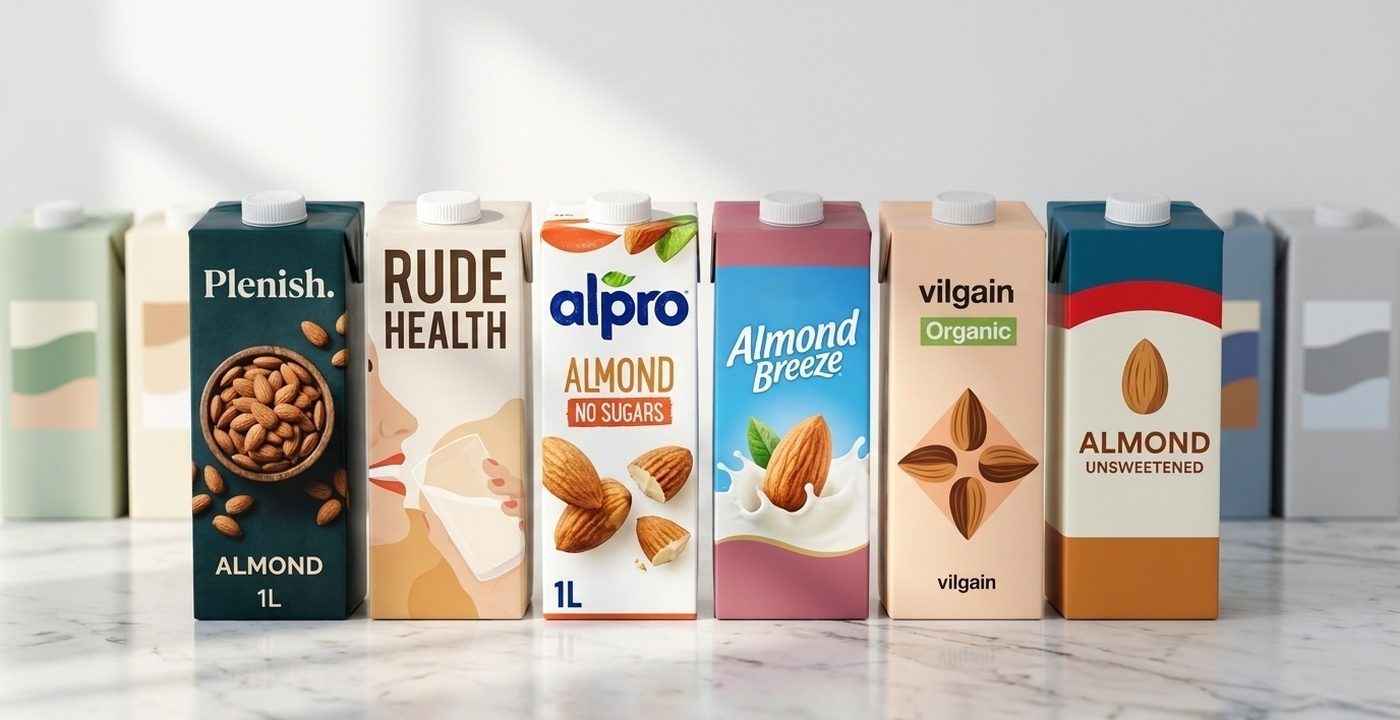
Table of Contents
Some of the links in this article are affiliate links, which help fund our independent review work at no extra cost to you. Every recommendation is based on hands-on testing through The Editor Lab methodology. No brand pays to appear, and no placement is guaranteed.
Pick up almost any almond milk carton in a UK supermarket and you will find the same thing: water, a small percentage of almonds, and a list of additives that varies by brand. Plenish Organic Almond is the best almond milk in the UK overall - clean ingredients, no added gums, and a genuinely higher almond content than most rivals. If budget is the deciding factor, a supermarket own-brand will do the job for cereal. If you want the highest almond content available, Rude Health Ultimate Almond is the one.
I am a Nutritional Therapist trained at the College of Naturopathic Medicine, and I have run nutrition clinics at Harrods and Google. I also spoke at the Global Healthspan Summit in Riyadh. Almond milk questions come up regularly in clinic - not because the answer is complicated, but because the gap between what is on the front of the carton and what is actually in the bottle is wider than most people realise. This guide closes that gap, brand by brand.
Top 3 Best Almond Milk UK
How We Tested
Every brand in this guide was purchased from UK retailers in July 2026 and assessed on four criteria: almond content (confirmed from the ingredient list), additives (oils, gums, emulsifiers), taste for everyday use (cereal, smoothies, drinking cold), and price per litre. Nutritional data was taken directly from current UK packaging. This article follows Balance Journal's Editor Lab testing standards.
For a full breakdown of almond milk's performance in coffee - frothing, splitting, and roast pairing - see our guide to the best alternative milk for coffee UK.
Most almond milks contain 2-7% almonds. The rest is water, stabilisers, and sometimes vegetable oils. That figure tends to surprise people who are buying almond milk for its nutritional properties. The need-segmented table below cuts through the marketing.
The Comparison Table
| Brand | Best for | Almond content | Sweetened? | Added oils/gums | Organic? | Price/litre (approx) | Where to buy |
|---|---|---|---|---|---|---|---|
| Plenish Organic Almond | Best overall / cleanest | 6% | No | None | Yes | £2.10 | Amazon, Ocado, Waitrose |
| Rude Health Ultimate Almond | Best organic / highest almond content | 9% | No | None | Yes | £2.50 | Amazon, Waitrose, Holland & Barrett |
| Alpro Almond No Sugar | Best everyday / availability | 2% | No | Locust bean gum | No | £1.65 | Most UK supermarkets |
| Almond Breeze Unsweetened | Best value / neutral taste | 2% | No | Gellan gum | No | £1.50 | Amazon, Asda, Morrisons |
| Vilgain Organic Almond | Best additive-free premium | 5% | No | None | Yes | £2.80 | Vilgain.co.uk direct |
| Supermarket own-brand (Waitrose/Aldi) | Best budget | 2% | Some variants | Varies | No | £0.90-£1.10 | In-store only |
Almond content and additive data taken from current UK packaging, July 2026. Prices are approximate and subject to change.
The Reviews
1. Plenish Organic Almond - Best Overall
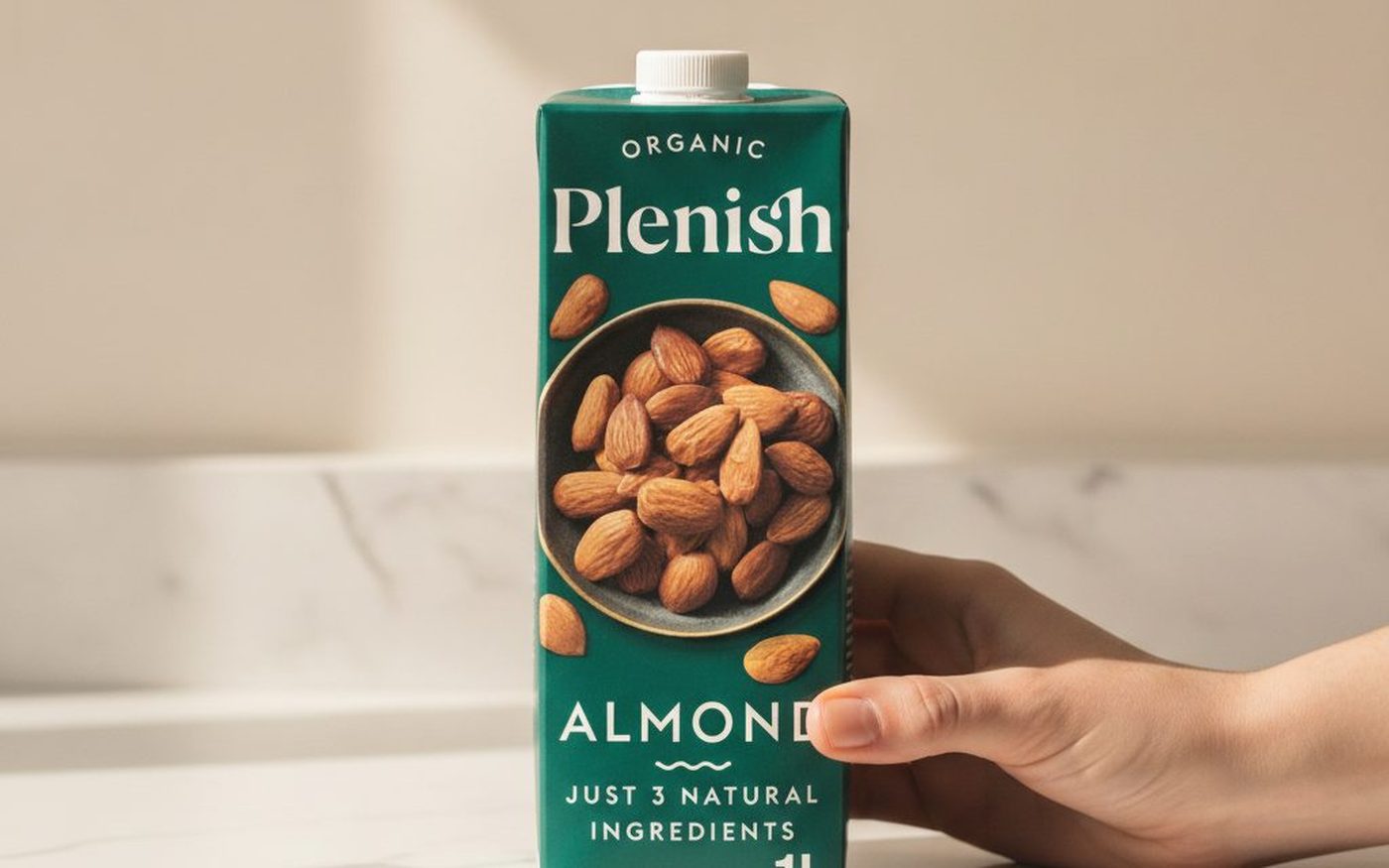
At 6% almonds, Plenish sits meaningfully above the category average of 2-3% for mainstream almond milks. The ingredient list is short: filtered water, almonds (6%), sea salt. No sunflower oil, no xanthan gum, no locust bean gum. For a reader trying to reduce their additive intake, that simplicity is genuinely rare in this category.
The taste is clean and mildly nutty - not the marzipan heaviness that Reddit threads complain about in cheaper almond milks. It works well on cereal where a neutral backdrop lets the food's flavour lead. In smoothies, it blends in without adding sweetness or competing with other flavours. As a drink on its own, it is pleasant but thin compared to dairy.
Plenish is organic, which matters for readers concerned about pesticides in coffee and agricultural chemicals more broadly. Almond trees are one of the most heavily sprayed crops in conventional farming, so the organic certification is not a trivial distinction here. The price of around £2.10 per litre puts it at the premium end of mainstream availability, but not as expensive as the specialist options.
One honest caveat: because there are no gums or stabilisers, Plenish separates in the carton faster than Alpro or Almond Breeze. Shake it well every time.
“At 6% almonds with no added oils or gums, Plenish is the closest this category gets to what people imagine they are buying.”
| Evaluation Criteria | Our Findings |
|---|---|
| Full review | Brand review page pending (spawned on cluster pillar publish) |
| Best for | Clean-label priority; everyday use; cereal and smoothies |
| Flagship product | Plenish Organic Almond Milk 1L |
| Shop | Plenish on Amazon UK |
2. Rude Health Ultimate Almond - Best Organic / Highest Almond Content
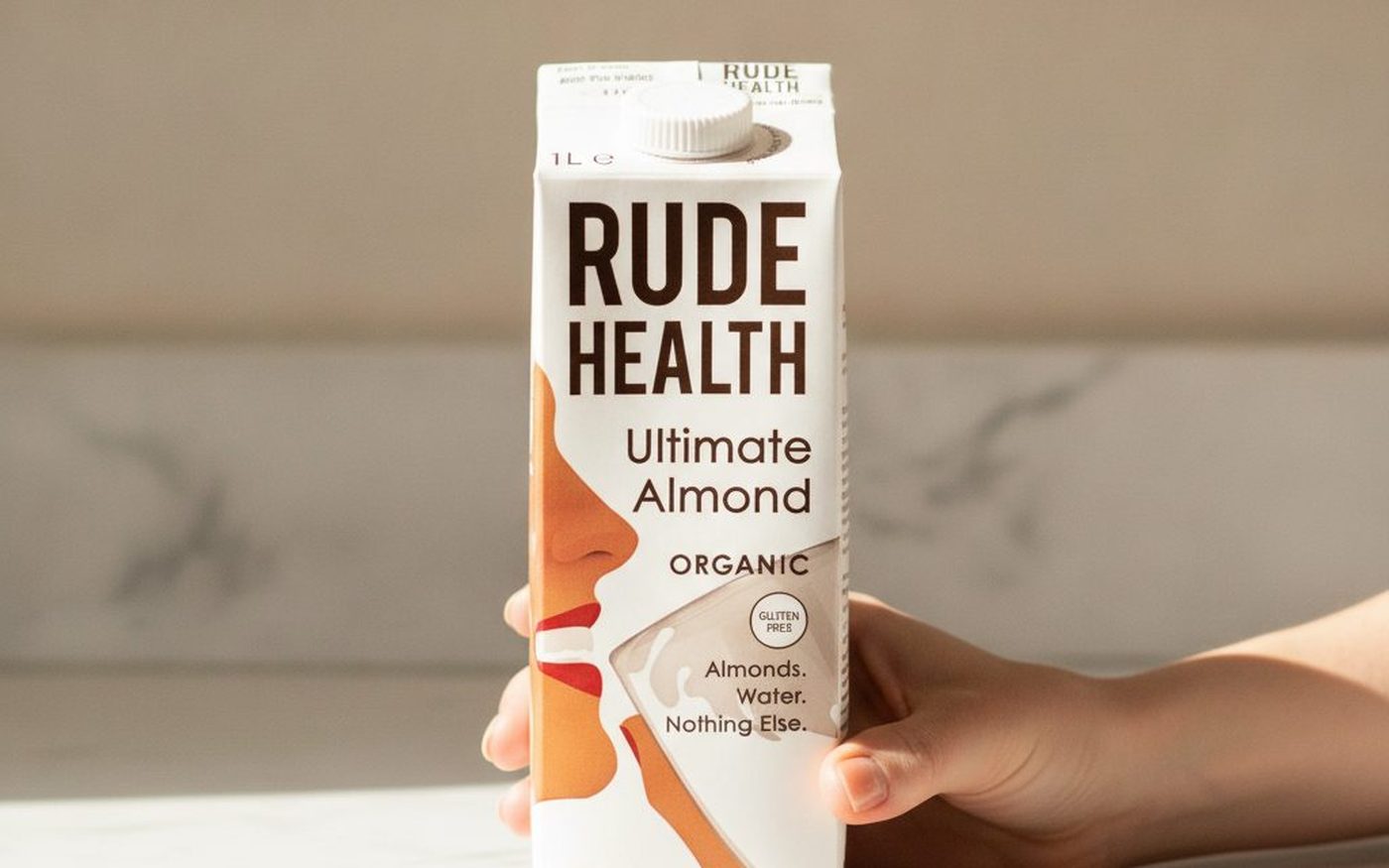
Nine percent almonds. That figure puts Rude Health Ultimate Almond in a category of its own on this list and well above anything you will find in most UK supermarket ranges. The texture is noticeably thicker than a 2% product - closer to how almond milk was made before the category industrialised. Ingredient list: water, almonds (9%), sea salt. Nothing else.
The taste is more pronounced than Plenish - a stronger almond character that some readers will find satisfying and others will find too nutty for coffee or neutral-palate use. For cereal or drinking plain, it works if you actually like the flavour of almonds. For smoothies, the higher almond content can compete with other flavours rather than disappear into them.
Rude Health is certified organic and contains no rapeseed oil, no sunflower oil, and no gums. Among readers already researching mycotoxins in coffee and broader clean-input principles, this will land as a credible option. The price - around £2.50 per litre - reflects the higher almond content. You are paying for the actual almonds, which is not the case with most cartons.
Practical note: Rude Health Ultimate Almond is available at Waitrose, Holland & Barrett, and Amazon UK, but not in the widest supermarket distribution. If you cannot source it locally, the online route is reliable.
“Nine percent almonds is the real thing. The taste is stronger than most people expect from almond milk, but that is the point.”
| Evaluation Criteria | Our Findings |
|---|---|
| Full review | Brand review page pending (spawned on cluster pillar publish) |
| Best for | Highest almond content; clean ingredients; drinking plain or on cereal |
| Flagship product | Rude Health Ultimate Almond Drink 1L |
| Shop | Rude Health on Amazon UK |
3. Alpro Almond No Sugar - Best Everyday / Availability
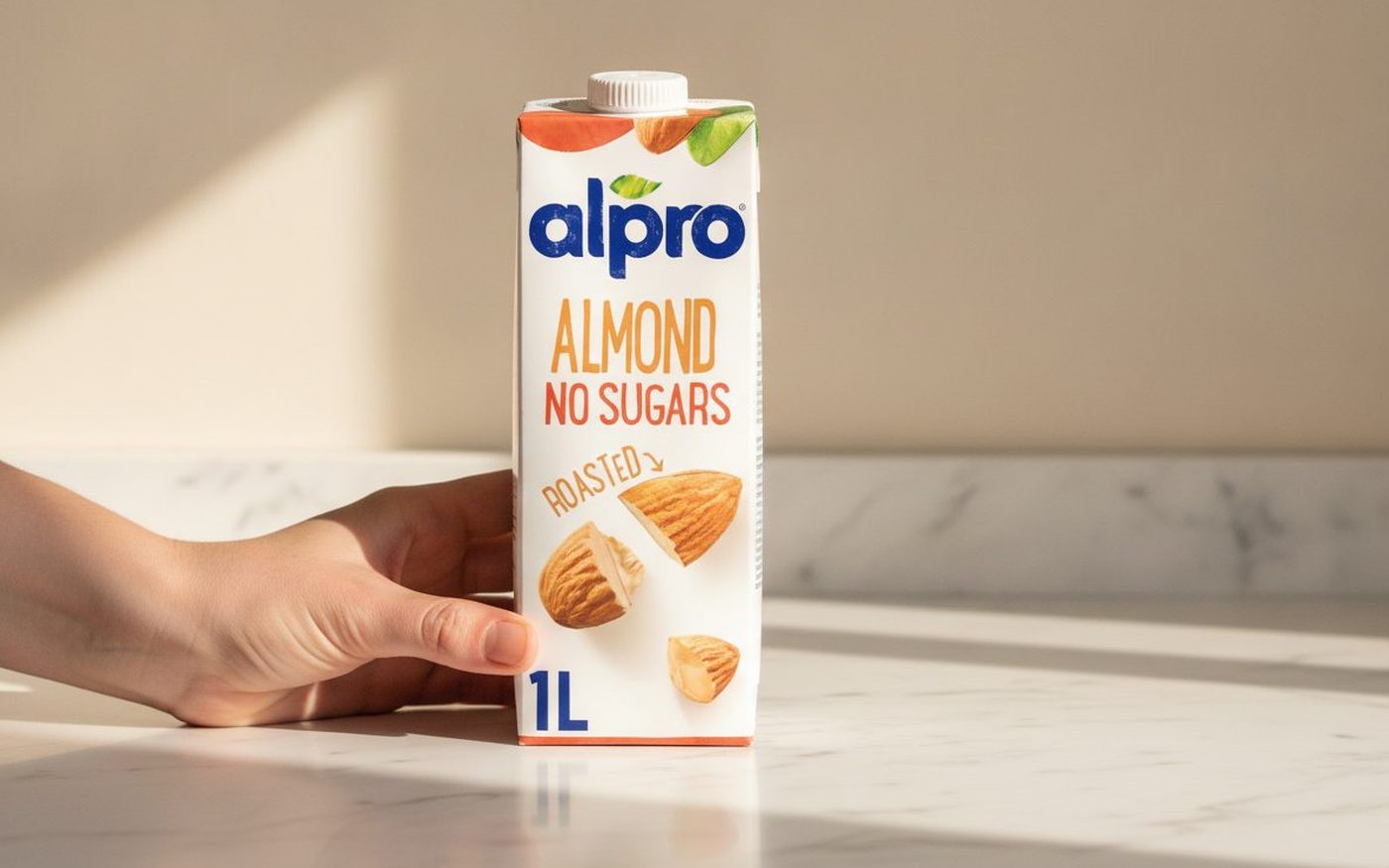
Two percent almonds. That is the honest number for Alpro's most widely distributed almond milk, and it is worth knowing before you buy. The rest of the liquid is water, with the body and texture coming from locust bean gum rather than from almonds. What Alpro offers is consistency, reliability, and the widest supermarket footprint of any brand on this list.
You can find Alpro Almond No Sugar in virtually every UK supermarket - Tesco, Sainsbury's, Asda, Morrisons, Waitrose, Lidl, and Aldi all stock it. The price of around £1.65 per litre is significantly lower than Plenish or Rude Health. For a reader who wants an additive-managed but affordable option for daily use, and for whom the specific almond percentage is not the priority, Alpro is the practical answer.
Taste is neutral and light. The marzipan quality that many readers dislike in cheaper almonds milks is not pronounced in Alpro - the low almond content ironically helps here, as there simply is not enough almond to generate a strong flavour note. It works in cereal without dominating, and blends cleanly in smoothies.
Not organic. Contains locust bean gum as a stabiliser. Calcium-fortified. If your core priority is the cleanest possible ingredient list or the highest almond content, Alpro is not the answer - but it is the most accessible place to start.
“Alpro is what most people reach for first, and that is a reasonable choice if availability and price are the priority.”
| Evaluation Criteria | Our Findings |
|---|---|
| Full review | Brand review page pending (spawned on cluster pillar publish) |
| Best for | Everyday use; widest UK supermarket availability; budget-conscious shoppers |
| Flagship product | Alpro Almond No Sugar 1L |
| Shop | Alpro Almond on Amazon UK |
4. Almond Breeze Unsweetened - Best Value / Neutral
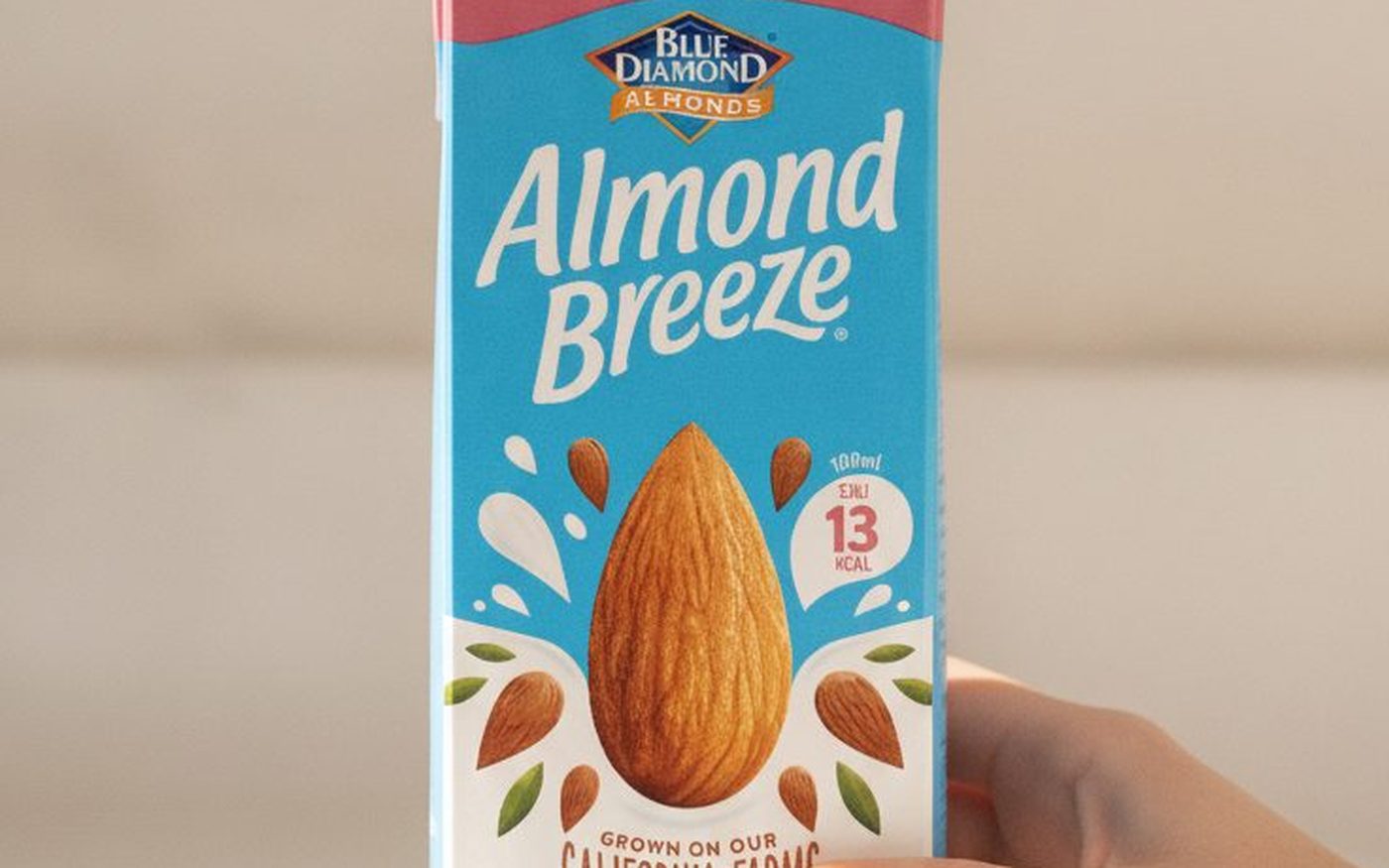
Almond Breeze (Blue Diamond) is a US brand with solid UK availability through Amazon and major supermarkets including Asda and Morrisons. At around £1.50 per litre, it is one of the more affordable options on this list. Like Alpro, it sits at 2% almonds - the category standard for mainstream brands. It contains gellan gum as a stabiliser.
What distinguishes Almond Breeze in taste testing is its neutrality. There is almost no almond flavour, and almost no marzipan quality - the result is a very thin, clean-tasting liquid that disappears into whatever you are adding it to. For readers who dislike any pronounced almond taste in their cereal or smoothies, this is actually a point in its favour.
Calcium-fortified, unsweetened, low in calories (around 13 kcal per 100ml). Not organic. The gellan gum is a common food stabiliser with a straightforward safety profile - not the same conversation as rapeseed or sunflower oil. It does create a very slightly different mouthfeel compared to gum-free options, but most readers will not notice it in a bowl of cereal.
Protein content is very low, around 0.4g per 100ml, consistent with other 2% almond milks. If you are buying almond milk as part of a higher-protein dietary approach, this is not the category to be in - soy or pea milk would serve that goal better regardless of brand.
“Almost no flavour is not a criticism for everyone. If the taste of almond milk has put you off before, Almond Breeze is worth trying.”
| Evaluation Criteria | Our Findings |
|---|---|
| Full review | Brand review page pending (spawned on cluster pillar publish) |
| Best for | Taste-neutral use; value; readers who dislike marzipan flavour notes |
| Flagship product | Almond Breeze Unsweetened Original 1L |
| Shop | Almond Breeze on Amazon UK |
5. Vilgain Organic Almond - Best Additive-Free Premium
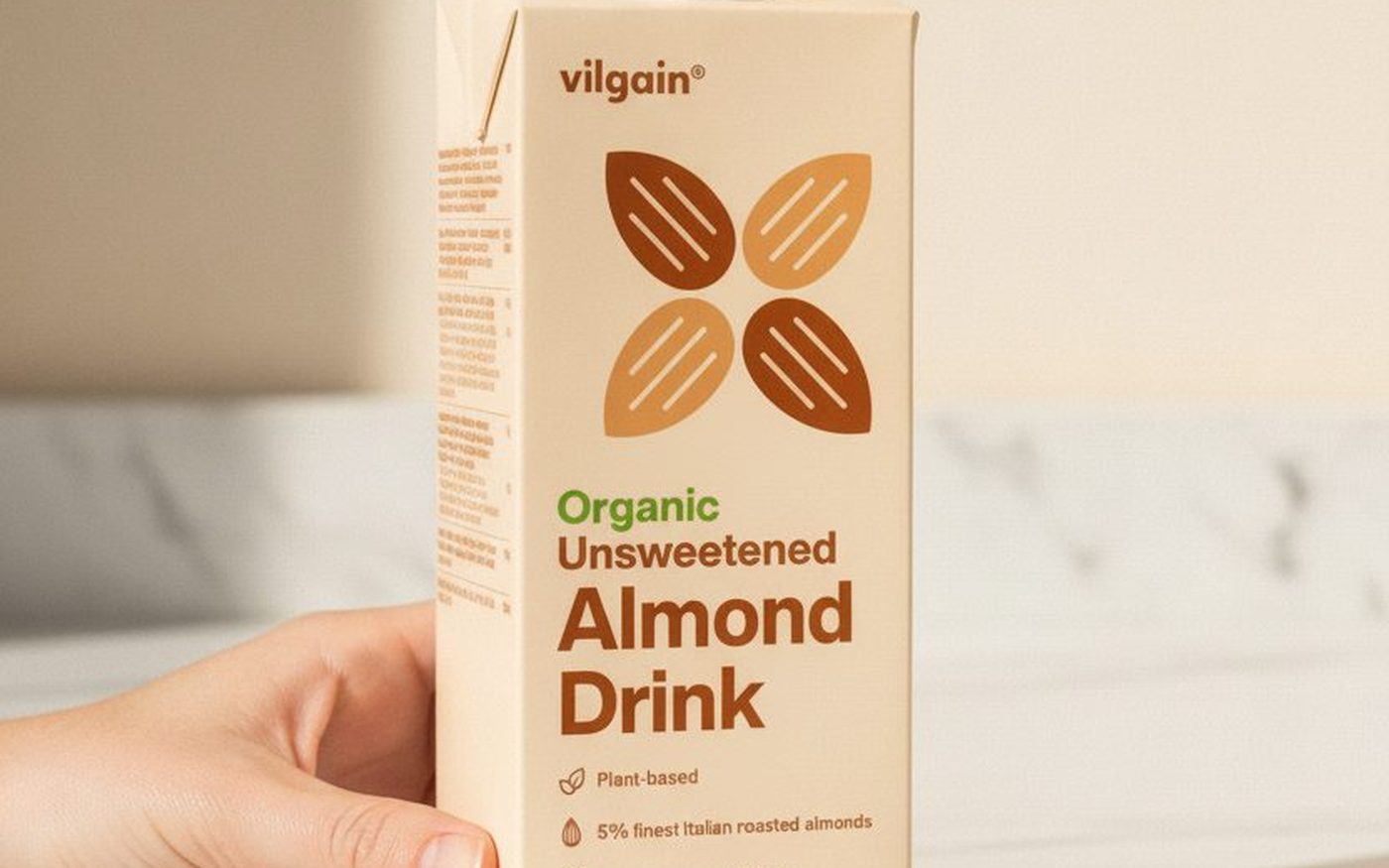
Vilgain is a Czech health brand with direct UK sales at Vilgain.co.uk. Their organic almond milk sits at around 5% almonds with a minimal ingredient list: water, almonds (5%), sea salt. Organic certified, no added oils, no gums. Among readers who have already progressed past mainstream supermarket options and are looking specifically at the cleanest formulations available, it is a credible choice.
The price point - around £2.80 per litre - is the highest on this list. Whether that premium is justified depends on what you are comparing it to. Against Plenish (6% almonds, similar clean list, £2.10/litre), Vilgain is more expensive for a slightly lower almond percentage, and Plenish has wider UK retail availability. Against Rude Health Ultimate (9% almonds, no gums, £2.50/litre), Vilgain comes in at a higher price for a lower almond content. The primary argument for Vilgain is brand preference and its specific certified-organic sourcing.
That said, readers who follow best organic coffee beans sourcing principles and apply similar logic to every input in their diet will find the Vilgain proposition coherent. The availability route is online direct or occasional third-party stockists. Stock can be inconsistent compared to the mainstream brands.
“Vilgain is a clean product, but the value comparison with Plenish and Rude Health is worth doing before you order.”
| Evaluation Criteria | Our Findings |
|---|---|
| Full review | Brand review page pending (spawned on cluster pillar publish) |
| Best for | Additive-free premium; clean-input diet approach; online buyers |
| Flagship product | Vilgain Organic Almond Milk 1L |
| Shop | Vilgain on Amazon UK |
6. Supermarket Own-Brand (Waitrose / Aldi) - Best Budget
Supermarket own-brand almond milks - Waitrose Essential, Aldi Specially Selected, and similar - typically contain 2% almonds and come in at £0.90-£1.10 per litre. They use a range of stabilisers (locust bean gum, gellan gum, or sunflower lecithin depending on the retailer). Some variants are sweetened; the unsweetened versions are the ones to check for on the label.
For a reader who uses almond milk occasionally - in a weekly smoothie or on cereal sometimes - the difference between a £1.00 own-brand and a £2.10 Plenish is difficult to justify on nutritional grounds at that usage level. The almond content is identical to Alpro. The taste is similar. The additive profile is slightly less predictable because formulations vary between retailers and can change without notice.
Where own-brand loses out is consistency and ingredient transparency. Plenish and Rude Health publish their almond percentages prominently; most supermarket own-brands do not. If knowing exactly what is in the carton matters to you, the mainstream branded options are more reliable.
For cereal use where the milk is a background ingredient and budget is the primary consideration: own-brand is a completely reasonable choice. For drinking plain or in smoothies where the flavour and ingredient profile matter more: spend the extra and go up the list.
“Own-brand almond milk is fine for cereal. It is not what it looks like on the carton, but neither is almost anything else in this category.”
| Evaluation Criteria | Our Findings |
|---|---|
| Full review | n/a - category entry, not single brand |
| Best for | Budget-first use; cereal; infrequent use |
| Flagship product | Waitrose Essential Almond Drink 1L / Aldi Almond Drink 1L |
| Shop | In-store at Waitrose / Aldi |
Best Almond Milk for Coffee: a Short Pointer
If your main use case is coffee - lattes, flat whites, or cortados - almond milk is one of the harder options to work with. Low protein content (around 0.5g per 100ml even in premium versions) means it does not foam reliably under steam, and the high water content makes it prone to splitting in hot, acidic espresso.
The best almond milk for coffee in the UK is the barista version of Plenish or Alpro Barista Almond, both of which add emulsifiers to improve foam stability compared to their standard cartons. The barista-specific testing - froth ratios, splitting thresholds, roast pairing - is covered in full in the best alternative milk for coffee UK guide.
For the coffee itself: Balance Coffee's Stability Blend (medium roast, notes of milk chocolate, hazelnut, and fig) pairs cleanly with almond milk. Its low-acid profile reduces the splitting risk that makes light-roast espresso problematic with almond milk. The Stability Blend is independently lab-tested and proven free of mould, mycotoxins, and pesticide residue. Balance Coffee is the company founded by James Bellis, who reviewed this article. Save 20% on Stability Blend.
Almond Milk and Health
The question comes up in every clinic consultation I have where plant milks are part of the conversation. The honest answer is: it depends on what you are comparing it to and what you are optimising for.
What Almond Milk Does Well
Almond milk is low in calories - around 13-24 kcal per 100ml depending on brand, compared to 46 kcal for semi-skimmed dairy. For readers managing calorie intake, the difference across multiple servings per day adds up. It is naturally lactose-free. Most UK brands are calcium-fortified to levels comparable to dairy milk (120mg per 100ml), which the NHS and the British Dietetic Association both recognise as an adequate substitute for bone health purposes, provided the version is fortified.
The BDA's 2024 position paper on plant-based drinks notes that most fortified plant milk alternatives provide a similar quantity of calcium as cow's milk, and that vitamin D addition further supports calcium absorption.
What Almond Milk Does Not Do Well
Protein is the main gap. At 0.4-0.8g per 100ml, almond milk provides a fraction of the protein in dairy (3.4g per 100ml) or soy milk (around 3.3g per 100ml). For a reader replacing dairy as a protein source, almond milk is not the answer - soy or pea milk would better serve that need.
The cardiologist concern - which surfaces regularly in the PAA pool for this topic - is typically about the overall saturated fat content of a person's diet rather than a specific concern about almond milk itself. Almond milk contains very little saturated fat, which is a straightforward plus for cardiovascular health markers. The British Dietetic Association notes that plant-based drinks (except coconut-based) are rich in unsaturated fats, which have a beneficial cardiovascular profile.
The 'Healthiest' Question
- Lowest additives: Plenish or Rude Health Ultimate
- Highest almond content: Rude Health Ultimate (9%)
- Lowest calories: Almond Breeze Unsweetened (around 13 kcal per 100ml)
- Most affordable: supermarket own-brand
- Organic: Plenish, Rude Health, Vilgain
Almond Milk and Sustainability
Water use is the most frequently cited sustainability concern with almond production. Almonds require significant water to grow - approximately 371 litres to produce one litre of almond milk. That figure sounds large, but it is substantially less than the 628 litres of water required to produce one litre of cow's milk (global average), according to the Poore and Nemecek (2018) meta-analysis via Our World in Data.
On greenhouse gas emissions, land use, and water eutrophication, all plant-based milks - including almond - produce lower environmental impacts than dairy milk. Almond milk does use more water than oat milk or soy milk, so within the plant-milk category, it is not the lowest-footprint option. But the comparison with dairy still favours almond milk substantially.
The honest sustainability position: almond milk is more sustainable than dairy, less water-efficient than oat or soy milk, and most responsibly sourced in organic form where water use and pesticide intensity tend to be lower.
Buying Guide: What to Check on the Label
Before buying any almond milk, run through these checks.
| What to check | What a good product looks like | Red flag |
|---|---|---|
| Almond content | 5%+ for premium, 2% is category average | Not declared on label |
| Added oils | None (cleanest option) | Sunflower oil or rapeseed oil listed early in ingredients |
| Added gums | None (cleanest option) | Xanthan gum, locust bean gum, gellan gum (not dangerous, but added for texture, not nutrition) |
| Sweetened vs unsweetened | Unsweetened for everyday use | 'Original' flavour may contain added sugar - check label |
| Fortification | Calcium 120mg+/100ml, vitamin D | No fortification on label |
| Organic | Relevant if pesticide avoidance is a priority | No organic certification if that matters to you |
Frequently Asked Questions
What is the best almond milk in the UK?
Plenish Organic Almond is the best almond milk in the UK for most buyers. It contains 6% almonds - above the category average - with no added oils, gums, or emulsifiers, and is certified organic. The taste is clean and mildly nutty without a strong marzipan note. For the highest almond content available in the UK, Rude Health Ultimate Almond (9%) is the alternative. For everyday budget use, Alpro Almond No Sugar is the widest-available option at around £1.65 per litre in most UK supermarkets.
Which almond milk is the healthiest in the UK?
The healthiest almond milk depends on your health criteria. For the cleanest ingredient list with no additives, choose Plenish Organic Almond or Rude Health Ultimate Almond. For the highest almond content, choose Rude Health Ultimate (9%). For the lowest calories, choose Almond Breeze Unsweetened, at around 13 kcal per 100ml. For bone health, choose any calcium-fortified option that provides at least 120mg calcium per 100ml - most mainstream UK brands meet this standard. The British Dietetic Association recommends fortified plant-based milks as suitable alternatives to dairy for calcium intake.
Which brand of almond milk is healthiest?
Rude Health Ultimate Almond is the most nutrient-dense option on almond content alone, at 9% almonds versus 2% for most mainstream brands. Plenish Organic Almond scores highest on ingredients cleanliness - no oils, gums, or emulsifiers, certified organic. Neither contains meaningful protein; for protein, soy or pea milk are stronger choices. The 'healthiest' answer shifts depending on whether your priority is ingredient purity, calorie count, calcium fortification, or almond percentage.
Why are people ditching almond milk?
The most commonly cited reasons are environmental (almond water use) and concerns about additives in mainstream cartons. Some readers switching from oat milk to almond milk are doing so to avoid rapeseed oil, which appears in most UK barista oat milk brands. Others are moving away from almond milk because its very low protein content (around 0.5g per 100ml) does not serve dietary goals where protein replacement matters. The marzipan taste that some readers find in cheaper almond milks - a result of low almond content combined with added flavourings - is also a noted reason for switching to a different type.
What do cardiologists say about drinking almond milk?
The cardiovascular picture for almond milk is largely positive. Almond milk is low in saturated fat, and most UK brands are unsweetened and low in calories. The British Dietetic Association's 2024 guidance on plant-based drinks notes that plant milks except coconut are rich in unsaturated fats and low in saturated fat - a fat profile that research associates with reduced cardiovascular risk. There is no specific cardiological concern about almond milk itself. The broader dietary context matters: replacing whole dairy with an unsweetened, calcium-fortified almond milk is unlikely to create nutritional gaps for most adults eating a varied diet.
Is there a downside to drinking almond milk?
The main downsides are low protein (0.4-0.8g per 100ml versus 3.4g for dairy milk), low overall almond content in mainstream brands (2%), and variable additive use across products. Almond milk is not a useful protein source for anyone replacing dairy specifically for its protein contribution. The water use in almond farming is also higher than oat or soy milk production, so it is not the lowest-footprint plant milk option. Some premium versions (Rude Health, Plenish) separate more quickly in the carton because they contain no stabilisers - this is a quality indicator, not a problem, but requires shaking before use.
How many almonds are actually in almond milk?
Most mainstream UK almond milks contain 2% almonds. A 1-litre carton therefore contains approximately 20g of almonds - roughly 15 to 20 whole almonds per litre. Premium and organic options do better: Plenish contains 6% (60g of almonds per litre), and Rude Health Ultimate Almond contains 9% (90g per litre). The significant water content of most cartons is why almond milk does not deliver the protein, fat, or fibre that eating whole almonds would provide. It is primarily flavoured, fortified water with a small almond fraction - a useful dairy alternative, but not a nutritional equivalent to the nut itself.
Is supermarket own-brand almond milk as good as Alpro?
For most everyday uses - cereal, smoothies, adding to food - supermarket own-brand almond milk performs comparably to Alpro on taste and nutrition. Both contain 2% almonds and similar calorie levels. Both are calcium-fortified. The differences are ingredient transparency (Alpro is more consistent across cartons) and price (own-brand is typically £0.50-£0.80 per litre cheaper than Alpro). For drinking plain where flavour matters more, Alpro's formula is marginally more consistent. For cereal or smoothies where almond milk is a background ingredient, the own-brand version is a reasonable and lower-cost choice.
What is the best unsweetened almond milk?
The best unsweetened almond milk in the UK is Plenish Organic Almond, which contains no added sugar, no oils, and no gums. For budget-friendly unsweetened options, Alpro Almond No Sugar and Almond Breeze Unsweetened are both widely available and contain no added sugar. When buying any almond milk, check the label carefully - some branded 'Original' variants contain added sugars that the 'No Sugar' or 'Unsweetened' versions do not. The carton front does not always make this clear.

A registered Nutritional Therapist and member of BANT, Clemmie blends science with a holistic approach to wellbeing.