Arabica vs Robusta: What Actually Separates Them

Coffee & Wellness Writer
'100% arabica' appears on supermarket instant and £25 specialty bags alike. Species is the starting point, not the answer.
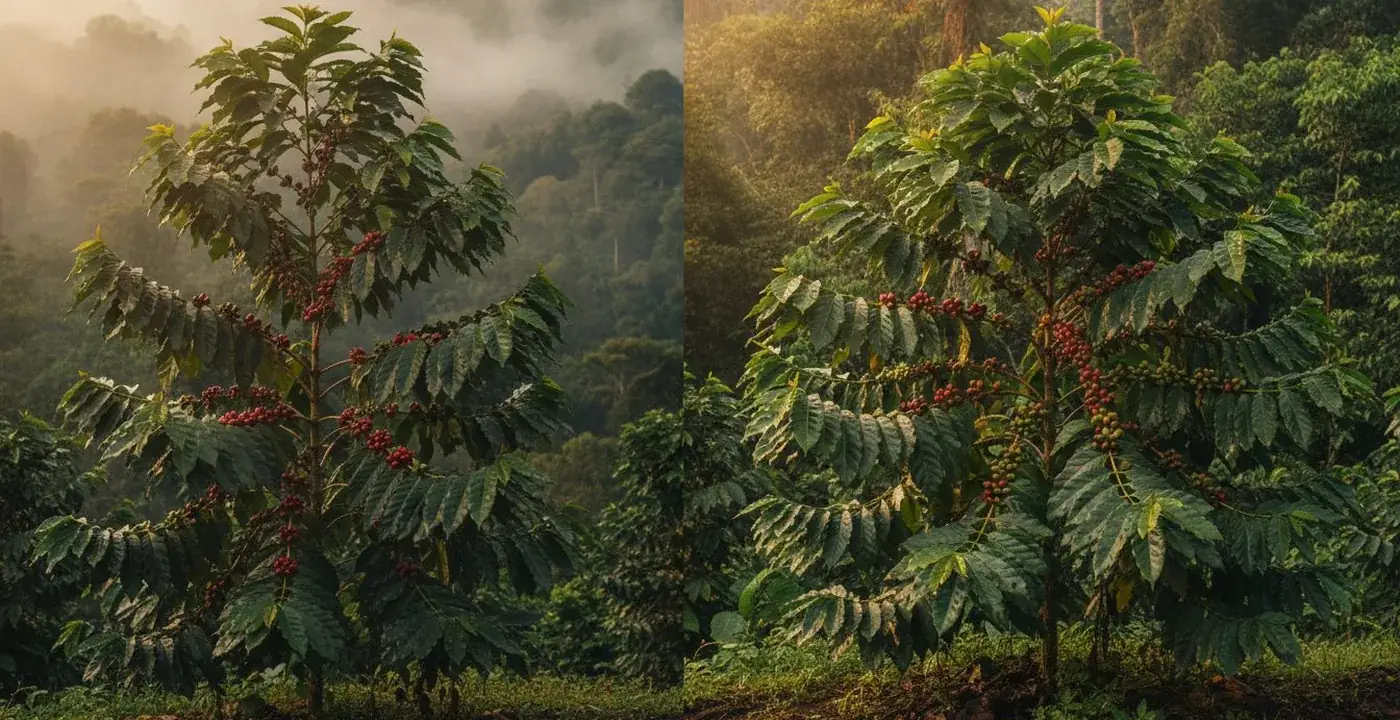
Table of Contents
Some of the links in this article are affiliate links, which help fund our independent review work at no extra cost to you. Every recommendation is based on hands-on testing through The Editor Lab methodology. No brand pays to appear, and no placement is guaranteed.
Arabica and robusta are genuinely different species - different genetics, different caffeine levels, different growing requirements, different prices. '100% arabica' on the bag is telling you something real. Whether it is telling you something meaningful about the coffee in your cup is a different question, and one the label cannot answer on its own.
I have spent nearly 15 years buying, tasting, and working with coffee across both species. The quality gap is real. It is also far narrower than most arabica-forward marketing suggests, and it collapses almost completely when you factor in roast date, processing, and how the coffee was actually grown. If you want to understand what separates the best coffee beans in the UK from the rest, species is the starting point, not the answer.
Arabica vs Robusta: The Short Answer
Arabica (Coffea arabica) is the species in most speciality and premium coffee. It grows at high altitude, has lower caffeine, higher acidity, and a wider flavour range - from floral and fruity naturals to clean, complex washed coffees. Robusta (Coffea canephora) grows at lower altitude, contains roughly twice the caffeine, produces more body and crema in the cup, and represents around 40% of world coffee production. The received hierarchy - arabica good, robusta bad - describes the average of what each species produces at commodity scale. It does not describe the ceiling of what robusta can be when grown and processed carefully. That distinction matters for how you read a label.
The Two Species, Side by Side
Both belong to the Rubiaceae family but diverged significantly - arabica is an allotetraploid (four chromosome sets), robusta a diploid (two sets). The practical differences that reach your cup are in the chemistry, not the chromosomes.
Production figures: International Coffee Organization World Coffee Statistics Database, 2024 data.
| Arabica (Coffea arabica) | Robusta (Coffea canephora) | |
|---|---|---|
| Caffeine (dry weight) | 1.2-1.5% | 2.2-2.7% |
| Chlorogenic acids | 5.5-8% | 7-10% |
| Lipids | ~16% | ~10% |
| Sugars | ~8% | ~4% |
| Growing altitude | 600-2,200m | 0-800m |
| Optimal temperature | 15-24°C | 24-30°C |
| Disease resistance | Moderate | High |
| Yield per hectare | Lower | Up to 2x arabica |
| World production share | ~60% | ~40% |
| Typical price band | Higher | Lower |
Taste and Flavour
Arabica produces a wider flavour range - from the blueberry brightness of an Ethiopian Yirgacheffe natural to the clean, nutty precision of a Colombian washed. The higher sugar content and lipid level give it sweetness and aromatic complexity. Acidity in arabica reads as brightness or fruit character rather than sourness, and at its best the finish is long and clean.
Robusta, in most of what reaches UK shelves, tastes harsh, woody, and overpoweringly bitter. That is an accurate description of commodity-grade robusta grown for yield at low altitude with minimal processing care. It is not an accurate description of what robusta is capable of as a species.
Well-grown, well-processed robusta - graded through programmes like those the Coffee Quality Institute administers for high-quality green coffee - has a different character entirely: full body, a nutty or dark chocolate profile, and a clean, low-acid finish. The harsh reputation is earned by the commodity majority. The species, given decent growing conditions and honest processing, is a more nuanced thing.
The distinction that matters is this: '100% arabica' appears on supermarket instant coffee and on £25 single-origin bags from a specialty roaster. Both claims are technically accurate. They tell you nothing about altitude, varietal, processing, or freshness - the four variables that actually predict what the coffee in your cup will taste like. The label is a minimum signal, not a quality guarantee.
Caffeine, and Why Robusta Has More
Robusta contains roughly twice the caffeine of arabica. The measured ranges are 1.2-1.5% for arabica and 2.2-2.7% for robusta by dry weight. The reason is agronomic: caffeine is a natural insecticide. It discourages pests and inhibits germination of competing plants. Robusta grows at lower altitudes where insect pressure is much higher, and the higher caffeine content is part of how the plant defends itself.
Is the extra caffeine why robusta tastes harsh? Partly, but not primarily. Caffeine is bitter, and higher caffeine does contribute to robusta's bitterness. The larger driver is chlorogenic acid content - robusta has 7-10% versus 5.5-8% for arabica. Chlorogenic acids degrade into quinic and caffeic acids during roasting; at high concentrations they produce astringency and a lingering harsh note that stays on the palate after the coffee has cooled.
The extra caffeine in robusta is not automatically a benefit. More caffeine also means more bitterness and, for some drinkers, more jitters. Whether that is a feature or a flaw depends on what you are optimising for.
Acidity, Body and Crema
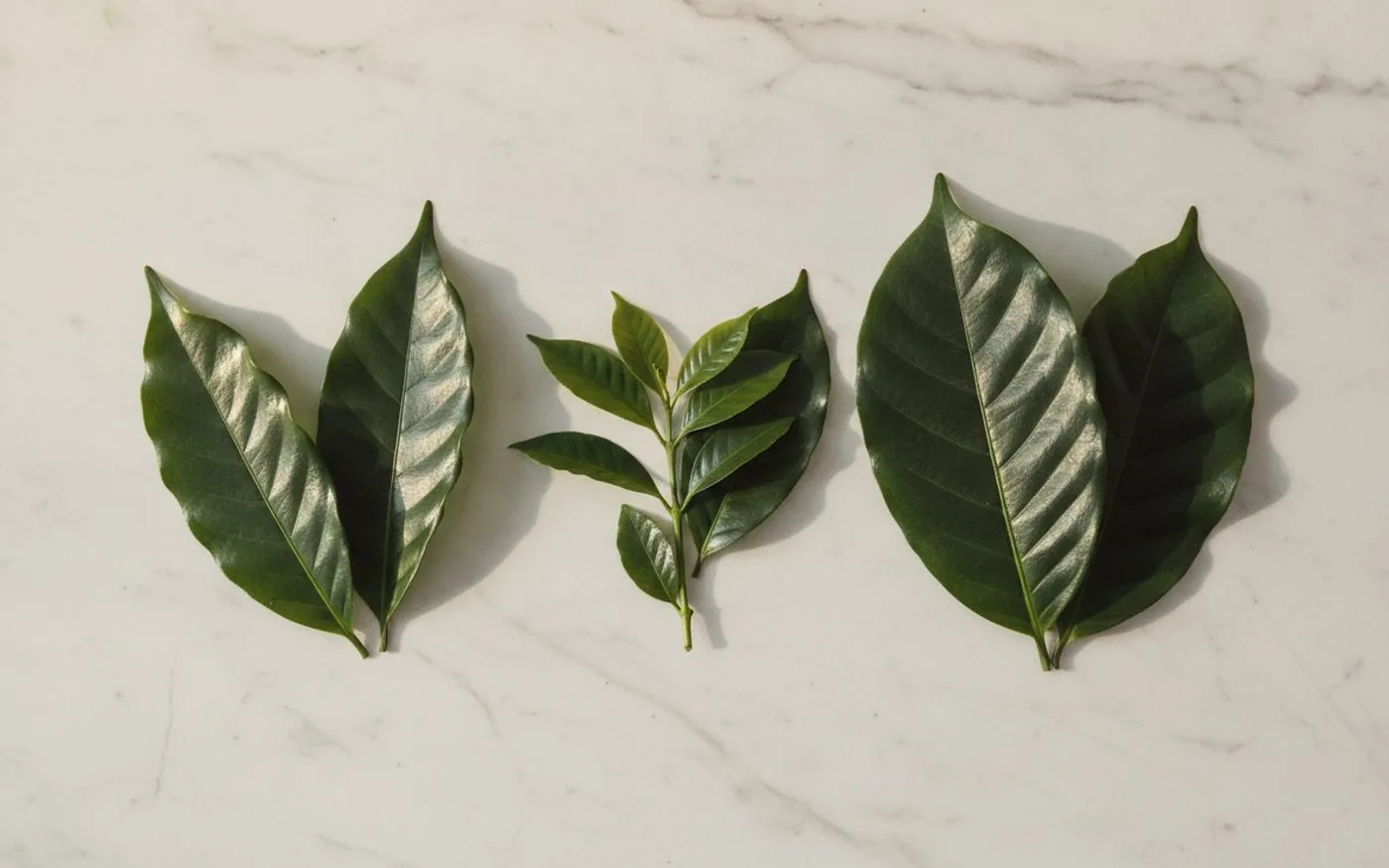
Arabica is the more acidic of the two species. This catches some readers off guard, because robusta's bitterness reads as harsh - and harshness and acidity are easy to conflate in the cup. They are different things. Arabica's acidity is brightness, the quality that makes a well-processed Ethiopian or Kenyan feel alive in the cup. Robusta's lower acidity produces a flatter, heavier profile with more body and less of that brightness.
The body and crema difference is why robusta earns its place in espresso blends. Robusta produces a thick, persistent crema - the emulsified oils and CO2 that form the reddish-brown layer on a pulled shot. Arabica on its own often produces a thinner crema that dissipates quickly. Adding a proportion of robusta to a blend gives the espresso body, crema stability, and a lower-acid profile that holds up well through milk.
This is not a cost-cutting trick, though it can be used as one. Done well, it is a deliberate technique used by some of the most respected Italian espresso houses in the world. If you want to go deeper on what makes the best coffee beans for espresso in the UK worth buying, the species discussion feeds directly into blend design.
Where Each Grows, and Why That Is Changing
Arabica needs altitude. The 600-2,200m growing band concentrates it in highland regions: Ethiopia, Colombia, Kenya, Guatemala, Honduras, and parts of Brazil's southern plateau. The narrow temperature range (15-24°C) makes it sensitive to climate variation - a warm year at origin can strip complexity from a crop that should have been excellent.
Robusta grows across a wider temperature band (24-30°C) at lower altitudes from sea level to 800m. This covers much of West Africa (Uganda, Ivory Coast), Vietnam - the world's largest robusta producer - and Indonesia. Its disease resistance is substantial. Robusta is largely immune to coffee leaf rust, the fungal disease that devastated arabica crops across Central America in the early 2010s and continues to pressure arabica yields.
The share of world production that robusta commands has been increasing. The International Coffee Organization's World Coffee Statistics Database records arabica's share moving from around two-thirds of global output historically toward closer to 60%, with robusta gaining ground. Climate pressure on arabica - a species that needs a specific temperature window that is narrowing as growing regions warm - is a real commercial reason the industry is reconsidering robusta's role. This is agronomic fact, not alarmism.
If you want to understand how what is speciality coffee actually gets defined - and how species fits into that grading conversation - the SCA's value framework is where that discussion sits.
Price: Why Robusta Is Cheaper (and Why That Gap Is Closing)
Robusta is cheaper to produce. Higher yield per hectare, lower altitude farming, greater disease resistance reducing crop losses and treatment costs, and a faster cherry-to-harvest cycle all reduce cost per kilogram for the grower. At commodity scale, this is decisive. Instant coffee manufacturers and large roasters blend robusta precisely because it keeps the cost of goods down without the customer noticing in a heavily processed, flavour-levelled product.
The price gap has narrowed materially in recent years, driven by climate pressure on arabica supply and increased demand for robusta from specialty-adjacent producers exploring the species. A commodity robusta and a commodity arabica are still priced differently, but the historic assumption that robusta is always a cheap filler is less true than it was ten years ago.
Whether you are being charged a premium for an arabica badge that does nothing for your cup is a fair question. The answer depends on what is behind the badge - how the crop was grown, how it was processed, and whether anyone cared about freshness before it reached you.
Which Brands Use Which
Starbucks states on their own site that they use only arabica coffee beans across their entire range. Their engagement team explains the choice in terms of flavour quality. This is verified on their website as of August 2026.
Lavazza is a useful case study in why the arabica/robusta binary is too simple. The Italian roaster blends both species across its espresso range, a practice they discuss in their own coffee education content. Their Qualita Rossa - one of their most widely sold products - is a documented arabica/robusta blend. The robusta component contributes body, crema stability, and the dense, low-acid profile associated with traditional Italian espresso. This is a deliberate formulation choice by a serious company, not a quality compromise.
Nespresso sources primarily arabica but confirms in their own range documentation that both species appear depending on the blend. Their higher-intensity ranges include robusta-origin coffees for body and caffeine.
These examples matter not because brand choices tell you what to buy, but because they confirm what the best coffee beans uk guides explain: species is one input among several, and serious producers manage it deliberately rather than treating it as a binary quality signal.
Is Robusta Actually Bad?
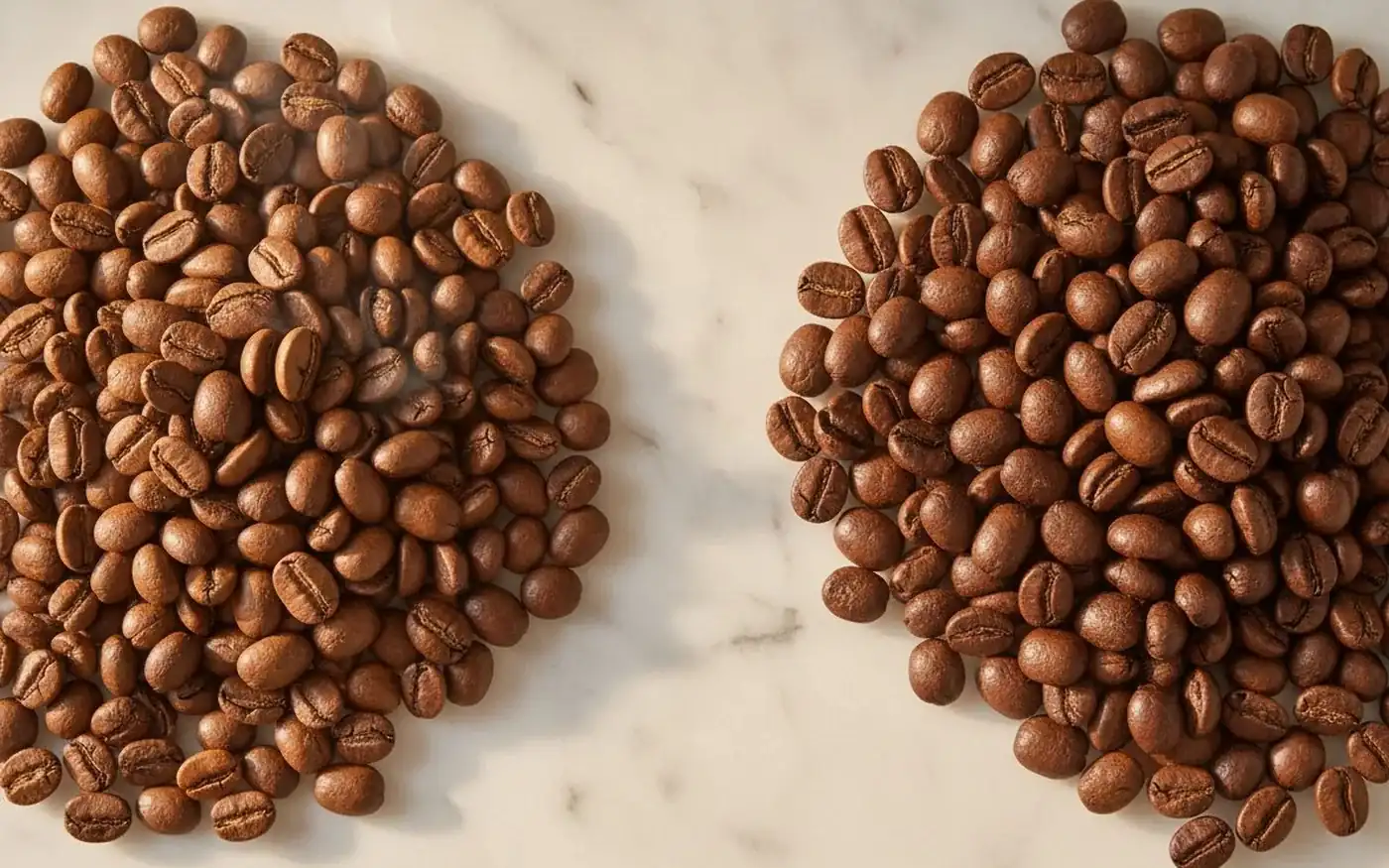
No. The qualified answer is that most robusta on the market genuinely is poor - grown at high yield, low altitude, with minimal processing care, and sold into the commodity market that powers instant coffee and cheap espresso blends. That is where the reputation came from, and it is not wrong as a description of the commodity majority.
What it does not describe is the ceiling of the species. The Specialty Coffee Association's Coffee Value Assessment - the formal replacement for the SCA Green Coffee Classification system - explicitly moved to a species-agnostic, attribute-based framework. Coffee is graded on what is in the cup: aroma, flavour, aftertaste, acidity, body, balance. Not on which plant it came from. A graded, high-quality robusta can score ahead of a poorly produced arabica. The grading world has formally stopped treating species as a proxy for quality.
The reader who prefers robusta - or prefers an espresso blend that includes it - is not wrong, and their palate is not broken. They are responding to real qualities in the cup: more body, more crema, lower acidity, higher caffeine. Whether those are the qualities they want is a preference, not an error.
The concession is worth making honestly: the great majority of robusta available in the UK is commodity grade. If you buy a bag labelled 'robusta' without further information, you are statistically more likely to meet the harsh, woody version than the fine, graded alternative. The reader interested in the best organic coffee beans is often looking for provenance signals that do more work than species alone. That instinct is correct.
Which Should You Buy?
Species is the starting point, not the answer. After nearly 15 years in coffee - including time visiting close to 300 roasteries across the UK and working on the supply side with roasters who buy green coffee against cup score - the four variables that predict what will be in your cup are roast date, processing method, origin, and how it was stored. Species fits in there, but it does not lead.
For most drinkers: buy arabica from a roaster who states the roast date, describes the processing method, and lets you taste before you commit. That is a higher-signal purchase than a bag that says '100% arabica' and nothing else.
If you are making espresso and care about crema and body: a blend with a proportion of well-sourced robusta is a legitimate choice, not a compromise. Some of the best espresso traditions in the world are built on exactly that combination.
If you prefer more caffeine and a heavier, less acidic cup: robusta or a robusta blend is the correct species for you. That is information, not a consolation prize.
For the best decaf coffee beans in the UK, species plays a similar secondary role - what matters is the decaf process and the roast. The guide covers that directly. And if the light roast vs dark roast decision is your next question after species, that is the right sequence - it is a separate variable worth getting clear on before you buy.
Full Specifications
| Specification | Arabica (Coffea arabica) | Robusta (Coffea canephora) |
|---|---|---|
| Species name | Coffea arabica | Coffea canephora (commercial name: robusta) |
| Chromosome count | Tetraploid (4 sets) | Diploid (2 sets) |
| Caffeine (dry weight) | 1.2-1.5% | 2.2-2.7% |
| Chlorogenic acid | 5.5-8% | 7-10% |
| Lipid content | ~16% | ~10% |
| Sugar content | ~8% | ~4% |
| Growing altitude | 600-2,200m | 0-800m |
| Optimal temperature | 15-24°C | 24-30°C |
| Disease resistance | Moderate | High |
| Yield per hectare | Lower | Up to 2x arabica |
| World production share | ~60% | ~40% (ICO, 2024) |
| Typical price band | Higher | Lower |
| Acidity in cup | Higher (brightness) | Lower |
| Body | Lighter to medium | Medium to full |
| Crema in espresso | Thinner, less stable | Thicker, more stable |
| Primary uses | Speciality, filter, espresso, blends | Espresso blends, instant, robusta-forward blends |
| Key producing regions | Ethiopia, Colombia, Kenya, Guatemala, Brazil | Vietnam, Uganda, Ivory Coast, Indonesia |
Frequently Asked Questions
Which is better, robusta or arabica?
Neither is categorically better. Arabica produces a wider flavour range, more acidity, and higher aromatic complexity. Robusta delivers more body, more crema, higher caffeine, and lower acidity. At commodity scale, arabica is more consistently good. At the specialty end, graded robusta can match poorly grown arabica on cup scores. Roast date and processing predict quality more reliably than species alone.
Do Starbucks use robusta or arabica?
Starbucks uses only arabica coffee beans across their entire range. Their team states this is a deliberate quality decision rather than a cost consideration, and the choice is documented on their own website. They do not use robusta in any of their standard coffee products. Verified on Starbucks' own website in August 2026.
Does Lavazza use robusta beans?
Yes. Lavazza openly blends arabica and robusta across their espresso range, a practice they discuss in their own coffee education content. Their Qualita Rossa is an arabica/robusta blend. The robusta component contributes body, crema stability, and the dense, low-acid profile associated with traditional Italian espresso - a deliberate formulation choice, not a cost-cutting measure.
Does McDonald's use arabica or robusta?
McDonald's UK markets their coffee as 100% arabica, sourced through the Rainforest Alliance programme. This is the claim made in their UK marketing materials, including in-restaurant labelling. Verify their current sourcing statement on their own website if you need the most up-to-date version.
How much more caffeine does robusta have than arabica?
Robusta contains roughly twice the caffeine of arabica. The measured ranges by dry weight are 1.2-1.5% for arabica and 2.2-2.7% for robusta. At the midpoint of each range, that is approximately 80% more caffeine in robusta. The agronomic reason is that caffeine acts as a natural insecticide, and robusta grows at lower altitudes where pest pressure is significantly higher.
Why is robusta cheaper than arabica?
Robusta is cheaper to produce at every stage: higher yield per hectare, lower altitude farming, greater disease resistance reducing crop losses and treatment costs, and a farming environment less specialised than high-altitude arabica terrain. At commodity scale these advantages compound. The price gap has narrowed in recent years as climate pressure on arabica tightens supply and interest in quality robusta has grown.
Does '100% arabica' mean the coffee is good?
No. '100% arabica' tells you the species and nothing else. It appears on supermarket own-label instant coffee and on £25 bags from specialty roasters alike, and both claims are accurate. The label is a minimum signal, not a quality guarantee. Look for the roast date, the origin, and the processing method - those carry more predictive weight than species alone.
Which countries grow arabica and which grow robusta?
The main arabica producers are Ethiopia, Colombia, Brazil, Kenya, and Guatemala - all highland growing environments. The main robusta producers are Vietnam, Uganda, Ivory Coast, and Indonesia. The International Coffee Organization's World Coffee Statistics Database (2024) records arabica at around 60% of world production and robusta at around 40%, with robusta's share increasing as climate pressure affects arabica yields.
Is robusta more acidic than arabica?
No - arabica is the more acidic of the two. This is one of the most common misconceptions about robusta. Arabica's higher acidity registers as brightness or fruit character in the cup. Robusta's lower acidity gives it a heavier, flatter profile. The confusion comes from robusta's bitterness - harsh and acidic are easy to conflate in the cup, but they are produced by different compounds and behave differently through the roast.
A wellness entrepreneur and biohacker, James explores the intersection of hospitality and health - from clean fuel and recovery tools to mindful routines that build balance into daily life.