Myprotein Creatine Review UK: Nutritionist Verdict

Qualified Nutritionist
The only creatine question that matters: which SKU, which price, and whether the Creapure premium is worth it for you.
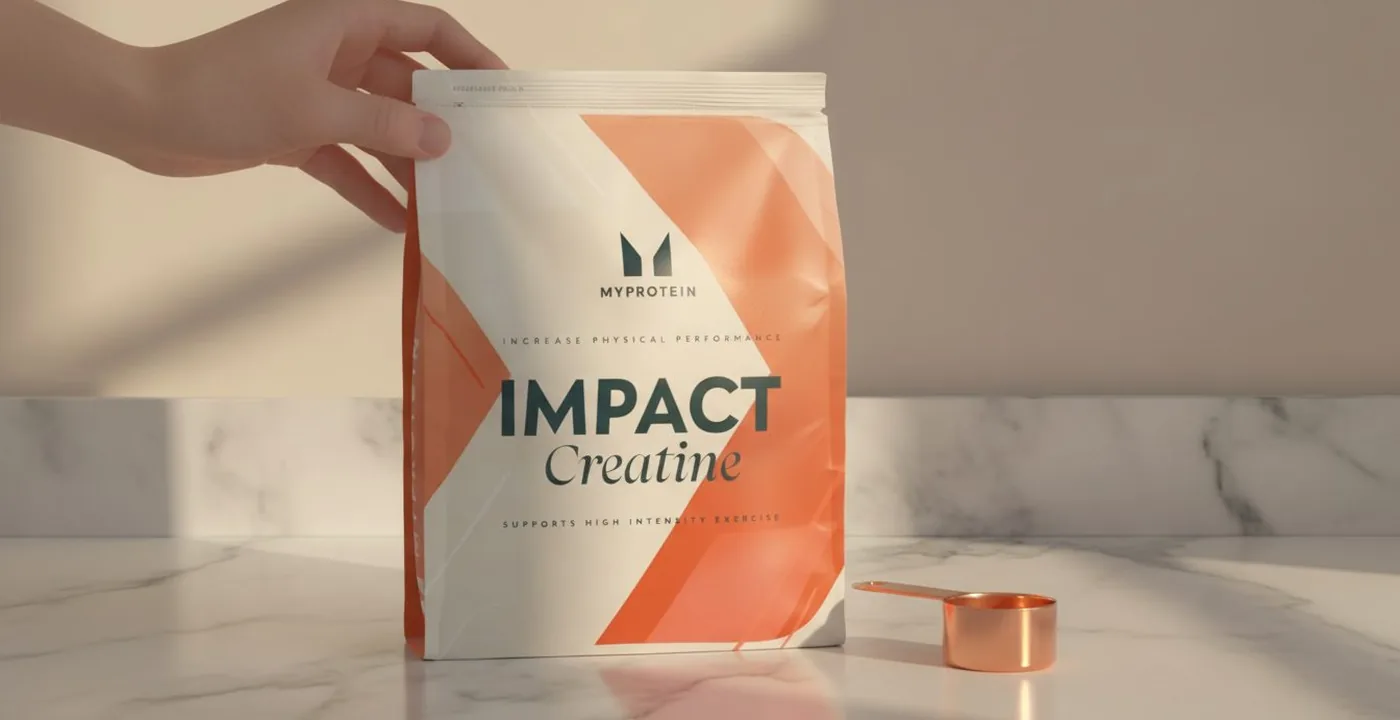
Table of Contents
Some of the links in this article are affiliate links, which help fund our independent review work at no extra cost to you. Every recommendation is based on hands-on testing through The Editor Lab methodology. No brand pays to appear, and no placement is guaranteed.
Myprotein creatine monohydrate appears on more supplement shelf shortlists than almost anything else in its category. The short answer: yes, it is worth it - with one important caveat about how you buy it. The 250g bag sits at under £9 on Amazon. The 1kg bag regularly drops below £15 on discount. For anyone who has spent time researching creatine, it is the obvious starting point - and the obvious question is whether cheap automatically means compromised.
The full answer depends on which Myprotein creatine you are buying, what dose you are actually getting per scoop, and whether the new Creapure line changes the calculation.
Editor's Note
Verdict at a Glance
Myprotein Impact Creatine Monohydrate is one of the most cost-effective creatine options available in the UK. At around £8.68 for 250g on Amazon (roughly £0.35 per serving at 3g), the price-per-serving benchmark is hard to undercut without moving to bulk powder. The unflavoured version is a single-ingredient product. The micronised particle size reduces grittiness without eliminating it entirely. The newer Creapure-certified line offers a verified 99.99% purity guarantee at a higher price point - and for most recreational gym-goers, the standard monohydrate holds up well enough that the Creapure premium is not mandatory.
The one honest caveat: Myprotein's full retail price is not the price most people pay. The brand runs near-constant discount events. The value proposition is real, but it is partially conditional on buying during a sale.
| Criteria | Rating |
|---|---|
| Purity (unflavoured) | 9/10 |
| Mixability (cold water) | 7/10 |
| Value at sale price | 9/10 |
| Value at full RRP | 6/10 |
| Creapure variant purity | 10/10 |
| Flavour options | 8/10 |
What Is Myprotein Creatine and What Form Does It Use?
Two products share the Myprotein creatine name - and they are not the same purchase decision. The standard Impact Creatine Monohydrate is a micronised monohydrate with no additional ingredients in the unflavoured version. The newer product, Myprotein Creatine Monohydrate with Creapure, uses creatine sourced from AlzChem's Creapure facility in Germany and carries Creapure certification - the most widely cited purity benchmark in the creatine market (99.99% creatine monohydrate by content).
The molecule in both products is identical: creatine monohydrate, the form with the strongest evidence base for improving high-intensity exercise performance. The International Society of Sports Nutrition's 2017 position stand, published in the Journal of the International Society of Sports Nutrition, confirms that creatine monohydrate is the most well-researched and effective form available, with a substantial body of evidence supporting performance, recovery, and cognitive benefits.
Dose: what the label says versus what the research recommends
Myprotein's labelled serving size is 3g. The effective maintenance dose range supported by the ISSN position stand is 3-5g per day for maintaining saturated creatine stores after initial loading, or as a steady no-loading approach over three to four weeks. The labelled 3g sits at the lower end of this range. Most experienced supplementers scoop 5g using a standard 5g scoop. The 3g label is accurate - it reflects the minimum effective daily maintenance dose - but buyers should be aware that many protocols recommend 5g, which changes the per-serving economics and means the 250g bag lasts 50 servings rather than 83.
Creatine monohydrate vs HCL and other forms
Monohydrate remains the research standard. Creatine HCL and other forms are marketed on solubility advantages, but the evidence base for performance equivalence at lower doses remains thinner than for monohydrate. If you want the form that has been tested in thousands of studies, monohydrate is the answer. For a deeper look at the form comparison, see our guide to creatine monohydrate vs HCL.
How We Tested
Clemmie evaluated both the standard Impact Creatine Monohydrate (unflavoured, 250g) and the Creapure variant over a four-week period in a regular strength-training and CrossFit routine. Both were mixed in cold water (approximately 250ml) and in a morning smoothie to assess dissolve behaviour under different conditions. Flavoured variants (Blue Raspberry, Fruit Punch) were tested for palatability. The Boots and Amazon listings were used to cross-reference pricing against the Myprotein direct site during the review period.
Friction Moment 1 - Grittiness in cold water
The standard Impact monohydrate does not fully dissolve in cold water, even with vigorous stirring. A fine sediment layer settles at the bottom of the glass within 60-90 seconds. Micronisation reduces the particle size and improves suspension compared to non-micronised powders, but it does not eliminate the issue. In a warm protein shake or smoothie, dispersal is significantly better. If dissolve quality in cold water matters to you, mix immediately before drinking, use warm liquid, or accept that a final swirl before the last sip is part of the ritual. The Creapure variant showed marginally better suspension but the same fundamental behaviour.
Mixability and Flavours
How well does Myprotein creatine actually mix? In a shaker bottle with 250-300ml of water, the unflavoured version performs adequately - but only if you drink it immediately after shaking. Leaving it to stand produces visible settling. In a smoothie context, it disappears entirely.
The flavoured range (Blue Raspberry, Fruit Punch, Watermelon, Tropical, and others) uses sweeteners and flavouring agents, so these are not single-ingredient products. Palatability is solid for a creatine powder - the flavours are clean without being artificial-heavy. If you are stacking creatine with a flavoured pre-workout or protein shake, the unflavoured version is the cleaner choice.
One genuine advantage of the Myprotein flavoured line is that it makes consistent daily dosing easier for people who find plain creatine hard to remember. The compliance case for flavoured is real, even if the ingredient profile is marginally more complex.
Quality, Purity, and Dose
Is Myprotein creatine 100% creatine?
For the unflavoured Impact Creatine Monohydrate: yes. The ingredients list reads creatine monohydrate only. Flavoured variants include sweeteners (sucralose) and flavouring agents - they are not 100% creatine by composition.
For the Creapure variant: Creapure certification guarantees 99.99% creatine monohydrate purity, with the production process independently controlled at the AlzChem facility. This is the highest commercially available purity standard for creatine monohydrate, and it addresses the concern - common in budget supplement discourse - that cheap creatine may contain contaminant creatinine or other by-products.
Is the standard Impact monohydrate also pure?
The standard Impact monohydrate is not Creapure-certified, which means it does not carry the same third-party purity verification. However, Myprotein is a major-volume, UK-regulated supplement brand (certified by Informed Sport in other product lines) and is not meaningfully comparable to unbranded grey-market powder. The r/Fitness thread that surfaces in search results for this query - in which thousands of community members confirm consistent results using Myprotein Impact creatine over years of use - reflects real-world performance that aligns with what a genuine monohydrate product would produce.
The purity concern is most valid when buying from unknown brands without any regulatory footprint. Myprotein is not that.
| Evaluation Criteria | Our Findings |
|---|---|
| Full review | Myprotein Creatine Monohydrate (Impact) and Creapure variant |
| Best for | Budget-conscious gym-goers wanting a reliable, volume-priced monohydrate |
| Flagship product | Impact Creatine Monohydrate Unflavoured (250g / 500g / 1kg) |
| Shop | Myprotein.com / Amazon UK / Boots / Holland & Barrett |
Micronised creatine: what it means for you
The standard Impact monohydrate is micronised, which means the creatine particles have been ground to a smaller size than standard creatine powder. Smaller particles mean better dispersion in liquid and lower likelihood of GI discomfort at the point of digestion. Research published in the Journal of the International Society of Sports Nutrition indicates that GI side effects from creatine (bloating, stomach discomfort) are dose-dependent and often related to under-dissolved powder reaching the gut undissolved. Micronisation reduces but does not eliminate this risk, which is why mixing technique still matters.
Price and Value: Is Myprotein Worth It?
Friction Moment 2 - The discount-code dependency
Myprotein operates a near-permanent discount structure. The full RRP on the 500g Impact monohydrate is around £14.99 on direct. The Amazon price sits around £8-9 on the 250g. Boots lists the 170g at £12.60, which is poor value even by creatine standards. During Myprotein's sale events (Black Friday, January sale, mid-year events), the direct price drops significantly - often to below £10 for 500g.
The honest framing: if you pay full RRP direct from Myprotein, the value proposition weakens relative to the Amazon street price. If you buy from Amazon (where pricing is more stable) or catch a Myprotein sale, it is one of the best-value creatine products available in the UK.
Cost-per-serving maths
At 3g per serving (labelled dose): 250g bag = 83 servings / Amazon price £8.68 = £0.10 per serving. At 5g per serving (typical gym protocol) = 50 servings = £0.17 per serving.
At 5g per serving, this still undercuts most premium creatine products by 40-60%. The Creapure variant commands a price premium of roughly 30-40% over the standard monohydrate, which is justified if purity verification matters to you.
Myprotein vs other UK creatine options
The best-value competitors in the UK market are Bulk Powders Creatine Monohydrate and Optimum Nutrition Micronised Creatine. Both sit in a similar price range. For a full comparison of the category, see our best creatine roundup. If you are specifically researching the best options for women, our best creatine for women guide covers dose guidance and product selection for female gym-goers.
Who Should Buy - and Who Should Skip
- You want a reliable, well-studied monohydrate at the lowest cost per gram in the UK market
- You are comfortable mixing and consuming immediately, or adding to a smoothie
- You are buying at Amazon price or during a sale event
- You want the Creapure variant for verified purity and are willing to pay a modest premium
- You need a creatine that dissolves completely clear in cold water (no monohydrate achieves this - consider a Kre-Alkalyn or HCL variant if sediment is a dealbreaker, noting the evidence base difference)
- You are buying at full Myprotein RRP from the direct site without a sale code - the value case is weaker
- You want a fully flavoured, ready-to-mix product with no preparation step - a premixed creatine drink is a better fit
A note on the loading phase: you do not need one. Myprotein's own product page and most community guidance frames creatine loading as optional. The ISSN position stand confirms that 3-5g daily for 28 days achieves the same saturated store as a 5-7 day loading phase. For a detailed look at the evidence, see our guide on the creatine loading phase.
Stacking with coffee: creatine pairs well with a morning pre-workout coffee routine - caffeine and creatine act on different energy pathways, so there is no interference. If you are building a supplement stack around your morning cup, see our guide to the best coffee beans to pair with your creatine dose.
Authority Sources
- Kreider RB et al. "International Society of Sports Nutrition position stand: safety and efficacy of creatine supplementation in exercise, sport, and medicine." Journal of the International Society of Sports Nutrition, 2017. https://pubmed.ncbi.nlm.nih.gov/28615996/
- Lanhers C et al. "Creatine supplementation and upper limb strength performance: A systematic review and meta-analysis." Sports Medicine, 2017. https://pubmed.ncbi.nlm.nih.gov/17652429/
- Greenhaff PL et al. "Influence of oral creatine supplementation on muscle torque during repeated bouts of maximal voluntary exercise in man." Clinical Science, 1993. https://www.ncbi.nlm.nih.gov/pmc/articles/PMC3407788/
Frequently Asked Questions
Is Myprotein creatine 100% creatine?
The unflavoured Impact Creatine Monohydrate contains creatine monohydrate as its only ingredient, making it 100% creatine in that SKU. Flavoured variants include sweeteners and flavouring agents and are not single-ingredient products. The Creapure variant carries independent certification verifying 99.99% creatine monohydrate purity. Check the ingredient list before purchasing if a single-ingredient product matters to you.
Is Myprotein creatine worth it?
At the Amazon street price of around £8.68 for 250g (approximately £0.10 to £0.17 per serving depending on your dose), Myprotein Impact monohydrate is one of the cheapest reliable creatines available in the UK. It is worth it at that price point. At full direct-site RRP during non-sale periods, the value case weakens. Buy from Amazon or wait for a sale event to get the strongest cost-per-serving return.
Which creatine brand is the best?
No single brand is the universal answer - the key question is whether the form is monohydrate, since that is the form with the deepest evidence base. Myprotein competes on price, Creapure-certified options compete on verified purity. For a full category comparison, our best creatine roundup ranks the leading UK options by value, purity, and mixability.
Why did I gain 10 pounds after taking creatine?
Weight gain in the first one to two weeks of creatine supplementation is almost always due to intracellular water retention, not fat. Creatine draws water into muscle cells as part of the saturation process. The ISSN position stand notes this is a normal and expected physiological response, typically stabilising after the initial loading or accumulation period. It is not specific to Myprotein creatine - it occurs with any monohydrate product.
What are two disadvantages of creatine?
The two most commonly reported disadvantages are initial water-weight gain (see above) and occasional gastrointestinal discomfort, typically in the form of bloating or stomach cramping. Research published in the Journal of the International Society of Sports Nutrition indicates GI effects are dose-dependent and often linked to under-dissolved powder. Micronised creatine and proper mixing in adequate liquid reduces GI risk. Both effects are well-documented, manageable, and not indicative of harm at standard doses.
When is the worst time to take creatine?
Timing is largely irrelevant for creatine supplementation. Once muscle stores are saturated, the timing of the daily dose has no meaningful effect on performance outcomes. The ISSN position stand is explicit on this: consistency of daily intake matters far more than the time of day. The must-take-pre-workout framing is a marketing convention, not an evidence-based requirement. Take it when you will remember it.
Is Myprotein creatine micronised?
Yes. The standard Impact Creatine Monohydrate is micronised, meaning the creatine particles have been reduced to a smaller size than standard-grade powder. Micronisation improves dispersion in liquid and reduces the likelihood of gritty sediment. It does not eliminate settling in cold water entirely - some sediment will occur if the powder is left to stand - but it produces better suspension than non-micronised alternatives, particularly when shaken vigorously and consumed immediately.
What is the difference between Impact Creatine and Creatine Monohydrate?
Impact Creatine is Myprotein's brand name for its standard micronised creatine monohydrate. The two terms describe the same molecule in the context of this product. The distinction worth knowing is between the standard Impact monohydrate and the Creapure variant: both contain creatine monohydrate, but Creapure carries third-party certification verifying 99.99% purity, produced at AlzChem's dedicated facility in Germany. Same molecule, different purity guarantee and price point.
A registered Nutritional Therapist and member of BANT, Clemmie blends science with a holistic approach to wellbeing.