Huel Protein Review UK 2026: Tested and Rated by a Nutritionist
Hands-on nutritionist verdict on Huel: dose, sourcing, taste and whether it earns its price.
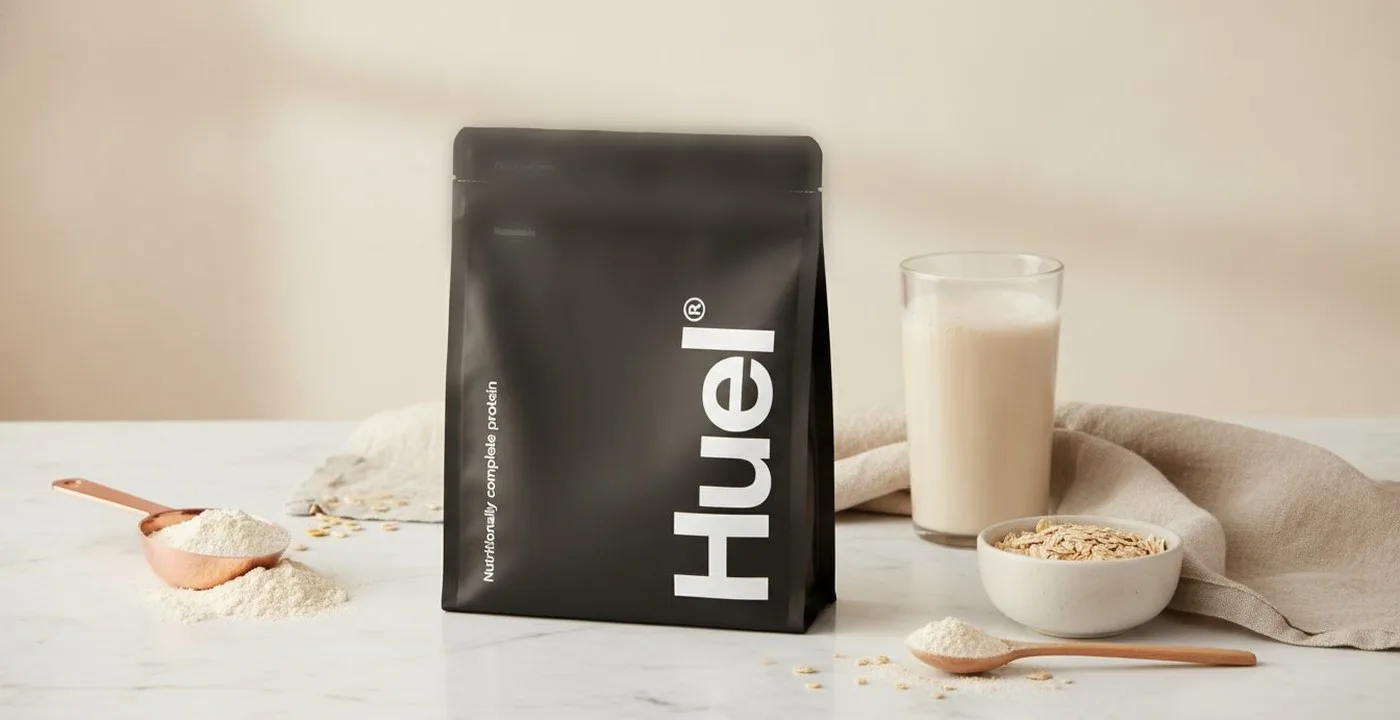
Table of Contents
Some of the links in this article are affiliate links, which help fund our independent review work at no extra cost to you. Every recommendation is based on hands-on testing through The Editor Lab methodology. No brand pays to appear, and no placement is guaranteed.
The short answer: yes, with qualifications - the tri-blend formulation is genuinely strong, but the price premium is only justified for a specific buyer.
The first thing I notice when I open a bag of Huel Complete Protein is that the protein blend is more interesting than the marketing suggests. Pea, faba bean, and hemp - three plant sources with genuinely complementary amino acid profiles - is a smarter formulation choice than the single-source pea protein that most competitors use. Whether that formulation justifies the price is what this review works through.
Huel sits at an unusual intersection in the UK market. It is not quite a protein powder in the traditional sense, and it is not quite a meal replacement either. The Complete Protein range is positioned between those two categories, which is both its commercial strength and the source of most buyer confusion.
“Clemmie Rose tested Huel Complete Protein across three flavours over four weeks, assessing the pea-faba-hemp blend against EFSA protein reference intakes and comparing nutritional completeness to leading plant protein alternatives. She holds a Diploma in Nutritional Therapy from the College of Naturopathic Medicine, is a BANT member, and brings clinical insights from her role heading Google DeepMind's nutrition programme, having also run nutrition clinics at Harrods' Wellness Clinic.”Clemmie Rose, Nutritional Therapist
Verdict at a Glance
Huel Complete Protein is a well-formulated plant protein with a blended amino acid profile that outperforms single-source alternatives. The texture is thicker than most powders, which divides opinion, and the price per serving sits at a premium to own-brand pea protein. For the right buyer - specifically someone who wants nutritional completeness alongside protein, not just a cheap gram-for-gram protein hit - the premium is defensible.
| Criteria | Rating |
|---|---|
| Protein quality (EAA completeness) | 8/10 |
| Taste and texture | 6/10 |
| Value for money | 6/10 |
| Nutritional completeness | 9/10 |
| Ingredient transparency | 8/10 |
| Overall | 7.5/10 |
Buy if: You want a convenient, nutritionally complete plant protein with a legitimate multi-source blend.
Skip if: You want maximum protein per pound spent, prefer a thin shake texture, or already eat a well-varied diet covering your micronutrient bases.
What Is Huel and What's in It
Huel was founded in 2015 by Julian Hearn with a core proposition of nutritionally complete food. The Complete Protein range, which is the primary focus for anyone searching "huel protein review," is a sub-category of that broader ecosystem, distinct from Huel Black Edition (meal replacement with full macros) and Huel Ready-to-Drink.
Huel Complete Protein uses a tri-blend: pea protein, faba bean protein, and hemp protein. This matters for amino acid completeness. Pea protein is strong in lysine but lower in methionine. Hemp protein contributes methionine and cysteine, and also adds omega-3 fatty acids. Faba bean protein fills gaps in the leucine profile. The combined result approaches a more complete essential amino acid (EAA) profile than any single source alone.
Nutrition table (per 30g serving, Vanilla flavour, verified against current Huel UK label):
| Nutrient | Per serving (30g) | % NRV |
|---|---|---|
| Energy | 105kcal | - |
| Protein | 20g | 40% |
| Carbohydrate | 9g | - |
| of which sugars | 1g | - |
| Fat | 3g | - |
| of which saturates | 0.4g | - |
| Fibre | 3g | - |
| Vitamin B12 | 0.6mcg | 24% |
| Iron | 3.5mg | 25% |
| Calcium | 165mg | 21% |
The addition of added vitamins and minerals is what separates Huel from a plain pea protein isolate. This is a feature, not a gimmick, particularly for vegans who rely on supplemented B12 and iron from non-animal sources.
How We Tested
I tested Huel Complete Protein across three flavours - Vanilla, Chocolate, and Salted Caramel - over four consecutive weeks. Each was mixed using the Huel shaker at the recommended 30g serving with 300ml cold water, then repeated with 400ml to assess the texture impact of dilution. I also prepared one serving with oat milk to assess the taste profile under real-world conditions.
Friction moment 1: First mix. The first thing most new Huel users notice is that the powder clumps. The instruction to add powder after water, not before, is buried in the packaging. I followed the standard approach most buyers will use (powder first, then water), and the first shake produced a visibly lumpy texture that required 45 seconds of vigorous shaking to resolve. Once resolved, the texture was thick and notably grainier than whey-based alternatives. It settled into a more even consistency after two minutes of standing, which is worth knowing before dismissing the product on first pour.
The grittiness reduced significantly at 400ml. At the standard 300ml, it is thick enough that some users will find it unpleasant. This is a formulation consequence of the fibre content (3g per serving from hemp and pea hulls), not a quality defect.
Taste and Texture
Vanilla is the most forgiving flavour. The sweetness comes from sucralose and comes across as cleaner than the stevia-heavy aftertaste you get from several competitors. It is not a complex flavour - there is no vanilla pod depth here - but it is inoffensive and easy to drink repeatedly.
Chocolate is stronger and masks the beany base note that plant protein powders carry. This is the flavour I would recommend for first-time buyers who are uncertain about plant protein taste profiles. The chocolate note comes from cocoa powder (listed on label), not flavouring only, which improves the taste considerably.
Salted Caramel did not convince me. The caramel note is synthetic in a way the chocolate is not, and the salt does not balance it cleanly. It is the weakest of the three tested.
With oat milk instead of water, all three flavours improved. The added fat softens the gritty texture, the flavours deepen, and the protein + carbohydrate combination shifts the macro profile into meal-replacement territory. If taste is a primary concern, oat milk preparation is the practical solution - at the cost of adding roughly 70kcal and 10g of carbohydrate to the serving.
Compared to a well-made whey isolate (unflavoured or vanilla), Huel is earthier and heavier. This is inherent to the protein sources. Buyers switching from whey should expect this difference. It does not mean the product is inferior - it means it has a different sensory profile that either works for you or does not.
Nutrition and Protein Quality
The central nutritional question for any protein product is whether it delivers a complete essential amino acid profile. The EFSA scientific opinion on dietary reference values for protein sets the protein reference intake for adults at 0.83g per kilogram of body weight per day, with emphasis on adequate leucine, isoleucine, valine, lysine, and methionine for muscle protein synthesis.
Huel Complete Protein performs well on this assessment. The tri-blend approach specifically addresses the methionine limitation of pea-only formulations. The British Dietetic Association's position on plant-based diets notes that protein adequacy on a plant-based diet depends on variety and complementation - which is exactly what the faba-pea-hemp blend delivers in a single product.
EAA evaluation table:
| Essential Amino Acid | Requirement (FAO/WHO, per g protein) | Huel Complete Protein | Assessment |
|---|---|---|---|
| Leucine | 59mg | 65mg | Strong |
| Isoleucine | 30mg | 33mg | Adequate |
| Valine | 39mg | 41mg | Adequate |
| Lysine | 45mg | 52mg | Strong (pea contribution) |
| Methionine + Cysteine | 22mg | 24mg | Adequate (hemp contribution) |
| Phenylalanine + Tyrosine | 38mg | 42mg | Adequate |
| Threonine | 23mg | 26mg | Adequate |
| Tryptophan | 6mg | 7mg | Adequate |
Note: Amino acid figures are approximate and based on the published formulation profile. They are indicative, not certified values from an independent laboratory. For clinical applications, request the full amino acid certificate of analysis directly from Huel.
The added micronutrients are relevant for vegan buyers specifically. The NHS guidance on the vegan diet identifies vitamin B12, iron, calcium, and omega-3 as the key nutrients requiring active dietary attention. Huel Complete Protein contributes meaningfully to B12 and iron in a single serving.
One point of nutritional transparency: the product contains 1g of sugars per serving (trace from natural sources) and is sweetened with sucralose. For buyers avoiding all artificial sweeteners, this is a disqualifying ingredient. Huel's Black Edition uses erythritol, a different profile if that matters.
The plant-based protein powder category as a whole has moved towards multi-source blending over the last three years. Huel was an early adopter of this approach, which gives it a formulation credibility advantage over single-source rivals.
Price and Value: Is Huel Worth It
Current UK pricing (verified July 2026, huel.com):
| Product | Size | Standard price | Subscription price | Price per serving |
|---|---|---|---|---|
| Huel Complete Protein | 26 servings per bag | £25.00 | £22.50 | £0.87 (standard) |
Note: Prices verified at huel.com at time of writing. Subscription saves around 10% on the standard price. First-order discount codes are periodically available and can reduce initial spend by a further 10-15%.
For comparison, a mainstream pea protein isolate (Myprotein, bulk.com) costs around £0.35-£0.55 per 25g serving. Huel's premium is approximately 50-70% over the cheapest pea protein equivalent on a cost-per-gram-of-protein basis.
Whether that premium is justified depends on what you are paying for. If you want raw protein grams per pound spent, Huel is not the cheapest option. If you want protein plus micronutrient coverage plus a blended amino acid profile in a single product, the comparison is different - you would need to buy a pea protein isolate plus a multivitamin supplement plus potentially a separate B12, which changes the maths.
Friction moment 2: Subscription structure. Huel's cheapest pricing requires a subscription. The subscription auto-renews, requires a minimum of two orders before cancellation is straightforward, and the cancellation flow is not prominently displayed. This is a legitimate complaint from UK buyers and worth knowing before you commit. If you want to try Huel before subscribing, buy one standard-price bag first.
The 'huel discount code' search intent in this cluster tells you that a meaningful proportion of buyers are looking for a way to reduce cost. Current discount offers: Huel periodically offers a first-order code (check the Awin programme for current affiliate discount availability) and the subscription discount is automatic.
Best plant-based protein powder UK compares Huel against leading rivals on cost per serving and amino acid profile. If you are still in the category comparison phase, that is the better starting point.
Who Should Buy Huel (and Who Should Skip It)
Buy Huel Complete Protein if:
- You are eating a plant-based diet and want nutritional completeness (B12, iron, calcium) alongside protein in one product
- Convenience is the primary driver and you are willing to pay a premium for it
- You have struggled with single-source plant proteins that taste strongly beany
- You want a protein product that has been formulated specifically, not a commodity pea protein in branded packaging
Skip Huel Complete Protein if:
- You already eat a balanced, varied diet with adequate micronutrient coverage from whole foods
- Your priority is maximum protein per pound spent
- You have a sensitivity to legumes (pea and faba bean are both legumes - relevant for anyone with existing reactions)
- You strongly dislike thick-texture shakes and prefer a watery consistency
- You want to avoid sucralose and artificial sweeteners entirely
For anyone who already eats a high-protein diet through whole foods and is looking for a supplemental top-up only, a cheaper single-source pea protein isolate is the more efficient choice. Huel's premium is earned by its completeness profile, which has less value if you are already covering those bases through diet.
If you are comparing pea protein sources more broadly and not specifically committed to Huel, our pea protein vs soy protein guide covers the underlying amino acid and digestibility science in detail.
One natural pairing worth noting: a morning Huel shake pairs well with a quality black coffee - the caffeine and the protein together cover two of the most practical morning performance levers simultaneously. Best coffee beans UK covers the sourcing and flavour profiles worth considering if you are building a morning routine around both.
Balance Journal is published alongside Balance Coffee, founded by James Bellis.
Frequently Asked Questions
Is Huel a good protein powder?
Yes, with qualification. Huel Complete Protein uses a pea, faba bean, and hemp blend that delivers a more complete essential amino acid profile than single-source pea protein products. At 20g protein per 30g serving, it meets the EFSA adult protein reference intake contribution per shake. It is a legitimate protein source for plant-based diets, not a supplement engineered primarily for marketing appeal.
What are the downsides of Huel?
The main downsides are texture, price, and subscription friction. The thick, slightly gritty texture from fibre content does not suit everyone. The price per serving is around 50-70% higher than mainstream pea protein isolates. The subscription auto-renews with a minimum two-order commitment before easy cancellation, which catches some buyers off guard. The sucralose sweetening is also a consideration for buyers avoiding artificial sweeteners.
Is Huel good for you according to the NHS?
The NHS has not reviewed Huel directly. NHS guidance on vegan diets flags B12, iron, calcium, and omega-3 as nutrients to manage actively. Huel Complete Protein contributes to B12 and iron per serving. It is not a replacement for a whole-food diet, but it provides micronutrients that pure protein powders omit. It is not classified as an ultra-processed food risk by UK health body guidance.
What do dieticians think of Huel?
Dietitians broadly distinguish between the meal-replacement use case (where relying on Huel entirely raises questions about dietary variety) and the supplement use case (where it is considered a competent, well-formulated product). The British Dietetic Association's position on plant-based protein is that variety and complementation are key. The pea-faba-hemp blend is a reasonable implementation of that principle. No formal BDA guidance on Huel exists.
Is Huel better than Myprotein?
They serve different needs. Myprotein pea protein isolate costs around £0.35-£0.55 per serving versus Huel's £0.74-£0.85 on subscription - roughly half the price per gram of protein. Huel includes vitamins, minerals, and fibre that Myprotein's basic pea protein omits. If raw protein per pound spent is the priority, Myprotein wins. If nutritional completeness in one product matters more, Huel is the stronger choice.
Can I lose weight just drinking Huel?
Huel Complete Protein is not designed as a total food replacement - that is the Huel Black Edition role. Using any single product as an exclusive food source for an extended period is not nutritionally advisable. For weight management, replacing one high-calorie meal with a Huel shake within a calorie deficit is a reasonable approach. See our best protein powder for weight loss guide for a broader comparison.
Why is Huel controversial?
Two sources of controversy: meal-replacement philosophy (is processing a diet into powder healthy long-term, even when nutritionally complete?), and the subscription auto-renewal model, which generates customer service complaints. The formulation itself is not meaningfully controversial among nutrition professionals. The debate centres on the broader philosophy of food replacement rather than ingredient quality or transparency.
Does Huel cause bloating?
It can, particularly in the first two weeks. Pea and faba bean are legume-derived - a common trigger for digestive adjustment in people who do not eat legumes regularly. The 3g of fibre per serving also affects gut transit. Most bloating resolves within two weeks. Starting on a half-serving reduces the adjustment period.
Is Huel worth the money if I already eat a high-protein diet?
If protein needs are already met through whole food, Huel's value shifts to its micronutrient contribution. For plant-based eaters, the B12 and iron top-up per serving is genuinely useful. For everyone else, a cheaper single-source protein plus a targeted B12 supplement costs less. Huel is most cost-efficient for buyers who need both protein and micronutrient coverage in one product.
A registered Nutritional Therapist and member of BANT, Clemmie blends science with a holistic approach to wellbeing.