Best Liquid Collagen UK 2026: Shots and Drinks Reviewed
Judged on evidence over marketing. Here are the ones that deliver.
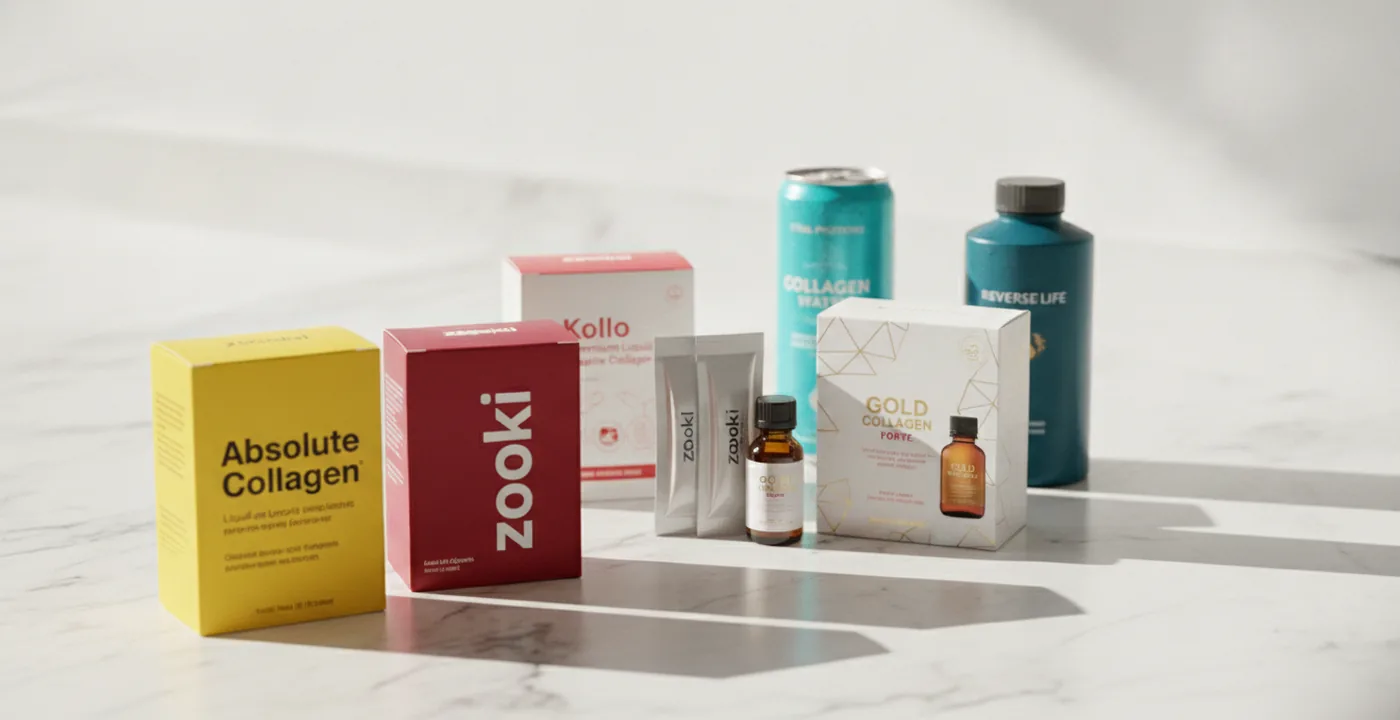
Table of Contents
Some of the links in this article are affiliate links, which help fund our independent review work at no extra cost to you. Every recommendation is based on hands-on testing through The Editor Lab methodology. No brand pays to appear, and no placement is guaranteed.
A typical liquid collagen shot contains 10,000mg of hydrolysed collagen per sachet and costs between £2.50 and £3.50 a day. That same 10g of collagen peptides in powder form costs between 30p and 70p. You are paying a premium of roughly four to eight times the price for the liquid format. Whether that premium is worth it is the only question that matters in any honest review of the best liquid collagen UK products. Proto-col sells marine collagen as both a drink and capsules at very different doses, and our Proto-col collagen review compares the two.
Clemmie Rose is a registered Nutritional Therapist, having led the nutrition clinic at The Kyros Project with Google DeepMind, and she has assessed each of the liquid collagen shots in this roundup. Her assessment focuses on what the evidence supports: peptide dose per serving, the type of collagen used, added actives (vitamin C, hyaluronic acid), sugar content, and cost-per-gram of peptides. The results are not always what the marketing implies.
“Two of the six shots delivered a clinically relevant dose with useful added actives at a defensible cost-per-gram. The absorption advantage of liquid over powder is not supported by the evidence.”Clemmie Rose, Registered Nutritional Therapist
Editor's Note
Clemmie Rose holds a Diploma in Nutritional Therapy from the College of Naturopathic Medicine and is a BANT-registered member. She has run nutrition clinics at Google DeepMind's Kyros Project and at The Wellness Clinic at Harrods. She is a nutritionist and wellness contributor to Balance Journal. Each product was assessed across five criteria (dose, collagen type, actives, sugar, cost-per-gram).
Balance Journal is published alongside Balance Coffee, founded by James Bellis.
How We Ranked
Six liquid collagen products were assessed at standard UK retail prices. No samples were accepted from brands for this review.
Products were scored across five criteria:
Peptide dose per serving. The threshold for evidence-based skin benefit in published research is 2.5-10g of hydrolysed collagen peptides daily, with most studies using 5-10g. Any product delivering below 2.5g per serving is under-dosed by clinical standards.
Collagen type and source. Marine collagen (type I) is most relevant for skin. Bovine collagen provides both type I and type III. Products were checked for sourcing transparency and third-party testing claims.
Added actives. Vitamin C is a cofactor in collagen synthesis; without it, dietary collagen cannot be incorporated effectively. Hyaluronic acid is a common addition with modest evidence for skin hydration. Products with meaningful doses of cofactors were rated higher.
Sugar content. Several liquid collagen products use flavouring that adds meaningful sugar per serving. The lower the sugar per sachet, the better.
Cost per gram of peptides. This is the single most useful comparison metric and the one most roundups omit. A product charging £3.00 per 10g sachet delivers peptides at £0.30/g. A powder delivering the same dose for £0.60 costs £0.06/g. That gap is real.
Shop from the Top 3 Liquid Collagen Brands

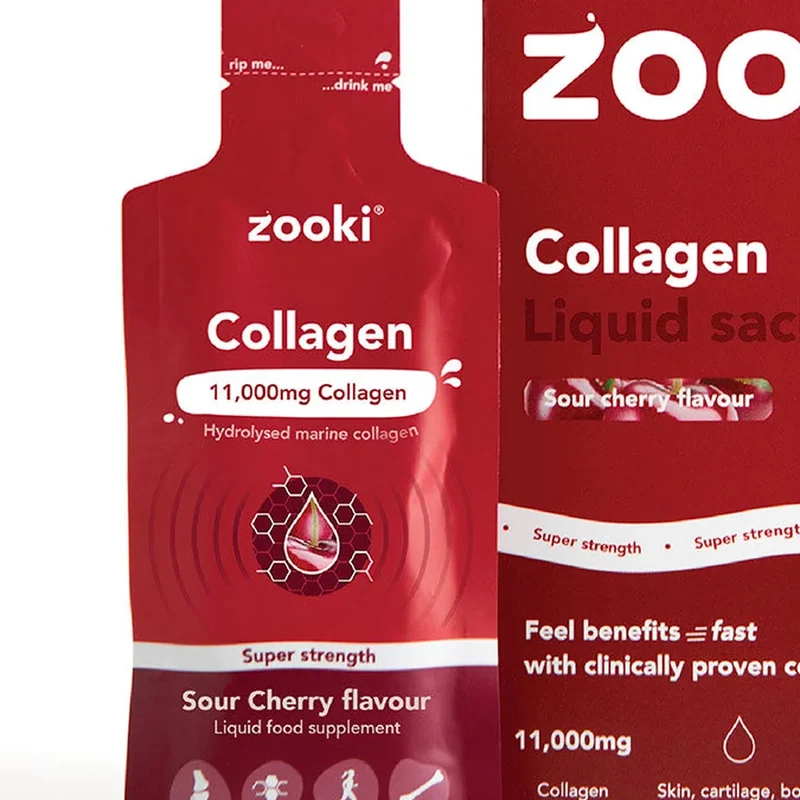
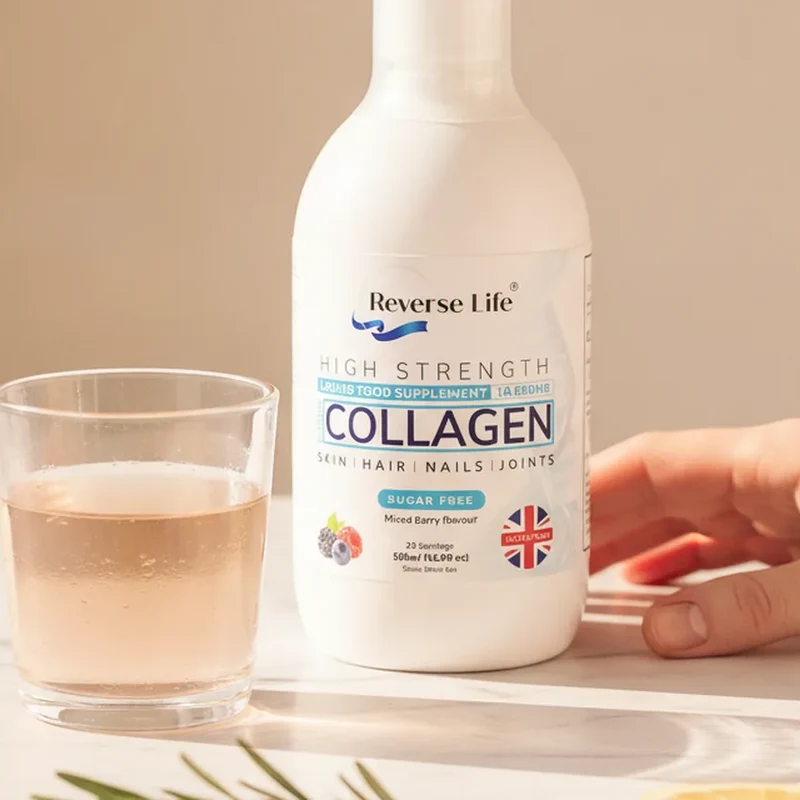
The top three picks above were chosen on peptide dose, cofactor inclusion, and cost-per-gram of collagen peptides. All three deliver 10,000-11,000mg per serving, which sits within the evidence-based range for skin and joint benefit. What separates them from the other three products in this roundup is transparency on dose and the presence of vitamin C as a collagen-synthesis cofactor. A product that meets the dose threshold and includes vitamin C is giving you the two things the research requires.
Liquid Collagen vs Powder: What the Evidence Says
The claim you will see on most liquid collagen marketing is that liquid 'absorbs better' or is 'more bioavailable' than powder. This is not supported by the published evidence. Hydrolysed collagen peptides - whether delivered in a liquid shot or dissolved powder - are broken down in the same way during digestion. The molecular structure of a hydrolysed peptide is identical regardless of whether it arrives dissolved in water or as a dry powder you mix yourself.
A 2015 study published in the Journal of Cosmetic Dermatology (Asserin et al.) assessed skin moisture and the dermal collagen network following hydrolysed collagen peptide supplementation, and a 2019 systematic review by Choi FD et al. in the Journal of Drugs in Dermatology both assessed hydrolysed collagen peptide supplementation for skin outcomes. Neither found evidence that delivery format (liquid versus powder) affected absorption or efficacy when the peptide dose was equivalent. The NHS guidance on vitamin C also confirms that vitamin C is essential for collagen synthesis, which is why cofactor inclusion is weighted in this review. The EFSA scientific opinion on collagen hydrolysate found insufficient evidence to substantiate collagen-specific health claims, which is why dose and cofactor criteria matter more than branded efficacy promises.
What liquid does offer is genuine convenience. A sachet requires no measuring, no mixing, no blender. It is ready to consume. If that convenience is what translates consistent daily use for you - and consistency is the single most important variable in collagen supplementation outcomes - then the premium can be justified. If you are comfortable measuring and mixing, powder will deliver the same dose at a fraction of the cost.
The honest summary: you are paying for convenience and palatability, not superior absorption. That can be a reasonable trade, but it should be a conscious one.
Top 6 Liquid Collagen UK Products: Detailed Reviews
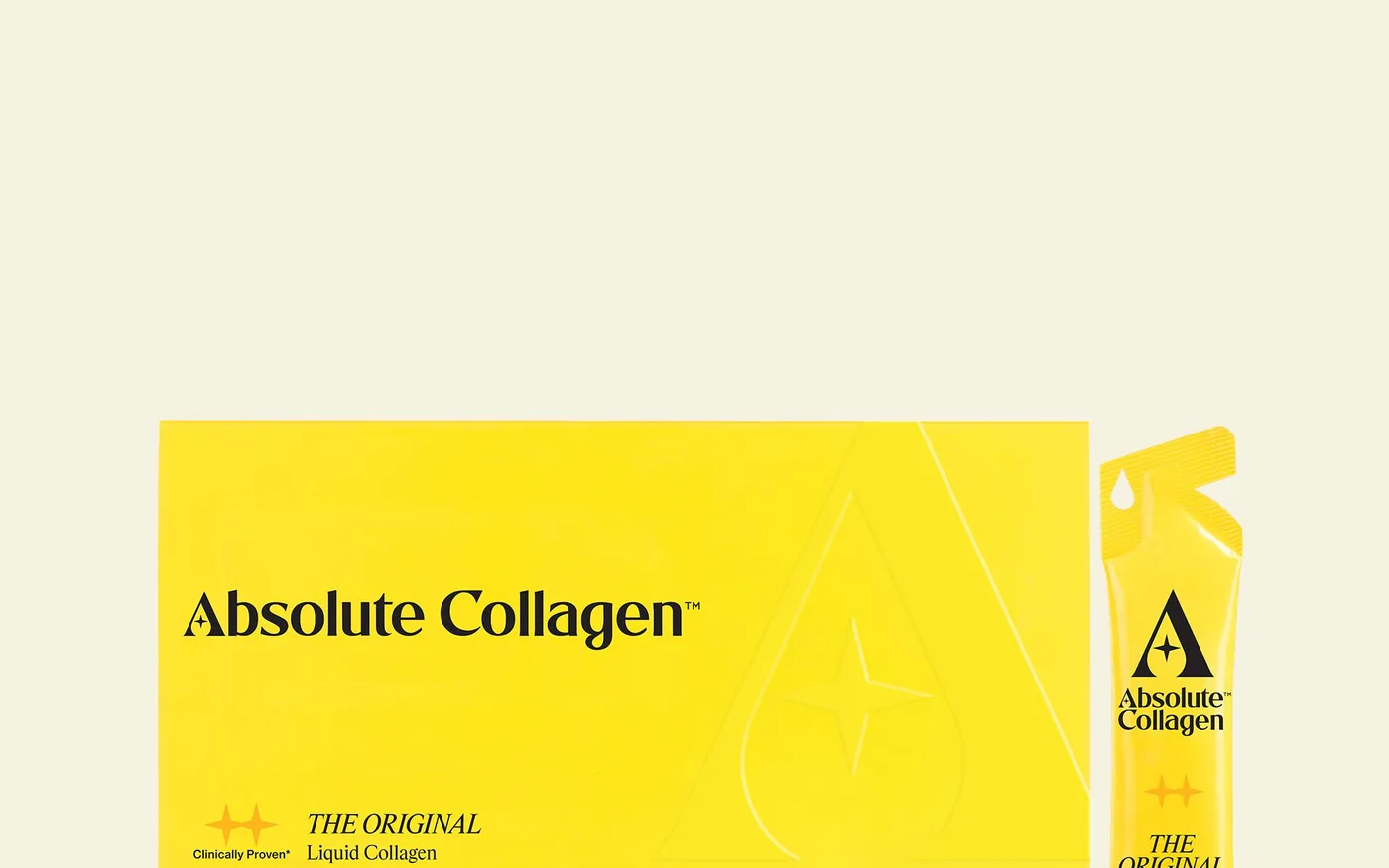
1. Absolute Collagen - Best Overall
Absolute Collagen occupies the position of market leader in UK liquid collagen, and the ranking holds on the criteria that matter most. Each 10ml sachet delivers 8,000mg of hydrolysed marine collagen alongside 56mg of vitamin C. The vitamin C inclusion is important: collagen synthesis requires adequate vitamin C as a cofactor, and products that omit it are asking your body to source it elsewhere. The dose at 8,000mg sits at the lower end of the 8,000-10,000mg range used in most published skin studies, but it is within the evidence-based window.
The sachet is unflavoured and does not require dilution. Sugar content is 0g per sachet. Cost per gram of peptides, at roughly £0.30/g on the monthly subscription, is high relative to powder but competitive within the liquid category.
The main limit is the dose ceiling at 8,000mg rather than 10,000mg. For most users the difference is unlikely to be clinically meaningful, but if maximum dose per serving is your priority, Zooki edges ahead.
“Absolute Collagen gets the fundamentals right: a meaningful dose, vitamin C included, zero sugar, and an unflavoured formula. That combination is what holds its position as the benchmark.”
| Evaluation Criteria | Our Findings |
|---|---|
| Full review | Absolute Collagen Review (link when live) |
| Best for | Ease of use and reliable dose with cofactor |
| Flagship product | Absolute Collagen Liquid Sachet 8,000mg |
| Shop | Amazon UK |
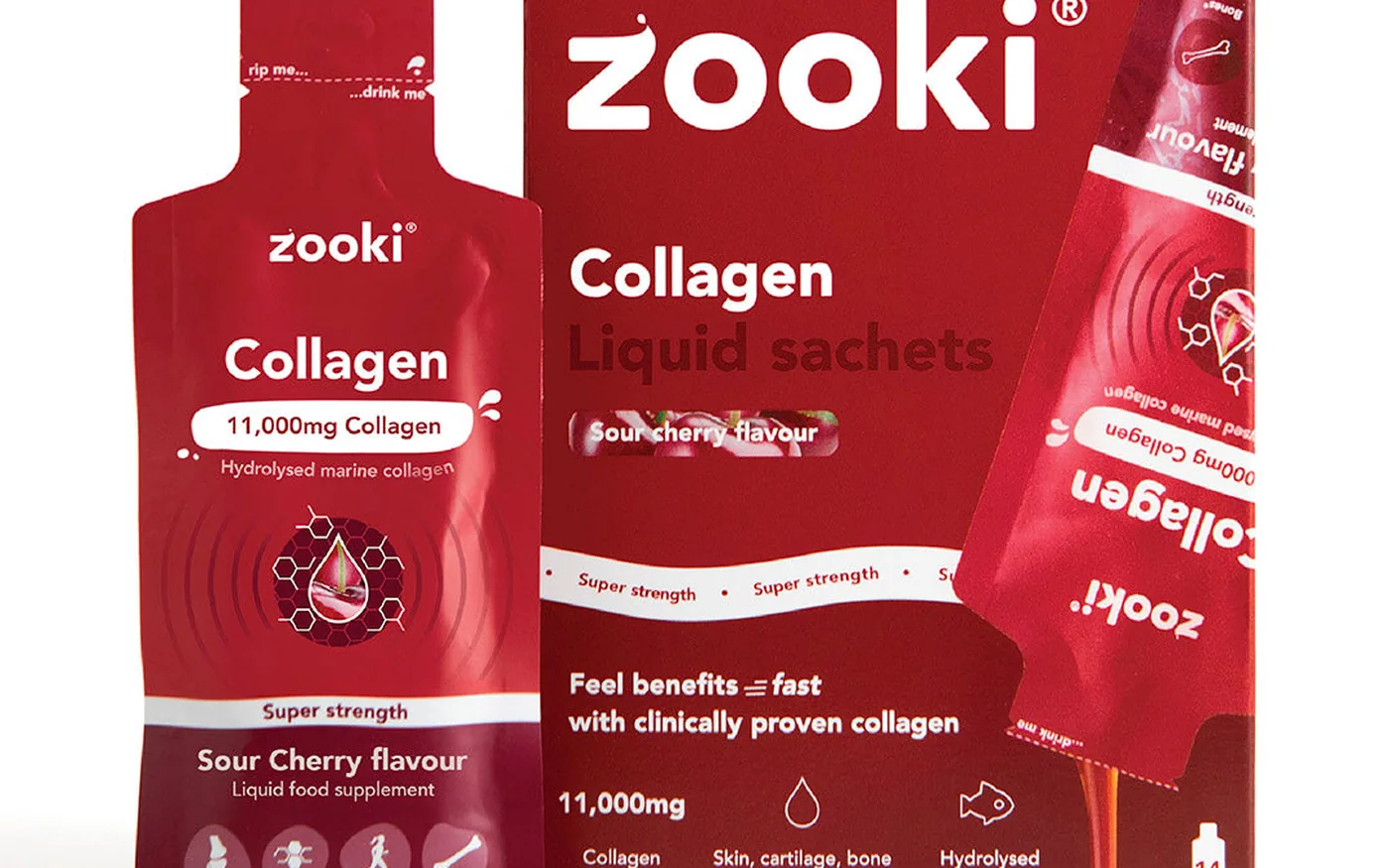
2. Zooki - Best for Maximum Peptide Dose
Zooki's Super Strength Collagen sachets deliver 11,000mg of hydrolysed marine collagen per serving, the highest dose in this roundup. Zooki hydrolyses the peptides to under 10 kilodaltons, a low molecular weight that the brand says improves absorption. This is standard hydrolysed collagen, not a liposomal product. The dose needs no qualification: 11,000mg is well above the threshold used in skin outcome studies.
Each sachet includes 40mg of vitamin C, the collagen-synthesis cofactor. There is no added sugar, and it comes in several fruit flavours.
Cost per gram of peptides is around £0.25/g on subscription, fractionally better than Absolute Collagen on a dose-adjusted basis. The headline price per sachet is slightly higher, but when you account for the dose difference, Zooki delivers more peptides per pound spent.
The reason to choose Zooki is the dose: more peptides per sachet than anything else here.
“The dose is the point. 11,000mg of low molecular weight peptides per sachet is why Zooki earns its second-place position.”
| Evaluation Criteria | Our Findings |
|---|---|
| Full review | Zooki Collagen Review (link when live) |
| Best for | Maximum peptide dose with cofactor |
| Flagship product | Zooki Super Strength Marine Collagen 11,000mg |
| Shop | Amazon UK |
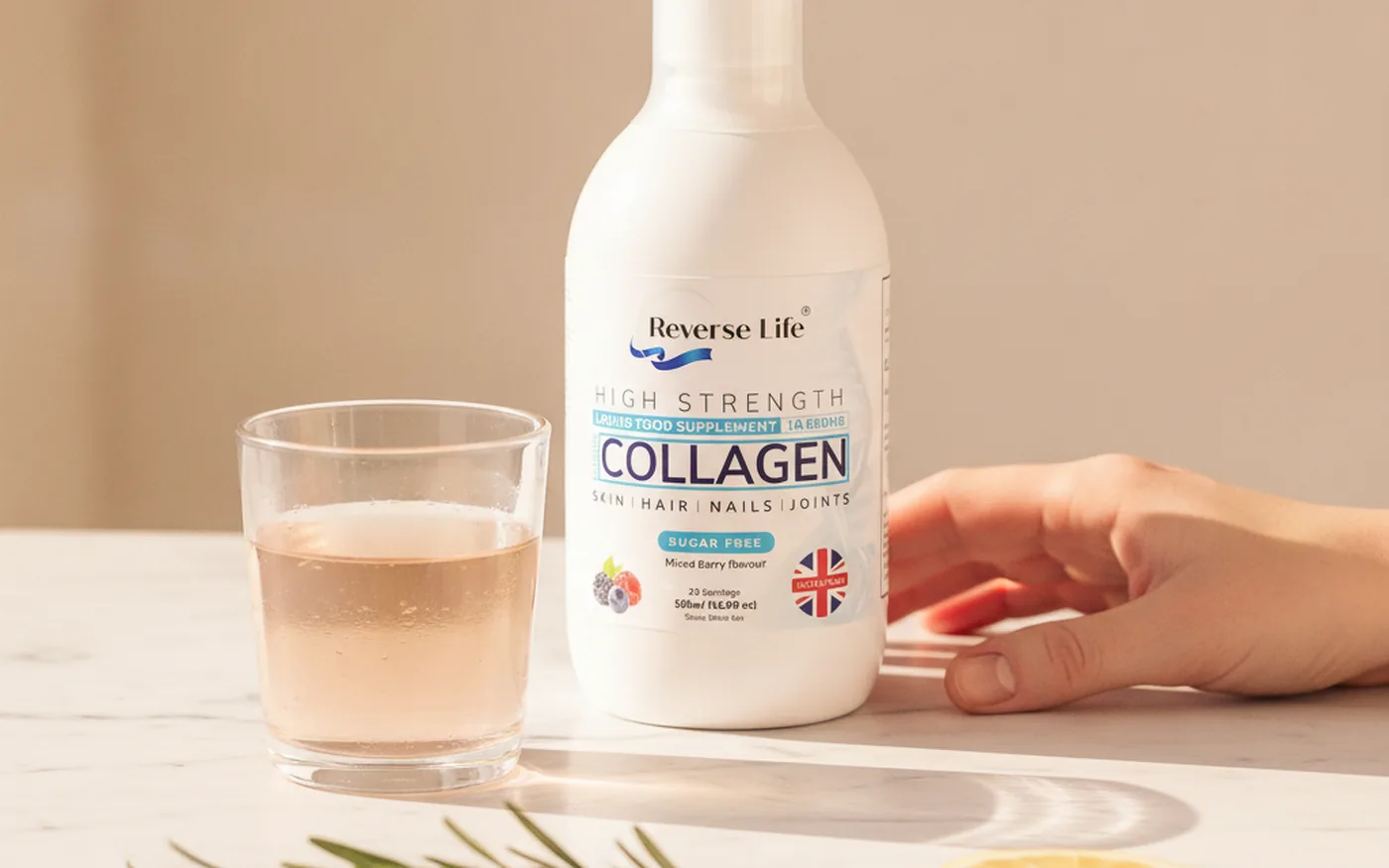
3. Reverse Life - Best Value Per Gram
10,000mg of hydrolysed marine collagen per 25ml bottle, at a lower per-serving cost than Absolute Collagen or Zooki. Reverse Life is the most visible liquid collagen brand on SERP for reasons that are partly marketing and partly substantive: the dose is real, the price is competitive, and the product has accumulated significant consumer reviews.
What keeps it in third place rather than first is the absence of vitamin C in the formula. For a product at this price point, excluding the primary collagen-synthesis cofactor is a meaningful gap. You can supplement vitamin C separately, but that adds complexity and cost that undercuts the convenience argument for liquid collagen.
Sugar content is low (under 1g per serving).
“The dose is right and the cost-per-gram is the best in the top tier. The missing vitamin C is the gap that drops it to third place.”
| Evaluation Criteria | Our Findings |
|---|---|
| Full review | Reverse Life Collagen Review (link when live) |
| Best for | Value per gram of peptides |
| Flagship product | Reverse Life Marine Collagen 10,000mg |
| Shop | Amazon UK |
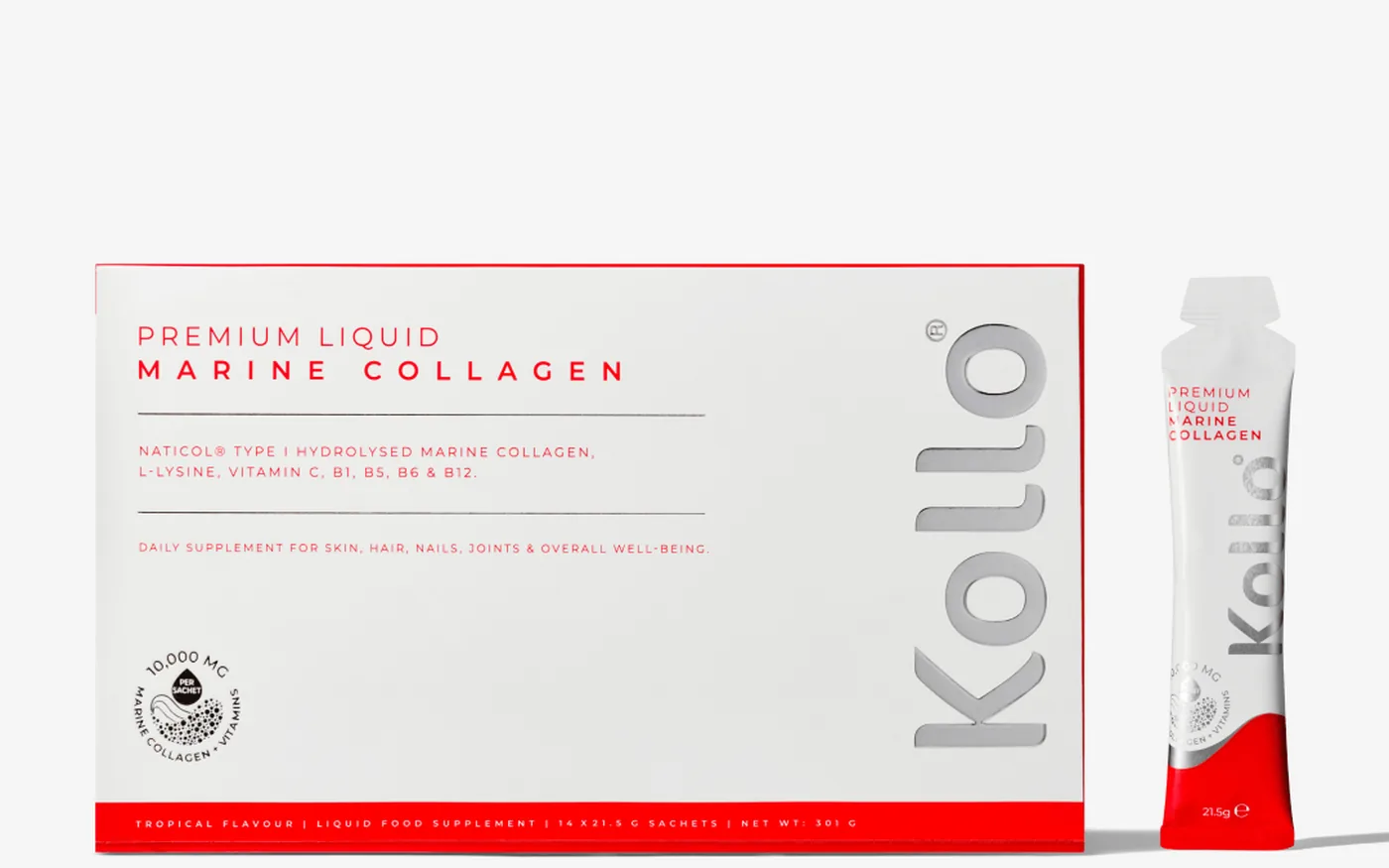
4. Kollo - Best for Vitamin C Content
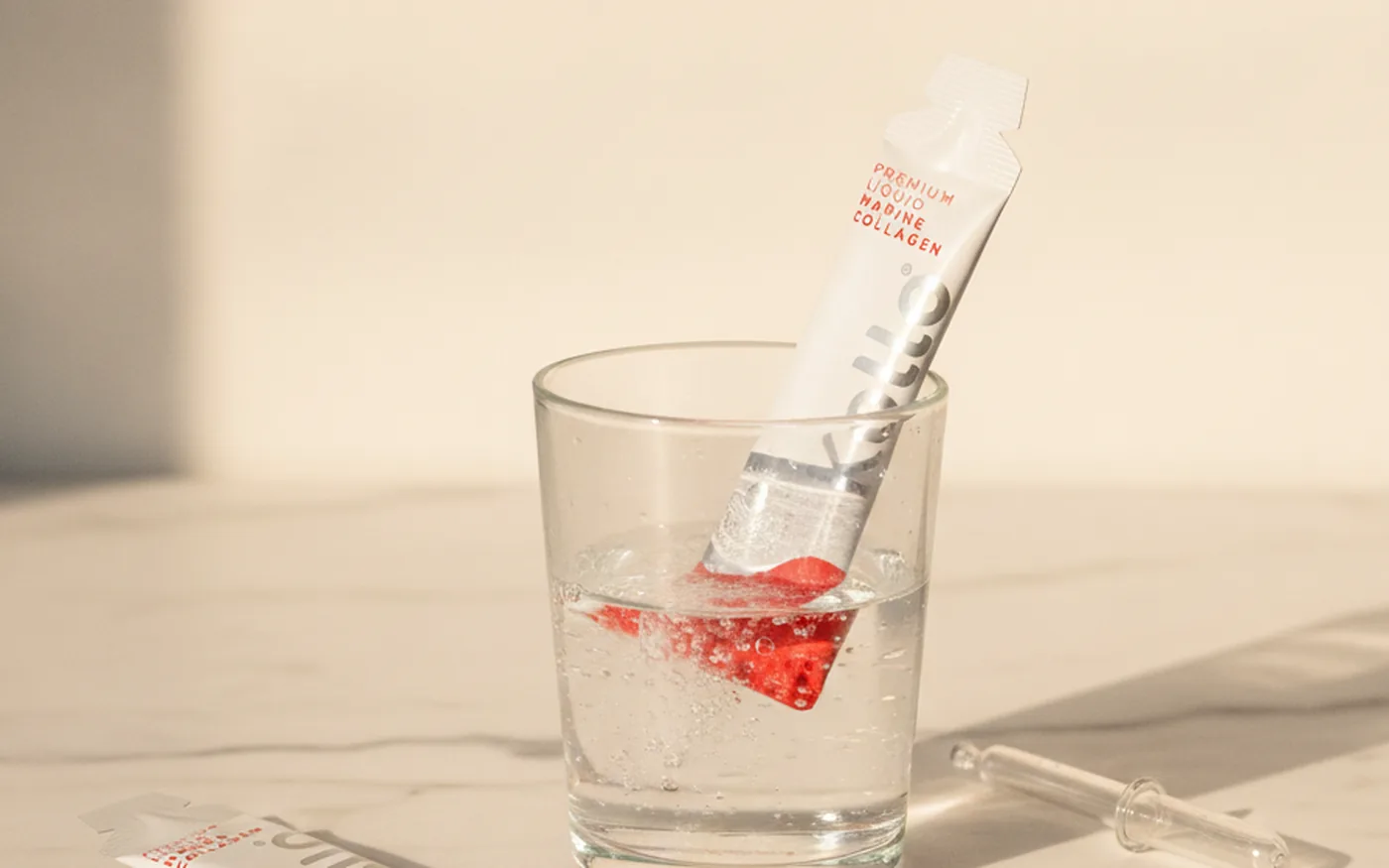
100mg of vitamin C per sachet is the highest cofactor dose in this roundup. Kollo's formula pairs this with 10,000mg of marine collagen plus B vitamins (B1, B6, B12) and biotin, making it the most nutritionally comprehensive of the six products here.
The complexity cuts both ways. The additional ingredients are not harmful, but the evidence base for their additive benefit above a well-dosed collagen-plus-vitamin-C formula is limited. You are paying for a broader formula, not necessarily a more effective one for collagen-specific outcomes.
Cost per gram of peptides is the highest in this roundup, reflecting the formula complexity.
“Kollo gets the cofactor right and goes further with the B vitamins. For collagen specifically, the 10,000mg plus 100mg vitamin C is what matters.”
| Evaluation Criteria | Our Findings |
|---|---|
| Full review | Kollo Review (link when live) |
| Best for | Comprehensive formula with highest vitamin C dose |
| Flagship product | Kollo Marine Collagen Liquid Sachet |
| Shop | Amazon UK |
5. Gold Collagen - Best for Hair and Nail Focus
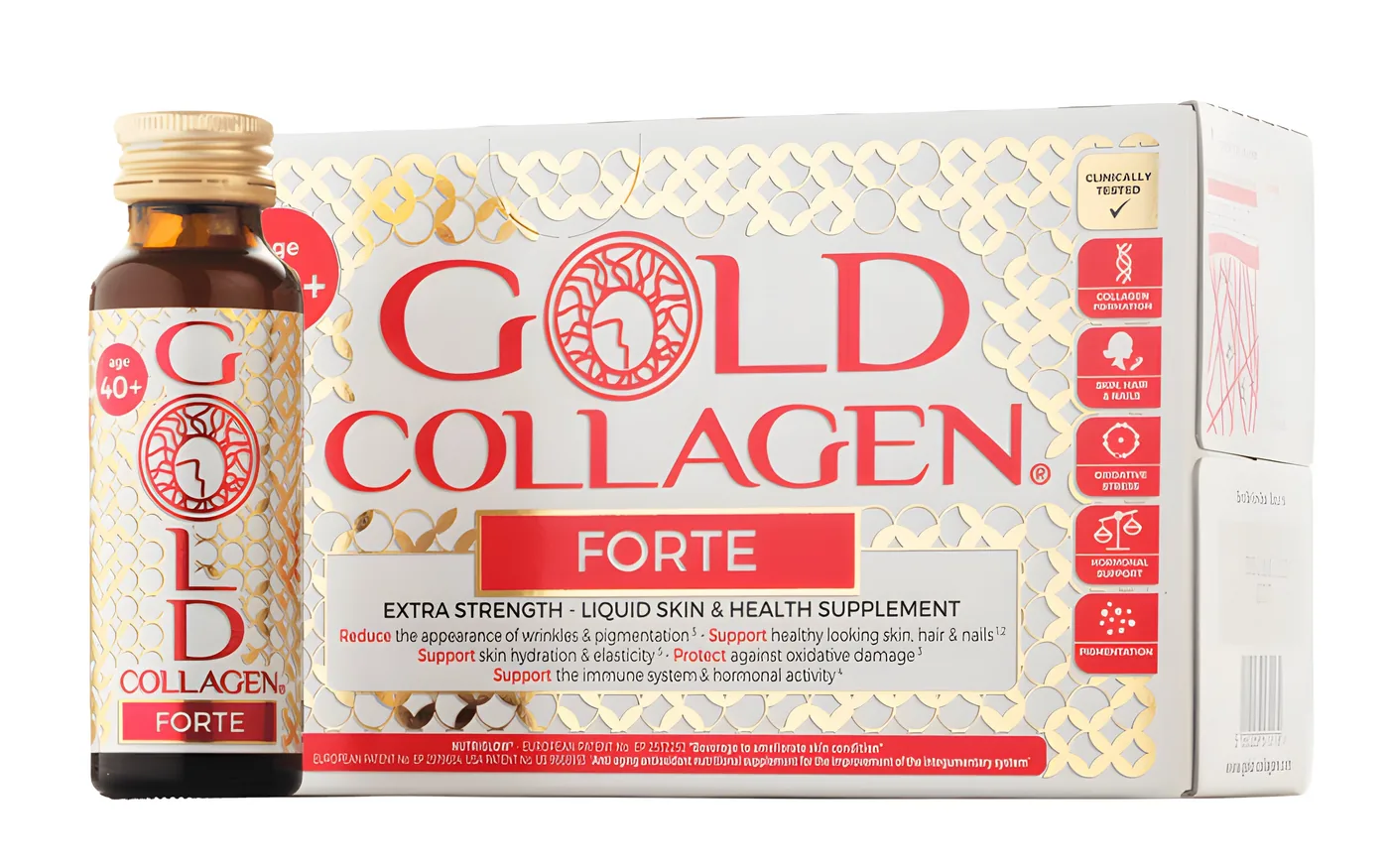
The broadest ingredient matrix in this roundup comes at a cost: 5,000mg of collagen per bottle, the lowest dose here. Gold Collagen's formula adds vitamin C, hyaluronic acid, and zinc - a thoughtful active profile - but the dose sits at the lower boundary of published skin study ranges and below the 8,000-10,000mg window where the stronger evidence sits.
The 5g dose may still deliver benefit at consistent daily use, but the cost-per-gram of peptides is poor relative to the competition: you are paying a premium for the broader ingredient matrix at a lower collagen dose.
For users who want the broadest beauty supplement in one shot and are not purely focused on maximising peptide dose, Gold Collagen is a viable choice. For anyone primarily focused on collagen dose optimisation, the maths does not favour it.
“The ingredient matrix is broad and the actives are thoughtful. The 5,000mg dose relative to the per-sachet price means the cost-per-gram of peptides is the worst in this roundup.”
| Evaluation Criteria | Our Findings |
|---|---|
| Full review | Gold Collagen Review (link when live) |
| Best for | Broad beauty-focused formula with multiple actives |
| Flagship product | Gold Collagen Active |
| Shop | Amazon UK |
6. Vital Proteins - Best for Brand Transparency
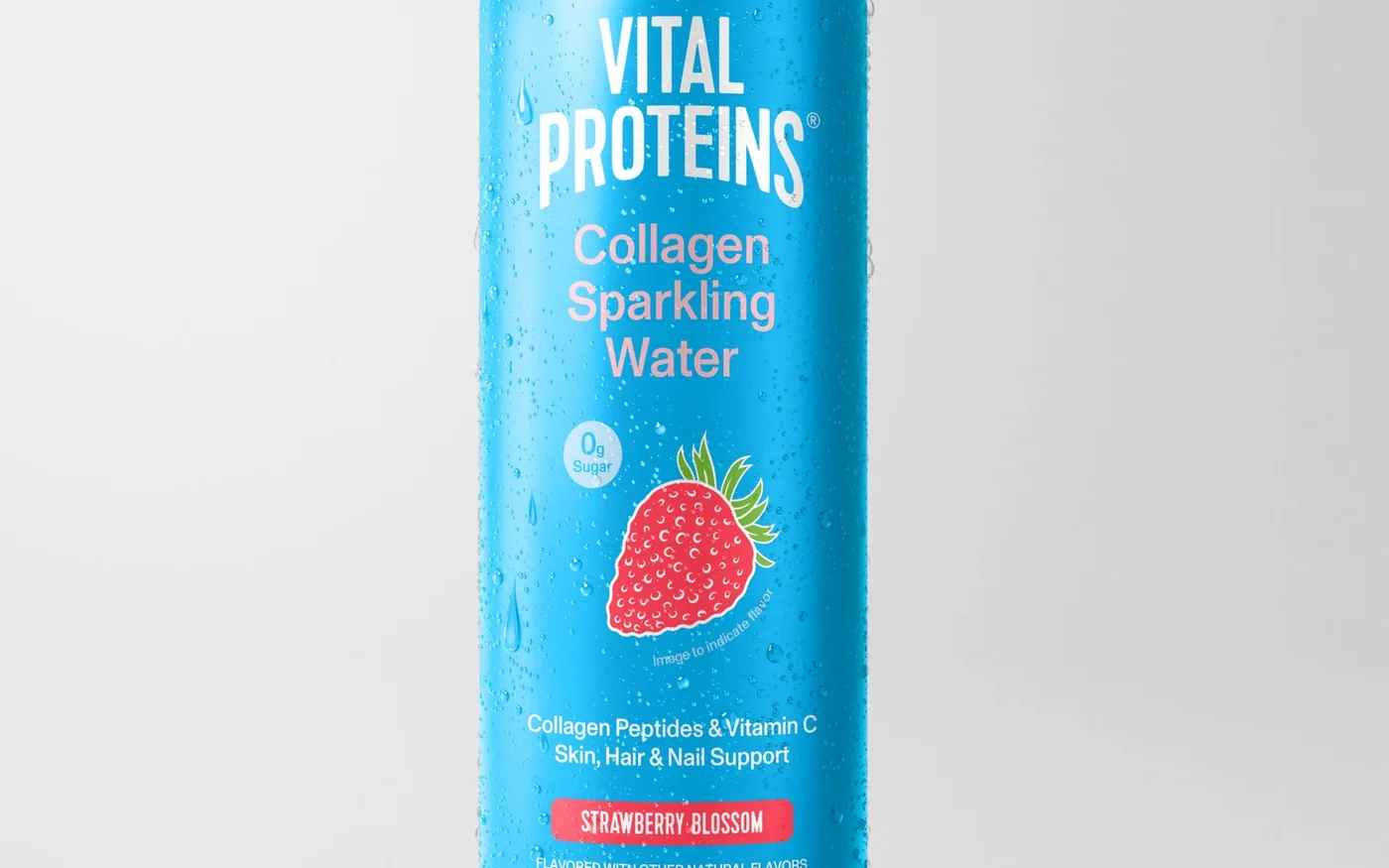
Vital Proteins is primarily known for its powder collagen range, and its liquid products - which include a range of collagen waters and shots - deliver a lower dose than most dedicated UK liquid collagen brands. The collagen water products typically deliver 10-15g per bottle but with less consistent UK availability than the powder formats.
The brand's strength is transparency: Vital Proteins publishes third-party testing results and sourcing information that most competitors do not. For buyers who prioritise verifiable quality over dose-maximisation, this matters.
For UK buyers specifically, Vital Proteins is priced at a level that makes it hard to recommend over Absolute Collagen or Zooki on pure value grounds. The brand's credibility is genuinely strong; the dose-per-price argument for the liquid format in the UK market is weaker.
“Vital Proteins has the strongest quality documentation of any brand in this roundup. The UK pricing and liquid dose make it a difficult value argument against the dedicated UK liquid brands.”
| Evaluation Criteria | Our Findings |
|---|---|
| Full review | Vital Proteins Review (link when live) |
| Best for | Third-party tested transparency |
| Flagship product | Vital Proteins Collagen Water |
| Shop | Amazon UK |
Full Comparison Table
| Brand | Peptide Dose | Collagen Type | Vitamin C | Sugar | Cost/Serving | Cost/g Peptides | Rating |
|---|---|---|---|---|---|---|---|
| Absolute Collagen | 8,000mg | Marine (type I) | 56mg | 0g | around £2.59 | around £0.32/g | 4.6/5 |
| Zooki | 11,000mg | Marine (type I) | 40mg | 0g | around £2.75 | around £0.25/g | 4.4/5 |
| Reverse Life | 10,000mg | Marine (type I) | None | under 1g | around £2.20 | around £0.22/g | 4.1/5 |
| Kollo | 10,000mg | Marine (type I) | 100mg | 0g | around £3.10 | around £0.31/g | 4.0/5 |
| Gold Collagen | 5,000mg | Marine (type I) | Yes | under 2g | around £2.80 | around £0.56/g | 3.6/5 |
| Vital Proteins | 10,000mg+ | Bovine (I + III) | No | 0g | around £3.50 | around £0.35/g | 3.8/5 |

What to Look for (and What to Avoid)
What to look for: A meaningful peptide dose (8,000-10,000mg minimum for skin and joint outcomes), vitamin C as a cofactor (without it, your body cannot synthesise collagen effectively from supplemental peptides), a transparent ingredient list, and a cost-per-gram of peptides you have calculated rather than accepted based on marketing.
Low peptide dose with high price. Any product delivering under 5,000mg of hydrolysed collagen at the price points of the 10,000mg products should be eliminated on value grounds alone.
Vague 'collagen complex' labelling. If the label describes "collagen complex" or "collagen blend" without specifying the gram dose of hydrolysed peptides, that is a dose-concealment signal. Every credible liquid collagen product in the UK states its peptide gram count per serving prominently.
Premium price without added actives. Paying £3+ per day for a collagen shot that has no vitamin C and no hyaluronic acid means you are paying for flavour and packaging, not for a better formula.
Sugar content above 3g per serving. Several liquid collagen products aimed at 'beauty' positioning add meaningful sugar to improve palatability. This is a trade-off worth knowing about.
The cost-per-gram reality check. Take any product's price per sachet and divide it by the gram dose (e.g. 10,000mg = 10g). A £3.00 sachet delivering 10g of peptides = £0.30/g. The equivalent collagen powder delivers 10g for around £0.06-0.09/g. That gap is the convenience premium. If you are comfortable with that trade, go in with open eyes.
How to Take Liquid Collagen
Take liquid collagen consistently every day. Consistency over 8-12 weeks is more important than which brand you choose. The published evidence for skin and joint outcomes from hydrolysed collagen supplementation is based on daily use across 8-12 week periods; studies do not support expecting visible results within days or weeks.
Liquid sachets can be taken at any time of day. There is no evidence that the often-cited 'morning on an empty stomach' timing rule offers any benefit over taking it with a meal. Choose a time that fits your routine, because that is the time you will do it.
If you are taking collagen primarily for joint support, consider pairing it with a best magnesium supplement uk protocol, as magnesium is a cofactor in connective tissue maintenance that many adults are deficient in. If skin outcomes are your primary focus, the cofactor most strongly supported by evidence is vitamin C, which is why this roundup rates products that include it higher.
One note on format selection: if convenience is genuinely the reason you choose liquid over powder, that is a valid reason. If you suspect you will use it more consistently as a shot than as a powder you have to mix, the premium can justify itself in outcomes through sustained daily use. The alternative is purchasing a best collagen powder uk and achieving the same dose at significantly lower cost if you are genuinely willing to mix and measure each day.
If you combine your collagen routine with a daily hydration drink, pairing it with one of the best electrolytes uk options supports the broader hydration and mineral protocol that benefits both skin and connective tissue.
Final Verdict
For most buyers, the decision comes down to dose per pound and cofactor inclusion. Absolute Collagen delivers 8,000mg of marine collagen with vitamin C at around £0.30/g - the benchmark combination at a competitive liquid-category cost. Zooki is the recommendation when maximum dose per serving (11,000mg) matters more than brand familiarity. Reverse Life is the value pick for buyers who are cost-conscious and willing to supplement vitamin C separately.
The wider context: if your primary goal is maximising collagen peptide intake per pound spent, powder remains the more efficient format. The best liquid collagen UK options add convenience and palatability. Whether those are worth four to eight times the cost per gram is a personal calculation, not a scientific one.
For more on collagen supplementation in general, including the evidence for skin, joint, and gut applications, see the collagen supplements guide. If you are comparing liquid versus powder on a budget, the best collagen powder UK roundup covers the powder category in detail.
Frequently Asked Questions
Which is the best liquid collagen to take?
Absolute Collagen is the top pick for most UK buyers: 8,000mg of hydrolysed marine collagen per sachet, vitamin C included, zero sugar, and consistent availability. Zooki is the alternative if you want maximum peptide dose (11,000mg) with vitamin C included. Both are within the dose range used in published skin and joint outcome studies, which is what separates them from the rest of the field.
Is liquid collagen effective?
The active ingredient is hydrolysed collagen peptides, and these show modest but consistent benefit for skin elasticity and hydration in peer-reviewed studies at doses of 5-10g daily taken consistently over 8-12 weeks. The liquid format is not more effective than powder at equivalent doses. What the studies support is the peptide dose and duration, not the delivery format. Liquid collagen works when the dose is right and use is daily over weeks, not days.
Does drinking liquid collagen really work?
It can work, but results are modest and time-dependent. The evidence base - including a systematic review in the International Journal of Dermatology - supports improvements in skin elasticity, hydration, and some joint metrics after 8-12 weeks of consistent daily use at adequate doses. Celebrity marketing implies faster, more dramatic results than the evidence supports. Setting a realistic expectation of eight to 12 weeks at a consistent dose is more accurate than expecting visible changes within a fortnight.
Is liquid collagen better than powder?
No proven absorption advantage exists for the liquid format over powder when the peptide dose is equivalent. Hydrolysed collagen peptides are processed identically by the digestive system regardless of how they arrive. Liquid collagen offers genuine convenience - no measuring, no mixing - and often better palatability. That is a reasonable basis for paying a premium, but it is a convenience premium, not a bioavailability premium.
What is the downside of taking collagen?
The main downsides are cost, the fact that most collagen is derived from marine or bovine sources (no vegan option), and mild gastrointestinal effects (bloating, discomfort) in a minority of users. Collagen is not a replacement for sunscreen if skin protection is your goal. It is also not appropriate to use collagen supplementation as a substitute for investigating a medical cause of hair loss or joint pain with a GP.
Does the NHS recommend collagen?
The NHS does not specifically recommend collagen supplements. NHS guidance on nutrition emphasises a varied diet as the foundation for supporting the body's natural collagen production. This includes adequate protein, vitamin C (from fruits and vegetables), and zinc. Supplemental collagen is not on any NHS recommended list, which does not mean the evidence is absent - it means the NHS has not assessed it as a public health priority.
How much liquid collagen should I take a day?
Most liquid collagen sachets in the UK deliver 8,000-10,000mg (8-10g) of hydrolysed marine collagen per serving, which aligns with the doses used in published efficacy studies. One sachet per day is the standard protocol. Taking more than one does not appear to produce additional benefit based on current evidence. For a full discussion of optimal daily dose across formats, see the how-much-collagen-per-day guide once published.
What collagen does Amanda Holden use?
Amanda Holden has been associated with Absolute Collagen in UK media coverage. Whether any specific endorsement arrangement exists and what terms govern it are not verified in publicly available sources. The more useful question for your own purchase decision is not which celebrity uses a product but what dose that product delivers, whether it includes vitamin C, and what it costs per gram of peptides. On those criteria, Absolute Collagen does perform well, which is why it ranks first in this review on independent merit.
Can you take liquid collagen every day?
Yes. Daily use is the protocol used in published studies and is how the benefits accumulate. There is no evidence of harm from daily use of standard liquid collagen at 8,000-10,000mg doses in healthy adults. Consistency over eight to 12 weeks is the variable most strongly associated with outcomes in the literature. Missing occasional days is unlikely to negate progress, but gaps in the first few weeks may extend the timeline for visible results.
Which liquid collagen is best for women over 50?
The dose and cofactor criteria do not change with age: 8,000-10,000mg of hydrolysed marine collagen daily with vitamin C included remains the recommendation. For women over 50, who are more likely to be concerned with skin laxity and joint comfort alongside hair and nail outcomes, the cofactor inclusion becomes particularly important. Oestrogen decline affects collagen synthesis rates, and ensuring adequate vitamin C alongside collagen peptides supports the body's reduced synthetic capacity. Absolute Collagen and Kollo are the strongest picks on this basis, both delivering a meaningful dose with meaningful vitamin C.
A registered Nutritional Therapist and member of BANT, Clemmie blends science with a holistic approach to wellbeing.