Proto-col Collagen Review UK 2026: Rated by a Nutritionist
Sachets or capsules? What the dose gap between them means for your results.
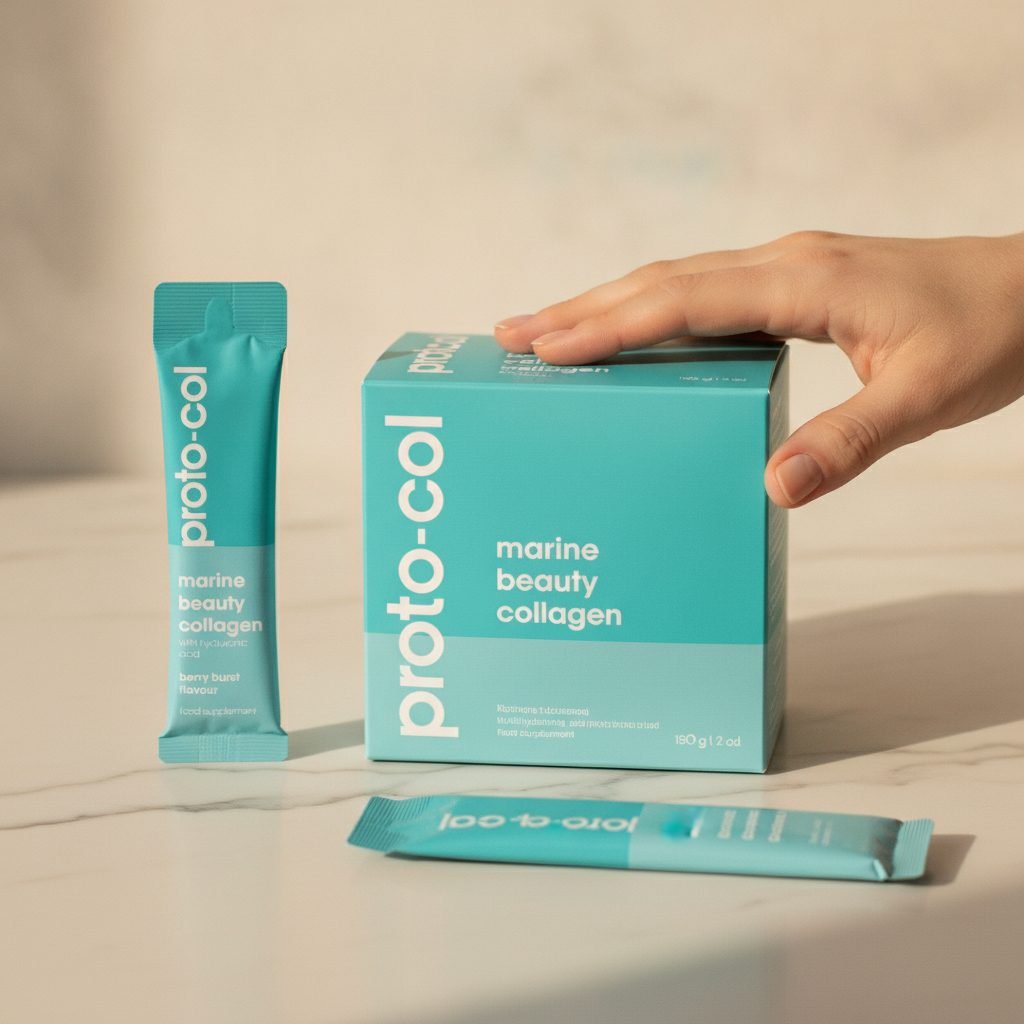
Table of Contents
Some of the links in this article are affiliate links, which help fund our independent review work at no extra cost to you. Every recommendation is based on hands-on testing through The Editor Lab methodology. No brand pays to appear, and no placement is guaranteed.
Proto-col's marine collagen drink delivers 10,000mg of hydrolysed collagen per serving. Its capsule range delivers 2,500mg. You are comparing the same brand, the same ingredient category, and a fourfold difference in dose - and a cost-per-10g that shifts considerably depending on which format you choose.
That gap is the practical centre of any honest proto-col collagen review, and it is one that most coverage skips past. I am Clemmie Rose, a Nutritional Therapist qualified at the College of Naturopathic Medicine, whose practice has taken her from Harrods' Wellness Clinic to Google DeepMind's Kyros nutrition programme. I assess supplements on dose, source, and bioavailability - not on packaging or marketing language - and Proto-col gives me something genuinely useful to work with: a brand that publishes its peptide strain, discloses its collagen type, and uses a clinically referenced trademarked ingredient. That is a reasonable starting point. Whether the price is justified depends on the format.
Quick Verdict
Overall rating: 7.5 / 10
Proto-col is one of the more credible UK collagen brands. It uses Verisol bioactive collagen peptides, discloses dose, and offers a range that covers both marine and bovine collagen in multiple formats. The Marine Beauty Collagen drink at 10,000mg per sachet sits at the top of the clinical dose range. The capsule range at 2,500mg per serving is below the threshold where the strongest skin evidence sits, which matters for value assessment.
The real question for any buyer is format versus cost. The ready-to-drink format is convenient, but you pay a meaningful premium per gram compared to a plain collagen powder. That trade-off is worth understanding before purchasing.
Buy if: You want a UK brand with clinical peptide credentials and a high-dose marine option in a convenient daily sachet format.
Skip if: You are primarily comparing cost-per-gram and want the highest dose for the lowest spend.
What Is Proto-col and Who Makes It?
Most supplement brands treat collagen as one line in a catalogue. Proto-col has spent over a decade building its entire identity around the ingredient - which means the formulation decisions carry more weight than they would from a general wellness brand.
The brand uses Verisol bioactive collagen peptides, a trademarked hydrolysed collagen ingredient that has been tested in peer-reviewed research, and TENDOFORTE peptides in its Complete Collagen gel. Both are manufactured by Gelita, a German collagen ingredient company with an established research programme. Using a named, researched peptide rather than a generic collagen isolate is a meaningful signal of quality at the formulation stage.
The UK range spans three core formats: ready-to-drink gel sachets, powder, and capsules. The primary commercial positioning is on the marine collagen drink and gel range, which are the most visible products and the ones that typically drive search intent for this brand.
Collagen Dose, Source, and Format
This is the section that determines whether Proto-col is the right fit for you. The dose varies significantly by format, and understanding that variation is the central purchase decision.
Marine Beauty Collagen Drink (sachet format)
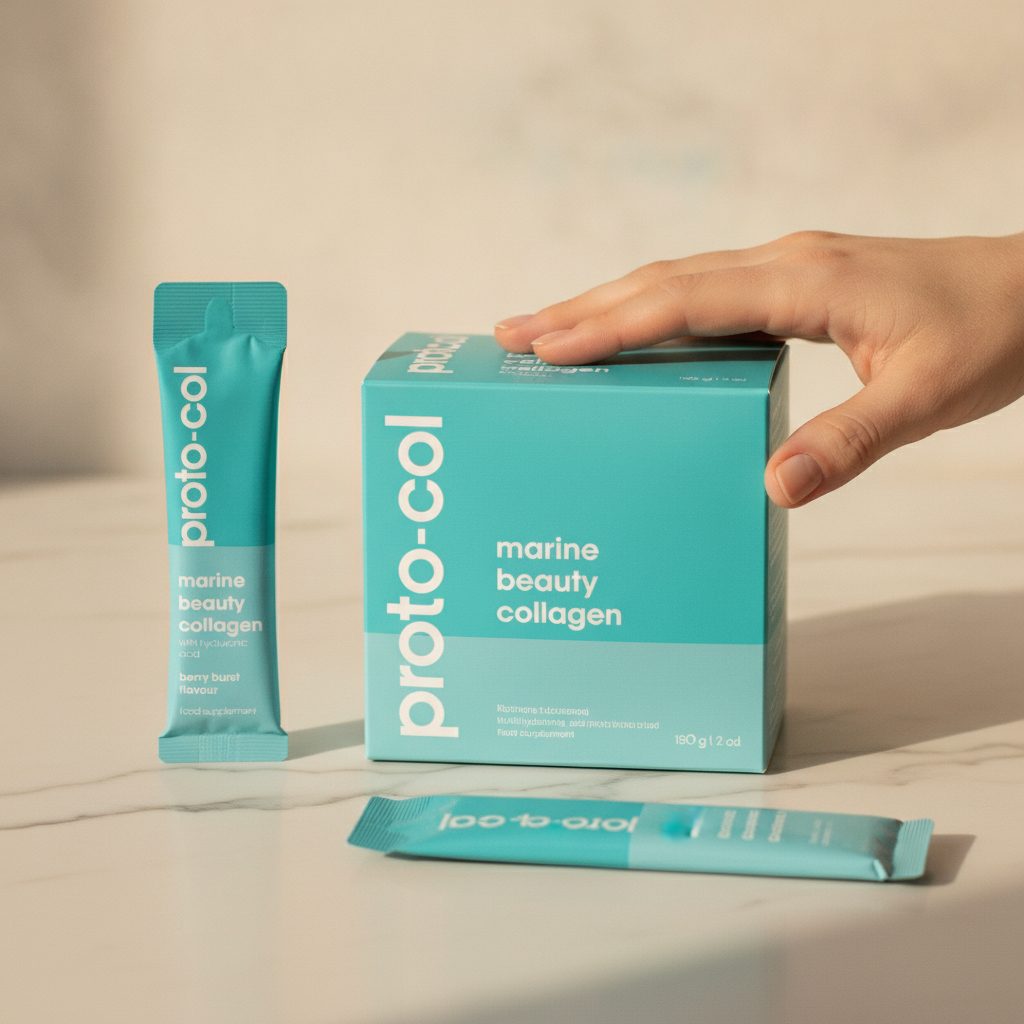
The Marine Beauty Collagen sachets deliver 10,000mg of VERISOL F marine collagen per 30ml sachet, alongside hyaluronic acid, vitamin C, vitamin E, vitamin B6, biotin, zinc, and copper. The collagen source is marine (fish-derived), and it is a Type I peptide - the primary structural collagen in skin. This is the flagship product and the one with the strongest alignment to the clinical dose range. Published randomised controlled trials on skin elasticity and hydration have used doses of 2.5g to 10g daily, with more consistent results at 5g to 10g. At 10g, this sachet sits at the upper end of that range.
Fifteen sachets cost £31.95, which works out to approximately £2.13 per day, or 21p per gram of collagen.
Complete Collagen Gel (sachet format)
The Complete Collagen gel delivers 8,000mg of collagen per sachet, using two Verisol peptide variants: VERISOL B (Type I, for skin) and TENDOFORTE (for tendons and ligaments). A 14-day supply is available at approximately £25.95 on subscription. At 8g per serving, this remains within the effective dose range for skin outcomes. Cost per gram works out to approximately 23p on subscription.
Marine Radiance Capsules
The Marine Radiance capsule product delivers 2,500mg of Verisol F marine collagen per serving (five capsules), alongside hyaluronic acid, vitamin A, vitamin C, vitamin E, and zinc. The 150-capsule pack (30 servings) is priced at approximately £29.95. That is approximately £1.00 per serving, or 40p per gram of collagen.
The dose differential matters here. At 2.5g, you are at the lower end of where trial evidence shows statistically significant effects. A 2019 systematic review in the Journal of Drugs in Dermatology found that eight of 11 studies using collagen hydrolysate supplementation showed improvement in skin outcomes, with doses ranging from 2.5g to 10g over 8 to 24 weeks. The 2.5g studies showed improvements, but the effect size was more consistent in the higher-dose cohorts.
| Format | Dose per serving | Collagen type | Price per serving | Cost per 10g |
|---|---|---|---|---|
| Marine Beauty Collagen drink | 10,000mg | Marine (Type I) | £2.13 | £2.13 |
| Complete Collagen gel | 8,000mg | Marine + tendon (Type I + TENDOFORTE) | from £1.85 | from £2.31 |
| Marine Radiance capsules | 2,500mg | Marine (Type I) | £1.00 | £4.00 |
The capsule format costs roughly twice as much per gram as the drink format. If your goal is dose efficiency, the sachets deliver more collagen at a lower cost per gram. The capsule format makes sense if the sachet format does not suit your routine, but it is not the more economical choice on a per-gram basis.
Does It Actually Work for Skin?
This question requires separating what the evidence says about collagen supplementation as a category from what it says about this specific product.
The clinical evidence on hydrolysed collagen for skin has improved substantially in the last five years. A 2024 randomised controlled trial published in Dermatology Research and Practice found significant improvements in skin collagen, hydration, and elasticity following 12 weeks of oral hydrolysed collagen intake. A systematic review published in the European Journal of Clinical Nutrition in 2026 confirmed consistent positive effects on skin hydration and elasticity across randomised controlled trials, with the caveat that many trials are small and some are industry-funded.
The mechanism is understood: hydrolysed collagen peptides are broken down in the gut into dipeptides and tripeptides that are absorbed into the bloodstream and accumulate in the skin and connective tissue. These peptides stimulate fibroblast activity - the cells responsible for producing collagen in the dermis. This is not a topical delivery mechanism. You are supplementing the building blocks for the body's own collagen synthesis, and the effect is systemic.
What the evidence does not yet support is the assumption that higher doses are always better beyond a threshold. The dose-response relationship is real up to approximately 10g, but there is no strong evidence that consuming 15g or 20g daily produces meaningfully better results than 10g. For the skin benefits specifically, Proto-col's 10g Marine Beauty sachet sits at the dose the research points to.
For further reading on the evidence behind supplementation, the Balance Journal article on does collagen work covers the mechanism and the quality of the clinical trial data in more detail.
The NHS does not recommend collagen supplements, and neither the MHRA nor the FSA have endorsed specific collagen products. This is not an indication that they do not work - it reflects that no authorised health claim for collagen exists under UK/GB nutrition and health claims regulations. The science is ahead of the regulatory position on this ingredient.
Taste and Format Experience
The Marine Beauty Collagen sachets have a mixed berry flavour and a thicker, gel-like texture. They are designed to be taken neat or mixed into cold water. In practice, the sachet format makes the daily dose easy to build into a morning routine. There is no mixing step, no measuring, and no flavour adjustment needed.
The taste is not neutral - if you are sensitive to sweeteners or prefer unflavoured supplements, it is worth noting that the drink sachets have a distinct flavour profile. It is mild but present. Most reviewers on the brand's website and on Trustpilot describe it as pleasant, which aligns with my own assessment. It is a better experience than stirring an unflavoured marine collagen powder into water.
The capsule format is flavour-free but requires taking four capsules per serving, which some users find inconvenient. There is no detectable taste.
The Complete Collagen gel has a citrus flavour, unlike the Marine Beauty sachets' berry profile, and the same sachet format. The texture is slightly thicker than the Marine Beauty drink.
One practical note on timing: collagen peptides do not require taking on an empty stomach, and there is no clinical evidence that food co-ingestion meaningfully reduces absorption. Morning supplementation is convenient and builds habit consistency, but the timing is not clinically significant. Stir it into a glass of water alongside your morning coffee - which, given that best coffee beans from quality roasters are already part of many health-conscious morning routines, makes the pairing straightforward.
Price and Value vs Alternatives
Cost-per-10g is the only honest way to compare collagen supplements - not per-pack price, not per-capsule, not per-sachet. At that unit of measure, here is where Proto-col lands against the UK field.
| Brand | Format | Dose per serving | Price per month (approx) | Cost per 10g |
|---|---|---|---|---|
| Proto-col Marine Beauty | Ready-to-drink sachet | 10g | £63.90 (2 packs) | £2.13 |
| Proto-col Marine Radiance | Capsules | 2.5g | £29.95 | £4.00 |
| Absolute Collagen | Ready-to-drink sachet | 10g (marine) | approximately £34 per 30 days | approximately £1.13 |
| Rejuvenated Collagen Shots | Ready-to-drink sachet | 10g | from £1.30 per day | from £1.30 |
On a cost-per-10g basis, Proto-col's Marine Beauty drink is more expensive than some direct UK competitors. Absolute Collagen and Rejuvenated Collagen Shots both deliver 10g marine collagen per sachet at a lower per-serving cost. Proto-col's differentiation is the Verisol peptide credential and the supporting co-formula (hyaluronic acid, vitamin C, biotin, zinc, copper). Whether that co-formula justifies the premium depends on whether you are already sourcing those nutrients elsewhere. If you are, you are paying for co-ingredients you do not need. If you are not, the combined formula has practical value.
The subscription looks cheaper at first glance, but the meaningful comparison is always cost-per-10g against plain collagen powder alternatives. A plain marine collagen powder from a reputable UK supplier can deliver 10g per serving at under 50p. You are paying a significant premium for the ready-to-drink format and the Verisol certification. For many buyers, that premium is a reasonable trade for convenience and clinical peptide credentials. For buyers optimising for cost efficiency, it is not.
Final Verdict
Two things are true about Proto-col simultaneously: the Marine Beauty drink is one of the better-formulated marine collagen options in the UK market, and the capsule range underdelivers on dose at a higher cost per gram than the format it sits alongside. Which one applies to you depends entirely on which product you are buying.
The Marine Beauty Collagen drink is the product most worth considering if you want a premium, convenient marine collagen option with a named, researched peptide. The capsule range is harder to recommend as the primary format given the dose and cost-per-gram relative to alternatives. The Complete Collagen gel is a reasonable option for buyers who want combined skin and tendon support.
If you are new to collagen supplementation and want an evidence-aligned UK brand with a good track record, Proto-col is a sensible starting point. If you have been using collagen for some time and are looking to optimise your cost-per-gram at the 10g dose, there are less expensive ways to reach the same dose from UK suppliers.
For broader comparisons across the UK collagen market, the Balance Journal guides on best marine collagen uk and best collagen powder uk compare Proto-col alongside the full field of UK brands. The super-pillar on collagen supplements covers the science of hydrolysed collagen, peptide types, and how to assess a supplement's quality independently. If you are specifically looking at skin outcomes, the guide on best collagen for skin ranks brands by dose, source, and clinical backing for that specific goal. And if you are weighing up marine versus bovine formats, the marine vs bovine collagen comparison covers the research on absorption, peptide size, and outcome differences between the two sources.
Frequently Asked Questions
Is Proto-col collagen any good?
Proto-col uses Verisol bioactive collagen peptides, a clinically referenced ingredient by Gelita. The Marine Beauty drink delivers 10,000mg of hydrolysed marine collagen per sachet, within the dose range where randomised controlled trials have shown measurable improvements in skin hydration and elasticity. Formulation transparency is above average for a UK collagen brand. Whether it justifies the price relative to alternatives depends on whether the Verisol credential and co-formula matter to you.
Is Proto-col a good supplement brand?
Proto-col has over a decade of presence specifically in collagen supplementation and uses trademarked peptide ingredients with published research behind them. It discloses collagen type, source, and dose clearly, which places it above many competitors using generic isolates. It is not the most affordable option in the UK market, but the formulation transparency is a genuine differentiator. A credible brand, though not the only credible option.
What are the first signs Proto-col collagen is working?
Clinical trials using 10g daily doses show measurable improvements in skin hydration at around eight weeks and elasticity improvements at 12 weeks. The first changes most users notice are in skin moisture and texture rather than dramatic visible changes. Nail changes can appear earlier. A realistic expectation is eight to 12 weeks at a consistent daily dose, not days or weeks. Results vary by individual and baseline skin condition.
What is the downside of taking collagen?
The main practical downside is cost over time. Hydrolysed collagen is well tolerated in most adults and does not have significant adverse effects at supplement doses. The secondary concern is dose adequacy: some collagen products use doses below where the strongest evidence sits. Proto-col's capsule range at 2.5g per serving is on the lower end of the effective range. Marine collagen is not suitable for people with fish allergies.
Does the NHS recommend collagen?
The NHS does not formally recommend collagen supplements, and no authorised health claim for collagen exists on the GB Nutrition and Health Claims Register. This reflects the regulatory position rather than a negative view of the evidence. The 2026 systematic review in the European Journal of Clinical Nutrition found consistent positive effects across randomised controlled trials. Collagen remains a personal supplement choice rather than a medically endorsed intervention.
Is Proto-col collagen worth it in the UK?
It depends on the format. The Marine Beauty drink delivers 10g at approximately £2.13 per day, within the effective dose range. On cost-per-gram, it is more expensive than Absolute Collagen and Rejuvenated for an equivalent dose. The co-formula adds value if you are not sourcing those nutrients elsewhere. The capsule range at 2.5g per serving is under-dosed relative to where the strongest skin evidence sits.
What collagen type does Proto-col use?
Proto-col's marine products use Type I collagen peptides from VERISOL F marine sources. The Complete Collagen gel also contains TENDOFORTE peptides for tendons and ligaments. Type I is the most abundant collagen in human skin and the type most relevant to skin hydration and elasticity. The bovine capsule range contains Type I and Type III collagen from pasture-fed bovine sources.
How does Proto-col compare to Absolute Collagen?
Both deliver 10g marine collagen per sachet. Absolute Collagen sachets are smaller (12ml vs 30ml) with fewer co-ingredients. Proto-col's Marine Beauty sachet includes hyaluronic acid, vitamin C, vitamin E, biotin, zinc, and copper. Absolute Collagen is available at a lower per-sachet cost. If you want only the collagen dose, the cost differential favours Absolute Collagen. If you want the combined formula, Proto-col is the more complete product.

A registered Nutritional Therapist and member of BANT, Clemmie blends science with a holistic approach to wellbeing.