Best Collagen for Joints UK 2026: Type II and Peptide Picks Tested for Joint Support
A Nutritional Therapist explains why 40mg vs 10g is not a dose - it is a mechanism question. The joint collagen guide that gets this right.

Table of Contents
Some of the links in this article are affiliate links, which help fund our independent review work at no extra cost to you. Every recommendation is based on hands-on testing through The Editor Lab methodology. No brand pays to appear, and no placement is guaranteed.
The question I get most often from clients who are already taking collagen is not “should I take it?” It is “why does this tiny capsule with 40mg cost the same as that big tub with 10,000mg, and which one is actually going to help my knee?”
That confusion is completely understandable. It also points to the exact problem with most collagen roundups: they list products without explaining that these two numbers come from entirely different mechanisms. One is not a smaller dose of the same thing. For joint support specifically, the mechanism you choose changes everything.
I am a registered Nutritional Therapist and BANT member holding a Diploma in Nutritional Therapy from the College of Naturopathic Medicine, having led the nutrition clinic at The Kyros Project with Google DeepMind and run clinics at The Wellness Clinic at Harrods. Collagen was the single most asked-about supplement I fielded at Harrods, and many of those questions were joint-specific. For this guide I read the randomised trials on both mechanisms, checked every UK product’s per-day dose against the research benchmark, and ranked on editorial quality alone. For transparency, this journal is connected to Balance Coffee, a roastery that sells coffee rather than collagen, so there is nothing here for me to sell you.

I evaluated each product across five criteria: collagen type matched to joint mechanism, dose per serving against research benchmarks, third-party testing and certifications, ingredient transparency, and price per daily dose. Products were assessed using the Editor Lab methodology and cross-referenced against the clinical evidence for each mechanism. No brand paid for inclusion. Ranking reflects editorial quality only, with affiliate status used as a tiebreaker within 0.5 quality points. For a full breakdown of collagen types and mechanisms, see our Ultimate Guide to Collagen Supplements.
Undenatured type II collagen (UC-II) leads this list because it is the joint-specific mechanism. Hydrolysed peptides are included because they serve a dual joint-and-skin goal at the correct dose. I have been clear about the distinction throughout.
Shop from the Top 3 Best Collagen for Joints Picks
The top three reflect both joint mechanisms. Healthspan leads on the UC-II route at the verified 40mg dose. Ancient + Brave and Vital Proteins deliver the hydrolysed peptide route at or close to the 10g research threshold. All three are UK-available and clearly labelled.
Top 6 Best Collagen for Joints UK 2026: Detailed Reviews
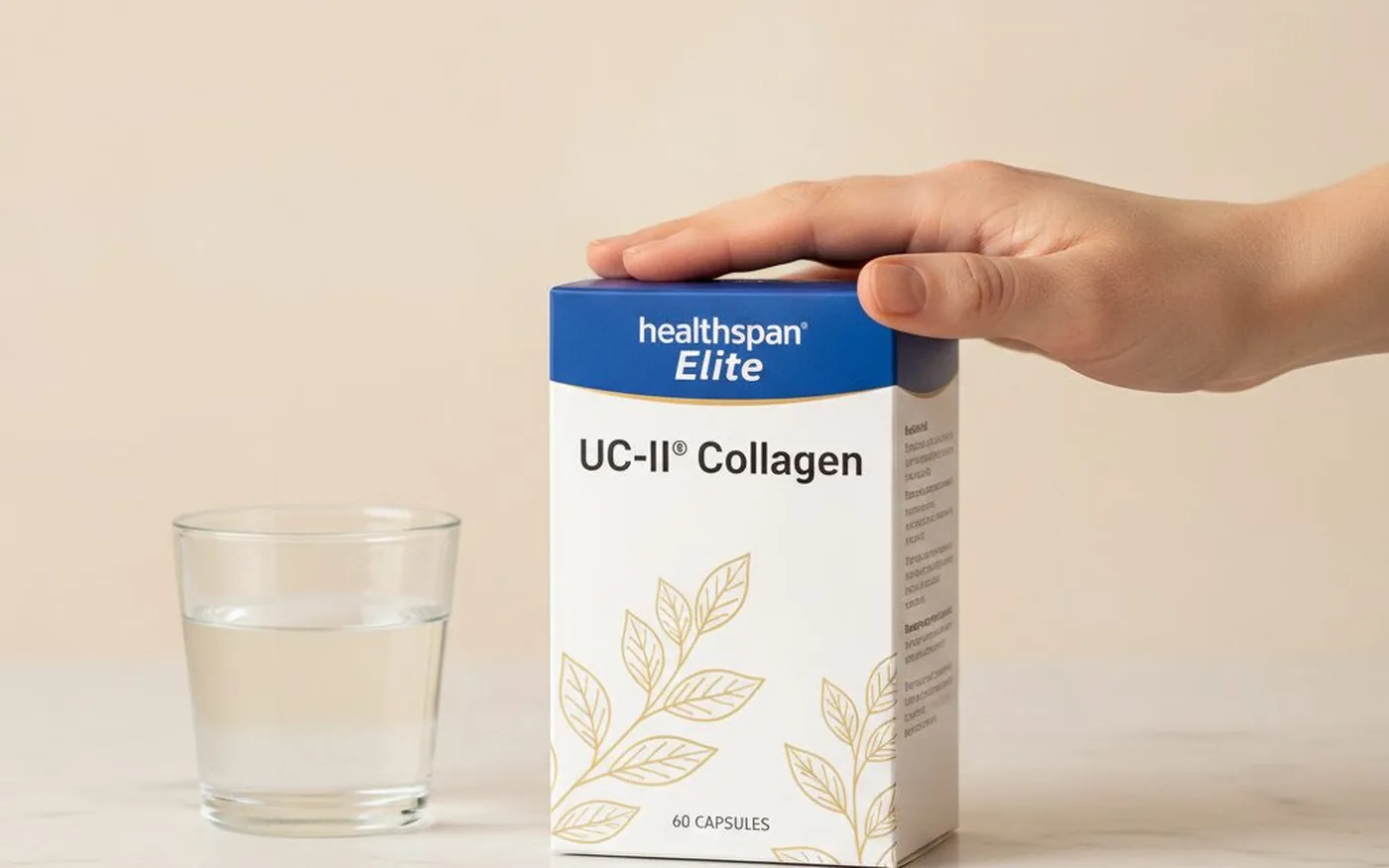
1. Healthspan Elite UC-II Joint Complex - Best for Dedicated Joint Support
Healthspan is a UK-based supplement brand with a long track record in clinically dosed formulations. Their UC-II Joint Complex delivers 40mg of undenatured type II collagen per capsule - the dose used in the most cited joint research, including the 2009 Arthritis & Rheumatism trial comparing UC-II to glucosamine and chondroitin.
What I respect here is the simplicity. You are not paying for a proprietary blend padded with fillers. You get the active at the correct dose, one capsule per day, taken before a meal as the protocol used in UC-II trials specifies. The honest trade-off: the capsule format will not appeal if you prefer powders. But for a targeted joint mechanism at a verified dose, this is the clearest UK pick I found.
Price per day: around £0.83 (as of June 2026, healthspan.co.uk).
“For joint support specifically, the UC-II dose is 40mg. If a product gives you 10g of type II collagen, you are either looking at the wrong type or a formulation that does not reflect current research. Healthspan gets this right.”
| Evaluation Criteria | Our Findings |
|---|---|
| Full review | Healthspan UC-II Review - coming soon |
| Best for | Knee, hip, and hand joint support via the oral-tolerance mechanism |
| Flagship product | UC-II Joint Complex, 40mg UC-II per capsule |
| Shop | Healthspan |

2. Ancient + Brave True Collagen - Best High-Dose Peptide for Joints and Skin
Ancient + Brave is one of the few UK supplement brands that earns its premium positioning through sourcing transparency. True Collagen is grass-fed, pasture-raised bovine peptides, cold-processed to preserve the amino acid profile. Each serving delivers 10g of hydrolysed collagen - matching the dose used in exercise-related joint pain trials.
The mechanism here is different from UC-II: hydrolysed peptides provide the amino acid substrates (glycine, proline, hydroxyproline) that cartilage matrix uses in tissue maintenance, plus signalling effects that appear to modulate inflammation. Not the oral-tolerance route; a nutritional support route. Both are valid. If your goal is skin and joints combined, this is the pick I would reach for first. One honest note: at 10g per serving, you are adding roughly 40 calories and 9g protein to your daily intake - worth factoring in if you are calorie-tracking.
Price per day: around £1.17 (as of June 2026, ancientandbrave.earth).
“The quality of the amino acid profile matters. Bovine peptides from grass-fed animals have more consistent hydroxyproline content - the amino acid most directly linked to collagen synthesis. Ancient + Brave is one of the few UK brands I trust on sourcing.”
| Evaluation Criteria | Our Findings |
|---|---|
| Full review | Ancient + Brave Review - coming soon |
| Best for | Dual skin and joint support via high-dose hydrolysed peptides |
| Flagship product | True Collagen Powder, 10g hydrolysed collagen per serving |
| Shop | Ancient + Brave |
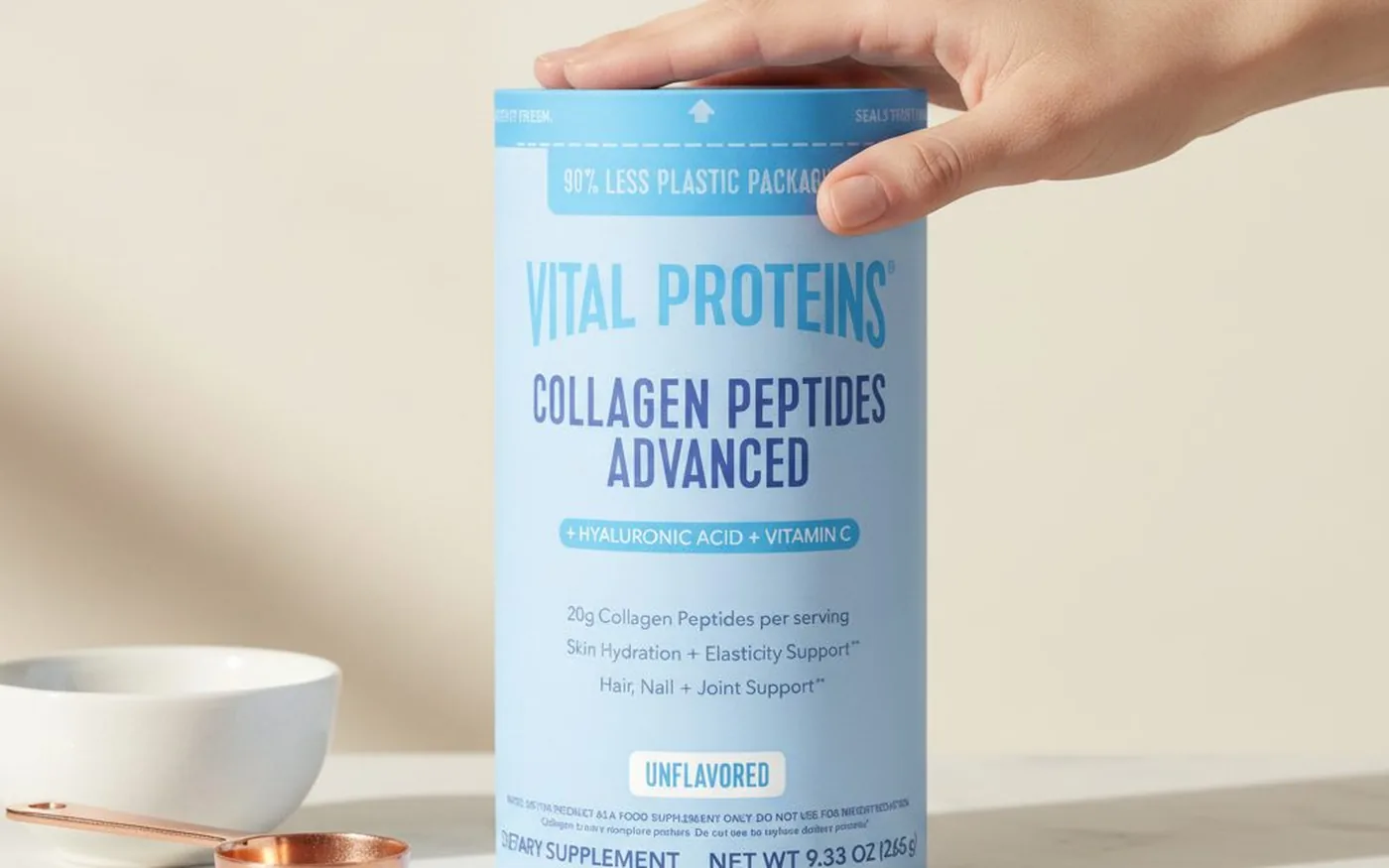
3. Vital Proteins Collagen Peptides - Best Value Hydrolysed Option
Vital Proteins Collagen Peptides is the most accessible entry point for the high-dose hydrolysed route. Two scoops delivers 20g - exceeding the 10g joint threshold and giving one of the better cost-per-gram ratios in this roundup. The unflavoured powder mixes easily into coffee, smoothies, or hot drinks.
The sourcing is bovine hide, delivering type I and type III collagen rather than type II. This is the standard peptide route: it does not target joints via UC-II oral tolerisation, but it provides the amino acid substrates at a dose the research supports for connective tissue broadly. One thing worth knowing: Vital Proteins is now owned by Nestlé. The formula has not changed, but if brand independence matters to you, that is a consideration. On formulation and dose, it is a solid, straightforward product.
Price per day: around £0.97 (as of June 2026, vitalproteins.co.uk).
“Vital Proteins is not the most sophisticated pick on this list, but it is the one I would suggest to a client who wants to start simple, hit the correct joint dose, and not overthink it. Sometimes straightforward is the right answer.”
| Evaluation Criteria | Our Findings |
|---|---|
| Full review | Vital Proteins Review - coming soon |
| Best for | High-dose peptides on a budget; joints and skin combined goal |
| Flagship product | Collagen Peptides Powder, 20g per 2-scoop serving |
| Shop | Vital Proteins |

4. Together Health Type II Collagen - Best UC-II Pick on a Budget
Together Health delivers undenatured type II chicken-derived collagen at 40mg per serving - the same mechanism and dose as Healthspan, at a noticeably lower price point. The source is clearly labelled as chicken sternum cartilage, which matters if you are avoiding shellfish or fish sources.
The formulation is clean and the brand publishes reasonable transparency on sourcing and manufacturing. They are not yet third-party tested at the same level as some premium brands, which is worth noting. Where Together Health sits versus Healthspan is a price-versus-brand-heritage trade-off. On the UC-II mechanism and dose, they are equivalent.
Price per day: around £0.60 (as of June 2026, togetherhealth.co.uk).
“For anyone who wants the UC-II mechanism without the premium price, Together Health is the one to know. The dose is right, the source is transparent, and it is made for exactly this purpose.”
| Evaluation Criteria | Our Findings |
|---|---|
| Full review | Together Health Review - coming soon |
| Best for | UC-II mechanism on a tighter budget; avoiding marine or bovine sources |
| Flagship product | Type II Collagen Capsules, 40mg per serving |
| Shop | Together Health |
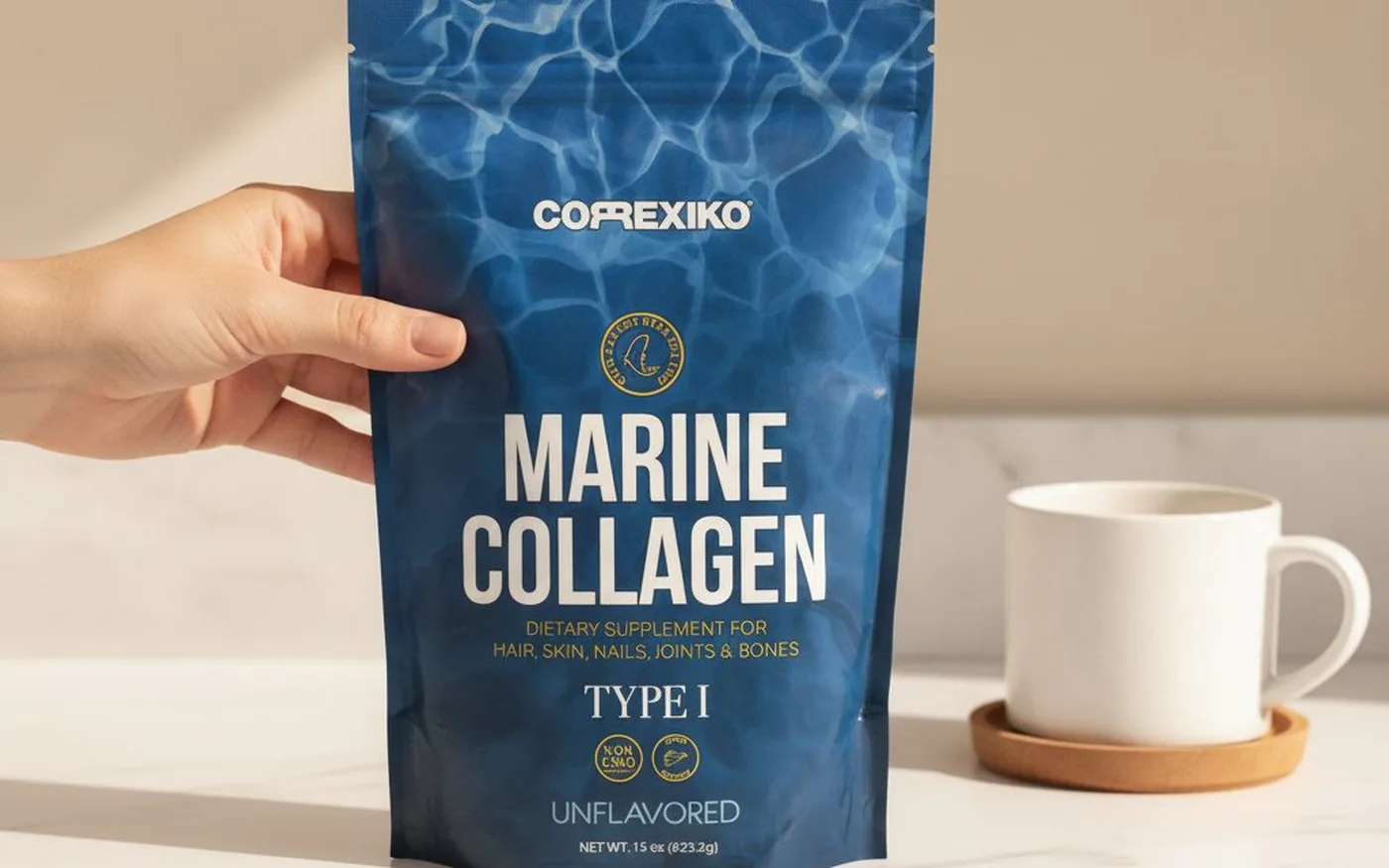
5. Correxiko Marine Collagen - Best Marine Option for Connective Tissue Support
Correxiko sources from wild-caught deep-sea fish and produces a type I collagen peptide powder with 10g per serving, meeting the hydrolysed dose target. The unflavoured version has a mild taste and dissolves cleanly.
I want to be direct about where marine collagen fits for joint shoppers: it is primarily type I. Cartilage is predominantly type II. If your goal is specifically cartilage support, marine collagen is not the strongest mechanism match. If you want skin and connective tissue support from a marine source - perhaps avoiding bovine products - Correxiko is a high-quality option at a dose that qualifies.
Price per day: around £1.33 (as of June 2026, correxiko.com).
“I would not put marine collagen at the top of a joint list. But for the buyer who has a skin goal alongside a joint goal and prefers marine, Correxiko is the cleanest option I found.”
| Evaluation Criteria | Our Findings |
|---|---|
| Full review | Correxiko Review - coming soon |
| Best for | Marine source preference; skin and connective tissue support alongside joint goal |
| Flagship product | Marine Collagen Powder, 10g per serving |
| Shop | Correxiko |
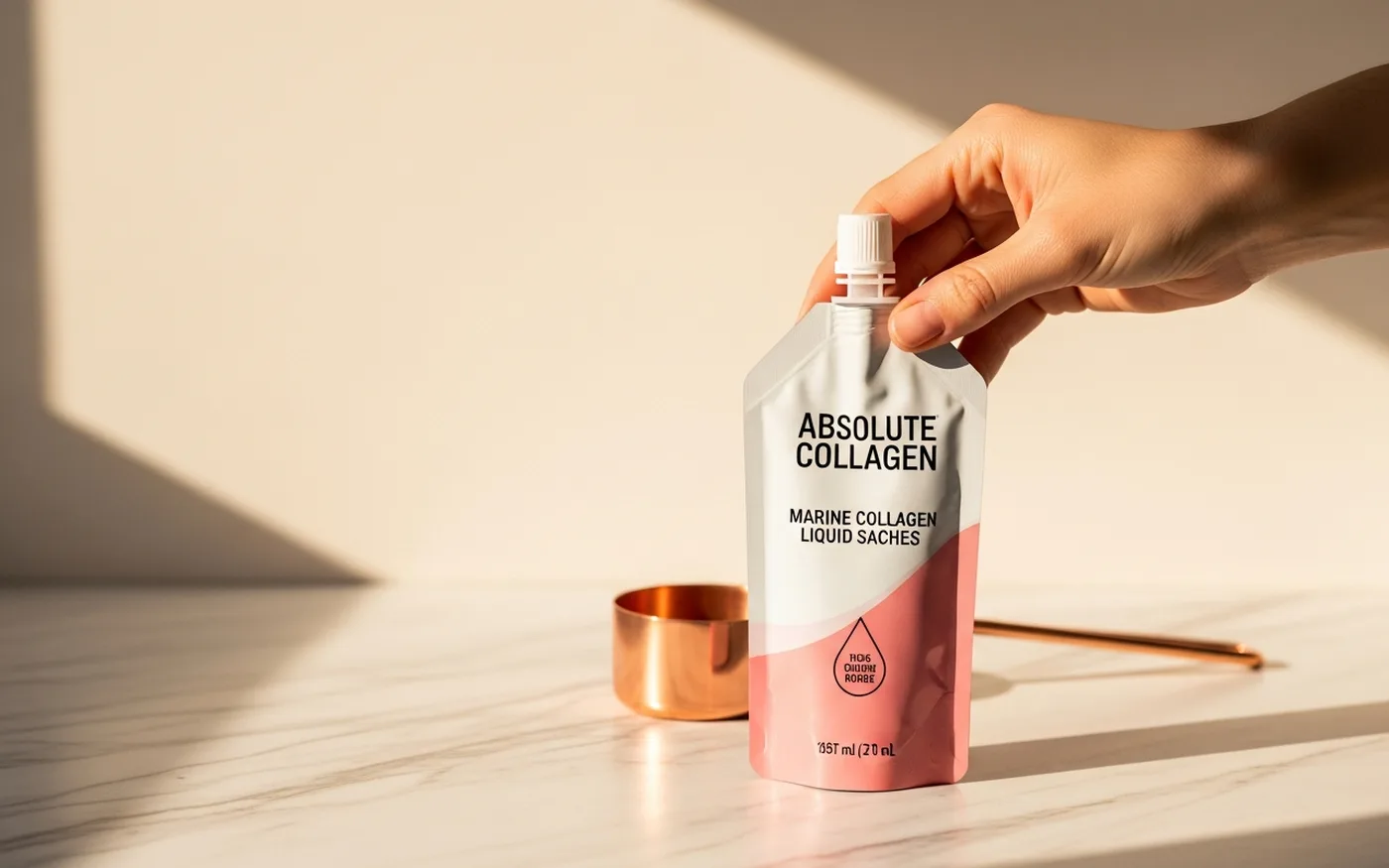
6. Absolute Collagen - Best Liquid Format for Daily Compliance
Absolute Collagen takes a different approach: single-serve 10ml liquid sachets with 8g of marine collagen peptides. The convenience argument is real. There is no measuring, no mixing, and the sachet format removes the friction that causes most people to abandon supplements within six weeks.
The caveat is dose. At 8g per sachet, you are slightly below the 10g hydrolysed threshold used in most joint research. That is not a disqualifying gap, but if you are choosing purely on joint efficacy, it is a consideration. Where Absolute Collagen wins is habit formation: a ready-to-drink sachet in the fridge is far easier to take consistently than a powder tub, and consistency over twelve weeks matters more than hitting an exact number.
Price per day: around £1.43 (as of June 2026, absolute-collagen.com).
“Eight grams is close enough to the research threshold that I would not worry about the gap. The bigger question is whether you will actually take something every day for three months. If the liquid format makes that more likely, it is worth the premium over a powder you never open.”
| Evaluation Criteria | Our Findings |
|---|---|
| Full review | Absolute Collagen Review - coming soon |
| Best for | Compliance; people who will not maintain a powder-measuring routine |
| Flagship product | Daily Sachets, 8g marine collagen per 10ml |
| Shop | Absolute Collagen |
Type II Collagen vs Collagen Peptides for Joints: Which Actually Helps
This is the question most roundups sidestep, and it is the most important one before you buy anything.
Undenatured type II collagen (UC-II) works through oral tolerisation. When you consume intact, undenatured type II collagen - typically derived from chicken sternum cartilage - at around 40mg per day, it interacts with immune cells in the gut-associated lymphoid tissue. The current hypothesis is that this trains the immune system to be less reactive to the type II collagen in your own cartilage, reducing the inflammatory response that contributes to joint degradation in osteoarthritis. The dose is 40mg because the mechanism is immune modulation, not amino acid supply.
Hydrolysed collagen peptides work differently. At 10g or more per day, broken-down collagen fragments - primarily glycine, proline, and hydroxyproline - are absorbed and accumulate in cartilage tissue, where they appear to stimulate chondrocytes to produce more collagen and may reduce inflammation through peptide signalling. The dose is 10g because you need enough substrate to support this function.
For joints specifically, undenatured type II collagen works at around 40mg, while hydrolysed peptides need around 10g, because they act through entirely different mechanisms.
| Undenatured Type II (UC-II) | Hydrolysed Collagen Peptides | |
|---|---|---|
| Daily dose | 40mg | 10g minimum |
| Mechanism | Oral tolerisation (immune modulation) | Amino acid supply + chondrocyte stimulation |
| Cartilage target | Direct (type II is cartilage collagen) | Indirect (amino acids support multiple tissues) |
| Also helps | Osteoarthritis-specific inflammation | Skin, hair, tendons, bones |
| Best for | Dedicated joint and OA focus | Dual skin-and-joints goal |
Neither mechanism is categorically better. They serve different goals. If your primary concern is joint cartilage and you have osteoarthritis symptoms, UC-II is the more targeted choice. If you want broad connective tissue support, high-dose hydrolysed peptides are more versatile.
Does Collagen Actually Work for Joints? What the Research Shows
The honest answer: the evidence is promising but not definitive, and the funding context matters.
On UC-II: a 2009 randomised controlled trial published in Arthritis & Rheumatism compared 40mg UC-II daily against the glucosamine-and-chondroitin combination in knee osteoarthritis patients. UC-II outperformed on KOOS (Knee injury and Osteoarthritis Outcome Score) over six months. A 2016 meta-analysis of five UC-II trials found meaningful reductions in WOMAC pain and stiffness scores. Most trials were small (under 100 participants) and several were funded by the ingredient manufacturer.
On hydrolysed peptides: a 2019 systematic review published on PubMed found that hydrolysed collagen showed statistically significant reductions in exercise-related joint pain compared to placebo across multiple trials, particularly in athletes and active populations. Again, industry funding featured across several of the studies.
The funding-bias caveat is worth stating plainly: The American Journal of Medicine (2025) noted that supplement research with industry funding consistently trends toward positive outcomes compared to independent replication. That does not mean the results are wrong. It means you should treat them as credible signals, not settled science.
My clinical read: the evidence is strong enough to justify a three-month trial, weak enough to stop and reassess if you notice no functional change. Neither mechanism is a cure for osteoarthritis or a cartilage regeneration tool. What the research supports is pain reduction and functional improvement in people with joint ache or early OA. If you are managing a diagnosed condition, combine any supplement trial with appropriate exercise, weight management, and GP oversight.
How Much Collagen to Take for Joint Support, and How Long
Dose depends entirely on the mechanism you are using.
For UC-II: 40mg per day. This is the dose validated across multiple RCTs. Taking more does not appear to increase the benefit. Timing: take on an empty stomach or before your first meal, as the oral tolerisation mechanism appears to require gut exposure in a relatively unfed state.
For hydrolysed peptides: aim for 10g per day minimum. Some trials used 15-20g. Timing is more flexible - add to your morning drink or smoothie.
Allow twelve weeks before judging results. Cartilage has one of the slowest metabolic turnover rates in the body. Studies showing meaningful results ran for twelve to twenty-four weeks. Testing collagen for three weeks and concluding it does not work is not a fair trial.
| Mechanism | Dose | Timing | Fair-test window |
|---|---|---|---|
| UC-II / Undenatured Type II | 40mg per day | Before meal, empty stomach | 12-24 weeks |
| Hydrolysed collagen peptides | 10g minimum per day | Any time, with food or drink | 12 weeks minimum |
Collagen for Arthritis and Knee Cartilage: What to Realistically Expect
I want to get this section right, because overclaiming is common in this category.
For osteoarthritis: UC-II’s oral tolerisation hypothesis directly addresses the immune component of cartilage inflammation. The research shows meaningful pain and stiffness reductions in mild-to-moderate knee OA. What it does not show is cartilage regeneration. The benefit is functional: less pain, better range of motion, potentially slower progression.
For exercise-related joint pain: hydrolysed peptides have a reasonable evidence base, particularly in active populations. If your joint ache is exercise-driven rather than OA-driven, peptides at 10g are the more studied option for you.
For knee cartilage repair: be appropriately sceptical of strong “repair” claims. Cartilage is avascular - it has no blood supply and very limited regenerative capacity. Collagen supports the cartilage matrix environment; it does not regrow cartilage that has already been lost. The appropriate expectation is pain management and functional support, not structural regeneration.
If you have a diagnosed joint condition, Versus Arthritis publishes independent guidance on supplements worth reading before you buy.
How to Choose a Joint Collagen Worth the Money
Match the type to the mechanism. For dedicated joint support, look for undenatured type II collagen (UC-II) at 40mg per serving. For joint and skin combined, look for hydrolysed peptides with at least 10g per serving. Do not confuse hydrolysed type II (just peptides from a type II source) with undenatured type II (intact protein structure preserved for oral tolerisation). They are different products.
Verify the dose. Any UC-II product below 40mg per serving is underdosed. Any hydrolysed peptide product below 10g per serving will not meet the joint threshold. Read the label.
Look for transparency. Third-party testing certificates, clear sourcing, and named ingredient suppliers separate serious brands from those coasting on category trends. “Marine collagen blend” without species or source information is a red flag.
Consider format honestly. A product you take every day for twelve weeks beats a theoretically superior product you take for a fortnight. If a liquid sachet fits your life better than a powder, that is a legitimate consideration.
Joints and bones combined: the best collagen for joints and bones dual goal requires both mechanisms. Type II targets cartilage; type I (in most hydrolysed peptides) supports bone, tendons, and ligaments. Very few single products deliver both mechanisms at the right doses - you may need two separate products if both goals matter to you.

Collagen is well-tolerated for most adults, but a few considerations apply.
Fish or shellfish allergy: marine collagen is derived from fish. Avoid it if you have a confirmed fish allergy. Bovine and chicken sources are alternatives.
Chicken sensitivity: UC-II type II collagen is typically from chicken sternum. Check the source if you have a chicken allergy.
Pregnancy and breastfeeding: insufficient clinical data exists. Speak with your midwife or GP before adding any new supplement.
Kidney conditions: hydrolysed peptides contribute to total daily protein. If you are managing a condition requiring protein restriction, account for this and check with your GP.
Immunosuppressant medication: given UC-II’s proposed immune-modulatory mechanism, check with your prescribing doctor if you are on immunosuppressants for inflammatory arthritis.
If your joint pain is new, severe, or accompanied by swelling, redness, or morning stiffness lasting over 45 minutes, see a GP before reaching for supplements. A magnesium supplement is another nutrient worth considering alongside collagen if your joint ache has a muscular component - magnesium has its own evidence base for muscle function and pain management.
Full Comparison Table
| Brand | Product | Type | Dose per serving | Format | Price per day | Best for |
|---|---|---|---|---|---|---|
| Healthspan Elite | UC-II Joint Complex | Undenatured Type II | 40mg | Capsule | around £0.83 | Dedicated joint/OA focus |
| Ancient + Brave | True Collagen | Hydrolysed Type I/III | 10g | Powder | around £1.17 | Joint + skin, premium peptides |
| Vital Proteins | Collagen Peptides | Hydrolysed Type I/III | 20g (2 scoops) | Powder | around £0.97 | High-dose peptides, value |
| Together Health | Type II Collagen | Undenatured Type II | 40mg | Capsule | around £0.60 | UC-II on a budget |
| Correxiko | Marine Collagen | Hydrolysed Type I (marine) | 10g | Powder | around £1.33 | Marine source, connective tissue |
| Absolute Collagen | Daily Sachets | Hydrolysed Type I (marine) | 8g | Liquid | around £1.43 | Compliance and convenience |

Frequently Asked Questions
What is the best type of collagen for joints?
For dedicated joint support, undenatured type II collagen (UC-II) at 40mg per day is the most targeted option. It works via an oral tolerisation mechanism that may reduce the immune-driven inflammation contributing to cartilage degradation in osteoarthritis. For joint and skin support combined, hydrolysed peptides at 10g per day are the more versatile choice. The two work differently - one is not a smaller dose of the other. For a joint-specific answer, UC-II at 40mg is the pick.
Does collagen really work for joint pain?
Multiple randomised trials show both UC-II at 40mg and hydrolysed peptides at 10g reduce joint pain and stiffness compared to placebo, with UC-II showing stronger results specifically in osteoarthritis populations. Most trials are small and several are industry-funded, so treat the results as credible signals rather than settled science. A twelve-week trial at the correct dose is a reasonable test. If there is no functional improvement after three months, stop and reassess.
Is type 1 or type 2 collagen better for joints?
Type II is better for joints specifically, because cartilage is predominantly type II collagen matrix. Undenatured type II collagen (UC-II) at 40mg targets cartilage via an oral tolerisation pathway. Type I collagen, found in most hydrolysed powders, supports tendons, ligaments, bones, and skin - which contribute to joint function indirectly but do not target cartilage structure directly. Choose type II for cartilage support; choose type I for broader connective tissue goals.
How much collagen should I take for my joints?
For UC-II (undenatured type II), the research-supported dose is 40mg per day - no more is needed. For hydrolysed peptides, aim for at least 10g per day; some trials used 15-20g. Do not apply the peptide dose logic to UC-II or vice versa. Taking 10g of UC-II does not mean extra joint benefit - it means expensive protein without the targeted immune mechanism. The dose number only makes sense in the context of the mechanism.
What is the best collagen for arthritis?
UC-II at 40mg per day has the most relevant evidence base for osteoarthritis. The oral tolerisation hypothesis addresses the immune-inflammatory component of cartilage degradation seen in OA, and a 2009 randomised trial found UC-II outperformed glucosamine and chondroitin on knee OA outcomes over six months. For rheumatoid arthritis, the mechanism is less studied and more complex. Speak with a rheumatologist before adding collagen to an RA protocol alongside existing medication.
Can collagen rebuild knee cartilage?
No, not in the regenerative sense. Cartilage is avascular - it has no blood supply and very limited capacity to regrow once lost. What collagen supplementation supports, based on current evidence, is the cartilage matrix environment and functional pain reduction. The appropriate expectation is less pain, better mobility, and potentially slower OA progression. Any product claiming to “rebuild” or “regrow” cartilage is overstating what the evidence shows. Collagen is a support tool, not a repair mechanism.
How long does collagen take to work for joints?
Allow twelve weeks as the minimum fair test. Cartilage has one of the slowest metabolic turnover rates in the body, and the studies showing meaningful results ran for twelve to twenty-four weeks. If you are not noticing any difference in pain, stiffness, or mobility after three months of consistent daily use at the correct dose for your chosen mechanism, the supplement is unlikely to be working for you. Three weeks is not enough time to draw any conclusion.
Can I take collagen for both my skin and my joints?
Yes, but understand the mechanism trade-off. Hydrolysed type I and type III peptides at 10g per day support skin and connective tissue broadly, including tendons and the matrix around joints. For skin specifically, best marine collagen uk type I peptides are the most studied option. For joint cartilage specifically, UC-II type II at 40mg is more targeted. Some people take both: a UC-II capsule for the joint mechanism alongside a hydrolysed peptide powder for the skin goal. That combination is safe; just be clear about what each is doing.
A registered Nutritional Therapist and member of BANT, Clemmie blends science with a holistic approach to wellbeing.