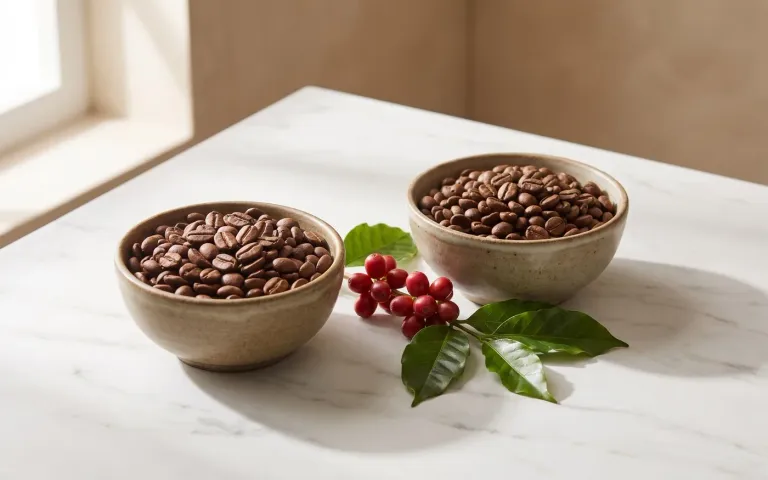
The bag says '100% arabica, Gesha, washed', and this guide tells you what each of those words means for your cup. Four types of coffee beans exist, but almost every speciality bag you buy in the UK is arabica, and its varietal, processing method, and roast decide what ends up in your cup.
The four types of coffee beans are arabica, robusta, liberica, and excelsa, although only arabica and robusta make up the commercial trade, at roughly 60% and 40% of traded coffee. Within arabica, the varietal and the processing method then decide most of the flavour you taste.
This guide is built from cupping these coffees over nearly 15 years in the trade, then compared against the World Coffee Research varieties catalogue and the 2019 Science Advances assessment of all 124 known coffee species. It is written for you if you are moving from supermarket coffee to roaster bags and want the label to make sense before your next purchase, including our guide to the best coffee beans in the UK.
“I am an SCA-certified barista who visited almost 300 UK roasteries, so the cupping-room tasting behind this guide is first-hand.”
James Bellis
Types of Coffee Beans: The Short Answer
Coffee comes from four types of bean: arabica (Coffea arabica), robusta (Coffea canephora), liberica (Coffea liberica), and excelsa (Coffea liberica var. dewevrei). Arabica and robusta dominate the shelves you shop from, and the other two stay mostly in West Africa and Southeast Asia.
Three words cause most of the confusion on a label, so here are the definitions you can carry into any shop.
Species: the plant itself. A species is what separates arabica from robusta, and it sets the broad limits on flavour, yield, and where you can grow it.
Varietal: a cultivated line within a species, such as Gesha or Bourbon within arabica. Roasters also say cultivar, and you can treat the two words as the same thing.
Process: what happens to the coffee fruit after picking, such as washed or natural. It changes the cup in front of you without changing the plant.
Species, Varietal, Process, Roast: The Four Layers on a Coffee Label
Read a bag as four decisions made in order, because each one changes what you taste. The species is settled when the seed goes into the ground, the varietal is the line the farmer chooses to plant, the process is how the fruit is handled after picking, and the roast is what the roaster does last.
A bag that names only the species tells you the least. A bag that names the species, the varietal, the process, and the roast tells you most of what you need, and you can often guess the flavour before you open it.
I think of the species as the broad outline and the other three as the detail. Two coffees from the same species can taste nothing alike, while two coffees from different species can land closer together than you would expect.
The sections below follow the same order, starting with the four species and finishing with how you should pick between them.
Arabica (Coffea arabica)
Arabica is the bean behind almost every speciality coffee you will buy in the UK. Nescafé states that the bean originates in Ethiopia and makes up about 60% to 70% of the coffee produced globally, and the Science Advances assessment puts it at 60% of traded coffee.
It is the species with the widest flavour range, from floral and fruity cups to chocolatey and nutty ones that you may already know. Where it grows, how it is processed, and which varietal is planted push it in different directions, which is why most of this guide is about arabica.
Here is the catch: '100% arabica' is a floor, not a quality mark. Most supermarket coffee is arabica too, so those words tell you the species and nothing about the grade, the freshness, or the roast. If a bag leads with '100% arabica' and says nothing else, you have been given the least useful fact on it.
Robusta (Coffea canephora)
If you drink instant or an espresso blend, you may already be drinking robusta, which supplies the remaining 40% of traded coffee according to the same Science Advances paper. Nescafé notes that it contains high levels of caffeine, which acts as a natural insect repellent for the plant. I leave the caffeine numbers to the full arabica vs robusta comparison, because that deserves a table of its own.
Is robusta bad coffee? Not always, but a lot of it earns the reputation. Drinkers on coffee forums describe the commodity version as bitter, heavy, and short on sweetness, and in a cheap instant jar you will taste why.
Well-grown robusta still has a place in espresso blends, where roasters use it for body and crema. Our guide to the best coffee beans for espresso shows how that plays out in a bag you can buy.
Liberica (Coffea liberica)
Liberica is the polarising one, and you will not find it on many shelves. Nescafé says it is native to western and central Africa, most specifically Liberia, and that it makes up only 2% of the world's coffee supply. Wikipedia's entry on the species records that Spanish friars brought it to Lipa in the Philippines in the 1740s, where it is still known as kapeng barako.
Opinion on the cup is split, and I will not oversell it to you. Roasters on forums describe liberica beans as large and irregular, and say they need a long, slow roast to cook evenly. Some Malaysian drinkers brew it happily, while plenty of others have heard nothing but bad things.
Treat it as an acquired taste, not an exotic upgrade. If you see a liberica bag on your travels, buy a small one before you commit to a large one.
Excelsa (Coffea liberica var. dewevrei)
Excelsa is the fourth type on most lists you will read, and the botany behind that is out of date. According to Wikipedia's entry on liberica, Coffea dewevrei, Coffea dybowskii, and Coffea excelsa were reclassified in 2006 as synonyms for Coffea liberica var. dewevrei, so excelsa is a variety of liberica.
This guide keeps the four-way framing because it is what you will see in shops and search results, but you should know the botany has moved on. Nescafé says excelsa is usually grown in Malaysia and the Philippines, which is why you are unlikely to meet it on a UK bag.
Arabica Varietals You Will See on UK Bags
Varietals are where arabica gets interesting, and where roaster bags start printing words you may not recognise. World Coffee Research maintains the arabica varieties catalogue, and it is the source for the descriptions below. If you want the quality context behind the best of them, our guide to what speciality coffee means explains the grading.
Typica and Bourbon
Typica is one of the most culturally and genetically important arabica coffees in the world, with high quality in Central America, according to World Coffee Research. Bourbon was selected in El Salvador and is known for good cup quality at the highest altitudes. When you see either name on a bag, you are looking at two of the long-established names in arabica.
Gesha
Gesha, also spelled Geisha, is the varietal with the reputation you have probably heard about. World Coffee Research says Panamanian Geisha has exceptionally high quality at high altitudes, and adds that the term is often applied to other coffees that do not share the distinct genetics of Panamanian Geisha. So a bag that says Gesha deserves a look at the origin line, because the name alone does not prove the genetics.
SL28 and Caturra
SL28 is drought tolerant with strong cup quality potential, but it is susceptible to major diseases, and World Coffee Research lists it as common in Kenya, Malawi, Uganda, and Zimbabwe. Kenya is where I go for bold acidity and blackcurrant, and SL28 is a name you will see on those bags.
Caturra is a compact plant with good yielding potential of standard quality in Central America, but it is highly susceptible to coffee leaf rust. That makes it a farmer's variety, so you will meet it as a workhorse.
Ethiopian Heirloom
Ethiopian heirloom is a different kind of label. It names the mix of local varieties found in Ethiopia, where Nescafé says arabica originates, so you are buying a place. It is the label on the blueberry-bright naturals from Guji, Sidamo, and Yirgacheffe that I keep going back for.
How Processing Changes the Bean: Washed, Natural, Honey
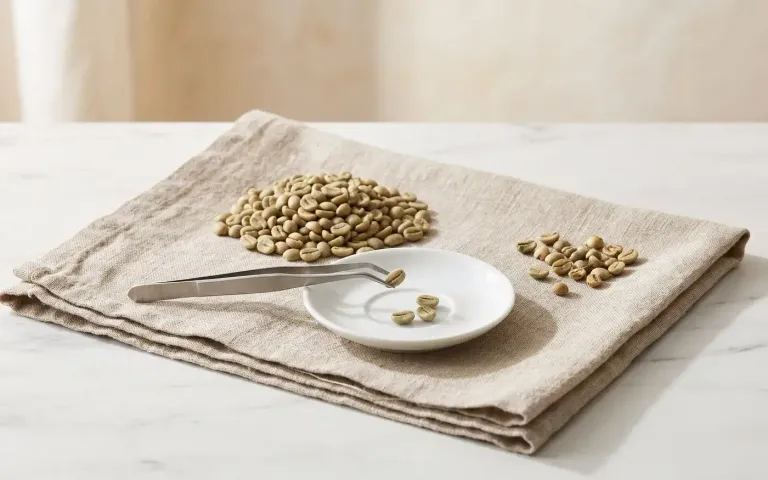
Processing is what happens to the coffee fruit between the tree and the roaster, and it changes the flavour without changing the plant. You will see washed and natural most often, and honey sits between them.
Method
What happens
Typical flavour
Washed
The fruit is removed from the seed before the seed dries
Clean, bright, and precise
Natural
The seed dries inside the whole fruit
Fruity, sweet, and sometimes boozy or funky
Honey
Part of the fruit's sticky layer stays on the seed while it dries
Sweeter than washed, cleaner than natural
Honey processing has nothing to do with honey, so do not expect it in your cup. The name comes from the sticky fruit layer left on the seed.
My best cup ever was a natural-processed Ethiopian heirloom from Haricha Woreda in Yirgacheffe, and it is the style I would point you towards first: boozy, strawberry, chocolate, and funky all at once. I love a clean washed coffee just as much on the right day, so I treat the two methods as a matter of mood.
Organic is a certification about how the coffee was farmed, so a washed coffee and a natural coffee can both be organic or neither. If that is the angle you care about, our guide to the best organic coffee beans ranks the options.
The quickest way to learn what processing does is to buy two bags from the same origin, one washed and one natural, and brew them side by side the same way. The gap you taste will usually be wider than the gap between two varietals, and it shows you which layer matters to your palate.
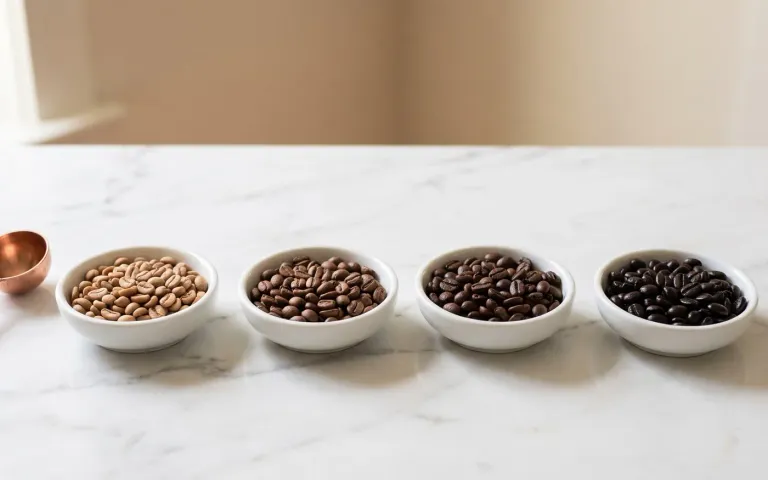
Roast: The Last Layer
Roast is the last layer. Any arabica, robusta, or liberica can be roasted light, medium, or dark, and the roaster's choice changes your cup as much as the species did.
A dark roast also covers much of what the varietal and process were doing, which matters in the next section. If you want the full trade-offs, read our light roast vs dark roast guide.
Can You Taste the Difference?
Sometimes, and less often than a label suggests. In a cupping room, with the roast and the process held level, I can pick out a varietal's character. At a kitchen table with a dark roast and a splash of milk, you probably cannot.
Drinkers admit this openly, and you may recognise the feeling. One r/Coffee thread asks which variety people favour because the poster cannot tell the difference between them, and that is a fair place to start.
Processing and roast level are usually louder than varietal. If you want to learn to taste, hold the roast and the process the same and change only the varietal, and you will hear the difference far more clearly than any label can describe it for you.
The Rare and Future Species: Stenophylla and the 124 Wild Coffees
Science Advances found 124 coffee species known to science, and at least 60% of them are threatened with extinction. You will never see most of them on a bag, but that figure is a reason to care about diversity beyond what ends up in your cup.
Coffea stenophylla is the one to watch. A 2021 Nature Plants study describes it as a wild species from Upper West Africa with a sensory profile analogous to high-quality arabica, growing at a mean annual temperature 6.2 to 6.8 °C higher than arabica. That heat tolerance is why researchers care, and why you may read about it more as the climate shifts, in the Science Advances assessment and the Nature Plants paper behind it.
Which Type of Coffee Bean Should You Buy?
Buy arabica unless you have a reason not to, then read the rest of the label for the reason it is worth your money. If you like bright, fruity cups, look for a natural or washed Ethiopian or Kenyan coffee at a light roast. If you like chocolate and balance, Colombia is the versatile choice, and a bag of Colombian coffee beans from a good roaster is a safe place to start.
A quick label check helps you spend well. Look for the varietal, the process, and the roast before you pay, because a roaster that prints all three is showing you what it did. A bag that prints only '100% arabica' leaves you guessing.
When you are ready to buy, our guide to the best coffee beans UK ranks the bags worth your money. Our guide to how to store coffee beans then keeps them tasting the way the label promised. Whether you buy whole or ground is a separate choice, covered under coffee beans vs ground coffee.
Coffee Bean Types at a Glance
Use this table when a label throws a word at you and you want the answer fast. The shares come from the Science Advances assessment and from Nescafé, and the flavour column describes a typical cup.
Type
Botanical name
Share of world coffee
Where grown
Typical flavour
Where you meet it in the UK
Arabica
Coffea arabica
About 60% of traded coffee (Science Advances); 60% to 70% of production (Nescafé)
Originates in Ethiopia (Nescafé)
Widest range, from floral and fruity to chocolatey and nutty
Almost every speciality bag
Robusta
Coffea canephora
The remaining 40% of traded coffee (Science Advances)
Covered in our arabica vs robusta guide
Bitter and heavy in cheap versions, with body and crema in blends
Espresso blends and instant coffee
Liberica
Coffea liberica
About 2% of world supply (Nescafé)
Native to western and central Africa; the Philippines
Polarising, needs a long, slow roast
Rare
Excelsa
Coffea liberica var. dewevrei
No reliable figure
Usually Malaysia and the Philippines (Nescafé)
Too rarely sold in the UK to generalise
Rare, if ever
Frequently Asked Questions
What are the varieties of coffee beans?
Varieties are cultivated lines within a species, and the arabica ones you will meet most are Typica, Bourbon, Gesha, SL28, and Caturra. A species is the plant itself, such as arabica or robusta. You will see the varietal named on many roaster bags because it shapes the cup, though processing and roast often matter more.
What is the most common variety of coffee beans?
Arabica is the most common type of coffee bean. A 2019 study in Science Advances put arabica at 60% of traded coffee and robusta at the remaining 40%, while Nescafé says arabica makes up about 60% to 70% of coffee produced globally. If you drink coffee in the UK, you are most likely drinking arabica.
What are 20 different types of coffee beans?
Lists of 20 types usually mix three different things: species such as arabica and robusta, varietals such as Bourbon and Gesha, and origins such as Colombia or Kenya. Only four types of bean are grown for coffee, so the rest are subdivisions or places. Use the three layers to read any list you find, and it stops looking like 20 separate coffees.
What are the 12 types of coffee?
That question usually means drinks. Espresso, americano, flat white, latte, cappuccino, and the rest are ways of serving coffee, and any of them can be made from any bean type. This guide covers the bean, so use the species, varietal, process, and roast layers to choose what goes into your cup.
What are the top 10 coffee beans?
The best beans for you depend on how you brew and which flavours you like, so no single top 10 fits everyone. Our ranked guide to the top coffee beans in the UK lists specific bags to buy. Start there once you know whether you want bright and fruity or rich and chocolatey.
What are the top 10 best coffees?
The best coffee is the one that matches your taste, so a method helps more than a fixed list. Pick a species, usually arabica, then choose a varietal and a processing style you like, then a roast that suits your brewer. That method turns any shelf of bags into a short list you can trust.
What are the four types of coffee beans?
The four types of coffee beans are arabica (Coffea arabica), robusta (Coffea canephora), liberica (Coffea liberica), and excelsa (Coffea liberica var. dewevrei). Arabica and robusta make up the commercial trade, roughly 60% and 40% of traded coffee. Liberica and excelsa are grown mainly in West Africa and Southeast Asia, so you will rarely meet them on a UK bag.
Is excelsa a separate species from liberica?
No, botanists reclassified excelsa in 2006 as Coffea liberica var. dewevrei, a variety of liberica. Many guides still list it as the fourth type, and this one does too, because that is what you will see on labels. Of the four, only three are separate species.
A wellness entrepreneur and biohacker, James explores the intersection of hospitality and health - from clean fuel and recovery tools to mindful routines that build balance into daily life.


James Bellis