Sage Oracle Dual Boiler Review: Brilliant, Expensive, and Flawed in One Place

Coffee & Wellness Writer
Two independent tests agree: the built-in grinder fights light roast beans. No page on page one of Google says so plainly.
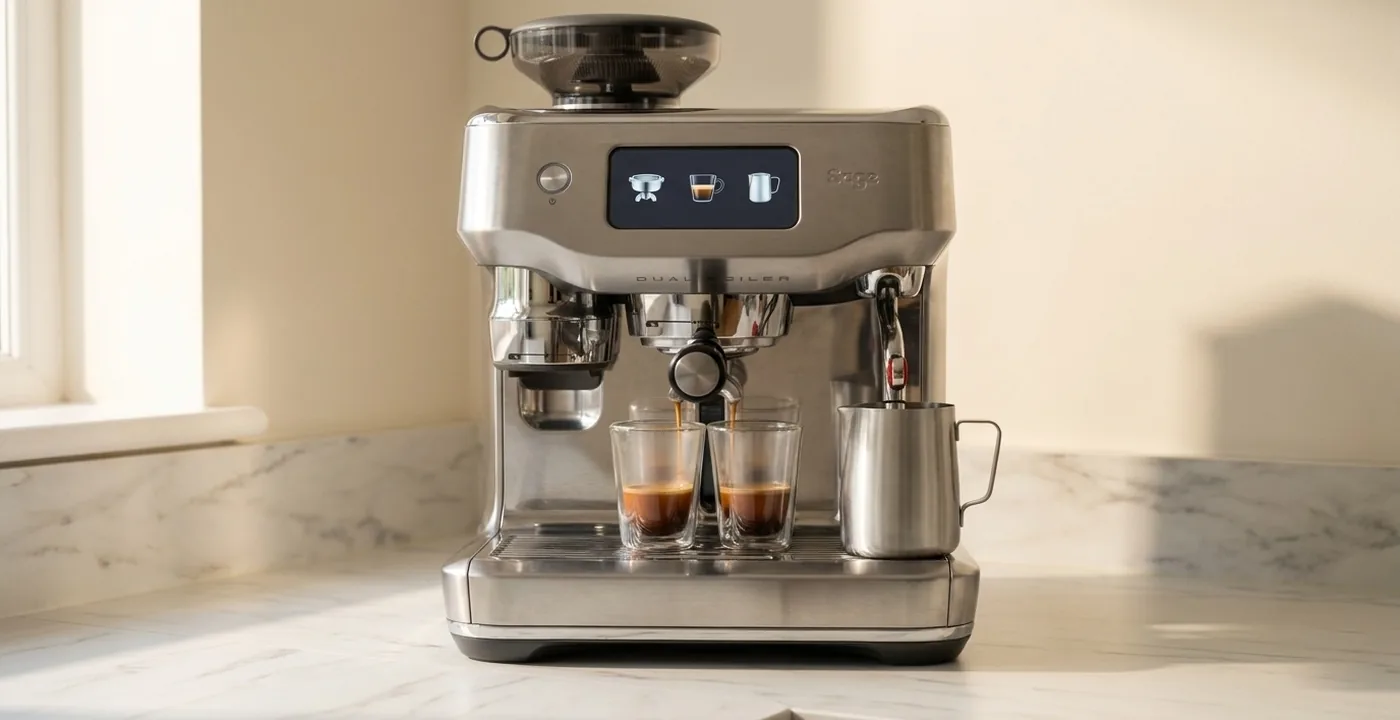
Table of Contents
Some of the links in this article are affiliate links, which help fund our independent review work at no extra cost to you. Every recommendation is based on hands-on testing through The Editor Lab methodology. No brand pays to appear, and no placement is guaranteed.
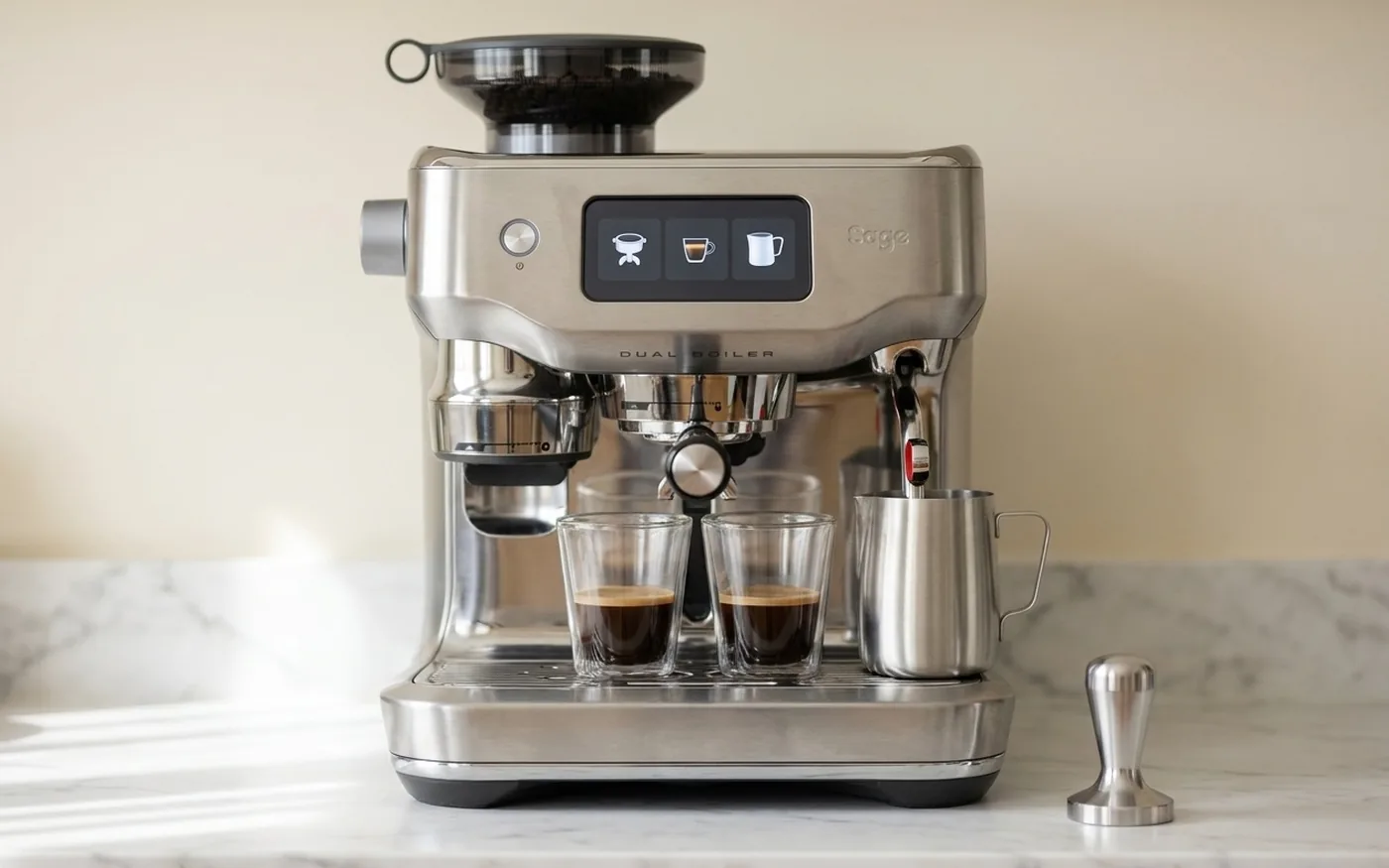
The Sage Oracle Dual Boiler costs £2,499.95 RRP, or £2,248.95 if you catch the right UK retailer this month, and it makes some of the best automated milk drinks your money buys at home. It also carries one flaw you cannot fix by spending more later: the grinder is built into the machine, and that grinder does not get on with light roast beans. Two independent published tests reached the same conclusion, and no page on the first page of Google says so plainly. This review, sitting within our wider best coffee machine rankings, does. If you drink medium or dark roast milk coffee and want the best automated workflow the UK sells, keep reading. If you buy light roast speciality beans, the honest answer sits in the grinder section below, and it may change your shortlist.
I spent five and a half years inside a traditional espresso machine manufacturer, the final two and a half as Sales and Marketing Manager, and their own engineers walked me through PID control and multi-boiler architecture component by component, the same category of system this machine runs at consumer scale. I also trained alongside the Sanremo SWAT team, including Sasa Sestic, the 2015 World Barista Champion, which is a strange thing to have in common with a Sage machine but shapes how I judge one. Every price, spec and owner claim below was checked against a live source in August 2026, run through our Editor Lab methodology.
The Verdict at £2,499.95
“Buy this if you want the best automated milk workflow money buys in the UK, and you already drink medium or dark roast beans. Skip it if you buy light roast speciality coffee, because the one part of this machine you cannot upgrade later is the part light roasts fight hardest.”
The price gap is worth naming upfront. Sage's own listing, along with 200 Degrees, Ozone Coffee, Small Batch and Workshop Coffee, prices the machine at £2,499.95 RRP. Shop around and you will find it lower: £2,248.95 at eCookshop and £2,249.95 at shopcoffee.co.uk, both checked August 2026, with Volcano Coffee Works sitting between the two at £2,399. That is a real ten percent you can save without waiting for a sale, so it is worth a few minutes of comparison shopping before you buy.
Ratings vary by source, and averaging them would flatten real differences, so here they are separately. Sage's own UK product page carries 4.5 out of 5 from 29 reviews. Google Shopping merchant aggregates sit lower: 4.1 out of 5 from 61 ratings at eCookshop and 4.1 out of 5 from 46 at shopcoffee.co.uk. Expert Reviews, in independent testing, scored it 4 out of 5. Read all four together and the picture is consistently good, not universally perfect, which matches what testing below actually found.
Retailers: Sage official (£2,499.95, Sage Appliances UK product page), Amazon UK (listing, check current price), eCookshop (£2,248.95, checked August 2026), shopcoffee.co.uk (£2,249.95, checked August 2026).
For the fuller range comparison, our best Sage coffee machine guide ranks the Oracle Dual Boiler against every other Sage machine we have tested.
Sage Oracle Dual Boiler vs Sage Dual Boiler - Which One You Are Looking At
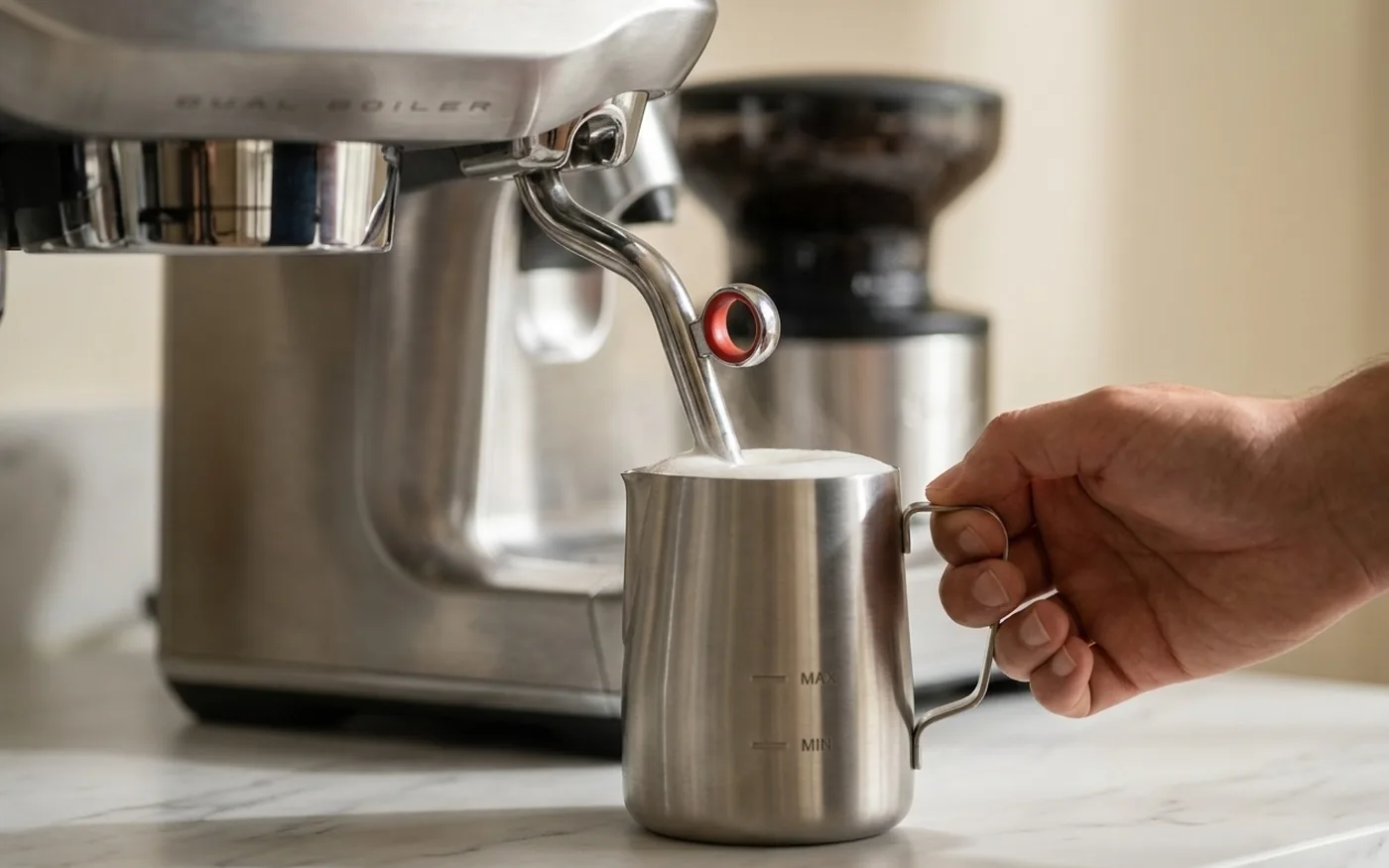
Two Sage machines share almost the same name, and if you searched your way here confused, you are not alone. The Sage Oracle Dual Boiler (BES995), reviewed in full below, costs £2,499.95 and comes with a built-in Baratza burr grinder handling grind, dose and tamp automatically. The Sage Dual Boiler (BES920) costs £1,249.95, launched over a decade earlier, and has no grinder at all. You buy your own separately and dial it in by hand.
That is not a minor spec difference, it is a different buying decision entirely. The BES920 suits a hands-on enthusiast who already owns, or wants to choose, their own grinder. The Oracle Dual Boiler suits someone who wants that decision made for them, automatically, every time. If a listing or a friend just says "Sage Dual Boiler" with no other qualifier, always check the model code before you assume which machine they mean.
We are working on a dedicated review of the Sage Dual Boiler (BES920) to cover that machine on its own terms. This article covers the BES995 only, so the BES920 gets no further review here beyond this distinction.
How It Performs
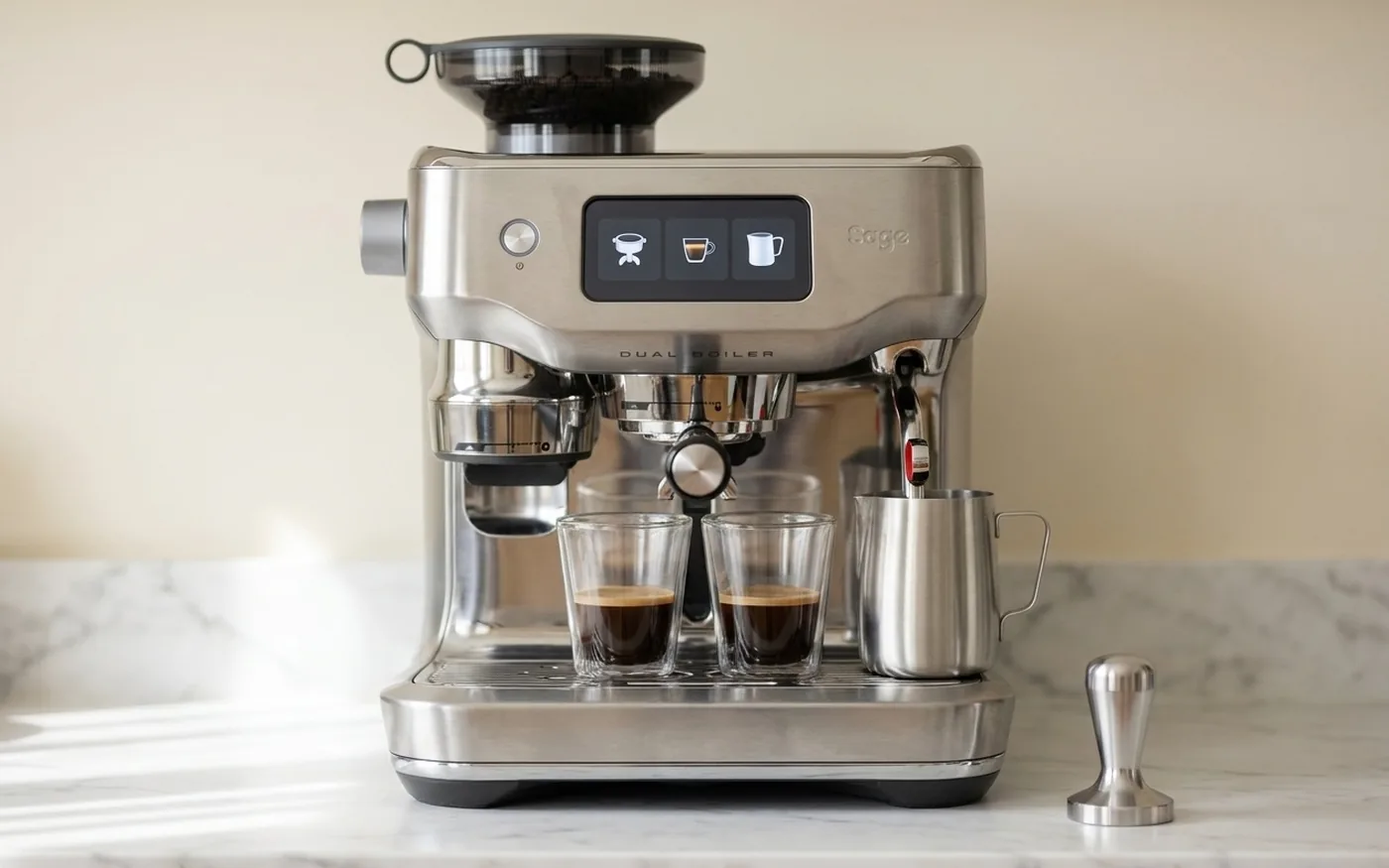
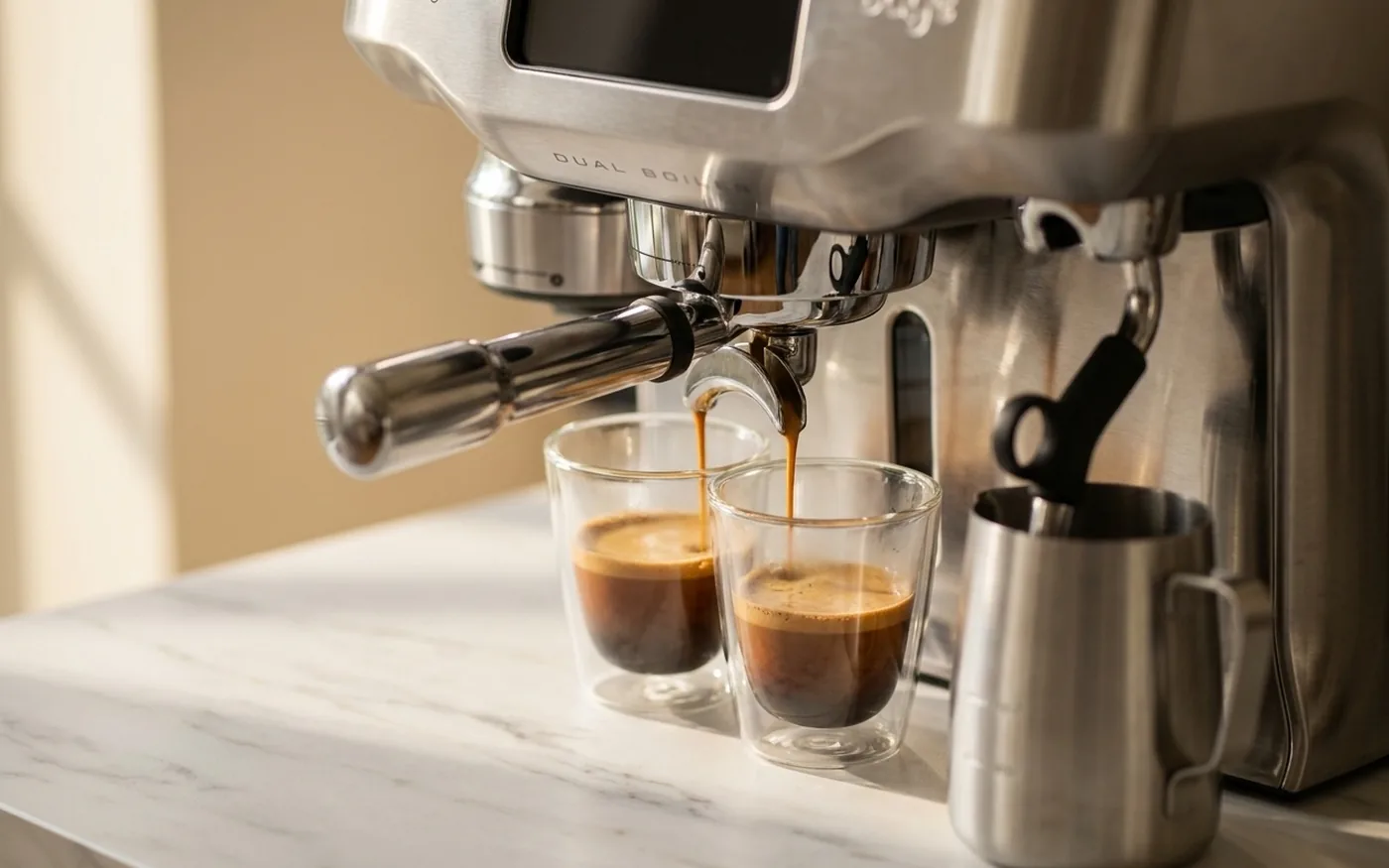
Pull a shot and steam milk on most home machines and you wait for one before you start the other. A dual boiler exists to remove that wait: two independent stainless boilers, one dedicated to brewing and one to steaming, running at the same time. That simultaneous brew-and-steam capability is the entire reason a dual boiler costs more than a single-boiler machine, and on the Oracle Dual Boiler it works exactly as intended.
Independent testing from Expert Reviews put heat-up at roughly four minutes from cold, a third espresso poured in about 32 seconds, with delivery landing between 30 and 36g. Manual mode lets you adjust brew temperature in 1°C steps across an 86 to 96°C range, which is a genuinely useful degree of control if you already know your extraction preferences. I trained on PID-controlled boiler systems built to hold temperature within fractions of a degree, and the range here, while consumer-grade rather than commercial-grade, is a real and usable spread, not a marketing number.
Milk is where this machine earns its price. Auto MilQ textures across 9 levels between 45 and 75°C, and Expert Reviews got 180ml of milk to temperature in 50 seconds, describing the result with full-fat dairy as "absolutely perfect, silky paint-like creaminess." You do not need to learn wrist position or pitcher angle to get there. Set the texture level once, and the machine repeats it.
For the fuller explanation of why two boilers beat one, and how a heat exchanger sits between them, our dual boiler vs heat exchanger guide covers the architecture on its own.
The Grinder: The One Real Limitation
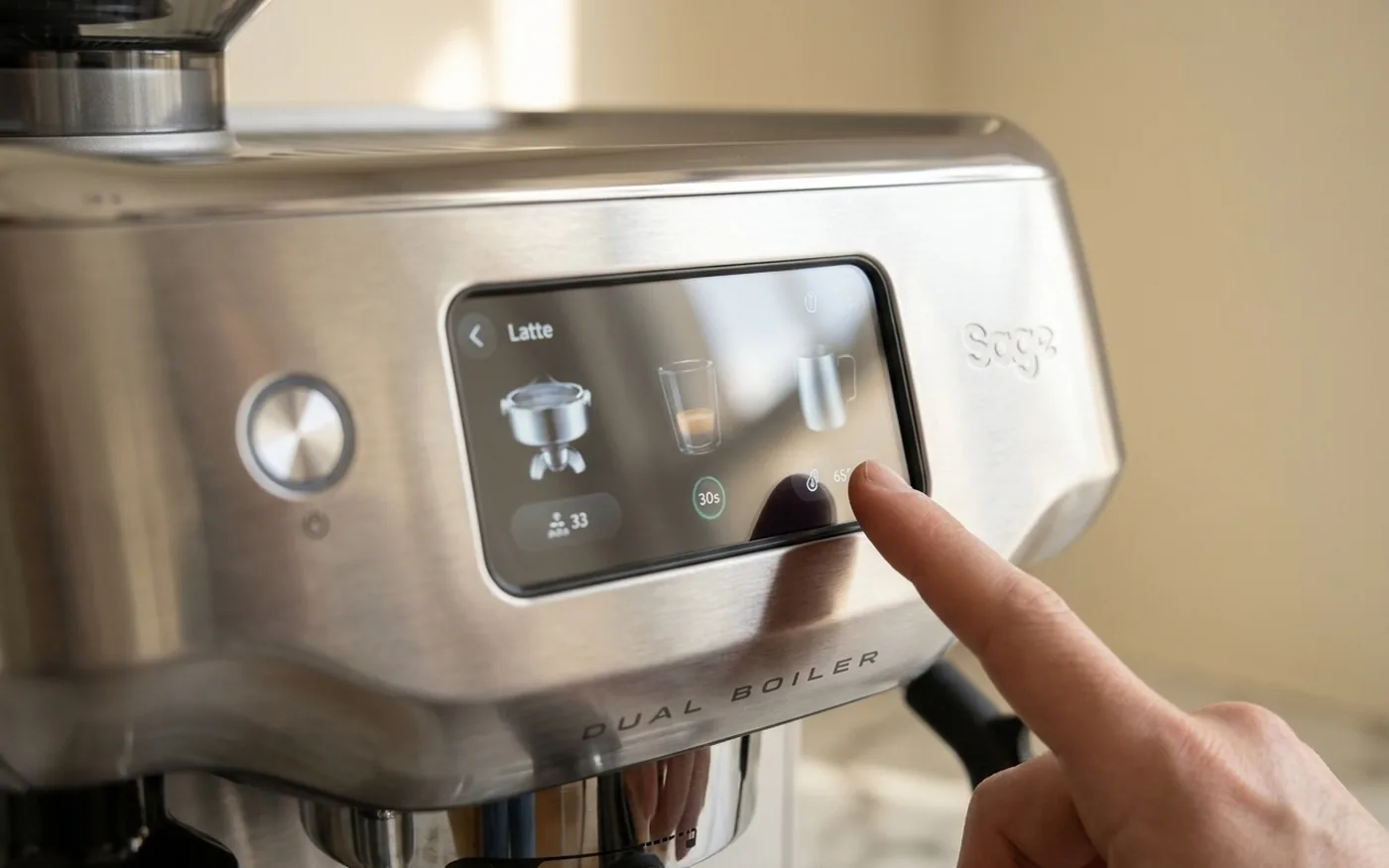
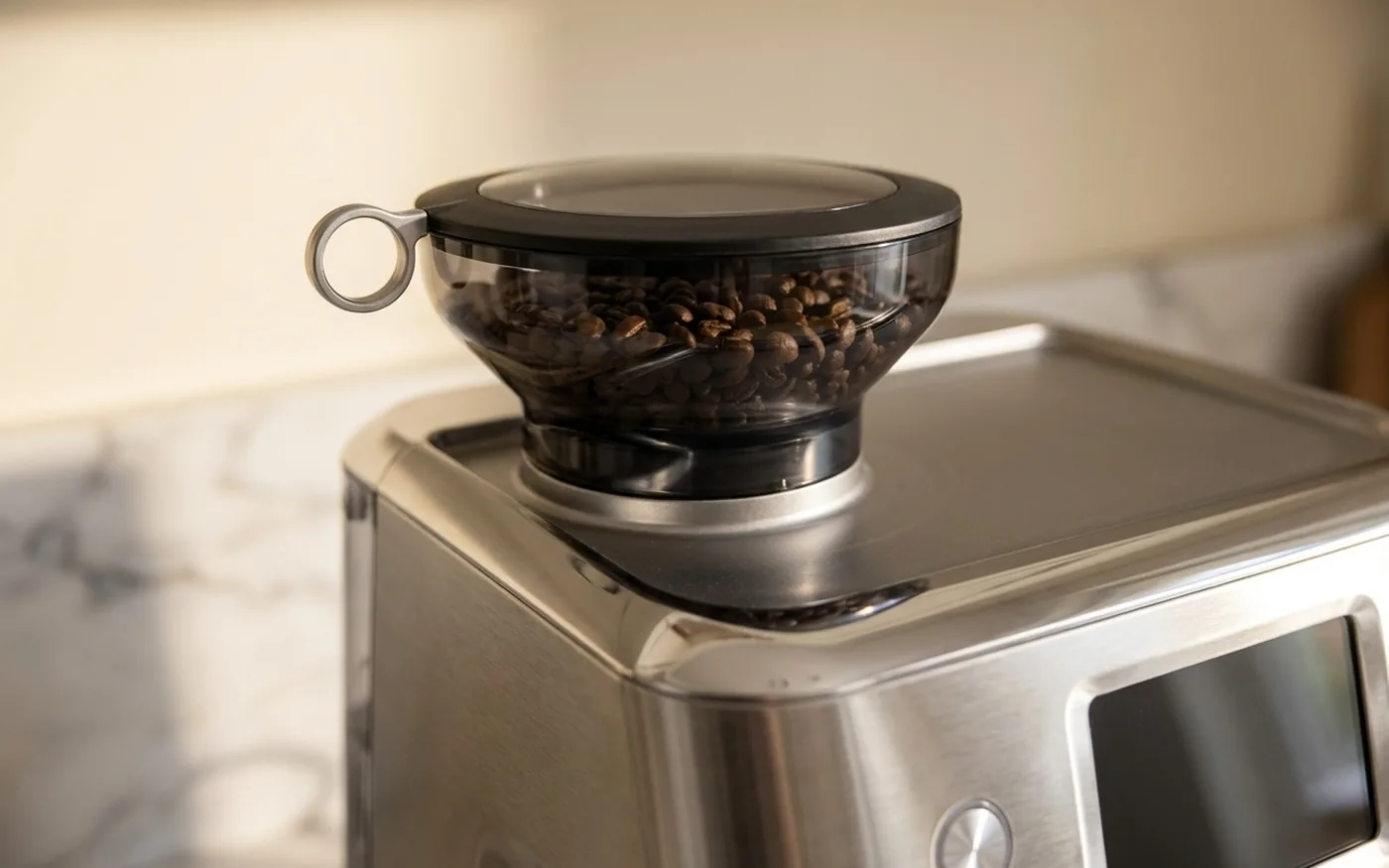
Ask what actually divides opinion on this machine, and the answer is always the same part. The built-in grinder runs Baratza burrs (Sage's own UK page calls them "Baratza European Precision Burrs"; Expert Reviews describes them as "good quality (and replaceable) Baratza M2 burrs") across 45 settings, adjusted through the touchscreen rather than an external dial. Replaceable burrs are a genuine positive, since it means the grinder is not permanently stuck with whatever edge it ships with.
Here is the honest part. Tom's Guide, testing the equivalent US model, needed 23 minutes and almost a full 200g bag of light roast coffee to dial the grinder in, and finished on setting 18, counterintuitively coarse for a roast that normally wants finer. Because the grinder is welded into the machine rather than sitting alongside it, that is not a problem you can solve later by buying a better one. I spent five years driving between UK roasteries, nearly 300 of them by the time I stopped counting, and light roast is where the disagreements about equipment always started, because it punishes anything that is not dialled in precisely.
Expert Reviews found the same pattern from a different angle: Auto Dial-In "doesn't always do a consistent job of optimising for different coffee types." That is the headline automation feature carrying a real caveat, not a rare edge case.
To be fair to it, this grinder is genuinely good with medium and dark roasts, which is what most buyers put through it day to day. If built-in automation matters more to you than manual control, our best bean-to-cup coffee machine guide covers that wider category. If you would rather keep the grinder decision entirely in your own hands, pairing a manual machine with a standalone unit such as the Sage Smart Grinder Pro is the more flexible route, and it is exactly the kind of setup our best coffee beans UK guide assumes when it recommends lighter roasts.
How It Compares in the Sage Range
Three hundred pounds and a very different question separate the Barista Touch Impress from the leap this machine represents. At £1,199, Expert Reviews names it, alongside the £1,799 Sage Oracle Jet, as better value for many buyers, and they are right for a specific reader: someone who does not need two independent boilers running at once.
Is the Oracle Dual Boiler £700 better than the Oracle Jet? It depends entirely on how your household actually drinks coffee. The Oracle Jet uses a single thermojet rather than dual boilers, which means it is genuinely capable but makes you choose between pulling a shot and steaming milk rather than doing both at once. If your mornings involve one person's espresso and someone else's flat white happening back to back, the Dual Boiler's simultaneous brewing earns its premium. If you make one drink at a time, the Jet does the same job for less. Our Sage Oracle Jet review covers that machine in full.
The Sage Oracle Touch sits closer in price and closer in spirit: same dual stainless boilers, same touchscreen-led experience, but automatic mode only. The Dual Boiler's real advance over the Touch is a genuine Manual mode alongside Auto, which matters if you ever want to override the machine rather than trust it completely. Our Sage Oracle Touch review, and our direct Oracle Jet vs Oracle Touch comparison, both help if you are choosing between the cheaper two before you even consider this one.
Dual boilers are, honestly, overkill for a lot of buyers. Expert Reviews says as much, and I agree with them: if you are not making back to back milk drinks daily, you are paying for capability you will rarely use. For a wider view across every prosumer option, not just Sage's own range, our best prosumer espresso machine guide sets this machine against its true competition.
Reliability, Servicing and What Owners Report
Every long-running product collects owner complaints, and naming them honestly matters more than pretending they do not exist. Sage's own UK listings carry reviews describing repeated faults after roughly sixteen to eighteen months of ownership, a pattern that turns up across the wider Sage range rather than being confirmed as specific to this exact model. Home-Barista's own long-running thread on Oracle reliability, titled "Months of Testing Reveal Serious Inconsistency Issues," is worth reading in full if durability is your main concern before you commit £2,500.
You should weigh that against two things. First, the replaceable Baratza burrs mean the part most likely to wear out over years of daily use is also the part you can swap without replacing the whole machine, which is a genuine mitigating factor most integrated grinders do not offer. Second, ten months of real owner feedback now exists that launch-week reviews could not have captured: Sage's own 4.5 from 29 and the merchant aggregates of 4.1 from 61 and 4.1 from 46 are all post-launch data, not pre-launch marketing claims.
I bought my parents a Sage Barista Pro during lockdown and spent weeks dialling it in at their kitchen counter, so I know how Sage's home machines age with genuine daily use, not just a review-week loan. That is not the same machine as this one, but it tells you Sage's home range is built for daily use rather than occasional showroom demonstration, which is the right baseline expectation for a machine at this price.
Who It Is For, and Who Should Skip It
If you already know you drink medium or dark roast beans and you want the best automated milk workflow the UK sells, stop reading the spec sheet and buy this machine. The simultaneous brew-and-steam, the Auto MilQ texturing and the Manual mode for when you want control together justify the price for that reader specifically.
If you buy light roast speciality beans, the honest answer changes. The Oracle Jet, or a separate machine paired with a grinder you control by hand, will serve you better than fighting this one's built-in Auto Dial-In every time you switch bags. That is not a knock on the machine, it is a mismatch between what it is built for and what you are trying to put through it.
On beans specifically: I founded Balance Coffee in 2020, and our Rotate Espresso, a medium roast 100% Mexico blend built for espresso, is a genuinely honest answer to what to put through this grinder if you already own it. It is worth being equally honest about the other side: Balance Coffee's lighter offerings will be harder to dial in on this machine than on a setup with an external grinder, for exactly the same reason the Tom's Guide test struggled. If light roast is what you actually reach for, buy the beans that suit your machine, not the other way around.
Full Specifications
| Spec | Detail |
|---|---|
| Model | BES995 (SES995BSS, EMEA) |
| Boiler system | Dual stainless steel boilers, triple heating system |
| Temperature control | PID, adjustable in 1°C steps, 86-96°C |
| Portafilter | 58mm |
| Dose | 22g |
| Grinder | Integrated Baratza burrs, 45 settings, electronic auto grind/dose/tamp |
| Milk system | Auto MilQ, 9 texture levels, 45-75°C, dairy/soy/almond/oat settings |
| Interface | 5.7 inch touchscreen, Quad-Core CPU, Auto and Manual modes |
| Dimensions | 45.4 x 37 x 37.5cm |
| Colours | Black Truffle, Brushed Stainless Steel |
| UK RRP | £2,499.95 (checked August 2026) |
| UK street price | £2,248.95-£2,499.95 (checked August 2026) |
Source: Sage Appliances UK product page, verified August 2026. Measured performance figures from Expert Reviews. Light roast dial-in test from Tom's Guide, tested on the equivalent US model at $2,999; the finding is used here, not the price.
Frequently Asked Questions
How good is the Sage Oracle Dual Boiler?
It is excellent at espresso and genuinely exceptional at milk texturing, matching commercial-grade steam performance in a way few home machines manage. Independent testing found roughly a four minute heat-up, a third espresso poured in about 32 seconds, and 180ml of milk textured in 50 seconds. The one real caveat is its built-in grinder, which struggles to dial in light roast beans.
What is the difference between the Oracle Touch and the Oracle Dual Boiler?
The Oracle Touch runs automatic mode only, using its touchscreen to control every step of the shot. The Oracle Dual Boiler adds a true Manual mode alongside Auto, letting you control grind, dose, and extraction by hand when you want to. Both use dual stainless boilers, but only the Dual Boiler gives you that manual option.
Which is better, an Oracle Jet or an Oracle Dual Boiler?
Neither is universally better. The Oracle Jet costs £1,799 and uses a single thermojet rather than dual boilers, and it is genuinely good value if you rarely brew and steam at the same time. The Oracle Dual Boiler costs £700 more and earns that premium if your household makes back to back milk drinks daily.
Is the Sage Oracle Touch dual boiler?
Yes, the Oracle Touch runs dual stainless boilers, the same architecture as the Oracle Dual Boiler reviewed here. The difference is not the boilers, it is the controls: the Touch is automatic only, while the Oracle Dual Boiler adds a genuine Manual mode. Do not confuse either with the separate Sage Dual Boiler (BES920), a different, cheaper machine with no built-in grinder.
What are common faults with Sage coffee machines?
Sage's own UK listings carry a mix of reviews, and among them are reports describing repeated faults after roughly sixteen to eighteen months of ownership. This pattern turns up across the wider Sage range rather than being specific to one model. Replaceable grinder burrs and Sage's UK service network are genuine mitigating factors worth weighing against those reports.
How long does a Sage dual boiler last?
There is no single verified average lifespan figure for the Oracle Dual Boiler, and inventing one would be dishonest. What exists instead is a mixed picture: some owners report years of reliable use, others report faults inside two years, and Home-Barista's own long-running thread on Oracle reliability names inconsistency as the core complaint. Replaceable burrs help longevity if a fault does occur.
Is the Sage Oracle Dual Boiler worth it for light roast coffee?
Honestly, this is the machine's weakest use case. One published test needed 23 minutes and almost a full 200g bag of light roast beans to dial in the built-in grinder, ending at a counterintuitively coarse setting 18. If light roast speciality coffee is what you drink most, buy the Oracle Jet instead or pair a machine with an external grinder you control yourself.
Is the Sage Oracle Dual Boiler the same as the Sage Dual Boiler?
No, and the names collide constantly. The Oracle Dual Boiler (BES995) costs £2,499.95 and has a built-in grinder with automatic dose and tamp. The Sage Dual Boiler (BES920) costs £1,249.95, has no grinder at all, and needs a separate one bought alongside it. If a listing just says "Dual Boiler," check the model code before you buy.
Related Guides
A wellness entrepreneur and biohacker, James explores the intersection of hospitality and health - from clean fuel and recovery tools to mindful routines that build balance into daily life.