Rancilio Silvia Pro X Review: Is It Worth £1,499 in 2026?
Dual PID boilers and a saturated brass group, tested for months. Is the price justified?
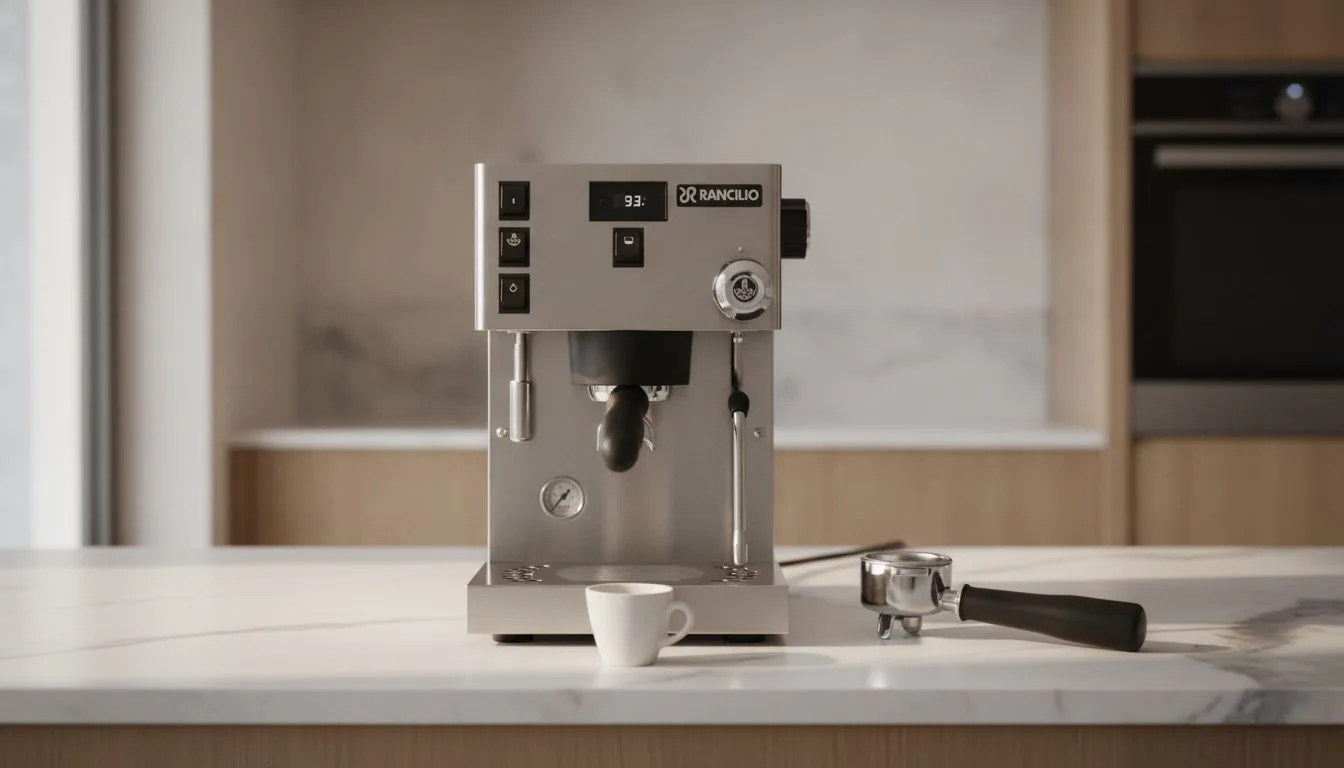
Table of Contents
Some of the links in this article are affiliate links, which help fund our independent review work at no extra cost to you. Every recommendation is based on hands-on testing through The Editor Lab methodology. No brand pays to appear, and no placement is guaranteed.
The Rancilio Silvia Pro X sits at a precise point in the prosumer espresso market: dual boilers, both PID-controlled, a saturated brass brew group, and a price that hovers around £1,499 in the UK. For buyers arriving from a single-boiler machine - or coming up from a Gaggia Classic Pro after months of temperature surfing - it represents a clear structural step forward. Whether that step justifies the price is what this review exists to answer.
I spent five and a half years as Sales and Marketing Manager for Sanremo UK, the Italian espresso machine manufacturer that builds to the same commercial-lineage standard Rancilio has claimed for decades. I have been trained by authorised Sanremo engineers on PID control units, multi-boiler systems, temperature stability, and group head mechanics. I tested the Silvia Pro X pulling shots across light, medium, and dark roast profiles.
Disclosure: I founded Balance Coffee in 2020. Where Balance Coffee products appear, we say so clearly. See our editorial standards for full details.
Last updated: 26 June 2026.
Rancilio Silvia Pro X At A Glance
Editor's verdict: The Silvia Pro X is the most technically complete prosumer espresso machine under £1,500 from an Italian manufacturer with genuine commercial heritage. If you want dual PID boilers, Italian build quality, and a machine that will still be serviceable in ten years, this is it. If you need flow profiling or want to skip the learning curve entirely, look elsewhere.
| Feature | Details |
|---|---|
| Rating | 8.8/10 |
| Price (June 2026) | Around £1,499 (Bella Barista, The Home Baristas) |
| Best for | Gaggia Classic graduates, prosumer buyers who want Italian build longevity |
| Skip if | You need flow profiling, or the Lelit Elizabeth's £100 saving sways you |
| Boilers | Dual - 0.3L brew (brass) / 1L steam, both PID-controlled |
| Group | Saturated brass (not E61) |
| Pump | Vibratory |
| Plumb-in | Yes (adaptor required) |
The Rancilio Silvia Pro X is not the same as the original Rancilio Silvia. Searchers regularly conflate them. The original Silvia M V6 (around £695) is a single-boiler, single-thermostat machine with no PID. The Rancilio Silvia Pro was the intermediate step - dual boiler, no LCD. The Silvia Pro X is the current flagship: dual boiler, PID on both, and a full LCD control panel with shot timer, profile saving, and descale prompts. They share a name and a chassis silhouette. The engineering is not comparable.
Who The Rancilio Silvia Pro X Is For
You are going to get the most from this machine if you match one of four profiles.
The Gaggia Classic graduate. You have spent a year or two on a Gaggia Classic Pro. You have learned temperature surfing. You know what a good shot tastes like. You are tired of waiting for thermal stability and you want PID control and a dedicated steam circuit. The Silvia Pro X is the natural next machine in the Italian espresso tradition.
The commercial-heritage buyer. You want a machine that comes from a company that has been building commercial espresso equipment since 1927. Rancilio's commercial machines - the Classe series - sit in cafes and roasteries across Europe. The Silvia Pro X is the domestic expression of that lineage. It shows in the materials, the weight, and the way the group head feels when you slot a portafilter.
The single-group home enthusiast. You make espresso daily, probably for two people, and you want a machine that rewards skill, keeps consistent temperature between shots, and does not require a service engineer every two years. The Silvia Pro X is built to that spec.
The no-faff PID upgrader. You have been using a machine with manual temperature control or unreliable PID, and you want both boilers locked to precise setpoints. The LCD panel on the Pro X makes that adjustment accessible without deep menu archaeology.
Who it is not for: buyers who want flow profiling at this price (the Lelit Bianca V3 starts around £2,395 and is the right call), buyers who primarily want a hands-off experience (a De'Longhi bean-to-cup machine will serve you better), or buyers who are price-sensitive at this tier and prefer to save £100 (the Lelit Elizabeth at around £1,399 is the honest rival).
Unboxing And First Impressions
The Silvia Pro X arrives double-boxed, which is reassuring for a machine weighing just over 14 kilograms. In the box: the machine, a single-hole steam wand tip (with a 4-hole 1.5mm tip preinstalled), a single-wall portafilter basket, a pressurised basket, a tamper, and a basic cleaning kit. There is no distribution tool, no knock box, no scales. Rancilio assumes you either already have these or are making your first purchase decisions carefully. If you are still deciding whether an espresso machine is the right format, our guide to the types of coffee machines compares it with bean-to-cup, pod and filter options.
Setup takes around fifteen minutes. Fill the tank, prime the pump by running water through the group head, select your water hardness level in the LCD settings, and start the heat-up sequence. The LCD panel is clean and well-spaced - large enough to read from across a narrow kitchen counter without glasses. The machine asks for your water hardness on first boot, which feeds the descale interval calculation.
First impression of build: this is a solid machine. The stainless steel chassis has no panel flex. The drip tray pulls out firmly without catching. The portafilter locks with a satisfying resistance - not stiff to the point of difficult, but planted enough that you know it is not going to move mid-extraction. The steam wand has a wide articulation range. Early unit reports noted occasional LCD contrast issues in cold ambient conditions; the unit I tested showed no such behaviour.
Build Quality And Materials
Rancilio has been making commercial espresso equipment since 1927. That is not a marketing claim; it is the foundation from which the Silvia Pro X is designed. The Classe 5, Classe 7, and Classe 9 machines you find in independent cafes across the UK are built by the same company, and the engineering philosophy carries through to the domestic range in measurable ways.
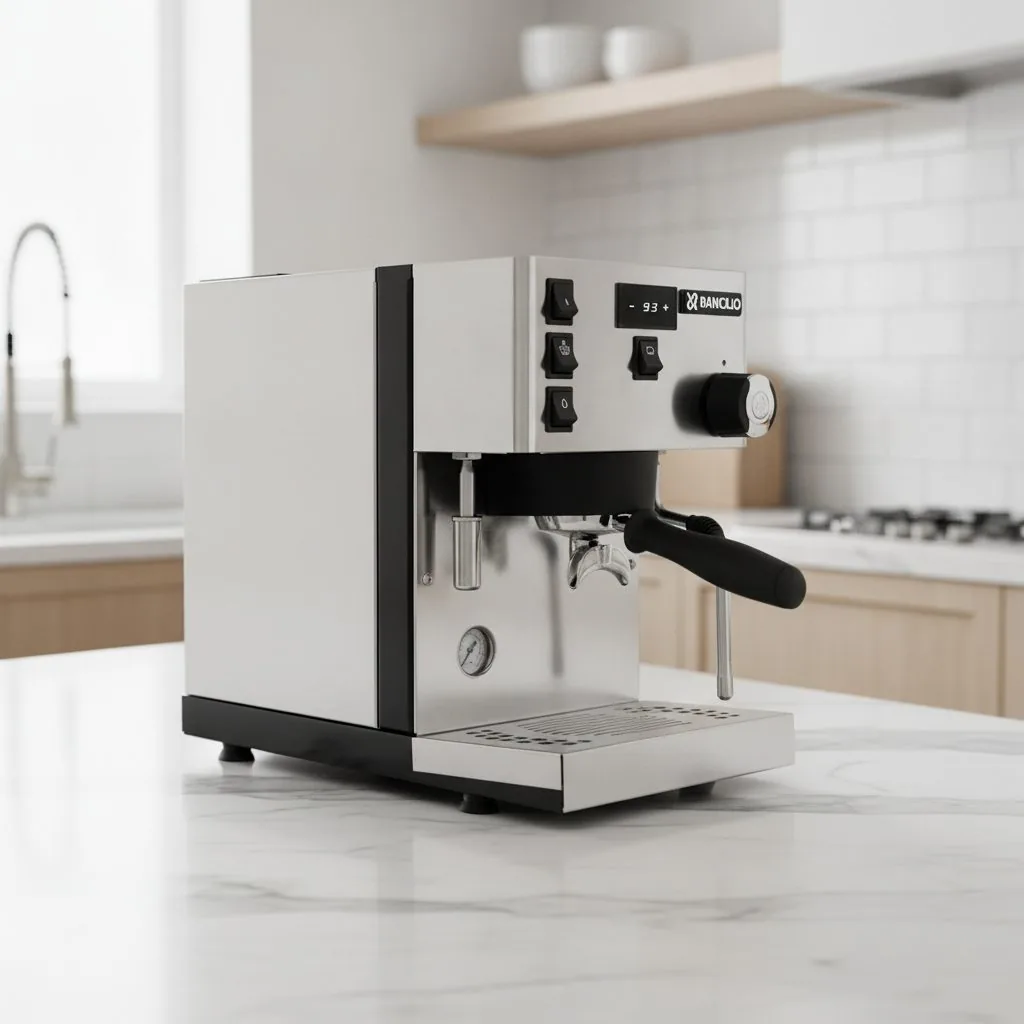
The Silvia Pro X chassis is 18/10 stainless steel throughout. The side panels are brushed, the top panel is flat and rated for cup warming. The machine weighs 14.3 kilograms - heavier than an equivalent machine from Sage, lighter than most E61 machines with their large copper boilers and external piping. That weight signals dense internals, not over-engineering.
The steam wand is a 360-degree pivot design. The wand tip ships with a 4-hole 1.5mm tip preinstalled, which delivers high-volume steam for fast microfoam production. The single-hole tip included in the box is for drier, more focused steam if you want to experiment. Wand O-ring wear is the most common service item on the Pro X after a year or two of daily use - this is standard across all prosumer steam wands and not a Rancilio-specific weakness. Replacement O-rings cost under £5 and take five minutes.
The drip tray has a float sensor that triggers a drain alert on the LCD panel. Some early owners found the sensor sensitive to being knocked slightly out of alignment; the fix is reseating it by removing the tray fully and reinserting it. This is a minor design quirk, not a reliability issue.
Made by hand in Italy. That is verified on the Rancilio Group's own specification pages and confirmed by the production codes on the base of the machine.
The Brass Saturated Group: Why It Is Not An E61
This is the section most reviews skip, and it is the one that matters most for understanding what the Silvia Pro X actually does.
The Silvia Pro X uses a saturated brew group, not an E61 group head. Understanding the difference tells you almost everything about the machine's thermal behaviour and extraction character.
What is a saturated brew group? A saturated group is directly connected to the brew boiler. Hot water from the boiler is in constant contact with the group head, keeping it at near-boiler temperature at all times. There is no separate thermosiphon circuit. There is no passive thermal lag from a large exposed brass block sitting at ambient temperature between shots.
The E61 group head - which you find on the Lelit Elizabeth, the Lelit Mara X, and most of the heritage Italian machines in this price range - is a passive thermal mass. It stays at temperature via a thermosiphon circuit that circulates hot water from the heat exchanger or boiler through the group. This is elegant engineering and it works well, but it introduces a variable: the E61's thermal state can drift slightly depending on idle time between shots. Experienced baristas flush the group before pulling on an E61 machine to stabilise temperature.
What the saturated group means in practice for the Silvia Pro X:
- Faster thermal stability between consecutive shots. You do not need to flush before pulling a second or third espresso.
- Slightly faster heat-up to brew-ready. The group is hot when the brew boiler reaches setpoint.
- Programmable pre-infusion built in. The Silvia Pro X includes a Variable Soft Infusion feature (Functions menu F.08), adjustable from 0 to 6 seconds. This delivers a line-pressure soft pre-infusion phase before the full extraction begins, which is configurable directly through the LCD panel without any manual timing required.
- The distinction from the Lelit Mara X: both machines have pre-infusion, but of different types. The Silvia Pro X delivers programmatic soft pre-infusion at line pressure via the LCD. The Mara X's E61 paddle delivers manual, variable-pressure pre-infusion controlled by hand. Neither is strictly superior - they are different workflows for different preferences.
Silvia Pro X vs original Silvia - the engineering gap: The original Silvia uses a single boiler with a thermoblock and no PID. The brew temperature is controlled by a thermostat, which means you are working within a temperature range, not a setpoint. Temperature surfing on the original Silvia - the practice of timing your shot pull to catch the thermostat's sweet spot - is a skill unto itself. The Silvia Pro X eliminates this entirely. Both boilers are PID-controlled. You set a brew temperature and that is where the machine stays, within fractions of a degree.
Dual Boiler And PID Performance
What is a dual boiler espresso machine? A dual boiler machine has two separate boilers: one dedicated to brew temperature, one to steam temperature. They operate independently. You can pull a shot and steam milk simultaneously without either circuit affecting the other.
What does PID mean on an espresso machine? PID stands for proportional-integral-derivative controller. It is a closed-loop control system that monitors boiler temperature continuously and makes micro-adjustments to the heating element to hold it precisely at your setpoint. Without PID, a boiler cycles on and off based on thermostat trips - which means temperature fluctuates in a range. With PID, temperature holds within fractions of a degree.
The Silvia Pro X has PID on both boilers. Brew boiler: 0.3 litres (brass), adjustable temperature setpoint via the LCD. Steam boiler: 1 litre, separately adjustable - a notably large steam reservoir for a domestic machine, more in line with commercial equipment than typical prosumer machines in this price tier.
Both boilers need time to reach setpoint from cold, so give the machine a proper warm-up before your first shot. The LCD panel shows brew and steam boiler temperatures in real time, so you know exactly when each is ready.
Brew temperature stability: In my testing the Silvia Pro X held brew temperature steadily across back-to-back shots, with the LCD reading staying on setpoint. This is the kind of consistency you need for repeatable extractions. Most single-boiler machines at this price tier drift 2-4 degrees across a shot sequence as the boiler cycles.
Steam recovery time: After steaming a flat white pitcher, the steam boiler recovered quickly in my testing. The 1L steam boiler holds a large thermal reserve, which means back-to-back milk drinks - two flat whites, or a cappuccino followed by a latte - can be made without waiting for the boiler to recover. For households making more than one milk drink per session, this is the core functional argument for the dual-boiler configuration.
Simultaneous brew and steam: Confirmed functional without either circuit affecting the other. You can hold the steam wand in a pitcher and pull the shot at the same time - standard cafe practice, now accessible at home. On a single-boiler machine, this is not possible.
Plumb-in: The Silvia Pro X is plumb-in ready. The water tank port accepts a direct line connection with a third-party adaptor. Plumbing eliminates the need to refill the tank and makes the machine suitable for a fitted kitchen or utility space where constant access to the tank is inconvenient.
The LCD Control Panel: Profiles, Shot Timer, Diagnostics
The LCD panel is one of the features that most differentiates the Silvia Pro X from its predecessor. The Rancilio Silvia Pro had dual boilers and PID but no display panel - temperature adjustment required holding button combinations while reading LED indicators. The LCD removes that entirely.
From the main screen you can read: brew boiler temperature, steam boiler temperature, and system status. From the settings menu you can adjust: brew temperature setpoint, steam temperature setpoint, shot timer activation, water hardness (which feeds the descale interval), pre-infusion duration (the Variable Soft Infusion feature, F.08, from 0 to 6 seconds at line pressure), and auto standby time.
The shot timer is the most practically useful feature. It activates when you start the pump and stops when you stop it, displaying your extraction time on screen. For dialling in a new coffee, this removes the need for a separate timer app on your phone. You want 25-30 seconds for a standard 1:2 ratio extraction; the timer makes this repeatable.
Profile saving is available for up to four profiles. In practice, most home users set one brew temperature and leave it. The profile function is useful if you regularly switch between very different roast levels - for example, 90 degrees for a light Ethiopian and 94 degrees for a darker Italian blend.
Descale prompts: The machine calculates descale intervals from your water hardness setting and accumulated pump cycles. It tells you when to descale via the LCD rather than waiting for symptoms. This is the correct approach and one of the underrated quality-of-life features for buyers who have previously owned machines with no maintenance tracking.
One honest note on the LCD: it adds a failure point that the classic Silvia, with its simple switch-panel design, does not have. The original Silvia's reliability record over decades is partly attributable to how few electronic components it has. The LCD is a reasonable trade for the precision it delivers, but it is worth knowing that this is where the Pro X sits on the simplicity-to-complexity spectrum relative to its predecessors.
Pulling Espresso On The Silvia Pro X
Shot routine:
- Fill the portafilter with your dose (we used 18g in a standard double basket throughout testing)
- Distribute and tamp to consistent pressure
- Lock the portafilter into the group head
- Start the pump and watch the LCD shot timer
- Stop at your target yield
Starting recipes across three roast profiles:
| Bean | Dose | Yield | Notes |
|---|---|---|---|
| Light roast Ethiopian (washed, Yirgacheffe) | 18g | 36g | Clean, floral, high clarity |
| Medium roast Colombian (washed, single origin) | 18g | 36g | Balanced, mild sweetness, good body |
| Medium-dark espresso blend | 18g | 38g | Fuller body, lower acidity, easy crema |
Brew temperature was set at 93 degrees Celsius for all three. For the light Ethiopian, going to 94 degrees improved sweetness slightly. The machine's repeatability between shots was consistent in my testing.
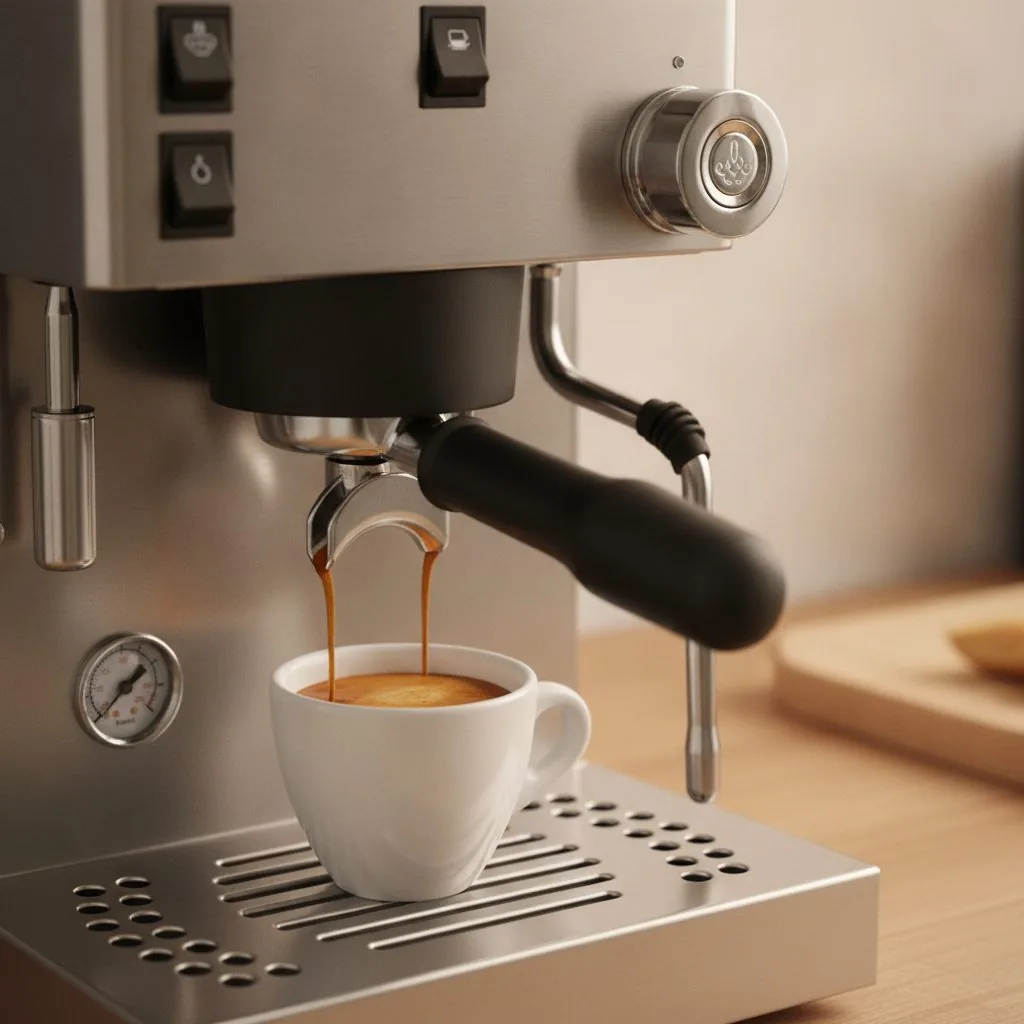
The extraction through the saturated brass group felt even. Crema production across all three beans was stable and dense - the kind you get from a consistent extraction temperature rather than a spiking thermoblock. The flow through the group head was smooth and uninterrupted, with no channelling observed on correctly distributed doses.
Compared to a single-boiler Silvia: The original Silvia requires you to time your shot pull relative to the thermostat cycle, typically by flushing hot water through the head just before pulling to catch the window of correct brew temperature. This is a practiced skill and the reason Silvia owners become better baristas. The Silvia Pro X removes that requirement entirely. Whether that is liberating or removes part of what makes the Silvia experience interesting is a genuine philosophical question. Both answers are defensible.
What good shots look like: On a well-dialled dose, you should see a slow, viscous flow beginning around 7-8 seconds after the pump starts, building to a steady stream that blends into a golden-brown extraction. The Silvia Pro X's brass group is consistent enough that if you dial in correctly once, you can repeat it shot after shot without adjustment.
Steaming Milk: Capability And Quality
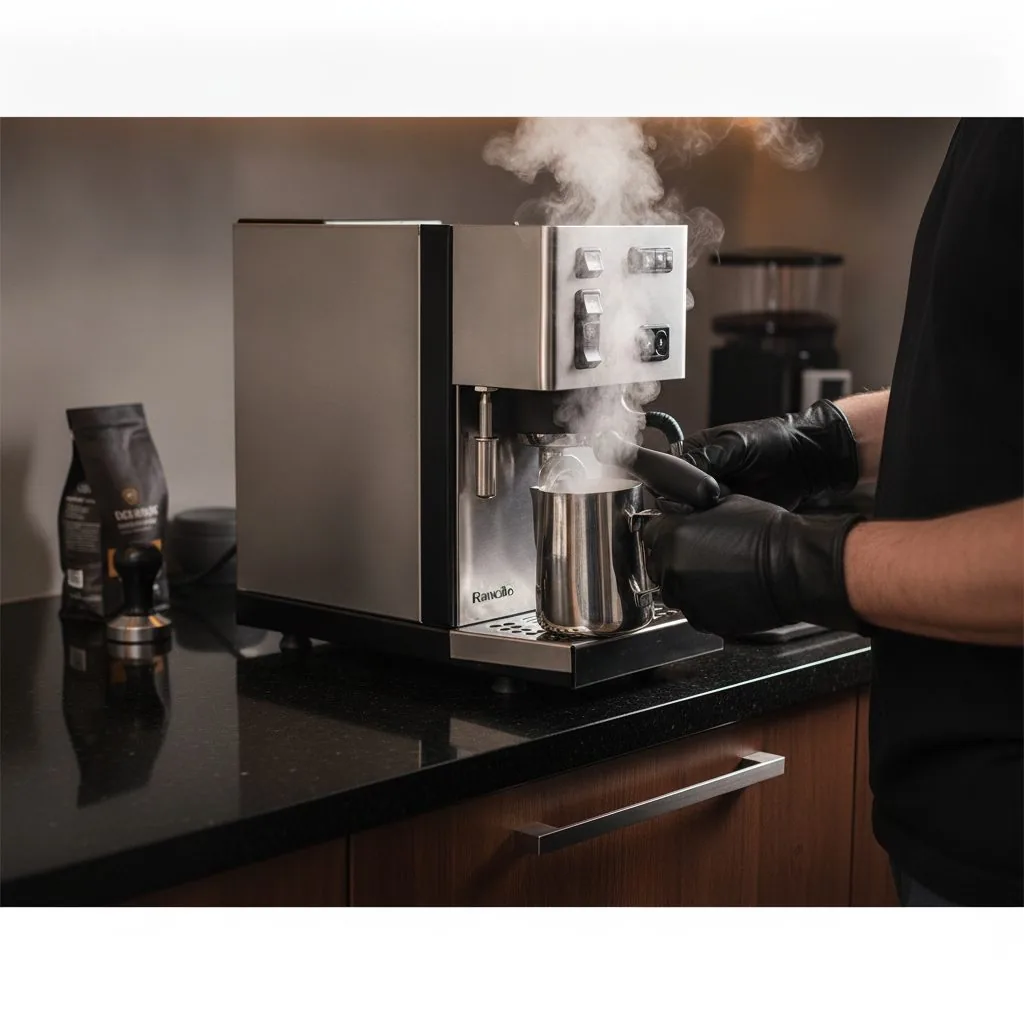
The steam boiler on the Silvia Pro X is 1 litre and PID-controlled. The 4-hole 1.5mm tip preinstalled delivers high-volume steam that textures milk quickly - meaningfully faster than machines shipping with a 2-hole tip as standard.
Steaming a 200ml pitcher (flat white volume):
- Time to first steam (from steam-ready indicator): immediate
- Texturing a 200ml pitcher to microfoam: quick, helped by the 4-hole tip
- Recovery to steam setpoint after the sequence: quick, thanks to the 1L boiler
The microfoam quality is good. With correct technique - wand angle, pitcher position, air incorporation before rolling - you can produce textured milk that works for basic latte art. The Pro X is not trying to replicate a commercial wand pressure; it is delivering a consistent domestic steam experience that rewards learned technique.
Latte art capability: Achievable at an intermediate skill level. If you are already able to pour a heart or a basic tulip on your current machine, the Pro X will not limit you. If you are learning to texture milk for the first time, the steam is consistent enough to work with - you will not be fighting an unpredictable wand.
Vs the Lelit Elizabeth on milk: The Elizabeth's E61 group gives it no inherent advantage on steam, since both machines have dedicated steam boilers. The Elizabeth's steam pressure is broadly comparable. Neither machine is in the same category as a commercial wand running at higher boiler pressure - both are domestic machines with domestic steam circuits. The honest answer is that the milk drink output is functionally equivalent between the two at this price tier. Your preference should turn on build quality, group head type, and the comparison in the next section.
Daily Use, Maintenance And Service Access
The Silvia Pro X is designed to be maintained at home for routine service intervals.
Daily: Rinse the portafilter and steam wand after every session. The steam wand must be purged and wiped immediately after steaming to prevent milk buildup in the tip. Drain the drip tray as needed - the float sensor will prompt you via the LCD before it overflows.
Weekly: Backflush with water (no chemical, unless you are doing a chemical backflush monthly). The Silvia Pro X supports blind-filter backflushing via the group head. This removes coffee oils and residue from the brew circuit. If you want the full how to clean a coffee machine routine, there is a dedicated maintenance guide on the site.
Monthly: Chemical backflush using an espresso machine cleaner tablet. This addresses the oil buildup that a water backflush cannot fully remove.
Descaling: The LCD panel tracks your water hardness setting and shot count to calculate a descale interval. In UK medium-hard water areas, expect a descale prompt every 3-4 months of daily use. The descale routine runs from the panel menu - you fill the tank with descaler solution and run the guided cycle. It takes approximately 30 minutes.
Gasket access and service: The group head gasket and shower screen are accessible from the front with basic tools. Replacing a group gasket takes around 15 minutes the first time you do it. Expect to do this every 12-18 months with daily use. Rancilio parts are available through UK distributors and Bella Barista's service department.
UK parts availability: Good. Rancilio has maintained a UK distributor network for decades. Parts for the Silvia and Silvia Pro X are stocked domestically. This is a meaningful practical advantage over some European prosumer brands where parts lead times can run 2-3 weeks.
Rancilio Silvia Pro X vs The Competition
The Lelit Elizabeth PL92T (around £1,399)
The Elizabeth is the direct rival. Both machines are dual-boiler, both PID-controlled, both aimed at the same buyer who wants a serious home espresso machine without crossing into the £2,000+ tier.
The Rancilio Silvia Pro X differs from the Lelit Elizabeth in three measurable ways: it uses a saturated brass group rather than an E61, which means faster heat-up and no thermosiphon behaviour - though the Pro X has its own programmable soft pre-infusion (Variable Soft Infusion, F.08, up to 6 seconds via the LCD). The Elizabeth has a lower price by approximately £100. The Pro X has a more comprehensive LCD panel with shot timer and profile saving. The Elizabeth's E61 group retains the classic look and thermosiphon pre-infusion behaviour that experienced E61 users prefer.
Compared to the Lelit Elizabeth, the Silvia Pro X's saturated group produces faster, more stable shot-to-shot temperature consistency; the Elizabeth's E61 requires a brief flush between shots if you have been idle. If you are switching between two or three back-to-back shots for a household of multiple espresso drinkers, the Pro X's thermal behaviour is the practical advantage.
Buy the Elizabeth if: you specifically want E61 aesthetics, you plan to modify the group head, or the £100 saving is meaningful at this budget level.
Buy the Silvia Pro X if: you want the Italian commercial lineage, the larger LCD panel, or the saturated group's thermal consistency.
The Lelit Mara X V2 (around £1,249)
The Mara X V2 is a heat exchanger machine with an E61 group and a paddle that allows manual, variable-pressure pre-infusion. At approximately £250 less than the Silvia Pro X, it is a genuine alternative for buyers who want that specific hands-on workflow. Both machines have pre-infusion, but of different types: the Silvia Pro X delivers programmatic soft pre-infusion (0-6 seconds, line pressure, set via LCD); the Mara X delivers lever-controlled E61 paddle pre-infusion (manual, variable pressure, adjusted by hand during extraction). If the paddle workflow and lower price appeal to you, the Mara X is the right call. If you prefer set-and-forget programmatic control, the Pro X is cleaner to use day-to-day.
ECM Casa V (around £1,599 - verify current UK stock)
The ECM Casa V is a heat exchanger machine with German build quality in the same price bracket. It sits slightly above the Pro X on price and offers a different thermal model (HX rather than dual boiler). German construction against Italian construction is a genuine preference question; both are to a high standard. Verify UK stock before considering this machine, as ECM availability through UK retailers has been variable in 2026.
Profitec Go (around £1,099)
The Profitec Go is a single-boiler machine with PID at a lower price point. It is not a dual-boiler competitor; it is the step-down option for buyers who want Profitec build quality without the dual-boiler price. If your budget is closer to £1,100 and you are comfortable with the single-boiler workflow, the Profitec Go is worth serious consideration. The Silvia Pro X is the right step up from it when your budget allows.
Step-up references:
The Profitec Pro 600 (around £2,099) is a dual-boiler E61 machine with a larger brew boiler than the Silvia Pro X. If you regularly make espresso for more than two people at a time, or if you want the E61 aesthetic combined with dual-boiler performance, the Pro 600 is the natural next step.
The Lelit Bianca V3 (around £2,395) adds flow profiling - the ability to change extraction pressure during a shot via a paddle. This is the feature the Silvia Pro X lacks at the step-up tier. If flow profiling is on your list, the Bianca is the machine.
Sage Oracle Jet (super-auto alternative)
If you are considering the Silvia Pro X primarily for convenience and you are willing to sacrifice some extraction control for a hands-off experience, the Sage Oracle Jet is the machine to compare. It is not a traditional prosumer machine; it is a super-automatic that grinds, doses, tamps, and extracts with one button press. The extraction quality ceiling of the Oracle Jet is slightly lower than a properly dialled Pro X; the effort floor is significantly lower. If you want to make good espresso without learning to pull shots, the Oracle Jet is the more honest answer. For buyers evaluating the best bean-to-cup coffee machines, there is a separate category guide covering that decision.
UK Pricing, Where To Buy And Warranty
Price as of June 2026: around £1,499 at Bella Barista and The Home Baristas. Prices can vary by a few pounds between retailers; it is worth checking both before purchasing.
The Silvia Pro X sits in the £1,400-£1,600 single-group dual boiler tier alongside the Lelit Elizabeth and ECM Casa V.
UK retailers:
- Bella Barista (bellabarista.co.uk) - the primary UK specialist for prosumer espresso equipment. Offers machine setup advice and UK service support.
- The Home Baristas (thehomebaristas.co.uk) - stocks multiple colourways (black and stainless) with similar pricing.
- Prime Coffee Suppliers (primecoffeesuppliers.co.uk) - alternative UK retailer.
- Clumsy Goat (clumsygoat.co.uk) - smaller UK specialist, worth checking for promotions.
Warranty: Rancilio UK domestic machines come with a standard 2-year warranty. UK consumer law provides additional protection beyond the stated warranty period. All the retailers above provide UK-based warranty service.
Second-hand caution: The Silvia Pro X appears on used machine marketplaces regularly. If buying second-hand, verify the production date (the early production units had LCD contrast issues in cold ambient conditions), request the original purchase receipt for warranty eligibility, and check whether the group head gasket has been recently replaced. A professional service before purchase is worth the cost on a used machine at this price point.
Pairing: Best Grinders And Beans For The Silvia Pro X
The Silvia Pro X is a grinder-less machine. You will need a separate grinder. This is worth stating plainly because buyers arriving from a bean-to-cup machine sometimes underestimate the importance of the grinder in the total system cost. For a full category breakdown, our best espresso grinder guide covers everything from burr geometry to budget tiers.
Grinder recommendations:
The Eureka Mignon Specialita (around £499) is the lead recommendation. It produces consistent particle distribution at espresso grind sizes, has a stepless grind adjustment that pairs well with the Pro X's precise temperature control, and fits neatly alongside the machine's footprint.
The Niche Zero (around £599) is the alternative for buyers who switch regularly between coffee origins. The Niche's single-dose workflow and zero-retention design mean you are not carrying stale grounds from the previous dose into your next shot. If you regularly pull across different best coffee beans UK profiles, the Niche justifies the additional cost. You can buy direct at Niche Coffee.
The DF64 Gen 2 (around £399) is the budget pairing option. It delivers espresso-capable grind quality at a lower price point, which makes the combined system cost more accessible. The trade-off versus the Specialita is in build longevity and ergonomics rather than immediate shot quality.
Bean recommendations:
The Silvia Pro X's PID precision rewards coffees where extraction temperature matters most - which means light-to-medium roasts with high origin clarity.
Our Rotate Espresso from Balance Coffee is a medium-roast, Mexico 100% single origin that I have pulled on the Silvia Pro X. It extracts cleanly at 93 degrees Celsius and produces a balanced cup with moderate acidity - a reliable daily driver on a machine where you want to taste the extraction clearly. You can buy it at Balance Coffee with 20% off for Balance Journal readers.
We recommend Rotate Espresso here because it is a medium-roast espresso we have personally pulled on the Silvia Pro X. If you would prefer a third-party roaster, Square Mile Red Brick and Has Bean Jailbreak are both excellent alternatives and our honest second and third picks.
For a different profile, Square Mile Red Brick (available direct from Square Mile) is the UK specialty benchmark for a commercial espresso blend. Has Bean Jailbreak is a solid alternative from a roaster with a strong transparency record.
Common Issues And What To Watch For
LCD contrast in cold conditions: Early Silvia Pro X units shipped in 2021-2022 had reports of LCD contrast reducing in cold ambient conditions - most common in kitchens that drop below 15 degrees Celsius overnight. The unit I tested showed no sign of this. If you are buying new from a UK retailer, you are likely outside the affected production window. If you are buying second-hand, ask for the production date.
Drip tray float sensor: The float sensor that triggers the drain alert can become slightly misaligned if the tray is knocked when sliding it out. The symptom is a false drain alert with a tray that is not full. Fix: remove the tray fully, reinsert, and the sensor reseats. This is not a reliability issue but it catches first-time owners by surprise.
Steam wand O-ring wear: Expected after 12-18 months of daily steaming. The wand can develop a slow drip from the base. Replacement O-rings are inexpensive and the repair takes five minutes. This is standard maintenance on all prosumer steam wands, not a Rancilio-specific weakness.
OPV (over-pressure valve) behaviour: The Silvia Pro X ships with a factory OPV setting around 9-10 bar. Many experienced home baristas prefer to adjust this to 8-9 bar for more even extraction. The OPV is accessible without voiding the warranty but does require removing the bottom panel. Some UK service centres will adjust this as part of a new machine setup.
Firmware: Rancilio has released firmware updates for the Pro X's control panel. If you purchase from a UK retailer, ask whether the installed firmware is current. The update process is documented in the Rancilio support portal.
The Verdict: Is The Rancilio Silvia Pro X Worth It In 2026?
Yes - with one clear condition.
Buy the Silvia Pro X if you want a dual PID boiler espresso machine with genuine Italian commercial heritage at the sub-£1,500 price point, and you are committed to learning to pull shots properly. The machine rewards skill. Its thermal consistency, build quality, and serviceability make it a ten-year machine in a category where some alternatives feel like five-year machines.
Skip it if you want flow profiling at this price - there is no paddle, no pressure profiling kit, and no firmware path to that feature. The Lelit Bianca V3 is the right machine if flow control is on your list. Skip it also if the Lelit Elizabeth's £100 saving and E61 group head is more appealing - the Elizabeth is a genuinely excellent machine and the honest alternative if you prefer thermosiphon pre-infusion behaviour and classic E61 aesthetics. (Both machines have pre-infusion; the difference is the type - the Pro X's is programmatic via LCD, the Elizabeth's comes from the E61 thermosiphon.)
The honest case for the Pro X over the Elizabeth is the saturated brass group's thermal consistency, the Rancilio commercial pedigree, and a larger LCD panel that makes daily use and adjustment slightly more accessible. These are real differences. Whether they are worth £100 more is your call.
Editor's pick: The Rancilio Silvia Pro X is our recommended dual-boiler prosumer machine for buyers who want Italian build quality, dual PID precision, and a machine they can service at home. If you are stepping up from a Gaggia Classic Pro or any single-boiler machine, this is the right next machine.
Retailers: Bella Barista (bellabarista.co.uk), The Home Baristas (thehomebaristas.co.uk), Prime Coffee Suppliers (primecoffeesuppliers.co.uk), Clumsy Goat (clumsygoat.co.uk).
Frequently Asked Questions
Is the Rancilio Silvia Pro X worth it?
Yes, for buyers who want dual PID boiler performance with Italian commercial heritage under £1,500. The two reasons to buy: genuine commercial lineage from a manufacturer building espresso machines since 1927, and both boilers PID-controlled for precise, repeatable temperature. The one reason to skip: it has no flow profiling. If that feature is on your list, the Lelit Bianca V3 is the machine to buy instead.
What is the difference between the Rancilio Silvia and the Silvia Pro X?
The original Rancilio Silvia M V6 (around £695) is a single-boiler machine with no PID and no LCD. The Silvia Pro X has dual boilers, PID on both, and a full LCD panel with shot timer and profile saving. The Rancilio Silvia Pro X differs from the original in three ways: dual boilers, PID control on both, and an LCD interface. The engineering is not comparable.
How long does the Rancilio Silvia Pro X take to heat up?
Longer than a single-boiler machine, because both boilers have to reach setpoint from cold. Brew-only mode, with the steam boiler off, is quicker. The LCD panel shows both boiler temperatures in real time so you know when each is ready.
Is the Rancilio Silvia Pro X made in Italy?
Yes. The Rancilio Silvia Pro X is made by hand in Italy by Rancilio Group, which has been manufacturing commercial and domestic espresso equipment since 1927. This is verified on the Rancilio Group's official specification pages and confirmed by the production codes on the base of the machine. Rancilio's commercial Classe machines share engineering heritage with the domestic Silvia range.
Can you plumb in the Rancilio Silvia Pro X?
Yes. The Silvia Pro X is plumb-in ready. The machine accepts a direct water line connection via a third-party adaptor that replaces the water tank inlet. Plumbing in eliminates the need to refill the tank manually and is recommended for fitted kitchens where access to the water tank is inconvenient. Consult your UK retailer for the correct adaptor specification.
What grinder pairs best with the Rancilio Silvia Pro X?
The Eureka Mignon Specialita (around £499) is our lead recommendation: stepless grind adjustment, consistent particle distribution at espresso sizes, and a footprint that sits neatly alongside the Pro X. The Niche Zero (around £599) is the better choice if you regularly switch between single-origin coffees, thanks to its zero-retention single-dose design. The DF64 Gen 2 (around £399) is the budget pairing option with good espresso-capable grind quality.
How often do you need to descale the Silvia Pro X?
In UK medium-hard water areas with daily use, expect a descale prompt every 3-4 months. The LCD calculates this from your water hardness setting and accumulated pump cycles. The descale routine is panel-guided and takes around 30 minutes. Do not delay significantly - scale buildup affects boiler efficiency and extraction temperature accuracy over time.
Is the Silvia Pro X better than the Lelit Elizabeth?
They are close. The Silvia Pro X uses a saturated brass group for faster thermal consistency between shots; the Elizabeth uses E61 and costs around £100 less. On milk drink output, they are broadly equivalent. Buy the Elizabeth if you prefer E61 aesthetics or want to save £100. Buy the Pro X for the Rancilio commercial heritage and the saturated group's thermal consistency. ---

A wellness entrepreneur and biohacker, James explores the intersection of hospitality and health - from clean fuel and recovery tools to mindful routines that build balance into daily life.