Koko Dairy Free Review: Ingredients, Taste & Verdict (UK)
We compared the ingredient panels of Koko Original, Unsweetened and Barista, plus what buyers report in hot drinks. Our verdict on taste, foam and value.
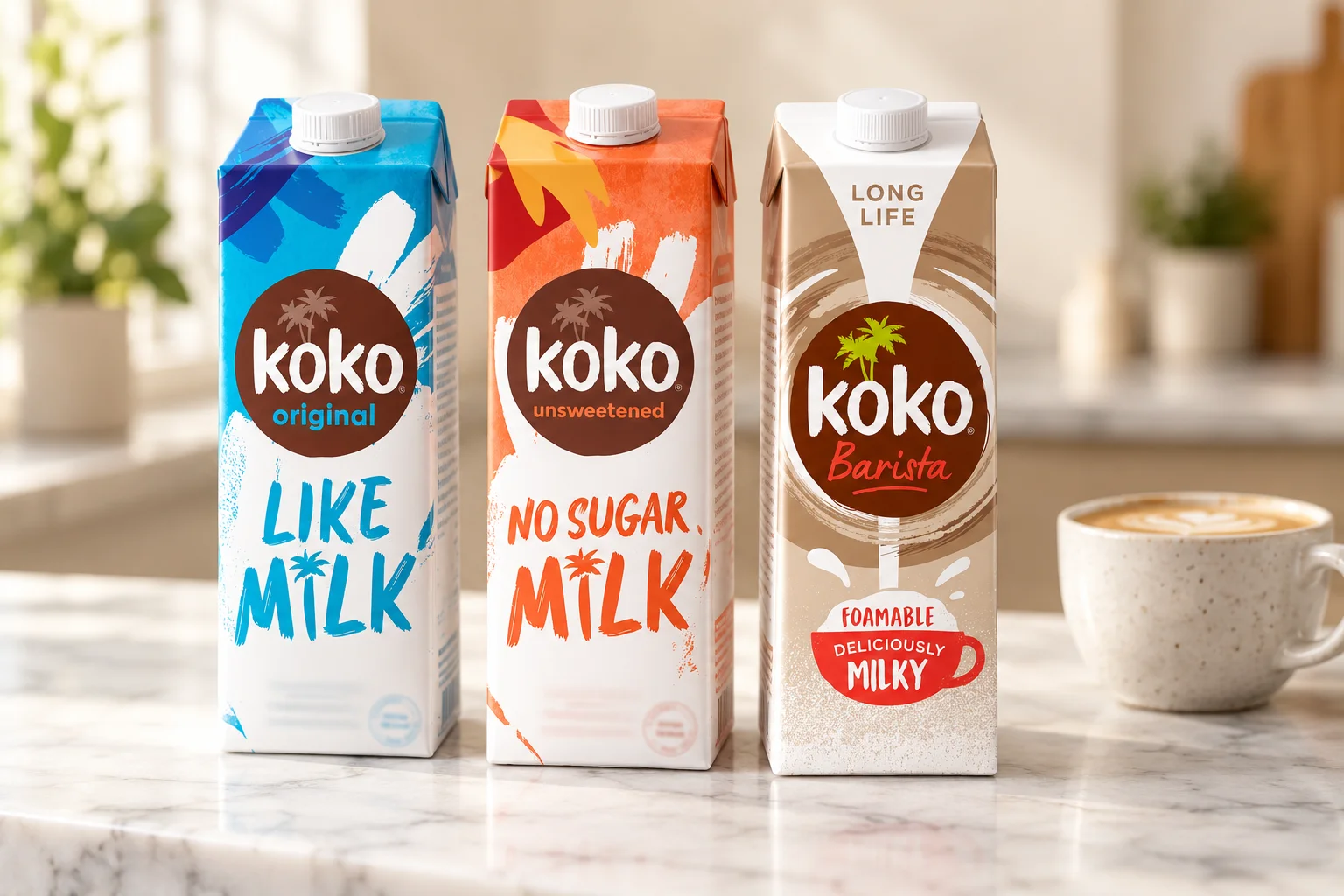
Table of Contents
Some of the links in this article are affiliate links, which help fund our independent review work at no extra cost to you. Every recommendation is based on hands-on testing through The Editor Lab methodology. No brand pays to appear, and no placement is guaranteed.
Koko Dairy Free does not curdle in your coffee - but the question worth asking is whether the version you are reaching for in the supermarket is the one that will actually work.
We cross-checked every Koko Original, Unsweetened, and Barista ingredient panel against the brand's current UK product pages, and verified retailer stock and pricing in July 2026 as part of our Editor Lab testing process. What follows is the honest account of how each variant is built to perform, and which one belongs in your fridge.
Koko has occupied a quiet corner of UK supermarkets for years, favoured mainly by people managing lactose intolerance or following a vegan diet who want something that behaves like milk at breakfast and in hot drinks. It is not a trendy product. It is a practical one. The question this review answers is whether practical is enough - or whether the coconut taste, the settling behaviour, and the price-per-litre premium make it a compromise rather than a genuine replacement.
Editor's Note
Clemmie Rose is a registered Nutritional Therapist and member of BANT, holding a Diploma in Nutritional Therapy from the College of Naturopathic Medicine, with clinical experience spanning Google DeepMind's nutrition programme and Harrods' Wellness Clinic, where she advised clients on dietary substitution and plant-based transitions. In her clinical work, the question of which plant milk genuinely replicates cow's milk in hot drinks is one that comes up constantly - she has guided dozens of clients through the options, and this review reflects her nutritional assessment of Koko's ingredient panels and fortification profile.
Quick Verdict
Koko Original is a reasonable everyday swap for cow's milk in tea and cereal. It does not curdle when poured into a hot cup, the coconut note is mild rather than dominant, and it is stocked in every major UK supermarket. The Unsweetened variant suits anyone reducing sugar intake but delivers noticeably less body. Koko Barista is formulated with rapeseed oil and faba bean protein to froth and steam for lattes and flat whites.
The trade-off in all three is a gentle sweetness that does not behave exactly like milk - it registers as a mild tropical note rather than neutral. For most hot-drink use cases, that is a minor distinction. For anyone who drinks black tea without sugar and wants their milk to be genuinely neutral, it will be noticeable.
Not suited to: buyers wanting a completely flavour-neutral barista milk (oat or pea protein performs better there), budget-first buyers who need something under £1/litre, or anyone expecting the Barista edition to be a 'cleaner' formulation than Original (it is not - it contains more additives, not fewer).



Ingredients & What's Actually in It
This is where the range gets more interesting than most brand sites let on.
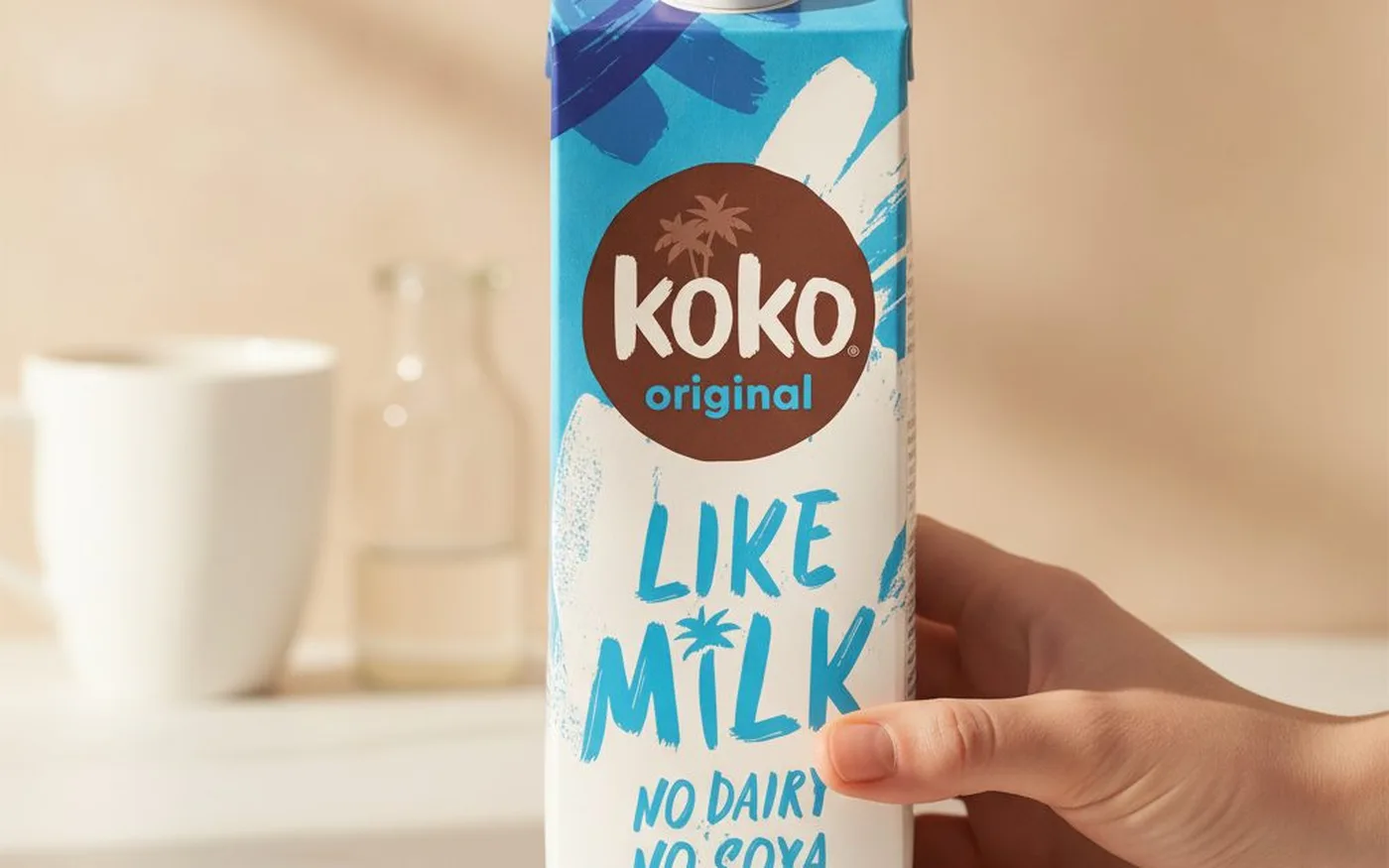
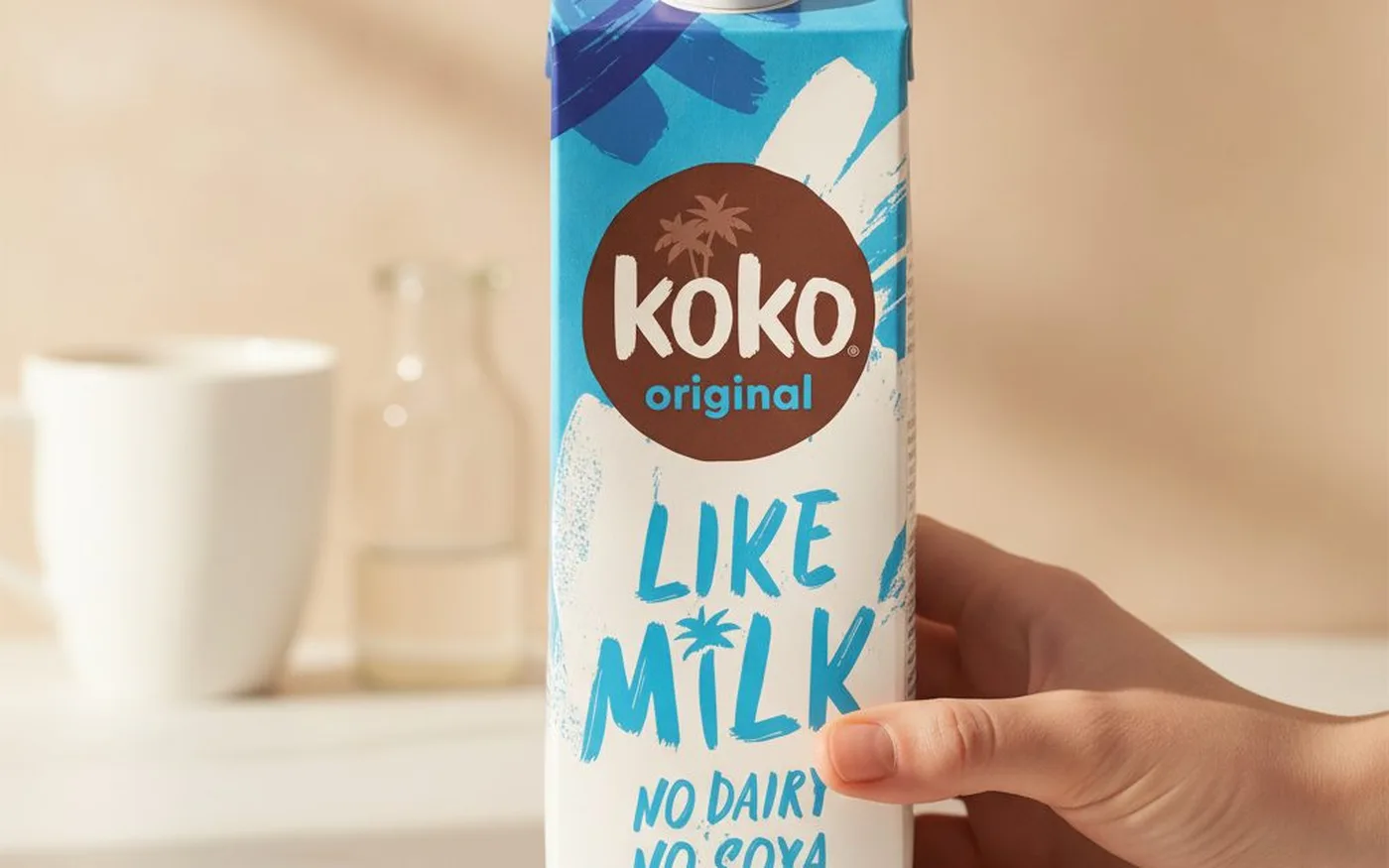
Koko Original is built on water, 11% coconut milk, and concentrated apple juice - that last ingredient is the sweetener, delivering 0.9g of sugar per 100ml without the brand having to write 'added sugar' on the front of the carton. It contains no added oil. The emulsifier (sucrose esters of fatty acids) and the guar gum and gellan gum stabilisers do the texture work, holding the coconut milk in suspension and reducing settling between uses.
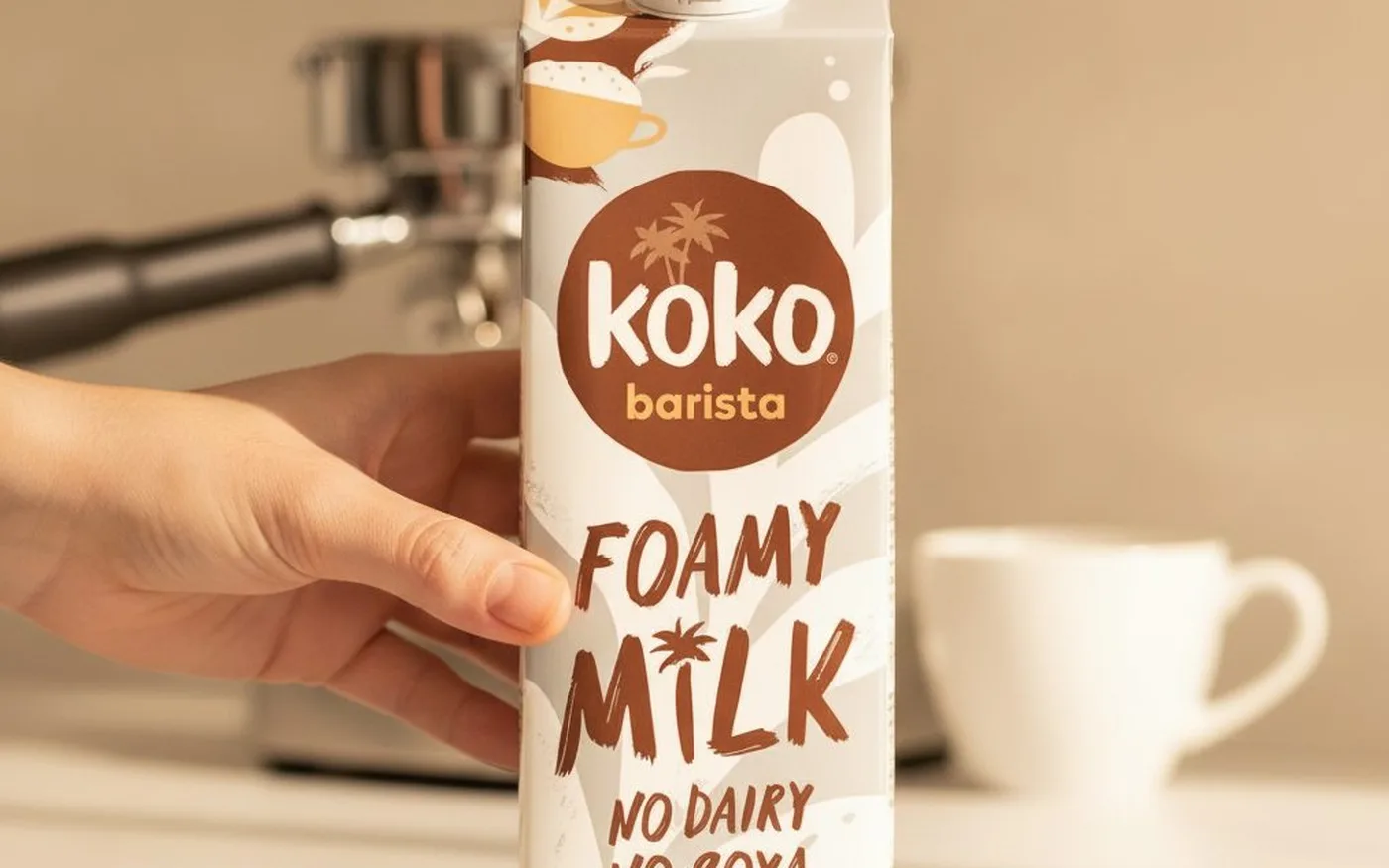
Koko Barista starts with the same base - water, 11% coconut milk, concentrated apple juice - then adds rapeseed oil and faba bean protein to achieve the foam stability that barista milks require. It also carries a higher sugar load at 1.7g per 100ml, uses cellulose gum rather than guar gum as one of its stabilisers, and includes dipotassium phosphate as an acidity regulator to prevent curdling during steaming.
What this means practically: 'Barista' does not mean 'purer' or 'simpler'. The Original has fewer additives. The Barista has more additives that serve a specific technical purpose - foam performance. Buyers who assume the Barista edition is the cleaner option should know this is the opposite of the truth. Koko Original contains no added oil; Koko Barista adds rapeseed oil and faba bean protein to achieve foam stability.
The coconut content itself - 11% in both variants - is the same concentration you find across most carton-format coconut milks designed for hot-drink use. This is not culinary coconut cream (which runs at 17-22% fat). Koko is a fortified, diluted coconut milk drink, closer to cow's milk in fat percentage and behaviour than to the tinned product.
One settling note: the carton visibly separates between uses. One independent reviewer documented finding a coconut deposit at the bottom of the mug despite shaking the carton before pouring. This is a formulation characteristic, not a defect - but it requires a more deliberate shake than dairy milk. A firm shake before every pour solves it.
Nutrition & Fortification
Koko's nutritional case rests primarily on its fortification profile. All three variants deliver calcium (120mg per 100ml), vitamin D2 (0.75ug per 100ml), and vitamin B12 (0.38ug per 100ml) - each at 15% of the nutrient reference value per 100ml serving. That calcium level is calibrated to match standard semi-skimmed cow's milk, which the British Dietetic Association notes at approximately 120mg per 100ml for a typical semi-skimmed variety.
This matters for daily routines where milk is consumed at volume - two cups of tea plus cereal adds up. A plant milk that does not replace the calcium contribution of dairy leaves a genuine gap in the diet for people who are not obtaining it elsewhere. Koko closes that gap more reliably than unfortified coconut products or home-made nut milks.
The Vegan Society has documented that most people switching from cow's milk to plant milk underestimate how much calcium their milk was contributing. Choosing a fortified carton product rather than an unfortified alternative is the single highest-impact switch a new dairy-free buyer can make from a nutritional standpoint.
Where Koko does not match cow's milk is protein. Standard semi-skimmed provides approximately 3.4g of protein per 100ml. Koko Original delivers less than 0.5g. For clients I advise who rely on their morning latte as a meaningful protein contribution, this gap is nutritionally relevant. It does not make Koko a poor choice - it makes it the wrong comparison. Koko is a hot-drink and cereal vehicle, not a protein source.
No organic certification applies to Koko. No Soil Association or B Corp status is claimed or confirmed. If clean-label organic production is a priority, this brand does not deliver it.
Taste & Texture
Forum reviewers often describe the coconut note in Koko Original as restrained: "you can tell it's coconut milk if you're looking for it." In tea, that means a tropical quality in the background rather than a neutral milk.
In filter coffee, one tester described it as behaving "like a slightly sweeter oat milk" - the sweetness from the concentrated apple juice is present but not assertive.
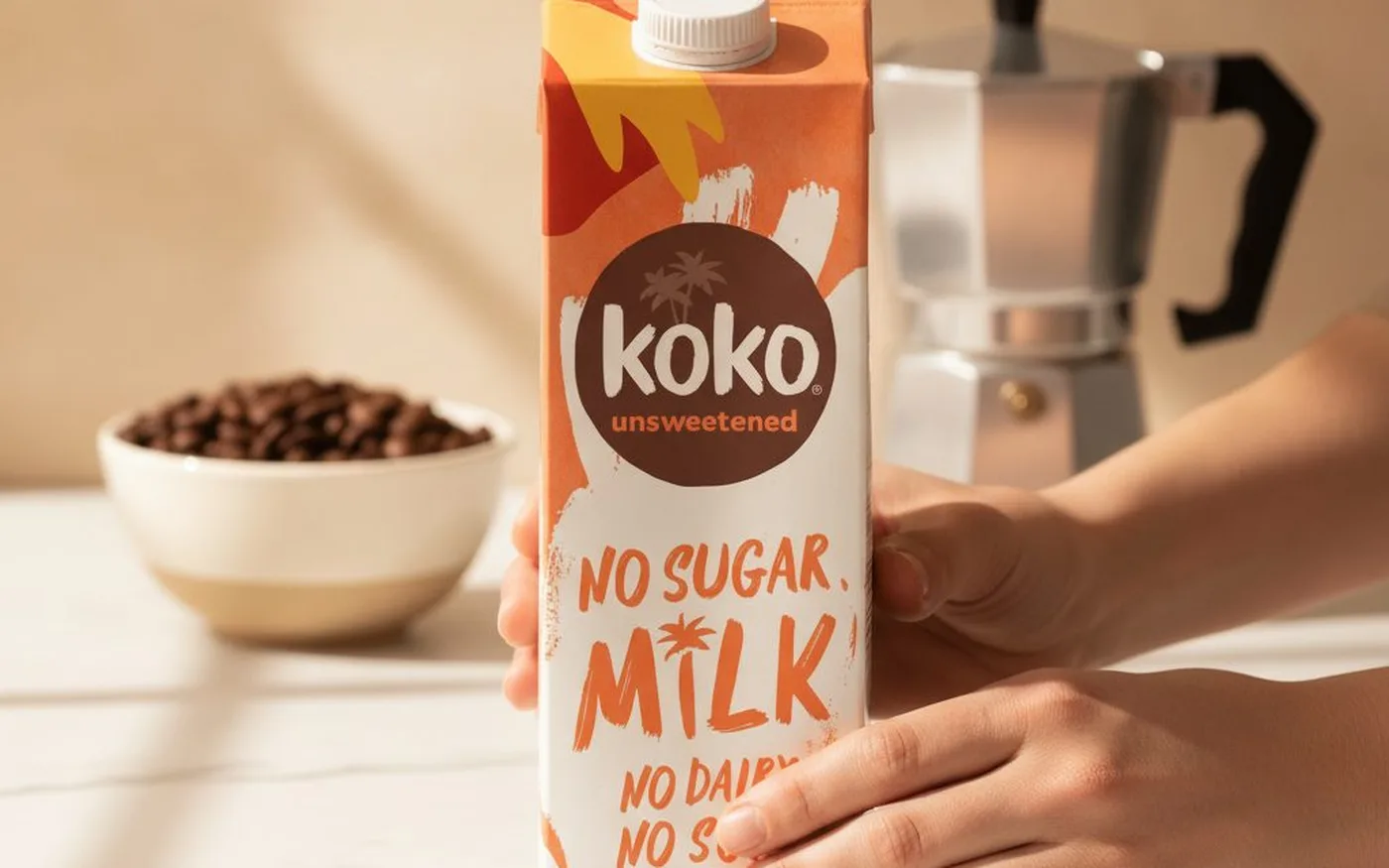
Without the apple juice, the Unsweetened variant loses the gentle sweetness that makes the Original forgiving in hot drinks. It suits cereal and smoothie applications where texture matters less.
The Barista variant adds rapeseed oil and faba bean protein for foam stability and dipotassium phosphate to prevent curdling during steaming, so it is built to steam cleanly. Expect functional foam rather than the density of a high-quality barista oat milk.
Performance in Coffee & Hot Drinks
The question that drives most Koko searches - will it curdle or split in coffee? - has a clear answer: it does not, provided you are using Koko Original or Barista rather than pouring tinned culinary coconut milk into espresso (a common search confusion).
In espresso: espresso intensifies flavours in the milk rather than diluting them, so this is the use case where Koko's coconut character is most noticeable.
In latte preparation with Koko Barista: the result is a coconut latte rather than a neutral milk latte - which is the honest description of what Koko Barista delivers.
For best alternative milk for coffee use, Koko sits in a specific position: the best option for buyers who actively enjoy a mild coconut note in hot drinks, or who are prioritising splitting prevention above all other concerns. For those who want a completely neutral barista milk experience, pea protein or barista oat milks perform closer to dairy without the flavour character.
This is also the section to note the pairing logic. Koko's tropical sweetness works best with dark or medium-dark roasts that can stand up to it - lighter, more acidic single-origin roasts can end up tasting muddied rather than complementary. If you are pulling from a speciality roaster's range of the best coffee beans, choose something from Brazil or Colombia with dark chocolate or nutty notes rather than the floral or citrus profiles that pair better with neutral milks.
Price & Where to Buy in the UK
Koko is widely stocked across UK supermarkets as of July 2026. Confirmed stockists: Tesco, Sainsbury's, Ocado, Asda, and Suma Wholesale. Pricing varies by retailer and promotional cycle - Koko runs £1.60 to £2.45 per litre at standard retail, with Asda and Tesco frequently discounting to closer to £1 on deal.
At standard price, that puts Koko at roughly three to four times the cost per litre of supermarket own-label soya, which starts around 59p. That is a real premium for a budget-conscious household. The counter-argument is performance: own-label soya milks are significantly more likely to split in hot coffee. If the use case is a hot-drink swap that behaves predictably, Koko is worth the price difference.
For online purchase, Koko products are available on Amazon.co.uk under the listing "Koko Unsweetened Plant-Based Milk Alternative." Amazon delivery works for multi-pack purchasing if you are going through it quickly.
Original vs Unsweetened vs Barista - Which One to Buy
| Variant | Sugar per 100ml | Added oil | Best use case |
|---|---|---|---|
| Original | 0.9g (concentrated apple juice) | None | Tea, cereal, general hot drinks |
| Unsweetened | Lower | None | Smoothies, cereal, reducing sugar intake |
| Barista | 1.7g (concentrated apple juice) | Rapeseed oil + faba bean protein | Steamed lattes, flat whites, any frothed drink |
The short answer for most buyers: if you want it in tea or cereal, buy Original. If you are making lattes or flat whites and need foam, buy Barista. If you are actively reducing sugar and do not need foam, buy Unsweetened.
The extended answer for anyone focused on ingredient purity: the Original is the cleanest label in the range. The Barista delivers the best hot-drink performance but carries the most additives. The Unsweetened delivers neither the foam capability of Barista nor the gentle body of Original - it is the right choice only if the sugar content in the other two is a genuine dietary concern for you.
All three carry the same fortification: calcium, D2, and B12 at 15% NRV per 100ml. The nutritional case for choosing between them is not about micronutrients - it is about the added oil, the sugar level, and the use case.
Pairs Well With
Koko Barista finds its best use case alongside a coffee that can meet its mild tropical sweetness rather than clash with it. Darkfire Energy from Balance Coffee - a 60% Brazil, 40% Colombia Arabica blend roasted to a medium-dark profile - delivers the dark chocolate and rounded body that pairs cleanly with coconut's sweetness without either note overpowering the other. A Darkfire flat white with Koko Barista should produce a cohesive drink rather than competing flavours.
Balance Coffee, founded in 2020, is our sister roastery - we mention products we would genuinely pair with what we are reviewing, not because of a paid placement.
For buyers who want to explore best coconut milk for coffee beyond Koko - testing multiple brands side by side - our full coconut-milk guide covers the category. We will also be covering almond milk for coffee and oat milk for coffee comparisons as part of the alternative-milks series.
Frequently Asked Questions
Is Koko Dairy Free actually dairy free?
Yes, Koko Dairy Free is completely free from dairy. None of the three variants - Original, Unsweetened, or Barista - contain cow's milk, any cow's milk derivative, lactose, or casein. The product is also free from gluten and soya, making it suitable for people managing multiple food intolerances simultaneously. The name describes exactly what it is: a coconut-based milk alternative with no dairy content at any stage of production.
Is Koko milk lactose-free?
Yes, all Koko Dairy Free products are fully lactose-free. Coconut milk contains no lactose by nature - lactose is a sugar found only in mammalian milk, and coconut is a plant source. All three Koko variants are therefore safe for people with lactose intolerance, including those with severe sensitivity who may react to trace amounts in other products. No lactase enzyme or lactose-reduction processing is required or applied.
Is coconut milk OK for a dairy-free diet?
Coconut milk is suitable for a dairy-free diet because it contains no dairy ingredients, no lactose, and no animal milk proteins. Koko is a fortified carton coconut milk drink - not culinary coconut cream - formulated to function as a cow's-milk substitute in everyday eating and hot drinks. It is appropriate for dairy-free, lactose-free, and vegan diets across all three variants.
Is coconut milk OK for dairy intolerance?
Coconut milk contains neither lactose nor any dairy protein, so it does not trigger lactose intolerance or dairy-protein sensitivity. The NHS guidance on the vegan diet recommends fortified dairy alternatives, such as soya drinks, as a calcium source when dairy foods are not eaten. A cow's milk protein allergy (CMPA) is a separate condition requiring medical guidance - for lactose intolerance and general dairy sensitivity, Koko is a suitable daily substitute.
What is the best non-dairy milk in the UK?
No single plant milk suits all uses. Koko Original and Barista perform well in hot drinks for buyers who do not object to a mild coconut note - they resist splitting and are stocked in all major UK supermarkets. For a completely neutral coffee experience, barista oat milks or pea protein milks perform closer to dairy. For budget buyers, own-label soya is cheaper. Koko's strength is hot-drink reliability and availability.
Where can I buy Koko Dairy Free in the UK?
As of July 2026, Koko Dairy Free is stocked at Tesco, Sainsbury's, Ocado, Asda, and Suma Wholesale, and on Amazon.co.uk. Asda and Tesco discount most frequently - Koko appears on promotion at around £1 per litre at both. Suma Wholesale suits bulk buying for regular users. Check kokodairyfree.com for current stockist listings if a specific retailer is out of stock.
Has Koko Dairy Free been discontinued?
No. Koko Dairy Free has not been discontinued. As of July 2026, all three main variants - Original, Unsweetened, and Barista - are available through major UK supermarkets including Tesco, Sainsbury's, and Ocado, and on Amazon.co.uk. The 'discontinued' rumour appears to circulate on social media periodically, likely linked to temporary local stock-outs or individual stores delisting the product. The brand and product range remain active and in production.
What's the difference between Koko Original and Koko Barista milk?
Koko Original contains no added oil and suits tea, cereal, and general hot drinks. Koko Barista adds rapeseed oil and faba bean protein to achieve foam stability for steamed lattes and flat whites. Barista carries more additives than Original, not fewer, and contains more sugar (1.7g per 100ml versus 0.9g). 'Barista' is a performance descriptor, not a purity marker.

A registered Nutritional Therapist and member of BANT, Clemmie blends science with a holistic approach to wellbeing.