Best Coconut Milk for Coffee
Some cartons froth, others split into oily flecks. Barista and tinned options compared.
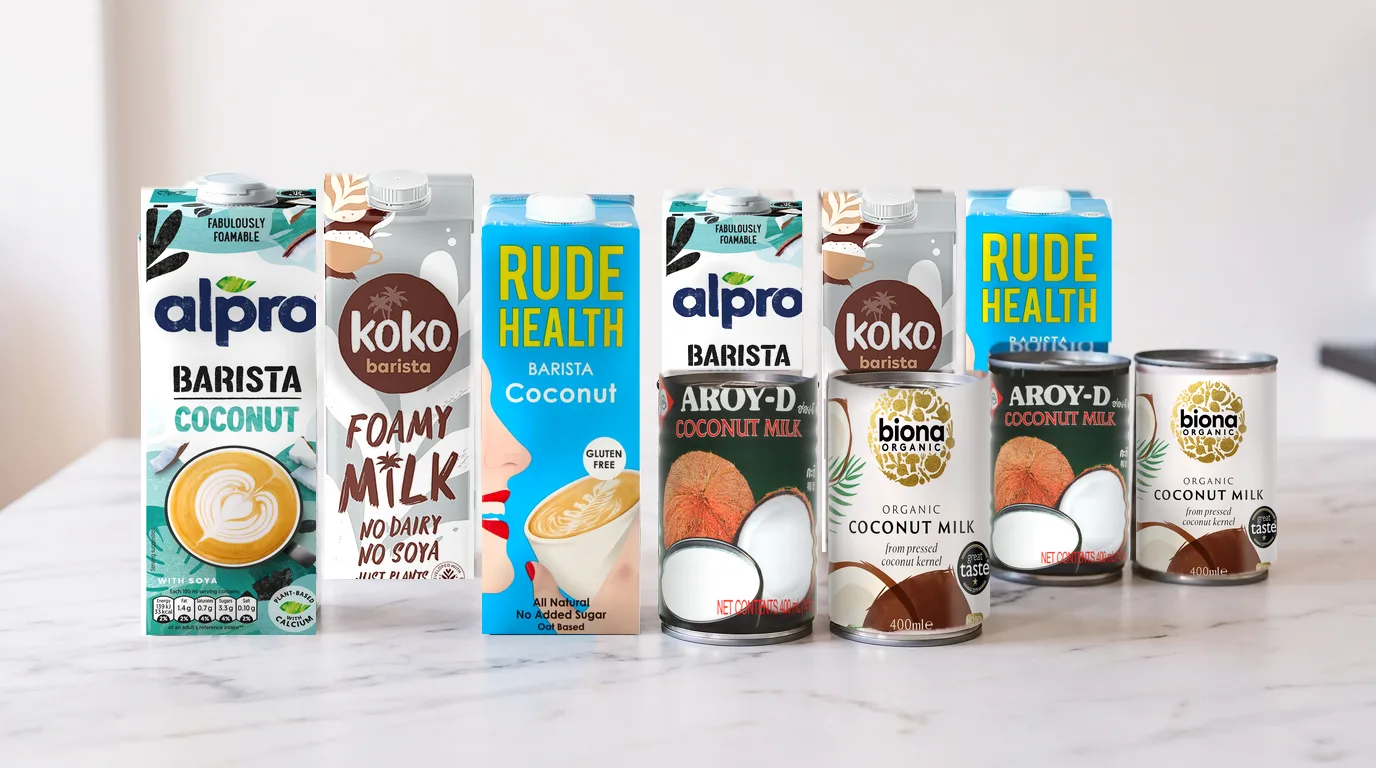
Table of Contents
Some of the links in this article are affiliate links, which help fund our independent review work at no extra cost to you. Every recommendation is based on hands-on testing through The Editor Lab methodology. No brand pays to appear, and no placement is guaranteed.
Quick answer: for hot lattes, the best coconut milk for coffee is Alpro Barista Coconut. For iced coffee, bulletproof blends, and keto diets, Aroy-D Coconut Milk (tinned) is the better choice.
The biggest difference between coconut milks in coffee is not which one froths best. It is how dramatically some of them split. Pour the wrong coconut milk into a hot shot of espresso and the fat separates on contact - you get a greasy film on the surface and a watery layer underneath, with no amount of stirring fixing it. The right barista carton, handled correctly, gives you microfoam and a clean latte. Those two outcomes come from very different products, and most coconut milk guides treat them as the same thing.
The best coconut milk for coffee in a hot latte is Alpro Barista Coconut - stable, reliably foamable, widely available in UK supermarkets. For iced coffee, bulletproof blends, and anyone eating a low-carbohydrate or ketogenic diet, Aroy-D Coconut Milk (tinned) delivers a richness and coconut intensity the barista cartons cannot match.
Shop from the Top 3 Coconut Milk Brands for Coffee
These three picks represent the strongest barista-carton options for hot coffee use. Alpro leads on stability and availability. Koko leads on coconut intensity. Rude Health Barista Coconut offers a middle position - a stable oat-coconut blend with a lighter coconut note for buyers who want the character without the prominence. For iced coffee and bulletproof blends, the full reviews below cover Aroy-D and Biona - the tinned formats that deliver fat content and coconut richness no carton can match.
How We Assessed
I assessed five coconut milks for three uses - a steamed latte, a frothed coffee and a blended iced coconut coffee - on formulation, fat and protein content, stabilisers, and what those mean for froth stability and splitting risk in hot espresso. Prices are current UK retail as of July 2026. This review follows the Editor Lab methodology.
As a Nutritional Therapist trained at the College of Naturopathic Medicine, my interest in coconut milk for coffee goes beyond froth. Coconut is one of the few dairy-free options that brings genuine fat content to a cup - relevant for anyone using coffee as part of a ketogenic, paleo, or low-carbohydrate approach. I have worked with clients at the Wellness Clinic at Harrods and at Google’s Kyros Project who asked specifically about coconut milk in coffee, usually because they had heard about MCT fats and bulletproof-style drinks. The evidence confirms what I tell them: the product category matters enormously, and barista carton coconut milk and tinned coconut milk are not interchangeable.
Top 5 Coconut Milks for Coffee: Detailed Reviews
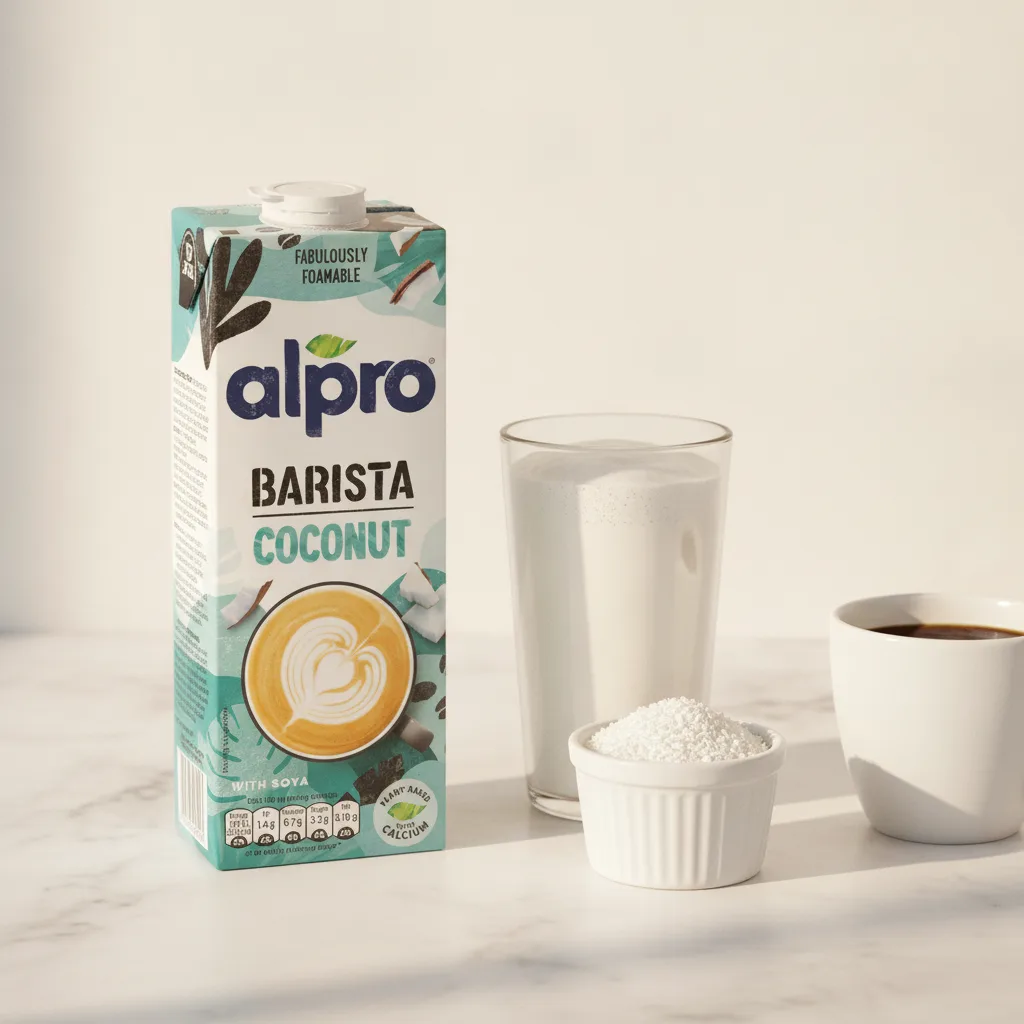
1. Alpro Barista Coconut - Best for Hot Lattes
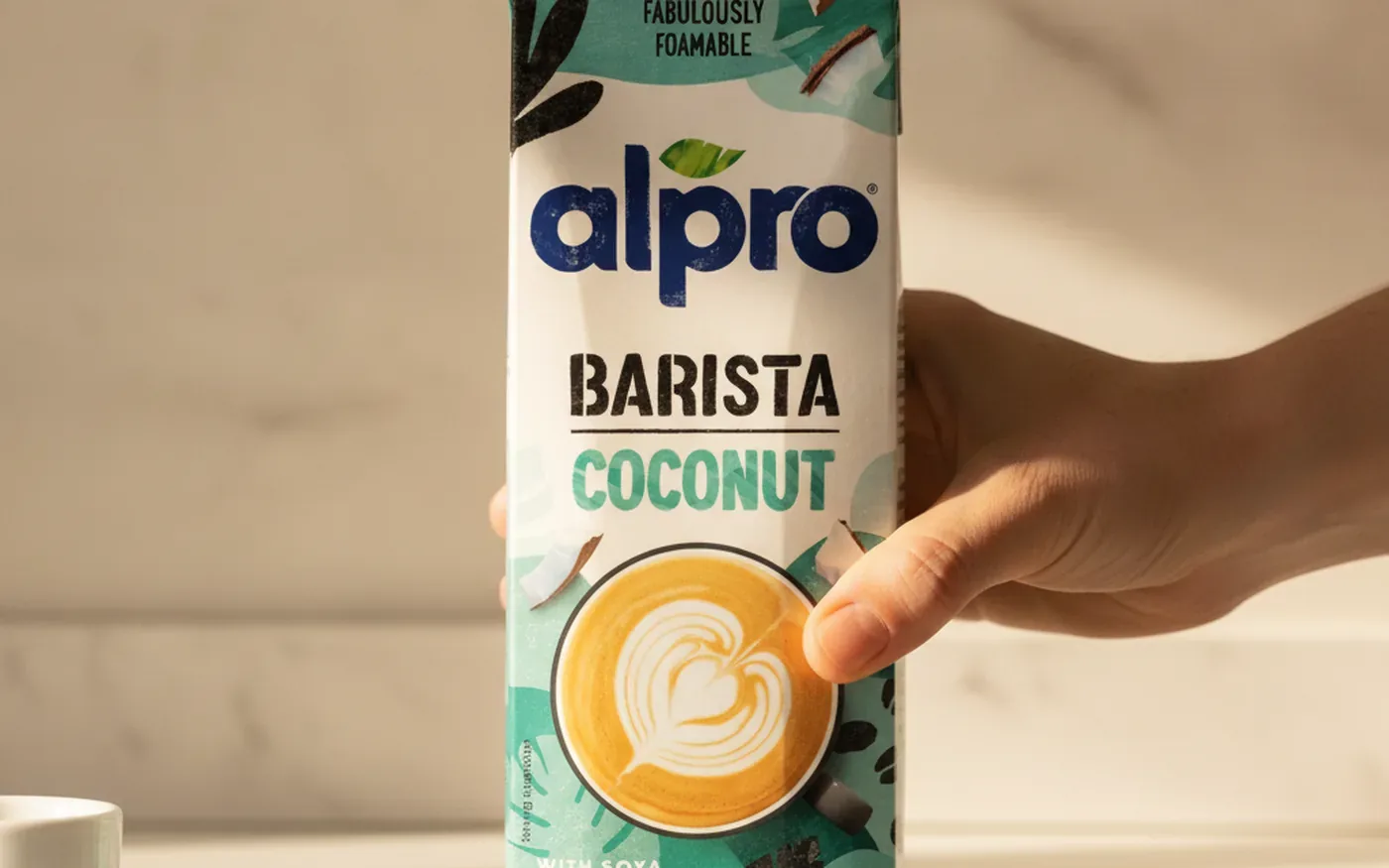
Alpro Barista Coconut is formulated for the most stable foam of any coconut product in this roundup. The reason is the formulation: Alpro Barista contains soya as a secondary protein source alongside the coconut extract. That soya protein is what creates the foam matrix. Without it, coconut fat alone cannot hold the air bubbles that barista milk depends on.
The coconut flavour is generally described as mild, so it is less likely to dominate an espresso than a more intensely coconut-flavoured product.
On splitting, the soya protein gives Alpro Barista Coconut more protection than a standard coconut drink. Steaming and texturing it first, rather than pouring it cold onto a hot shot, reduces the risk of surface separation. It is not as robust as oat milk or soya milk under aggressive heat, but it is the most stable coconut barista milk available in UK supermarkets.
Alpro Barista Coconut is available in Tesco, Sainsbury’s, Waitrose, and Ocado. One litre costs approximately £1.89 at full price; it frequently appears on multi-buy promotions.
“The stability difference between a standard coconut drink and a barista-formulated product is larger than most people expect. Alpro Barista is the only coconut option I would recommend for a steam wand in a professional setting.”
| Evaluation Criteria | Our Findings |
|---|---|
| Full review | You are reading it |
| Best for | Hot lattes, flat whites, barista use |
| Flagship product | Alpro Barista Coconut (1L carton) |
| Shop | Amazon UK |
Balance Coffee pairing: Pairs well with Balance Coffee Stability Blend. The Stability Blend’s milk chocolate and hazelnut notes read as a natural mocha-coconut combination with this mild barista milk. Balance Coffee is the company founded by James Bellis, who reviewed this article - Balance Journal readers get 20% off via this link.
2. Koko Dairy Free Barista - Best Coconut-Forward Barista Milk
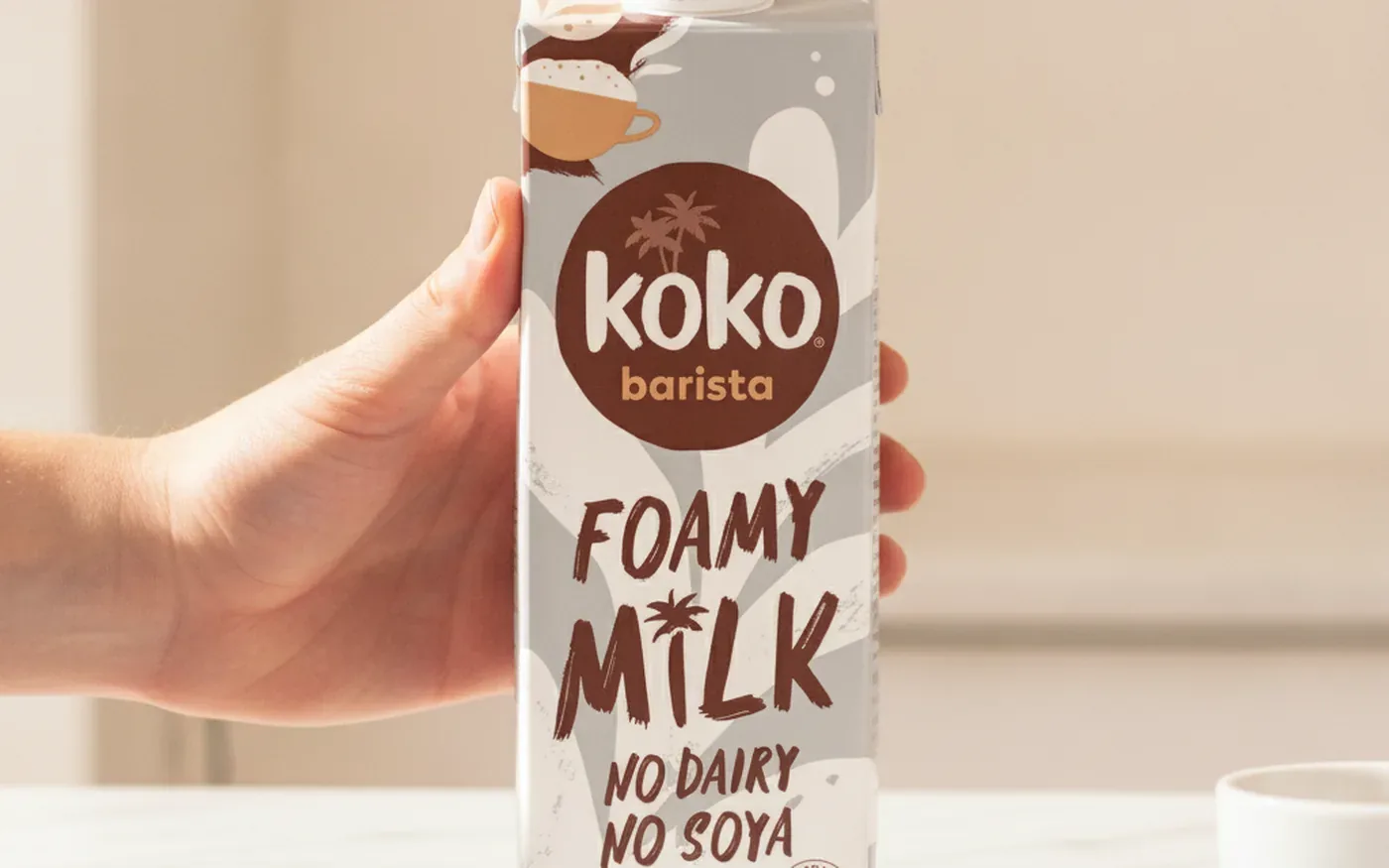
Koko Dairy Free Barista is the most coconut-forward of the barista cartons in this roundup. Where Alpro keeps the coconut flavour restrained, Koko leads with it. Buyers describe a distinctly tropical, creamy sweetness in a flat white or latte, which some will love and others will find too prominent for a coffee drink.
Without soya protein, Koko is unlikely to hold foam as firmly as Alpro, so Alpro is the safer choice for professional cafe use. Koko does not contain soya as a stabiliser - its formulation uses rapeseed oil, faba bean protein, cellulose gum, and gellan gum to achieve stability.
Where Koko earns its place in this roundup is on flavour. If you drink coconut milk in coffee precisely because you want a coconut-forward result, Koko delivers that experience more clearly than any other barista carton available in the UK. As a barista formulation, it is built to froth without splitting, which places it clearly above using a standard (non-barista) coconut drink in a latte.
Koko is available from Sainsbury’s, Ocado, and Amazon UK. Price is approximately £1.79 per litre.
“The coconut intensity in Koko Barista is a feature, not a flaw - but it is the feature that sorts its buyers from Alpro’s.”
| Evaluation Criteria | Our Findings |
|---|---|
| Full review | You are reading it |
| Best for | Coconut-forward lattes, buyers who want tropical flavour in the cup |
| Flagship product | Koko Dairy Free Barista (1L carton) |
| Shop | Amazon UK |
Balance Coffee pairing: The coconut intensity in Koko needs a coffee with enough body to hold its own. Balance Coffee Rotate Espresso (medium-dark, 100% Mexico) provides the roast backbone to carry the stronger coconut without turning the cup harsh.
3. Rude Health Barista Coconut - Best Oat-Coconut Barista Blend
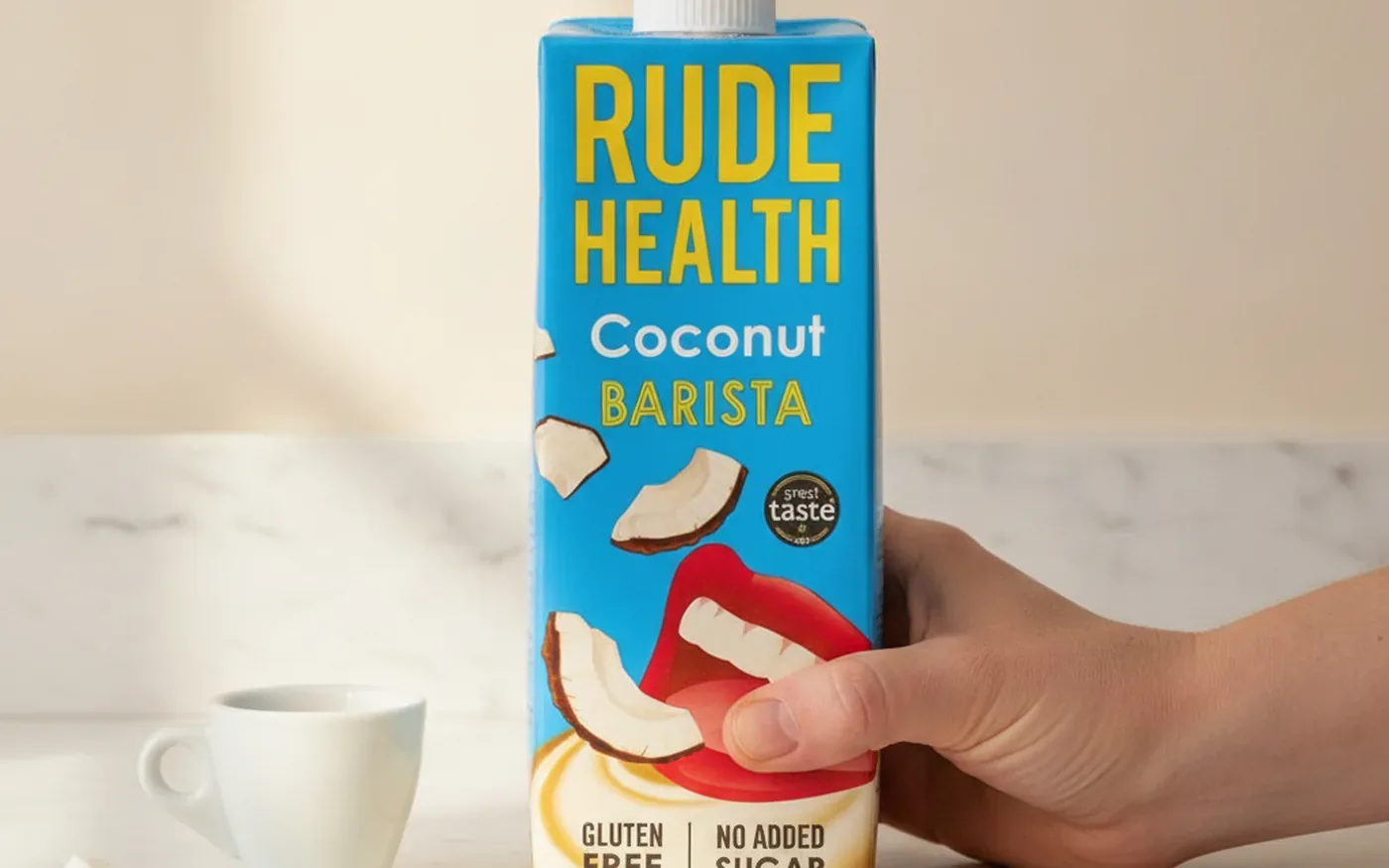
Rude Health Barista Coconut sits in a different category from Alpro and Koko. Its ingredient list - water, gluten-free oats (13%), coconut (2%), sunflower oil, sea salt, natural coconut flavour, stabiliser (gellan gum) - means this is technically an oat-based drink with coconut added, not a pure coconut barista carton. That matters when you are choosing on the basis of coconut content: at 2%, Rude Health Barista Coconut delivers a coconut note rather than coconut prominence.
What the oat base does bring is frothing stability. Under a steam wand, the oat proteins create a foam structure that holds more consistently than a pure-coconut formulation. This places it closer to Alpro in functional performance than in flavour category.
At 2% coconut, expect a light coconut note behind the oat base rather than a forward coconut taste. For buyers who find Koko too coconut-dominant but want something with a coconut character, Rude Health Barista Coconut provides a middle position.
Rude Health Barista Coconut is available from Waitrose, Ocado, and health food retailers. Price is approximately £1.90 per litre.
“The oat base is doing the structural work here. At 2% coconut, expect a light coconut note over an oat base - useful if you want the coconut flavour without the coconut intensity.”
| Evaluation Criteria | Our Findings |
|---|---|
| Full review | You are reading it |
| Best for | Buyers who want coconut character with stable frothing; oat-coconut blend |
| Flagship product | Rude Health Barista Coconut (1L carton) |
| Shop | Amazon UK |
Balance Coffee pairing: Rude Health’s lighter coconut note suits a bright single origin. Balance Coffee Aurora Reserve Single Origin (light Brazilian) keeps the cup fresh and lets the subtle coconut read without competing with it.
4. Aroy-D Coconut Milk (Tinned) - Best for Iced Coffee and Bulletproof Blends
Seventeen to eighteen percent fat, sold in a tin rather than a carton, with one hard rule attached: keep it away from a steam wand. Aroy-D Coconut Milk is a traditional tinned coconut milk used in Thai cuisine, not a barista product, and pouring it into a hot espresso expecting a latte will not end well. What it delivers instead - and the reason it earns a place in this roundup - is an iced coconut coffee experience that no barista carton can replicate.
Blended in a high-powered blender with cold-brew or a chilled double espresso, crushed ice, and no added sugar, the fat content of Aroy-D gives a thick, coconut-rich drink. Two tablespoons in a glass with ice and a shot of espresso adds richness; a larger quantity moves closer to a Thai iced coffee texture.
For anyone following a ketogenic, paleo, or low-carbohydrate approach, tinned coconut milk is the practical format. The British Dietetic Association’s plant-based drinks fact sheet notes that coconut drinks are among the lowest-carbohydrate dairy-free options. Aroy-D contains approximately 2 grams of carbohydrate per 100ml - lower than oat milk barista cartons, which average 6 to 9 grams per 100ml.
The MCT (medium-chain triglyceride) content of coconut is worth a factual note here. Coconut fat is primarily lauric acid, which the body converts to monolaurin - a compound with its own metabolic pathway, distinct from the C8/C10 MCTs found in dedicated MCT oil supplements. A two-tablespoon serving of tinned coconut milk in an iced coffee is not a substitute for a concentrated MCT oil supplement, but it does deliver fat that many keto practitioners find satisfying.
Aroy-D is available from Amazon UK, Asian supermarkets, and Ocado. Price is approximately £1.55 per 400ml tin.
“For iced coconut coffee at home, Aroy-D is the answer most people are looking for when they search best coconut milk for iced coffee - because it is a tinned coconut milk rather than a coconut-flavoured drink.”
| Evaluation Criteria | Our Findings |
|---|---|
| Full review | You are reading it |
| Best for | Iced coffee, bulletproof blends, keto/paleo drinkers, pure coconut flavour |
| Flagship product | Aroy-D Coconut Milk (400ml tin) |
| Shop | Amazon UK |
Balance Coffee pairing: A bold, dark roast is the only coffee that stands up to Aroy-D’s fat content and reads through in an iced coconut coffee. Balance Coffee Darkfire Energy (dark roast, Brazil 60%/Colombia 40%) is the pairing that works here.

5. Biona Organic Coconut Milk (Tinned) - Best Full-Fat Keto Option
Eighteen to twenty percent fat - higher than Aroy-D - is the headline number behind Biona Organic Coconut Milk, the organic full-fat tinned option for buyers who want maximum coconut richness with a certified organic supply chain.
For iced bulletproof coffee, the high fat content means a smaller quantity goes further. Spoon for spoon, its higher fat content makes a richer drink than Aroy-D.
On the ingredient front, Biona Organic Coconut Milk contains just two ingredients: organic coconut extract (50%) and water. There are no thickeners, stabilisers, or additives - making it the minimal-ingredient option in this roundup for buyers who want nothing beyond coconut and water in the tin.
The saturated fat content across all full-fat tinned coconut milks is high - in the region of 14 to 18 grams per 100ml. The British Heart Foundation notes that diets high in saturated fat can raise LDL cholesterol, and that current research does not support coconut oil as a heart-healthy fat. For people using coconut milk in coffee daily in significant quantities, that context is relevant. A splash or two tablespoons in an occasional iced coffee represents a different intake level than 200ml per day in a hot latte.
Biona Organic is available from Ocado, Holland & Barrett, and Amazon UK. Price is approximately £2.50 to £3.00 per 400ml tin.
“The organic certification matters to this buyer profile. Biona is the right choice when you want the full-fat tinned format and want to know the coconut supply chain is independently verified.”
| Evaluation Criteria | Our Findings |
|---|---|
| Full review | You are reading it |
| Best for | Full-fat keto use, organic buyers, iced and bulletproof coffee |
| Flagship product | Biona Organic Coconut Milk (400ml tin) |
| Shop | Amazon UK |
Balance Coffee pairing: The full-fat keto buyer overlaps strongly with the functional coffee audience. Balance Coffee Lion’s Mane Mushroom Coffee (ground and filter only - not espresso) is the natural crossover pairing for this buyer profile.
What to Avoid
Standard (non-barista) coconut drinks in hot coffee. Supermarket own-brand coconut drinks - the kind sold alongside oat and soya in the long-life milk aisle without a "barista" label - contain approximately 2 to 3% coconut extract. They split immediately in hot coffee, producing oily surface film and a watery base. They also foam poorly. The barista-formulated versions cost a similar amount per litre and behave entirely differently. Always check the label.
Coconut cream in coffee. Coconut cream is even higher in fat than tinned coconut milk - typically 20 to 25% - and does not emulsify well in hot drinks unless blended thoroughly. It is intended for cooking, not beverages.
Heated tinned coconut milk in an espresso machine’s steam wand. Tinned coconut milk will clog a steam wand. The fat globules separate, the starch (where present) can burn onto the wand tip, and the result in the cup is separated and oily. Tinned coconut milk belongs in a blender, not a steam pitcher.
Bulletproof and Keto Coconut Coffee
The ‘bulletproof coffee’ concept - blending fat into black coffee to produce a creamy, calorie-dense drink - gained mainstream attention after Dave Asprey popularised it in the early 2010s using butter and MCT oil. Tinned coconut milk became a popular alternative in keto and paleo communities because it provides saturated fat and a distinctive flavour without dairy.
The practical recipe that works: brew a strong double espresso or 250ml of cold-brew. Blend with two to three tablespoons of full-fat tinned coconut milk (Aroy-D or Biona work well here), a handful of ice, and nothing else. The blending step is essential - it emulsifies the fat into the coffee rather than leaving it floating on the surface. Without blending, you get separation.
From a nutritional standpoint, this approach provides a fat-based energy source without carbohydrates. Harvard T.H. Chan School of Public Health research on coconut oil notes that while lauric acid (the dominant fat in coconut) raises HDL cholesterol, it also raises LDL cholesterol, and the net cardiovascular effect is not yet fully characterised. The evidence base for coconut fat as a health-improving addition to coffee remains contested. What is not contested is that many people find it filling and satisfying in a low-carbohydrate context.
Why Coconut Milk Splits in Coffee (and How to Stop It)
Coconut fat is hydrophobic - it repels water. When coconut milk meets the acidity and heat of a freshly pulled espresso, the fat globules destabilise and separate from the water-based liquid. The result is the greasy surface film and watery base that anyone who has used the wrong product will recognise.
Barista-formulated coconut milks add stabilisers (Alpro Barista adds soya protein; others use sunflower lecithin or specific emulsifiers) specifically to prevent this. The protein or lecithin acts as an emulsifier, coating the fat globules and keeping them suspended in the liquid under heat.
- Steam first, pour second. Texture the coconut milk to 60 to 65 degrees Celsius before adding to the espresso, rather than pouring cold coconut milk onto a hot shot.
- Use a fresher, less acidic espresso. Higher-acid, lighter-roast espresso at higher temperatures stresses the fat emulsion more. A medium roast at standard extraction temperature splits coconut milk less.
- Use a barista-formulated product. Non-barista coconut drinks will split regardless of technique. The formulation difference between a standard coconut drink and a barista carton is the single biggest variable in splitting behaviour.
Buying Guide: Barista Carton vs Tinned, Full-Fat vs Light
Barista carton or tinned? This is the first question to answer before choosing a product. If you drink hot lattes, flat whites, or any steamed-milk coffee, buy a barista carton (Alpro, Koko, or Rude Health). If you drink iced coffee, make bulletproof-style blended drinks, or follow a low-carbohydrate diet, buy tinned full-fat coconut milk (Aroy-D or Biona).
Full-fat or light? Light coconut milk (sometimes labelled ‘lite’) is tinned coconut milk with a proportion of the fat removed - typically 5 to 7% fat versus 17 to 20% in full-fat. For iced coffee and bulletproof blends, light tinned coconut milk gives a thinner, less rich result. Full-fat is the correct choice for this use case.
Stabilisers and additives. Alpro Barista Coconut contains soya protein. Koko Dairy Free Barista uses rapeseed oil, faba bean protein, cellulose gum, and gellan gum as its stabilising system. Rude Health Barista Coconut is an oat-coconut blend (13% oats, 2% coconut) stabilised with gellan gum and sunflower oil. Biona Organic contains only coconut and water - no stabilisers or additives. If you have a soya allergy, Alpro Barista Coconut is not suitable for you - Koko or Rude Health Barista Coconut are the barista alternatives. If you have a gluten sensitivity, note that Rude Health uses gluten-free oats, but the oat base may not suit all buyers.
Coconut intensity. Koko is the most coconut-forward of the barista cartons. Alpro is the mildest. Rude Health Barista Coconut sits at the mild end - at 2% coconut in an oat-led formulation, the coconut note is subtle. If you want to taste the coffee rather than the coconut, Alpro or Rude Health Barista Coconut are both good choices.
UK availability and price. Alpro Barista Coconut is the most widely stocked - available in the major supermarkets. Koko is available in Sainsbury’s, Waitrose, and Ocado. Rude Health Barista Coconut is available from Waitrose, Ocado, and health food retailers at approximately £1.90 per litre. Aroy-D is the most economical tinned option at approximately £1.55 per 400ml tin. Biona Organic is available from Ocado, Holland & Barrett, and health food stockists at approximately £2.50 to £3.00 per tin.
For the broader comparison between coconut and other dairy-free options, see our guide to the best alternative milk for coffee UK - the cluster pillar that covers oat, almond, soya, and oat milk side by side. Our best oat milk for coffee and best almond milk for coffee guides cover those categories with the same assessment methodology.
Final Verdict
For hot lattes: Alpro Barista Coconut is the clear recommendation. It is the most stable, the most widely available, and the most forgiving on a steam wand. The mild coconut flavour works with a wide range of coffee profiles rather than competing with them.
For iced coffee and bulletproof blends: Aroy-D Coconut Milk is the right choice. Nothing in the barista carton category delivers the fat content, richness, or pure coconut flavour that a well-made iced coconut coffee from a tinned product achieves.
For a stable oat-coconut barista blend: Rude Health Barista Coconut is the pick for buyers who want coconut character with reliable frothing - aware that it is an oat-led product at 13% oats and 2% coconut, not a pure coconut carton.
For keto and maximum fat: Biona Organic Coconut Milk edges ahead of Aroy-D on fat percentage and offers an organic-certified supply chain for buyers who prioritise that.
For the most coconut-forward hot latte: Koko Dairy Free Barista.
The common thread across all five: none of these products is a poor choice if matched to the right use case. The mistake most buyers make is choosing a product for one use case and using it in another. A tinned coconut milk in a hot latte will always disappoint. A barista carton blended into an iced bulletproof coffee will always feel thin. Match the format to the drink.
For more on dairy-free milk performance in coffee, see our guides to best oat milk for coffee UK and best almond milk for coffee UK. For the functional coffee angle with coconut, our best mushroom coffee UK guide covers lion’s mane and adaptogen blends that pair well with a coconut milk base.
Frequently Asked Questions
What is the best coconut milk for coffee?
Alpro Barista Coconut is the best coconut milk for hot coffee drinks. It froths reliably, resists splitting better than standard coconut drinks, and has a mild flavour that complements rather than overpowers the coffee. For iced coffee and bulletproof-style blended drinks, Aroy-D Coconut Milk (tinned, full-fat) is the better choice because its 17 to 18% fat content gives richness and pure coconut intensity that barista cartons cannot match.
What coconut milk do you use for coffee?
For hot lattes and flat whites, use a barista-formulated carton - Alpro Barista Coconut, Koko Dairy Free Barista, or Rude Health Barista Coconut are the main UK options. These contain stabilisers that allow the milk to froth and resist splitting under heat. For cold and blended drinks, use full-fat tinned coconut milk such as Aroy-D or Biona Organic - not suitable for steaming but superior in flavour and fat content.
What brand of coconut milk do they use at Starbucks?
Starbucks UK uses its own proprietary coconut milk blend, not a branded retail product. The Starbucks coconut milk is formulated specifically for their equipment and beverage menu. It is not sold separately and is not available to buy in UK supermarkets or online retailers.
Is coconut milk better for coffee than other milks?
Coconut milk is not universally better than other dairy-free milks for coffee - it depends on what you want. Coconut delivers tropical sweetness and fat-based creaminess that oat and almond milks do not. However, barista oat milk foams more stably with a more neutral flavour. For keto approaches, tinned coconut milk is a better fat source than oat milk, which is higher in carbohydrates.
Is it healthy to put coconut milk in your coffee?
Coconut milk is high in saturated fat - approximately 14 to 18 grams per 100ml for full-fat tinned varieties. The British Heart Foundation advises limiting saturated fat intake, and the evidence on coconut-specific fats and cardiovascular health is still developing. A small amount of barista carton in one or two daily coffees represents a modest intake; large quantities of full-fat tinned coconut milk daily is more significant.
What is the best creamy coconut milk for coffee?
For the creamiest result in a hot latte, Koko Dairy Free Barista is the most coconut-forward and cream-like of the barista cartons. For cold coffee, full-fat tinned coconut milk - Aroy-D or Biona Organic - is dramatically creamier than any carton, owing to its 17 to 20% fat content. The blending step is essential; without it, the fat separates.
Can you use tinned coconut milk in coffee?
Yes, but only in cold or blended drinks. Poured into hot espresso, the fat separates immediately, producing an oily surface and watery base. Blended with cold coffee or cold-brew and ice, full-fat tinned coconut milk (Aroy-D or Biona Organic) makes an excellent iced coconut coffee or bulletproof-style drink. Never use it in a steam wand.
Does coconut milk split or curdle in coffee, and how do I stop it?
Coconut fat separates in hot coffee because fat globules destabilise under heat and acidity. The most effective fix is a barista-formulated carton - these contain stabilisers (soya protein in Alpro, gellan gum in others) that prevent separation. If using a barista carton, steam the milk to 60 to 65 degrees Celsius before pouring onto the espresso rather than adding it cold.
What is the best coconut milk for iced coffee?
Aroy-D Coconut Milk (full-fat tinned) is the best coconut milk for iced coffee. Its 17 to 18% fat content emulsifies into cold coffee when blended, producing a rich, naturally coconut-flavoured drink. Two to three tablespoons blended with espresso and ice gives a result barista cartons cannot match. Biona Organic is the alternative for an organic-certified option.
Does Biona Organic Coconut Milk contain additives?
No. Biona Organic Coconut Milk contains two ingredients: organic coconut extract (50%) and water. It has no thickeners, stabilisers or other additives, which makes it the minimal-ingredient option in this roundup. That suits buyers who want nothing in the tin beyond coconut and water, and it is the choice for organic-certified, full-fat iced and bulletproof drinks.

A registered Nutritional Therapist and member of BANT, Clemmie blends science with a holistic approach to wellbeing.