Biona Coconut Milk Review: Is It Actually Good for Coffee?
Two ingredients, no stabilisers. Biona coconut milk works in filter coffee - with one technique caveat: stir before pouring.
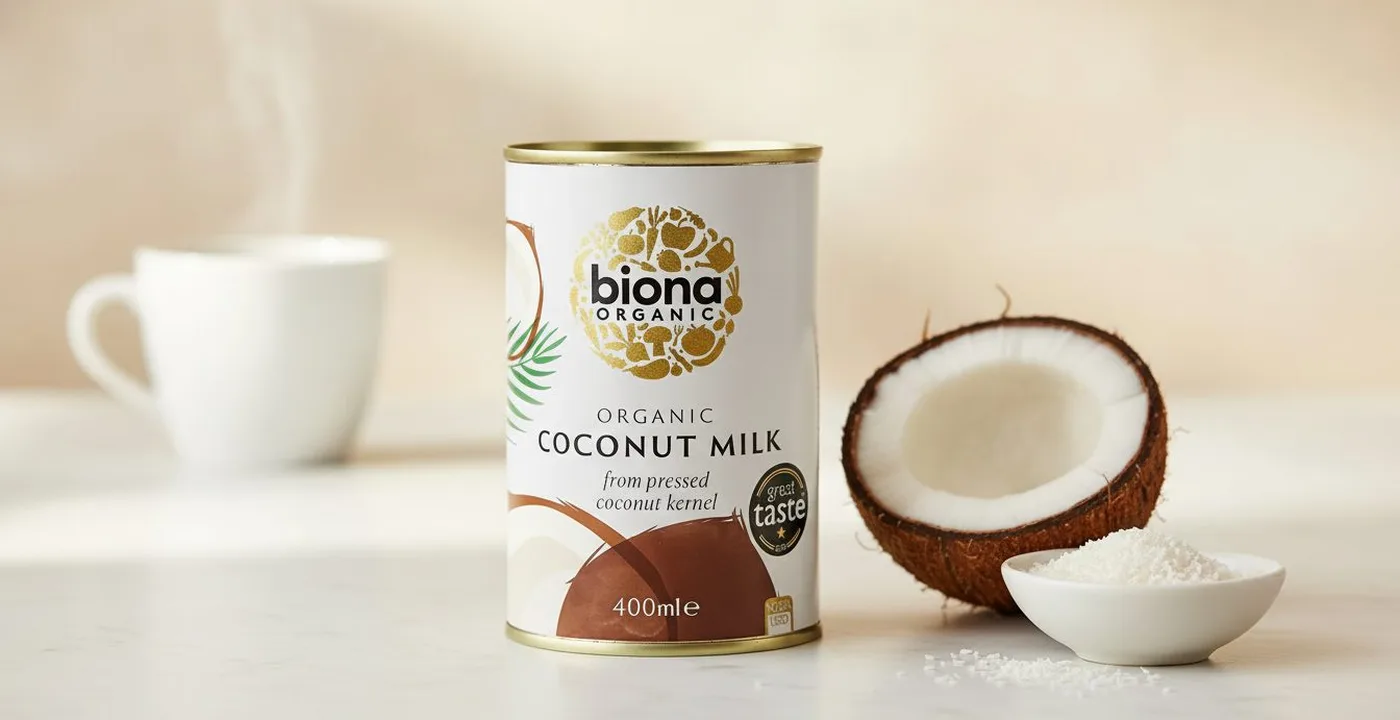
Table of Contents
Some of the links in this article are affiliate links, which help fund our independent review work at no extra cost to you. Every recommendation is based on hands-on testing through The Editor Lab methodology. No brand pays to appear, and no placement is guaranteed.
Biona coconut milk is the cleanest-ingredient coconut milk in mainstream UK retail - two ingredients, no stabilisers - and it works in filter coffee with one technique caveat: stir before pouring, or expect separation.
Biona coconut milk has two ingredients. That is the first thing you notice when you turn the can over: coconut extract and water. No emulsifiers. No stabilisers. No guar gum or carrageenan. For anyone who has been reading labels on mainstream coconut milks and found a paragraph of additives where you expected two lines, this is immediately interesting.
The question that sent most readers here is whether that clean ingredient list is enough - whether a canned culinary coconut milk from a UK organic brand actually performs in coffee, or whether you end up with something that works beautifully in a curry and separates into an oily slick the moment you add espresso. This review answers that question directly, based on the ingredient claims on the Biona product page, assessed for hot filter coffee and espresso using the methodology set out by The Editor Lab.
This review covers: what Biona coconut milk is (and what it is not), the full ingredient and nutrition breakdown, how it performs in hot coffee, where it falls short, where to buy it and what you should expect to pay, how it compares to a barista coconut carton and a supermarket own-brand tin, and a direct verdict on whether the premium is worth it.
I am a registered Nutritional Therapist holding a Diploma in Nutritional Therapy from the College of Naturopathic Medicine, and a BANT member. I have run nutrition clinics at The Wellness Clinic at Harrods and through The Kyros Project at Google DeepMind. My clinical interest in coconut milk as an ingredient - rather than just a flavour - is in what its fat profile and additive-free formulation do in the context of a realistic daily diet. This review applies that question to the specific product, not the category in general.
What Is Biona Coconut Milk? (Culinary Can vs Coffee Drink)
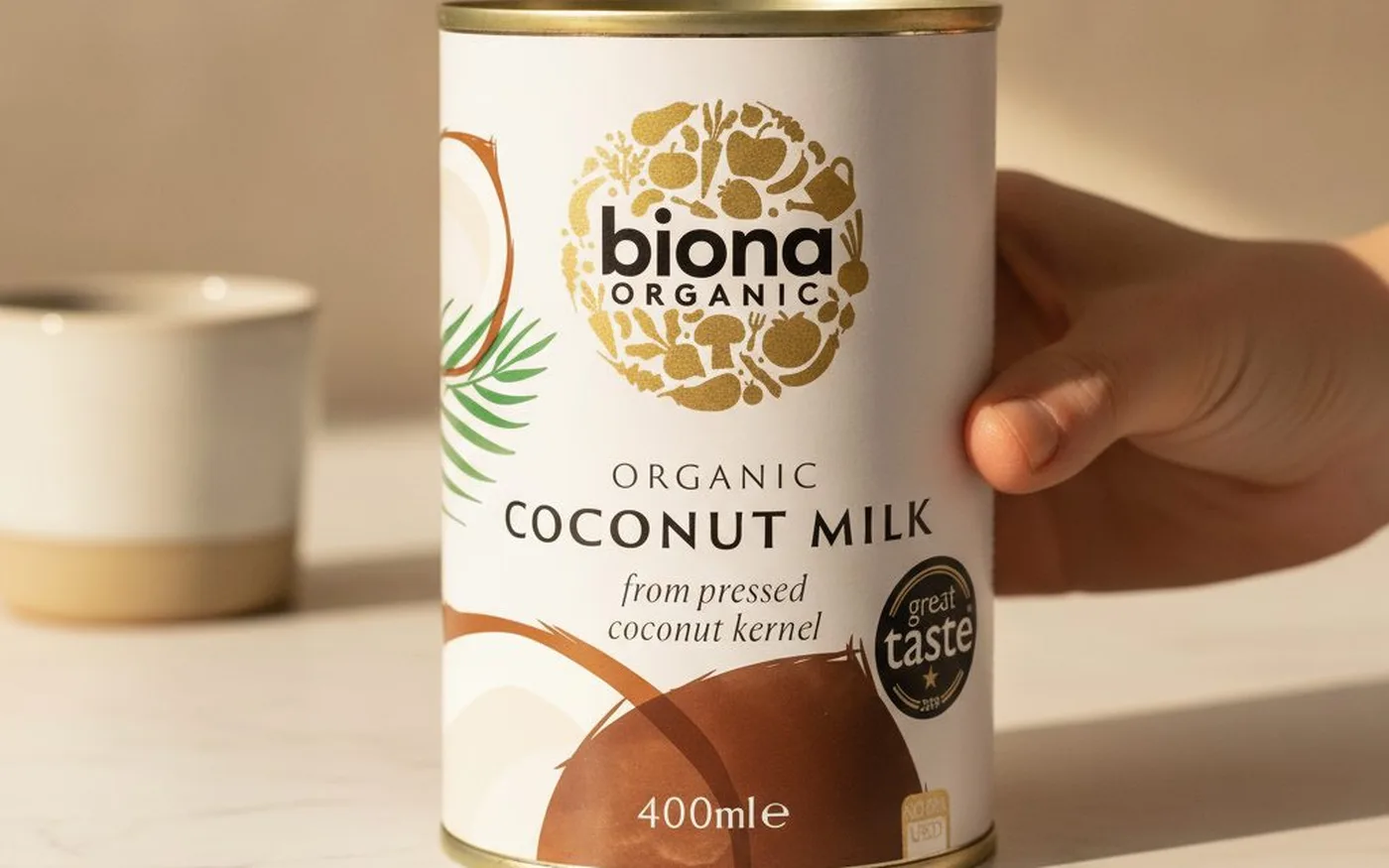
Biona coconut milk is a canned culinary coconut milk, not a coconut milk drink. This distinction matters more than most people realise when they are choosing it for coffee.
A culinary coconut milk - the format in this review - contains around 50% coconut extract mixed with water. It is designed to enrich curries, soups, and rice dishes. A coconut milk drink (the carton format sold by brands like Koko Dairy Free or Alpro) is an entirely different product: predominantly water with a small percentage of coconut extract, typically 2-5%, stabilised and often fortified with calcium and vitamins to behave more like dairy milk. The two products share a name and almost nothing else in terms of composition or behaviour.
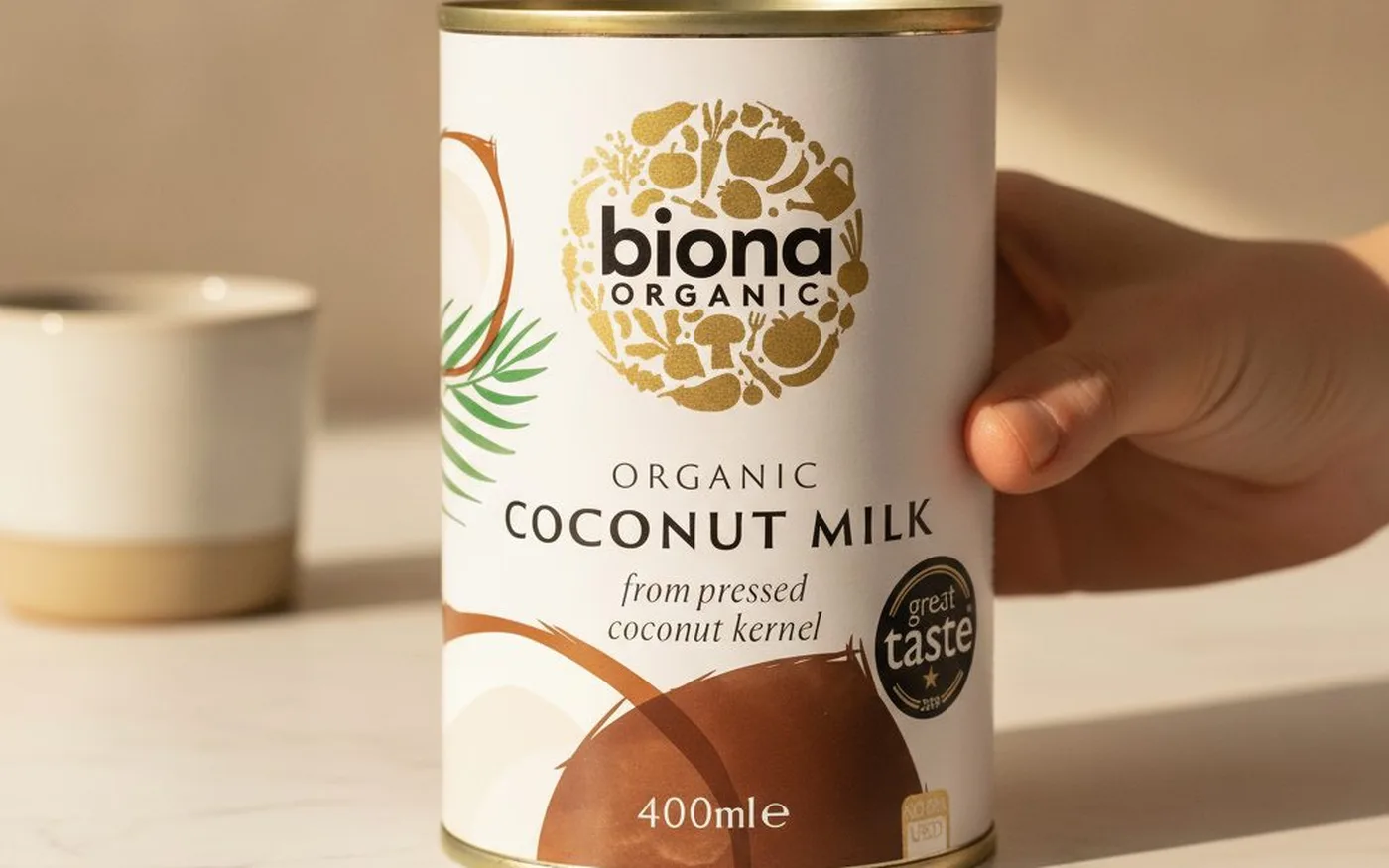
Biona is a brand of Windmill Organics Ltd, a UK organic food company founded in the 1970s by Noel McDonald, originally trading as Windmill Wholefoods from Fulham. Windmill Organics is British, based in London, and also owns the Amisa, RAW, Profusion, Bonsan, and BioFair brands. Biona is its mainstream organic grocery range, sold through health food stores, Planet Organic, Holland & Barrett, Ocado, and increasingly through Amazon UK.
The 400ml can is the standard format. A Biona Coconut Cream (a higher-fat, lower-water version of the same product) and a Biona Coconut Milk Light (9% fat instead of 18%) are separate SKUs. This review covers the standard 400ml coconut milk only - not the cream and not the Light variant.
Ingredients and Nutrition: What's Actually in the Can
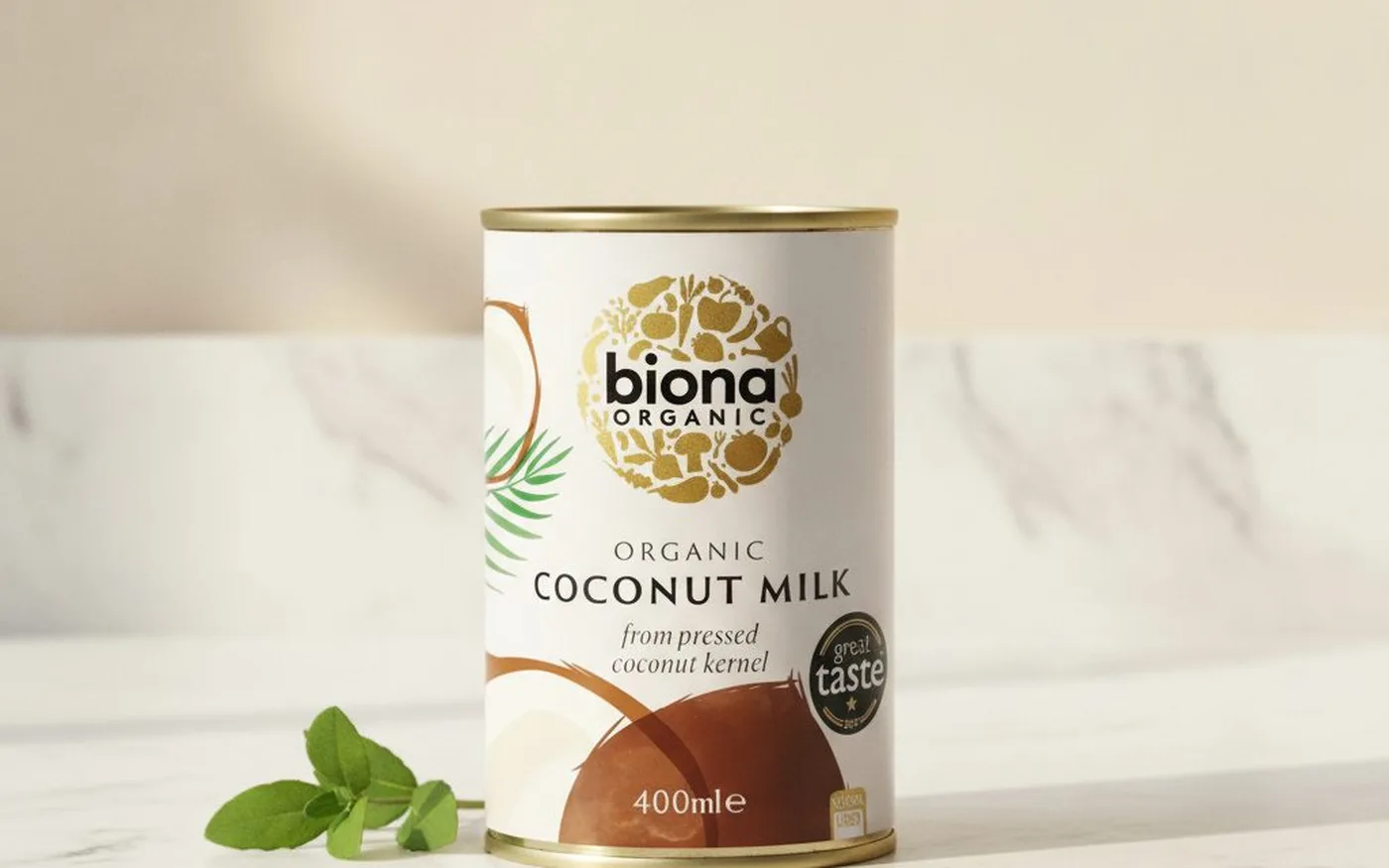
The ingredient list on the standard Biona can is: Organic Coconut Extract (50%), Water. That is it. No stabilisers. No emulsifiers. No guar gum or locust bean gum. No carrageenan. No added calcium or vitamins.
The product page states Certified Organic Ingredients but does not name the certifying body. I am not asserting a specific certifier here - if the Soil Association status matters for your purchasing decision, you would need to verify that directly with Biona or through a retailer that lists certification details. Independently certified organic is the accurate description based on what is stated on-pack.
Nutrition per 100ml (from the Biona product page, verified 20 July 2026):
| Nutrient | Per 100ml |
|---|---|
| Energy | 181 kcal |
| Fat (total) | 18g |
| of which saturates | 16g |
| Carbohydrate | 3.3g |
| of which sugars | 1.8g |
| Protein | 1.4g |
| Salt | 0.02g |
The 18g fat per 100ml is a significant number. For context, whole dairy milk contains around 3.5g fat per 100ml. Even a barista-format oat milk runs 1.5-3g fat per 100ml. Biona's standard coconut milk is a high-fat, high-calorie product - this is not a substitute for dairy if you are trying to reduce your saturated fat intake.
The NHS guidance on saturated fat recommends women consume no more than 20g of saturated fat per day and men no more than 30g. A 50ml splash of Biona in a coffee adds roughly 8g of saturated fat - 40% of the daily guideline for women, from one drink. That does not make it unhealthy in the sense of being harmful if used occasionally, but it is relevant context if you are using it daily across cooking and drinks.
The British Dietetic Association's guidance on plant-based drinks notes that unfortified plant-based options provide significantly less calcium than dairy - a consideration if you are relying on coconut milk as a nutritional dairy replacement rather than simply an additive-free ingredient.
The Biona Coconut Milk Light (also 400ml) contains 9% fat instead of 18% and is a different product entirely. The water-to-coconut ratio is higher, the texture is thinner, and the cooking and coffee behaviour differ. Do not conflate the two based on price or can size.
How Biona Coconut Milk Performs in Coffee
Can you use Biona coconut milk in coffee - or does it separate on contact with espresso? The honest answer is: it works well in filter coffee and less predictably in espresso, and the reason is directly tied to its ingredient list.
To understand why, you need to understand what the absence of stabilisers does to the physics of the product. Emulsifiers and stabilisers in a barista-format carton do one primary job: they keep the fat droplets suspended uniformly in the water, preventing them from coalescing and floating to the surface when the product is heated or agitated. Biona's coconut milk has none of these. When you heat it, the fat begins to separate from the water fraction. This is not a quality defect - it is the expected behaviour of a product that has not been engineered to prevent it.
What This Means in Practice
Shake the can before opening. Stir the contents before pouring, even after shaking. In a filter coffee - pour-over, Chemex, batch brew - where the liquid is not under pressure and the temperature is manageable, Biona should integrate adequately if you pour it in and stir immediately. Without stabilisers, expect some separation if you leave it to sit, so drink it promptly.
In espresso, the result is less predictable. Pouring cold Biona directly onto a hot espresso shot is likely to cause visible separation, with the fat rising to the top. That is not curdling, but it is nothing like a barista flat white. Warming the coconut milk first (not steaming, just gently heating) and stirring immediately before pouring onto the espresso reduces this, but does not eliminate it.
The fat carries more sweetness and body than sharpness, so the coconut note should round out the cup rather than dominate it. At 50% coconut extract, expect the coconut note to be noticeable rather than subtle.
At 18g fat per 100ml, expect a much thicker mouthfeel than oat or soy milk in coffee. If you like a richer cup and are comfortable with separation, Biona works. If you need the milk to behave like a barista carton - no separation, smooth texture, holds under steam - this is not that product.
Where Biona Coconut Milk Falls Short
Separation is not optional. Because Biona contains no stabilisers, the separation in hot coffee is guaranteed rather than occasional. Every pour requires a fresh stir. Every cup. A barista-format carton coconut drink (from Koko or Koko Dairy Free, which is a dedicated coconut milk alternative, or Alpro Coconut Barista) handles heat and espresso contact without this issue because it is engineered to. Biona's clean ingredient list is not compatible with stabilised behaviour - the trade-off is explicit and real.

Price per litre is roughly double a supermarket own-brand tin. As of July 2026, Biona retails at £2.49 for 400ml at biona.co.uk and Planet Organic, which works out to £6.23 per litre. A supermarket own-brand coconut milk tin (Sainsbury's, Tesco, or Waitrose own label) typically runs £1.00-£1.20 per 400ml, or £2.50-£3.00 per litre. You are paying a 100-150% premium for the clean ingredient list. That premium is real - and for the people this review is written for, it is likely acceptable. But it is worth stating plainly.
No calcium fortification. A 50ml serving of Biona in your morning coffee provides no meaningful calcium. If you have moved away from dairy partly for convenience and are relying on your coffee milk for calcium contribution, this matters. Fortified plant-based options provide 120mg calcium per 100ml, matching dairy. Biona provides essentially zero.
Not suitable for steaming. Do not put Biona in a steam wand. The high fat content and absence of stabilisers produces an unpredictable, greasy result - not the foam you get from oat or barista-format milks.
Price and Where to Buy Biona Coconut Milk in the UK
As of 20 July 2026, UK pricing across major stockists:
| Retailer | Price (400ml) | Price per litre | Notes |
|---|---|---|---|
| biona.co.uk | £2.49 | £6.23 | Direct. Standard pricing. |
| Holland & Barrett | £2.69 | £6.73 | Full price. Regular 25%-off offers. |
| Planet Organic | £2.50 | £6.25 | Consistent with brand site. |
| Ocado | £3.20 | £8.00 | Premium channel pricing. |
| Amazon UK | Varies (multipack) | Lower per-unit in multipacks | 6-pack on Amazon reduces per-can cost materially. |
The Holland & Barrett 25%-off event (which runs frequently) brings Biona to around £2.02 per can, or £5.05 per litre - still above supermarket own-brand but a more competitive gap. If you are a regular buyer, buying in multiples from Amazon or catching a H&B promotion is the most cost-effective approach.
Biona vs Other Coconut Milks for Coffee
| Biona (400ml can) | Barista coconut carton (e.g. Koko Barista) | Supermarket own-brand tin | |
|---|---|---|---|
| Fat % | 18g/100ml | 2-4g/100ml | 17-20g/100ml |
| Ingredient list | 2 ingredients | 8-14 ingredients | 3-6 ingredients |
| Stabilisers | None | Yes (guar gum, gellan gum) | Often yes |
| Coffee performance | Good in filter, separates in espresso | Designed for espresso and steaming | Similar to Biona - separates |
| Flavour in coffee | Noticeable coconut, rich body | Mild coconut, neutral texture | Similar to Biona; check the additives |
| Price per litre | £6.23 | £2.50-£3.50 | £2.50-£3.00 |
| Organic certification | Yes (stated on-pack) | Varies | Usually no |
| Calcium fortified | No | Yes (most brands) | No |
The barista carton wins on coffee performance - it is designed for exactly that use case. Biona wins on ingredient purity. The supermarket own-brand tin is closest to Biona in composition but lacks the organic positioning and often includes guar gum. The choice between them is a question of what you are optimising for.
If you want one product for both cooking and occasional coffee use and you are willing to tolerate the separation caveat, Biona is the best clean-label option currently available in mainstream UK retail. If you need seamless espresso performance, a dedicated barista coconut carton is the correct choice.
Pairs Well With
Biona's coconut milk has a rich, slightly sweet, high-fat body. It suits medium-dark, low-acidity coffees - roasts with chocolate, caramel, or nutty notes that cut through the coconut fat rather than being overwhelmed by it. A very light or fruity filter roast is likely to taste thin against this level of fat.
Balance Coffee's Stability Blend (Brazil 60%, Mexico 20%, Uganda 20%) fits this profile well. It is a medium-dark roast with a rounded body and enough structure to hold its ground against coconut's natural sweetness. Available via Save 20% on Stability Blend at Balance Coffee for Balance Journal readers. Balance Coffee is the company founded by James Bellis in 2020, who reviewed this article.
For best coffee beans to pair generally with alternative milks, our guide to the best coffee beans in the UK covers roast profiles and how they interact with different milk types.

Verdict: Is Biona Coconut Milk Good?
Yes - within honest terms. Biona's two-ingredient list is genuine, and for anyone trying to reduce additive intake across their kitchen staples, it is one of the cleanest options in mainstream UK retail. The fat content is high (18g/100ml) and the saturated fat contribution is significant if you use it daily, but neither of those is a hidden problem: the nutrition information is on the can and the product is not marketed as a low-fat option.
For coffee, the verdict is more specific: it works in filter coffee if you stir thoroughly before pouring and drink it fairly promptly. It separates more than a barista-format carton because it is not engineered to prevent separation - that is the direct consequence of the clean ingredient list, and it is a trade-off, not a defect. In espresso-based drinks, expect visible separation and a less cohesive result than you would get from a product with stabilisers.
The best use case is someone who wants a single additive-free coconut milk for both cooking and occasional coffee use, is comfortable with the technique adjustment, and does not need their morning drink to look like it was made in a specialty coffee shop. For that person, Biona is excellent. For someone who needs barista-grade coffee performance without compromise, a dedicated best coconut milk for coffee carton option is the better fit - and our best alternative milk for coffee guide covers the full field.
Frequently Asked Questions
Is Biona coconut milk healthy?
Biona coconut milk contains only organic coconut extract (50%) and water, making it free from emulsifiers and stabilisers. Its 18g fat per 100ml is primarily saturated fat - the NHS recommends no more than 20g per day for women. It is a clean-label product but not a low-fat one, and it provides no calcium fortification. Worth considering in context of your overall diet.
Is Biona a British company?
Biona is a brand of Windmill Organics Ltd, a UK company founded in the 1970s by Noel McDonald, originally trading as Windmill Wholefoods in Fulham, London. The company and its portfolio of organic brands are British-owned and headquartered in the UK. The coconut itself is grown in tropical regions, not the UK - the organic sourcing is the relevant claim, not the ingredient's geographical origin.
Is Biona really organic?
The Biona product page states Certified Organic Ingredients but does not name the certifying body. The organic claim appears genuine, but I cannot confirm whether it is Soil Association, OF&G, or another body without independent verification. If the specific certifier matters, contact Biona directly or check with a retailer that publishes certification details.
Who owns Biona?
Biona is owned by Windmill Organics Ltd, a London-based organic food company that also owns the Amisa, RAW, Profusion, Bonsan, and BioFair brands. The company was founded by Noel McDonald via Windmill Wholefoods in the 1970s and remains one of the longer-established organic food businesses in the UK.
What are the downsides of coconut milk?
High saturated fat (16g per 100ml) is the main nutritional consideration. Canned coconut milk without stabilisers separates when heated, which is less convenient in hot drinks. The flavour is noticeably coconutty - not always wanted in savoury cooking or coffee. It is also calorie-dense (181 kcal per 100ml vs around 47 kcal for oat milk) and unfortified versions provide no calcium.
What is the healthiest coconut milk on the market?
Healthiest depends on what you are measuring. For the shortest ingredient list, Biona scores well. For lowest saturated fat, the Biona Coconut Milk Light (9% fat) is the better choice. For calcium contribution, a fortified coconut carton drink wins. These are different priorities - no single coconut milk is objectively healthiest across all nutritional dimensions.
Which brand of coconut milk is the healthiest?
No brand has a universal claim here - it depends on your nutritional priority. Additive-free brands like Biona reduce emulsifier intake. Lower-fat variants (Biona Light) reduce saturated fat. Fortified carton brands like Koko Dairy Free provide calcium. Identify which factor matters most in your diet, then match the product to that priority.
Why has Aldi stopped selling coconut milk?
Some UK retailers reviewed coconut milk supply chains following animal welfare concerns - specifically reports of trained monkeys used to harvest coconuts in parts of Thailand. Aldi's stocking decisions vary by period and region. Biona does not publish the coconut sourcing country on its product page (verified July 2026), so a direct comparison on this point cannot be made.
Can you put Biona coconut milk in your coffee, or is it only for cooking?
You can use it in coffee, but it is a culinary can rather than a barista drink. Stir thoroughly before pouring. It works better in filter coffee than espresso - expect separation in any hot espresso-based drink. For seamless latte or flat white performance, a dedicated barista-format coconut carton will hold more consistently, though it will have a longer ingredient list.

A registered Nutritional Therapist and member of BANT, Clemmie blends science with a holistic approach to wellbeing.