Gaggia Classic GT Dual Boiler Review

Coffee & Wellness Writer
Thirty shots through Gaggia's first dual-boiler. Here is whether the £699 premium over the Classic Pro is earned.
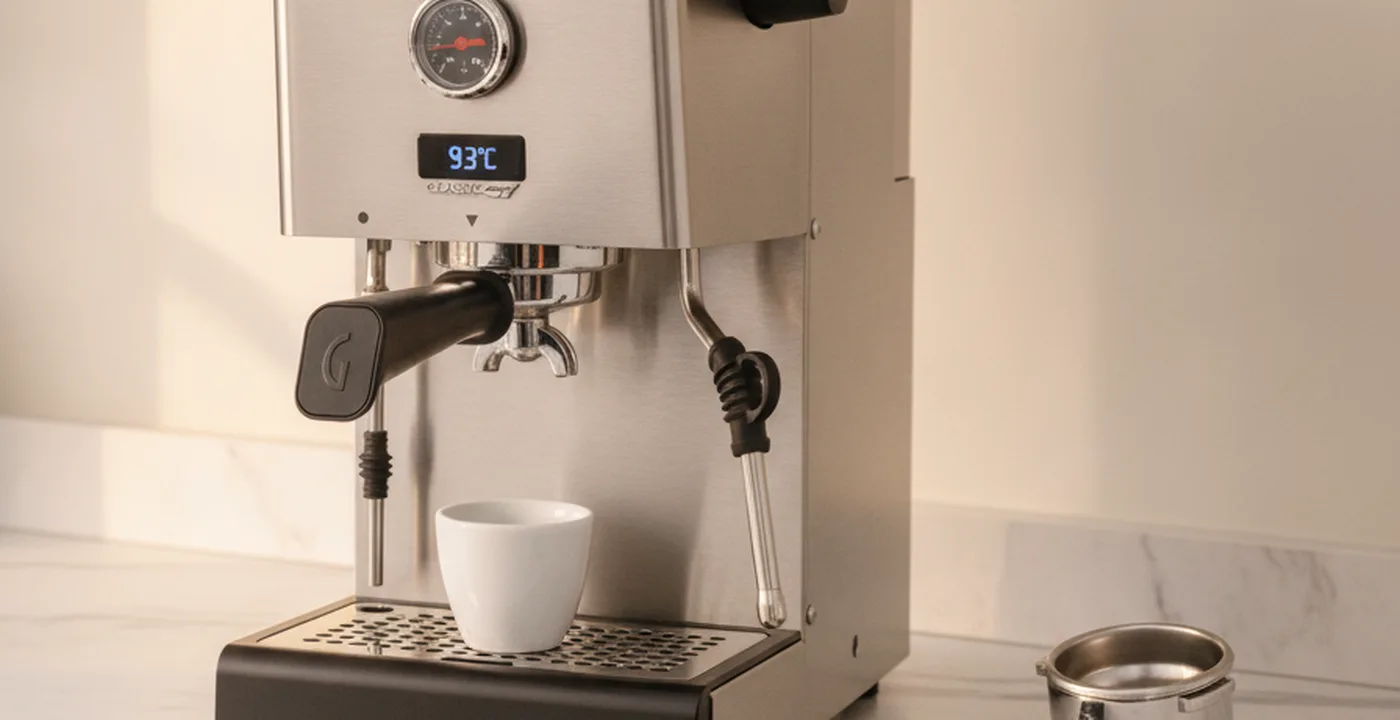
Table of Contents
Some of the links in this article are affiliate links, which help fund our independent review work at no extra cost to you. Every recommendation is based on hands-on testing through The Editor Lab methodology. No brand pays to appear, and no placement is guaranteed.
The Gaggia Classic GT Dual Boiler Review you are about to read is shaped by 30 shots through a machine that has divided expert opinion since launch. Gaggia released the Classic GT in late 2024 as their first dual-boiler home espresso machine at £699, a price that undercuts the obvious competition by £300 to £500. The question you are really asking is whether the GT is a new tier of machine, or a Classic Pro with a second boiler bolted on.
This is the question I tested over a fortnight in my own kitchen, with my own grinder, and a single bean I know well enough to taste the variables the machine introduces. The short answer sits in the verdict box below. The honest answer takes the rest of the article, and if you have already read the best Gaggia coffee machine roundup, this is the long-form companion to the Classic GT row in that table.
“I spent 5 years inside Sanremo UK being trained by their engineers on PID controllers and multi-boiler systems before going home and pulling shots on Gaggia Classics for years. After 30 shots through the GT, my verdict sits closer to Whole Latte Love's 'best value dual boiler' than to Lance Hedrick's 'An Icon Underdelivers', the pre-infusion is the weakest link, but everything else earns the £699.”
Verdict: Is the Gaggia Classic GT Worth £699?
Editor's Note
Score: 8.2 out of 10
Price as tested: £699 (Gaggia UK direct, May 2026)
Who it is for. The buyer who wants a real dual-boiler experience for under £700, plans to keep the machine 5 to 10 years, and is happy to develop technique. The first prosumer espresso machine for someone who has outgrown a moka pot, an Aeropress, or a pod machine and wants to learn properly without paying Lelit Elizabeth money. Daily milk drinkers gain the most. If you make one cappuccino, flat white, or latte a day, the dual-boiler workflow change is the upgrade you feel within a week.
Who should skip it. Anyone hoping for the deep, full-pressure pre-infusion of a Sage Dual Boiler should look up the price tier. Anyone who needs a single-button, milk-automated workflow should look at the Sage Touch or a bean-to-cup machine. Anyone whose budget cannot also stretch to a separate burr grinder is buying the wrong machine, since a £699 dual-boiler with stale pre-ground beans performs worse than a £449 Classic Pro with a £200 grinder.
| Category | Score |
|---|---|
| Espresso Quality | 8 / 10 |
| Steam Performance | 8 / 10 |
| Build Quality | 9 / 10 |
| Ease of Use | 7 / 10 |
| Value | 9 / 10 |
| Weighted Total | 41 / 50 |
How I Tested the Classic GT
My setup for this review was a Niche Zero grinder, an 18g VST precision basket, and Balance Coffee's Cerrado Brazil naturals as the single bean across all 30 test shots. I pulled the first shot 5 minutes after switching the machine on and kept pulling for two weeks, two to three shots a day, in a typical home kitchen at 19 to 21 degrees ambient. Steaming was done in a 350ml jug with whole and oat milk. The shot data table further down records dose, yield, time, and the taste impression for the cleanest five shots in the run.
If you want to see the methodology I use across every BJ review, including how I select baskets, beans, and what counts as a dialled shot, The Editor Lab holds the full standard. The shots in this review were pulled to that brief, and the bean choice mirrors what you would land on after working through our best coffee beans for espresso uk guide.
What the Gaggia Classic GT Is, and Why a Dual Boiler Matters
The Gaggia Classic GT is Gaggia's first dual-boiler home espresso machine, launched in late 2024 at £699 RRP. It sits in Gaggia's UK lineup one step above the £449 Classic Pro and well below the £1,200 prosumer category. You can think of it as the Classic family's grown-up sibling, keeping the commercial 58mm portafilter and three-way solenoid the Classic Pro is known for, and adding a second boiler, programmable pre-infusion, and factory PID.
A dual-boiler espresso machine has two physically separate boilers: one heats water to brew temperature, around 93 degrees, for the shot, and a second boiler heats water to steam temperature, around 130 to 135 degrees, for milk texturing. Because the two circuits operate independently, the machine can pull a shot and texture milk at the same time, with no waiting between modes. This is the architectural change you are paying for.
On a single-boiler machine like the Classic Pro, you switch the boiler up to steam temperature after pulling the shot, wait for the steam light, and then steam. If you steam before extraction, you cool the boiler back down with a flush. Home baristas call this the shot-to-steam dance. The Classic GT removes it entirely. You pull, you steam, you serve. The minute or two saved per drink does not sound like much in the abstract. In daily use, it is the single biggest workflow upgrade the GT delivers over the Classic Pro, and the one that determines whether you fit the machine.
Design and Build Quality
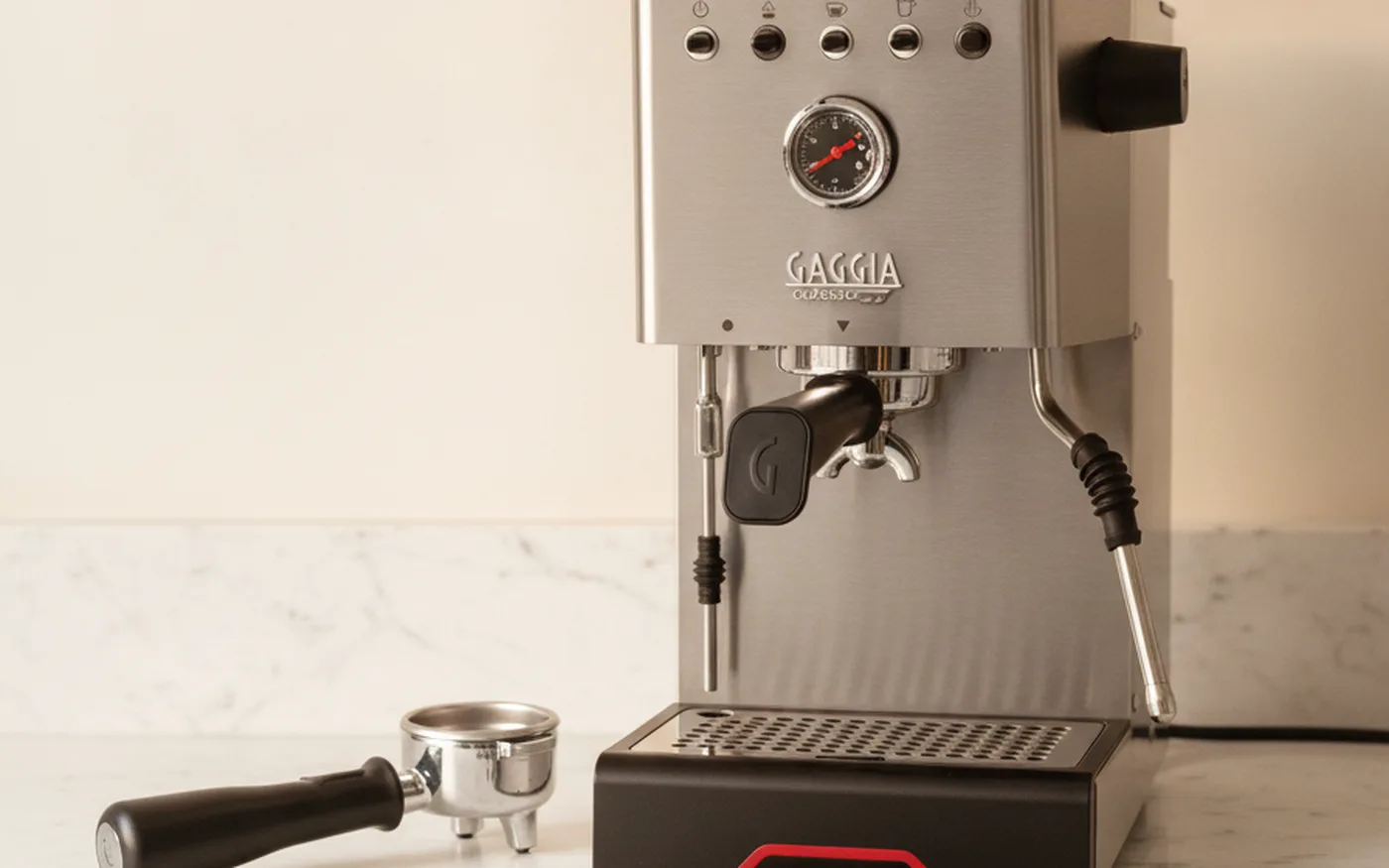
The Classic GT looks like a Classic. The footprint is small enough for a domestic kitchen counter at 24cm wide, the chrome and brushed-steel finish reads commercial rather than appliance, and the chassis has no flex when you cup it. The portafilter carries the heft of the commercial 58mm units the rest of the Classic line uses, which means you can run the same VST and IMS aftermarket baskets that competition baristas favour.
Gaggia specifies a 1.4 litre water reservoir, a 0.1 litre stainless brew boiler, and a 0.25 litre stainless steam boiler. The brew group sits behind a removable drip tray and reads more straightforward than Sage's tech-led front panel. There is no LCD screen, just five buttons across the top: power, 1-cup, 2-cup, hot water, and steam. The water reservoir is rear-mounted, which means pulling the machine forward to refill it is a daily reality you should factor into your counter depth.
| Spec | Gaggia Classic GT |
|---|---|
| Boiler config | Dual (brew + steam, separate) |
| Brew boiler | 0.1 L stainless |
| Steam boiler | 0.25 L stainless |
| Portafilter | 58mm commercial |
| Tank capacity | 1.4 L |
| Pump | 15 bar vibratory |
| Pre-infusion | Programmable, low pressure |
| Three-way solenoid | Yes |
| PID temperature | Yes |
| Warranty (UK) | 2 years domestic |
Source: Gaggia UK official product page, verified 30 May 2026.
Espresso Quality: What 30 Shots Told Me
On the question you actually care about, does the Classic GT pull better shots than the Classic Pro, the answer is yes, but with one honest caveat. The temperature stability is noticeably tighter. Shot to shot, the GT held within roughly 1 degree of my chosen brew temperature once warmed up, where a stock Classic Pro typically drifts 2 to 3 degrees between consecutive shots without a PID mod. That tightness reads in the cup as a more even extraction across a dialled ratio, which matters most when you are working with a light or medium roast where small temperature shifts move the flavour profile.
The pre-infusion is where the divided expert SERP plays out. Whole Latte Love treats it as a genuine feature. Lance Hedrick, in his 'An Icon Underdelivers' YouTube review, argues it does not move the needle in any meaningful way. After 30 shots, my read sits between the two but closer to Hedrick. Gaggia's pre-infusion on the GT is brief and low-pressure, and you cannot adjust it to anything close to the saturation phase a Sage Dual Boiler can hold. If you have used a proper saturating pre-infusion on a Sage or a Lelit, you will notice the difference. If you are coming from a Classic Pro or a moka pot, you will notice an upgrade.
The shot parameters I worked to follow the SCA framework you can read in full at the SCA brewing standards page, an 18 to 20g dose, a 36 to 40g yield, 25 to 32 seconds of extraction. Here is what the cleanest five shots in the test run looked like, all pulled on a Niche Zero grinder with Balance Coffee's Cerrado Brazil naturals.
| Shot | Dose | Yield | Time | Taste Note |
|---|---|---|---|---|
| 1 | 18.0 g | 36.0 g | 28 s | Milk chocolate front, brown sugar finish, full body |
| 2 | 18.0 g | 36.5 g | 27 s | Same dose, finer grind. Hazelnut clearer through the middle |
| 3 | 18.0 g | 38.0 g | 31 s | Longer ratio. Sweeter, slightly thinner body |
| 4 | 18.5 g | 37.0 g | 29 s | Bigger dose. Denser body, milk chocolate emphasised |
| 5 | 17.5 g | 35.0 g | 26 s | Smaller dose. Brighter acidity, lighter body |
In the cup, the Classic GT pulls the kind of espresso the Classic Pro is capable of on its best day, but more often. The milk chocolate on the nose, hazelnut through the body, and brown sugar finish I expect from a Cerrado Brazil came through on every dialled shot you would care to pull. The improvement over a stock Classic Pro is not in some new flavour ceiling. It is in how often the GT lands in the window for you, shot to shot.
Milk and Steam Performance

Steam is where the GT genuinely changes your daily workflow. The dedicated steam boiler holds pressure, comes back up quickly between shots, and produces dense, fine microfoam in a 350ml jug without much coaxing. With whole milk, I was pouring latte art within three or four sessions of getting used to the wand. With oat milk, the texture is slightly less stable but still pourable. The steam wand itself is a two-hole tip, a Classic-line standard. It is not as fast as the four-hole tips on Sage's commercial-style wands, but it is more forgiving if you are still learning to pitch a jug.
For context, having worked on Sanremo Opera, La Marzocco Linea, and Victoria Arduino Eagle machines in cafes, the GT is not in the commercial steam category. Nothing at £699 is. But for a home machine, you get consistently correct microfoam, which is the bar most domestic buyers actually need. Where it sits relative to a single-boiler Classic Pro is straightforward, you steam while the shot is pulling, you serve the drink hot, and you skip the shot-to-steam dance entirely. That is the dual-boiler value, paid back in seconds per drink and in the workflow you stop fighting.
Daily Use: Workflow, Cleaning, Quirks
Heat-up from cold takes 5 to 6 minutes to brew-ready and another minute or so for full steam pressure. That is in line with the Classic Pro and faster than the Lelit Elizabeth, which takes 10 to 12 minutes. Once warm, the GT is essentially ready on demand for back-to-back drinks. The Classic line three-way solenoid means your puck is dry by the time you knock it out, which makes daily cleanup quick. A backflush every 20 to 30 shots using a blanking disk and a small dose of Cafiza is enough to keep the group head clean. Descaling depends on your local water hardness, typically every 3 to 6 months on a softened or filtered supply.
What I would change.
- The pre-infusion needs a real saturation mode, not the brief low-pressure hold the GT currently offers. This is the single area where the £300 step up to a Sage Dual Boiler genuinely earns the difference.
- The rear-mounted water reservoir means you are pulling the machine forward to refill it. A side-access tank, the way Sage does it, would be a daily-use improvement and costs nothing in component engineering.
If you are pairing the GT with a separate grinder, the same conversation that applies to the Classic Pro applies here, and the cluster article on the best grinder for gaggia classic pro will become the natural companion to this review once it goes live.
Gaggia Classic GT vs the Competition
Three machines come up in every Classic GT buying conversation: the Classic Pro you might be upgrading from, the Sage Dual Boiler one tier up, and the Lelit Elizabeth that sits at the prosumer entry point. Here is how they compare on the specs that matter at this buying decision.
| Spec | Gaggia Classic GT | Gaggia Classic Pro | Sage the Dual Boiler | Lelit Elizabeth PL92T |
|---|---|---|---|---|
| Price (UK, May 2026) | £699 | £449 | £1,099 | £1,199 |
| Boiler configuration | Dual (brew + steam) | Single | Dual (brew + steam) | Dual (brew + service) |
| Portafilter | 58mm commercial | 58mm commercial | 58mm | 58mm |
| PID temperature | Yes (factory) | No (mod available) | Yes (adjustable) | Yes (dual independent) |
| Pre-infusion | Programmable, low pressure | None (mod available) | Programmable, saturating | Programmable |
| Steam type | Dedicated boiler | Single boiler (wait) | Dedicated boiler | Dedicated service boiler |
| Heat-up time | 5 to 6 min | 5 to 6 min + steam wait | 5 to 6 min | 10 to 12 min |
| Warranty (UK) | 2 years domestic | 2 years domestic | 2 years | 2 years |
| Best for | First dual-boiler buyer | Mod-friendly upgrader | Tech-led automation | Prosumer step-up |
vs Gaggia Classic Pro. If you already own a Classic Pro, the upgrade case is about workflow more than shot quality. The dual boiler removes the steam wait. The factory PID and pre-infusion are improvements you can mod onto a Classic Pro for around £100 to £150. Adding a second boiler is not a mod you can do, you would be buying a different machine. If you make milk drinks daily, the GT saves you a real minute per drink and earns its premium. If you pull straight espresso and drink it black, the £250 between the two is harder for you to justify. The full gaggia classic pro review sits in the same cluster as this one once it lands.
vs Sage the Dual Boiler. The Sage is genuinely better at pre-infusion, has a built-in shot timer, and offers PID-controlled brew temperature you can set to the nearest degree. It also costs £300 to £400 more, takes up more counter space, and is harder to service yourself in five years. The Classic GT undercuts it by a meaningful margin and is the easier machine to keep alive for a decade. For tech-led buyers who want shot data on a screen, the Sage wins. For repair-friendly, longer-lifetime ownership, the GT does.
vs Lelit Elizabeth. The Lelit is the entry-prosumer step-up. It has dual independent PIDs, a longer heat-up, a proper service boiler, and the engineering depth that justifies £1,199. The GT does not match the Lelit on prosumer build. It costs £500 less. Whether the GT is enough for you depends on whether you are buying a machine for the next 3 years or the next 10.
Who Should Buy the Classic GT (and Who Should Not)
Buy the Classic GT if you are upgrading from a moka pot, an Aeropress, or a pod machine, you want to learn proper espresso without throwing £1,200 at your first prosumer, and you make at least one milk drink a day. The dual boiler will save you 30 to 60 seconds per drink, and that workflow change is the reason you will keep using the machine instead of putting it away after three months. You also need to either already own a decent burr grinder or have the budget for one. A £150 to £250 grinder is the minimum companion. Without it, the dual-boiler upgrade does not show up in your cup.
Skip the Classic GT if you have a Sage Dual Boiler already and the only deficit you feel is pre-infusion, since the GT will not solve that for you. Skip it if you want a single-button, milk-automated workflow, since the Sage Touch or a bean-to-cup machine is your call there. Skip it if your budget has no headroom for a grinder at all. A £699 machine paired with a £40 pre-ground bag of supermarket beans will deliver a worse cup than a £449 Classic Pro paired with a £200 grinder, every time.
Where to Buy the Gaggia Classic GT
Last price-checked: 30 May 2026.
As of late May 2026, the Classic GT lists at £699 RRP across Gaggia UK direct, Whole Latte Love UK, and selected speciality independents. Amazon UK pricing is broadly the same on listed stock, but availability fluctuates week to week. Bella Barista is the UK independent most likely to stock the Classic line at depth, so it is worth checking your local independent before committing to a major retailer.
Recommended UK retailers (May 2026, prices subject to change):
- Gaggia UK direct (£699): Gaggia Classic GT product page
- Whole Latte Love UK (£699): Whole Latte Love Classic GT listing
- Amazon UK (price varies): Amazon UK search for Classic GT
Frequently Asked Questions
Is the Gaggia Classic GT worth it?
Yes, if you fit the buyer profile. The Classic GT is worth £699 for first-time prosumer buyers who make milk drinks daily, plan to keep the machine 5 to 10 years, and own or plan to buy a decent burr grinder. For black-coffee drinkers upgrading from a Classic Pro, the £250 premium is harder to justify, and the workflow win lands hardest if you make milk drinks.
What is the difference between the Gaggia Classic Pro and the Classic GT?
The Classic GT has a second boiler dedicated to steam, programmable pre-infusion, and factory PID temperature control. The Classic Pro is single-boiler with none of those features as standard. The GT removes the shot-to-steam wait the Classic Pro requires and adds £250 to the price. Both share the same commercial 58mm portafilter, three-way solenoid, and chassis platform, so the upgrade is in workflow and consistency, not in basket size.
Is the Gaggia Classic GT actually a dual boiler?
Yes. The Classic GT has two physically separate boilers, a 0.1 litre stainless brew boiler and a 0.25 litre stainless steam boiler. The two circuits operate independently, so you can pull a shot and steam milk at the same time. This is the architectural change that distinguishes it from the single-boiler Classic Pro and the reason most buyers shortlist it in the first place.
How long does the Gaggia Classic GT take to heat up?
From cold, the Classic GT takes 5 to 6 minutes to reach brew-ready temperature and roughly another minute for full steam pressure. That is similar to the Classic Pro and meaningfully faster than the Lelit Elizabeth's 10 to 12 minute warm-up. Once at temperature, the machine is essentially on-demand for back-to-back drinks, which matters most when you are making two or three drinks in a morning.
Does the Gaggia Classic GT have PID temperature control?
Yes. The Classic GT ships with PID temperature control as standard, where the Classic Pro requires an aftermarket mod to add the same feature. PID holds brew temperature within roughly 1 degree shot to shot, which produces more consistent extraction than a thermostatic boiler. You cannot adjust the setpoint as finely as on a Sage Dual Boiler, but the factory calibration is competent out of the box.
Can you steam milk and pull a shot at the same time on the Gaggia Classic GT?
Yes. That is the central reason for the dual-boiler architecture. The brew circuit and the steam circuit are independent, so the Classic GT can extract a shot and texture milk simultaneously with no waiting between modes. This is the workflow change the Classic Pro cannot match, and it is the GT's single biggest daily-use upgrade if you make any kind of milk drink at home.
How does the Gaggia Classic GT compare to the Sage Dual Boiler?
The Sage Dual Boiler costs £300 to £400 more, has stronger saturating pre-infusion, a built-in shot timer, and adjustable PID brew temperature. The Classic GT is cheaper, simpler, has a smaller counter footprint, and is easier to service long-term. For tech-led buyers who want shot data on a screen, the Sage wins. For repair-friendly, longer-lifetime ownership, the GT is the call.
Should I buy the Gaggia Classic GT or save up for a Lelit Elizabeth?
Buy the Classic GT if you want a dual-boiler machine now and £699 is your ceiling. Save for the Lelit Elizabeth if you can stretch to £1,199 and want prosumer-tier engineering, dual independent PIDs, and a service boiler. The Lelit is the longer-term machine, the GT is the better value at its price. If your budget caps at £700, the GT is your answer.
Final Verdict
The Gaggia Classic GT is the dual-boiler espresso machine I would recommend at £699, and the buying decision is genuinely about whether you fit its profile. It delivers the workflow change a dual boiler is supposed to deliver, holds its temperature tightly enough for consistent extraction, and steams well enough for daily milk drinks at home. Its weakest point is a pre-infusion that does not match the Sage Dual Boiler, and that is the only place where the £300 to £400 step up to the Sage genuinely earns the difference for the right buyer.
For most first-time prosumer buyers, the GT is the right call. For pre-infusion purists or anyone with the headroom to wait and save for a Lelit Elizabeth, it is not. My verdict sits closer to Whole Latte Love than to Hedrick, and the Classic GT earns its £699 for you if the buyer profile fits.
A wellness entrepreneur and biohacker, James explores the intersection of hospitality and health - from clean fuel and recovery tools to mindful routines that build balance into daily life.