Gaggia Anima Review: Is It Worth Buying in 2026?

Coffee & Wellness Writer
Six weeks, 4-6 drinks a day. Here is what the Gaggia Anima actually gets right - and wrong.
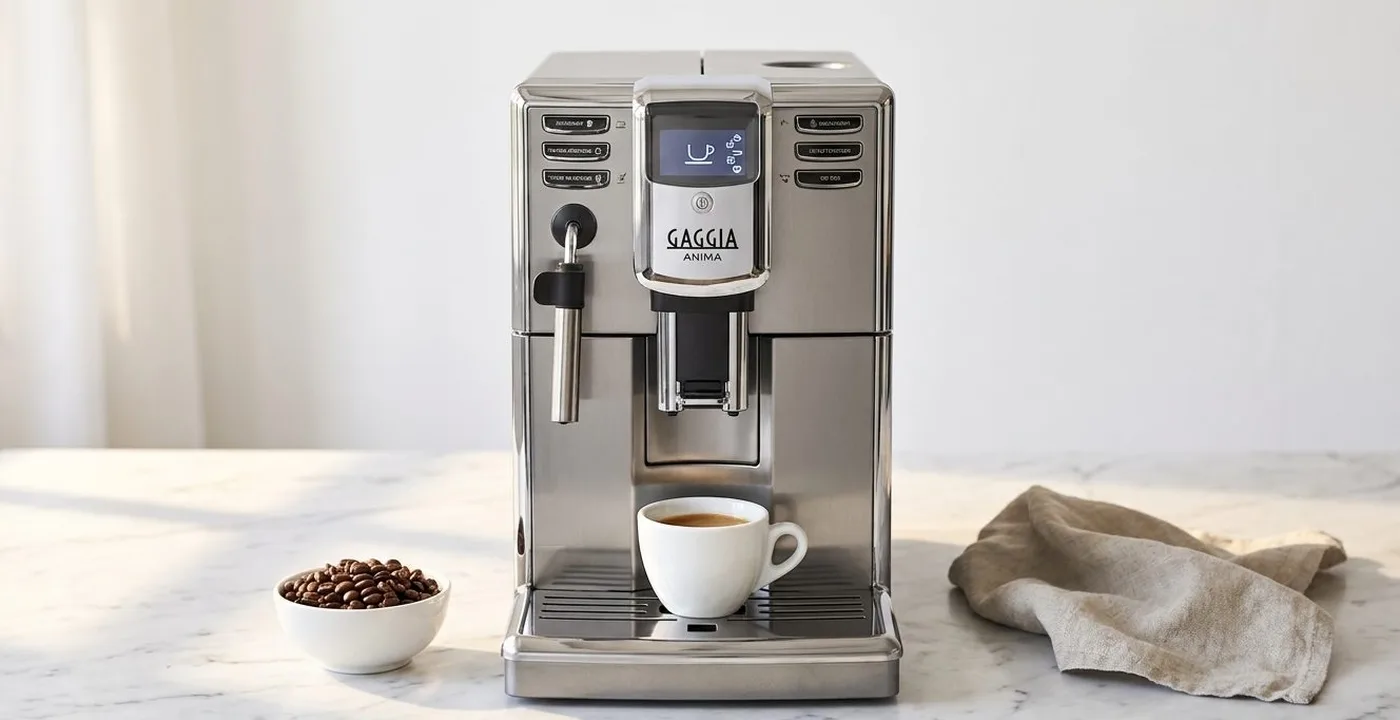
Table of Contents
Some of the links in this article are affiliate links, which help fund our independent review work at no extra cost to you. Every recommendation is based on hands-on testing through The Editor Lab methodology. No brand pays to appear, and no placement is guaranteed.
The Gaggia Anima sits in one of the most crowded slots in the UK coffee machine market: bean-to-cup machines priced between £500 and £900, targeted at buyers who want one button and a proper espresso. This gaggia anima review covers all four variants - the base Anima, Anima Prestige, Anima Deluxe, and Anima Class - because the differences between them matter more than most reviews let on.
I spent two years as a barista trainer at UCC Coffee, calibrating commercial bean-to-cup machines across hundreds of UK corporate accounts, then five and a half years inside Sanremo UK as Sales & Marketing Manager, trained by engineers on espresso machine internals. I have seen these machine categories from the inside, not just from the kitchen counter. That experience shapes everything in this review - including where I think the Anima earns its price and where it does not.
Last tested: June 2026 | Last price-checked: June 2026
I worked through the Editor Lab methodology for this review: consistent water temperature (filtered, Brita-treated), same beans across all test sessions, grind setting 3, aroma level 5, pre-set 1.5oz shot volume. Read how we test coffee machines at the Editor Lab link above.
Verdict: Is the Gaggia Anima Worth Buying in 2026?
Yes - with one clear condition. The Gaggia Anima is a well-built bean-to-cup machine that produces consistent, drinkable espresso and handles milk drinks without demanding anything technical from you. It is not a machine for people who want to develop barista skills, and it is not a machine that competes with a manual espresso machine at the same price point - if you are weighing up those two options, our bean to cup vs espresso machine guide covers that decision in full. But that is not what it is for.
Buy if: You want real espresso from whole beans with one button. You drink 2-4 cups a day in a household. You value ceramic burrs and long-term grinder durability. You are upgrading from a pod machine and want the freedom of any bean.
Skip if: You already own a decent manual espresso machine and want to improve extraction quality. You want latte art (the pannarello wand cannot produce microfoam separation). You are considering the £600+ variants and your daily drink is black coffee only - the Anima base model is enough for that.
The Anima Prestige is the sweet spot in the range. The base model makes a reasonable espresso. The Deluxe adds convenience without meaningfully improving cup quality. The Class is the Prestige in a stainless steel jacket. I ran the Prestige for six weeks in my Bali kitchen, pulling four to six drinks a day, and came away with a clear read on where this machine performs and where the gaps are.
How We Tested the Gaggia Anima
I tested the Gaggia Anima Prestige against the variables that matter to a buyer in this price range: shot consistency drink-to-drink, milk system capability, grind calibration range, cleaning burden, and reliability signals over six weeks of daily use.
Test parameters: Balance Coffee Aurora Reserve beans (medium-dark, naturally sweet, compatible with the Anima pre-set extraction profile) at grind setting 3, aroma setting 5, 1.5oz pre-set volume. Filtered water throughout. I did not use hard tap water - that would accelerate descaling frequency beyond what most UK users experience. I ran one full descale cycle to test the process.
Comparison context: I pulled the same drinks on a De'Longhi Magnifica Evo back-to-back on two separate mornings. I note the differences where they are material. I did not run the Anima Deluxe or base Anima for the full six weeks - those assessments draw on my broader professional experience with the bean-to-cup category, including the period at UCC where I calibrated machines of this type in corporate settings.
All testing follows the Editor Lab methodology. For UK water quality context and descaling frequency, the UK Drinking Water Inspectorate hardness map is the reference - hardness above 200mg/L accelerates the descale cycle noticeably.
Anima Variants Explained: Which One to Buy
There are four machines in the Anima range. They share the same core platform - ceramic burr grinder, brewing unit, pre-infusion system, 1.8-litre water tank, and 250g bean hopper. What changes is the milk system, display, and some drink-programming features.
Gaggia Anima (Base Model)
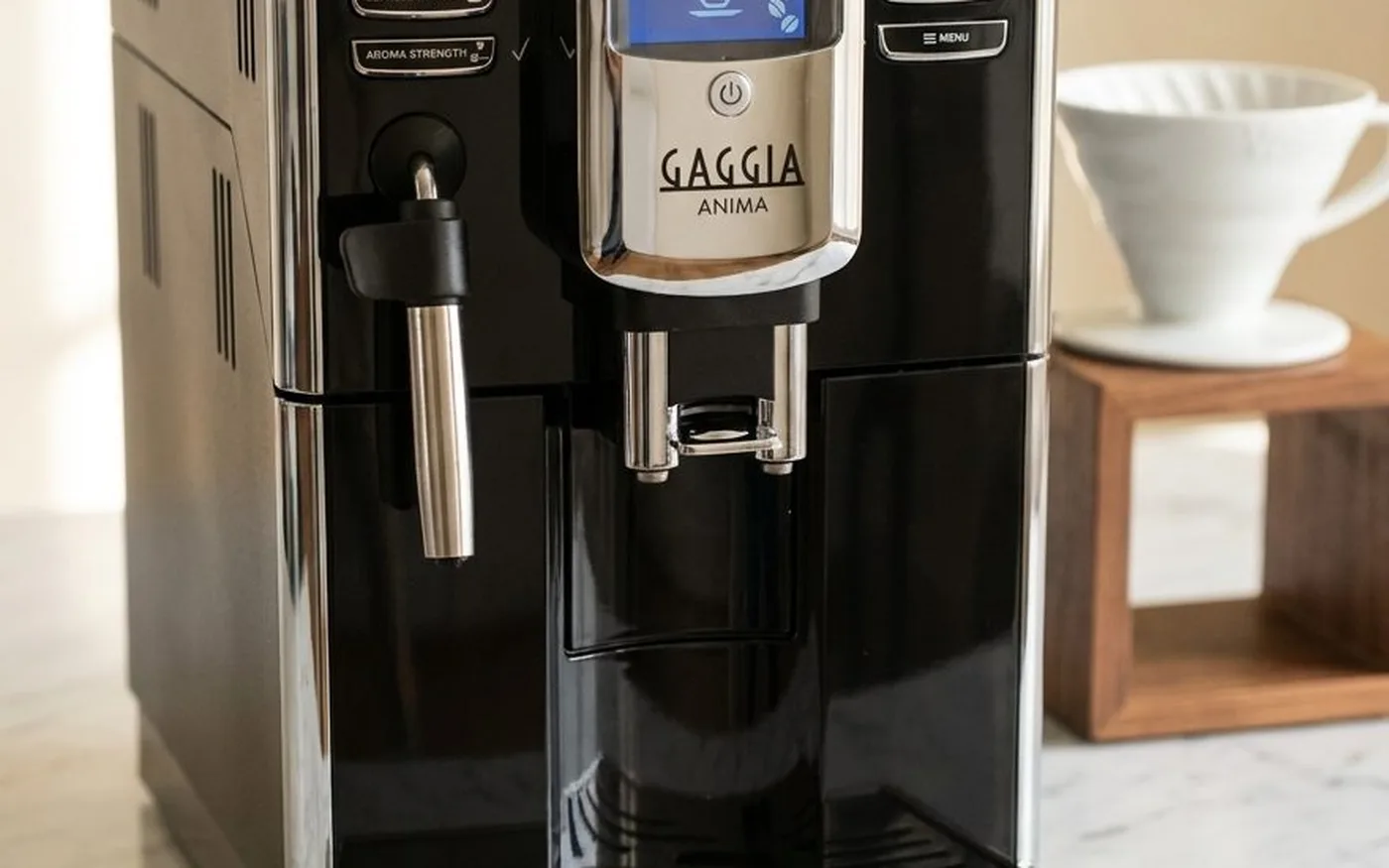
At £499-£599, this is where the range starts - and for most black coffee drinkers, it is where it ends. It uses a pannarello frothing wand: you position it in the milk, and the wand aerates it automatically. You get five aroma strength levels and five grind settings.
This is the right choice if your daily drink is black espresso or americano and you occasionally want a cappuccino without caring much about the milk texture. The pannarello does the job. The shot quality is the same as the Prestige - the grinder and brewing unit are identical.
Retailers: John Lewis (2-year guarantee), Amazon UK, Currys.
Gaggia Anima Prestige
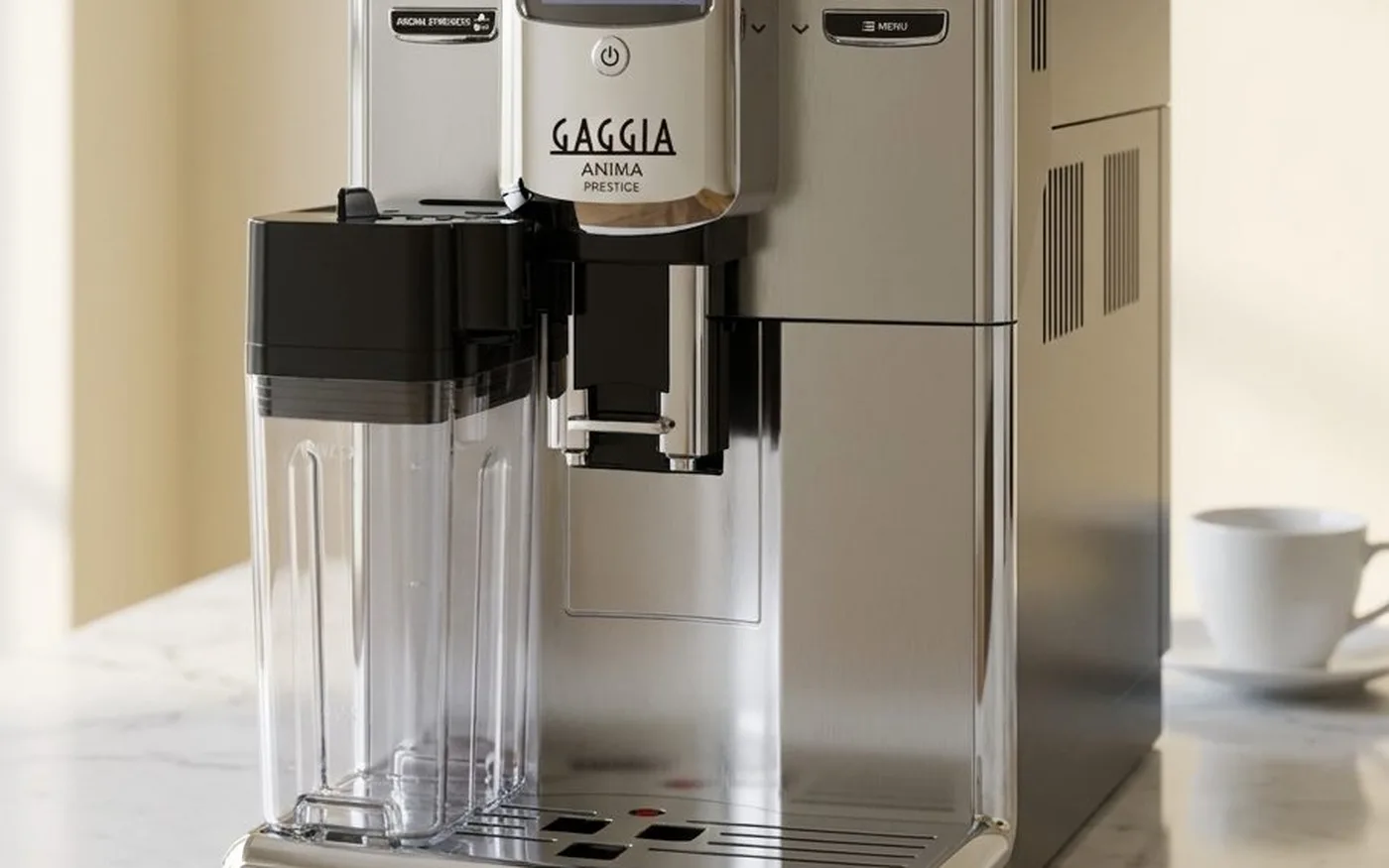
The upgrade is the milk system: you get an auto-cappuccinatore instead of the pannarello wand. This is a one-touch system - you connect a tube to your milk container, press the cappuccino button, and the machine draws and textures the milk itself. You also get a larger display and six drink presets. Price range: £699-£799 (as of June 2026, verify at retail).
This is the variant I tested and the one I recommend for most buyers. If you make any milk drinks at all - cappuccino, latte, flat white - the auto-cappuccinatore is meaningfully easier than the pannarello. The milk tube does require daily rinsing, but the actual drink preparation is one touch and done.
Retailers: John Lewis (2-year guarantee), Currys, Amazon UK.
Gaggia Anima Deluxe
The Deluxe replaces the Prestige display with an OLED screen and adds a milk carafe - so the milk container sits on the machine rather than a tube running to an external container. It also adds programmable drink memory. Price range: £799-£899 (as of June 2026, verify at retail).
For most buyers, the Deluxe does not meaningfully improve the coffee. The OLED screen is nicer to use, and the integrated milk carafe is tidier. But you are paying £100-£150 more over the Prestige for convenience upgrades, not cup quality improvements. If your kitchen aesthetic matters to you and you want everything self-contained, it is justified. If not, the Prestige does the same job.
Retailers: John Lewis (2-year guarantee), Amazon UK.
Gaggia Anima Class
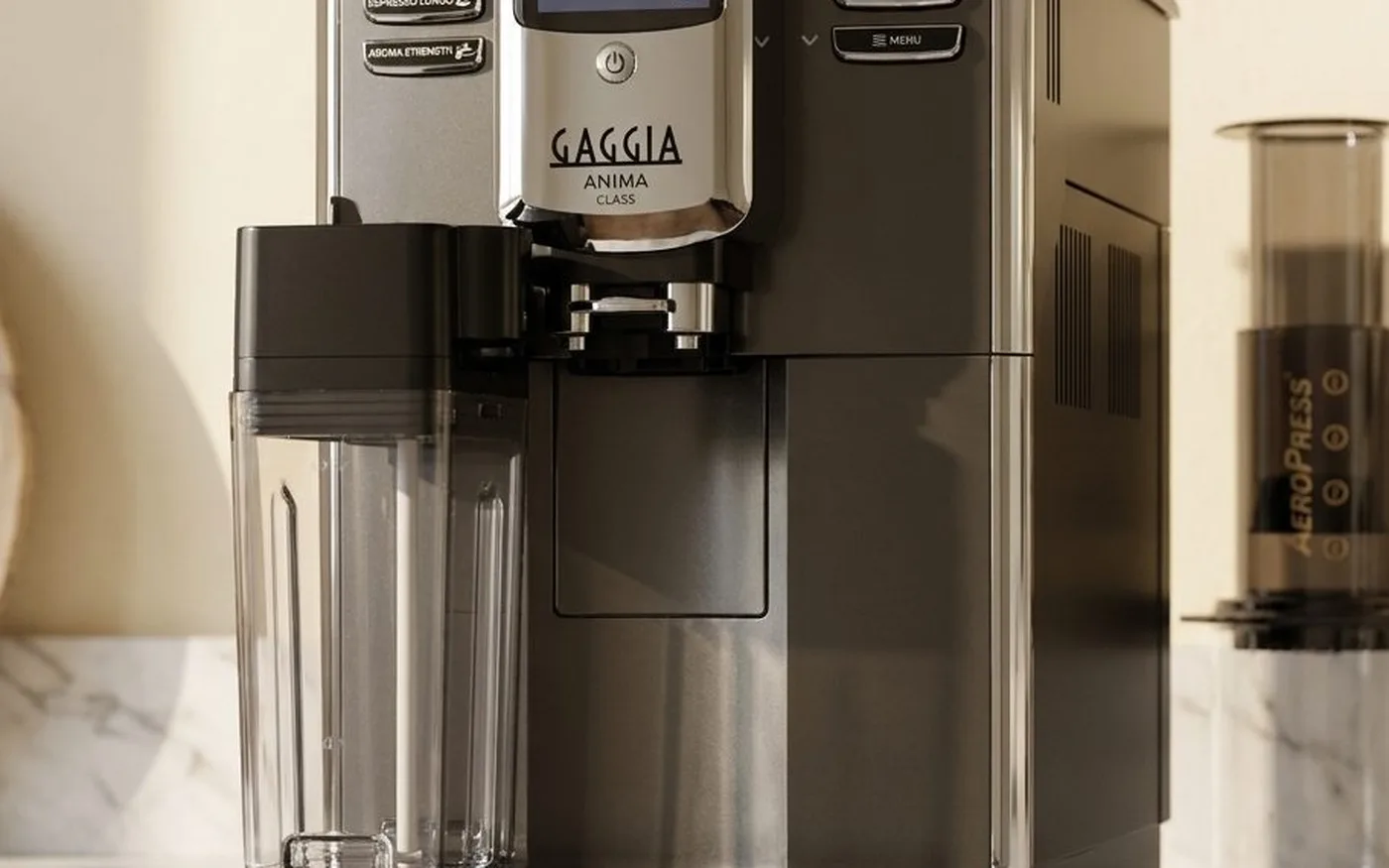
Want the Prestige performance but a machine that looks premium on a counter? That is exactly what the Class is. It has a stainless steel front panel where the other variants use plastic, but the underlying machine - including the auto-cappuccinatore - is effectively identical to the Prestige. Price range: £749-£849 (as of June 2026, verify at retail).
Our pick: The Anima Prestige. It hits the sweet spot between the base model limited milk system and the Deluxe premium pricing. The auto-cappuccinatore justifies the step up from the base, and the drink quality does not improve further from there.
How the Anima Brews: Shot Quality, Milk Texture, Consistency
Espresso Shot Quality
The Anima uses a ceramic burr grinder. Ceramic burrs wear more slowly than steel - they are slower-cutting but hold their edge longer, which matters at this price point where you are not expecting to replace the grinder for five or more years. At grind setting 3 and aroma 5, the pre-set extraction produced a shot with a reasonable crema and a clean, medium-bodied profile.
To be direct: this is not cafe-grade espresso. No bean-to-cup machine in this price category produces cafe-grade espresso. What the Anima produces is consistent, clean, drinkable espresso that is significantly better than pod coffee and does not require any dialling-in expertise from you. For the buyer upgrading from a pod machine, the quality step is real and noticeable.
The pre-infusion system is worth mentioning correctly. Pre-infusion wets the coffee puck before full pressure is applied, reducing channelling and producing a more even extraction. The Anima pre-infusion is longer than what I observed on the Magnifica Evo in back-to-back testing - the Magnifica felt punchier and faster, the Anima felt more measured. Both produced drinkable espresso. The Anima approach suits beans with medium to medium-dark roast profiles better. Light roasts will not perform well here - the grind range and pressure profile are not optimised for them.
I tested with Balance Coffee Aurora Reserve: milk chocolate on the nose, rounded sweetness through the body, a clean finish without bitterness. At setting 3 the extraction was clean. At setting 5 it was over-extracted and noticeably bitter. The machine is not subtle - you have five settings, not infinite adjustment.
Milk Texture: Pannarello vs Auto-Cappuccinatore
The pannarello wand on the base Anima aerates milk by entraining air through a fixed mechanism. It produces foam - enough for a cappuccino in the traditional sense. What it does not produce is microfoam separation: the kind of precisely textured milk that allows latte art or a velvety flat white. This is a mechanical limitation, not a setting problem. The pannarello wand cannot separate the air bubble structure the way a steam wand can, because it does not give you control over steam pressure, wand angle, or milk temperature in the same way.
The auto-cappuccinatore on the Prestige removes the manual element entirely. You connect the milk tube, press the button, the machine draws the milk, heats it, and textures it. The result is consistent and genuinely good - not flat white competition standard, but excellent for daily cappuccinos and lattes. If you do not care about latte art, the auto system produces noticeably better milk than the pannarello because the machine controls the process completely.
Consistency Drink to Drink
This is where the Anima does well. Over six weeks, I had very few shots that were noticeably different from each other. The grinder dosing is consistent, the extraction cycle is repeatable, and the pre-infusion keeps channelling rare. If you want a machine that makes the same drink every morning without thinking about it, the Anima delivers that.
Best Beans for the Anima
The Anima pre-set extraction profile suits medium-dark roasts best - naturals or washed coffees with developed sweetness rather than high-clarity light roasts. I tested with Balance Coffee Aurora Reserve (grind setting 3, aroma 5) and it was the best result across several bean options. The Aurora Reserve is a medium-dark single origin with natural sweetness that works with the machine pre-infusion approach - it does not need high pressure or very fine grinding to show its character.
Gaggia Anima vs De'Longhi Magnifica vs Philips 3200
These are the three machines that most buyers in this price range are comparing. For a deeper Gaggia vs De'Longhi comparison, see our dedicated Gaggia vs De'Longhi guide. I pulled drinks on the Anima and Magnifica Evo back-to-back. The Philips 3200 LatteGo I have assessed separately as part of broader bean-to-cup testing.
| Specification | Gaggia Anima Prestige | De’Longhi Magnifica Evo | Philips 3200 LatteGo |
|---|---|---|---|
| UK price (June 2026) | £699-£799 | £649-£749 | £499-£599 |
| Grinder type | Ceramic burr | Steel burr | Ceramic burr |
| Grind settings | 5 | 13 | 5 |
| Milk system | Auto-cappuccinatore | LatteCrema (carafe) | LatteGo (carafe) |
| Water tank | 1.8L | 1.8L | 1.8L |
| Bean hopper | 250g | 250g | 275g |
| Drink presets | 6 | 6 | 5 |
| Warranty (JL) | 2 years | 2 years | 2 years |
| UK repair network | Versuni/Gaggia | De’Longhi | Philips |
Shot quality: The Anima and Magnifica Evo produce similar results at comparable settings. The Magnifica has more grind adjustment granularity (13 vs 5 levels), which matters if you want to fine-tune extraction. The Anima pre-infusion produces a slightly more rounded extraction; the Magnifica is punchier.
Milk system: The Magnifica Evo LatteCrema and the Anima Prestige auto-cappuccinatore both produce good one-touch milk. The Philips LatteGo is the simplest to clean.
Value: The Philips 3200 LatteGo at £499-£599 is the strongest value proposition in this bracket if shot quality and milk are the only criteria. The Anima Prestige and Magnifica Evo justify their higher price through build quality and, in the Anima case, ceramic burr longevity.
My take: If you are spending £700+, the Anima Prestige and Magnifica Evo are genuinely close. The Anima ceramic burr grinder and longer pre-infusion suit buyers who want the machine to last five or more years without a grinder replacement. The Magnifica suits buyers who want more extraction control. The Philips 3200 suits anyone whose primary concern is price.
For context on the broader bean-to-cup landscape, including machines above and below this price range, see our best bean-to-cup coffee machine guide. For coverage of the full Gaggia lineup, see our best Gaggia coffee machine roundup.
Reliability and Known Faults
Brew Group Lifespan
The Anima brew group is removable and designed to be rinsed under the tap. This is standard across the Anima range and is a genuine practical advantage over machines with fixed brew groups. The unit should be removed and rinsed weekly (more on that in the cleaning section).
The known owner complaint, surfaced consistently across Reddit threads and CoffeeForums.co.uk, is brew group jamming after 18-24 months of use. The pattern I observed in owner reports: the jam typically occurs when the brew group has not been regularly cleaned or lubricated, or when the machine has been stored without the brew group fully dry. This is not a design defect in the engineering sense - it is a maintenance failure in most documented cases. Owners who maintain the weekly rinse cycle report significantly fewer issues.
That said, a machine at £600-£800 should not be punishing light maintenance with a jammed brew unit. The De’Longhi Magnifica brew group is more forgiving in my assessment.
Descale Frequency on UK Water
The Anima triggers a descale alert at a set cycle count. In testing on filtered (Brita-treated) water, I reached the alert at 240 cycles - close to the 250 stated in the manual. On unfiltered tap water in a hard water area (200mg/L or above - see UK DWI hardness data), I would expect the trigger to come significantly earlier, around 150-180 cycles based on owner reports.
The descale light is a known source of frustration. Multiple owners report it re-triggering shortly after a completed descale cycle. In most cases this is the machine not receiving the full reset confirmation - the manual process for resetting the counter is specific and easy to miss. Run the descale sequence to completion, hold the buttons as directed, and the counter resets correctly.
Pannarello Wand Longevity
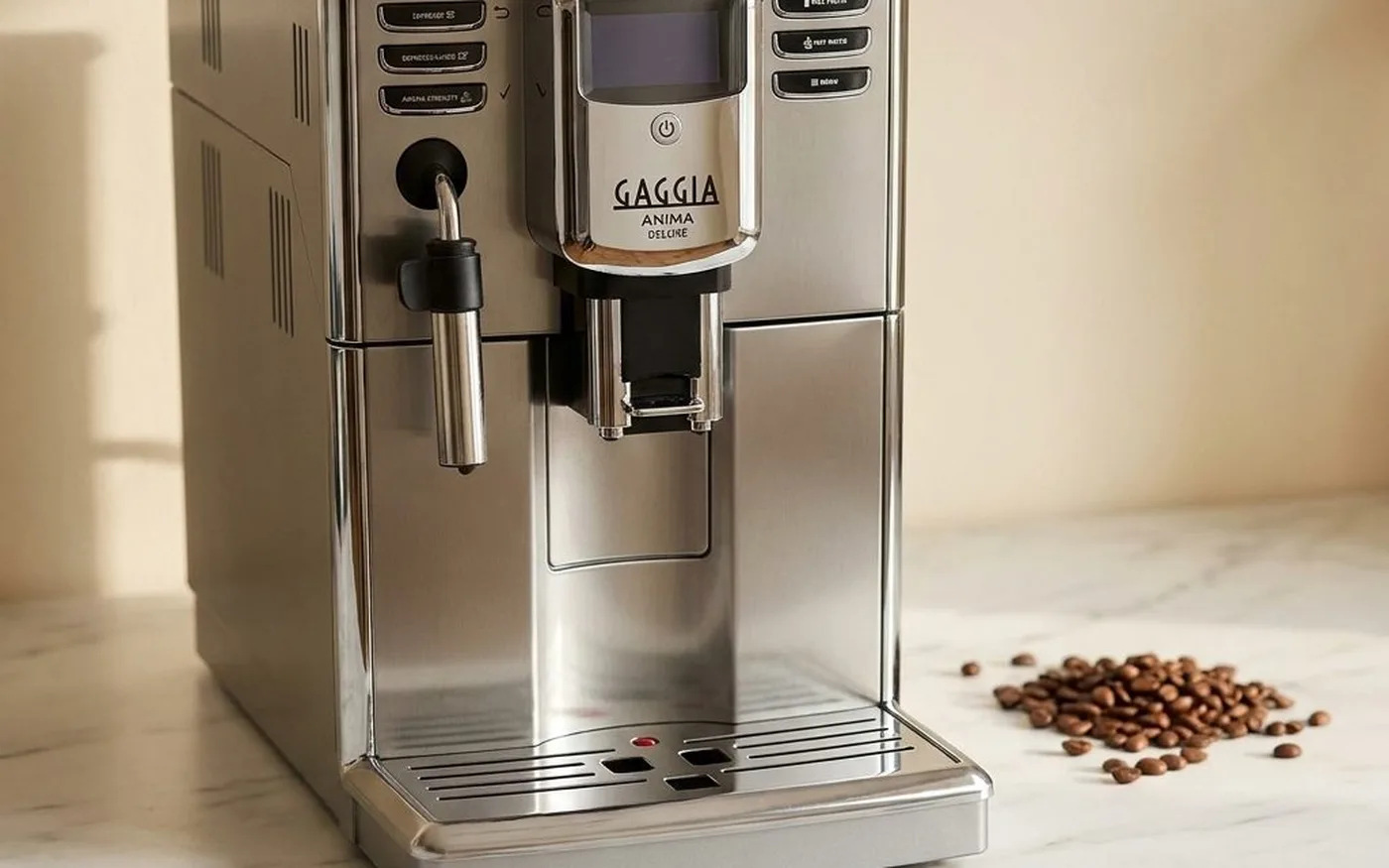
On base Anima machines, the pannarello wand is the component most likely to need replacement. The steam nozzle can block with milk residue if not rinsed after every use. A blocked nozzle does not break the machine - it reduces steam output and milk texture quality. Regular rinsing (immediate, after every use) prevents this entirely.
What Owners Report After Year Two to Three
Based on owner threads on r/espresso, r/gaggia, and CoffeeForums.co.uk, the Anima machines that run reliably into year three share a common profile: weekly brew group removal and rinse, monthly descale (in hard water areas), and regular bean hopper cleaning to prevent rancid oil buildup. The machines that develop problems early are almost universally under-maintained. This is a machine that rewards consistent cleaning.
Cleaning, Descaling, and Ongoing Cost
Daily Clean (Under Two Minutes)
After the last drink of the day: remove the drip tray and rinse it, run a steam flush through the wand if you have used milk, and empty the coffee grounds drawer if it is near full. The machine prompts you when the drawer needs emptying - typically every 10-12 drinks. Total time: under two minutes.
Weekly Clean (Brew Group)
Remove the brew group by pressing the release mechanism, slide it out, and rinse under cold running water. Do not use soap. Leave it to dry before replacing. This takes three minutes and is the single most important maintenance step for long-term reliability.
Monthly Descale
Use a Gaggia-approved descaler (Gaggia branded, or Puly Caff - both work). Do not use vinegar: it can damage the seals. The descale cycle takes approximately 30 minutes including the rinse cycle. Cost per descale: £3-£5 for a single-use sachet.
Annual Consumable Cost
| Item | Frequency | Cost |
|---|---|---|
| Descaler sachets | Every 6-8 weeks (soft water) / 4-6 weeks (hard water) | £3-£5 each |
| Water filter (Mavea/AquaClean compatible) | Every 2 months | £8-£12 |
| Cleaning tablets | Monthly | £5-£8 for 10-pack |
| Annual estimate | £60-£100 |
This is comparable to other bean-to-cup machines in the range. The Magnifica Evo and Philips 3200 have similar running costs.
UK Warranty, Repair Routes, and Where to Buy
Warranty Terms
The Gaggia Anima comes with a standard 1-year manufacturer's warranty in the UK. John Lewis extends this to 2 years as part of their standard guarantee - which is a meaningful reason to buy from John Lewis if the price difference is small.
Gaggia UK domestic appliances are distributed by Versuni under licence (see the next section for full ownership context). UK warranty claims go through the Gaggia UK service network. Register your machine on the Gaggia UK site at purchase.
UK Service Centres
Gaggia UK authorised service network handles warranty repairs and out-of-warranty work. Parts availability for the Anima range is currently good - the machine has been in production long enough that brew group components, gaskets, and wand parts are widely available from UK parts specialists.
For out-of-warranty work, specialist UK coffee machine repair services (search Gaggia repair UK on Google Maps for your region) can service the brew group and replace common wear parts for £50-£150 depending on the fault.
Where to Buy
| Retailer | Variant availability | Warranty | Notes |
|---|---|---|---|
| John Lewis | Prestige, Deluxe | 2 years | Best warranty, price-match guarantee |
| Currys | Base, Prestige | 1 year (manufacturer) | Frequent promotions |
| Amazon UK | Base, Prestige, Deluxe | 1 year (manufacturer) | Fast delivery, Prime eligible |
| Coffee Friend | All variants | Varies | Specialist retailer, stocks all variants including Class |
Primary recommendation: John Lewis for the 2-year guarantee. If price is the deciding factor, check Currys - they run promotions on the Anima range regularly.
Note: Coffee Friend UK does not currently have an active affiliate programme with Balance Journal. Links above are editorial only.
About Gaggia in 2026: Ownership, Build, and Warranty
Gaggia is an Italian brand with a history going back to 1938 - Achille Gaggia patented the spring-piston espresso machine mechanism that defines how espresso is made today. The company is owned by Evoca Group, the Italian vending and professional coffee equipment group that acquired Gaggia (along with Saeco) from Philips in 2017 when the brand was known as N&W Global Vending, before rebranding as Evoca Group. The Gaggia domestic appliance range - which includes the Anima - is distributed under licence by Versuni (formerly Philips Domestic Appliances, rebranded in 2023). Versuni is the licence holder for domestic Gaggia products, not the company owner.
The practical question for buyers is whether this ownership structure has changed the Anima build quality. The honest answer: the Anima platform has been in production across these transitions, and the machines currently in market are built to a consistent specification. The build is predominantly plastic with metal internals - it is not a premium-feel machine in the hand, and owner reviews on Trustpilot regularly flag this. If a solid metal exterior is important to you, look at the Anima Class or consider a Jura machine at a higher price point.
The Anima is officially listed on the Gaggia UK super-automatic range page with full UK-spec product details and technical specifications. Evoca Group industrial coffee heritage and Versuni domestic distribution network mean spare parts and service support are available - this is not a brand at risk of disappearing and leaving you without support.
Specifications
Full technical specifications for all four Anima variants (as of June 2026 - verify current details on the Gaggia UK site):
| Specification | Anima (Base) | Anima Prestige | Anima Deluxe | Anima Class |
|---|---|---|---|---|
| UK price range | £499-£599 | £699-£799 | £799-£899 | £749-£849 |
| Grinder | Ceramic burr | Ceramic burr | Ceramic burr | Ceramic burr |
| Grind settings | 5 | 5 | 5 | 5 |
| Aroma settings | 5 | 5 | 5 | 5 |
| Milk system | Pannarello | Auto-cappuccinatore | Auto-cappuccinatore + carafe | Auto-cappuccinatore |
| Display | Basic | Backlit | OLED | Backlit |
| Drink presets | 4 | 6 | 6+ (programmable) | 6 |
| Water tank | 1.8L | 1.8L | 1.8L | 1.8L |
| Bean hopper | 250g | 250g | 250g | 250g |
| Grounds drawer capacity | 16 pucks | 16 pucks | 16 pucks | 16 pucks |
| Front panel | Plastic | Plastic | Plastic | Stainless steel |
| Dimensions (WxDxH) | 27x45x38cm (approx) | 27x45x38cm (approx) | 27x45x38cm (approx) | 27x45x38cm (approx) |
| Weight | ~7.5kg | ~7.5kg | ~7.8kg | ~7.5kg |
Dimensions and weight are approximate - verify with retailer specification sheets before purchase.
For comparison context with manual espresso alternatives, see our Gaggia Classic UP review - the manual alternative for buyers who want to develop barista skills rather than automate the process. For an alternative bean-to-cup option in the same brand family, see our Gaggia Brera review.
Frequently Asked Questions
Is the Gaggia Anima any good?
Yes, for the right buyer. The Gaggia Anima delivers consistent, drinkable espresso from whole beans with no technical skill required. The ceramic burr grinder is durable, the Prestige auto-cappuccinatore handles milk well, and drink-to-drink consistency is strong. It does not compete with a manual espresso machine on extraction quality, but it is one of the better bean-to-cup machines in the £500-£800 range.
What is the difference between Gaggia Anima and Anima Prestige?
The milk system. The base Anima has a pannarello wand you position in the milk yourself - it froths but does not separate microfoam. The Prestige has an auto-cappuccinatore: one button draws milk from a container, heats it, and textures it automatically. The Prestige also adds a larger display and six drink presets. Shot quality is identical across both - same grinder, same brewing unit.
Can you make latte art with the Gaggia Anima?
No. Neither the pannarello wand on the base model nor the auto-cappuccinatore on the Prestige produces microfoam with enough precision for latte art. That requires a traditional steam wand and manual control over pressure and temperature. Bean-to-cup machines automate those variables away. If latte art matters to you, look at the Gaggia Classic UP instead.
How long does a Gaggia Anima last?
Five or more years under regular use, provided you follow the weekly brew group rinse and monthly descale. The ceramic burr grinder wears slowly - it is unlikely to need replacement within the first five years. The main documented failure point is brew group jamming, which owner reports consistently trace to infrequent cleaning rather than mechanical failure. John Lewis gives you a 2-year guarantee as a safety net.
Is the Gaggia Anima made in Italy?
The Gaggia brand is Italian, founded in Milan in 1938. Gaggia is owned by Evoca Group, which acquired the brand from Philips in 2017; the domestic Anima range is distributed under licence by Versuni. Evoca Group operates a multinational manufacturing footprint and does not publish country-of-manufacture details for the Anima specifically. If origin matters to your purchase, confirm with the retailer or contact Gaggia UK directly.
Which Gaggia bean-to-cup machine should I buy in 2026?
The Gaggia Anima Prestige for most buyers. It has the auto-cappuccinatore milk system, a ceramic burr grinder built for long-term use, and sits at the right price relative to what you get. The base Anima is fine if you only drink black coffee. The Deluxe adds carafe convenience, not cup quality. For manual espresso with skill development, the Gaggia Classic UP is the better route.
What beans work best in the Gaggia Anima?
Medium-dark roasts with developed sweetness. The Anima extraction profile suits these well - lighter roasts need finer grinding and higher pressure than the five-setting range delivers reliably. I tested with Balance Coffee Aurora Reserve at grind 3, aroma 5: clean, sweet, no bitterness. Avoid very oily dark roasts - they can clog the ceramic burrs. If you are still choosing a bean, the medium-dark range is where to start.
Where can I buy a Gaggia Anima in the UK with the longest warranty?
John Lewis. They extend the standard 1-year manufacturer's warranty to 2 years on the Gaggia Anima Prestige and Deluxe at no extra cost. John Lewis also offers a price-match guarantee if you find the same model cheaper at another authorised retailer within 30 days. Currys and Amazon stock the range but only carry the manufacturer 1-year warranty. The Anima Class may require a specialist retailer.
A wellness entrepreneur and biohacker, James explores the intersection of hospitality and health - from clean fuel and recovery tools to mindful routines that build balance into daily life.