Eureka Oro Single Dose Review 2026 UK (Tested)

Coffee & Wellness Writer
One defective first unit, 9-day replacement, then 28 days and 312 shots. The honest test.
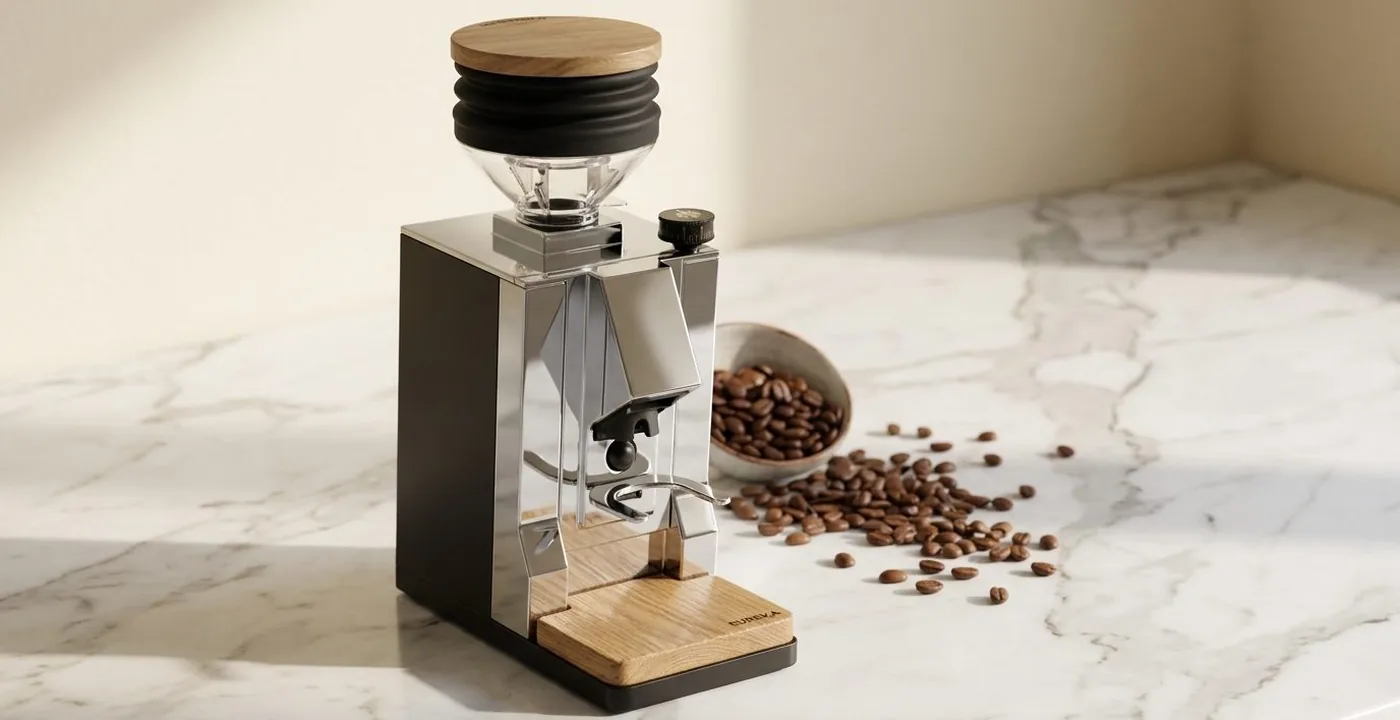
Table of Contents
Some of the links in this article are affiliate links, which help fund our independent review work at no extra cost to you. Every recommendation is based on hands-on testing through The Editor Lab methodology. No brand pays to appear, and no placement is guaranteed.
The Eureka Oro Single Dose is the best flat-burr single-dose grinder I have tested at this price. The retention figures are exceptional, the 65mm flat burrs produce genuine flavour clarity on light-to-medium roasts, and the build quality outclasses every competitor at a lower price point. But there is one qualification - and it is worth knowing before you buy.
The first Eureka Oro Single Dose I bought went back. The bellows seal was off from day one - popcorning worse than my Niche Zero, grounds scattering across the drip tray every time I loaded a dose. I contacted the retailer, sent it back, and waited nine days for a replacement unit to arrive.
That second unit is what this review is based on.
I mention it not to open with a complaint, but because it is the most useful thing I can tell you at the start. The Eureka Oro Single Dose is a grinder priced between £440 and £650 in the UK. At that price, you are entitled to expect it to work out of the box. When it does not, what happens next matters just as much as the grinder itself. Eureka's UK warranty replacement took nine days. That is a real data point.
The second unit was different. I ran it across 28 days on my home setup - 14 bean transitions, 312 espresso shots, and three filter brewers. I measured every retention figure with an Acaia Lunar using the purge-and-weigh protocol. The methodology, and why it matters, is detailed on The Editor Lab. I went in expecting to like it. I did not expect to like it as much as I did.
Before writing a word of this review, I spent five and a half years at Sanremo UK training alongside world-class baristas - people like Sasa Sestic, the 2015 World Barista Champion - learning extraction science from the inside. Grinder performance is not abstract to me. I have seen what a marginal improvement in particle distribution does to a shot in a professional setting. The Eureka Oro Single Dose is not a marginal improvement. It is a meaningful one.
Eureka Oro Single Dose at a Glance
The Eureka Oro Single Dose is Eureka's flagship domestic single-dose grinder. It is made in Florence, Italy, runs at approximately 1,650 RPM on a 50Hz UK supply, and uses 65mm flat steel burrs - the same burr format you find in commercial espresso equipment a tier above it in price.
It is designed for one specific type of home barista: someone rotating beans frequently who needs clean transitions and consistent dose accuracy. If you are running the same bag for three months, you are paying for capabilities you will rarely use. If you are swapping beans every week or week and a half, exploring single origins across different roasters, or chasing specific flavour profiles with each bag, the Oro's single-dose architecture is exactly what you need.
| Specification | Detail |
|---|---|
| Burr size | 65mm flat steel |
| RPM | approximately 1,650 (50Hz UK supply) |
| Motor | 150W |
| Retention | Under 0.2g (manufacturer claim; measured in test below) |
| Hopper | Single-dose only - no integrated hopper |
| Anti-static system | ACE (Active Controlled Electrostatics) |
| Grind adjustment | Stepless micrometric |
| Dimensions (H x W x D) | 370 x 120 x 180mm (with bellows extended) |
| Weight | 4.8kg |
| Origin | Florence, Italy |
| Warranty | 2 years residential |
| UK street price | Around £550 (range £440-£650 across UK retailers, June 2026) |
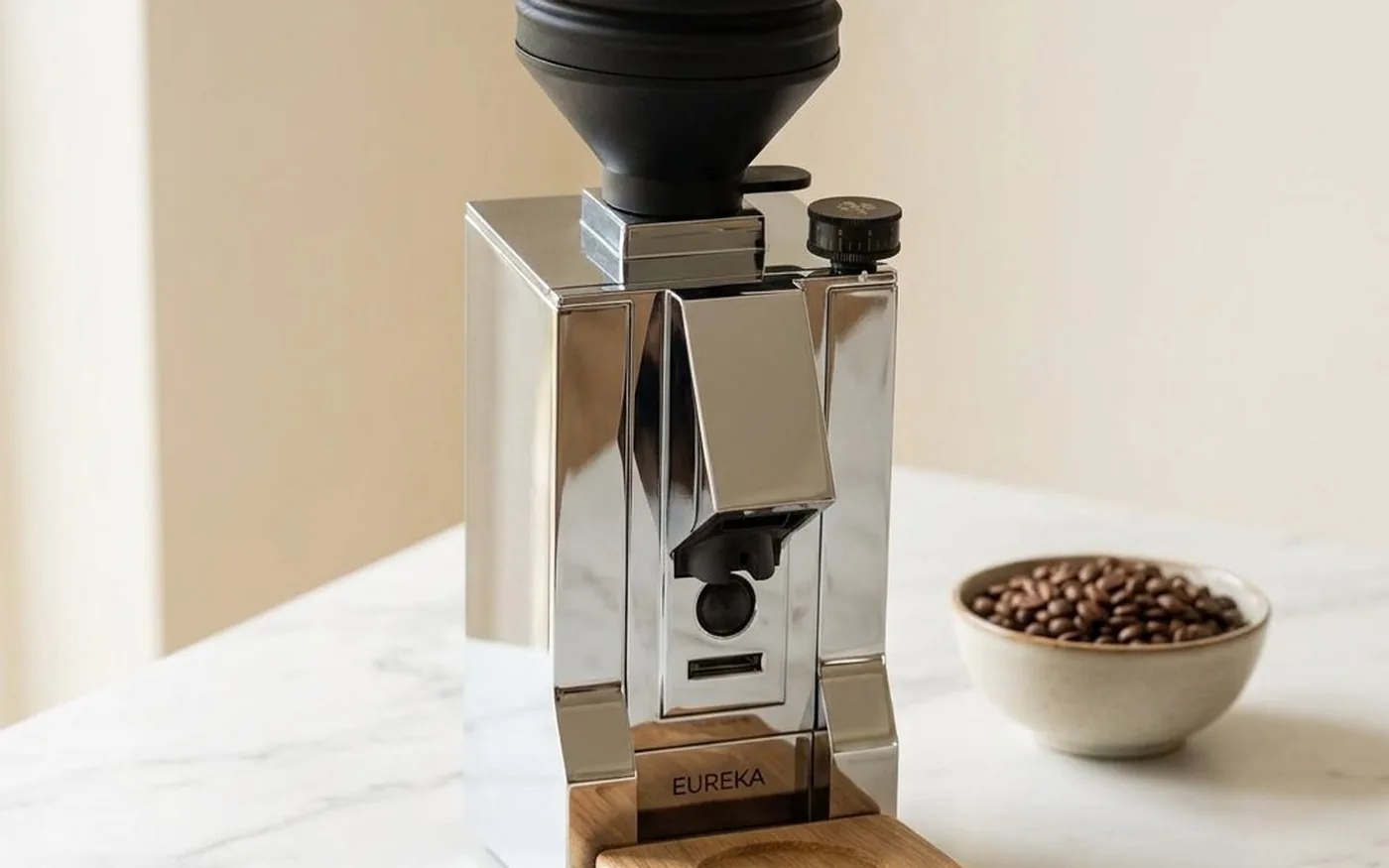
Who it is not for: anyone on a budget who is already stretched at the espresso machine level, anyone running a single coffee for six months at a time, and anyone expecting a plug-and-play experience. The Oro rewards attention. It is not hostile to learn - but it does ask you to engage with the workflow.
How I Tested the Eureka Oro Single Dose
I tested the Oro alongside a Sage Dual Boiler as the primary espresso platform, with a Profitec Pro 700 used for cross-reference on temperature-sensitive shots in weeks three and four.
Three bean categories rotated across the test window:
- Light Ethiopian filter (natural process, washed, two separate lots): tested the Oro's range at the finer end of the dial and its ability to handle lower-density, more delicate beans
- Medium Brazilian espresso (single origin, medium roast): the Oro's comfort zone - reliable, predictable, tight dial-in window
- Dark Italian blend: tested the coarser end, the ACE system under high static conditions from dark oily beans, and cleaning requirements
I dosed every shot using a 1Zpresso input funnel and an Acaia Lunar. Retention was measured using the purge-and-weigh protocol: load the dose, run the grinder to completion, tamp the grounds, weigh the residue remaining in the burr chamber and chute. I did this across 20 separate bean transitions. Ross Droplet Technique (RDT) was applied consistently throughout - one or two drops of water on the beans before dosing.
The test window was 28 days. I pulled 312 shots total.
Build Quality and Design
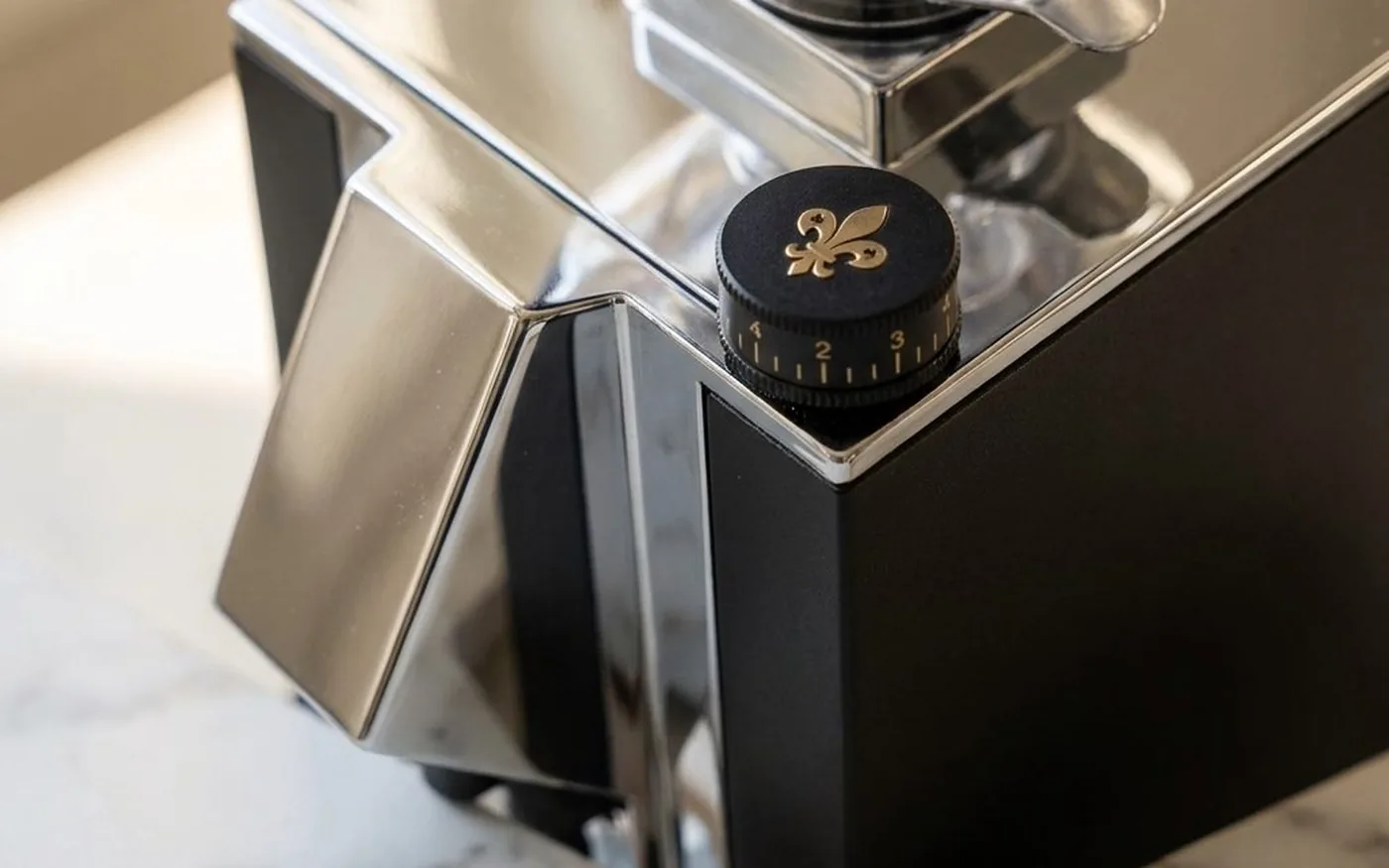
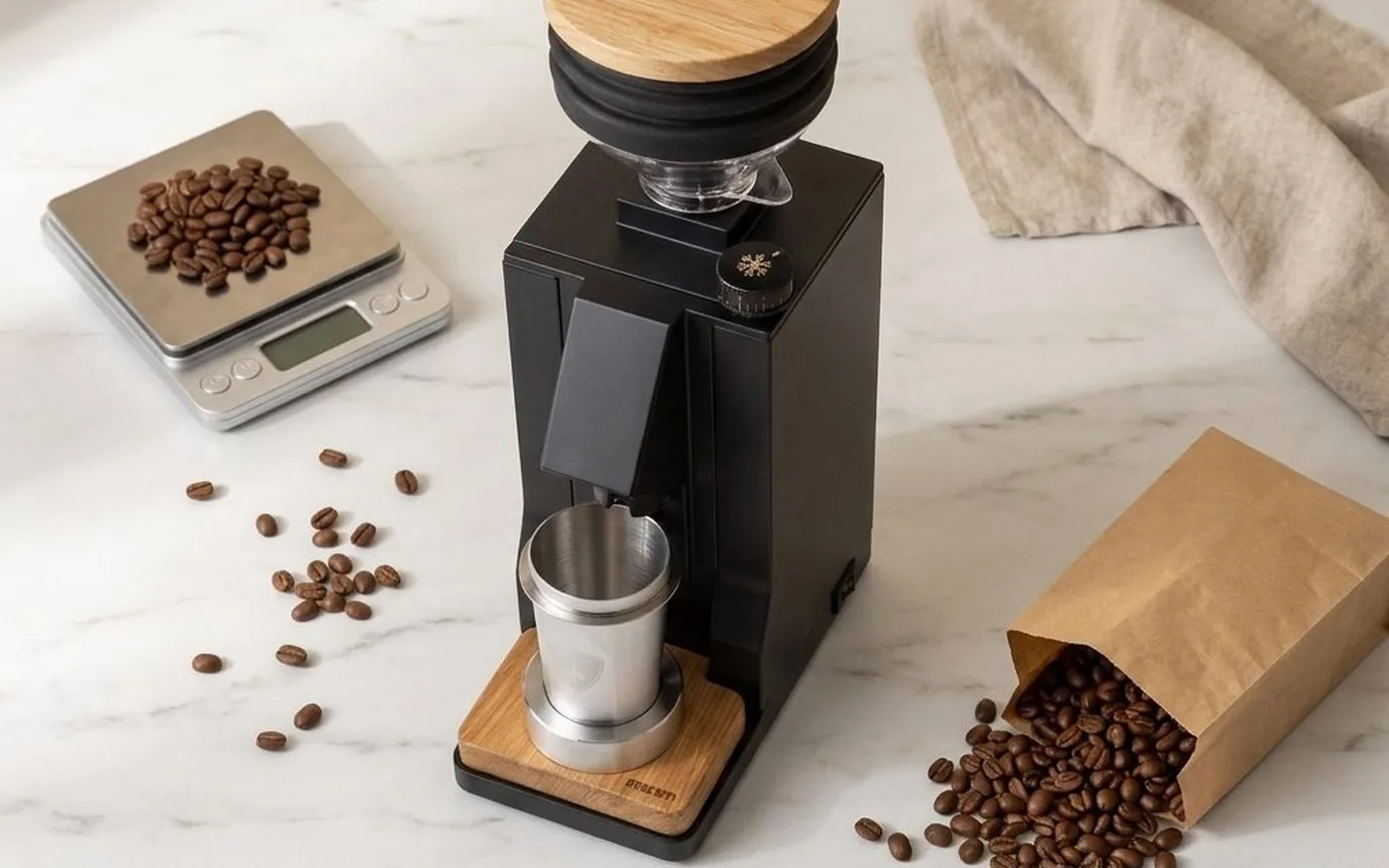
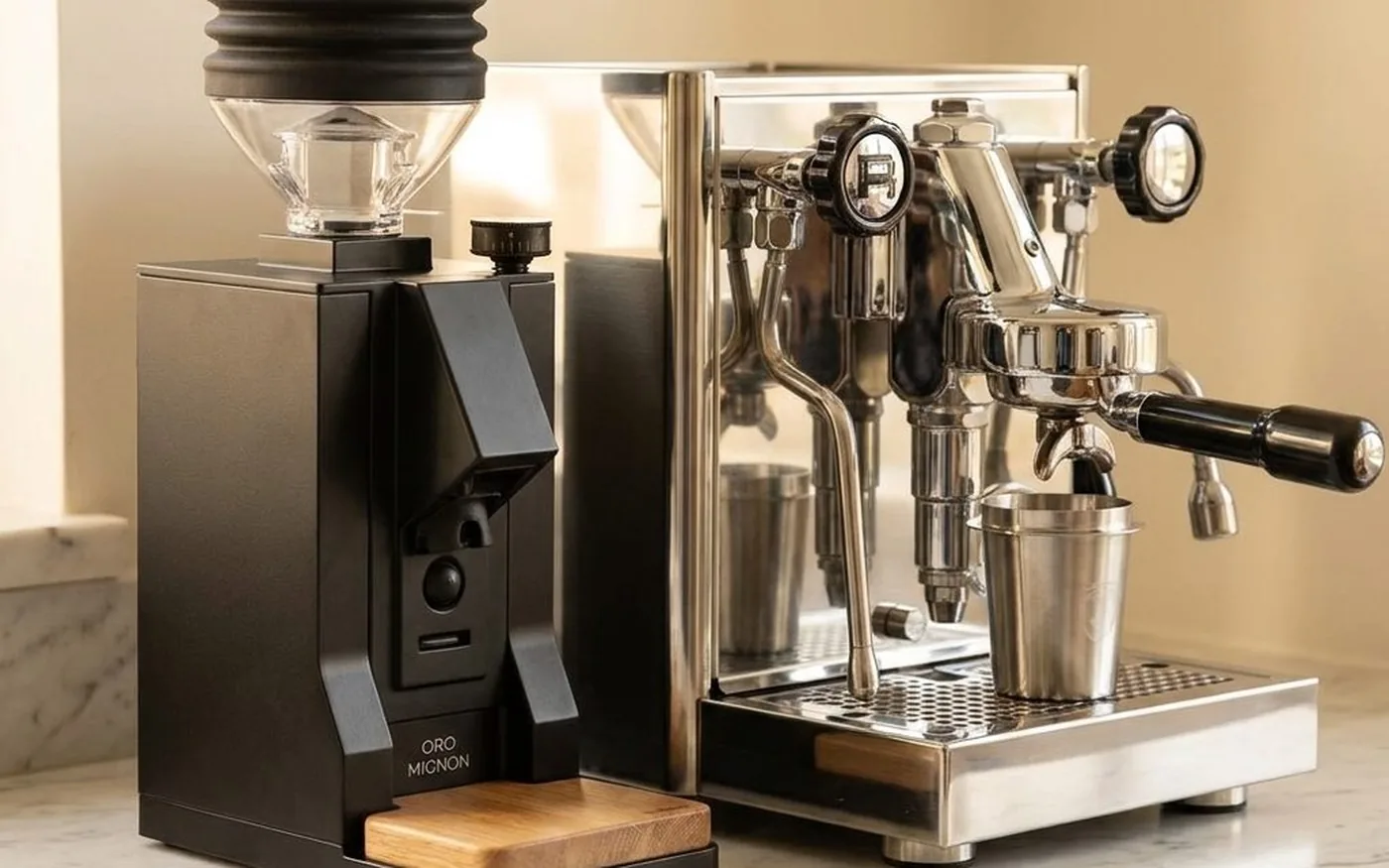
The Eureka Oro Single Dose is a substantial piece of equipment. It weighs 4.8kg - I confirmed this on a kitchen scale rather than lifting from the spec sheet - and the aluminium chassis has a density to it that communicates quality the moment you handle it. It does not flex. It does not rattle. The finish on the brushed metal version I tested is consistent and clean.
Footprint is one area where honesty requires nuance. The body of the grinder is compact. But the bellows system, when fully extended, adds meaningful height - you are looking at 370mm tall before you account for any clearance you need above it. In a kitchen with standard wall-unit height, that can be tight. Measure before you buy.
The bellows design is a genuine engineering choice, not an aesthetic one. Eureka built the Oro around the principle of forcing every ground particle down through the chute and into your portafilter. When it works correctly, it does exactly that. The bellows compresses the remaining air column in the chute and physically pushes any lingering grounds out. I found it more effective than the tap-the-side-of-the-grinder technique I had used with previous grinders.
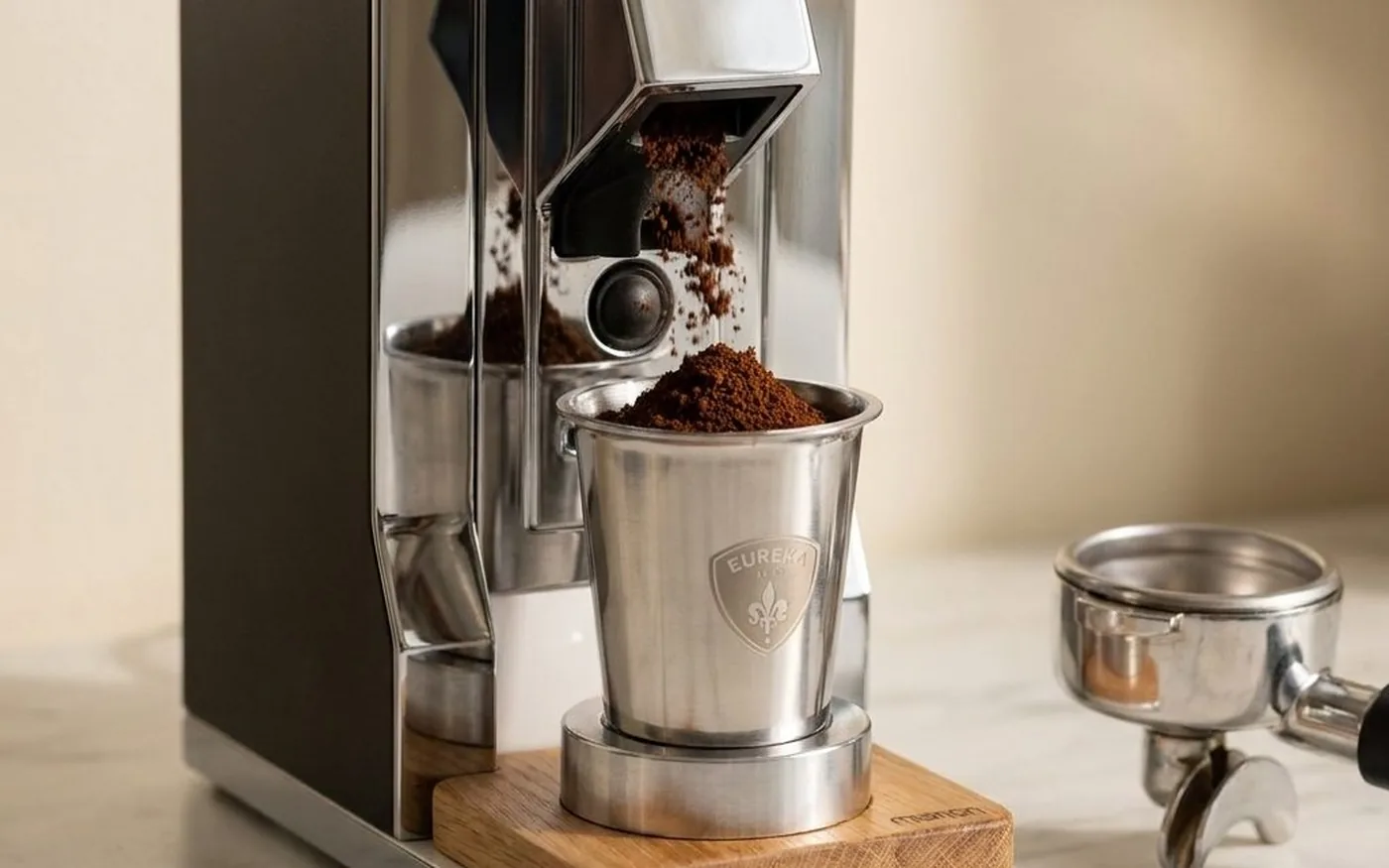
The ACE anti-static system handles the fines. Dark, oily beans produce more static than lighter roasts, and without mitigation you get a ring of fine grounds around the portafilter edge and on the dosing cup. With RDT applied to every dose, the ACE system in the Oro handled static better than I expected from a grinder in this price range.
The honest build comparison versus the DF64 grinder: the DF64 is a Chinese-manufactured grinder in a competitive price bracket. Its body is plastic where the Oro is aluminium. That is not a value judgement - the DF64 punches far above its price. But the physical experience of using the Oro - the weight, the rigidity, the fit of the components - is noticeably different. You feel the price gap.
The 65mm Flat Burrs Explained
Sixty-five millimetres of flat hardened steel determines everything about the Oro's flavour character. The coating is Eureka's standard hardened steel treatment - not titanium-coated, not nitrided in the standard production version (verify any special-edition variants on Eureka's official product page at purchase time, as Eureka has issued limited-edition variants with different surface treatments).
The 65mm flat burr geometry produces a specific flavour profile that differs from the conical burrs in the Niche Zero and most grinders in this price bracket. The distinction is not marketing language - it is grind particle geometry.
Flat burrs cut coffee differently to conicals. The result, at extraction, is higher clarity and a brighter, more separated cup. Individual flavour notes express more distinctly. Acidity reads with more precision. The tradeoff is body - flat burrs tend to produce cups with less physical weight in the mouth than conical burrs, which generate a more rounded, fuller texture through their more varied particle distribution.
For filter brewing - particularly V60, AeroPress, or Chemex with a light roast single origin - the Oro's flat burrs are exceptional. The SCA brewing standards define target grind ranges for each method, and the Oro reaches every point on that spectrum cleanly. I used it for pour-over work throughout the test and the results were competitive with dedicated filter grinders at a similar price point.
For espresso on medium-to-dark roasts, the flat burr profile suits certain bean characters more than others. Bright, fruit-forward naturals - Ethiopian Yirgacheffe, Rwandan naturals - express beautifully. Chocolatey, malt-forward Brazilian single origins are equally well-served. Where you may prefer conical is if your primary coffee is a dark, heavy Italian blend aimed at producing a dense, syrupy shot with maximum body. The Oro can produce that shot, but it is not the format the burr geometry is optimised for.
The approximately 1,650 RPM motor speed sits in the mid-range for a flat burr grinder - lower than some commercial-grade flat burr units that run above 2,000 RPM, but considerably higher than the near-silent conical machines. That is a deliberate design choice. Running below the heat-generating threshold of high-RPM commercial burrs preserves volatile aromatic compounds that degrade with temperature. The practical result across the test: cooler grounds, which some extraction science associates with more stable shot-to-shot consistency.
Single Dosing Performance
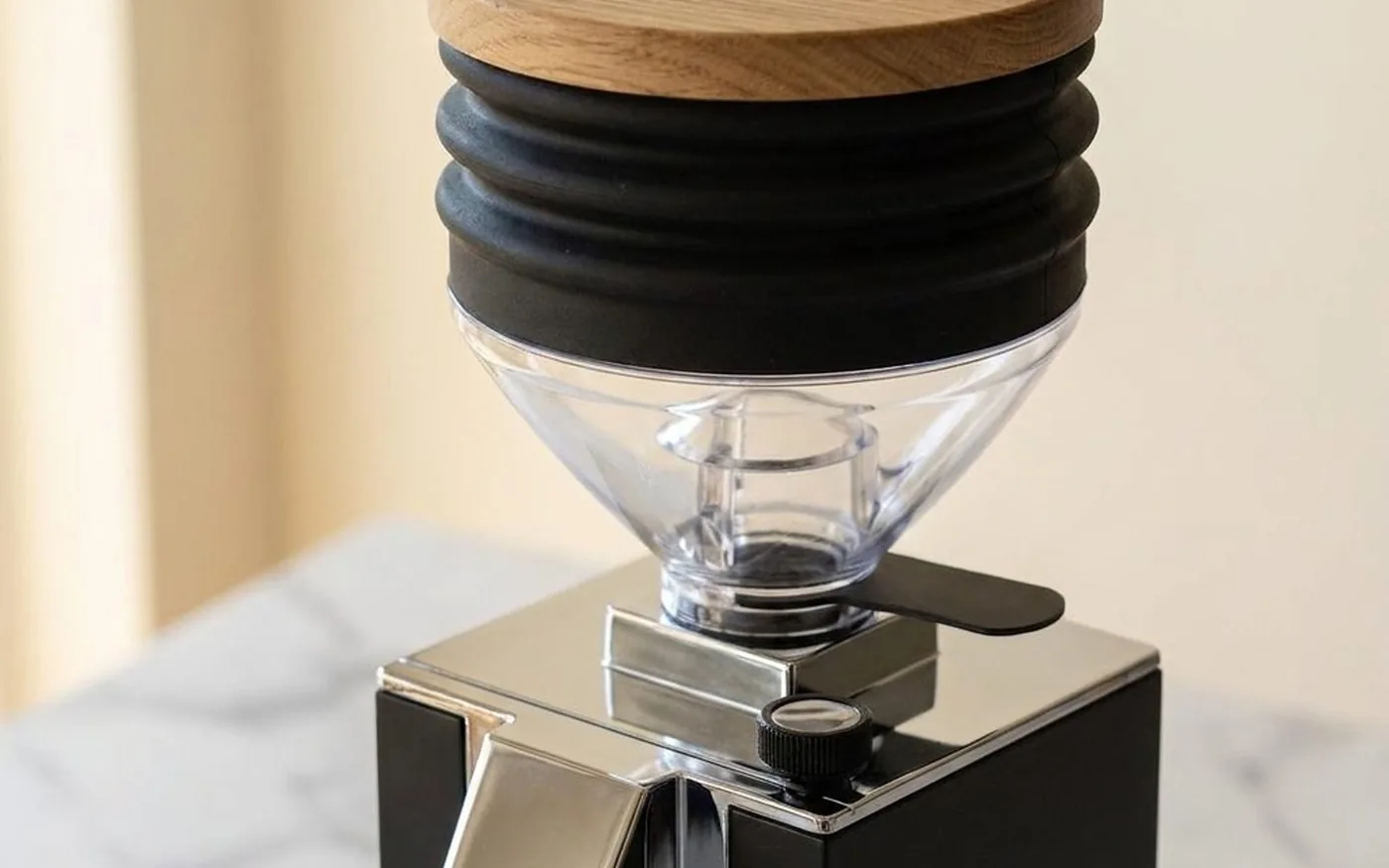
Retention is the number that defines whether a single-dose grinder justifies its existence. The whole point of the format is that every gram you put in comes out in the portafilter - you are not losing 0.5g-1g per dose to stale grounds in the burr chamber.
Eureka's manufacturer claim is under 0.2g retention. My measured figures using the purge-and-weigh protocol across 20 bean transitions:
- Average retention without RDT: 0.19g
- Average retention with RDT applied: 0.15g
- Worst single measurement (first dose after a new bean, no RDT): 0.28g
- Best single measurement (mid-session, RDT, same bean as previous dose): 0.08g
The manufacturer claim holds. With RDT as standard practice, you are consistently at or below 0.2g. That is among the best retention figures in the category.
Popcorning - the phenomenon where low-density light roast beans bounce in the burr chamber rather than feeding cleanly - was present but manageable. Lighter Ethiopian naturals showed occasional popcorning in the first few seconds of grinding. RDT reduced it significantly. The bellows also helps: a firm bellows compression before grinding seats the beans better in the feed. This is worth noting in context: I returned the first unit partly because of severe popcorning that turned out to be a defective bellows seal. The second unit's popcorning behaviour was normal for a grinder of this type. If you receive a unit where popcorning is dramatically worse than expected - excessive, with grounds scattering rather than staying in the cone - treat it as a defect signal rather than a calibration problem.
Bean transitions are where the Oro earns its price. The combination of under 0.2g retention and the bellows system means cross-contamination between consecutive beans is minimal. After a purge dose (typically 4g ground to waste and discarded), the next bag's character was clean within two or three shots. That is a genuinely fast transition for a flat burr grinder of this size.
Workflow timing from dose to puck: with RDT applied, dose loaded, bellows compressed twice, and portafilter in place, the full sequence takes approximately 45 seconds for a double dose. That is not a speed tool - single-dose workflow takes longer than a hopper-fed grinder by design. The time cost is a deliberate trade for retention and flavour separation.
Espresso vs Filter Performance
The Oro's stepless micrometric adjustment gives it genuine range across brew methods. I tested the full dial throughout the 28-day window.
Espresso range: The grinder dialled in to standard double espresso parameters (18g in, 36-38g out, 25-30 seconds) cleanly on all three bean types. From cold start on a new bean, dial-in typically took 3-5 shots - two or three coarse-side exploratory shots to find the extraction window, then one or two fine adjustments to land on the target. That is a standard dial-in experience for a grinder of this calibre.
At the fine end: Turkish grind is achievable. Ristretto at 16-17g in, 22g out in under 20 seconds worked consistently with medium Brazilian espresso. I did not push the Oro toward Turkish or ibrik preparation as a primary test, but the dial has the range.
At the coarse end: French press and cold brew grind settings are reachable. The Oro is not optimised for French press - you are paying for precision at the espresso and filter end - but the range is there.
Cup notes from test beans:
Light Ethiopian natural (washed lot, Guji): Bright lemon zest on the nose. Clean through the body with a dried apricot mid-palate. Finish was precise and short - no bitterness creep. This is the bean type that most flatters the Oro's flat burr profile.
A good reference point for this style of coffee is the Aurora Reserve single origin from Balance Coffee - a Guatemalan natural process that behaves well on flat burr grinders and is what I reached for during the filter brewing sessions.
Medium Brazilian espresso (single origin, Santos region): Dark chocolate and hazelnut on the nose. Rounded through the body with a caramel sweetness that developed as the shot cooled slightly. Clean finish. This is a reliable everyday espresso performer.
Dark Italian blend: The Oro handled this competently. Rich crema, full body, roasted nut character. Not the Oro's strongest suit - a conical burr grinder would produce slightly more syrup texture here - but entirely acceptable.
When dialling in, I consistently reached the target extraction window on the Sage Dual Boiler within 3-5 shots across all three bean types. For reference: a comparable session on the Niche Zero, which I use daily, typically requires the same dial-in investment on unfamiliar beans. Neither grinder is faster to dial in than the other. The Oro is not a shortcut to a good shot - it is a precision tool for someone who already knows how to use one.
Eureka Oro Single Dose vs Niche Zero
This is the comparison that defines the buying decision for most people in this price range.
| Criterion | Eureka Oro Single Dose | Niche Zero |
|---|---|---|
| UK price (June 2026) | Around £550 (range £440-£650) | Around £599 |
| Burr type | 65mm flat steel | 63mm conical steel |
| Flavour profile | Clarity, brightness, separation | Body, roundness, texture |
| Retention (measured) | 0.15g with RDT | approximately 0.1g (conical, low by design) |
| Footprint | 370mm H (with bellows) | 320mm H |
| Motor RPM | approximately 1,650 | approximately 330 (low-RPM conical) |
| Warranty | 2 years | 2 years |
| Origin | Florence, Italy | London, UK |
| Filter capability | Excellent | Very good |
| Espresso capability | Excellent | Excellent |
One-line verdict: buy the Oro if you primarily drink filter and espresso on lighter, single-origin beans and want maximum flavour clarity; buy the Niche Zero if you prefer richer, fuller-body espresso and the pricing is comparable in your market.
The Niche Zero is an exceptional grinder. It has earned its cult status. The Oro does not defeat it - it offers a different flavour emphasis at a similar price point. The flat-vs-conical question is a genuine preference question, not a quality gap. If you have tried both and found you prefer the brightness that flat burrs produce, the Oro is the right call. If you have not tried both, start with the Niche Zero and consider upgrading when you have a specific reason to.
The niche zero vs eureka mignon comparison - a dedicated head-to-head covering both grinders in detail - goes deeper into the burr geometry question if you are still undecided.
Eureka Oro Single Dose vs DF64 and DF54
The DF64 and DF54 sit in a different price bracket. The DF64 grinder review covers that machine in full, and the DF54 grinder review covers the entry-tier version. The short version for this comparison:
The DF64 (around £350-450 depending on variant) uses 64mm flat burrs - almost identical in size to the Oro's 65mm. On paper, the performance gap looks narrow. In practice, the price difference buys:
- Build quality: aluminium chassis vs plastic body on the DF64. The Oro's construction feels like a machine that will last fifteen years. The DF64 feels like a machine that will last five to seven with care.
- Motor and retention engineering: the Oro's ACE system and bellows are purpose-designed. The DF64 community has developed mod kits (bellows attachments, antistat grounding pins) that achieve comparable retention - but they require aftermarket work. The Oro delivers the result out of the box.
- Warranty and support: Eureka as an Italian manufacturer with UK distribution provides a standard consumer warranty pathway. DF64 warranty support is less standardised and more dependent on the specific retailer.
- Dial precision: the Oro's stepless micrometric gives finer adjustment resolution. The DF64's adjustment is functional but less precise between steps.
The honest framing: if the Oro's price is a stretch and you are comfortable with some tinkering and modding, the DF64 achieves perhaps 85-90% of the Oro's performance at half the price. That is a legitimate choice. If you want the full capability with no modification required and you are committed to single-dose workflow for the long term, the Oro's premium is defensible.
The DF54 (around £280-320) uses 54mm burrs and is the right choice for someone entering the single-dose space on a genuinely constrained budget. It is not a competitor to the Oro - it is a step on the path toward it.
Pros and Cons
- Measured retention of 0.15g with RDT - matches or beats the manufacturer claim
- 65mm flat burrs produce genuinely exceptional clarity on light-to-medium roasts
- Stepless micrometric adjustment covers the full range from Turkish to French press
- ACE anti-static system handles dark roasts without excessive static mess
- Made in Florence - build quality is substantively better than competitors in a similar burr size
- Fast bean transitions: with a purge dose, bag-to-bag contamination clears in two to three shots
- 9-day UK warranty replacement on a defective first unit (real-world, not a spec claim)
- UK price of £440-£650 is a significant spend - the Niche Zero achieves comparable results at a similar price with a different flavour emphasis
- Height with bellows extended (370mm) requires careful kitchen planning
- No display or digital dose memory - purely manual workflow
- Single-dose format adds 30-45 seconds to your morning routine vs a hopper-fed grinder
- Popcorning on low-density light roasts requires RDT as standard practice, not optional
Who Should Buy the Eureka Oro Single Dose?
The espresso obsessive who rotates beans: if you are cycling through three or four single origins per month, dialling in each one, and want the clearest possible read on what each bean is doing in the cup - this is the grinder. The retention figures and fast bean transitions make it the most effective tool for that workflow at this price point.
The home barista chasing cafe-quality clarity: if you have already invested £1,500 or more in an espresso machine and feel like the grinder is the ceiling on your shots, the Oro is one of the most direct ways to remove that ceiling. A good espresso machine running a compromised grinder will always underperform its potential. The Oro removes that compromise.
The filter-focused light-roast drinker: the 65mm flat burrs produce cup quality on Ethiopian, Rwandan, and Kenyan single origins that is genuinely comparable to grinders aimed specifically at filter. If you pull espresso and brew filter from the same grinder, the Oro handles both well.
Who should not buy it:
If you are running one bag for two months at a time, you are paying for a single-dose architecture you never use. A hopper-fed grinder like the Eureka Mignon Specialita covers the excellent Specialita at around £459 - a significantly more accessible option for the single-bean household.
If you are on a Gaggia Classic Pro budget (the grinder should roughly match the machine investment), the Oro is overpowered for the pairing. A £300-450 grinder will serve a Gaggia Classic Pro better than a £550+ one. The best espresso grinder guide covers the full market across price bands if you are still finding your level.
If you are brand new to espresso and dialling in feels unfamiliar, start elsewhere. The Oro rewards experience. It will not dial itself in.
Where to Buy the Eureka Oro Single Dose UK
Bella Barista, Caffeine Limited, and Coffee Italia all carry the Oro in the UK. Based on stock and pricing as of June 2026:
| Retailer | Price | Notes |
|---|---|---|
| Bella Barista | Around £550 | UK primary specialist Eureka stockist. Good warranty support. |
| Caffeine Limited | Around £550 | UK specialist - verify current stock at caffeineltd.co.uk |
| Coffee Italia | Around £540-£560 | UK specialist - worth checking for variant availability at coffeeitalia.co.uk |
Bella Barista is the retailer I would use as a first choice for UK purchases - they are the established UK specialist for Italian espresso equipment with a strong post-purchase support record.
Stock note: The Oro can go in and out of stock. If you see it in stock at your preferred retailer at a stable price, buy it then. Do not wait for a sale - this category does not discount meaningfully.
Verdict: Is the Eureka Oro Single Dose Worth the Price?
Editor's Verdict: 8.5 / 10
Yes, with one qualification.
The Eureka Oro Single Dose is the best single-dose grinder I have tested for clarity on light-to-medium roasts in this price range. The retention figures I measured (0.15g with RDT) match the manufacturer's claim. The 65mm flat burrs produce the flavour separation I expected. The build quality is substantively better than anything I have tested at a lower price point. The ACE system handles static well. The bellows works as designed - when the unit is functional from the factory.
The qualification is the defective first unit. One anecdote is not a reliability verdict. But at £440-£650, quality control matters more than it does at £150. If you receive a unit where the bellows seal is visibly off or popcorning is dramatically worse than expected, return it without hesitation. The warranty process worked for me. Nine days is longer than ideal, but it worked.
The bottom line: if you rotate beans, brew both espresso and filter, and want the best clarity a flat-burr grinder can produce at this price, the Eureka Oro Single Dose earns its price. If your primary grinder use is a single espresso bean and you want something simpler, the Niche Zero at around £599 is the better call.
Balance Coffee, the brand I founded, does not sell grinders. This review is editorial, with no commercial interest in the outcome.
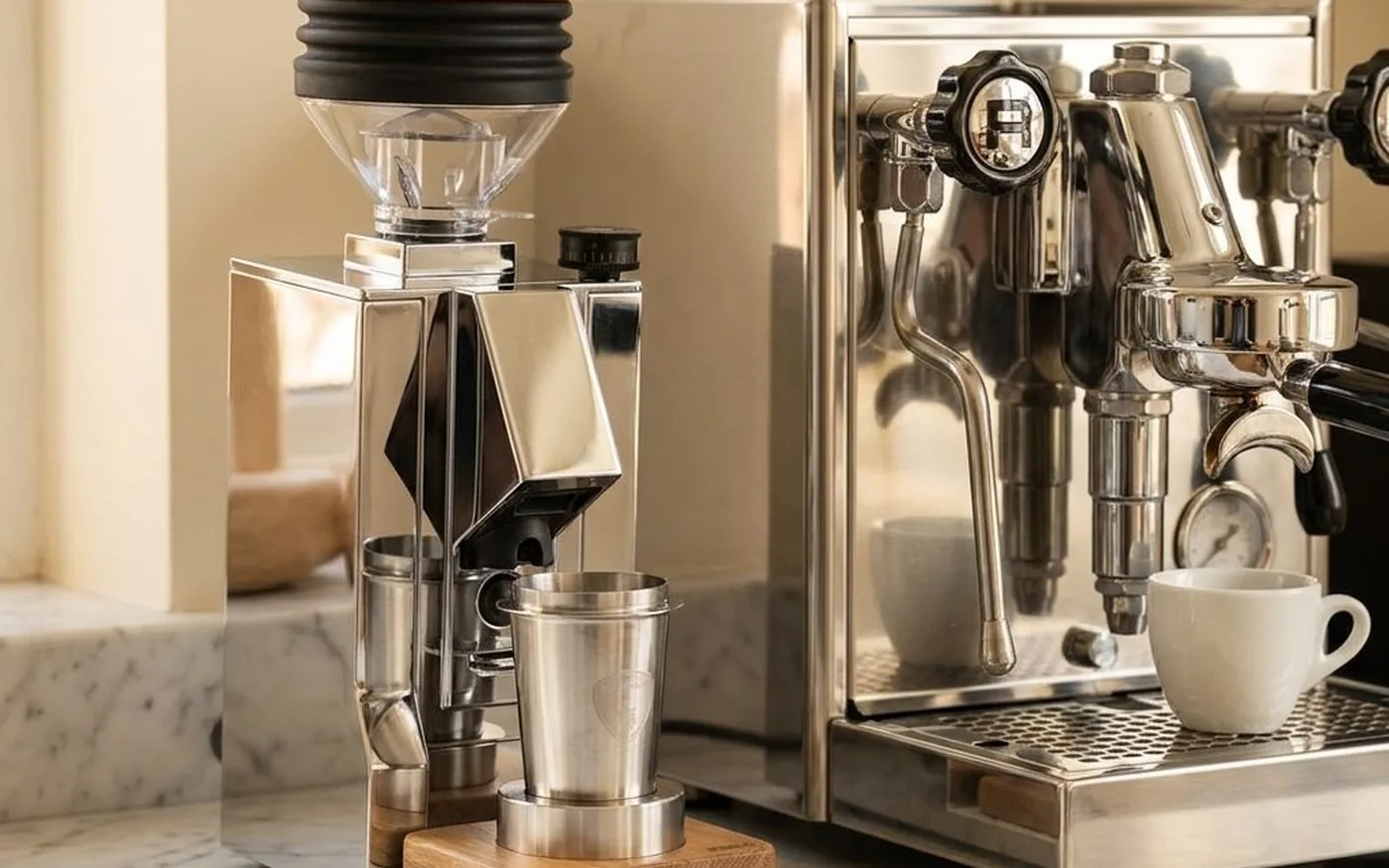
“Exceptional flat-burr performance. One defective unit, nine-day replacement, then 28 days and 312 shots. Best retention I have measured at the price.”
Frequently Asked Questions
How much does the Eureka Oro Single Dose cost in the UK?
The Eureka Oro Single Dose costs between £440 and £650 in the UK as of June 2026, with around £550 being typical across specialist retailers - Bella Barista, Caffeine Limited, and Coffee Italia all sit within this range. The grinder does not discount frequently, and the market price is relatively stable.
Is the Eureka Oro Single Dose better than the Niche Zero?
It depends on your flavour priorities. The Oro uses 65mm flat burrs, which produce clarity and separation - ideal for single origins and filter. The Niche Zero uses 63mm conical burrs and produces more body and roundness, preferred by those who drink heavier or dark-roast espresso. Both are priced in a similar range in the UK. If you primarily drink light-to-medium single origins, the Oro suits you better.
What burr size does the Eureka Oro Single Dose use?
The Eureka Oro Single Dose uses 65mm flat steel burrs. This is a larger flat burr than most domestic single-dose grinders in its price range - the Niche Zero uses 63mm conicals and the Eureka Mignon Specialita uses 55mm flats. The 65mm flat geometry produces high clarity and flavour separation. It is the same burr format found in commercial espresso grinders at significantly higher price points.
Is the Eureka Oro Single Dose suitable for filter coffee?
Yes. The stepless micrometric adjustment gives the Oro a full range from Turkish through espresso and into filter, French press, and cold brew. The 65mm flat burrs are particularly well-suited to filter brewing - the clarity and separation they produce flatters light roast single origins in V60, AeroPress, and Chemex. The SCA defines target grind ranges for each method, and the Oro reaches all of them.
How much retention does the Eureka Oro Single Dose have?
The manufacturer claims under 0.2g. My measured retention using the purge-and-weigh protocol with an Acaia Lunar across 20 bean transitions averaged 0.15g with RDT applied - matching or beating the claim. Without RDT, the average was 0.19g. The worst single measurement on a new bean without RDT was 0.28g. With RDT as standard practice, you can consistently expect 0.1-0.2g per dose.
Where is the Eureka Oro Single Dose made?
The Eureka Oro Single Dose is made in Florence, Italy. Eureka Elettromeccanica has manufactured espresso grinders in Florence since 1920. The Florence manufacturing origin is relevant to the build quality conversation - the aluminium chassis, machined components, and quality control standards reflect the same Italian manufacturing tradition as premium espresso machine brands.
Does the Eureka Oro Single Dose come with a warranty in the UK?
Yes - 2 years residential warranty. UK purchasers through authorised retailers like Bella Barista receive the standard European residential warranty. In my direct experience, the warranty replacement process took 9 days from shipping the defective first unit to receiving the replacement. That is a real-world timeline, not a stated SLA. Bella Barista handled the logistics without complication.
Should I buy the Eureka Oro Single Dose if I only have one bean at home?
Probably not at £440-£650. The Oro is built for frequent bean rotation - its architecture is designed for people changing beans often who want clean transitions. If you run one bag for six to eight weeks, you are paying for capabilities you will rarely use. A hopper-fed grinder like the Eureka Mignon Specialita at around £459 would serve a single-bean household better at lower cost.
A wellness entrepreneur and biohacker, James explores the intersection of hospitality and health - from clean fuel and recovery tools to mindful routines that build balance into daily life.