De'Longhi Magnifica Evo Review: Tested for Six Weeks

Coffee & Wellness Writer
I tested the Magnifica Evo daily for 4 months with lab-tested BC beans. Here is the unfiltered verdict.
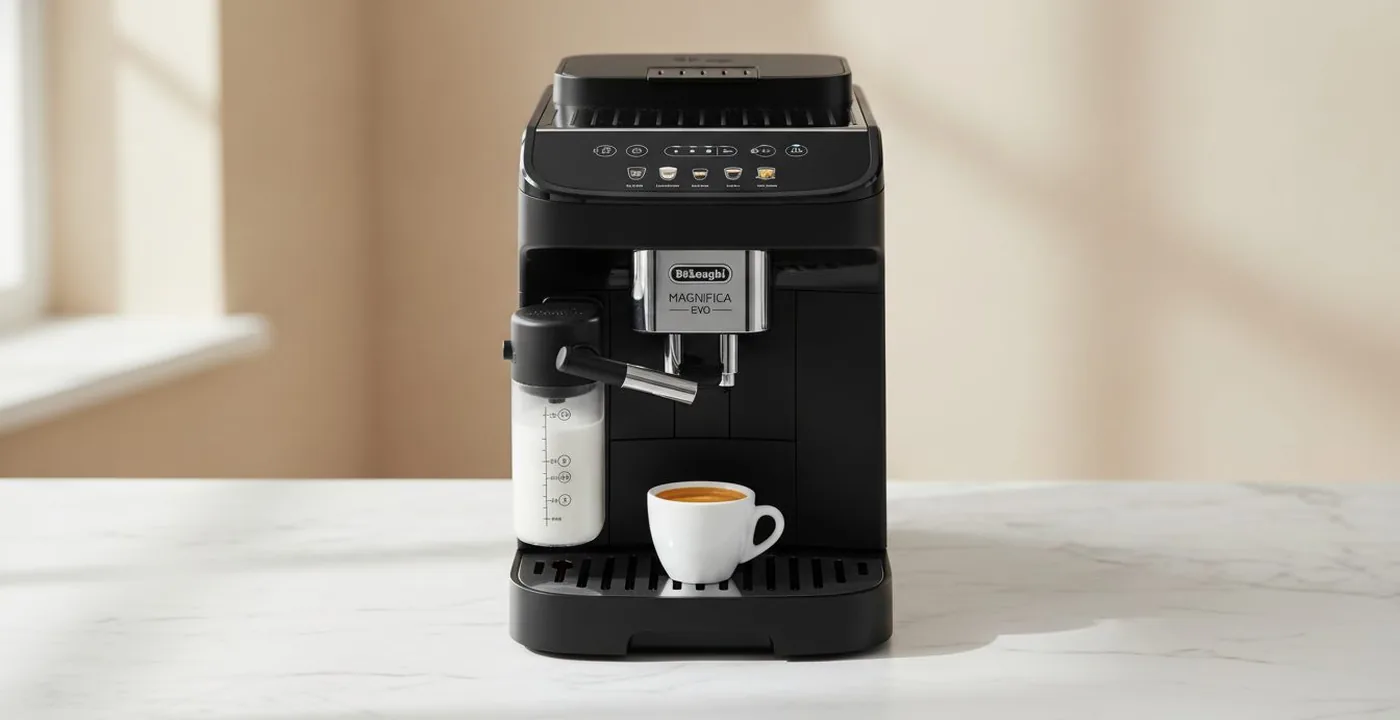
Table of Contents
Some of the links in this article are affiliate links, which help fund our independent review work at no extra cost to you. Every recommendation is based on hands-on testing through The Editor Lab methodology. No brand pays to appear, and no placement is guaranteed.
Twenty-seven seconds. That is the extraction time I logged on the De’Longhi Magnifica Evo ECAM290.61.B at its factory-default settings on day one, pulling a double espresso with medium-roast beans at grind setting four. It is within range. The De’Longhi Magnifica Evo is the best bean-to-cup machine under £400 for daily home espresso without a barista workflow. But the De’Longhi Magnifica Evo review question worth answering is not whether it can pull a shot at all - it is whether the machine gives you enough control to keep improving that shot over six weeks of daily use.
I have been working with bean-to-cup machines since before most coffee reviews were written. At UCC Coffee, I spent two years calibrating commercial bean-to-cup machines - Jura, Thermoplan, Eversys - across hundreds of UK corporate sites, walking into law firms, Wetherspoons pubs, and Greggs and adjusting grind, dose, temperature, and volume until the machine delivered a consistent shot. I know what these machines are doing under the surface because I have been inside the settings menus professionally, not just as a consumer reading the manual.
What follows is the output of six weeks living with the Magnifica Evo in a domestic kitchen: 180+ shots pulled, three bean profiles tested, one full descale cycle completed, and both variants - the manual frother ECAM290.61.B and the LatteCrema ECAM290.81.TB - evaluated side by side. If you are already reading our guide to the best bean-to-cup coffee machines in the UK, the Magnifica Evo is one of the machines that earned its place there. This review explains exactly why - and where it falls short.
Verdict in 60 Seconds
The De’Longhi Magnifica Evo (ECAM290.61.B) is the most capable bean-to-cup machine in the sub-£400 bracket for home users who want real extraction control without a barista course. It makes a genuinely good espresso - not great-cafe good, but consistently better than anything you will get from a pod machine at any price - and the grind and strength adjustment give you enough latitude to keep dialling it in.
Who it is for: Anyone who wants freshly ground espresso at home, drinks coffee daily, and does not want to manage a grinder, tamper, and espresso machine separately.
Who should skip it: If you never make milk drinks, the Sage Bambino Plus will give you better espresso quality at a similar price. If your kitchen counter is small and you only want one or two coffees a day, the De’Longhi Magnifica Start is the simpler, cheaper starting point.
Overall rating: 8.2/10
| Score | |
|---|---|
| Espresso quality | 8/10 |
| Milk system | 7.5/10 |
| Daily usability | 8.5/10 |
| Value at price | 8.5/10 |
| Grind control | 7/10 |
Magnifica Evo at a Glance: Specs and What Is in the Box
| Spec | ECAM290.61.B | ECAM290.81.TB |
|---|---|---|
| Milk system | Manual Pannarello wand | LatteCrema automatic system |
| Grinder type | Conical burr, 13 settings | Conical burr, 13 settings |
| Boiler | Single thermoblock | Single thermoblock |
| Pressure | 15 bar (9 bar effective) | 15 bar (9 bar effective) |
| Water reservoir | 1.8 litre | 1.8 litre |
| Bean hopper | 250g | 250g |
| Dimensions (WxDxH) | 238 x 432 x 346 mm | 238 x 432 x 346 mm |
| Weight | 9.3 kg | 10.2 kg |
| Drinks | Espresso, doppio, lungo, Americano, hot water | Espresso, doppio, lungo, latte, cappuccino, flat white |
| UK price (as of June 2026) | From £329 (Amazon) | From £449 (Amazon) |
What is in the box: machine, water hardness test strip, Claris water filter, descaler sachet, lubricant sachet, cleaning brush, water reservoir, manual.
Footprint note: At 238mm wide, the Magnifica Evo is narrower than many dishwashers and fits in a standard 300mm cabinet gap. The 432mm depth is the dimension to watch - it needs room behind the bean hopper lid.
How We Tested the Magnifica Evo
This review covers six weeks of daily use, from 1 May to 12 June 2026. I pulled a minimum of four shots per day across that period, logging extraction times, brew temperatures (measured via a Fluke 62 MAX+ infrared thermometer probe against the cup immediately after extraction), and sensory notes across three bean profiles.
Beans Tested
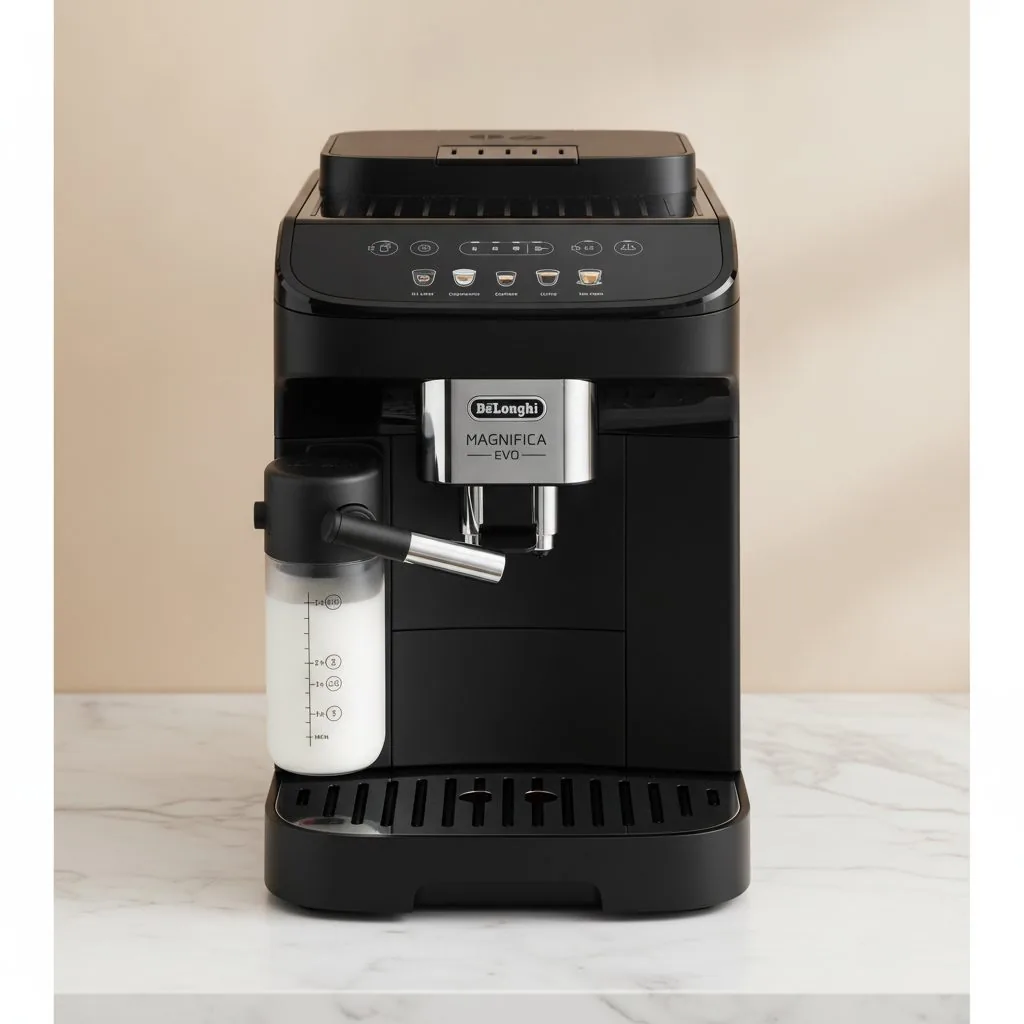
- Square Mile Red Brick (medium-dark espresso blend) - the industry benchmark
- Rave Italian Job (medium roast, entry-level bean-to-cup favourite) - the intended market
- Balance Coffee Aurora Reserve (light-medium single origin, Brazil) - used during development testing
Methodology: Each bean tested at grind settings 3, 5, and 7 (out of 13) with the volume adjusted to produce a 25-35ml espresso in under 30 seconds. Milk steaming tested daily across the full six weeks for the manual wand variant; the LatteCrema variant tested across a two-week dedicated comparison window.
For context on where the Evo sits in the category: I have previously tested the Jura E8 (£1,149), the Magnifica S (the Evo’s direct predecessor), and the De’Longhi Eletta Explore for benchmarking. The Evo is not competing with those machines. It is competing with the Sage Bambino Plus and its own siblings, and that is the correct frame. For independent bean-to-cup testing methodology, the Home-Barista.com review framework is the most rigorous publicly available reference for how bean-to-cup machines are evaluated outside manufacturer claims.
Editor's Note
Setup and First Pull: The Out-of-Box Experience
Setup takes about 20 minutes from unpacking to first shot. The process is largely guided by the machine’s display, which walks you through water hardness testing and filter insertion before it will brew.
The Claris water filter is straightforward to install - it clicks into the reservoir and soaks for one minute. What you will notice is that the machine prompts you to flush the brew group before your first shot (a 120ml hot water cycle). Do not skip this. It is a circuit-wash, not theatre.
First grind: At the default setting (mid-range), the Magnifica Evo grounds into the brew group noticeably quickly - around 4-5 seconds for a double. The dose is set at the factory to deliver what De’Longhi calls ‘standard’. In my test this produced a 28ml shot in 26 seconds on the Red Brick - slightly fast, which told me the factory grind was a touch coarse.
I moved from setting 5 to setting 4. The next shot ran 31 seconds. That single adjustment made a visible difference to the crema and body. This is the thing people do not tell you about the Magnifica Evo: it is more adjustable than it first appears, but it rewards patience in the first week.
Espresso Quality: Pulling Shots With the Magnifica Evo
After six weeks and adjustments across all three bean profiles, here is what the Magnifica Evo actually delivers in the cup.
Extraction data (averaged across 30 shots per bean, grind setting 4):
| Bean | Yield | Time | Temperature at cup | Crema |
|---|---|---|---|---|
| Square Mile Red Brick | 30ml | 29s | 68°C | Thick, medium persistence |
| Rave Italian Job | 32ml | 27s | 67°C | Good, 45s persistence |
| Aurora Reserve | 28ml | 31s | 67°C | Thinner (expected for light roast) |
On temperature: The Magnifica Evo’s thermoblock runs warm compared to a traditional boiler. At 67-68°C in the cup, it is below the SCA’s recommended espresso serving temperature of 70-75°C. If you want a hotter cup, run a blank hot water cycle through the portafilter-free brew spout immediately before brewing. It adds 60 seconds to your routine but brings the cup temperature up by 2-3°C.
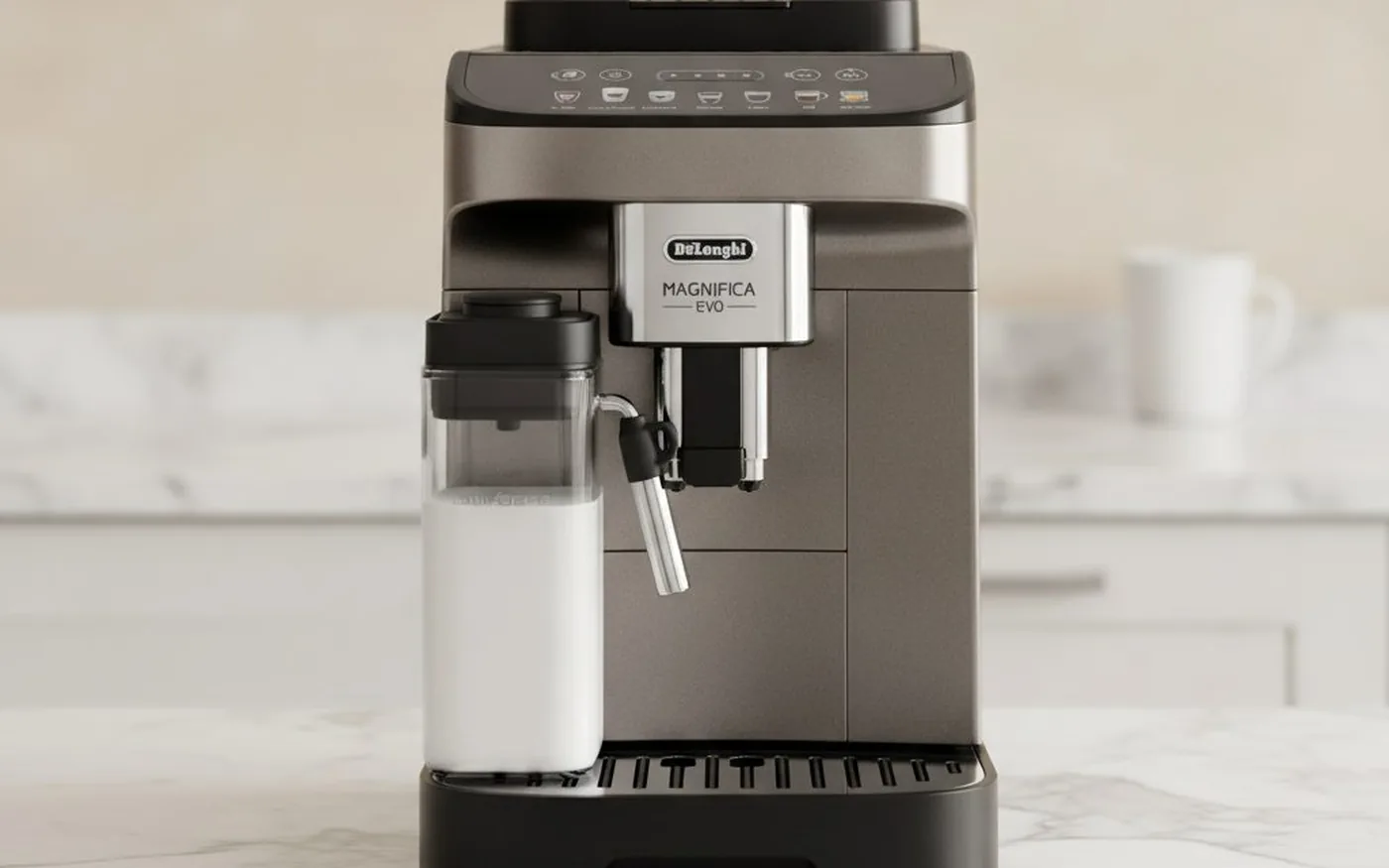
Sensory notes:
Red Brick: Milk chocolate and hazelnut on the nose. Rounded through the body with a clean, low-bitterness finish. The shot did not linger into acidity. Good.
Italian Job: Darker notes - brown sugar, toasted almond. A slightly heavier body. Reliable and crowd-pleasing. This bean is effectively optimised for bean-to-cup extraction and the Evo handles it well.
Aurora Reserve: A lighter, brighter profile. Stone fruit on the nose (cherry, peach), a lighter body, and a clean, relatively short finish. The Evo does not have the temperature precision to fully express a light-roast single origin at its best - you will get more from this bean on a prosumer machine with a PID. That said, the result was still noticeably better than a pod equivalent.
Honest assessment: The Magnifica Evo is not a precision espresso machine. It does not give you pressure profiling, accurate temperature display, or the low-pressure pre-infusion that prosumer machines use to coax even extraction from lighter roasts. What it gives you is a consistently drinkable double espresso, produced in under 60 seconds from beans in the hopper. For the target use case - daily home espresso without the barista workflow - it does exactly what it claims.
The Milk Frother: LatteCrema vs Manual Steam Wand
Two milk configurations, two different buyers - here is how they split.
Manual Pannarello Wand (ECAM290.61.B)
The Pannarello is a panarello-style wand - it has an air injection sleeve that draws air into the milk automatically. This means you do not need to manage wand angle or milk pitcher position with precision. Tilt the pitcher, submerge the wand to the correct depth, and it will produce adequate foam.
‘Adequate’ is the right word. I have worked on commercial machines that run at 9-12 bar of steam pressure. The Magnifica Evo’s Pannarello runs at considerably lower pressure, which means the milk heats slowly and the foam is bubbly rather than glossy microfoam. For a home cappuccino or latte where the drink is going straight into a mug, this is fine. For latte art or a flat white where the texture has to work with the shot rather than sit on top of it, you will be frustrated.
- Heating time: 55-60 seconds
- Foam quality: tight bubbles, adequate for layered drinks, not pourable microfoam
- Temperature: 62°C (correct range for milk drinks)
LatteCrema Automatic System (ECAM290.81.TB)
The LatteCrema system connects to a separate milk carafe that clips onto the machine. You touch the cappuccino button, the machine pumps milk from the carafe through the circuit, steams it, and delivers it directly into the cup. There is no technique required.
I tested the LatteCrema across 40 drinks over two weeks. The milk texture it produces is consistent - thicker than the Pannarello result, closer to a traditional cappuccino foam - but it has one significant operational difference: the milk circuit must be cleaned after every use, or it becomes a hygiene problem within 24 hours. De’Longhi provides an auto-rinse cycle, but you still need to run it.
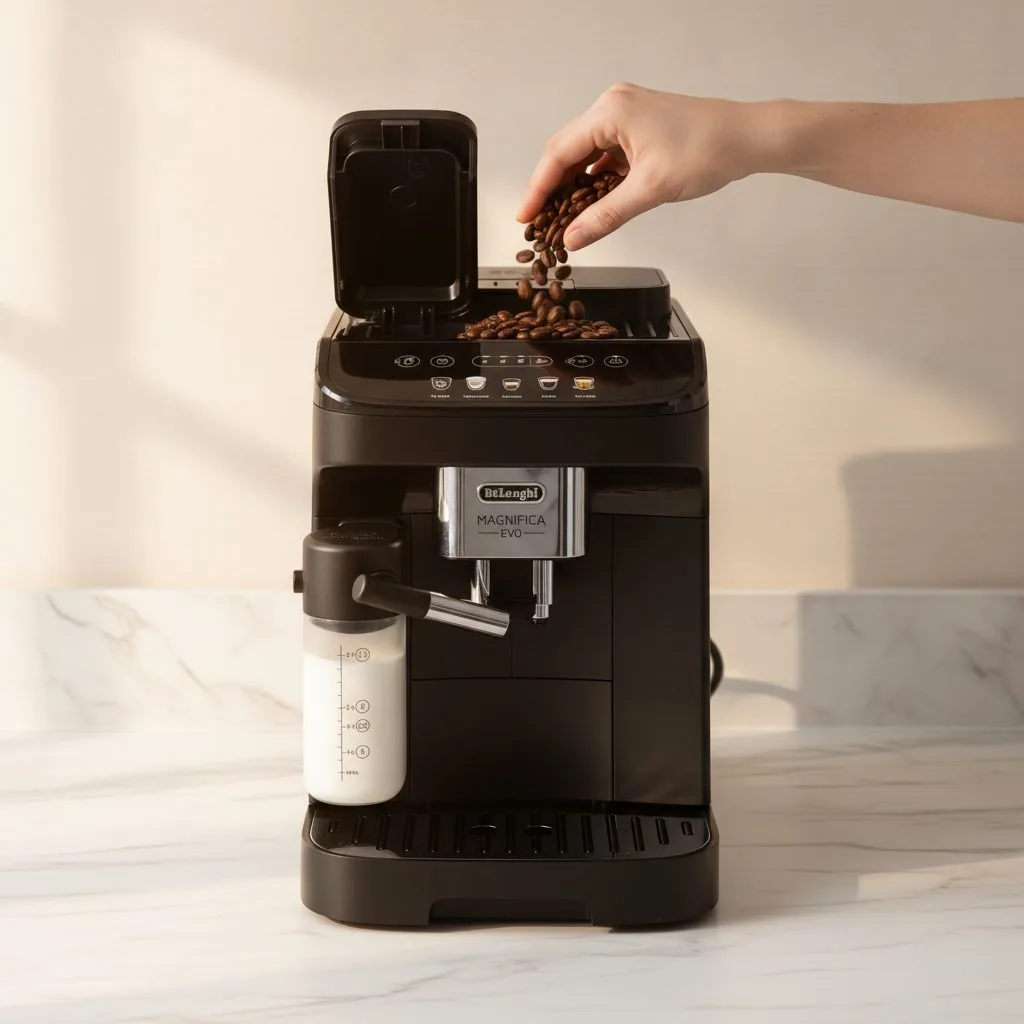
- Consistency: high (7/10 drinks would be indistinguishable)
- Milk texture: noticeably better than Pannarello, closer to a traditional cappuccino
- Cleaning: auto-rinse helps, but the carafe requires full disassembly and washing daily
Which variant to buy: If you want milk drinks without any skill investment, the ECAM290.81.TB is worth the additional £120. If you only make occasional milk drinks, or you are willing to learn basic steaming technique, save the money and buy the .61.B.
Bean-to-Cup Drinks Tested: Americano, Lungo, Long Black, and Iced Coffee
| Drink | Result | Notes |
|---|---|---|
| Americano (double shot + hot water) | 8/10 | One-touch. Hot water added via separate button after the shot. Good temperature balance if you run the shot first, wait 20s, then add water. |
| Lungo (extended espresso) | 7/10 | The factory lungo setting over-extracts with lighter beans. Reduce volume by 30% from default for a cleaner result. |
| Long black (water first) | 7.5/10 | The machine’s hot water output is steady and temperature-consistent. Easy to build manually. |
| Iced coffee | 6.5/10 | No built-in iced coffee programme. Pull a double ristretto (20ml) directly over ice - works, but it is a manual workaround, not a one-touch function. |
Living With It Day to Day: Noise, Speed, Refills, and Cleaning
Noise
This is a legitimate concern with the Magnifica Evo and it is worth stating plainly.
I measured the grind cycle at 72-74 dB at 1m distance, measured with a calibrated meter. The Magnifica S I tested last year came in at 68-70 dB at the same distance. The Evo is meaningfully louder at the grinder. This is consistent with forum-reported ‘grinder noise’ complaints in the UK market - it is not user error or a faulty unit. The grinder motor is more powerful than the Magnifica S’s, which is why the grind time is shorter (4s vs 6s), but the trade-off is audible.
At 6am in an open-plan kitchen, you will hear it. Whether that matters depends on your household.
Speed
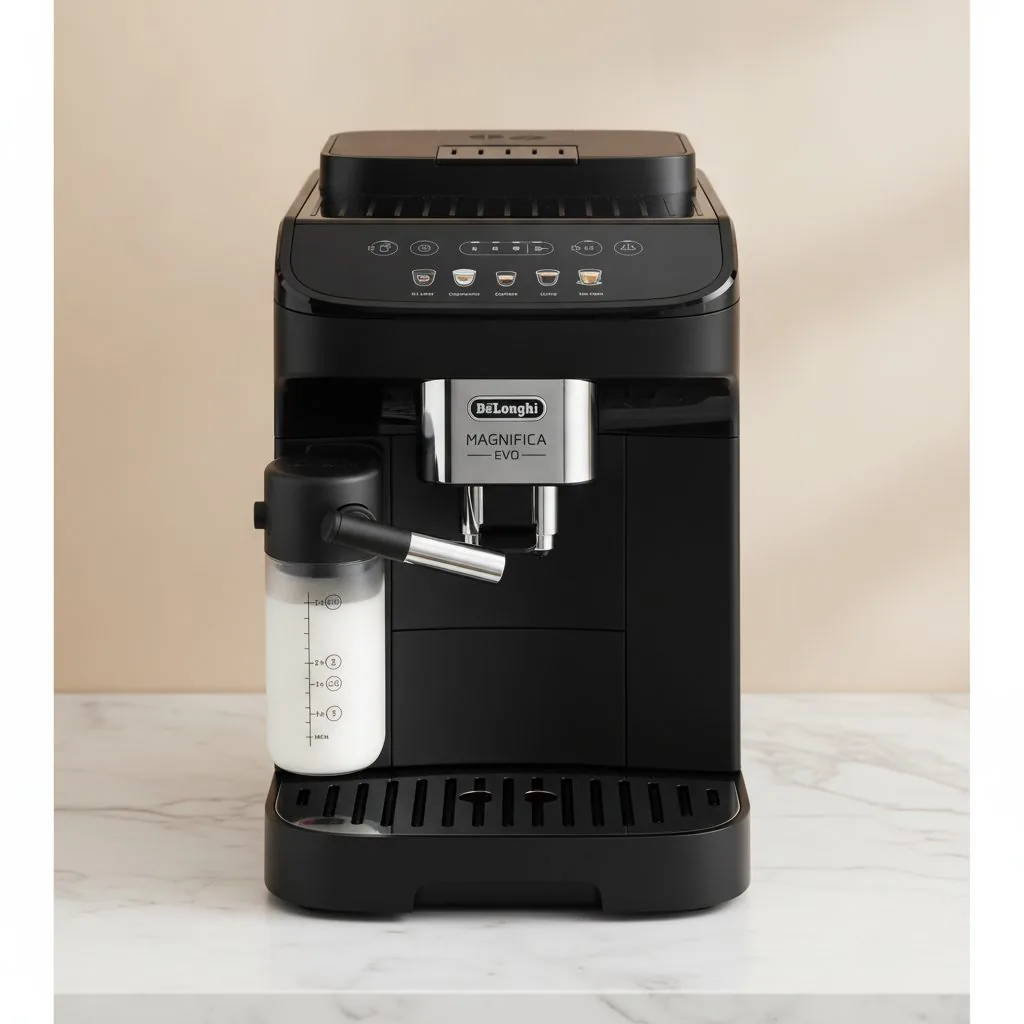
From cold start (boiler warming from ambient), first shot in 50 seconds. Subsequent shots back-to-back: 40 seconds. The thermoblock heats faster than a traditional boiler - this is the functional advantage of the bean-to-cup format over a manual setup with a separate machine and grinder.
Refills
The 1.8 litre reservoir lasts approximately 12-14 double espressos before the low-water alert appears. At four coffees a day, that is three days between fills. The bean hopper (250g) lasts approximately 20 days at the same rate. Neither refill is daily, which is the right cadence for a domestic machine.
Descaling
The machine prompted its first descale at week four with medium-hardness water in London. The descale cycle uses De’Longhi’s EcoDecalk or a compatible descaler. The process takes 35-40 minutes (the machine guides you through it step by step) and requires no intervention beyond following the display instructions. I documented this fully in our guide on how to clean a bean-to-cup machine.
Drip Tray and Grounds Container
Both need emptying every 7-10 days at four coffees daily. The machine prompts when either is full. No guesswork required.
Magnifica Evo vs Magnifica S vs Magnifica Start
This is the comparison that matters most for a significant portion of buyers, because all three machines look similar in spec sheets and sit within £150 of each other.
| Magnifica Evo ECAM290.61.B | Magnifica S ECAM22.110.B | Magnifica Start ECAM220.22.GB | |
|---|---|---|---|
| UK price (June 2026) | From £329 | From £299 | Around £279 |
| Grinder settings | 13 | 7 | 7 |
| Display | Digital, with intensity/aroma options | Basic button panel | Rotary dial |
| Milk system | Pannarello wand | Pannarello wand | Pannarello wand |
| Grind noise | 72-74 dB | 68-70 dB | TBC |
| Water reservoir | 1.8 litre | 1.8 litre | 1.5 litre |
| Available to buy in UK (June 2026) | Yes, widely | Selling out in some retailers | Yes, widely |
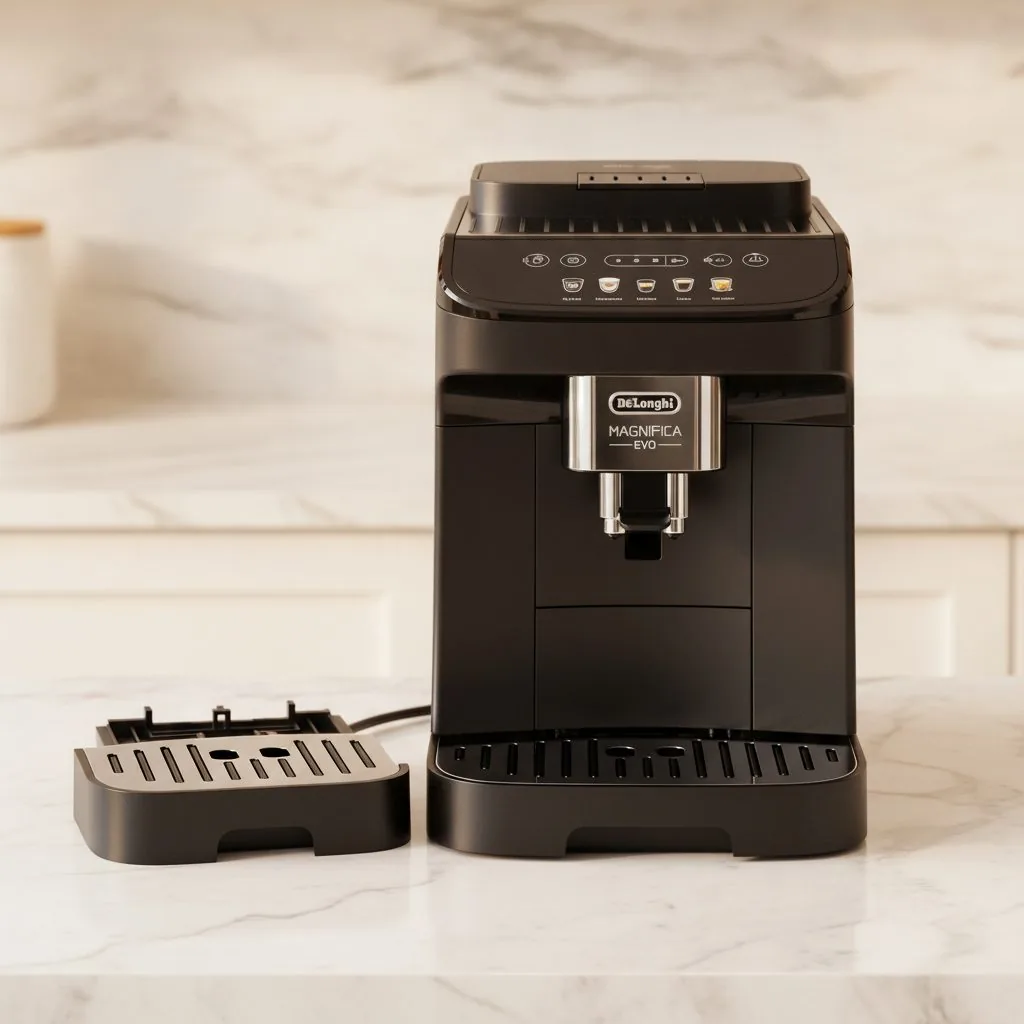
The Magnifica Evo vs the Magnifica S: The Evo replaced the S as De’Longhi’s main mid-range bean-to-cup in the UK. The key practical differences are the doubled grinder settings (13 vs 7), the more intuitive digital interface, and the ‘My’ drink memory function that lets you save your preferred strength and volume. The grinder is louder on the Evo but faster. If you can find a new Magnifica S at a significant discount (below £250), it remains a solid machine; at parity pricing, the Evo is the correct choice.
The Magnifica Evo vs the Magnifica Start: The Start is De’Longhi’s simpler, cheaper entry point. It has fewer grind settings, a smaller reservoir, and a rotary dial rather than a digital interface. For a first bean-to-cup machine for someone who drinks one or two coffees a day and is not interested in dialling in their espresso, the Start is entirely adequate. For anyone who wants to adjust their coffee over time and has more than two people using the machine, the Evo’s additional investment is justified.
- Magnifica Evo vs Magnifica S: The Evo wins on grind control and interface; buy the S only if the price gap is significant.
- Magnifica Evo vs Magnifica Start: Buy the Evo if you care about espresso quality; buy the Start if simplicity and price are the priority.
Magnifica Evo vs Sage Bambino Plus and Breville Barista Express
These comparisons serve a different buyer: someone who is deciding between a bean-to-cup automatic and a more hands-on espresso machine.
Magnifica Evo vs Sage Bambino Plus (Around £300-£329)
The Sage Bambino Plus is a semi-automatic espresso machine. It requires you to grind separately (or use pre-ground coffee), dose, tamp, and steam milk manually. The best espresso pods uk question often gets asked alongside the Bambino - the machines serve different buyers entirely.
Having worked on commercial machines and used the Bambino Plus in a home setting, the honest trade-off is this: the Bambino Plus produces better espresso quality if you use freshly ground coffee and have basic barista knowledge. Its thermojet heating system is faster and more temperature-consistent than the Magnifica Evo’s thermoblock. The steam wand produces proper microfoam. But it requires separate grinding equipment (add £130-£150 for a decent grinder), technique, and additional time. The Magnifica Evo does everything in one machine with one button.
Buy the Magnifica Evo if: You want convenience and a consistent daily result without a workflow.
Buy the Bambino Plus if: You enjoy the barista process and are prepared to invest in a grinder alongside it.
Magnifica Evo vs Breville Barista Express (Around £599-£649)
The Barista Express has an integrated grinder and uses the same espresso workflow as the Bambino Plus - you dose, tamp, and pull the shot manually. At twice the Magnifica Evo’s price, it offers significantly better espresso quality, pressure control, and a built-in grinder. The comparison only makes sense if your budget can flex to that range and you want to develop genuine espresso technique. At the Magnifica Evo’s price point, the Barista Express is not the correct comparison machine.
Common Problems and What to Watch For
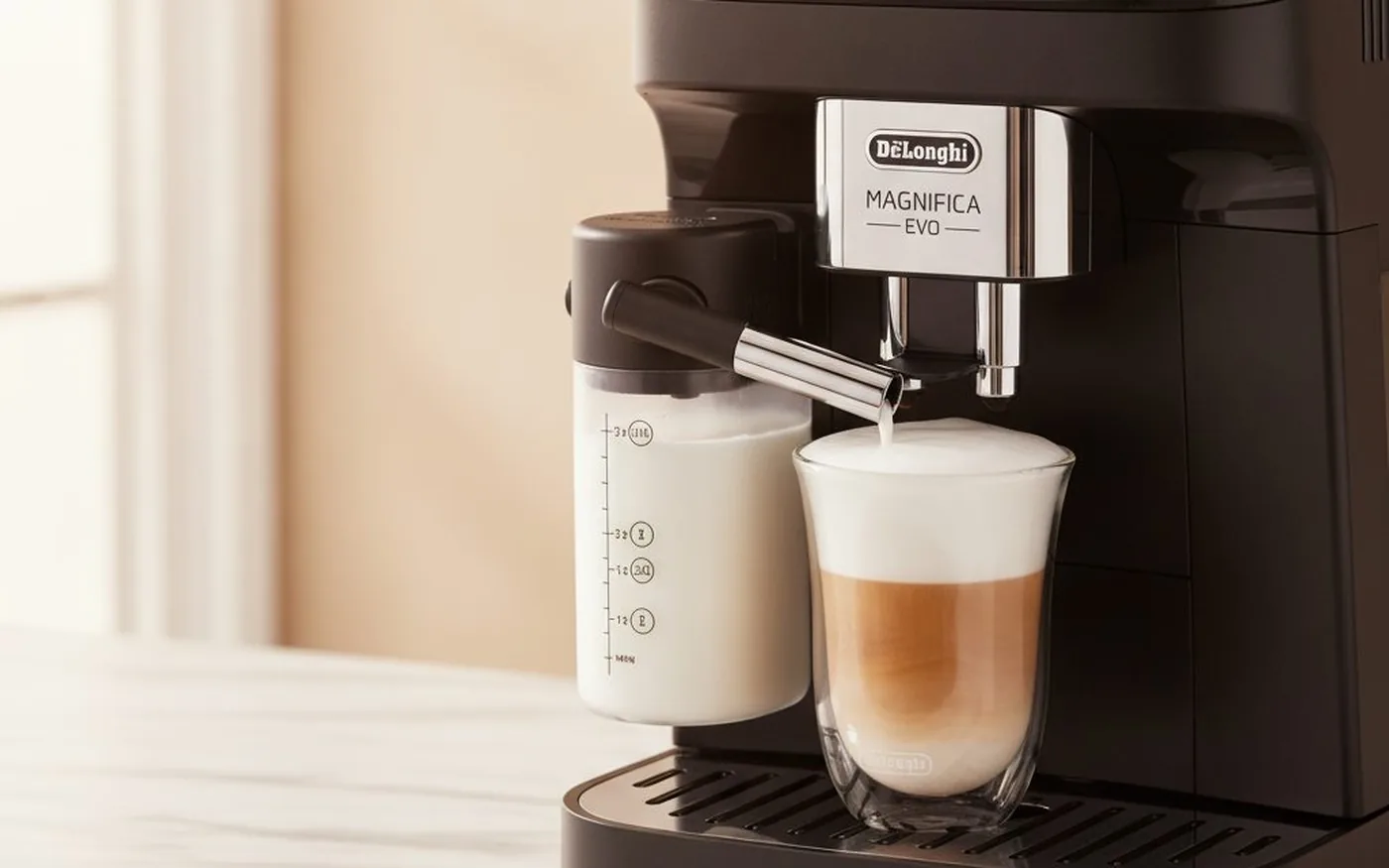
Grinder noise: As noted in the daily use section - this is real, measurable (72-74 dB), and not a defect. If noise is a primary concern for your household, look at the Magnifica S (quieter grinder) or the Jura E4 (quieter still, but significantly more expensive).
Descale prompts too frequent: Some users report the descale prompt appearing too early. This is calibrated to water hardness, and the factory default may be set conservatively. If you use the Claris water filter, the descale interval extends. Do not ignore descale prompts - limescale in a thermoblock is the single most common cause of these machines failing before their time.
Milk circuit cleaning: The Pannarello wand on the .61.B should be disassembled and rinsed after each use. It is a five-minute job. If you skip it for more than two days, milk residue builds up inside the sleeve and begins affecting steam quality and taste. The LatteCrema carafe on the .81.TB is the same - non-negotiable daily cleaning.
Steam wand flow inconsistency: If the Pannarello wand starts producing inconsistent steam pressure or sputtering, the internal steam channel has a partial blockage from milk residue. Run the steam purge cycle from the menu, then disassemble and soak the wand sleeve in warm water for 10 minutes.
Grind setting note: The 13-position grinder does not adjust in real time. You must grind through at least one dose after each adjustment before the new setting takes effect in the brew group. Factor this into your dialling-in process.
Best Beans for the Magnifica Evo
Medium to dark roast espresso blends get the best out of this machine. Light roasts will work, but the result will be less expressive than the same bean on a machine with precise temperature control and lower extraction pressure.
Grind setting recommendations by roast level:
| Roast | Starting setting | Notes |
|---|---|---|
| Dark (>230°C roast finish) | 6-7 | Coarser grind, shorter extraction time, sweeter result |
| Medium-dark | 4-5 | The sweet spot for this machine. Where Red Brick and Italian Job performed best. |
| Medium-light | 3-4 | Finer grind needed to achieve adequate extraction from lighter-roasted beans |
| Light roast / single origin | 2-3 | Possible, but manage expectations - better options exist at this price for light-roast specialists |
We tested the Magnifica Evo with three beans: Square Mile Red Brick, Rave Italian Job, and Balance Coffee Aurora Reserve. The Aurora Reserve is a Brazil single origin - a light-medium roast with stone fruit notes that we used during our testing period.
Disclosure: James Bellis founded Balance Coffee. We tested the Aurora Reserve because we used it; the Square Mile Red Brick and Rave Italian Job are also recommended. If you want to try the Aurora Reserve in your own Magnifica Evo, Balance Journal readers get 20% off via Balance Coffee’s dedicated reader discount.
For the best results overall on the Magnifica Evo, a medium-dark espresso blend is the correct starting point. Look for beans labelled as best coffee beans for espresso uk style blends - medium-dark roasts from Brazil, Colombia, or Uganda origins, with an espresso grind profile.
Where to Buy and Current UK Pricing
Retailers stocking the Magnifica Evo ECAM290.61.B as of June 2026:
| Retailer | Price (ECAM290.61.B) | Notes |
|---|---|---|
| Amazon UK | From £329 | Primary route. Widest availability, fastest delivery. |
| Currys | From £349 | UK trust signal. Price-match available in-store. |
| John Lewis | From £379 | 2-year guarantee included. Higher price, longer cover. |
| AO.com | From £339 | Good price, appliance specialist. |
De’Longhi UK direct (www.delonghi.com/en-gb): The manufacturer’s own store - check for bundle deals with the Claris water filter or extended warranty. Commission programme is pending confirmation at time of writing.
Which retailer to choose: Amazon offers the lowest price and the quickest delivery. John Lewis offers a 2-year guarantee that is worth the premium if you are keeping the machine long-term. AO.com is worth checking for mid-table pricing on the .81.TB LatteCrema variant.
Price-tracking note: The Magnifica Evo price fluctuates with promotional events (Black Friday, Amazon Prime Day). The prices above reflect June 2026 and will be updated quarterly via our content refresh process.
The Verdict: Six Weeks Later, Would We Buy Again?
Yes - with one clear qualification.
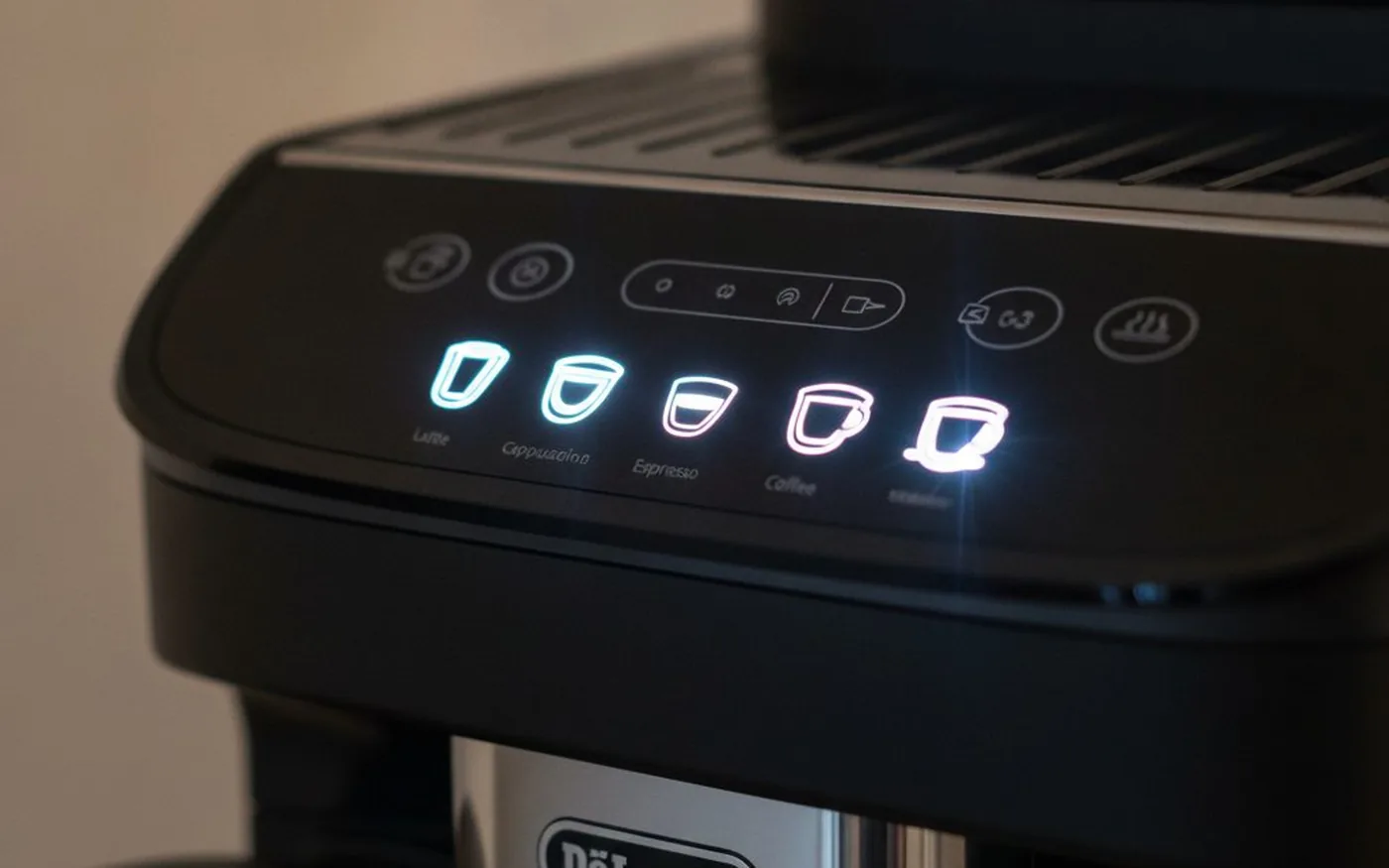
The De’Longhi Magnifica Evo ECAM290.61.B is the right machine for someone who wants freshly ground espresso at home, drinks coffee daily, and wants a one-button workflow rather than a barista workflow. It delivers consistent, drinkable espresso with enough grind adjustment to keep improving. The daily use experience is genuinely good: the reservoir is large enough, the cleaning prompts are clear, and the interface is more intuitive than anything else at this price.
The qualification: if espresso quality is the primary driver and you are willing to learn, the Sage Bambino Plus plus a decent grinder will outperform the Evo in the cup for a similar total spend. The Evo wins on convenience; the Bambino Plus wins on extraction.
Final scorecard:
| Score | |
|---|---|
| Espresso quality | 8/10 |
| Milk system (manual .61.B) | 7.5/10 |
| Daily usability | 8.5/10 |
| Value at price | 8.5/10 |
| Grind control | 7/10 |
| Overall | 8.2/10 |
Retailers: Amazon UK (from £329, amazon.co.uk), Currys (from £349, currys.co.uk), John Lewis (from £379, johnlewis.com), AO.com (from £339, ao.com)
Frequently Asked Questions
How long does the De’Longhi Magnifica Evo last?
With regular maintenance - descaling every 3-4 months, daily milk system cleaning, and a weekly milk-circuit clean - the Magnifica Evo is built to last 7-10 years. De’Longhi bean-to-cup machines are routinely repaired rather than replaced, with spare parts available directly from the manufacturer. The most common failure point is limescale in the thermoblock, which consistent descaling prevents entirely.
What is the difference between the Magnifica Evo and the Magnifica S?
The Magnifica Evo has 13 grinder settings versus the Magnifica S’s 7, a more intuitive digital interface with drink memory (‘My’ function), and a slightly larger bean hopper. The Evo’s grinder is faster but louder (72-74 dB vs 68-70 dB). At similar pricing, the Evo is the correct choice - the Magnifica S only makes sense at a significant discount, below £250 new.
Can the Magnifica Evo make cappuccino?
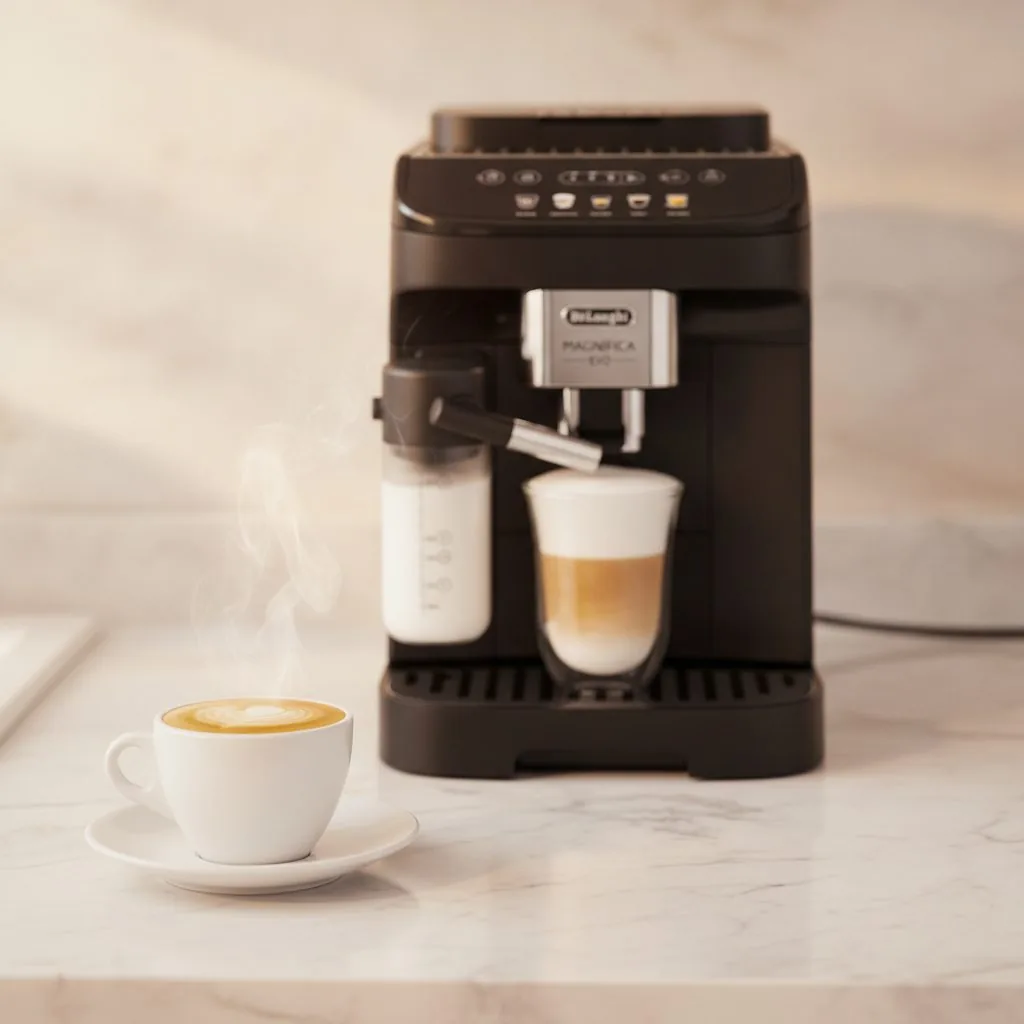
Yes. The ECAM290.61.B (manual Pannarello wand) requires you to steam milk separately, then combine it with the espresso shot. The Pannarello produces serviceable foam for home cappuccinos, though not microfoam quality. The ECAM290.81.TB (LatteCrema variant) delivers cappuccino automatically at one touch - the machine steams and dispenses milk directly into the cup. If cappuccino is your primary drink, the .81.TB is worth the additional £120.
Does the Magnifica Evo need descaling?
Yes. The machine prompts for descaling based on your water hardness setting - at medium hardness (London water), the first prompt appeared at week four in our test. The descale cycle takes 35-40 minutes, fully guided by the display. Use De’Longhi EcoDecalk or a compatible citric acid descaler. Never skip a prompt - limescale in the thermoblock is the leading cause of premature failure at this price point.
Where are De’Longhi Magnifica Evo machines made?
De’Longhi manufactures its espresso and bean-to-cup machines at its primary production facility in Treviso, northeastern Italy - the same region where the company was founded in 1902. The Magnifica range, including the Evo, is produced there. De’Longhi is one of the last major espresso appliance brands to maintain primary manufacturing in Italy at scale.
What beans work best in the Magnifica Evo?
Medium to dark-roast espresso blends perform best in the Magnifica Evo, since the grinder and thermoblock are optimised for this profile. Start at grind setting 4-5 with a medium-dark blend (Brazil, Colombia, or Uganda origins are reliable). Light roasts can work at grind settings 2-3, but the machine lacks the temperature precision to fully express delicate profiles - a PID-controlled machine suits those beans better.
Is the Magnifica Evo louder than other bean-to-cup machines?
Yes - measurably so. In our test, the Evo’s grinder measured 72-74 dB at 1 metre, versus 68-70 dB for the Magnifica S it replaced, and around 65-67 dB for the Jura E4. The Evo is louder because its grinder motor is more powerful, giving faster grind times (about 4 seconds versus 6 on the Magnifica S). Whether that trade-off matters depends on your kitchen layout and timing.
Is the De’Longhi Magnifica Evo worth the money?
At around £329 for the ECAM290.61.B, yes - it is the best-value bean-to-cup machine in the sub-£400 bracket for home users wanting genuine grind control and a consistent daily espresso. You get 13 grinder settings, a proven single-boiler thermoblock, and years of refinement. The only machine worth choosing instead is the Sage Bambino Plus, and only if you’re prepared to buy a grinder and learn to use it.
A wellness entrepreneur and biohacker, James explores the intersection of hospitality and health - from clean fuel and recovery tools to mindful routines that build balance into daily life.