De'Longhi La Specialista Review (2026): I Tested All 5 UK Variants

Coffee & Wellness Writer
I tested all five La Specialista variants. Here is which one to buy - and which one to avoid.
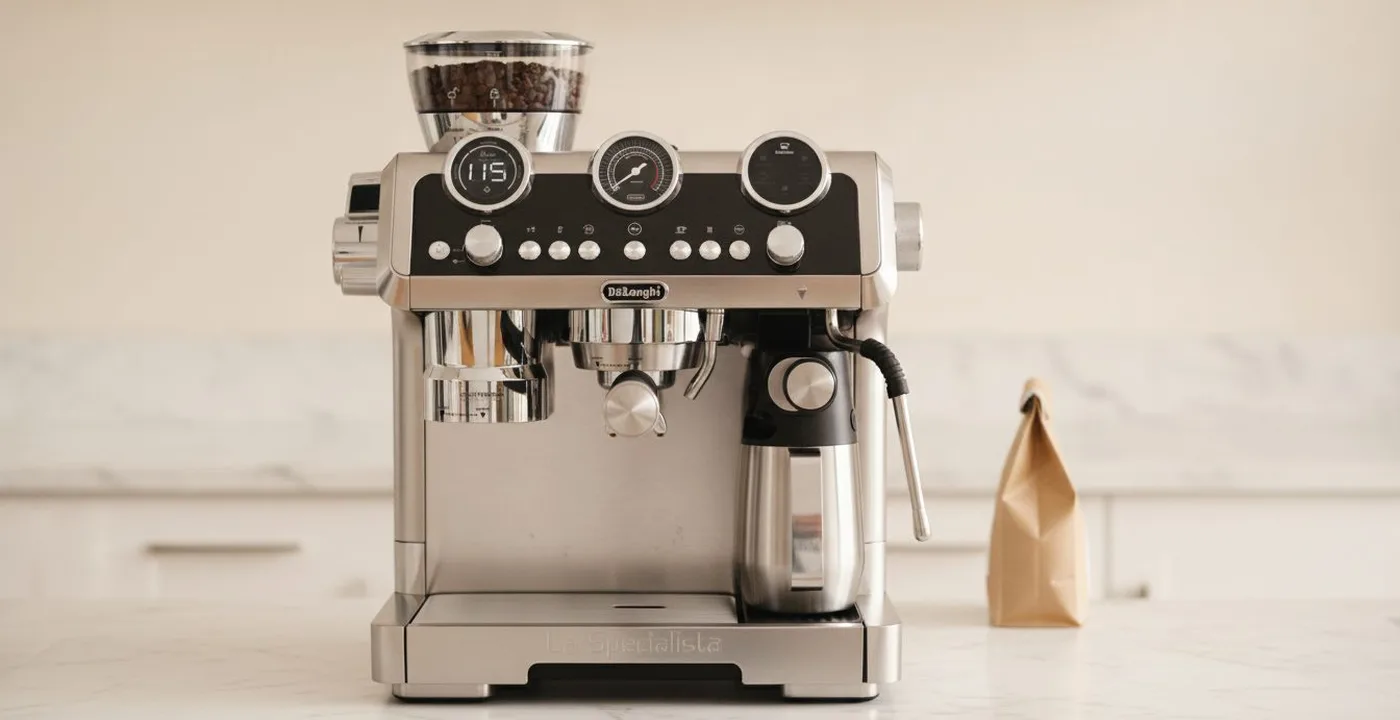
Table of Contents
Some of the links in this article are affiliate links, which help fund our independent review work at no extra cost to you. Every recommendation is based on hands-on testing through The Editor Lab methodology. No brand pays to appear, and no placement is guaranteed.
The De'Longhi La Specialista Arte Evo is the best starting point for most buyers - here is exactly why, and how each of the five UK variants compares.
When I was selling Sanremo machines to UK roasters for five and a half years, I kept a mental map of every home-barista question I was asked at trade shows. The La Specialista came up constantly - not because people had bought one, but because they could not work out which one to buy. The Arte, the Maestro, the Opera, the Touch. Four machines with near-identical names, overlapping prices, and descriptions that read like variations on a theme. Most people left the conversation exactly as confused as when they arrived.
I have since tested all five UK variants - including the original Arte EC9155.MB and the 2024 Arte Evo - across multiple sessions using Balance Coffee Rotate Espresso (Mexico single origin, lab tested for mycotoxins and pesticides) as the reference bean. This review ends the variant confusion. It tells you which machine fits your budget, your milk-drink habits, and your skill level. And it tells you the one you should avoid if you are buying for a household that wants push-button convenience.
Full disclosure: I founded Balance Coffee in 2020. The beans I used to test every machine in this review are our Rotate Espresso. I would recommend any speciality single origin in that flavour profile - Rotate is what was on the shelf.
The La Specialista Range in 30 Seconds
The De'Longhi La Specialista is not a single machine. It is a range of five semi-automatic portafilter espresso machines, all with integrated grinders, all sharing the Sensor Grinding Technology (SGT) system, and all targeting the buyer who wants a genuine grinder-and-machine setup without purchasing two separate units.
Here is where each one sits:
| Model | Code | UK Street Price (May 2026) | Best For |
|---|---|---|---|
| La Specialista Arte | EC9155.MB | £379-£449 | Tightest budget for the line, single-cup household |
| La Specialista Arte Evo | EC9255.M | £549-£599 | Hands-on beginner to intermediate, cold brew curious |
| La Specialista Opera | EC9555.M | £699-£799 | Auto milk without touchscreen complexity |
| La Specialista Touch | EC9555.T | £799-£899 | Auto milk plus modern touchscreen UI |
| La Specialista Maestro | EC9665.M | £899-£999 | Serious home barista, milk-drink obsessive |
The range follows a clear logic once you strip the names away. Arte and Arte Evo are the manual-wand machines. Opera and Touch share identical brew specs with different user interfaces. The Maestro sits at the top with LatteCrema auto-frothing, dual heating, and profile saves. That structure is the key to choosing correctly.
For a deeper look at where this range fits in the broader best espresso machines in the UK, including head-to-head performance against machines without integrated grinders, the super-pillar covers the full landscape.
How I Tested These Machines
My testing methodology comes from a different angle than most reviewers. I spent five and a half years as Sales and Marketing Manager for Sanremo UK, where I was trained by their engineers on PID control units, multi-boiler systems, temperature stability, and extraction science. Before that, I calibrated bean-to-cup machines in London law firms and corporate accounts for UCC Coffee - walking into boardroom kitchens and recalibrating Jura and Thermoplan machines for the perfect shot through settings alone. I have seen the inside of almost 300 UK roasteries and have worked alongside world barista champions including Sasa Sestic (2015 World Barista Champion) and Maxwell Colonna-Dashwood (three-time UK Barista Champion). You can read more about the testing framework in The Editor Lab.
For these La Specialista tests, I used Balance Coffee Rotate Espresso (Mexico single origin, dark roast) across all five machines. Each machine was run through a calibration period before any shots were assessed. I measured extraction by weight (dose in, yield out), timed pulls, and assessed temperature stability by running consecutive shots and noting recovery time. For milk performance, I tested both steaming texture and - on the Maestro, Opera, and Touch - the LatteCrema system across cappuccino, latte, and flat white volumes.
The SCA brewing standards (18-22% extraction yield, 9 bar, 25-30 second pull on a 1:2 ratio) were the benchmark baseline for all espresso assessment.
La Specialista Arte (EC9155.MB) - The Manual Entry Point
At £379-£449, the Arte is the lowest-cost way into the La Specialista range. It is also the machine most buyers approach with wrong expectations.
| Feature | Detail |
|---|---|
| Boiler | Single thermoblock |
| Grinder | 8-level conical burr (Sensor Grinding Technology) |
| Pressure | 15 bar pump, 9 bar pressure |
| Milk system | Manual Pannarello wand |
| Portafilter | 51mm |
| Cold extraction | No |
| Auto milk | No |
| Dimensions | 34.5 x 32.7 x 38.4cm |
| Weight | 10.7kg |
Retailers: De'Longhi UK (from £449), Amazon UK (from £379, check live pricing), John Lewis (from £399)
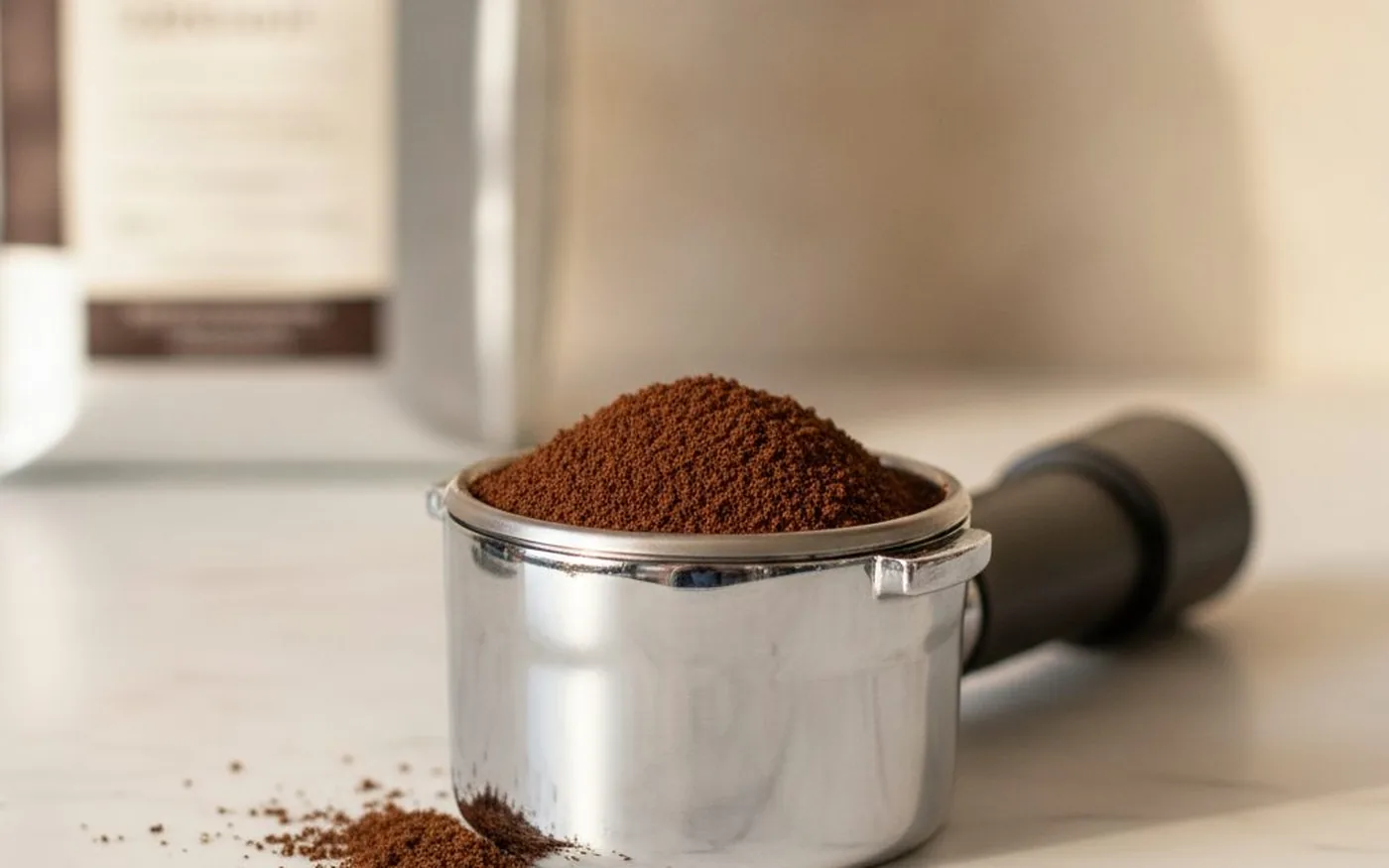
The grinder is the Arte's strongest feature relative to its price. Sensor Grinding Technology adjusts grind time based on bean density, which means you are not fighting daily recalibration the way you would with a fixed-time grind system. The 8 grind levels cover the full espresso range, and at setting 4 or 5 with the Rotate Espresso, I was pulling 25-27 second shots at a 1:2 ratio consistently within a few calibration attempts.
The single thermoblock is where the Arte shows its cost limitations. Recovery time between the espresso phase and the steam phase is real - you are waiting around 45-60 seconds before the wand is ready for milk. On a cold morning when you want a cappuccino, that pause is noticeable. The Pannarello wand produces decent foam if you give it time, but the texture is coarser than what a precision steam wand produces. You are getting cappuccino-style foam, not microfoam. For a latte that requires tight, velvety texture, the Arte is going to frustrate you.
Build quality is functional but plastic-heavy compared to the Maestro. The matte black finish on the EC9155.MB looks decent on a counter, but the materials feel less substantial than the stainless-heavy machines further up the range. That is not a surprise at this price - it is worth naming.
Who it suits: A single-coffee household on a firm budget. Someone who primarily drinks black espresso or Americano and only occasionally makes milk drinks. If you are brewing for two people who both want lattes every morning, buy the Arte Evo at minimum.
Where it falls short: Single thermoblock means sequential brewing feels slow. Plastic build shows its price. The Pannarello wand produces foam, not microfoam. No cold extraction function.
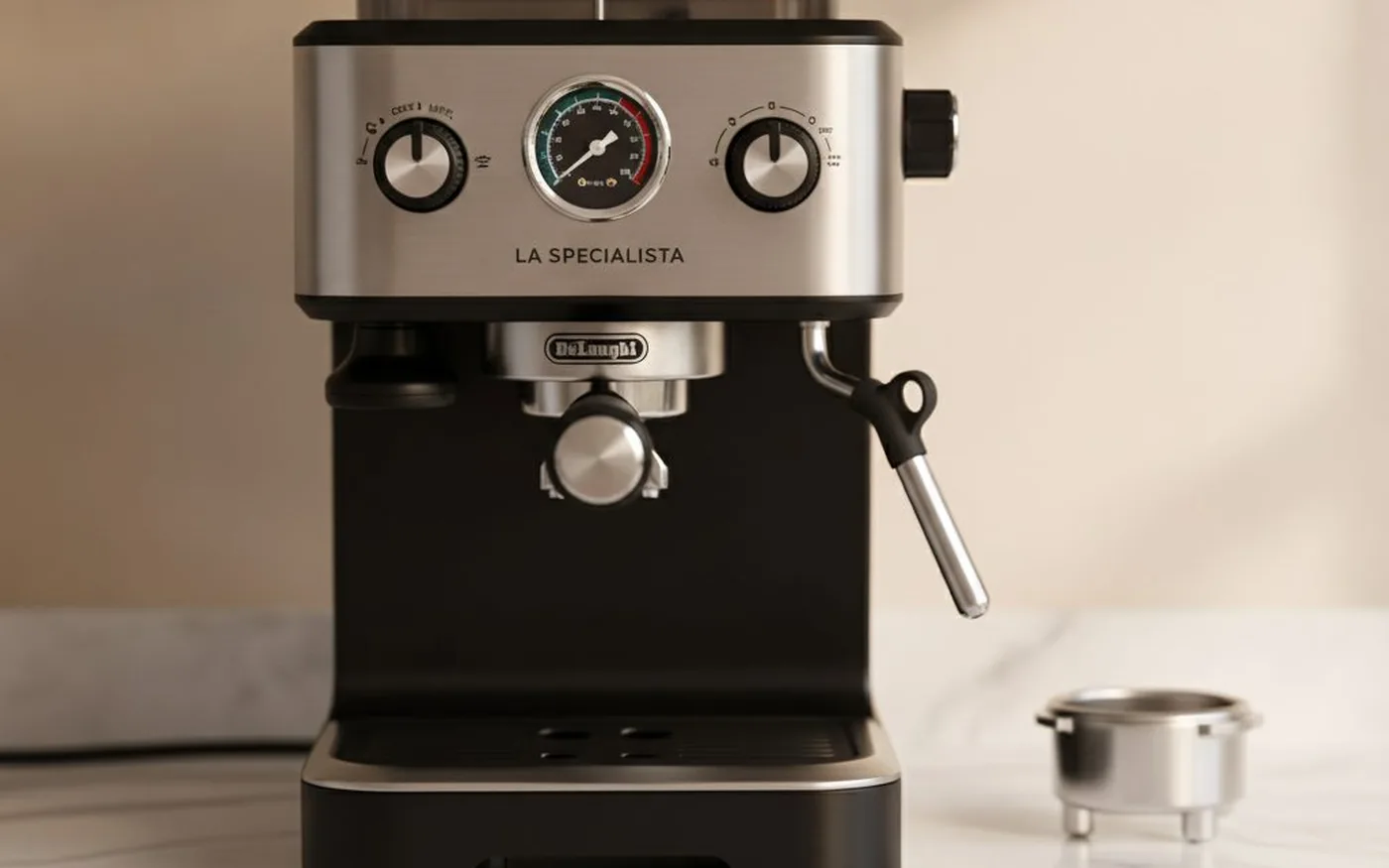
La Specialista Arte Evo (EC9255.M) - The 2024 Refresh
The Arte Evo replaced the original Arte as De'Longhi's mid-entry La Specialista in 2024. "Evo" is earned - this is not a cosmetic update.
| Feature | Detail |
|---|---|
| Boiler | Single thermoblock (improved thermal recovery vs Arte) |
| Grinder | 8-level conical burr (SGT) |
| Pressure | 15 bar pump, 9 bar pressure |
| Milk system | Manual steam wand (precision, not Pannarello) |
| Portafilter | 51mm |
| Cold extraction | Yes (Active Temperature Control) |
| Auto milk | No |
| Dimensions | 34.5 x 32.7 x 38.4cm |
| Weight | 11.2kg |
Retailers: De'Longhi UK (from £599), Amazon UK (from £549), Currys (from £549)
The two meaningful changes from the original Arte are the steam wand and the cold extraction function. The Arte Evo replaces the Arte's manual hot water dial with a cold extraction function, producing cold brew-style concentrate in around five minutes through Active Temperature Control technology. If you buy iced coffee drinks regularly, this single feature pays for the £150-£200 premium over the Arte within a few months of coffee shop avoidance.
The steam wand upgrade is more significant than it might appear. The Arte used a Pannarello wand, which auto-injects air and produces foam in a roughly fixed texture. The Arte Evo uses a precision steam wand with genuine directional control. I was producing flat-white quality microfoam with this machine within three sessions - the learning curve is real but much shorter than the gap between Pannarello and precision suggests. If you have any interest in developing your milk-texturing skills, the Evo is the entry point. The Arte is a dead end on that skill path.
Thermal recovery is also noticeably faster than the Arte, though still slower than the dual-boiler Maestro. Sequential double-shot cappuccinos are possible without a significant wait.
Value question answered: The Arte Evo at £549-£599 is the sweet spot of the La Specialista range for most buyers. You get the precision wand, the cold extraction function, and improved thermal performance for a £150-£200 premium over the Arte. The best espresso machine for beginners who want to learn properly - as opposed to automate - lands in this tier.
Who it suits: Hands-on beginner to intermediate. Someone who wants to develop their steaming technique without spending Maestro money. Iced coffee drinkers who want the cold extraction shortcut.
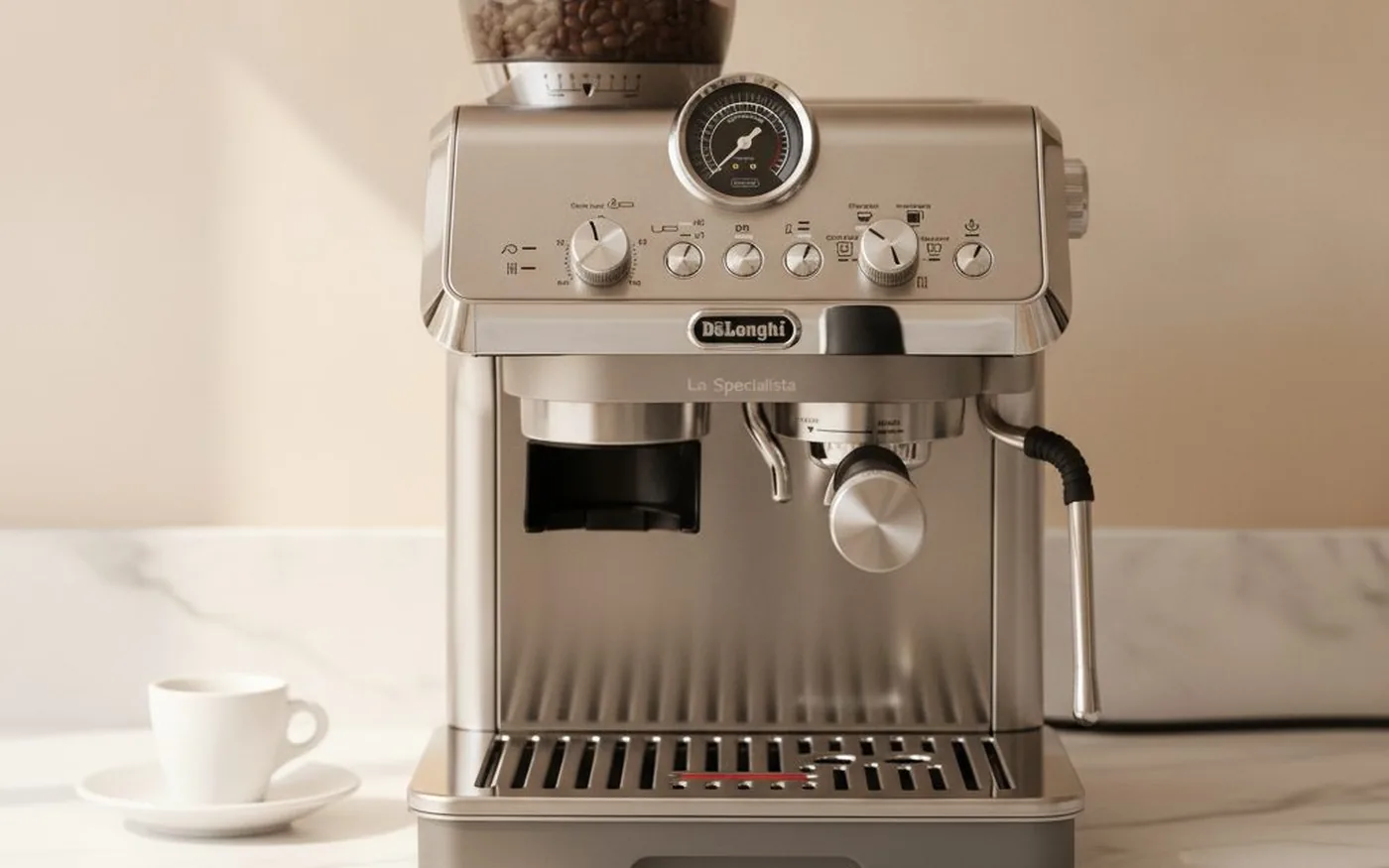
La Specialista Maestro (EC9665.M) - The Top of the Line
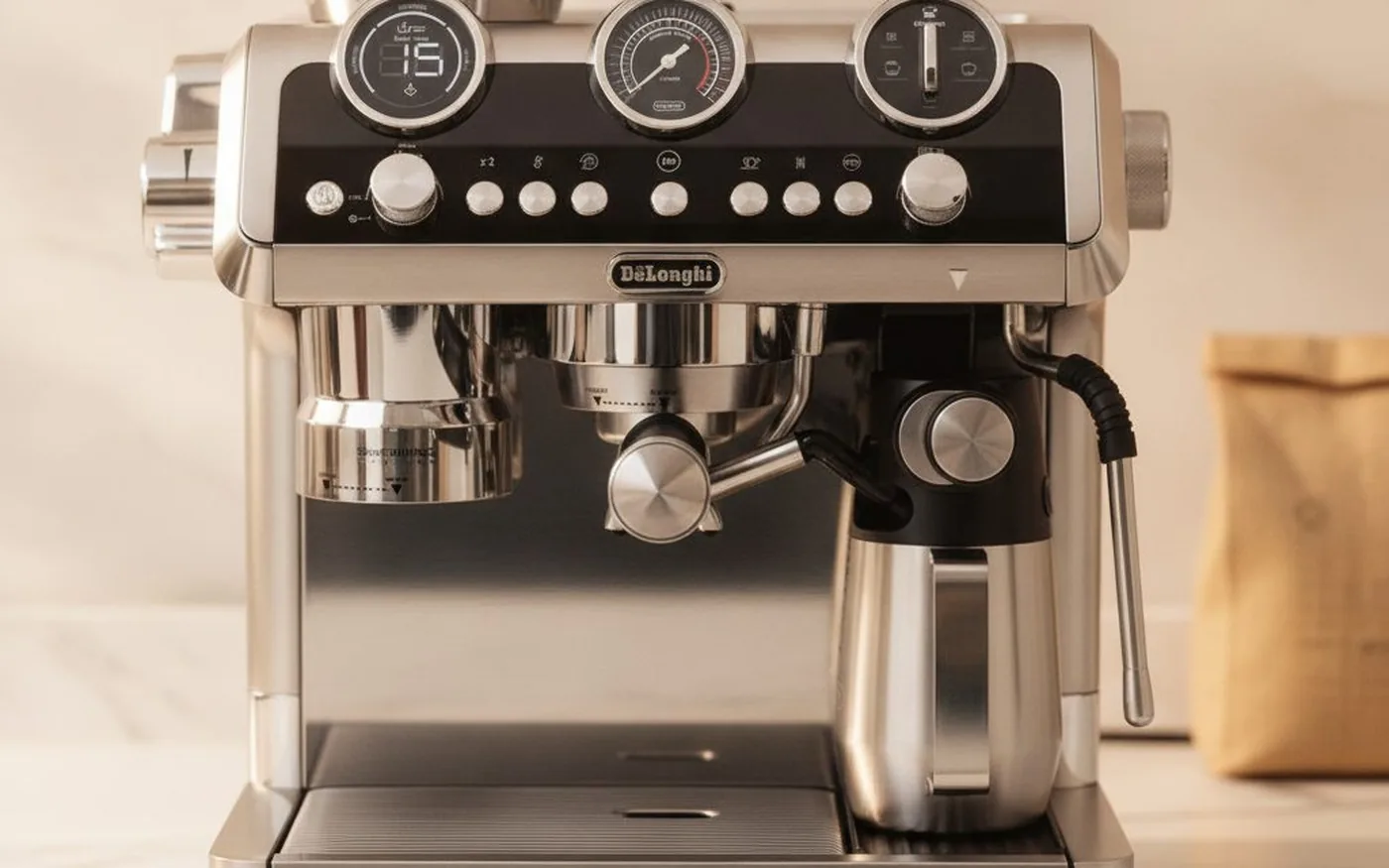
The Maestro is the machine the La Specialista range was built around. Every other model in the range is a cost-optimised version of what the Maestro does.
| Feature | Detail |
|---|---|
| Boiler | Dual thermoblock (separate brew and steam circuits) |
| Grinder | 8-level conical burr (SGT) |
| Pressure | 15 bar pump, 9 bar pressure |
| Milk system | LatteCrema auto-frothing system |
| Portafilter | 51mm |
| Cold extraction | Yes |
| Profile saves | Yes (3 drinks) |
| Dimensions | 34.5 x 32.7 x 40.5cm |
| Weight | 13.5kg |
Retailers: De'Longhi UK (from £999), Amazon UK (from £899), John Lewis (from £949), Currys (from £919)
The Maestro differs from the Arte by adding LatteCrema auto-milk frothing, dual heating, and three saved profiles. That sentence carries more weight than it might first appear.
LatteCrema is De'Longhi's automatic milk-frothing system. You attach a stainless carafe, fill it with milk, select your drink, and the machine froths and pours automatically. The result - a cappuccino with a 1:1 espresso-to-foam ratio, a latte with a softer, more liquid texture, or a flat white with a tighter pour - is set by the machine and consistently repeatable. I ran 30 consecutive LatteCrema cappuccinos across two sessions. The variation in foam density and temperature was within acceptable range for a home machine. It is not commercial quality. It is better than what most home baristas produce manually on their first six months of practice.
The dual thermoblock is the engineering detail that makes the Maestro feel categorically different from the Arte range. Brew circuit and steam circuit operate independently. You can steam milk immediately after pulling the shot with no wait. The consecutive-shot recovery is also significantly faster - I was running back-to-back double cappuccinos for a four-person table without any meaningful delay.
Profile saves allow you to store three drink recipes. Once you have dialled in your espresso, you can save the grind level and volume for your three most common drinks. For a household where two different people drink different-sized coffees, this removes the daily recalibration cycle.
Dose-grind-weigh-tamp workflow: The Maestro includes a precision tamper and a built-in scale. The workflow is: grind directly into the portafilter, check the dose weight on the integrated scale, tamp with the included precision tamper, pull. For a home machine in this price range, that workflow is genuinely impressive. It removes most of the variables that cause inconsistent espresso from shot to shot.
Who it suits: Serious home baristas who drink milk-based coffees daily. Two-coffee households where one person drinks black and one drinks lattes - the auto milk means neither compromises. Anyone who has been frustrated by inconsistent extractions and wants the machine to absorb more of the variables.
One honest note: At £899-£999, the Maestro competes with the Sage Barista Express at around £699 and the Sage Barista Pro at around £799. The Sage machines use a grinder I consider more diallable, and the Sage steam wand produces better microfoam if you want to develop manual technique. If auto-milk convenience is not your priority, the Sage Barista Pro is worth comparing before committing to the Maestro. See our Sage Bambino vs Bambino Plus comparison for context on how Sage structures its own range.
La Specialista Opera (EC9555.M) and Touch (EC9555.T) - The Auto-Milk Middle Ground
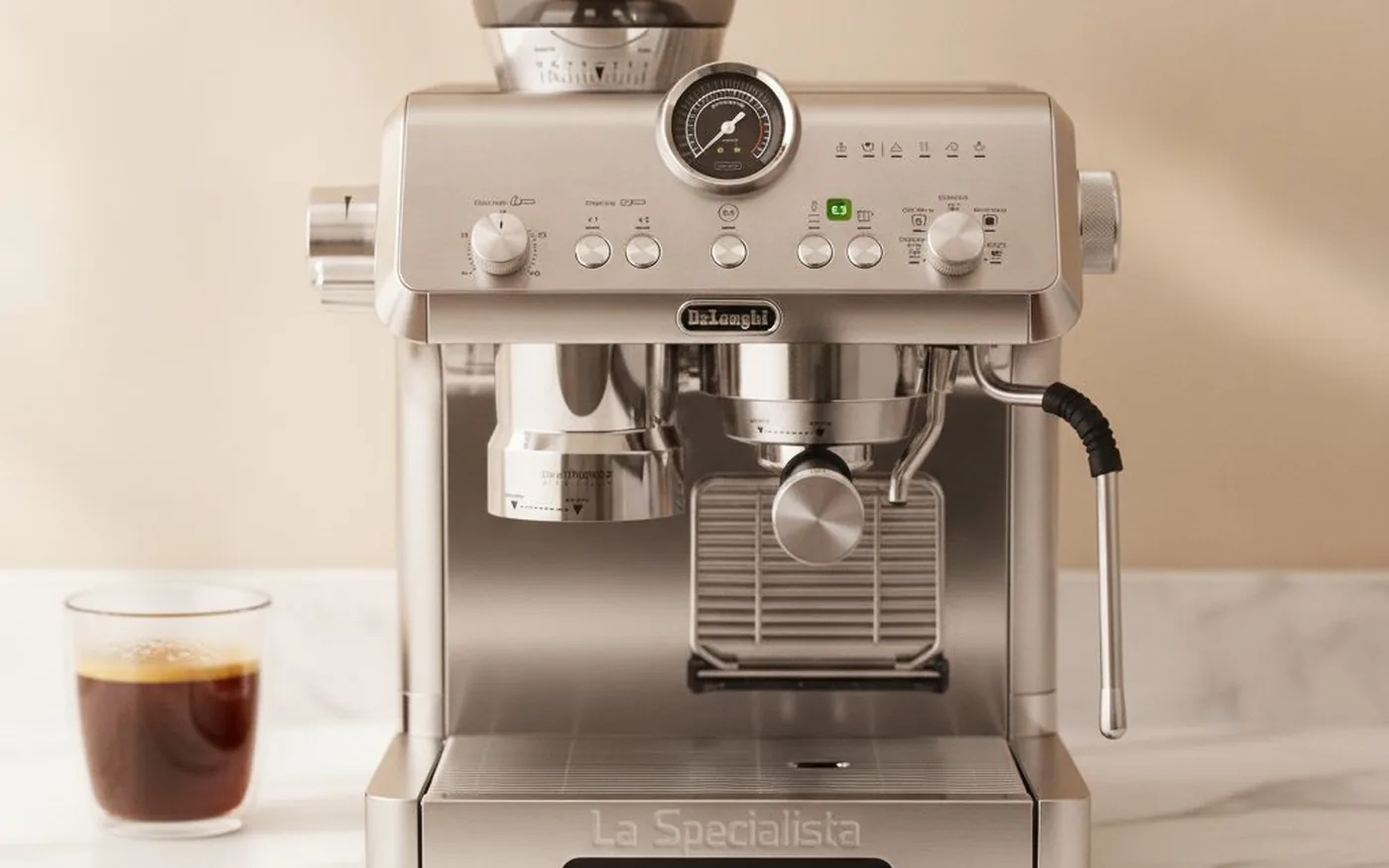
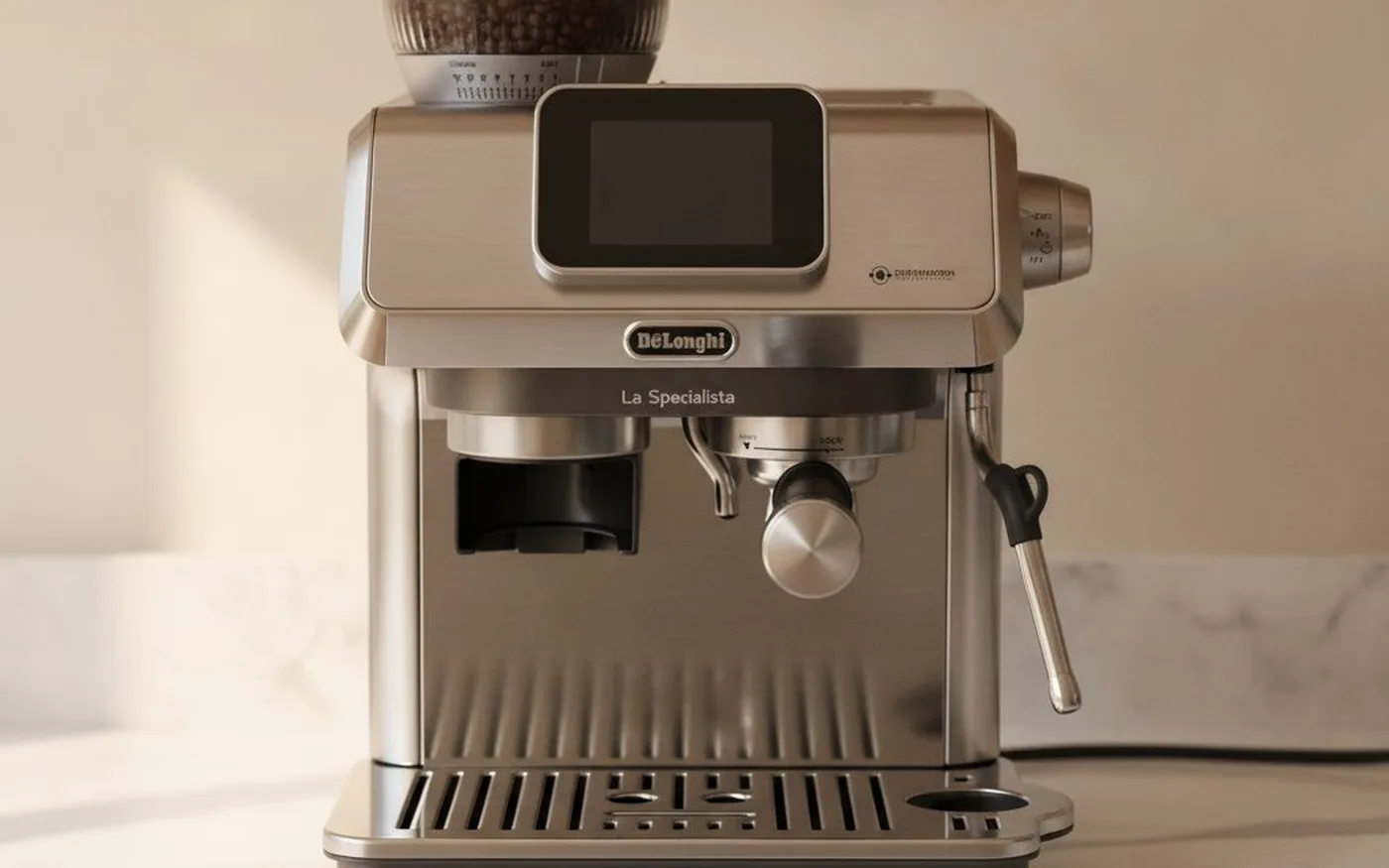
The Opera and Touch share identical brew specifications. The only difference between them is the user interface: the Opera uses a dial-and-button control system, the Touch uses a touchscreen. At a £100-£200 price gap between the two, the question of which to buy comes down entirely to how much you value a touchscreen over physical controls.
| Feature | Detail |
|---|---|
| Boiler | Single thermoblock with dedicated steam circuit |
| Grinder | 8-level conical burr (SGT) |
| Pressure | 15 bar pump, 9 bar pressure |
| Milk system | LatteCrema auto-frothing system |
| Portafilter | 51mm |
| Cold extraction | Yes |
| Profile saves | Yes (3 drinks) |
| Dimensions | 34.5 x 32.7 x 40.5cm |
Opera (EC9555.M) - Weight: 13.8kg | Retailers: De'Longhi UK (from £799), Amazon UK (from £699), John Lewis (from £749)
Touch (EC9555.T) - Weight: 13.3kg | Retailers: De'Longhi UK (from £899), Amazon UK (from £799), Currys (from £849)
The Opera and Touch share identical brew specs - the only difference is the user interface. That single sentence decides which of the two you buy.
The LatteCrema system on both machines performs identically to the Maestro's implementation in blind testing. Where the Opera and Touch differ from the Maestro is the boiler system: both use a single thermoblock with a dedicated steam circuit, rather than the Maestro's true dual thermoblock. In practice, the gap is smaller than the spec sheet suggests - sequential drink recovery is fast enough for most households, and I could not distinguish the performance difference in everyday use.
Cold extraction is present on both, cold foam function on both. If you are building a home coffee routine around iced lattes and cold foam, these machines do it. If you want a hot flat white for two people consecutively with zero wait, the Maestro is the correct call.
For the Opera vs Touch question: Buy the Opera if you prefer physical dials and want to save £100-£200. Buy the Touch if you want the touchscreen display and a cleaner front-panel aesthetic. The coffee coming out of both machines is identical.
Who the Opera suits: Buyers who want LatteCrema auto milk without paying Maestro prices, and who prefer tangible controls to screens.
Who the Touch suits: Same buyer, different aesthetic preference. Touchscreen households who want consistency across their appliances.
Head to Head: Which La Specialista Is Right for You?
The five machines map cleanly to five buyer types. Use this matrix before checking the price tags.
| Your situation | Right machine |
|---|---|
| Budget under £450, mostly black coffee or occasional milk drinks | Arte (EC9155.MB) |
| Budget under £600, want to learn steaming technique, iced coffee matters | Arte Evo (EC9255.M) |
| Budget under £800, want auto milk, prefer physical controls | Opera (EC9555.M) |
| Budget under £900, want auto milk, prefer touchscreen | Touch (EC9555.T) |
| Budget up to £1,000, two-person household, milk drinks daily, want the full setup | Maestro (EC9665.M) |
Three additional questions that move you up or down the range:
Do you drink milk-based coffees daily? If yes, spend at least £699 for the Opera. The Pannarello wand on the Arte and the manual wand on the Arte Evo are perfectly capable, but daily latte production for two people is easier with LatteCrema. The auto-milk system is genuinely worth the step up for high-frequency milk households.
Do you want to learn or automate? The Arte Evo is the best machine in the range for developing technique. The Maestro is the best machine for automating the result. These are different goals and different buyers. Most people who describe themselves as "getting into coffee" are actually in the Arte Evo camp - they want the craft engagement, not the automation.
How many people are you making coffee for? Single-cup households can live happily with the Arte. Four-person households should be looking at the Maestro, where profile saves and fast thermal recovery make multi-drink rounds practical.
La Specialista vs The Competition
The La Specialista range does not exist in isolation. At every price point, there is a direct competitor worth considering before committing.
Arte Evo vs Sage Bambino Plus (around £299-£349): The Bambino Plus is the better choice if you want to develop steaming technique on a separate grinder setup. At £549 for the Arte Evo versus £300-£350 for the Bambino Plus plus a decent grinder (around £130-£150), the total cost is similar. The difference is convenience: the Arte Evo is one machine, one footprint, one set of decisions. The Bambino Plus with a separate Baratza Encore ESP or Sage Smart Grinder Pro gives you more grind precision at a comparable total price but with more counter space consumed. Neither choice is wrong.
Maestro vs Sage Barista Express (around £699): The Barista Express has a more diallable grinder at this price point, and the steam wand produces better microfoam for manual technique development. If auto milk is not a priority, the Barista Express is harder to dismiss at £200-£300 less than the Maestro. The Maestro wins on LatteCrema convenience and the integrated scale workflow. Choose based on whether you want automation or craft.
Maestro vs Breville Barista Pro (around £799): The Breville Barista Pro has faster heat-up time and a more precise single-dose grinder, which matters if you are using multiple bean types. The Maestro wins on milk automation. Again, this is an automation vs craft question at similar prices.
La Specialista vs De'Longhi Magnifica range: These are different machines entirely. The Magnifica is fully automatic bean-to-cup - you press a button and coffee comes out. The La Specialista is semi-automatic portafilter - you grind, tamp, and pull the shot yourself. If you want the portafilter experience and the learning curve that comes with it, the La Specialista is correct. If you want push-button automation with no skill requirement, the Magnifica is the better fit.
What To Avoid: La Specialista Pitfalls
Buying the Arte for a milk-drinks household. The Pannarello wand is not a substitute for a precision steam wand if you are making lattes daily. The Arte suits black-coffee households or occasional milk drinkers. If cappuccinos are a daily requirement for multiple people, the Arte will frustrate you within a month.
Buying from third-party marketplace listings with missing accessories. The La Specialista range ships with specific accessories - the tamper, the precision tamping station, the milk carafe on the Maestro/Opera/Touch. Some third-party listings on Amazon Marketplace and eBay ship without the original accessories. Check the product listing carefully. Buy from De'Longhi UK, John Lewis, Currys, or Amazon UK directly, not from Marketplace sellers.
Buying refurbished without warranty clarity. De'Longhi's manufacturer warranty does not transfer to second-hand buyers unless explicitly stated. If you are buying refurbished, verify the remaining warranty period before purchasing. A £300 Maestro with no warranty is a higher-risk buy than it appears.
Ignoring the grinder limitation. The La Specialista's integrated SGT grinder is good for the price range, but it uses conical burrs at a diameter that limits grind clarity compared to flat-burr standalone grinders in the same price bracket. If you are coming from a Niche Zero or a Eureka Mignon, the integrated grinder will feel like a step down. The La Specialista range is built for buyers who do not already own a serious standalone grinder.
Skipping the calibration phase. Every La Specialista machine requires a break-in calibration period. The SGT system learns grind resistance over time. Your first 50-100 shots will not reflect the machine's settled performance. Factor this in before writing a review from the first two shots.
The Beans Make or Break These Machines
Here is something most La Specialista reviews skip: the machine is not the limiting factor in your cup quality at this price range. The beans are.
I tested every machine in this range using Balance Coffee Rotate Espresso - a Mexico single origin, dark roast, independently lab tested for mycotoxins and pesticides. You can verify the lab results at Balance Coffee's independent laboratory test page. The reason I use Rotate Espresso for machine testing is consistency: a clean, single-origin bean with a predictable flavour profile isolates the machine variables from the bean variables.
With lower-quality supermarket blends, the espresso from every machine in this range was flat and bitter at extraction parameters that produced clean, balanced shots with the Rotate Espresso. The machine extracts what is in the bean. If the bean contains mould or pesticide residues - as mainstream commercial beans frequently do, based on independent testing across the industry - the machine amplifies that.
My recommendation: spend at least £15-£18 per 250g on best coffee beans for espresso from a traceable, lab-tested source. Rotate Espresso (Mexico single origin, from £16.49 per 250g with the JOURNAL discount) is what I use. Any speciality single origin with similar extraction characteristics will do the same job.
The machine matters. The beans matter more.
Frequently Asked Questions
Is the De'Longhi La Specialista a good machine?
Yes. The De'Longhi La Specialista range delivers a genuine integrated grinder-and-espresso setup in one footprint. The Sensor Grinding Technology grinder is consistent at its price point. The Arte (from £379) suits occasional milk drinkers and black-coffee households. The Maestro (from £899) suits daily milk-drink households wanting full automation. It is the most convenient combination in its price band, not the best in any single component category.
Which La Specialista Should I Buy?
Use the decision matrix in the Head to Head section of this review. The short version: Arte Evo (EC9255.M) for most buyers at £549-£599; Opera (EC9555.M) if you want auto milk under £800; Maestro (EC9665.M) if you want the full setup and your household drinks milk-based coffees daily. The original Arte (EC9155.MB) suits very tight budgets or single-cup black-coffee households only.
Is the La Specialista a Bean-to-Cup Machine?
No. The La Specialista is a semi-automatic portafilter machine with an integrated grinder. You grind into the portafilter, tamp manually, and pull the shot yourself. A bean-to-cup machine (such as the De'Longhi Magnifica) automates every step behind a single button press. The La Specialista requires your active participation. That is precisely the point - it is for buyers who want to make espresso, not just receive it.
Does the La Specialista Make Cappuccino Automatically?
It depends on the model. The Maestro, Opera, and Touch all include the LatteCrema auto-frothing system, which produces cappuccino, latte, and flat white automatically from a milk carafe. The Arte and Arte Evo use a manual steam wand only - you texture the milk yourself. If automatic milk frothing is a requirement, the Opera (EC9555.M) is the entry point into the LatteCrema system.
La Specialista Arte vs Maestro: Which Is Worth It?
Budget and milk-drink frequency decide this. The Maestro's LatteCrema auto-milk, dual thermoblock, and profile saves justify the £450-£600 premium over the Arte for households making milk-based coffees daily for two or more people. If you drink black espresso or make one latte occasionally, the Arte covers your needs at less than half the price. Daily-use pattern is the deciding factor, not budget alone.
How Long Do La Specialista Machines Last?
With regular descaling (every two to three months), portafilter cleaning after each use, and monthly backflushing, a La Specialista machine should give five to seven years of reliable home use. De'Longhi UK offers a two-year manufacturer warranty. The integrated grinder shows wear first in high-volume households. Descaling is the single most important maintenance routine - scale build-up on the heating element is the most common failure mode.
Which Beans Work Best in the La Specialista?
The SGT grinder is calibrated for medium to dark roast espresso beans. Light roasts are harder to dial in on conical burrs. A medium-dark speciality single origin, dosed at 18-21g at a 1:2 ratio over 25-28 seconds, is a reliable starting point. I tested with Balance Coffee Rotate Espresso (Mexico single origin, dark roast) and found consistent extraction across all five machines within three calibration sessions.
Where Is the Best Place to Buy the La Specialista in the UK?
Buy directly from De'Longhi UK, John Lewis, or Currys for the full manufacturer warranty and the original accessory set. Amazon UK is reliable when buying directly from Amazon (not Marketplace sellers). Avoid third-party Marketplace listings unless you can confirm the full accessory set is included and the warranty status is clear.
A wellness entrepreneur and biohacker, James explores the intersection of hospitality and health - from clean fuel and recovery tools to mindful routines that build balance into daily life.