Decaf Coffee Statistics UK 2026

Coffee & Wellness Writer
UK decaf coffee market size, adoption rates, and growth forecasts - from the founder who launched his own decaf range. Updated May 2026.
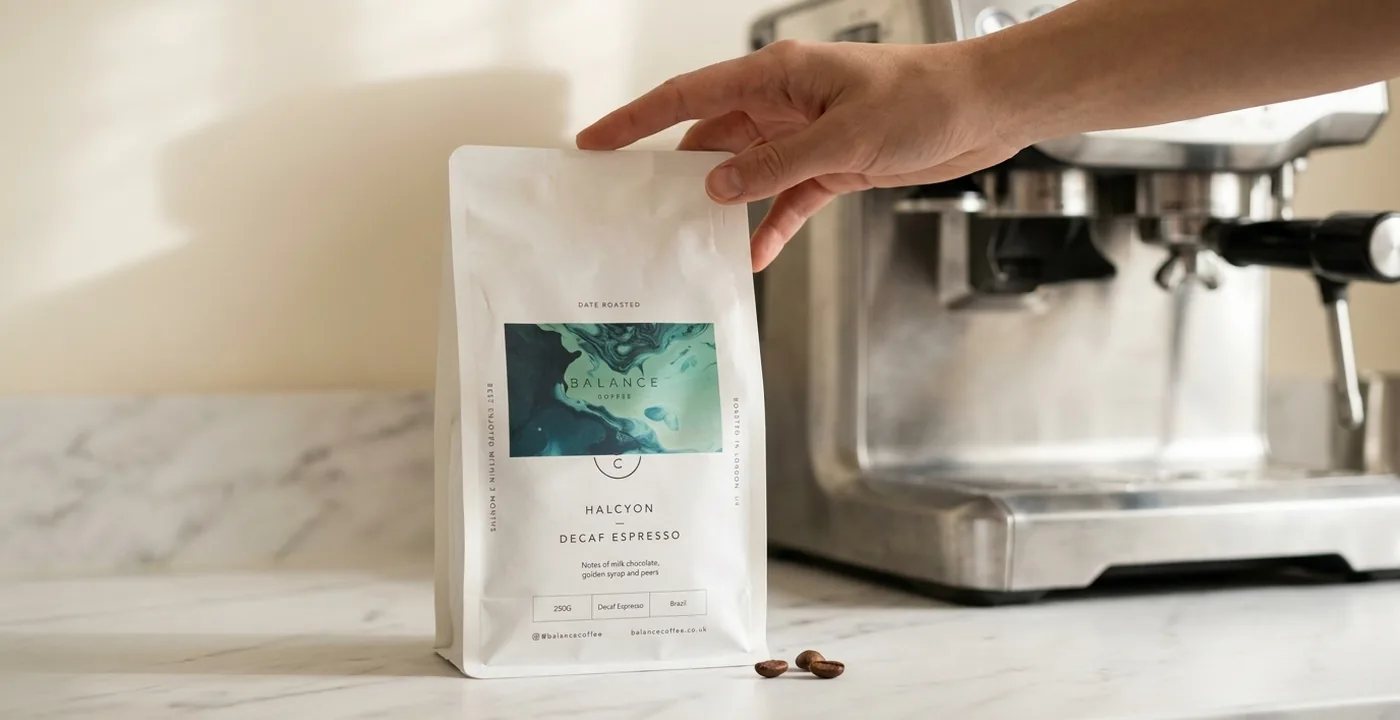
Table of Contents
Some of the links in this article are affiliate links, which help fund our independent review work at no extra cost to you. Every recommendation is based on hands-on testing through The Editor Lab methodology. No brand pays to appear, and no placement is guaranteed.
Updated May 2026. This page aggregates publicly available UK decaf coffee statistics and global market data - market size, consumer trends, and growth forecasts - for journalists, researchers, and coffee industry professionals. Statistics cover the period 2013-2026 where data is available. For product recommendations, see our guide to the best decaf coffee beans in the UK.
As the founder of Balance Coffee, which produces its own decaf range, I have tracked the UK decaf market closely since 2020.
“The UK decaf data tells a story the mainstream press has largely missed - on adoption rates, demographics, and consumer motivations. This page puts all of it in one place.”
9 Verified UK Statistics
- 1
1 in 5 UK coffee drinkers now regularly opts for decaf
a proportion that has grown consistently since Mintel first tracked the category
British Coffee Association, citing Mintel, 2021 ↗ Source
- 2
26% of Brits increased their decaf coffee intake in the 12 months to December 2025
the highest annual adoption rate on record
Censuswide / Nespresso Professional, 2025 ↗ Source
- 3
62% of Brits avoid regular coffee in the afternoon and evening
driving structural demand for decaf as the natural all-day coffee choice
Lavazza research, 2025 ↗ Source
- 4
UK decaf coffee sales rose 45% year-on-year to 2025
the fastest growth rate of any UK coffee category
Lavazza research, 2025 ↗ Source
- 5
41% of UK consumers are willing to pay a premium for quality decaf
a signal that the category is premiumising, not commoditising
Censuswide / Nespresso Professional, 2025 ↗ Source
- 6
51% of UK coffee drinkers believe decaf is better for their wellbeing
health perception is the primary switch trigger
Lavazza research, 2025 ↗ Source
- 7
The global decaf market reached USD 3.18 billion in 2025
growing at 6.7% CAGR through 2033, with a forecast value of USD 5.22 billion by 2033
Grand View Research, 2025 ↗ Source
- 8
The UK roasted decaf market is worth approximately £37M
with imports growing at 1.9% per year in volume terms since 2013
IndexBox, 2024 ↗ Source
- 9
46% of global consumers want to drink less caffeine
the macro tailwind behind UK decaf growth
Euromonitor International, 2024
UK Decaf Coffee Market Size and Growth
The UK's roasted decaffeinated coffee market was valued at approximately $47M (roughly £37M) in 2024, according to IndexBox trade data. That figure is projected to reach $55M (approximately £43M) by 2035 - a compound annual growth rate of 1.6% in value terms.
Volume growth is slower, at 0.9% CAGR over the same period. The gap between value growth and volume growth is the premiumisation signal: the UK is importing less decaf by weight but paying significantly more per kilogram.
Import data tells the clearest story. UK decaf coffee imports grew at 1.9% per year in volume terms between 2013 and 2024 - outpacing overall coffee import growth for the same period. In 2024, the UK imported 3.3K tons of roasted decaffeinated coffee at a value of $46M, with Italy (1,000 tons), Ireland (616 tons), and Switzerland (565 tons) as the dominant suppliers. Average import prices reached $14,022 per ton in 2024, up 6.3% year-on-year.
Placing the UK inside the global picture: Europe accounted for 37.7% of global decaf revenue in 2024, making it the world's largest decaf market by region, according to Grand View Research. Globally, the decaffeinated coffee market was valued at USD 3.18 billion in 2025 and is projected to reach USD 5.22 billion by 2033 at a CAGR of 6.7% (Grand View Research, data as of 2025).
One nuance worth naming: domestic UK decaf production declined to 899 tons in 2024, down 2.4% year-on-year (IndexBox, 2024). The UK is primarily an importing market, not a producing one. Growth is happening in imports, not domestic manufacturing.
UK Decaf Coffee Consumer Behaviour
Three numbers define the UK decaf drinker in 2026.
1 in 5 UK coffee drinkers now regularly opts for decaf, according to Mintel data cited by the British Coffee Association - a figure that has grown consistently for more than a decade. More recently, a Censuswide survey of 2,000 UK consumers commissioned by Nespresso Professional found that 26% of Brits increased their decaf intake in the 12 months to December 2025. Nine per cent reported a significant increase; 17% a slight one.
Avoidance behaviour drives the demand. 62% of British adults avoid regular coffee in the afternoon and evening, according to Lavazza research published in 2025. That daily avoidance creates a structural gap - a period when people want to drink coffee but not the caffeine that comes with it. Decaf fills it.
That same research found 25% of British coffee drinkers now actively seek decaf alternatives, and 51% believe decaf is better for their wellbeing. Quality perception remains the category's main friction point: 32% of consumers still view decaf as inferior in taste, and 46% assume it tastes worse before they have tried a quality product.
Premiumisation is accelerating. 41% of UK consumers are now willing to pay more for quality decaf (Censuswide / Nespresso Professional, 2025).
| UK Decaf Trade Metric | 2024 Figure | Source |
|---|---|---|
| Import volume | 3.3K tons | IndexBox, 2024 |
| Top supplier by volume | Italy (1,000 tons) | IndexBox, 2024 |
| Average import price per ton | $14,022 | IndexBox, 2024 |
| Year-on-year price growth | +6.3% | IndexBox, 2024 |
| Projected market value (2035) | $55M (approx. £43M) | IndexBox, 2024 |
| Import Volume CAGR (2013-2024) | 1.9% per year | IndexBox, 2024 |
| Domestic production 2024 | 899 tons (-2.4% YoY) | IndexBox, 2024 |
UK Decaf Coffee Industry Landscape
The UK decaf market runs almost entirely on imported product. Domestic production stood at 899 tons in 2024 - less than a third of the 3.3K tons imported the same year (IndexBox, 2024). European specialty roasters, particularly in Italy, Ireland, and Switzerland, dominate UK supply.
How coffee is decaffeinated is increasingly a purchasing decision for UK consumers. Four processes are in active use:
Methylene chloride (traditional solvent process). Approved at low residue levels by UK and EU food safety regulators. Facing increasing scrutiny as the ultra-processed food conversation reaches coffee, with some consumers seeking solvent-free alternatives.
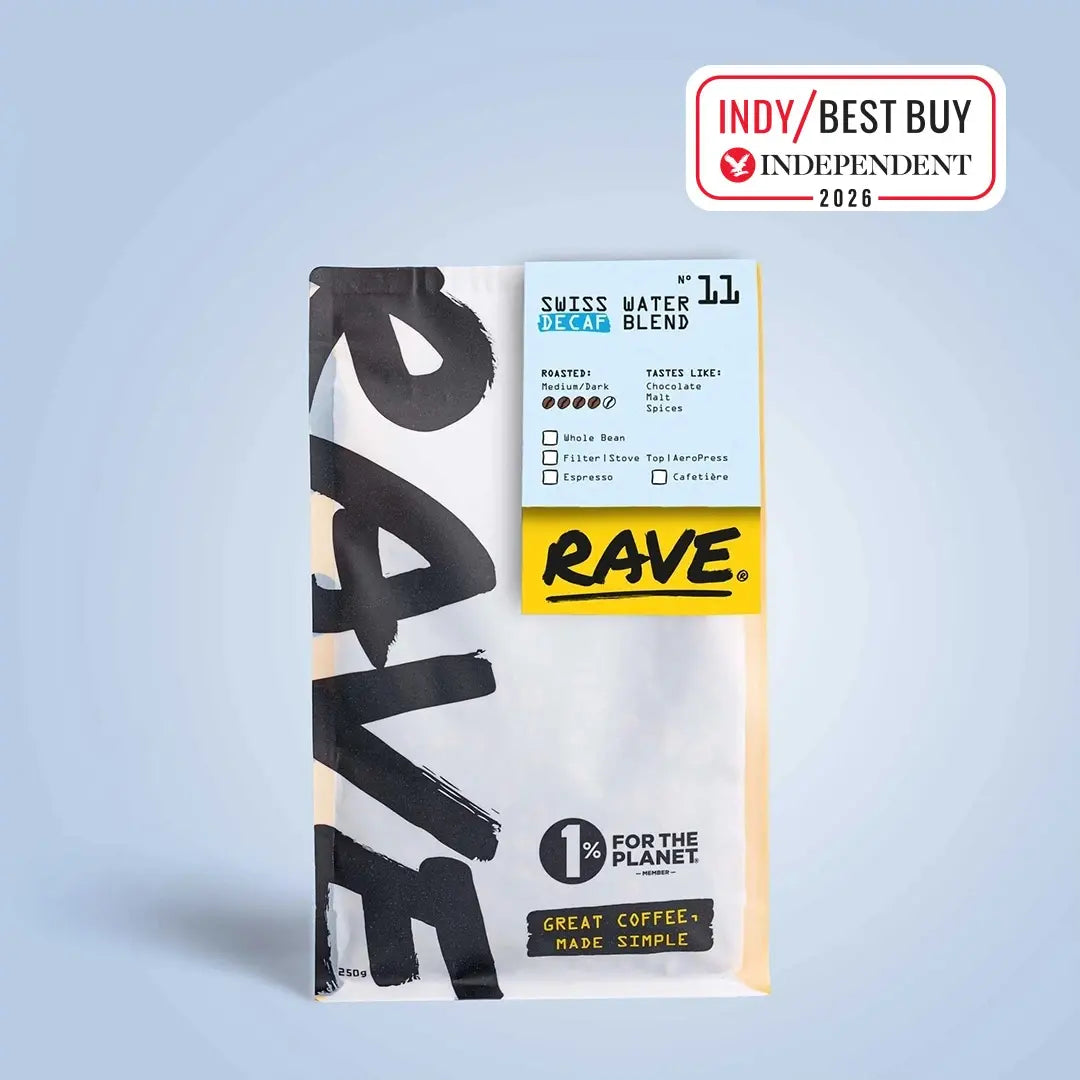
Swiss Water Process. Chemical-solvent-free, using water and a carbon filter to remove caffeine. Increasingly standard among UK specialty roasters seeking organic certification compatibility. Rave Coffee (Cambridge) uses this process across its full decaf range.
Sugarcane EA (ethyl acetate). Ethyl acetate is a naturally occurring compound derived from sugarcane fermentation. This process has moved from nothing to a standard option in UK specialty coffee over the past three years - driven by natural origin claims and perceived taste advantages. Balance Coffee's Halcyon Decaf (Guatemala) uses this process; Balance Coffee is the parent brand of Balance Journal.
CO2 extraction. The premium end of decaffeination. Still rare in UK market due to the cost and infrastructure required.
Retail channels reflect the bifurcation of the category. Mass-market decaf runs through grocery retailers (Lavazza, Taylors of Harrogate, Douwe Egberts). Specialty decaf has its own growing lane: direct-to-consumer subscriptions and independent roasters, where the decaffeination method is often the lead marketing message. The quality gap between these two ends of the market has widened significantly since 2020 - which helps explain why 46% of regular coffee drinkers report difficulty finding quality decaf. They are often looking in the wrong channel.
UK Decaf Coffee Trends and Forecasts
Three macro forces are driving UK decaf growth in 2026 and beyond.
Wellness and sleep optimisation. 46% of global consumers want to reduce their caffeine intake, according to Euromonitor International's Voice of the Consumer: Consumer Health report (2024). This is a targeted dietary adjustment made by people who have connected caffeine to particular health outcomes - not a general wellness trend.
All-day coffee culture. 62% of Brits avoid caffeinated coffee in the afternoon. That number describes the structural demand gap decaf was built to fill - it has just taken the market this long to produce quality products worth switching to.
Forecast data is consistent across independent sources. IndexBox projects the UK roasted decaf market to reach $55M by 2035. Inkwood Research forecasts the broader UK decaffeinated products market at a CAGR of 7.72% through 2024-2032. Grand View Research projects the global market to reach USD 5.22 billion by 2033 (data as of 2025).
Premiumisation reinforces these forecasts. Average UK decaf import prices rose 6.3% in 2024, reaching $14,022 per ton (IndexBox, 2024). Volume is growing at 0.9% CAGR. Value is growing at 1.6% CAGR. The market is moving toward fewer, better decaf products at higher price points - which creates margin opportunity for specialty brands disproportionate to their volume share.
Frequently Asked Questions
Is decaf coffee becoming more popular in the UK?
Is there a downside to decaffeinated coffee?
Why are people switching to decaf coffee in the UK?
Which decaf coffee does not use chemicals in the UK?
Does the NHS recommend decaf coffee?
What is the UK decaf coffee market worth?
Which countries supply the most decaf coffee to the UK?
What percentage of UK consumers are willing to pay more for quality decaf?
What is the global decaf coffee market forecast?
How many UK coffee drinkers say decaf is better for their wellbeing?
Methodology and Sources
This page aggregates publicly available UK and global decaf coffee data from free-access trade datasets, market research preview pages, and published consumer surveys. Data covers the period 2013-2026 where available.
Data gaps (declared):
Mintel's full UK Coffee Market report is the most frequently cited source for the '1 in 5' consumer figure. Only the headline statistic is publicly available; segment breakdowns, demographic crosstabs, and trend lines are paywalled. This figure dates from 2021 and may have changed.
IndexBox data covers 'roasted decaffeinated coffee' as a trade and production category, not total retail decaf sales. Total UK retail decaf value - including instant, ready-to-drink, and cafe consumption - will be higher than the IndexBox figure reported here.
DEFRA Family Food Statistics do not break out decaf as a separate household purchase category. UK household-level decaf spend data is not publicly available.
Lavazza and Nespresso Professional consumer surveys are proprietary research. Full methodology (quotas, sampling method, question wording) has not been publicly disclosed. Reported figures represent published headlines from press releases.
Euromonitor International's '46% of global consumers want to reduce caffeine intake' figure is from the Voice of the Consumer: Consumer Health 2024 report. This is a paywalled dataset with no public preview available for this specific statistic.
Last updated: May 2026. This page is reviewed and updated annually.
- British Coffee Association - Decaf Coffee Under the Spotlight
- IndexBox - UK Roasted Decaffeinated Coffee Market Overview 2024
- Grand View Research - Decaffeinated Coffee Market (free preview)
- Dr Wakefield - Future Trends in Decaf, January 2026
- Perfect Daily Grind - Why the Demand for Decaf is Growing, April 2025
- Retail Times / Nespresso Professional / Censuswide survey, December 2025
- Grocery Trader - The Decaf Revolution, February 2025
- Euromonitor International - Voice of the Consumer: Consumer Health, 2024 (paywalled)
- Mintel UK Coffee Market Report (paywalled - headline figure publicly cited by BCA)
- Inkwood Research - UK Decaffeinated Products Market Forecast 2024-2032 (preview)
- PubMed - Decaffeinated coffee consumption and cancer risk, 2025
- Northumbria Healthcare NHS - Decaf by Default
A wellness entrepreneur and biohacker, James explores the intersection of hospitality and health - from clean fuel and recovery tools to mindful routines that build balance into daily life.