Clifton Coffee Review: Tried, Tested, Honest Verdict
Bristol's quiet achiever. Clifton doesn't chase trends or Instagram. The coffee is better for it.
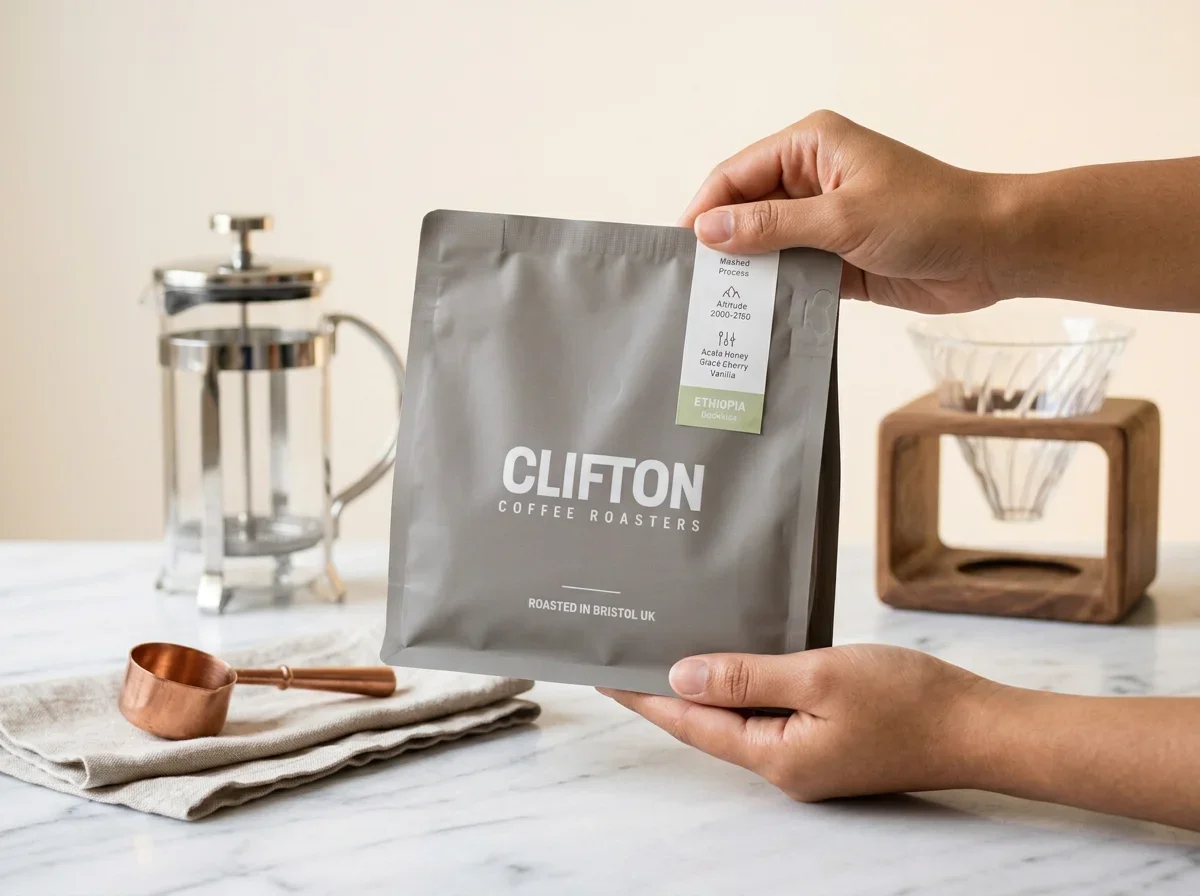
Table of Contents
Some of the links in this article are affiliate links, which help fund our independent review work at no extra cost to you. Every recommendation is based on hands-on testing through The Editor Lab methodology. No brand pays to appear, and no placement is guaranteed.
I first tasted Clifton Coffee at a trade event in 2022, standing at a cramped cupping table behind Bristol Temple Meads. Someone had set out six bowls of a washed Ethiopian, and the room smelled like a florist's shop. I broke the crust, leaned in, and got a hit of jasmine so clean it stopped me mid-conversation. The guy pouring was Josh Clarke, Clifton's Head of Coffee and the UK's number one Cup Tasters Champion. He didn't pitch the coffee. He just asked what I tasted and nodded when I said lemon blossom. That quiet confidence runs through everything this roaster does.
Clifton Coffee: Competition Pedigree in the Cup
In our roundup of the best coffee beans in the UK, Clifton Coffee earned the twelfth spot for Best Competition-Grade. Their beans are built for people who care about extraction yields, brew ratios, and dialling in every variable. But a listicle only captures a snapshot. This review goes deeper into the roasting, the range, and whether Clifton's technical pedigree translates into something you'll actually enjoy drinking on a Tuesday morning.
The Brand Story
Clifton Coffee Roasters was founded by James Fisher in 2001, starting life not as a roaster but as an espresso machine servicing company for Bristol's independent cafes. Hands-on, unglamorous work that teaches you what actually goes wrong in coffee shops every day. Over the following decade, Fisher brought Ed Buston, Emma Russe, and Miles Lenthall into the team and shifted toward wholesale supply.
The real pivot came in 2013, when Clifton invested in an in-house production roastery to take full control of sourcing and roasting. That decision changed their trajectory. Today, they supply Michelin-starred restaurants, five-star hotels, and some of the best independent cafes in the country.
What separates Clifton from most UK roasters is education. Their Bristol facility holds SCA Premier Training Campus status, one of a small number of UK sites certified to deliver the full range of Speciality Coffee Association courses. They employ two accredited Q-Graders, Joshua Clarke and Jimmy Dimitrov, trained to evaluate coffee at the highest sensory level. Clarke won the 2019 UK Cup Tasters Championship and placed third at the World Cup Tasters Championship in Berlin, scoring 7 out of 8 in five minutes and 43 seconds. That's the kind of palate shaping your morning coffee. The company also holds B Corp certification, putting ethical standards alongside sensory ones.
How We Tested
We put three Clifton coffees through a structured tasting over eight days in February 2026. Equipment included a Hario V60, an AeroPress, and a Sage Barista Pro for espresso. Each coffee was tasted black first, then with oat milk. Our three-person panel scored blind across five categories: aroma, flavour clarity, body, finish, and overall balance. Full details on our scoring process are available on The Editor Lab™ methodology page.
Taste & Quality
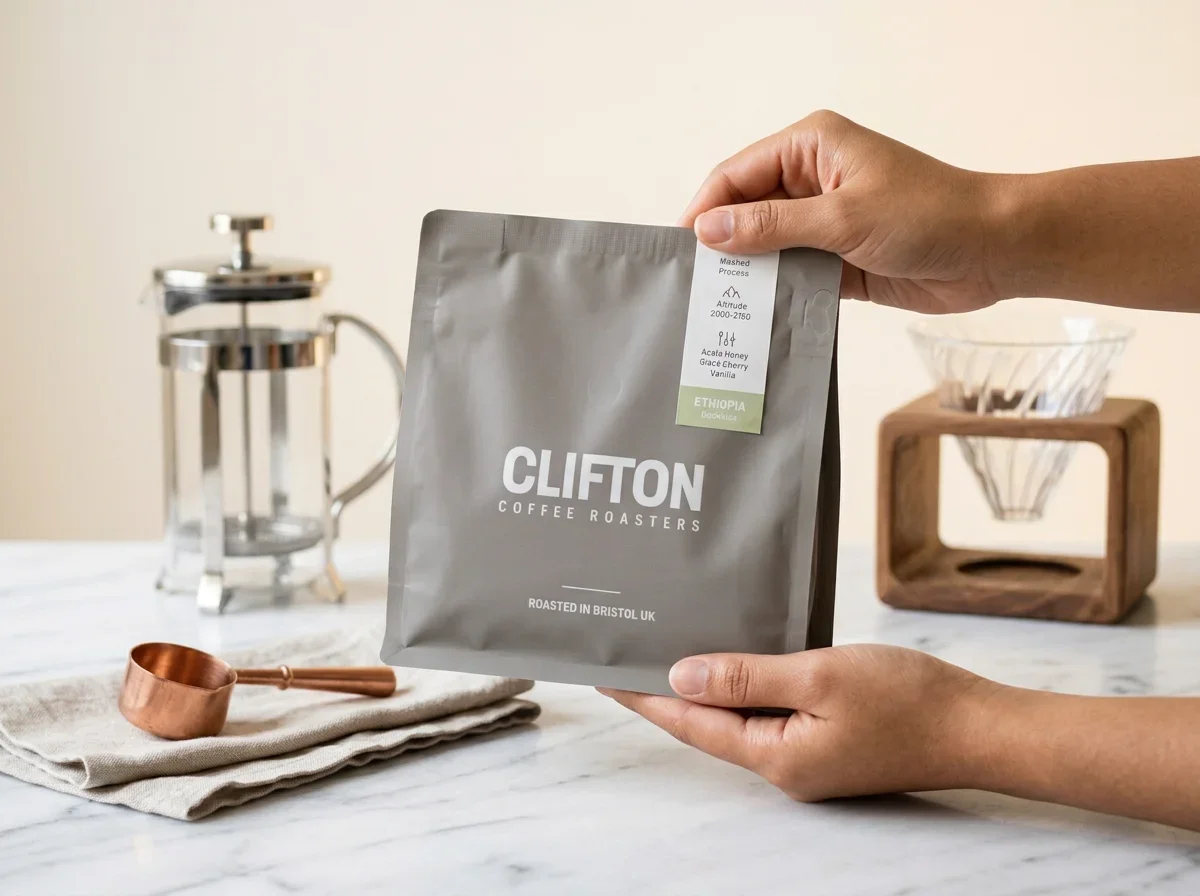
The Ethiopia Duwancho was the standout. Brewed on the V60 at a 1:16 ratio with water at 94 degrees, the dry grounds released a scent of dried jasmine and raw honey. The first sip was startling. A bright lemon-lime acidity cut across the front of the palate, precise and sharp, before giving way to layers of ripe plum sweetness and a floral top note that lingered without turning cloying. What struck me most was the clarity. Each flavour occupied its own space, distinct and readable, like someone had separated the mix into individual tracks. One of our tasters wrote "surgical" in her notes. It's an odd word for coffee, but it fits. This is the competition-grade precision Clifton is known for.
Through the AeroPress, the Duwancho shifted. The jasmine condensed into something thicker and more honeyed, the acidity softened to stone fruit, and the body gained a silky weight that the V60 didn't reveal. As espresso, it pulled a light crema and delivered a punchy, almost tea-like shot with bright citrus and a dry, tannic finish. Not built for milk drinks, this one.
The Kenya Ngunguini PB offered a different character altogether. Blackcurrant and grapefruit on the nose, a juicy, full body, and a long finish that swung between brown sugar and something almost savoury. It made a far better espresso than the Ethiopian, holding its own with a dash of oat milk.
We also tested the Burundi CAFEX, a cleaner, more restrained cup. Gentle citrus, cocoa, a smooth finish. A solid daily drinker that doesn't demand your full attention at 7am.
What We Liked
Sensory clarity that's hard to find elsewhere. If you've ever drunk speciality coffee and struggled to taste the tasting notes on the bag, Clifton will change that. The roast profiles are dialled to separate flavours rather than blend them. It's genuinely educational to drink.
The training campus connection. Knowing that Q-Graders and competition-level cuppers are the ones profiling each roast gives you real confidence in consistency. This isn't guesswork. It's calibrated.
A focused, curated range. Instead of launching 20 new coffees a month, Clifton keeps a tight rotation of single origins alongside their house coffees. Every bag we tried felt intentional, like it had been selected for a reason rather than to fill a shelf.
Grind options and subscription savings. Bags ship as wholebean, espresso, filter, or cafetiere grind, and the 20% subscription discount brings prices down meaningfully.
What Could Be Better
The range leans heavily toward lighter, more complex roast profiles, which is deliberate but does narrow the audience. If you want a rich, chocolatey espresso blend for flat whites, Clifton's lineup doesn't really cater for that. Their house options exist but don't carry the same punch as the single origins. You'll likely need a second roaster alongside them for daily espresso.
The website is functional but sparse. Product pages carry minimal tasting notes and almost no brewing guidance. For a roaster with an SCA training campus and two Q-Graders on staff, there's a missed opportunity to share more of that expertise with retail customers online.
Value for Money
Single origins range from £10.50 to £15.00 for 250g, with 1kg bags offering better per-gram value. That puts Clifton in the same bracket as Origin Coffee and Square Mile Coffee, competitive for the quality tier. Their speciality instant sachets start at £9.00 for six, which is premium but reasonable for travel or the office.
The 20% subscription discount is generous. Applied to a 250g bag of the Kenya at £10.50, that drops to £8.40, putting competition-grade coffee in line with high-street speciality pricing. Given the calibre of the roasting, that's strong value.
The Verdict
Clifton Coffee is built for the technically minded drinker. If you own a refractometer, if you log your brew ratios, if you've ever argued about water chemistry, this is your roaster. The Duwancho alone justifies the reputation. That level of flavour clarity, jasmine, lemon-lime, plum, each note separated and readable, is exceptional in UK speciality coffee.
It's not the right fit for everyone. If you want bold espresso blends, a wider product range, or a warmer brand experience, you'll find better matches at Pact Coffee or Kiss the HippoBut for roasting precision, palate development, and coffee that rewards attention, Clifton is one of the finest in the country. Bristol should be proud of this one.
For more Bristol-based recommendations, see our guide to the best coffee roasters in Bristol.

A wellness entrepreneur and biohacker, James explores the intersection of hospitality and health - from clean fuel and recovery tools to mindful routines that build balance into daily life.
Where Clifton Gets Featured
| Article | Ranking | Best For |
|---|---|---|
| Best Coffee Roasters Uk | #8 | Best for Education and Training |