Bonsoy Milk Review: Ingredients, Taste & Verdict (UK)
The best soya milk for espresso, with a 2010 iodine history that still needs a straight answer.
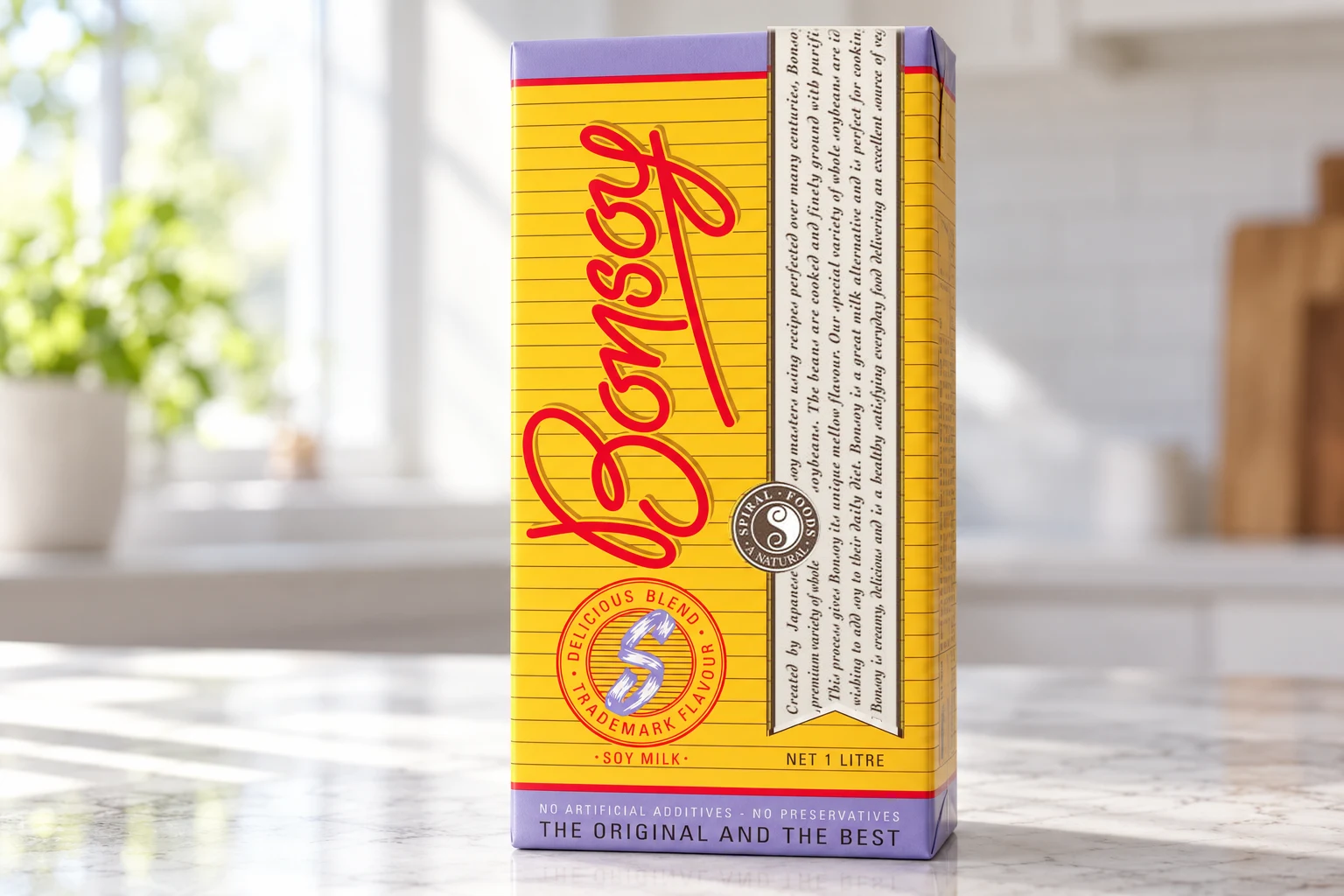
Table of Contents
Some of the links in this article are affiliate links, which help fund our independent review work at no extra cost to you. Every recommendation is based on hands-on testing through The Editor Lab methodology. No brand pays to appear, and no placement is guaranteed.
Bonsoy is the best-performing soya milk for espresso in the UK - and the most scrutinised, given the 2010 iodine incident that preceded a AU$25 million class action settlement.
Two questions follow Bonsoy everywhere. Is it safe to drink, given the 2010 iodine incident that led to a court settlement and product reformulation? And is it actually worth the price - typically three to six times more per litre than supermarket soya - for home barista use?
Both questions deserve specific, sourced answers. Bonsoy’s own website does not discuss the iodine reformulation. Retailer product pages do not address it either. This review does.
I reviewed Bonsoy as part of Balance Journal’s Editor Lab process, verified the current UK ingredient panel directly against the Planet Organic product page in July 2026, and cross-referenced the iodine history against the original Medical Journal of Australia case study and the 2015 Guardian settlement reporting. What follows is an honest account of what the current UK product is, what coffee drinkers report about how it performs, and what the history means for a buyer in 2026.
“Bonsoy required one additional step - verifying the current formulation is categorically different from the one implicated in the 2010 cases.”Clemmie Rose, Registered Nutritional Therapist, BANT
As a registered Nutritional Therapist with BANT membership and clinical experience at The Wellness Clinic at Harrods, advising clients on dairy-free switches - including those with thyroid conditions and those who are pregnant - is a question I encounter regularly. This review reflects the same evidence standard I apply to those conversations.
Quick Verdict
Bonsoy is the best-performing soya milk for espresso and steamed-milk drinks currently available in the UK. Coffee forum users consistently report that it froths without splitting, holds texture through a latte pour, and does not carry the beany aftertaste that makes budget supermarket soya a poor match for espresso. The price is genuinely high - around £3.20 to £3.89 per litre depending on retailer - and the value judgement depends entirely on whether barista-quality froth performance matters to you.
On the iodine history: the product reformulated in 2010 is not the product on UK shelves today. The kombu (seaweed) ingredient responsible for the clinically documented iodine toxicity was removed from the recipe in 2010 and has not appeared on the current UK ingredient panel. I have verified this directly against the Planet Organic ingredient panel (July 2026). The mechanism, timeline, and current status are covered in full below - the short version is that the 2010 incident involved a pre-reformulation product and a specific ingredient that no longer appears in the UK formulation.
Buy it if: You want the best soya milk available in the UK for coffee and you are willing to pay the premium for consistent froth performance.
Consider alternatives if: You are looking for an unsweetened soya option (Bonsoy’s UK range does not include an unsweetened soy milk SKU), or the price per litre is not justifiable for everyday use.
Ingredients and What’s Actually in It
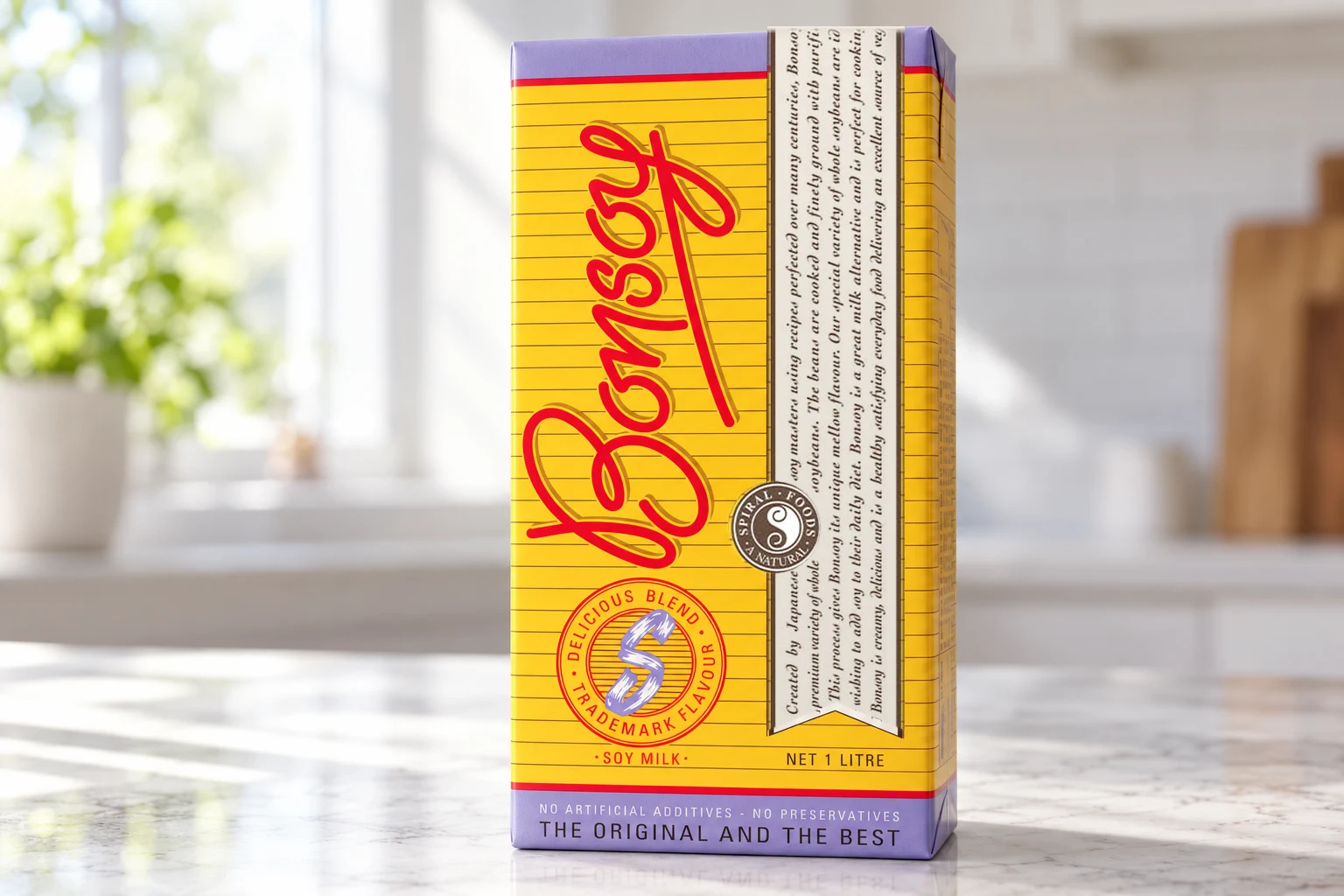
The current UK Bonsoy Soya Milk ingredient panel, verified against the Planet Organic product page in July 2026, is: Water; Soybeans (15%); Tapioca Syrup; Sea Salt; Job’s Tears/Hatomugi (Japanese Barley); Calcium Carbonate.
That is six ingredients. There are no added oils, no seed-oil derivatives, and no lengthy stabiliser list. The soybean content at 15% is notably higher than most budget supermarket soya milks, which commonly sit at 8% to 12%. Higher whole-soybean content is one of the reasons Bonsoy performs differently in espresso - more protein and fat from the bean itself creates a more stable emulsion when heated.
Job’s Tears / Hatomugi is worth explaining, because it is unusual. Job’s Tears is a cereal grain cultivated across East Asia, known in Japanese food as Hatomugi. In Bonsoy’s formulation it functions as both a flavour agent and a texture contributor, adding a mild malty sweetness that distinguishes the taste profile from standard soya. It replaced the kombu (seaweed) ingredient removed in 2010, which is covered in the next section.
Tapioca syrup is the sweetener. Bonsoy’s UK soy milk is sweetened - not with cane sugar or refined sugar, but via tapioca syrup derived from cassava root. This results in a lower glycaemic sweetness than cane sugar. There is no separate unsweetened soy milk SKU in Bonsoy’s current UK range - the unsweetened Bonsoy product is an Oat Milk, a different product entirely. Searches for ‘bonsoy milk unsweetened’ are common, but there is no matching soy milk product. Buyers specifically wanting unsweetened soya will need to look elsewhere - Alpro Unsweetened Soya is the most widely available UK option.
Calcium Carbonate is the sole confirmed fortificant on the current ingredient panel. No vitamin D or vitamin B12 fortification was listed on the UK retailer pages reviewed in July 2026. Buyers using Bonsoy as a primary dairy replacement should check their overall dietary calcium sources, as a single fortified milk is not sufficient calcium coverage for most adults without dietary variety.
Unlike Oatly, Koko, or Rude Health, Bonsoy sells one soy milk formulation in the UK - marketed on-pack and via Amazon as ‘Barista-Quality’. There is no separate ‘standard versus barista’ SKU. A buyer does not need to choose between variants; the one product covers both everyday drinking and espresso steaming use.
The Iodine Question: What Changed Since 2010
This question deserves a complete and specific answer, not vague reassurance.
Bonsoy’s original Australian formulation, sold approximately 2004 to 2009, contained kombu - a type of brown seaweed used traditionally in Japanese and macrobiotic cooking for its umami properties. Kombu has naturally high and variable iodine content. In Bonsoy’s original formulation, this resulted in dangerously high and fluctuating iodine levels in the product.
The clinical consequences were documented in a 2010 case study published in the Medical Journal of Australia: iodine toxicity and serious thyroid dysfunction in consumers who had been using Bonsoy as a primary milk replacement over an extended period. Cases included neonatal thyroid dysfunction linked to maternal consumption. The cause was not soy itself - it was the kombu ingredient delivering iodine at levels far exceeding safe dietary thresholds.
Manufacturer Spiral Foods withdrew the product and reformulated the recipe in 2010, removing kombu from the formula. A class action followed in Australia; in 2015, the Supreme Court of Victoria approved a settlement of AU$25 million, as reported by The Guardian.
The current UK ingredient panel, verified via Planet Organic in July 2026, does not list kombu or seaweed. The flavour and texture function previously served by kombu is now performed by Job’s Tears / Hatomugi, which does not carry the same iodine risk. The reformulated product has been on UK shelves since 2010.
One important qualification: the specific iodine content of the current UK product is not stated on the retailer pages I reviewed. The British Dietetic Association notes that not all plant milks are iodine-fortified, and iodine status matters particularly in pregnancy and for those with thyroid conditions. Readers in either category should check the current on-pack nutritional panel directly - not this article - for the specific figure, and discuss it with their GP or midwife. I am not in a position to state a precise iodine value from retailer page data alone.
Nutrition and Fortification
The per-100ml nutrition figures, sourced from the Planet Organic product page (verified July 2026), are as follows:
| Nutrient | Per 100ml |
|---|---|
| Energy | approximately 52 kcal |
| Protein | approximately 3.3g |
| Fat | approximately 2.0g |
| Carbohydrate (of which sugars) | approximately 4.9g |
| Salt | approximately 0.07g |
| Calcium (from Calcium Carbonate) | stated on pack |
The protein content of approximately 3.3g per 100ml is meaningfully higher than most almond, oat, or coconut milk alternatives. This reflects the 15% whole-soybean content - soya is the only plant milk that provides a protein-per-litre comparable to semi-skimmed cow’s milk (approximately 3.5g per 100ml for dairy). For buyers choosing an alternative milk partly for protein contribution, soya and specifically Bonsoy soy milk is the most protein-dense category option.
The single confirmed fortificant is Calcium Carbonate. At time of writing, no vitamin D or vitamin B12 fortification was verifiable from UK retailer ingredient panels. Alpro and Oatly both fortify with vitamin D and B12 as standard; Bonsoy does not confirm these in the ingredient list checked. Buyers relying on their alternative milk for B12 (relevant for those eating a plant-based diet) should source B12 from other dietary sources or supplements, not from Bonsoy alone.
The tapioca syrup sweetening results in approximately 4.9g of carbohydrate per 100ml, of which sugars are derived from the tapioca source. This is higher carbohydrate than unsweetened soya alternatives and comparable to standard oat milk in terms of carbohydrate content, though the glycaemic properties of tapioca syrup differ from refined sugar.
Taste and Texture
On the label, the Job’s Tears grain component gives Bonsoy a mild malty sweetness, and whole soybeans rather than soy protein isolate are what keep it less beany than budget supermarket soya.
Because it is sweetened with tapioca syrup, expect that sweetness to show when hot, which may be too present for someone using it in a lightly roasted filter coffee without sugar. This is not a neutral milk in the same way that unsweetened soya is.
One reported texture issue worth naming: several reviewers on ProductReview.com.au (users Andi and Mayra R.) note that the carton requires vigorous shaking before use and that the milk can develop a watery or lumpy consistency toward the end of a carton, particularly in tea. This was reported by more than one reviewer and is worth flagging as a genuine, if not universal, texture inconsistency. There is no resealable cap on the 1L carton format; once opened, it should be refrigerated and used within the standard shelf-life window for refrigerated plant milks.
Performance in Coffee and Hot Drinks
Does Bonsoy’s ‘barista-quality’ labelling hold up in a real home espresso setup? Coffee forum users who have tried it say yes: it steams without the splitting that makes standard supermarket soya frustrating for home baristas.
Because the milk is already sweetened, Bonsoy does not need added sugar in a flat white, and its malty sweetness suits a medium-roast espresso better than a lighter roast.
In tea, its malty note suits Assam or a strong breakfast blend better than a delicate green or white tea, where neutrality is preferred.
For anyone who wants to avoid the barista milk category confusion: Bonsoy sells a single UK formulation pre-optimised for barista use. Unlike Oatly or Koko, there is no separate ‘Original versus Barista’ SKU to choose between. The one product covers both steaming and everyday drinking use.
Readers building a home espresso setup should consider the best coffee beans UK alongside their milk choice.
Price and Where to Buy in the UK
Bonsoy is available from the following UK retailers at prices verified in July 2026:
| Retailer | Format | Price per litre | Notes |
|---|---|---|---|
| Planet Organic | 1L carton | £3.89 (reduced from £4.29) | In-store and online |
| Ocado | 1L carton | £3.20-£3.89 | Price varies by promotion |
| Dolphin Fitness | 6 x 1L case | Price per litre lower in bulk | Health food distributor |
| Amazon.co.uk | 6 x 1L case (ASIN B01065NK5U) | Check current listing | Amazon Associates |
For comparison, Alpro Unsweetened Soya retails at approximately £1.40 to £1.60 per litre in major supermarkets. Own-brand supermarket soya starts from around £0.60 per litre. Bonsoy costs roughly three to six times more per litre depending on which option it is compared against.
CoffeeSnobs forum users who have tested both consistently frame Bonsoy’s price as justified specifically for espresso and steaming use - "awesome...if you can afford it" was a recurring summary from users in that community. For everyday cold pouring on cereal or into tea, the premium is harder to justify against a competent fortified soya alternative. The performance case rests on espresso use; the value calculation depends on use case.
Pairs Well With
Balance Coffee’s Aurora Single Origin has tropical fruit, toffee, and caramel notes in the cup. Bonsoy’s malty Job’s-Tears sweetness complements those notes without a heavier roast overpowering the milk’s subtle flavour - in a flat white, the caramel in the coffee should align with the tapioca-derived sweetness in the milk.
Balance Coffee, founded in 2020, is our sister roastery - we mention products we would genuinely pair with what we are reviewing, not because of a paid placement. If you want to test Bonsoy in the best possible condition for a home flat white, Aurora is the pairing we would suggest. Balance Journal readers get 20% off via Balance Coffee’s Aurora Single Origin.
Frequently Asked Questions
What is the Bonsoy milk lawsuit?
In 2010, Australian health authorities identified unsafe iodine levels in Bonsoy soy milk caused by a kombu (seaweed) ingredient used in the formula from approximately 2004 to 2009. Consumers who had used Bonsoy as a primary milk replacement over extended periods developed clinically documented thyroid dysfunction. Manufacturer Spiral Foods reformulated the product, removing kombu. A class action followed; in 2015, the Supreme Court of Victoria approved a settlement of AU$25 million. The current UK formulation does not contain kombu.
What is the Bonsoy scandal?
The ‘scandal’ refers to the same 2010 to 2015 series of events. Kombu added to Bonsoy’s original formulation for flavour and umami properties caused dangerously high and fluctuating iodine levels in the product. The Medical Journal of Australia documented thyroid dysfunction in consumers, including neonatal cases linked to maternal consumption during the period the original formulation was sold. The mechanism was kombu (seaweed), not soy itself. Spiral Foods removed kombu from the recipe in 2010, and the product’s current UK ingredient panel reflects this reformulation.
Is Bonsoy milk good for you?
The current UK formulation contains whole organic soybeans (15%), calcium carbonate as a fortification source, and tapioca syrup for gentle sweetness rather than refined sugar. It provides approximately 3.3g of protein per 100ml - the highest protein density of any common alternative-milk category. The calcium fortification supports bone health as part of a varied diet. No vitamin D or B12 fortification was confirmed on the UK ingredient panel reviewed in July 2026. As with any plant milk, it is one component of a broader dietary picture, not a nutritionally complete dairy substitute on its own.
Where is Bonsoy milk from?
Bonsoy is an Australian brand, established in 1983 and made by Spiral Foods. The recipe was developed using a Japanese-influenced production process and includes Job’s Tears / Hatomugi, a cereal grain common in Japanese food. Current UK stock is imported and distributed via Community Foods, a specialist natural and organic food distributor. The product is manufactured in Japan.
Why does Bonsoy taste so good?
The taste advantage comes from three formulation decisions: whole organic soybeans at 15% (rather than the soy protein isolate or powder used in cheaper brands), Job’s Tears / Hatomugi adding a malty, sweet grain note absent from most soya milks, and tapioca syrup as a sweetener producing a gentler, lower-glycaemic sweetness than refined cane sugar. Coffee forum users describe the combined effect as fuller and less beany than most budget alternatives.
Why is Bonsoy so good for coffee?
Bonsoy’s coffee performance comes from its whole-soybean content and the absence of seed oils or emulsifiers that are added to less premium soya milks to simulate creaminess. The natural protein and fat from 15% whole soybeans creates a more stable emulsion when heated, which is why it steams without splitting - the primary failure mode that makes standard supermarket soya frustrating for espresso use. The barista-quality labelling on the UK product is earned by the formulation, not a marketing claim.
What is the best soy milk in the UK?
For coffee and espresso steaming use, Bonsoy is the strongest performer among UK-available soy milks at the time of this review. Coffee forum users report that it froths without splitting, holds texture through a latte pour, and lacks the beany aftertaste of budget soya. For everyday use, cost-sensitive buyers, or those needing vitamin D and B12 fortification, Alpro is more widely available and competitively priced. For a full comparison across the soy-milk category, see our guide to the best soy milk for coffee (publishing soon).
Is Bonsoy safe to drink if I’m pregnant or have a thyroid condition?
The current UK formulation, verified via Planet Organic in July 2026, does not contain kombu or seaweed - the ingredient responsible for the clinically documented iodine toxicity in the pre-2010 cases. Job’s Tears / Hatomugi has replaced it as the flavour agent. However, the specific iodine content per 100ml of the current UK product was not stated on the retailer pages reviewed in July 2026. The British Dietetic Association notes that not all plant milks are iodine-fortified. Readers who are pregnant or have a thyroid condition should check the current on-pack nutritional panel directly for the iodine figure and discuss this with their GP or midwife rather than relying on this article for a specific value.
A registered Nutritional Therapist and member of BANT, Clemmie blends science with a holistic approach to wellbeing.