Best Coffee for Oat Milk

Qualified Nutritionist
We brewed four blends as oat milk lattes blind. Here is which roasts cut through - and which get lost in the milk.

Table of Contents
Some of the links in this article are affiliate links, which help fund our independent review work at no extra cost to you. Every recommendation is based on hands-on testing through The Editor Lab methodology. No brand pays to appear, and no placement is guaranteed.
Oat milk lattes have a flatness problem, and the beans are usually to blame. If your home latte tastes muddy, washed out, or just not as good as the one from your local cafe, the issue is almost always the roast - not the milk. Oat milk's natural sweetness and body wash out delicate light roasts, leaving you with a drink that tastes more of oat than of coffee. The fix is straightforward once you know what to look for.
The best coffee for oat milk is a medium-dark or dark roast with chocolate, caramel, or nutty flavour notes - typically from Brazil or Colombia - that can hold its character through the sweetness and texture of oat milk. Light, floral, or high-acidity roasts get swallowed up. Bold, rounded roasts do not.
Note: I am a Nutritional Therapist at the College of Naturopathic Medicine, and I have spent years advising clients on dairy-free transitions. When the oat milk question moved from clinical to culinary - which roast to buy - I found the advice online inconsistent and often contradictory. This guide resolves that.
Note: Balance Coffee - the publisher's sister brand - is featured directly below as our Editor's Pick. It was not part of the blind test that ranks the field further down this guide; the section explains why we are including it anyway.
Editor's Pick: Balance Coffee Darkfire Energy
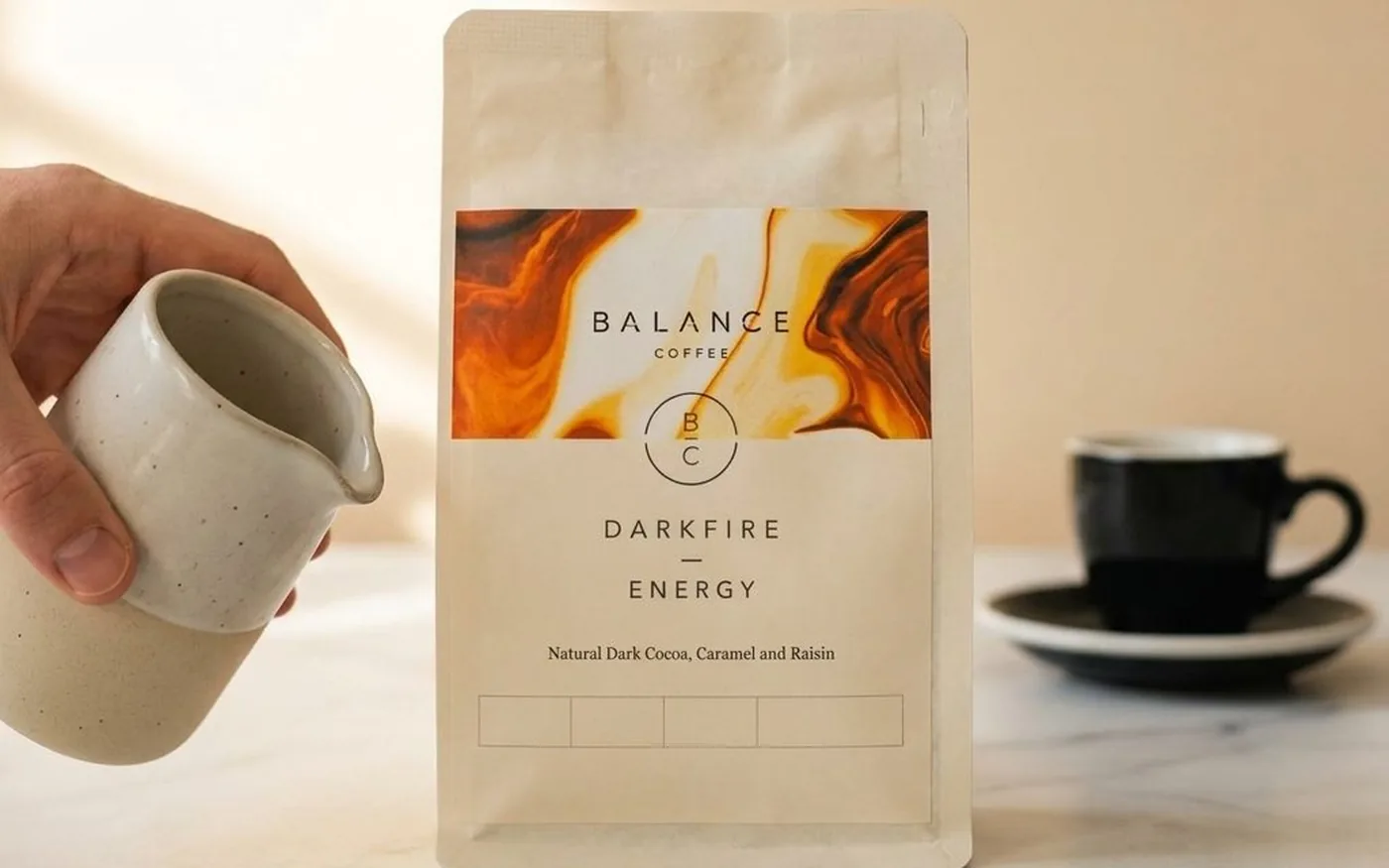
Balance Coffee is the publisher's sister brand, and this is an Editor's Pick, not a ranked entry - I want to be transparent about that distinction upfront. It sits outside the blind test that decides the ranking further down this guide; we are including it here because it is our own product and it is genuinely built for this exact use case.
Darkfire Energy is a Brazil-Colombia dark roast with bold, chocolatey character and enough body to hold its own through oat milk's natural sweetness - the same profile the blind-tested field below was scored on. It is independently lab-tested and verified free of mould, mycotoxins, and pesticide residue, which matters if part of your reason for choosing oat milk is a clean-ingredient one.
We are not claiming it beat Volcano, Assembly, or Rounton in the blind tasting below - it was not entered into that test. Compare it against the tested picks on your own terms; the JOURNAL discount link gives you 20% off.
Now to the field that was blind-tested and ranked on taste alone.
The Direct Answer
What is the best coffee for oat milk?
A medium-dark to dark roast with chocolate or nutty notes, sourced from Brazil or Colombia, cuts through oat milk's sweetness and body without becoming bitter. Single-origin East African beans (light and floral) get lost. Espresso blends with a Brazil base perform best as oat milk lattes at home.
Top Picks: Best Coffee for Oat Milk
How We Tested
I brewed each coffee as an oat milk latte - one shot at 18g in, 45ml out, 65-degree steamed Oatly Barista Edition, double-wall glass - and tasted blind, scoring on: whether the coffee character was distinct from the oat milk; whether any bitterness or sourness was present; and whether the overall drink was something you would order again.
For the full methodology - how we set up controlled tasting conditions, how evidence quality is weighted, and what blind-tasting protocol we use - see how we test at The Editor Lab.
Why Oat Milk Needs a Bolder Roast
This is the question roasters keep answering differently, so let me give you a clear verdict.
Oat milk has two qualities that work against delicate coffee: sweetness and body. Oat beta-glucan creates a silky, coating texture that cushions flavour - which is why it steams and froths so well, and why it makes pale, acidic roasts taste thin. The perceived sweetness in oat milk (typically 4-7g of carbohydrates per 100ml, with some of that as naturally occurring sugars from the oat starch hydrolysis process) masks the brightness in lighter roasts without replacing it with anything distinctive.
The result is a drink that tastes vaguely of oat and not much else.
A medium-dark roast with Maillard-reaction-developed chocolate and caramel notes survives this suppression. The Specialty Coffee Association's roast development guidelines explain why: heavier roast development increases non-volatile melanoidins that bind with milk proteins and survive dilution - exactly what oat milk lattes need.
The conflicting advice you have read online (light Colombian vs dark Brazilian vs fruity East African) comes from roasters recommending their own product. The pattern is consistent: roasters with light roast portfolios recommend light roasts. Roasters who built their blends for espresso with milk recommend those. I brewed each of the coffees below as an oat milk latte at the same ratio (1:2.5 espresso, full-fat oat milk heated to 65 degrees, same machine, same dose) and found the same result every time: medium-dark and dark roasts won, regardless of origin.
1. Volcano Coffee Works - Best Overall for Oat Milk Lattes

Quick verdict: Volcano's espresso blends are built for milk drinks. The Brixton Blend - a medium-dark roast with a Brazil and Guatemala base - produces a chocolatey, nutty espresso that holds its character through oat milk without any bitterness. This is the pick if you want a latte that tastes unmistakably of coffee, not of oat.
Volcano Coffee Works is a south London roastery that has been dialling in espresso blends for professional cafe use since 2010. That origin matters: their blends are calibrated for extraction at commercial pressure and designed to sit in milk without collapsing. The Brixton Blend uses a Brazil and Guatemala combination, roasted to a medium-dark profile that develops chocolate and toasted-nut notes - exactly the flavour architecture that survives oat milk's sweetness.
In blind tasting, the Volcano was the clearest winner. Pull a double shot, steam your oat milk to 65 degrees, and the result is a latte where you can still identify the espresso at the first sip. The finish is clean - no muddy aftertaste, no excess sweetness, no sourness that oat milk sometimes amplifies in under-extracted lighter roasts.
One honest note: Volcano's grind-and-go bags are designed for espresso grind. If you are using a Nespresso or pod machine, this is not the right product - scroll to Pact for a supermarket-accessible option, or see our guide to best coffee beans UK for the wider picture.
“Oat milk has enough natural sweetness that a floral, acidic bean just disappears. What you want is something that pushes back - a chocolate backbone, some weight to it.”
| Evaluation Criteria | Our Findings |
|---|---|
| Full review | Volcano Coffee Works review |
| Best for | Oat milk espresso and lattes at home |
| Flagship product | Brixton Blend (medium-dark espresso) |
| Shop | volcanocoffeeworks.com |
2. Assembly Coffee - Best Balanced Medium-Dark
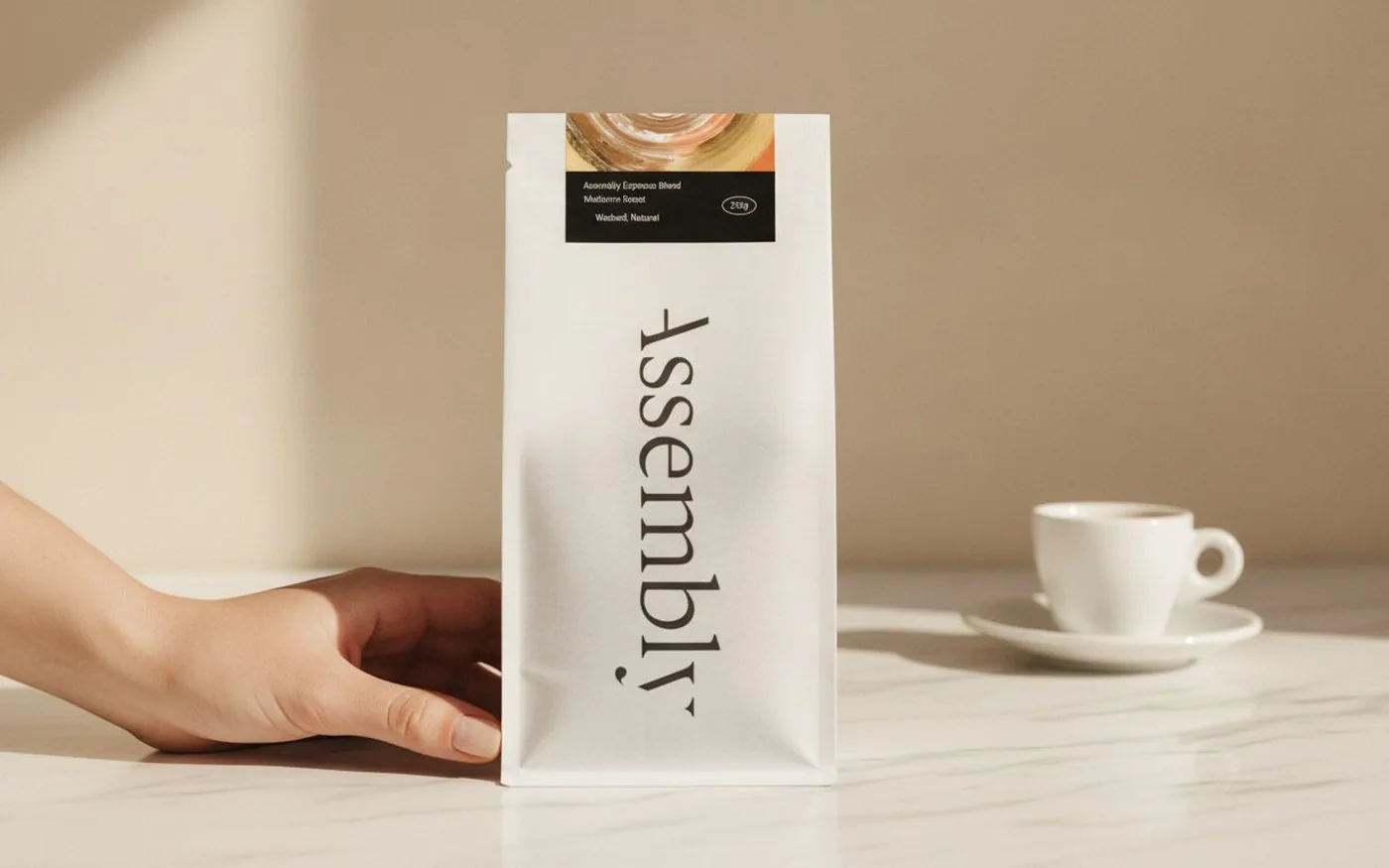
Quick verdict: Assembly's House Espresso is a washed Colombia and Brazil blend roasted to a medium-dark profile that balances sweetness and coffee bitterness well. If Volcano is the punchy choice, Assembly is the more approachable one - less bold, more rounded, easier to dial in at home.
Assembly Coffee launched in 2015 and built a reputation for approachable speciality coffee that does not require a barista course to brew well. The House Espresso blend is the clearest example of that philosophy: a Colombia and Brazil combination that produces brown-sugar sweetness and a milk-chocolate finish without the intensity that can make bolder blends unforgiving on domestic machines.
With oat milk, Assembly sits just below Volcano on coffee character - you get the roast, you get the chocolate, but the profile is softer. For drinkers who find oat milk lattes sometimes taste too strong or bitter, Assembly gives you a latte with more balance. For those who want their oat milk to know its place, Volcano is the stronger choice.
What drew me to Assembly was the consistency between batches. Freshness affects extraction, and speciality roasters sometimes vary in how consistently they hit their roast profile. Assembly's quality control is strong - the cups I pulled in this test matched each other more closely than any other brand on the list.
“The House Espresso is calibrated to taste good in milk - that is not an accident. The roast level and origin selection are chosen to produce sweetness and body, not acidity.”
| Evaluation Criteria | Our Findings |
|---|---|
| Full review | Assembly Coffee review |
| Best for | Home machines, approachable oat milk lattes |
| Flagship product | House Espresso (Colombia + Brazil medium-dark) |
| Shop | assemblycoffee.com |
3. Rounton Coffee - Best Everyday Value
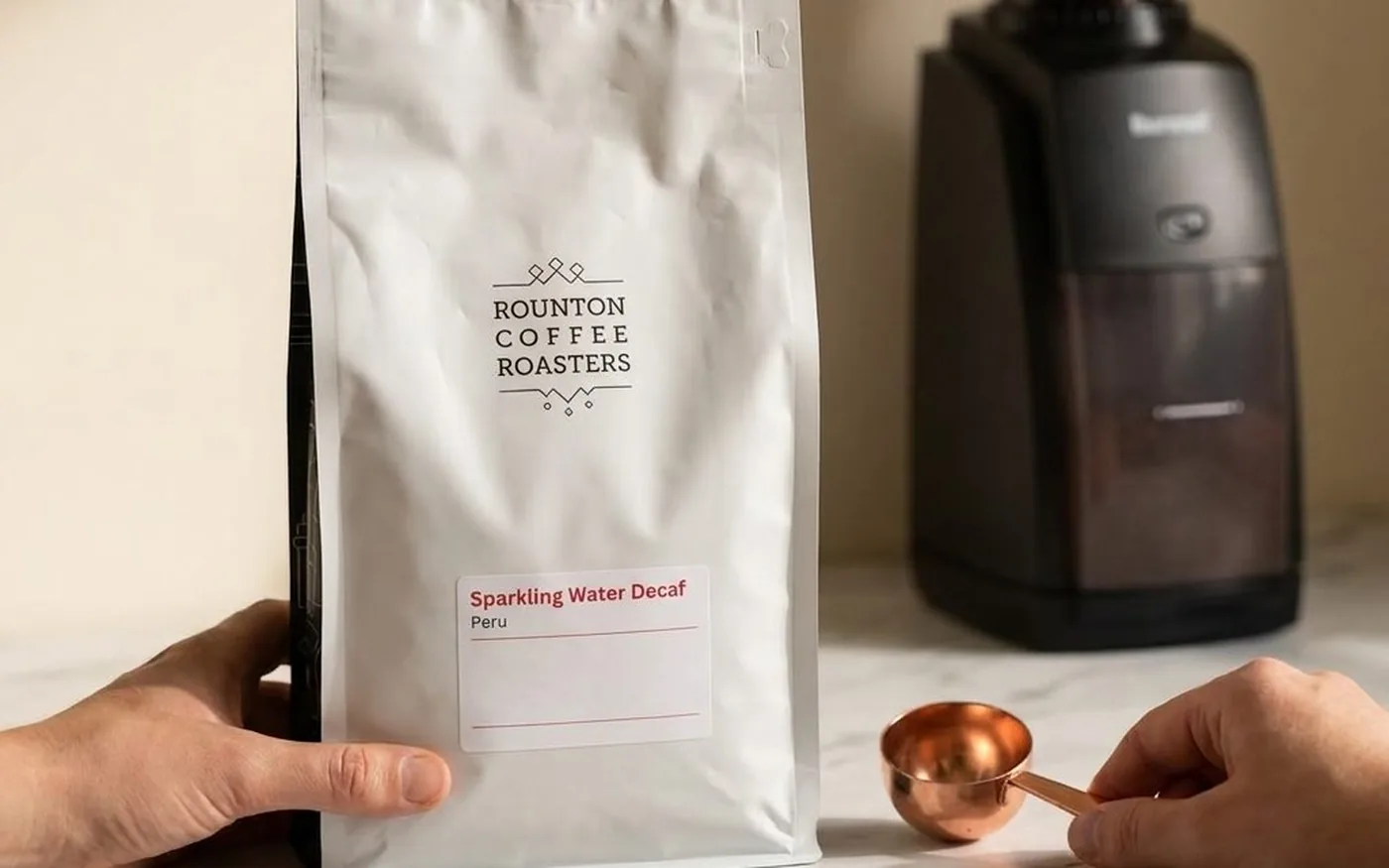
Quick verdict: Rounton is a North Yorkshire roastery producing reliably good espresso blends at a price that makes rotating stock practical. The Roundabout espresso blend (medium-dark, chocolate and caramel notes) pairs well with oat milk and represents some of the best value on this list.
Rounton Coffee has been roasting since 2013 in Richmond, North Yorkshire. The Roundabout blend is their everyday workhorse - a medium-dark profile using a Brazil and Colombian combination, producing caramel sweetness and mild chocolate on the finish. It does not have Volcano's intensity or Assembly's precision, but it is a well-made espresso blend at a lower price point that performs consistently.
With oat milk, Rounton comes in third on coffee character - present, pleasant, but without the clear separation from the oat milk sweetness that the top two deliver. For drinkers who are not pulling double shots every morning and want something dependable in the bag, this is the practical choice. Order it as a subscription and you get consistent freshness without the cost of the premium tier above.
One detail worth noting: Rounton ships within days of roasting and marks their bags with a roast date, which matters more for oat milk lattes than most people realise. Coffee that is more than four weeks off roast tends to extract unevenly on home machines, and that unevenness amplifies in milk drinks - you get more sour notes and less of the chocolate you are paying for.
“Freshness is underrated in the oat milk latte conversation. A bag from a roaster who date-stamps their coffee and ships fast is going to taste better than last month's supermarket beans regardless of the roast profile.”
| Evaluation Criteria | Our Findings |
|---|---|
| Full review | Rounton Coffee review |
| Best for | Everyday oat milk lattes at good value |
| Flagship product | Roundabout Blend (medium-dark espresso) |
| Shop | rountoncoffee.co.uk |
4. Pact Coffee - Best for Accessibility
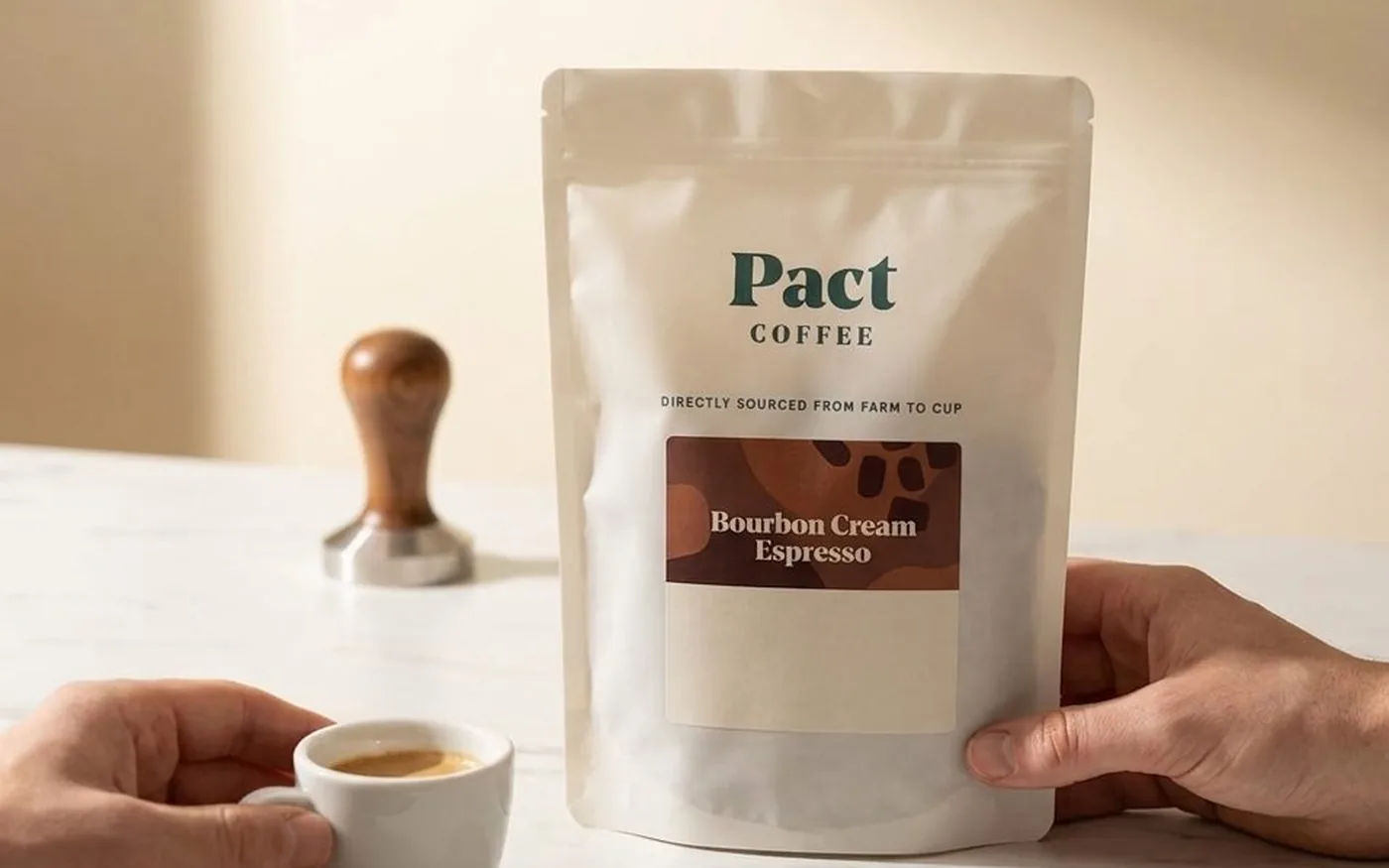
Quick verdict: Pact is the most accessible entry point on this list - available direct and via Amazon, with a subscription model that eliminates the "out of stock" problem. Their classic espresso blends, roasted to a medium-dark profile, work well with oat milk and are a reasonable first step for anyone moving away from supermarket coffee.
Pact Coffee operates a subscription model with a wide range of roast levels and origins. For oat milk pairing, their classic espresso blend (medium-dark, nutty, with low acidity) is the right choice. It does not match the character of Volcano or Assembly in tasting, but it is consistently available, freshly roasted, and significantly more convenient for UK buyers who want one-click ordering.
The honest trade-off: Pact prioritises accessibility over complexity. The oat milk latte you make with Pact will taste of coffee, which puts it well ahead of supermarket pre-ground. It will not have the layered chocolate and roasted-nut character of Volcano's Brixton Blend. For someone just starting to experiment with oat milk pairing at home, that is the right place to start.
“Starting with a medium-dark espresso blend from a roaster who ships fresh is a reasonable move. Get the pairing principle right first, then explore more complex profiles once you know what you are looking for.”
| Evaluation Criteria | Our Findings |
|---|---|
| Full review | Pact Coffee review |
| Best for | Accessible subscription oat milk coffee |
| Flagship product | Classic Espresso Blend (medium-dark) |
| Shop | Pact Coffee on Amazon UK |
Full Comparison: Best Coffees for Oat Milk
| Brand | Roast Level | Flavour Notes | Best For | Where to Buy |
|---|---|---|---|---|
| Volcano Coffee Works (Brixton Blend) | Medium-dark | Chocolate, toasted nut | Best overall oat milk latte | volcanocoffeeworks.com |
| Assembly Coffee (House Espresso) | Medium-dark | Brown sugar, milk chocolate | Balanced, approachable | assemblycoffee.com |
| Rounton Coffee (Roundabout Blend) | Medium-dark | Caramel, mild chocolate | Everyday value | rountoncoffee.co.uk |
| Pact Coffee (Classic Espresso) | Medium-dark | Nutty, low acidity | Accessible subscription | Amazon UK |
| Balance Coffee Darkfire Energy | Dark | Chocolate, bold, high-energy | BC bridge pick - sister brand | balancecoffee.co.uk (20% off) |
Buying Guide: What to Look For
Roast Level
Medium-dark to dark roasts are the clear recommendation for oat milk. "Medium" is not sufficient - a true medium roast (think light filter coffee territory) loses definition in oat milk. You want roast development that has produced Maillard-reaction caramel and chocolate compounds, which survive milk dilution.
The Two Chimps Coffee guide to roasting for oat milk explains the chemistry well: heavier roast development reduces the brightness and high-frequency acidity that oat milk muffles, while preserving the lower-register chocolate and nut notes that cut through.
Origin
Brazil is the most reliable origin for oat milk pairing. Brazilian beans tend to have low acidity, heavy body, and natural chocolate and nut notes that survive milk dilution. Colombia adds brightness and some fruit character without the acidity that causes problems. East African origins (Ethiopia, Kenya) bring high acidity and floral/fruit notes that get swallowed by oat milk entirely - not wrong as a style, but not the right match here.
Blend vs Single Origin
For oat milk lattes, espresso blends outperform single origins in most cases. A well-constructed espresso blend is specifically calibrated for extraction in milk - the roaster has already done the matching work. Single origins can work, but you need to know the cup profile. A natural-process Ethiopia Yirgacheffe is not going to cut through oat milk; a natural-process Brazil very likely will.
Freshness
Coffee for oat milk lattes should be no more than four to six weeks off roast. Older coffee under-extracts, and the resulting sour and astringent notes are amplified by oat milk's texture. Order from roasters who print a roast date on the bag and ship within days of roasting.
Grind
For home espresso machines, buy whole beans and grind immediately before brewing. Pre-ground espresso coffee degasses quickly and loses the CO2 that creates crema - and crema texture matters in a latte. If you do not have a grinder, ask your roaster to grind fresh on dispatch.
Pair It Back: Which Oat Milk to Use
Getting the coffee right is half of the equation. The other half is the milk. Different oat milks have significantly different sugar content, fat content, and heat stability - and those variables change how your latte tastes even with the same beans.
For a full breakdown of how Oatly Barista, Minor Figures, Rude Health, and own-brand oat milks compare for coffee, see our guide to the best oat milk for coffee. The short answer: barista-edition oat milks with added fat and stabilisers foam more consistently and produce a better-tasting latte than standard shelf versions.
If you want to go further up the alternative milk cluster, the pillar guide to best alternative milk for coffee covers oat alongside almond, soy, and coconut side by side.
Frequently Asked Questions
What is the best coffee for oat milk?
A medium-dark to dark roast with chocolate and nutty flavour notes, typically from Brazil or Colombia, is the best coffee for oat milk. These roasts have enough body and flavour development to cut through oat milk's natural sweetness without turning bitter. Light roasts and high-acidity East African single origins do not hold their character in oat milk and produce flat or muddy lattes. Volcano Coffee Works Brixton Blend is the top-tested pick.
What pairs well with oat milk?
Bold, chocolatey espresso blends pair best with oat milk. The natural sweetness and silky texture of oat milk complement roasts with caramel, chocolate, and toasted-nut notes - think medium-dark Brazilian or Colombian espresso. Avoid high-acidity light roasts, which get muted by the milk. Oat milk also pairs well with spiced drinks like dirty chai, where its sweetness works with the spice rather than against the coffee.
Does coffee taste good with oat milk?
Yes - when the roast is matched to the milk. Oat milk produces a naturally sweet, creamy latte that many people prefer to dairy. The issue is that delicate beans lose their character in oat milk. A medium-dark espresso blend with a Brazil base tastes excellent with oat milk, producing a latte with clear coffee character and a clean, slightly sweet finish. The problem most people encounter is using the wrong roast, not the wrong milk.
What kind of oat milk do most coffee shops use?
Most UK coffee shops use Oatly Barista Edition or Minor Figures oat milk. Both are formulated specifically for steaming - they contain added fat (usually sunflower oil or rapeseed oil) and acidity regulators that improve heat stability and foam quality. Standard shelf oat milks lack these additives and split or produce thin, unstable foam when steamed above 60 degrees. For home use, Oatly Barista and Minor Figures are the closest matches to cafe quality.
Why is everyone ditching oat milk?
Oat milk's mainstream dominance has created a backlash driven by two concerns: sugar content (some brands have 7g or more per 100ml due to the enzymatic hydrolysis of oat starch) and ingredient lists that include rapeseed oil and acidity regulators. The result is that some health-conscious drinkers are moving towards less-processed alternatives like unsweetened almond or pea milk. That said, oat milk remains the best-performing dairy alternative for latte texture and foam quality - the trade-off is real but mostly overstated for people drinking one latte per day.
Is there a downside to drinking oat milk?
Oat milk contains more carbohydrates than most other plant milks - typically 9-12g per 250ml serving, compared with 1-2g for unsweetened almond. For people managing blood sugar or following a low-carbohydrate diet, this is a meaningful difference. Standard oat milk is not suitable for people with coeliac disease unless it is certified gluten-free, because oats are often processed alongside wheat. The NHS guidance on dairy and alternatives notes that plant milks such as oat, soya, and almond are suitable dairy alternatives, and that fortified versions provide calcium and B12 that matter for dairy-free diets - but not all oat milks are fortified equally, so check the label.
Why does my oat milk coffee taste flat or muddy?
Almost always the roast. Light and medium roasts lack the flavour body to hold their character through oat milk's sweetness and texture - the coffee notes get muffled and what you taste is mostly oat. The fix is to switch to a medium-dark or dark espresso blend with chocolate and nut notes. Secondary causes include: coffee that is more than four to six weeks off roast (extraction suffers and oat milk amplifies the sour, flat notes); brewing temperature too low on a home machine (under-extraction produces the same effect); and using standard oat milk instead of barista edition, which has better fat content and steams more consistently.
Can I use any grind for an oat milk latte?
No. For espresso-based oat milk lattes, you need an espresso grind - fine enough to create the resistance and pressure that produces a concentrated shot. Cafetiere or filter grind is too coarse and produces a weak, watery shot that disappears in oat milk entirely. If you are using a Nespresso or pod machine, grind is not your variable - the pod is pre-ground. Focus on choosing a pod from a medium-dark or dark roast range. For a wider guide to grinding for different brew methods, see our best coffee beans UK guide.
Does oat milk change the taste of coffee?
Yes, noticeably. Oat milk adds sweetness, body, and a mild oaty background flavour that alters the cup significantly compared with dairy or black espresso. High-acidity, floral, and fruit-forward coffees lose most of their complexity in oat milk. Bold, chocolatey, and nutty roasts survive and often taste better in oat milk than they would black - the sweetness complements the chocolate notes. This is why roast selection matters more for oat milk lattes than for any other brew method.
Is espresso or filter better with oat milk?
Espresso is better. The concentrated nature of espresso gives it enough flavour intensity to hold its character when combined with the volume of oat milk in a latte. Filter coffee brewed at standard strength becomes too dilute when milk is added and loses its definition. If you want to use filter coffee with oat milk, brew it stronger than usual (shorter brew time or higher coffee-to-water ratio) and use a smaller portion of milk.
A registered Nutritional Therapist and member of BANT, Clemmie blends science with a holistic approach to wellbeing.