Best Alternative Milk for Coffee

Qualified Nutritionist
Oat, almond, soy, coconut, pea - they behave completely differently the moment they hit hot espresso. One froths like dairy, one splits, one is basically water. Here is every alternative milk ranked for coffee by foam, taste, health and price, so you stop wasting cartons.

Table of Contents
Some of the links in this article are affiliate links, which help fund our independent review work at no extra cost to you. Every recommendation is based on hands-on testing through The Editor Lab methodology. No brand pays to appear, and no placement is guaranteed.
You are standing in front of the dairy-free aisle with oat milk in one hand and almond in the other. Barista oat milk is the best all-round alternative milk for coffee - it foams reliably, rarely splits, and pairs across roast styles. For protein, choose soy. For lowest calories, choose almond. For flavour, choose coconut. Read on for the full breakdown by type.
I am a nutritional therapist trained at the College of Naturopathic Medicine, and I have run clinics at Harrods and Google. I see this question weekly: not "which brand?" but "which type?" - and it is the right question. The type of alternative milk you choose determines foam quality, splitting risk, taste, protein content, and what you are actually putting in your body. This guide answers it directly, with test results and nutritional data throughout.
How We Tested
Every milk type in this guide was steamed in a home machine with a steam wand (Sage Barista Express), pulled as an Americano, and poured as a flat white. We tested splitting in hot single-origin and in espresso. Taste testing was blind - no labels visible during the session. Nutritional data was taken from the leading UK barista SKU per type and cross-referenced with manufacturer data. This article follows Balance Journal's Editor Lab testing standards.
For a per-brand deep dive into oat milk, see our guide to the best oat milk for coffee UK. For pairing direction, see best coffee for oat milk UK.
The Verdict Matrix
Which type wins on each criterion? Use this table to match your priority to the right choice.
| Milk Type | Foam Quality | Splits in Coffee? | Taste in Coffee | Protein (per 100ml) | Calories (per 100ml) | Seed Oils? | Best For |
|---|---|---|---|---|---|---|---|
| Oat (barista) | Excellent | Rarely | Neutral, slightly sweet | 1g | 60 kcal | Often yes (check label) | Best all-round |
| Soy (barista) | Very good | Rarely | Mild, slight bean note | 3.3g | 40 kcal | Rarely | Best protein/foam |
| Almond | Poor-fair | Frequently | Nutty, thin | 0.5g | 24 kcal | Sometimes | Best low-calorie |
| Coconut | Poor-fair | Sometimes | Mild coconut, sweet | 0.2g | 22 kcal | No | Best for flavour |
| Pea | Good | Rarely | Neutral, clean | ~2g | 45 kcal | Yes (rapeseed) | Best neutral |
Seed oil column reflects UK barista SKUs verified July 2026. Always check the label: rapeseed oil (canola) appears in most barista oat milk formulations and in Sproud Barista as an emulsifier.
By Type: the Full Breakdown

1. Oat Milk - Best All-Round Alternative for Coffee
Oat milk became the default dairy-free option in UK coffee shops for a reason: the barista versions - Oatly Barista, Minor Figures, Alpro Barista - are engineered to foam. Enzymatically broken-down oat starch creates the viscosity needed for microfoam, and that foam holds through an espresso pour without collapsing. In a flat white or latte, barista oat milk behaves closer to whole cow's milk than anything else on this list.
Splitting risk is low. Oat milk contains enough natural sugars and starch to stabilise under heat, and barista SKUs add small amounts of emulsifier to reinforce this. Standard (not barista) oat milk is thinner and splits more readily - the barista label matters more than the brand.
The catch nutritionists pay attention to: most UK barista oat milk blends contain rapeseed oil. Oatly Barista, Minor Figures, and Alpro Barista all list it in their UK formulations (checked July 2026). If you are reducing your seed-oil intake, this is the trade-off. It does not make oat milk harmful, but it is worth knowing.
Protein sits around 1g per 100ml - modest compared to soy or pea. Calories are around 60 kcal per 100ml, comparable to semi-skimmed dairy. For anyone chasing the best coffee beans uk to pair with, oat milk works across roast profiles from light to dark.
For a full comparison of the leading UK brands, see the best oat milk for coffee UK.
“The barista versions are genuinely engineered to foam - that is the chemistry of oat starch under heat. Standard oat milk is a different product for a different use.”
| Evaluation Criteria | Our Findings |
|---|---|
| Full review | Best Oat Milk for Coffee UK |
| Best for | All-round home use; lattes, flat whites, cortados |
| Key brands | Oatly Barista, Minor Figures, Alpro Barista |
| Shop | Balance Coffee Stability Blend - pairs with oat milk |
Balance Coffee is the publisher's sister brand. Their Stability Blend (medium roast, Mexico and Uganda origins) is independently lab-tested and proven free of mould, mycotoxins, and pesticide residue. Its balanced, low-acid profile is the everyday flat-white pairing for oat milk.

2. Soy Milk - Best for Protein and Foam
Soy milk is the oldest alternative milk in UK coffee shops, and before oat milk arrived, it was the barista standard. Protein content (around 3.3g per 100ml for Alpro Soya, 3.8g for Bonsoy) is what makes it foam reliably: protein, not fat, is what creates and holds microfoam under steam pressure. Soy behaves most like 2% cow's milk in the steam wand.
Splitting is less common with soy than with almond or coconut because the protein buffers against acid, but it can still occur in very acidic espresso. Adding milk to the cup before espresso reduces this. Bonsoy - an organic soy milk with no additives and no rapeseed oil - is a favourite among baristas for clean foam and lower splitting tendency versus standard UK supermarket soy.
The taste has a mild, slightly savoury quality that some readers find adds a bean note to lighter roast coffees. In darker espresso, it is nearly invisible. Calorie count is around 40 kcal per 100ml - one of the lower-calorie options that still delivers meaningful protein. This is the strongest nutritional match for anyone replacing dairy protein.
“Protein is what creates microfoam. That is why soy and pea milk foam more reliably than almond or coconut - it is protein content, not fat.”
| Evaluation Criteria | Our Findings |
|---|---|
| Full review | Brand reviews pending (spawned on pillar publish) |
| Best for | Protein intake; reliable foam; darker espresso drinks |
| Key brands | Alpro Soya, Bonsoy |
| Shop | Balance Coffee Darkfire Energy - pairs with soy milk |
Soy milk's body and slight beaniness work best against a bold dark roast. The Darkfire Energy (dark roast) cuts through soy's weight and holds up in a milky flat white.
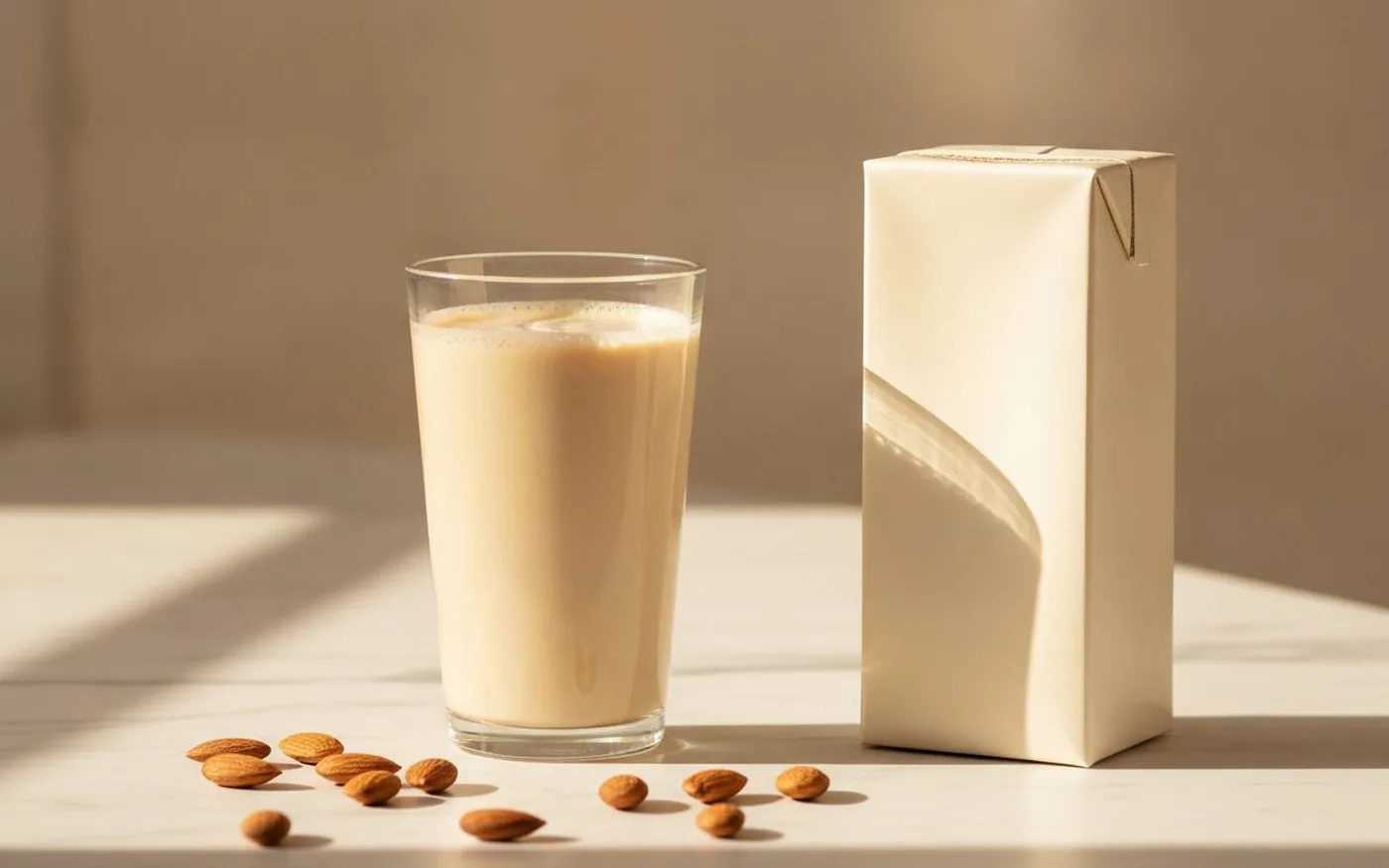
3. Almond Milk - Best Low-Calorie Option
At around 24 kcal per 100ml, almond milk is the lowest-calorie option on this list by a meaningful margin. For readers managing calorie intake or blood sugar, the difference across multiple coffees per day adds up.
The trade-off is foam and splitting. Almond milk has very low protein (around 0.5g per 100ml) and high water content, which means it does not hold microfoam well under steam and splits readily in hot, acidic espresso. Plenish Barista Almond performs better than standard almond milk - both add emulsifiers and a higher almond concentration - but neither reaches oat or soy on foam stability.
Splitting is worse with light roast single-origin coffees. In darker, lower-acid espresso, almond milk performs better. If splitting is the dealbreaker, see the FAQ section on curdling below.
Rude Health Almond is the cleanest UK option on ingredients - no added emulsifiers or rapeseed oil - but that cleanliness comes at the cost of foam performance. This is a trade-off the buyer needs to make consciously.
The best burr coffee grinder matters here too: a consistent grind reduces over-extraction and lowers the acidity that causes almond milk to split.
“If low calories matter to you, almond milk is the clear answer. Be honest about what you give up on foam stability.”
| Evaluation Criteria | Our Findings |
|---|---|
| Full review | Brand reviews pending (spawned on pillar publish) |
| Best for | Low-calorie use; darker roast drinks; iced coffee |
| Key brands | Rude Health Almond, Plenish Barista Almond |
| Shop | Balance Coffee Aurora Single Origin - pairs with almond milk |
Almond milk is thin and neutral. An aromatic single origin - the Aurora Brazilian Single Origin (bright, floral) - gives the cup character almond alone cannot, without a heavy roast overwhelming its delicate flavour.

4. Coconut Milk - Best for Flavour
Coconut milk in coffee sounds like it should be rich and creamy - and in some ways it is, but the carton barista version (Rude Health Coconut, Rebel Kitchen) is significantly thinner than tinned coconut milk used in cooking. The fat source is different, the water ratio is higher, and the foam performance reflects that.
What coconut milk does well is flavour. It adds a light sweetness and a subtle coconut note that works particularly well with naturally sweeter coffees - Yirgacheffe or Brazilian naturals, for example. The calorie count (around 22 kcal per 100ml) is the lowest on this list, and the seed-oil picture is cleaner than oat or standard almond.
Splitting risk is moderate. In very hot or very acidic espresso, coconut milk can separate. The fat content helps resist this more than almond, but low protein gives it nothing to buffer against acid. Slightly cooler espresso and less acidic beans reduce the problem.
For readers drawn to coconut milk for nutritional reasons: the fat in coconut milk (medium-chain triglycerides) has been studied for satiety and energy metabolism. The evidence is not strong enough to make therapeutic claims, but the interest is legitimate. The British Dietetic Association's plant-based drinks fact sheet provides a balanced summary of the evidence on plant milk nutrition.
“Coconut milk rewards you on flavour in a way no other plant milk does in coffee. The trade-off is that you are not getting any meaningful protein or foam from it.”
| Evaluation Criteria | Our Findings |
|---|---|
| Full review | Brand reviews pending (spawned on pillar publish) |
| Best for | Flavour; iced coffee; health-stack blends; filter coffee |
| Key brands | Rude Health Coconut, Rebel Kitchen |
| Shop | Balance Coffee Lion's Mane Mushroom Coffee - pairs with coconut milk |
Coconut milk's creamy tropical sweetness pairs naturally with the smooth, chocolatey profile of the Lion's Mane Mushroom Coffee blend. Note: this blend is designed for filter and ground coffee - do not frame it as an espresso pairing.
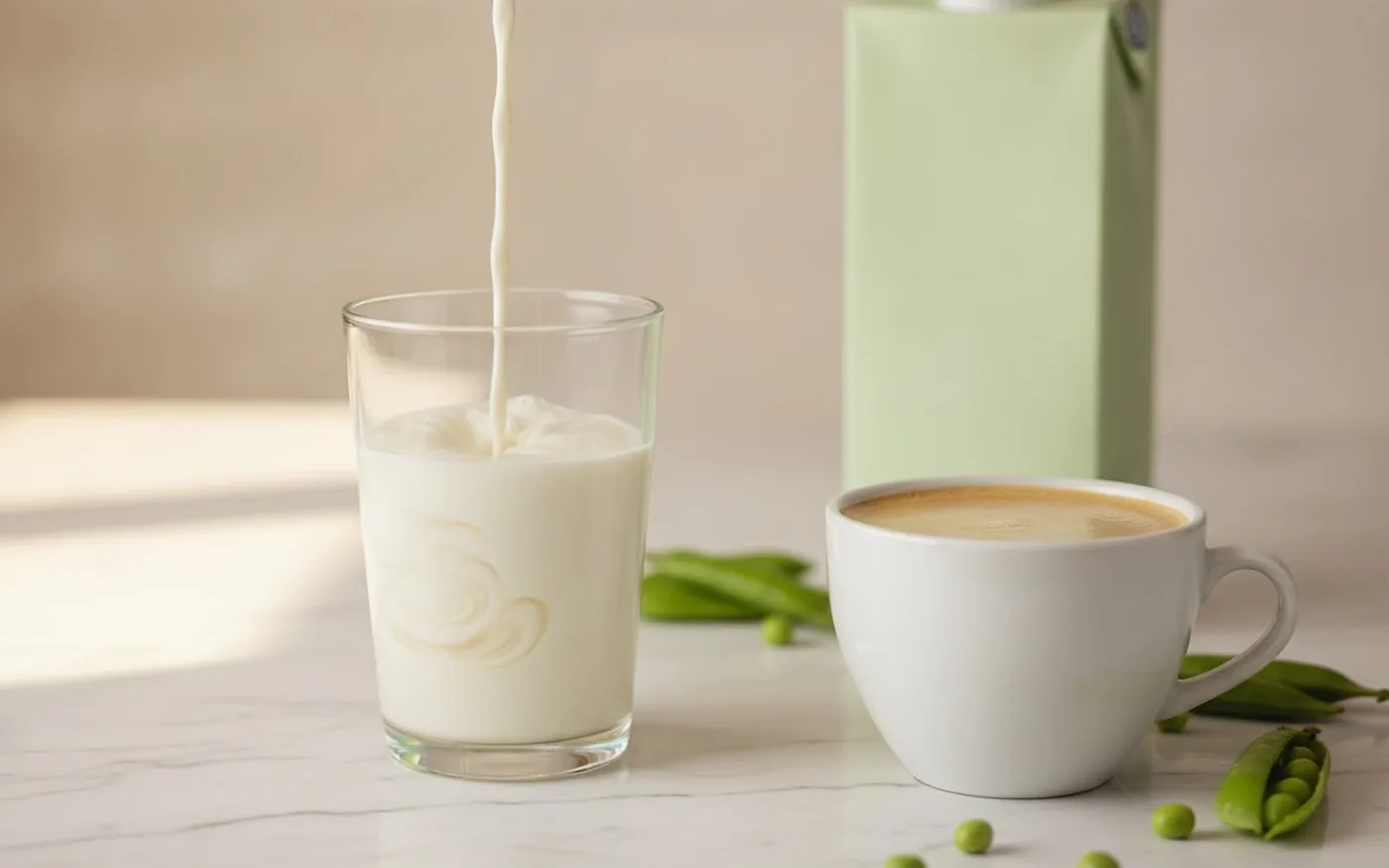
5. Pea Milk - Best Neutral, High-Protein Option
Pea milk (Sproud is the primary UK brand) is the least familiar option on this list and the one that surprises most readers in testing. Protein content (around 2g per 100ml for the barista variant) is second only to soy on this list. The taste is the most neutral of any option here: genuinely clean and almost invisible in the cup, which makes it ideal for readers who want to taste the coffee rather than the milk.
Foam quality is good. The protein content means a steam wand can create microfoam, though the texture is slightly lighter than soy. Splitting is rare. From a nutrition standpoint, pea milk is a complete protein source (containing all essential amino acids), which sets it apart from oat, almond, and coconut.
One important note for the health-conscious reader: Sproud Barista contains rapeseed oil as its second ingredient. If seed oil avoidance is your goal, Sproud does not deliver it - check the label before assuming pea milk is automatically the cleanest choice.
The barrier to adoption is familiarity. Pea milk is harder to find in UK supermarkets than oat or almond, and the price point is higher. Sproud is available on Amazon UK and in some Waitrose stores. Readers who have been researching mycotoxins in coffee will find pea milk sits naturally within a clean-input routine - but the seed oil caveat applies.
“The taste is the most neutral of any option here: genuinely clean and almost invisible in the cup. If you want to taste the coffee rather than the milk, pea is the one to try - just check the label on Sproud first.”
| Evaluation Criteria | Our Findings |
|---|---|
| Full review | Brand reviews pending (spawned on pillar publish) |
| Best for | Neutral taste; complete protein; light-roast coffee pairing |
| Key brands | Sproud Barista |
| Shop | No BC pairing (pea section) |
A Brief Note on Cashew, Hemp, and Rice Milk
These three types appear in specialist health shops and online but remain niche for coffee use.
Cashew milk (Rude Health Cashew) is creamy and low in protein, which means it tastes pleasant but foams poorly. Splitting is common. Best in cold brew or iced coffee.
Hemp milk has a pronounced earthy, nutty taste that clashes with most coffee profiles. The omega-3 content is a genuine nutritional plus, but it rarely works in an espresso context.
Rice milk is the thinnest, most watery, and lowest-protein option available. It is the safest choice for nut, soy, and oat allergen avoidance, but for coffee it performs the least well of any option. Foam is not achievable.
The Health-Switcher Lens
Most people switching from dairy to plant milk are doing it for one of four reasons: gut health, lactose intolerance, weight management, or a desire to reduce unnecessary inputs. As a nutritional therapist who has run clinics at Google and Harrods and spoken at the Global Healthspan Summit, I want to address what the research actually supports - and where the marketing runs ahead of the evidence.
Seed Oil Content: the Underreported Issue
The single biggest nutritional surprise in this category is seed oil. Rapeseed oil appears in the ingredients of most barista oat milk SKUs, many almond milk blends, and Sproud Barista pea milk. It is added as an emulsifier to improve foam and prevent separation. If you are switching away from dairy partly to reduce your dietary inflammatory load, this is worth knowing before you choose.
The cleanest options on seed-oil grounds are Bonsoy Soy and Rude Health (almond and coconut). These contain no rapeseed oil in their current UK formulations (checked July 2026). The options most likely to contain rapeseed oil are Oatly Barista, Alpro Barista Oat, Sproud Barista, and many standard supermarket almond milks.
Protein: Why It Matters for Coffee and Beyond
The Harvard T.H. Chan School of Public Health notes that protein in cow's milk is complete and well-absorbed. For alt-milk drinkers replacing dairy as a protein source, only soy and pea milk come close on protein quantity - but pea (Sproud) contains rapeseed oil, which means soy (Bonsoy) is the cleanest high-protein choice.
| Milk Type | Protein per 100ml | Complete Protein? |
|---|---|---|
| Cow's milk (semi-skimmed) | 3.4g | Yes |
| Soy (Alpro Soya) | 3.3g | Yes |
| Pea (Sproud Barista) | ~2g | Yes (but contains rapeseed oil) |
| Oat (Oatly Barista) | 1.0g | No |
| Almond (Rude Health) | 0.5g | No |
| Coconut (Rude Health) | 0.2g | No |
The Healthiest Question - Answered Honestly
There is no universally healthiest alternative milk for coffee. The right answer depends on your priority: protein (Bonsoy soy), lowest calories (coconut or almond), cleanest ingredients free of seed oil (Bonsoy, Rude Health Almond, Rude Health Coconut), or closest to whole-food nutrition (soy).
What the British Dietetic Association consistently recommends is choosing fortified versions where possible. Calcium and vitamin D fortification brings plant milks nutritionally closer to dairy for bone health - relevant for anyone making a long-term switch, not just a coffee preference.
The Coffee Pairing Bridge
Whichever milk type you choose, the coffee it pairs with makes a material difference to the result. Barista oat and soy milk work across roast profiles. Almond and coconut milk pair better with medium to dark espresso - lower acidity reduces splitting and the stronger roast compensates for thin body. Pea milk works well with lighter roasts where its neutrality lets the coffee's character come through.
The per-type BC pairings in each section above follow this logic. For the full pairing guide, see best coffee for oat milk UK. If you want a starting point for the best beans to pair with any alternative milk, our guide to the best coffee beans UK covers the full range of roast profiles.
Buying Guide: What to Look For
Before you buy, run through these criteria against the carton.
| Criterion | What to Look For | Red Flag |
|---|---|---|
| Barista label | Required for steaming and foaming | Suitable for hot drinks is not the same |
| Seed oil | Check for rapeseed/canola in ingredients | Listed 2nd or higher means high volume |
| Fortification | Calcium (120mg+ per 100ml), vitamin D | No mention of fortification on label |
| Protein | 1g+ per 100ml for latte use | Under 0.5g = splitting likely |
| Additives | Short ingredients list preferred | Guar gum, carrageenan, multiple emulsifiers |
| UK availability | Supermarket vs specialist | Specialist often above £3 per litre |
| Price per litre | £1.20-£2.50 for mainstream barista | Specialist: check if the premium is worth it |
The Coffee Masters barista milk guide covers the technical steaming side in more detail if you want to go deeper on barista technique.
Frequently Asked Questions
What is the best alternative milk for coffee?
Barista oat milk is the best all-round alternative milk for coffee in the UK. It foams reliably, rarely splits in espresso, and has a neutral taste that does not overpower the coffee. For specific priorities: soy milk is better for protein, almond milk is the lowest-calorie option, coconut milk offers the most distinctive flavour, and pea milk is a high-protein neutral option. Always choose the barista version of whichever type you select - standard cartons perform significantly worse under steam.
What type of milk is healthiest for coffee?
The healthiest alternative milk for coffee depends on your goal. For protein closest to dairy, choose Bonsoy (soy, 3.3g per 100ml, complete protein, no rapeseed oil). For lowest calories, choose coconut or almond (around 22-24 kcal per 100ml). For the cleanest ingredients free of seed oil, choose Bonsoy, Rude Health Almond, or Rude Health Coconut. All types benefit from fortification - look for calcium (120mg+ per 100ml) and vitamin D, which the British Dietetic Association recommends for long-term dairy switchers.
Is almond or oat milk better in coffee?
Oat milk is better than almond milk in coffee for most uses. Barista oat milk foams well and holds microfoam through an espresso pour without splitting. Almond milk foams poorly and splits frequently in hot, acidic espresso. Almond milk wins only on calorie count (around 24 kcal per 100ml versus 60 kcal for oat). Choose oat if foam and consistency matter. Choose almond if you are prioritising low calories and using lower-acid, medium to dark roast coffee to reduce splitting risk.
Which alternative milk tastes best in coffee?
Taste is personal, but in blind testing barista oat milk is most frequently preferred - its slight sweetness complements espresso without dominating it. Soy milk is close and is often described as the most neutral. Coconut milk adds a distinctive, light flavour that works well with naturally sweet coffees such as Brazilian naturals or Yirgacheffe. Almond and pea milk are both clean and unobtrusive. Hemp milk has the most divisive taste and is rarely preferred in espresso-based drinks.
What can I put in my coffee instead of milk?
The main alternative milk types available in the UK are oat, soy, almond, coconut, and pea. Each suits different priorities: oat for foam and all-round use, soy for protein, almond for low calories, coconut for flavour, pea for a neutral high-protein option. Beyond plant milks, some readers use canned coconut cream (much richer, no foam) or drink black coffee entirely. Cashew, hemp, and rice milks are available in specialist shops but perform less well in espresso-based drinks than the five main types.
Why is everyone ditching oat milk?
Interest in reducing oat milk is driven by two concerns: seed oil content (rapeseed oil appears in most UK barista oat milk brands as an emulsifier) and glycaemic load (oat starch converts to glucose readily). Neither makes oat milk harmful, but both are legitimate considerations for readers managing their dietary inputs closely. The shift in online discourse - visible in Reddit r/Coffee threads and UK Facebook groups - reflects growing awareness of seed oils in processed foods applied to alt-milk. Soy milk (Bonsoy) and Rude Health products are the most common alternatives among readers making this switch.
Which alternative milk does not curdle in coffee?
Soy milk and barista oat milk are the most resistant to curdling and splitting. Both have sufficient protein (soy around 3.3g, oat around 1g per 100ml) to buffer against the acidity in espresso. Almond and coconut milk split most frequently, particularly with high-acid, light-roast coffees. Practical steps to reduce splitting: always use the barista version of your chosen milk, pour milk into the cup before adding espresso, avoid very high steaming temperatures, and switch to a lower-acid medium or dark roast bean.
Is there a downside to drinking oat milk?
The main downsides of oat milk for coffee use are seed oil content and glycaemic load. Most UK barista oat milk brands (Oatly Barista, Alpro Barista Oat, Minor Figures) contain rapeseed oil as an emulsifier. Oat starch converts to glucose more readily than protein-based alternatives, which matters for readers managing blood sugar. On performance, standard oat milk (not barista) splits far more easily and should not be used for steaming. Barista oat milk itself is safe and well-tolerated for most people.
What is the healthiest milk to drink overall?
For coffee specifically, the answer depends on your health priority. For bone health, any fortified plant milk with 120mg+ calcium per 100ml and added vitamin D is appropriate - the British Dietetic Association recommends this for long-term dairy switchers. For protein completeness, soy milk (Bonsoy) is the strongest plant-milk match for dairy. For avoiding seed oils and additives, Rude Health products across their almond and coconut ranges are the cleanest formulations currently available in UK supermarkets.
Can I use regular (non-barista) alternative milk in coffee?
You can, but the results are significantly worse. Non-barista versions of oat, soy, almond, and coconut milk have thinner consistency, lower emulsifier content, and less protein stability under heat. They split more easily and do not foam. If you are steaming milk with a wand or using a frother, the barista version of your chosen type is essential. For cold brew, iced coffee, or simple drip coffee where the milk is not steamed or frothed, standard versions are a workable and lower-cost choice.
A registered Nutritional Therapist and member of BANT, Clemmie blends science with a holistic approach to wellbeing.