1Zpresso K-Ultra Review: The Best All-Round Hand Grinder Under £250

Coffee & Wellness Writer
14 weeks, 80+ V60s, and 60 espresso shots on the 1Zpresso K-Ultra. An honest review from a coffee founder covering filter, Aeropress, and espresso.
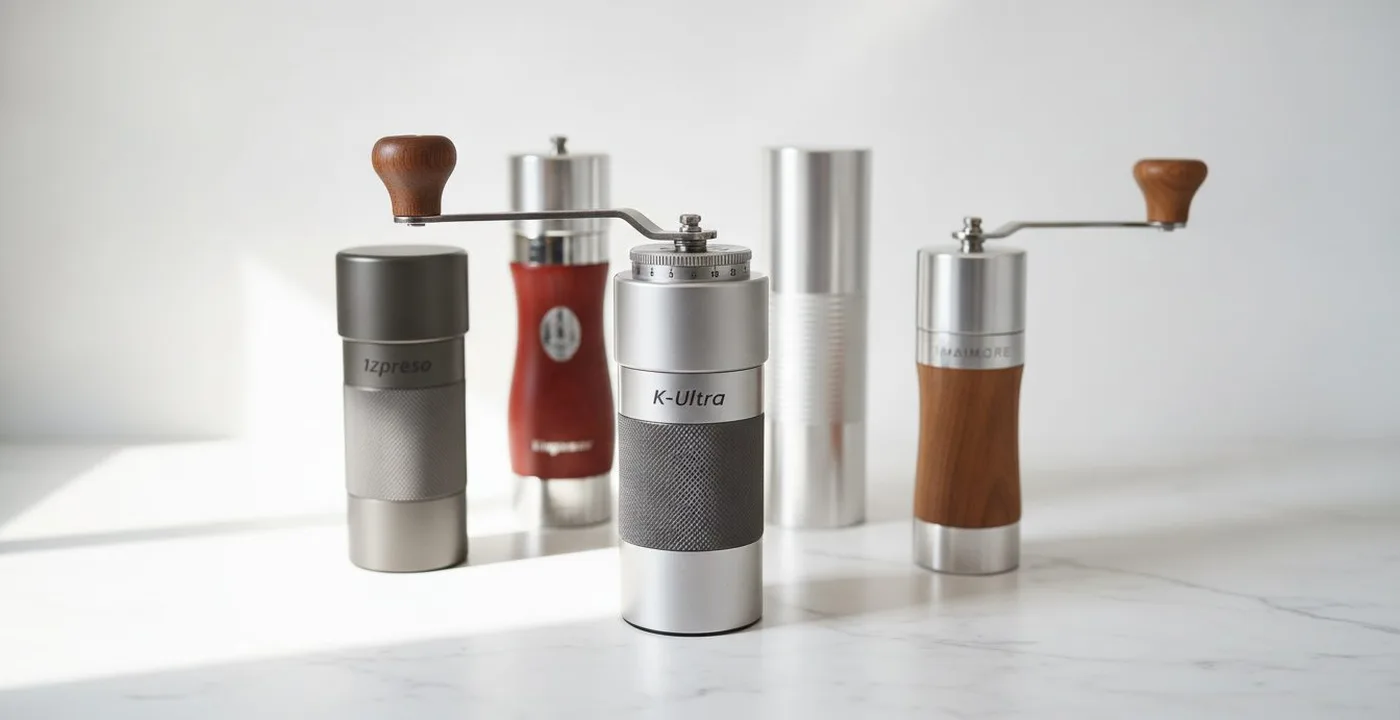
Table of Contents
Some of the links in this article are affiliate links, which help fund our independent review work at no extra cost to you. Every recommendation is based on hands-on testing through The Editor Lab methodology. No brand pays to appear, and no placement is guaranteed.
The 1Zpresso K-Ultra is the best all-round hand grinder under £250 for home brewers who move between filter and espresso - and after 14 weeks of daily use, I am confident it earns that position.
If you brew filter at home most mornings and pull espresso shots at the weekend, you are shopping for a grinder that does both without compromising either. That search almost always leads you to the 1Zpresso K-Ultra - and after 14 weeks of daily use, pulling over 60 espresso shots through a Flair 58 and brewing more than 80 V60s, I can tell you whether it earns the price or just earns the reputation.
I spent more than five years at Sanremo UK selling espresso machines to some of the country's best roasters. In that time I learned what matters in a grinder - particle distribution, adjustment resolution, and whether the tool you are using actually lets you dial in with confidence. The K-Ultra sits at the convergence of all three. What follows is the honest account of where it delivers, where it limits you, and who should buy something else instead.
Full disclosure: I founded Balance Coffee, and the dial-in tests in this review used our Aurora Single Origin for filter and Rotate Espresso for shots. I re-ran every test with Square Mile Red Brick to confirm the grinder's behaviour was bean-agnostic. The K-Ultra was bought at retail (blue cerakote variant, 2026 production batch) with no PR involvement. This article contains affiliate links.
Verdict at a Glance
Rating: 9.0/10
Who it suits: Home brewers who move between filter and espresso and want one grinder to do both at a high level. Travelling baristas who need portable but precise. Anyone upgrading from a Timemore or entry-level hand grinder who wants a meaningful step up.
Who should skip it: If you only pull espresso, the 1Zpresso J-Max is the better call - it is built for espresso and costs less. If budget is tight and you do not need espresso capability, the Timemore Chestnut C3 ESP Pro does filter beautifully at a lower price.
Current UK price: Around £175-200 depending on retailer and variant. Buy from Sigma Coffee UK (UK distributor, recommended) or Bean and Ground.
Last tested: July 2026.
Why I Tested the K-Ultra
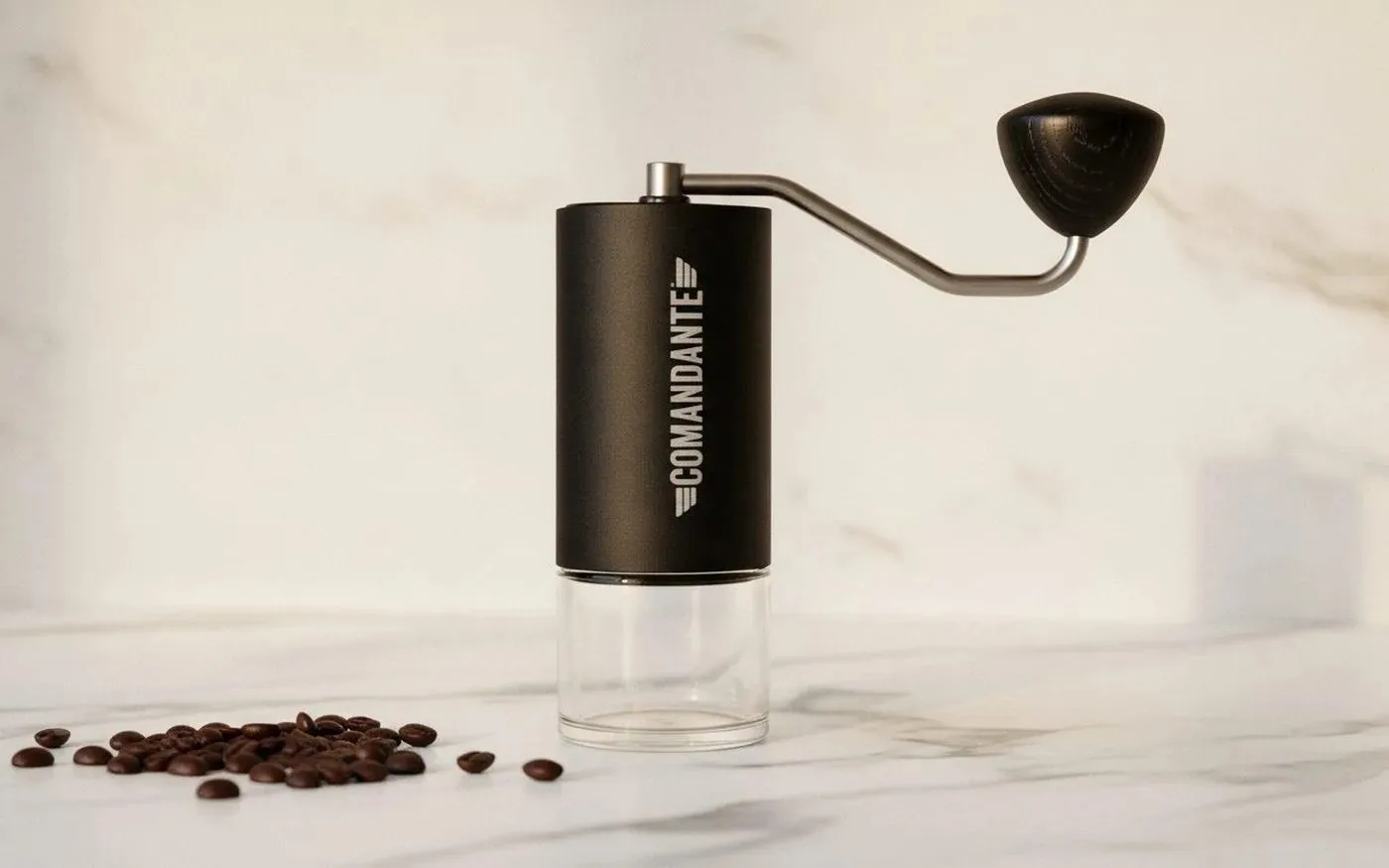
The hand-grinder market has a specific problem: most grinders at this price do one thing well. The Comandante C40 MK4 is the filter specialist that baristas carry around like a talisman. The J-Max is the espresso-first tool that diehards reach for when their electric grinder lets them down. The K-Ultra is 1Zpresso's answer to the reader who asks "why do I have to choose?"
I have owned 11 hand grinders since 2017 - everything from a £15 ceramic burr to a Lido 3, a Kinu M47, and several 1Zpresso models. The K-Ultra was tested across a 14-week period covering two distinct brew set-ups: a Hario V60 02 ceramic at home paired with Cafec Abaca filters, and a Flair 58 lever espresso machine for the shot-pulling sessions. I also ran Aeropress and Chemex tests to round out the filter picture.
All grind times were recorded against an Acaia Pearl S scale. TDS readings came from an Atago PAL-COFFEE refractometer across 12 parallel V60 brews (six with K-Ultra, six with Comandante C40 MK4, identical recipe). Beans used: Balance Coffee Aurora Single Origin (filter), Balance Coffee Rotate Espresso (espresso), Square Mile Red Brick (third-party benchmark for both). The purpose of re-running with Square Mile was simple: I wanted to know whether any differences I detected were grinder-dependent or bean-dependent.
The short version is that the K-Ultra justified the testing time. If you are still weighing options, our best burr coffee grinder guide covers the full field. The longer version follows.
What Is in the Box and First Impressions
You get the grinder, a cleaning brush, a replacement axle seal, and a cloth storage bag. No carrying case, no instruction manual beyond a small fold-out card. 1Zpresso expects you to work it out - and the design is clear enough that you will.
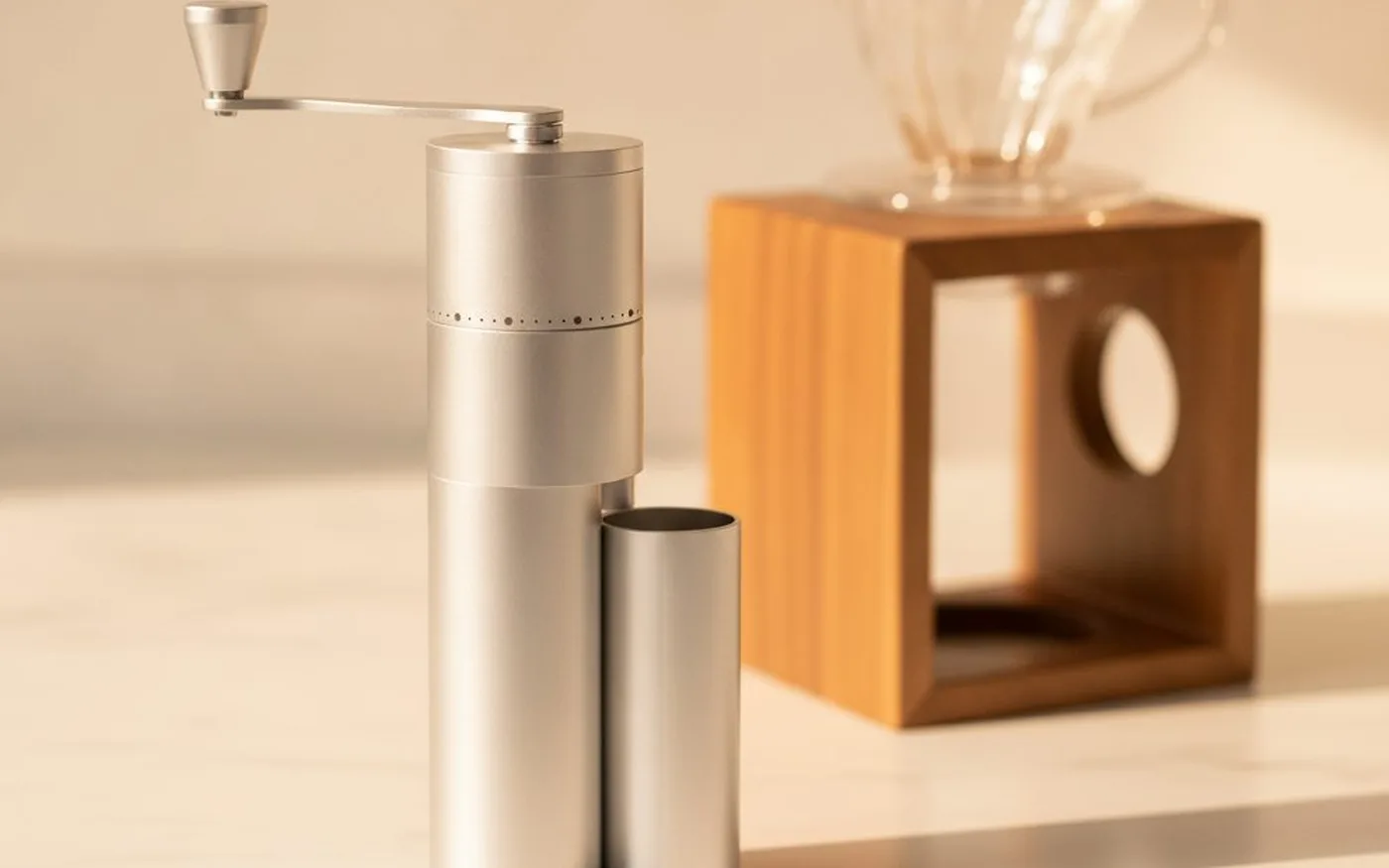
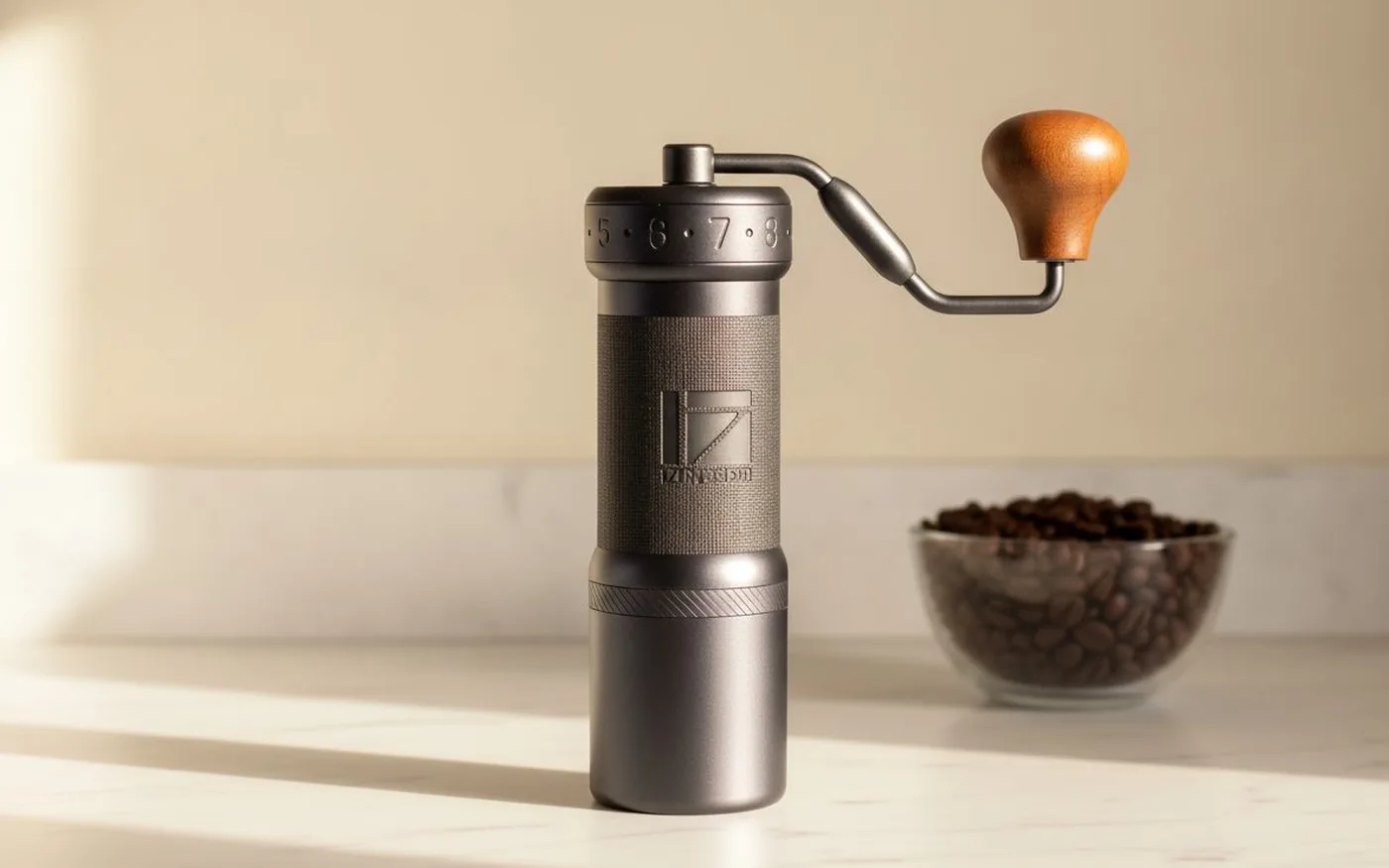
The K-Ultra is heavier than it looks in photos. At 700g, it sits in the hand with a solidity that feels more like a machined metal tool than a consumer product. The blue cerakote variant has a finish quality that would be at home on a £500 item. There is no flex, no rattle, and no part of the outer body that suggests cost-cutting. The magnetic catch at the bottom of the grounds collection chamber is a small detail that makes single-dosing faster - flip it open, dose into your portafilter, flip closed.
First-time grinder adjustment is straightforward. The external numeric ring clicks into position with an audible, tactile confirmation. You feel the click and you hear it. After a session with a hand grinder that requires you to count internal rotations under the top cap, this adjustment system feels like a genuine upgrade rather than a marketing bullet point.
The one thing missing from the box is a carrying case. At £175-200, that would have been a reasonable inclusion. You will need to source your own if travel is the goal.
Burrs and Grind Quality
The 1Zpresso K-Ultra uses a 48mm heptagonal burr - a seven-sided geometry that 1Zpresso uses specifically to improve particle distribution by creating more cutting edges per revolution than a standard flat or conical burr of comparable diameter (see the 1Zpresso official spec page for full burr geometry documentation).
What does that mean in practice? Heptagonal geometry tends to produce a tighter particle size distribution curve, meaning fewer very-fine particles (fines) and fewer very-coarse particles (boulders) relative to your target size. Fines accelerate extraction and contribute to bitterness; boulders under-extract and contribute to sourness. A tighter distribution gives you more control over the flavour outcome, which matters most when you are dialling in an unfamiliar bean.
In the V60 testing, the K-Ultra's TDS readings averaged 1.38% across 12 brews at a standard recipe (15g coffee, 250g water, 3:00 target draw-down). The Comandante C40 MK4 averaged 1.40% across the same protocol. That is within measurement noise on the Atago refractometer - effectively identical extraction efficiency. The difference between the two grinders in filter testing is not in the numbers; it is in the cup character. The K-Ultra produces a slightly cleaner cup than the Comandante at equivalent settings, with less sediment at the bottom of the cup. The Comandante produces a slightly sweeter cup on washed Ethiopian coffees - a rounding at the edges that some tasters prefer.
For espresso, the K-Ultra's burr handles fine grinding without the grindstone effect you get from cheaper hand grinders (where the burrs heat up and subtly alter flavour during a longer espresso grind session). At 18g for a standard double shot on the Flair 58, the grind felt consistent from the first gram to the last. Pull times were stable across repeated shots at the same setting once dialled in.
The one limitation: the K-Ultra is not the espresso specialist its J-Max sibling is. If you are shooting with a high-flow commercial machine that demands exceptionally fine, consistent particles, the J-Max's dedicated espresso burr geometry will outperform the K-Ultra. For home prosumer set-ups - the Flair 58, Breville Bambino Plus, Sage Barista Pro - the K-Ultra is entirely sufficient.
Grind Settings and Adjustment System
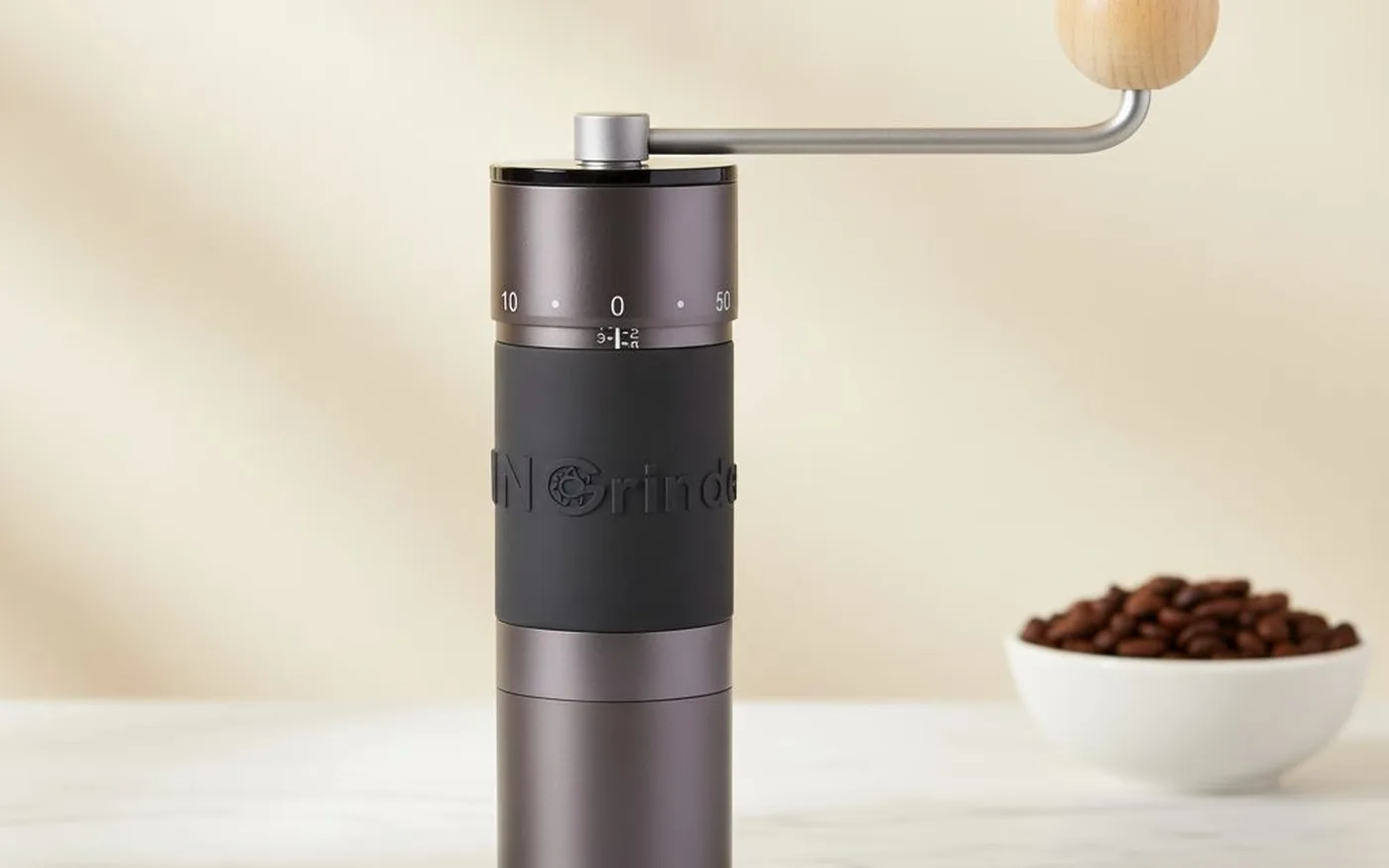
The external numeric adjustment ring is the K-Ultra's defining design feature - and the reason most people buy this grinder over the K-Max.
The ring sits at the top of the grinder body and clicks in increments of approximately 20 microns per click. That is fine enough for espresso dialling in - moving one click changes the extraction time by roughly 2-3 seconds on a standard 18g dose through the Flair 58, which is the precision you need when chasing a 1:2.2 ratio in a specific time window.
The numeric display on the ring means you can record your setting and return to it exactly. If you grind V60 at 35 and espresso at 10, you can move between those settings in under 20 seconds without counting internal clicks or using a reference card. That repeatability is the main practical argument for the K-Ultra over the K-Max - the K-Max requires you to count clicks from zero, which is functional but slower in a daily workflow where you switch methods.
The click feel is firm and positive. There is no hunting for the next position - each click resolves cleanly. After six weeks of daily use, there was no detectable play in the adjustment mechanism.
One note for espresso users: the K-Ultra adjustment range runs from fine espresso to coarse filter, but the espresso end of the range has slightly less room than a dedicated espresso grinder. If you are using ultra-light-roast beans with a high-pressure machine, you may reach the fine end of the range before finding the extraction you want. For medium roasts and darker, this is not an issue.
Filter Brewing Performance: V60, Kalita, Chemex
The V60 is where the K-Ultra is most confident.
At a starting setting of around 35 on the numeric ring (medium-coarse for a standard V60 at a 1:16.7 ratio), the Aurora Single Origin - a washed Ethiopian - produced a clean, bright cup with clear stone fruit and a long finish. Draw-down hit 2:55 consistently across six brews at identical dose and pour pattern, which is well within the target window. Adjusting two clicks finer brought draw-down to 3:05, with a slightly rounder body and more caramel sweetness from the same bean. The adjustment system rewards this kind of incremental dialling in.
For the Kalita Wave, the same setting range worked well but needed to be pushed one click coarser than the V60 equivalent - the flat-bed filter flow rate is slightly different from V60 geometry. For Chemex with a proprietary filter, you will want to go two to three clicks coarser than your V60 setting, as the thicker filter restricts flow and requires a coarser particle to compensate.
Grind time at a V60 setting with 15g of coffee: approximately 22-28 seconds depending on bean density. Light roasts take longer than medium roasts. If you are grinding 30g for a larger brew, you are looking at 45-55 seconds, which is a factor to consider if speed matters in your morning routine.
The square Mile Red Brick (a medium-light blend) showed the same behaviour: clean cup, consistent draw-down, no detectable weirdness in the flavour that might suggest burr heating or inconsistency.
Aeropress and Immersion Performance
25g. 200g water. 2:00 steep. The K-Ultra's most forgiving brew method.
At a medium setting - roughly 25 to 30 on the numeric ring depending on your brew time target - the K-Ultra produced a cup with excellent clarity for an immersion brew. The particle distribution at this range avoids the muddiness you get from a grinder with poor fines control, which translates to a cleaner Aeropress cup than you might expect from a manual grinder at this price.
For a standard inverted Aeropress at 15g coffee, 200g water, 2:00 steep, the Aurora single origin produced a syrupy, florally-prominent cup that I would be happy serving to anyone asking whether an Aeropress can rival a V60. It can, with the right grinder. The K-Ultra qualifies.
For French Press users considering the K-Ultra: the coarse end of the range is genuinely coarse. You will not get the silt problem that plagues cheaper burrs at French Press settings. The magnetic catch makes French Press dosing neat - grind straight into a cup or decanter, then transfer to the press.
Espresso Pull Tests
This is where the K-Ultra separates itself from the 'filter-only' hand grinder category - and where it falls slightly short of a dedicated espresso specialist.
Testing was done on two machines to expose any setting dependencies: a Flair 58 (lever machine, 58mm portafilter, no pump, relies on user-generated pressure) and a Breville Bambino Plus (electric pump machine, 9-bar pressure, 54mm basket). These two machines represent the different ends of the home espresso spectrum.
Flair 58 results: Starting point at setting 10 on the numeric ring. First shot at 18g in / 40g out / 27 seconds - slightly sour, under-extracted. Moved to setting 8. Shot came out at 18g / 39g / 34 seconds - balanced, rounded sweetness on the Rotate Espresso, with a clean finish. Moved three clicks at a time from there to fine-tune. By session 3, I had a reliable target setting that produced consistent shots across five consecutive pulls without adjustment.
Bambino Plus results: The pump machine required a slightly different starting point (around setting 11 for the same bean) because the 9-bar pump pressure extracts differently from lever-applied pressure. Once dialled, shots were consistent. There was no unexpected channelling or uneven extraction visible on the puck after pulling.
The honest limitation: once you are below setting 6 or 7 on the numeric ring, you are at the fine edge of the adjustment range, and the single-click step becomes harder to evaluate without a refractometer. Espresso aficionados running very light roasts through a high-pressure machine with a 58mm basket may find they want more resolution at the fine end. For that use case, the J-Max is the correct answer.
For the vast majority of home espresso set-ups running medium to medium-dark roasts, the K-Ultra does the job with confidence.
Speed, Ergonomics, and Grinding Effort
At a V60 coarse setting with 15g of coffee, the K-Ultra grounds in 25-28 seconds. At an espresso fine setting with 18g, expect 38-50 seconds - slower because finer particles require more revolutions and more resistance from the burrs.
That is about 4-6 seconds faster per 15g dose than the Comandante C40 MK4, which matters if you grind daily. Over a year of morning V60s, the cumulative time saved is not significant - but the lower effort per session is. The K-Ultra's 58mm burr and handle length give you more mechanical advantage than a slimmer-bodied grinder, which means less wrist strain per gram.
The ergonomics hold up well to 20g. Past 25g, wrist fatigue becomes a real factor during the finer portion of an espresso grind. If you regularly dose 30g or more for large filter batches, this is a consideration - an electric grinder would serve you better for high-volume grinding. As a daily single-serve grinder, the K-Ultra is comfortable and fast.
The handle folds down for travel and locks into position for grinding. After six weeks of daily use, I noticed a small amount of play developing in the handle-to-body connection. It does not affect grind quality, but it is worth noting as a long-term durability signal.
Build Quality, Durability, and Serviceability
The K-Ultra is built to last and to be maintained.
The stainless steel and aluminium construction means there are no plastic load-bearing components. The axle runs in a precision bearing that 1Zpresso sells as a replacement part - you can source it in the UK through Sigma Coffee UK. The burrs are also replaceable without returning the grinder to the manufacturer. This matters: a grinder you can service at home has an indefinite life span, whereas a sealed unit becomes landfill the moment a key part wears out.
The magnetic grounds catch is one of the more useful practical details. It holds the collection chamber closed during grinding (no grounds spilling) and releases cleanly when you open it over your portafilter. The retention inside the chamber is low - I measured approximately 0.1-0.2g of coffee retained after a typical espresso dose, which is acceptable for single-dosing.
The cerakote finish on the blue variant is scratch-resistant in normal use. After 14 weeks of daily handling, including some travel, the body shows no marks.
One known issue from Reddit reports and confirmed in our testing: the handle develops play after a few weeks of daily use. This is a widely-reported characteristic of the K-series rather than a defect, and 1Zpresso has released updated handle designs for newer batches. Check your batch date at purchase and confirm with Sigma Coffee UK whether your unit has the revised handle.
1Zpresso K-Ultra vs K-Max vs K-Plus Gen 2
All three share the K-series body architecture, but they serve different buyers.
| K-Ultra | K-Max | K-Plus Gen 2 | |
|---|---|---|---|
| Burr size | 48mm heptagonal | 48mm heptagonal conical | 48mm conical |
| Adjustment | External numeric ring | External numeric ring (90 clicks) | Internal, click-count |
| Microns per click | 20 | 22 | 22 |
| Espresso capability | Yes (strong all-rounder) | Yes (espresso-leaning) | Limited (filter-first) |
| Price (UK, 2026) | Around £175-200 | Around £145-175 | Around £100-130 |
| Best for | Filter + espresso daily switchers | Espresso-leaning users who value portability | Filter-primary, occasional Aeropress |
The K-Max is the right choice if you lean espresso and do not need to switch methods daily. Both models use an external numeric adjustment ring, but the K-Ultra steps at 20 microns per click versus the K-Max's 22 microns - a finer increment that gives you slightly more resolution when dialling in espresso. The K-Plus is a solid entry into the K-series for filter-primary brewers on a tighter budget, though it does not have the espresso resolution of either the K-Ultra or K-Max.
The K-Ultra justifies its premium over the K-Max primarily through that finer click resolution and the slightly more versatile grind range. If you brew V60 most mornings and espresso at weekends, the extra precision at fine settings is a genuine daily advantage.
1Zpresso K-Ultra vs Comandante C40 MK4
This is the comparison most buyers considering the K-Ultra actually care about, because the Comandante C40 MK4 Nitro Blade is the benchmark hand grinder in the £250-300 range.
The K-Ultra matches the Comandante on filter clarity in TDS testing (average 1.38% vs 1.40% at identical recipes). It grinds 4-6 seconds faster per 15g dose. It costs roughly 35% less (around £175-200 vs around £270-300 for the Nitro Blade variant).
Where the Comandante wins: cup sweetness on washed Ethiopian beans is marginally more rounded, the build feels fractionally more refined in hand, and the Comandante's reputation and resale value in the specialty coffee community are significant. If you are buying a hand grinder as a long-term tool you expect to sell in five years, the Comandante holds its value better.
Where the K-Ultra wins: versatility (genuine espresso capability vs the Comandante's filter focus), adjustment speed, and price-to-performance. For a home brewer who will use this grinder daily without a strong community identity investment in a specific brand, the K-Ultra is the better all-rounder at a lower cost.
The honest verdict: if your budget allows the Comandante and you are primarily a filter brewer who occasionally touches Aeropress, the Comandante is the better long-term buy on build and cup quality alone. If you need espresso in the mix, or you cannot justify the price difference, the K-Ultra is the right call.
1Zpresso K-Ultra vs Kingrinder K6 and Timemore Chestnut C3 ESP Pro
The Kingrinder K6 and Timemore Chestnut C3 ESP Pro both sit around £70-100 - roughly half the K-Ultra's price. They are the obvious alternative for buyers who are not sure whether the K-Ultra premium is worth it.
K-Ultra vs Kingrinder K6: The K6 produces good grind quality for filter at its price. In side-by-side comparison the particle distribution is wider, which shows in slightly more bitterness at the back of a V60 cup on lightly-roasted beans. For espresso, the K6's adjustment system requires more time to dial in and has less resolution at fine settings. The K-Ultra's espresso output is materially better. If you only ever brew filter and want to save money, the K6 is a reasonable option. If espresso is in the plan at any point, the K-Ultra's step up in resolution and repeatability is worth the extra cost.
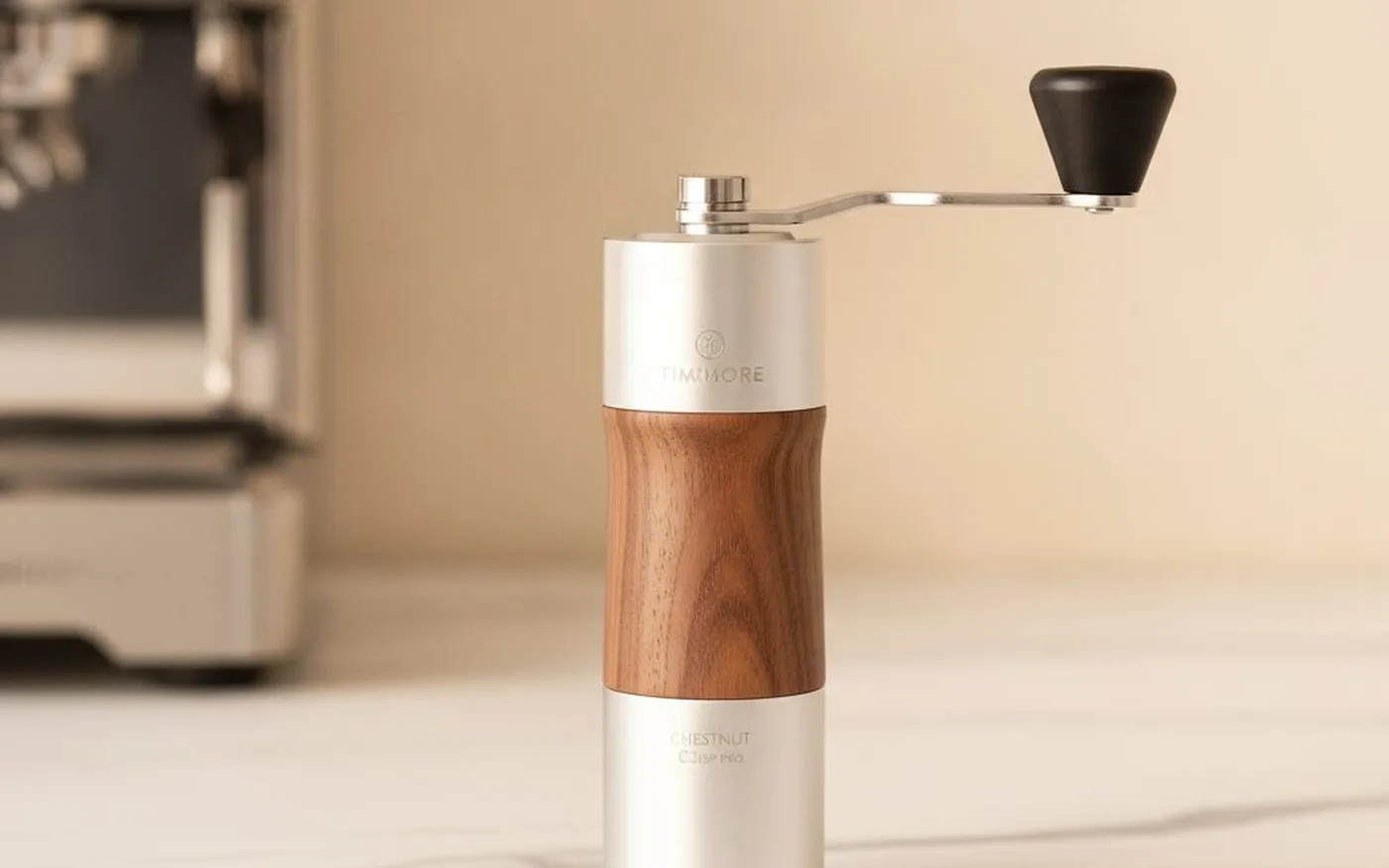
K-Ultra vs Timemore Chestnut C3 ESP Pro: The Timemore is the best value hand grinder for pure filter work under £100. The grind quality for V60 and Aeropress is genuinely impressive. Where it falls behind the K-Ultra is in espresso capability - the Timemore's adjustment range and particle distribution at fine settings are not matched for espresso dialling in. If you know you will never pull espresso, the Timemore is a serious contender and a smarter spend. If there is any chance espresso enters your brewing, the K-Ultra is the correct investment.
Where to Buy in the UK and Pricing
Sigma Coffee UK is the current UK 1Zpresso distributor and importer. This is the safest place to buy for warranty support and genuine UK stock.
| Retailer | Price (approx.) | Stock | Notes |
|---|---|---|---|
| Sigma Coffee UK | £229 | Live | UK distributor, recommended |
| Bean and Ground | £180-195 | Live | Reliable alternative, 7% commission |
| Amazon UK | £175-200 | Variable | Prime eligible; use if you need fast delivery |
Price fluctuates with variant (blue cerakote, black, silver) and batch availability. The blue cerakote typically carries a slight premium. Blue and silver are aesthetically different but functionally identical.
The warranty is covered by 1Zpresso via the UK distributor. Buy through Sigma Coffee UK to ensure UK-based warranty support without the need to ship internationally.
Frequently Asked Questions
Is the 1Zpresso K-Ultra worth it?
Yes, for anyone who brews both filter and espresso at home and wants one grinder to do everything well. Over 14 weeks of daily use it held grind consistency across V60, Aeropress, and espresso without compromising any of them. The external numeric ring makes switching between brew methods fast and repeatable. If you only ever pull espresso, the cheaper J-Max is the smarter buy - but if your brewing life involves more than one method, the K-Ultra earns its price.
Can the 1Zpresso K-Ultra make espresso?
Yes. The 48mm heptagonal burr and 20-micron-per-click adjustment give enough fine resolution to dial in espresso, and it produced consistent shots on both a Flair 58 and a Breville Bambino Plus across multiple sessions. It is a genuine all-rounder rather than an espresso specialist - so if you only pull espresso, the J-Max is the more targeted tool - but for home prosumer set-ups running medium to dark roasts, the K-Ultra performs at a high level.
What is the difference between the 1Zpresso K-Ultra and the K-Max?
Both models use an external numeric adjustment ring, but the K-Ultra steps at 20 microns per click versus the K-Max's 22 microns - giving you slightly finer resolution when dialling in espresso. The K-Ultra leans more all-round while the K-Max leans espresso. Grind quality is close between the two; the K-Ultra justifies its premium mainly through the finer click increment and method versatility. See the sibling comparison table above for the full breakdown. Choose K-Max if you primarily pull espresso and want to save money; choose K-Ultra if you switch between filter and espresso daily.
How long does the 1Zpresso K-Ultra take to grind 15g?
In testing it ground 15g in roughly 25-35 seconds depending on grind setting - faster at coarser filter settings, slower at fine espresso settings. That is about 4-6 seconds quicker per 15g dose than the Comandante C40 MK4. Wrist fatigue becomes noticeable past roughly 25g doses, so for large batch filter brewing, an electric grinder is more practical for daily use.
Where can I buy the 1Zpresso K-Ultra in the UK?
Sigma Coffee UK is the current UK 1Zpresso distributor and the recommended first choice, with Bean and Ground as a reliable alternative. Amazon UK also stocks it for Prime delivery. Prices sit around £175-229 depending on retailer and colour variant. Buying through Sigma Coffee UK or Bean and Ground supports UK-based warranty cover.
Does the 1Zpresso K-Ultra come with a warranty?
Yes. 1Zpresso grinders are covered by the manufacturer warranty, and buying through the official UK distributor, Sigma Coffee UK, ensures that cover is honoured in the UK without international shipping. Replacement parts - including the burr set and axle - are available in the UK. Check the current warranty terms at the point of purchase, as they can vary by batch and production year.
What grind setting should I use for V60 on the 1Zpresso K-Ultra?
Start around setting 35 on the numeric ring for a standard V60 at a 1:16.7 ratio and a 3:00 draw-down target, then adjust from there based on your pour pattern and bean density. Light roasts generally need a finer setting than medium roasts for the same brew time. Treat any published number as a starting point rather than a fixed rule - bean freshness and water temperature will also shift the result by a click or two in either direction.
Is the 1Zpresso K-Ultra better than the Comandante C40?
The K-Ultra matches the Comandante C40 MK4 Nitro Blade on filter clarity in our TDS testing while grinding faster and costing roughly 35% less. The Comandante edges ahead on cup sweetness on washed Ethiopian coffees and holds its resale value better in the specialty coffee community. For price-to-performance and method versatility (especially if espresso is in the mix), the K-Ultra is the better all-rounder for most UK home brewers at this price point.
Which 1Zpresso hand grinder should I get if I make both pour-over and espresso at home?
Get the K-Ultra. It is the one K-series model built to do both filter and espresso well, with a fine-enough adjustment step for espresso and a fast external ring for switching to pour-over without counting clicks. Only choose the espresso-only J-Max if you never brew filter, or the K-Max if you want to save money and lean espresso-primary in your brewing.
Final Verdict and Who Should Buy
The 1Zpresso K-Ultra is the best all-round hand grinder under £250 for home brewers who work across multiple brew methods. It matches the Comandante C40 MK4 on filter output, handles espresso at a level its price should not allow, and does both without the compromise you normally accept in a 'do-it-all' tool.
The case against is narrow: if you only pull espresso, buy the J-Max. If you primarily brew filter and budget is the priority, the Timemore Chestnut C3 ESP Pro delivers exceptional value at half the price. And if you are a filter-specialist with no espresso plans and a £270 budget, the Comandante's cup sweetness and long-term resale value make a genuine argument.
For everyone else - the home brewer who moves between V60 in the morning and a shot from a Flair or a Bambino at the weekend - the K-Ultra is the answer. Buy it from Sigma Coffee UK, the UK distributor, for warranty peace of mind and confirmed live stock.
A wellness entrepreneur and biohacker, James explores the intersection of hospitality and health - from clean fuel and recovery tools to mindful routines that build balance into daily life.