Wild Nutrition Magnesium Review UK 2026: Our Verdict


Food-Grown is real - but 80mg elemental dose covers just 21% NRV. The honest test of whether the premium is justified.
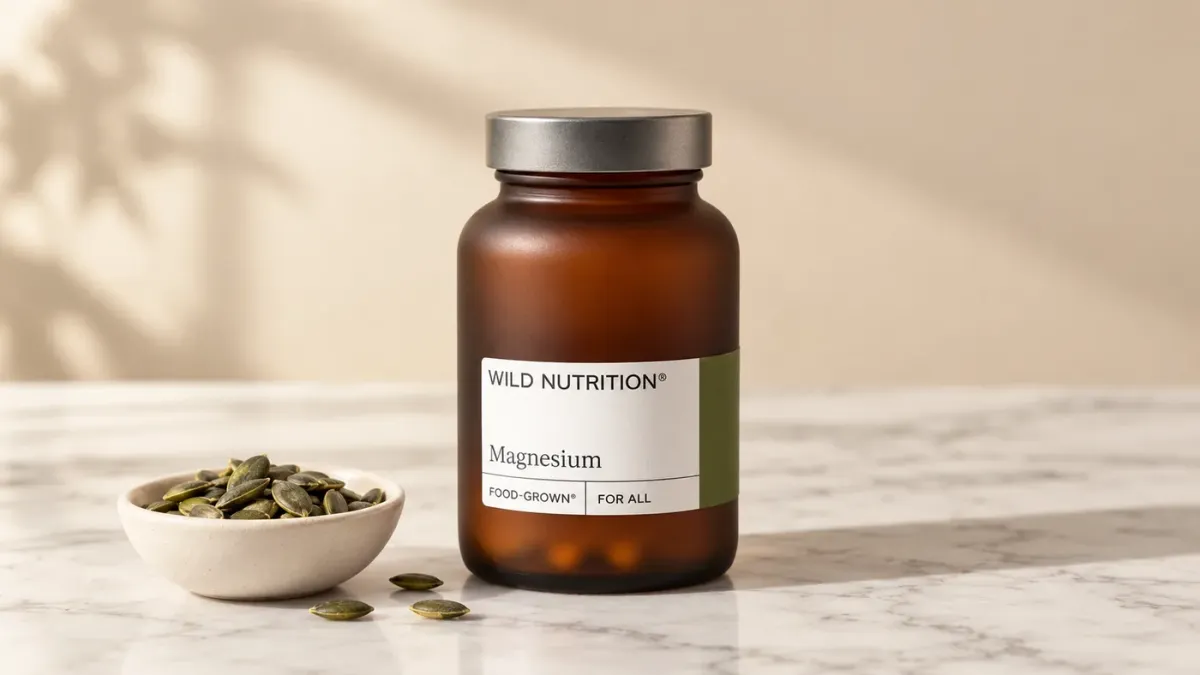
Table of Contents
Some of the links in this article are affiliate links, which help fund our independent review work at no extra cost to you. How we assessed these products is explained in this article and our Editor Lab methodology. No brand pays to appear, and no placement is guaranteed.
Wild Nutrition Food-Grown Magnesium is a clean, well-tolerated supplement at a premium price - but the 80mg elemental dose per serving is lower than most therapeutic options, covering only 21% of the UK NRV.
Wild Nutrition built its reputation on the phrase "Food-Grown." It appears on every product page, in every customer testimonial, and in nearly every question buyers ask before purchasing. The phrase is doing significant work on the label - and this review sets out to determine whether the science justifies what you pay.
I am a registered Nutritional Therapist who has run nutrition clinics at The Wellness Clinic at Harrods and holds a Diploma in Nutritional Therapy from the College of Naturopathic Medicine. I assess supplement formulations by checking elemental doses against reference values, reading the full ingredient list, and separating what the evidence supports from what is marketing language.
At a Glance
Verdict: Wild Nutrition Food-Grown Magnesium is a well-made supplement from a brand with genuine nutritional credentials. The Food-Grown process is real, not invented marketing. However, the elemental dose per serving (80mg from two capsules, approximately 21% of the UK NRV) sits below what most adults need from a single supplement if their dietary intake is already low. At around £0.60 to £0.70 per serving, it is premium-priced for its dose. Best suited to buyers who want a gentle, food-state magnesium for everyday maintenance rather than a high-dose therapeutic option.
Rating: 3.8/5
| Evaluation Criteria | Our Findings |
|---|---|
| Full review | Below |
| Best for | Gentle daily maintenance; food-form preference |
| Flagship product | Food-Grown Magnesium (60 capsules) |
| Shop | Wild Nutrition |
| Factor | Detail |
|---|---|
| Magnesium form | Food-Grown (complexed with yeast culture) |
| Elemental magnesium per 2-capsule serving | Approximately 80mg |
| % of UK NRV | Approximately 21% |
| Capsules per day (typical) | 2 |
| Price per serving (at time of writing) | Approximately £0.65 |
| Vegan | Yes |
| Artificial additives | None stated |
Who Is Wild Nutrition?
Before spending a premium on any supplement brand, it is worth understanding whether the company credentials hold up to scrutiny - or whether "food-grown" is simply packaging language. Wild Nutrition is a UK supplement brand founded in 2013 and headquartered in East Sussex. The company positions itself around "Food-Grown" nutrients - a proprietary process in which vitamins and minerals are cultured with living yeast or plant cells, so the nutrients are bound within a food matrix rather than existing as isolated synthetic compounds.
The brand is stocked at Holland and Barrett and sells direct through its own website. Its customer base skews towards women seeking natural health support, covering women hormonal health, pregnancy nutrition, and general wellness alongside standalone minerals.
Wild Nutrition holds B Corp certification and its products are formulated without unnecessary fillers or artificial additives - a credible quality signal in a market where those standards are not universal.
What Food-Grown Magnesium Actually Means
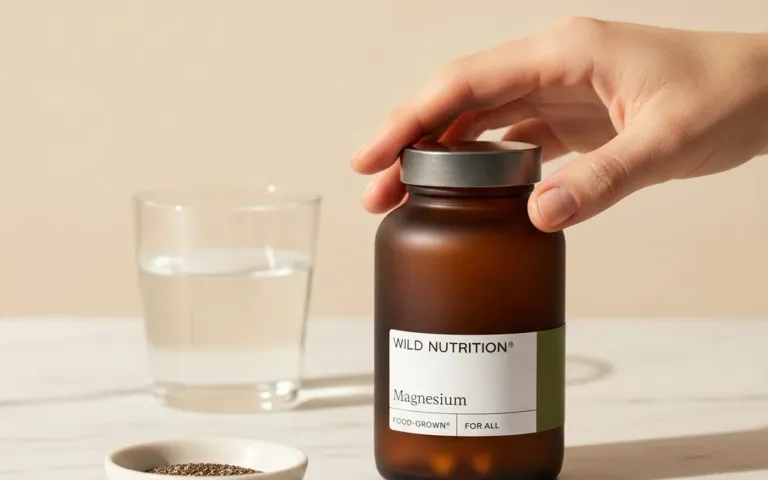
Does "Food-Grown" mean anything nutritionally, or is it a premium-sounding trademark that disguises a standard mineral supplement? When I reviewed the ingredient list and checked the production process against published research, the answer sits somewhere in between. "Food-Grown" is a trademarked process specific to Wild Nutrition. It is not a generic industry term, and it is not the same as simply combining magnesium with food. In the Wild Nutrition process, magnesium is cultured through a living yeast fermentation medium so that the mineral becomes bound within the cellular structure of the yeast - effectively carried inside a food matrix rather than added to it.
The rationale is that the body recognises nutrients embedded in a food matrix more efficiently than isolated mineral salts. EFSA supports the general principle that organic and chelated forms of magnesium show good bioavailability compared to inorganic forms such as magnesium oxide. Research on magnesium supplement forms consistently shows this advantage.
However, the specific bioavailability advantage of food-cultured magnesium over well-absorbed forms like magnesium glycinate vs malate or citrate has not been demonstrated in large clinical trials. Wild Nutrition does not publish comparative absorption data for Food-Grown versus glycinate - an honest gap in the positioning that buyers comparing forms should note.
Friction point 1 - elemental dose. The most important number on a magnesium label is the elemental magnesium figure, not the compound weight. Wild Nutrition Food-Grown Magnesium delivers approximately 80mg of elemental magnesium per two-capsule serving. The UK nutrient reference value (NRV) for magnesium is 375mg per day, per EFSA guidance. At 80mg, a two-capsule serving provides roughly 21% of that reference value - a meaningful contribution, but not a full replacement for dietary sources or a high-dose supplement.
By comparison, a standard magnesium glycinate supplement typically delivers 200mg to 400mg of elemental magnesium per serving. If you are looking for a supplement that fills a significant gap in a low-intake diet, that difference matters and has a direct cost-per-milligram implication.
Friction point 2 - cost per milligram. At approximately £0.65 per two-capsule serving and 80mg of elemental magnesium, Wild Nutrition costs around £8.10 per 1,000mg of elemental magnesium. A comparable dose from a quality magnesium glycinate supplement costs between £2 and £4 per 1,000mg. The premium for food-state delivery is real and meaningful.
This does not make Wild Nutrition poor value for every buyer. If tolerability is the priority - if synthetic magnesium salts have caused gastrointestinal discomfort for you in the past - a food-complexed form at a lower dose may be the better daily fit. But the value equation looks different for buyers who need a meaningful dose delivered efficiently.
See our guide to the best magnesium supplement UK options tested across all major forms.
Performance: Tolerability, Capsule Size, and Effect
The majority of magnesium supplement complaints centre on digestive discomfort - so tolerability is the practical test that matters most for daily use. On that measure, Wild Nutrition performs well. Two capsules per day is the standard protocol, though the label permits up to four capsules for a higher dose (approximately 160mg elemental).
Tolerability is genuinely good. The food-complexed form is unlikely to cause the loose stools or intestinal discomfort that some users report with magnesium oxide or higher-dose citrate supplements. NHS guidance notes that magnesium from food-state forms carries a lower risk of adverse effects than high-dose inorganic supplementation.
The lower elemental dose means the physiological signal is milder than from a 300mg to 400mg serving. Buyers switching from high-dose glycinate should expect a gentler profile - which may or may not be what they need.
Price and Value vs Standard Magnesium
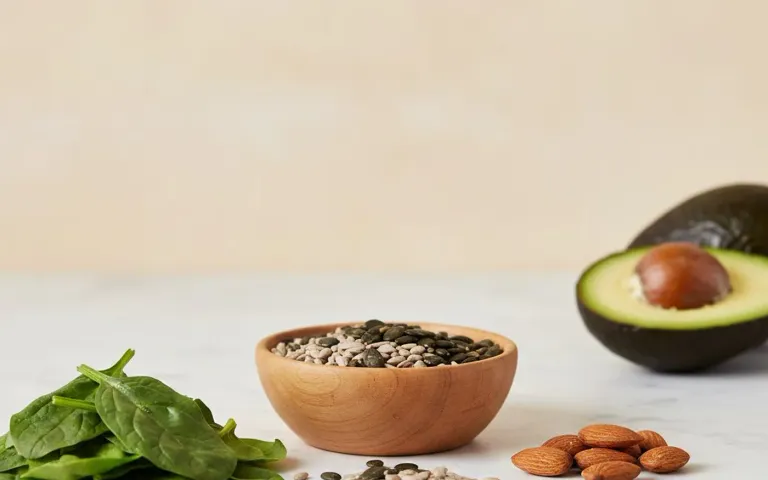
Wild Nutrition Food-Grown Magnesium retails at approximately £19.50 for 60 capsules (30 servings), giving a cost per serving of roughly £0.65. It is available direct from wildnutrition.com and from Holland and Barrett.
| Comparison | Wild Nutrition Food-Grown | Standard Magnesium Glycinate |
|---|---|---|
| Elemental dose per serving | ~80mg | ~200-400mg |
| NRV coverage | ~21% | ~53-107% |
| Cost per serving | around £0.65 | around £0.20-£0.40 |
| Cost per 1,000mg elemental | around £8.10 | around £2-4 |
| Tolerability | Excellent | Good (glycinate) |
| Bioavailability evidence | Plausible (limited comparative data) | Good (established for glycinate) |
Our magnesium glycinate vs malate guide covers the evidence on each organic magnesium form in more detail.

Pros and Cons
- Genuine food-state delivery process, not marketing terminology
- Excellent tolerability for sensitive digestive systems
- No artificial additives or unnecessary fillers
- B Corp certified; UK-based brand with clear formulation ethics
- Vegan-friendly capsules
- Low elemental dose (approximately 80mg per serving, 21% NRV) limits therapeutic usefulness for those with significant dietary gaps
- High cost per milligram of elemental magnesium versus comparable alternatives
- No comparative bioavailability data versus well-absorbed synthetic forms published by the brand
Who Should - and Should Not - Buy Wild Nutrition Magnesium
Buy if: You want a gentle, clean-ingredient magnesium for everyday top-up, you have experienced digestive discomfort with synthetic forms, and you are comfortable paying a premium for food-state delivery.
Do not buy if: You need a meaningful therapeutic dose (300mg or more of elemental magnesium per day) from a single supplement, you are comparing on cost per milligram, or you are looking to address diagnosed magnesium insufficiency - in that case, speak to a healthcare professional about appropriate dosing first.
If you are exploring the range of available UK products across multiple forms, our complete guide to best magnesium complex uk options covers multi-form blends with higher elemental doses alongside food-state choices.
For readers interested in the whole-food and clean-sourcing philosophy that underpins brands like Wild Nutrition, it extends beyond supplements - the same sourcing principles apply to what goes into your coffee cup. If that matters to you, our guide to mould-free coffee UK covers the cleanest tested options available in 2026.
Frequently Asked Questions
What type of magnesium does Wild Nutrition use?
Wild Nutrition uses its own Food-Grown process in which magnesium is cultured through a living yeast fermentation medium, binding the mineral within the yeast cell structure rather than adding it as an isolated salt. This produces a food-matrix form of magnesium rather than a conventional mineral compound such as glycinate, citrate, or oxide. The process is proprietary to Wild Nutrition and distinct from standard chelated forms.
Is Wild Nutrition magnesium any good?
Wild Nutrition magnesium is a well-formulated supplement with genuine quality credentials - B Corp certified, no artificial additives, and a real food-state delivery process. The key limitation is the elemental dose: approximately 80mg per two-capsule serving covers roughly 21% of the UK NRV. It is good for gentle daily maintenance and excellent for digestive tolerability, but not the strongest option for buyers needing a high therapeutic dose.
Is Wild Nutrition worth it?
It depends on what you need from a magnesium supplement. If tolerability is your priority and you respond poorly to synthetic magnesium forms, Wild Nutrition Food-Grown approach offers a genuine benefit that can justify the premium. If you need a high elemental dose at competitive cost, a quality magnesium glycinate or citrate supplement will deliver more magnesium per pound spent. The premium is real and the dose is low - both facts should be part of your purchasing decision.
Is there a downside to taking magnesium every day?
For most adults, daily magnesium supplementation within safe limits is well tolerated. The NHS advises that taking up to 400mg of magnesium as a supplement per day is unlikely to cause harm. Very high doses - above 400mg from supplements alone - can cause diarrhoea, nausea, and abdominal cramping. Wild Nutrition 80mg per serving sits well within the safe daily range, making it a low-risk option for regular use. If you have kidney disease or take certain medications, consult your GP before supplementing.
Is Wild Nutrition magnesium glycinate?
No. Wild Nutrition magnesium is not magnesium glycinate. It uses the brand proprietary Food-Grown process, which involves culturing magnesium through living yeast cells to create a food-matrix form. Magnesium glycinate is a chelated form in which magnesium is bonded to the amino acid glycine. Both are organic forms with good tolerability profiles, but they are produced differently and deliver different elemental doses per capsule.
What are the side effects of Wild Nutrition magnesium?
Side effects from Wild Nutrition Food-Grown Magnesium are uncommon at the recommended two-capsule dose, partly because the 80mg elemental dose is low and partly because food-complexed forms tend to be gentler on the gut than inorganic mineral salts. At higher doses - four capsules or above - some users may experience loose stools. If you are taking medications that interact with magnesium, including some antibiotics and diuretics, check with a pharmacist before use.
Is Wild Nutrition magnesium vegan?
Yes. Wild Nutrition Food-Grown Magnesium is vegan-friendly. The capsules are made from cellulose (plant-derived) rather than gelatine, and the Food-Grown fermentation process uses yeast cultures rather than animal-derived substrates. The brand does not use artificial colours, preservatives, or fillers in this product.
How much elemental magnesium is actually in Wild Nutrition Food-Grown Magnesium, and is that enough?
Wild Nutrition Food-Grown Magnesium delivers approximately 80mg of elemental magnesium per two-capsule serving, which covers roughly 21% of the UK daily NRV of 375mg. For a healthy adult with a reasonably varied diet, this is a useful daily top-up rather than a corrective dose. If your dietary magnesium intake is low - common with restricted diets or high-processing food patterns - you would need either more servings per day or a higher-dose supplement to approach the NRV from supplementation alone. EFSA guidance and the British Dietetic Association both stress food first: the BDA notes that no supplement provides the same nutritional benefits as a healthy balanced diet, so a supplement works best as a top-up for identified gaps.

A registered Nutritional Therapist and member of BANT, Clemmie blends science with a holistic approach to wellbeing.