Vivid Matcha Review UK 2026: Rated and Compared
An evidence-led verdict on dose, sourcing, taste and whether it earns its price.
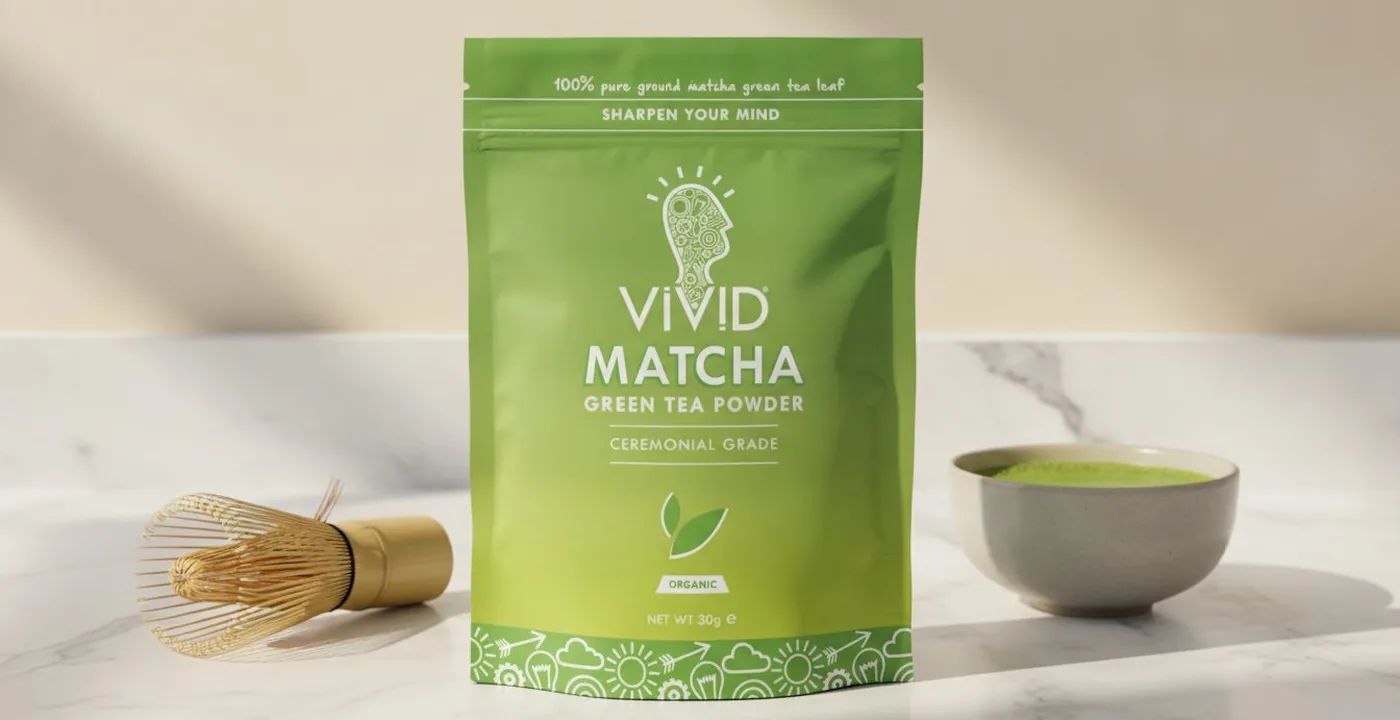
Table of Contents
Some of the links in this article are affiliate links, which help fund our independent review work at no extra cost to you. Every recommendation is based on hands-on testing through The Editor Lab methodology. No brand pays to appear, and no placement is guaranteed.
Vivid matcha is a solid everyday organic option for latte preparation, let down mainly by a per-gram cost roughly twice that of comparable specialist alternatives. It earns its shelf space for in-store convenience and organic certification; it does not earn the price premium over DTC brands if you are drinking it plain-whisked. The Tesco and Holland and Barrett reviews that range from "bitter and grassy, barely any matcha per serving" to "vivid green, slightly nutty, and really well balanced" reflect a real preparation split - not a product defect - and that is what this review sets out to explain honestly.
I have spent more than fifteen years writing about food and drink across London and thirty-plus countries, and I am Head of Editorial at Balance Journal. I assessed Vivid’s organic matcha powder using the label, price data and verified buyer reviews, to give a fair read on how it suits plain-whisked, latte and cold preparation, and on value per gram.
“Vivid matcha is the product that appears in a reader’s trolley long before they know whether it is good. This review is the honest answer to whether it earns that shelf placement.”Snita Pandoria, Head of Editorial, Balance Coffee
Editor's Note
Balance Journal is published alongside Balance Coffee, founded by James Bellis. The matcha cluster carries no Balance Coffee products. This review is editorially independent.
Who Is Vivid and What Do They Actually Sell?
Vivid Drinks was founded by James Shillcock in 2013 after he encountered matcha in Asia and wanted to bring it to mainstream UK retail. That origin story matters because it frames what Vivid is: not a specialist Japanese DTC matcha house, but a UK organic wellness brand built for mass retail. The entire product range reflects this.
There are two distinct product lines, and the naming overlap creates genuine confusion for new buyers.
The first is the ready-to-drink matcha iced tea: 330ml tetra packs naturally flavoured with fruit juice (Pear and Rhubarb, Grape and Elderflower, Original, and Lemon). Under 10 calories per carton, no refined sugar. They are not the subject of this review.
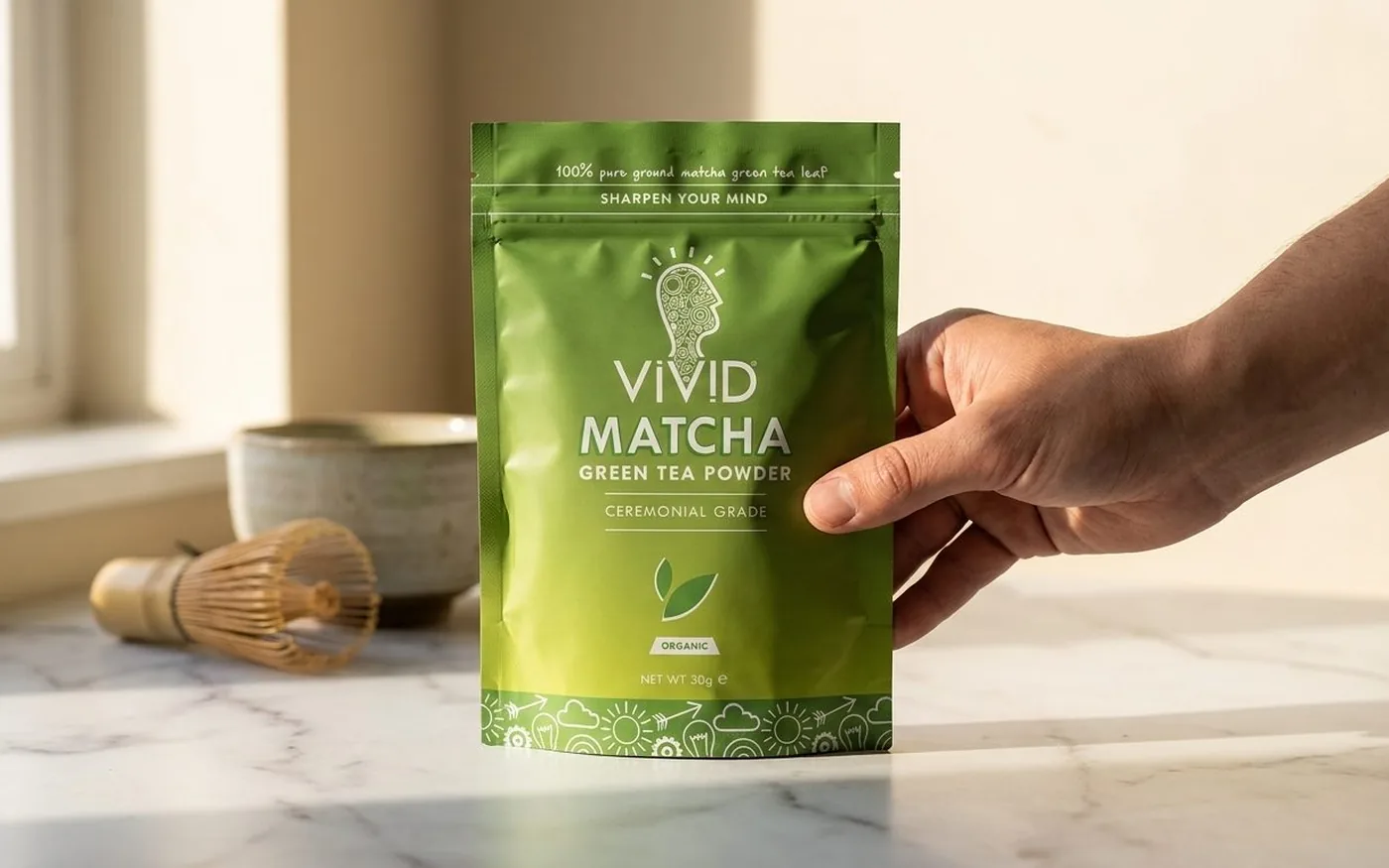
The second is what this review covers: the Vivid Organic Matcha Green Tea Powder. Sold as a 30g resealable pouch at Holland and Barrett (around £17.75) and as a 7x1g sachet format at Tesco (around £4.50). Vivid markets the powder as organic and labels it ceremonial grade, though the "bitter and grassy" buyer reviews suggest a profile below what dedicated ceremonial-grade brands produce - a distinction that matters when comparing it to specialist brands.
If you picked up Vivid on a Tesco shelf and are unsure whether it is the powder or the drink: the tetra packs and powder pouch look nothing alike. The powder is the resealable green foil pouch.
How I Assessed the Vivid Matcha Powder
I assessed Vivid against the Balance Journal Editor Lab criteria for powdered beverages.
Sources: the product label and listing, Vivid’s published product detail, and verified buyer reviews at Tesco and Holland and Barrett.
Assessment criteria: colour, bitterness and umami as buyers report them, and how those reports vary across plain-whisked, latte and cold preparation. Water at around 70 degrees Celsius matters, because high heat amplifies bitterness in any matcha. I also ran a price comparison with PerfectTed matcha (around £8.99 per 30g) to give the value question a concrete rather than theoretical answer.
Grade, Colour, and Taste: What the Vivid Matcha Delivers
Colour is the first thing buyers notice. Reviewers describe Vivid’s powder as vivid green, which is a legitimate quality signal: dull, khaki-green matcha indicates oxidation or low grade.
Whisked plain: This is where the review split sits. The "bitter and grassy" complaints fit plain-whisked preparation, where bitterness in any matcha rises with dose and with water that is too hot. One gram (a single sachet) at around 70 degrees is the gentler starting point.
As an oat milk latte: This is where Vivid fits best. Milk rounds out bitterness, and the reviews that call it "slightly nutty, and really well balanced" are consistent with this kind of preparation.
Cold: Cold preparation is the most forgiving, because cooler water draws out less bitterness. A good summer option.
Overall quality verdict: A solid everyday organic matcha on the label and buyer evidence. The buyer reviews do not place it at ceremonial grade in taste: the bitterness complaints point to less umami depth than shade-grown ceremonial powder. For daily latte preparation, reviews are more positive. The "bitter and grassy" complaints are real but context-dependent: over-preparation amplifies them significantly.
Sourcing and Transparency
Vivid’s powder carries EU Organic certification, a meaningful standard requiring no synthetic pesticides or herbicides in cultivation. The organic claim is verifiable on packaging and is not a marketing label.
What Vivid does not publish is the specific harvest region in Japan, harvest season, or any third-party heavy-metal testing results. Sourcing transparency sits below what specialist brands provide - Bird and Blend publishes harvest origin and tea house partnerships; Vivid does not.
This is not grounds for avoiding the product. The UK Food Standards Authority food-grade standards apply, and organic certification removes the primary pesticide concern. But if sourcing transparency matters to you, Vivid will not satisfy that need.
Price and Value Per Gram
| Product | Pack size | Price | Price per gram |
|---|---|---|---|
| Vivid Organic Matcha (H&B) | 30g | around £17.75 | £0.59/g |
| Vivid Organic Matcha (Tesco sachets) | 7x1g | around £4.50 | £0.64/g |
| PerfectTed Matcha | 30g | around £8.99 | £0.30/g |
| Bird and Blend Matcha | 50g | around £12.50 | £0.25/g |
| Jade Leaf Matcha | 30g | around £8.00 | £0.27/g |
The Tesco sachet format works out to around £643 per kilogram - a figure that circulates as a gotcha. It is accurate, but the useful number is cost per serving: around £0.64 per cup. That is still roughly twice the per-cup cost of PerfectTed or Jade Leaf, but it is not the catastrophic overpay the per-kilogram figure implies.
The Holland and Barrett 30g pouch at around £17.75 is better value within the Vivid range - the resealable format preserves freshness better than individual sachets once opened.
The honest per-gram read: Vivid costs roughly twice the price of comparable DTC alternatives for what the label and buyer reviews suggest is similar everyday quality. The premium reflects organic certification costs and retail distribution margin - shelf space in Holland and Barrett and Tesco is not free.
Powder vs RTD Drinks: Which to Buy?
Buy the powder if: You want to make lattes at home, control serving strength, or add matcha to smoothies and recipes.
Buy the RTD drinks if: You want a no-faff cold matcha drink with fruit flavour on the go. They are not a substitute for the powder for latte-making.
For anyone who has seen "Vivid matcha" on a shelf or social media, the powder is almost certainly what they are looking for.
Pros, Cons, and Who Should Buy
Where Vivid does well: Organic certification is a meaningful standard at this price point. Reviewers describe the colour as vivid green. Latte preparation draws the most positive reviews. Wide availability in-store without a minimum order. No refined sugar or artificial ingredients.
Where it falls short: Roughly twice the per-gram cost of comparable DTC alternatives such as PerfectTed and Jade Leaf. No sourcing transparency beyond organic certification. Bitterness at higher doses requires careful preparation. The ‘premium’ label can mislead buyers expecting ceremonial-grade umami depth.
Buy if: You prefer buying in-person from Holland and Barrett or Tesco. You make lattes primarily and want an organic option. You are trying matcha for the first time and want a low-commitment Tesco entry point.
Skip if: You want deep umami for plain-whisked preparation, sourcing transparency, or the lowest per-gram specialist price. For the full comparison across all UK matcha brands and price points, see our best matcha brands UK guide.
If you are rotating off coffee and looking for a low-jitter daily ritual with functional benefits, best lions mane coffee uk is an adjacent category worth exploring alongside matcha.
Frequently Asked Questions
Is Vivid matcha worth it?
Vivid is worth the price for buyers who value organic certification and in-store convenience without a minimum order. For latte preparation, buyer reviews are largely positive. It is harder to justify for plain-whisked drinkers: PerfectTed (around £8.99 for 30g) delivers comparable quality at roughly half the per-gram cost.
Is Vivid matcha good quality?
The organic certification is real and meaningful - it rules out synthetic pesticides, the primary quality concern for everyday matcha. Reviewers describe the colour as vivid green, not dull or oxidised. Bitterness increases with dose and water temperature, explaining the split Tesco reviews. At one to two grams and 70 degrees, quality is respectable for a mass-market organic powder.
Where can I buy Vivid matcha in the UK?
The 30g powder pouch is at Holland and Barrett for around £17.75 - the best value format in the range. Tesco stocks 7x1g sachets for around £4.50, a higher per-gram cost with no minimum commitment. The powder and RTD drinks are also available at vividdrinks.com. The sachets suit first-time buyers; the pouch suits regular drinkers.
Is there a downside to drinking matcha every day?
The main consideration is caffeine. Matcha contains roughly 30 to 70mg per gram depending on grade and preparation. The NHS advises a maximum of 400mg daily for healthy adults - one to two grams of matcha per cup sits well within that for most people. Matcha tannins can reduce iron absorption if consumed close to an iron-rich meal.
Is matcha healthier than coffee?
Matcha and coffee offer different profiles rather than one being simply healthier. Matcha delivers caffeine alongside L-theanine, shown in peer-reviewed research to reduce jitteriness while maintaining alertness. EFSA assesses green tea antioxidant claims cautiously, noting the evidence requires more consistency. For most people, matcha is a useful daily alternative or complement to coffee rather than a clear replacement.
Why do I feel jittery or strange after drinking matcha?
The most common cause is caffeine sensitivity on an empty stomach. A second cause is over-preparation: Vivid sachets are single 1g servings, but buyers used to double-dosing coffee may overshoot their tolerance. Starting with one gram in a latte with food removes most common causes. A small number of people experience a histamine response to green tea specifically.
Is Vivid matcha ceremonial or culinary grade?
Vivid labels the product ceremonial grade - the official product name is Vivid Matcha Organic Ceremonial Grade Green Tea Powder. Whether it performs at ceremonial quality level is a separate question: reviewers describe a vivid green colour, but the "bitter and grassy" complaints suggest a less complex umami profile than dedicated shade-grown ceremonial brands. For lattes and cooking the distinction matters little; for drinking whisked plain, it matters more.
What is the best time to drink matcha?
Morning or early afternoon works best for most people. The L-theanine and caffeine combination produces calm alertness peaking within 30 to 45 minutes and tapering over two to four hours - a smoother curve than coffee. Caffeine-sensitive individuals should avoid matcha within two to three hours of sleep. Most people find it easier on the stomach than coffee.
Related Guides
A seasoned food and lifestyle writer with over a decade in London's hospitality scene, Snita explores the culture of dining, drink, and connection.