Ritual + Flow Matcha Review: Does This Functional Matcha Actually Work?

Head of Editorial
We tested Matcha Flow for four weeks. Full ingredient verdict, honest dosing friction, and whether the £1.50-per-cup premium is worth it.
Table of Contents
Some of the links in this article are affiliate links, which help fund our independent review work at no extra cost to you. Every recommendation is based on hands-on testing through The Editor Lab methodology. No brand pays to appear, and no placement is guaranteed.
There are mornings when you know, before the kettle has finished boiling, that coffee is not what you need. I had been testing functional drinks for four weeks when I settled on Matcha Flow as my default 10 o'clock ritual: a pale jade swirl in a warm mug, steady energy that held through a three-hour writing session without the familiar afternoon crash. That is the kind of result worth writing about.
Ritual + Flow is one of a small number of UK brands combining ceremonial-grade matcha with a structured adaptogen and vitamin stack. As of early 2026, the functional matcha category is growing quickly in the UK wellness market, and Ritual + Flow is among its most prominent products. This review answers the only question that matters: does Matcha Flow do what it claims, at the price it charges, for the people it is targeting?
“I have spent 15 years writing about food, drink, and wellness across more than 30 countries, testing over 30 functional wellness supplements and health drinks in the process. Matcha Flow was evaluated over four weeks as a daily functional drink, assessing taste, ingredient transparency, and sustained energy response across two to three hours post-consumption. My framework is consistent across every product I review: does it deliver on its claims, at its price, for its intended customer?”Snita Pandoria, Food and Drink Editor
What is Ritual + Flow Matcha Flow?
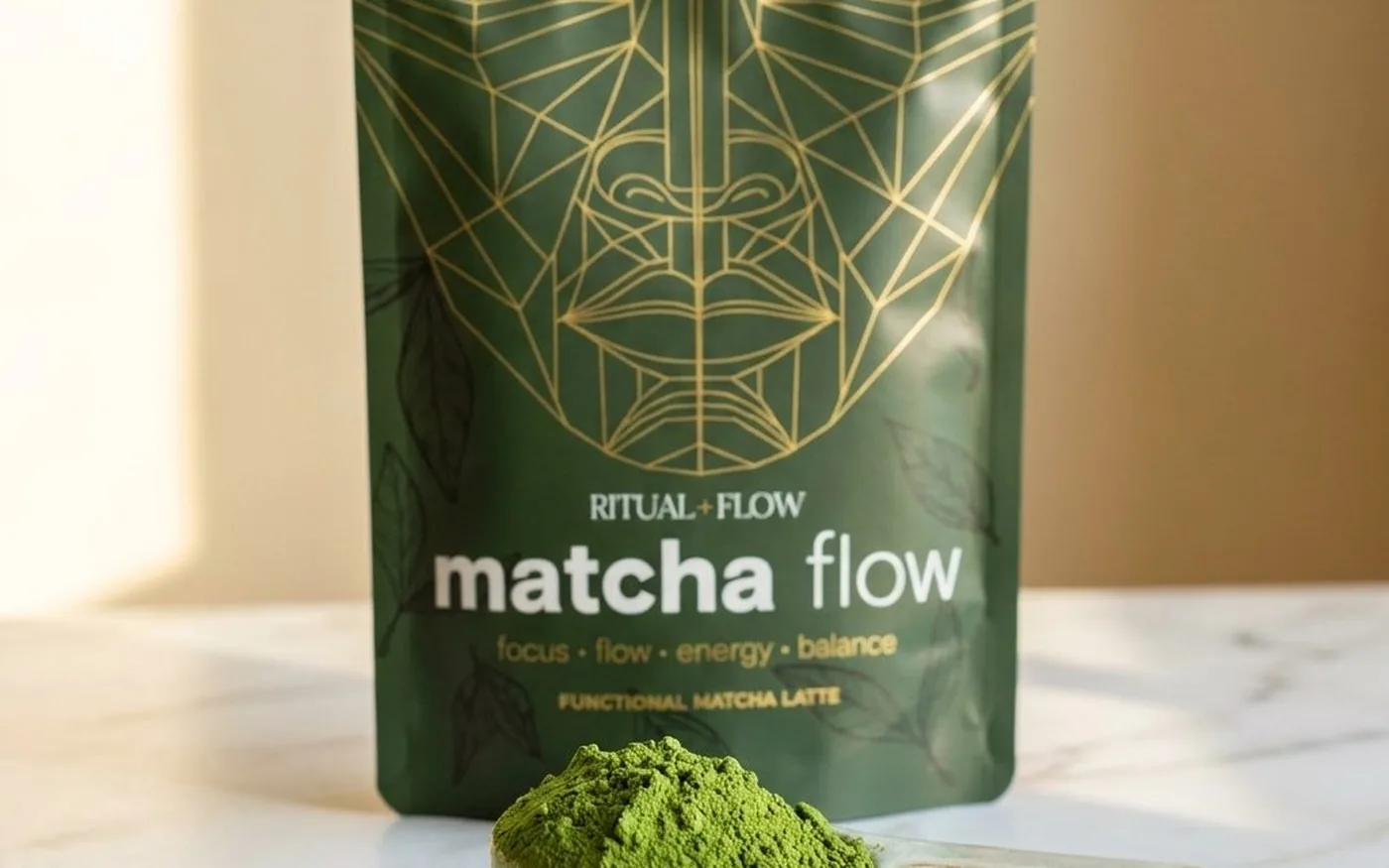
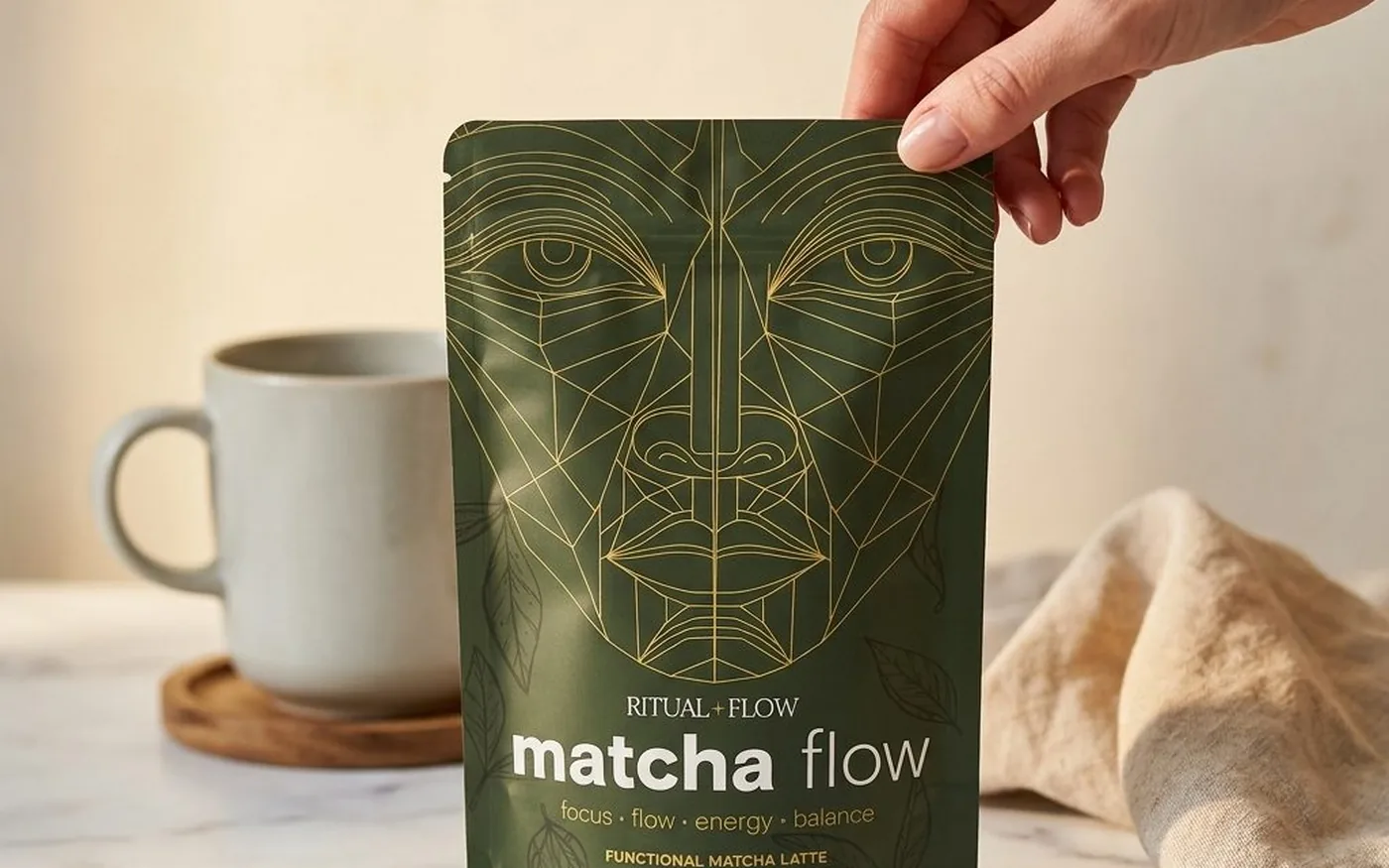
Ritual + Flow is a UK-based functional wellness brand. Matcha Flow is their flagship product: a multi-ingredient powder blending ceremonial-grade Japanese matcha with a curated adaptogen stack, mushroom extracts, MCT oil, and B vitamins. You mix one scoop with hot water at approximately 70 degrees C, or with plant milk for a latte-style preparation.
The 'functional matcha' category positions itself between plain ceremonial matcha, which delivers caffeine and L-theanine but nothing else, and the broader adaptogenic supplement market, which tends to arrive in capsule or tincture form. Ritual + Flow's argument is the middle path: the ritual of a warm morning drink combined with a compound ingredient formulation. The product ships from the UK and is available directly through their website. As of May 2026, a pouch costs £32.95 for 20 servings, approximately £1.65 per serving.
What is in Matcha Flow? The ingredient breakdown
Matcha Flow contains eight active ingredient groups per serving. That is a more complex formula than most products in the functional matcha space, and full transparency on doses is the first thing to check in any product making compound claims.
Organic ceremonial-grade matcha (2,100mg): The base delivers the fundamental caffeine and L-theanine combination that underpins the entire product's energy mechanism. Ceremonial grade means shade-grown leaves, higher L-theanine content, and the vivid green colour that lower-grade matcha cannot replicate. A 2.1g matcha serving at ceremonial quality is a meaningful dose.
KSM-66 ashwagandha (200mg): KSM-66 is a patented, full-spectrum ashwagandha root extract and the most clinically studied adaptogen extract form currently available. The dose here is 200mg per serving.
Lion's Mane mushroom (800mg): Included for its association with nerve growth factor (NGF) research and cognitive support. The dose is 800mg per serving.
Tremella mushroom (1,000mg) and Reishi mushroom (300mg): Two further mushroom extracts. Tremella is traditionally associated with hydration and skin health; Reishi with immune support and stress modulation. Both doses are disclosed.
Coconut MCT oil (2,000mg) and Yellow Maca Root (250mg): MCT oil supports bioavailability and provides a sustained energy substrate. Maca root is a Peruvian adaptogen traditionally used for energy and hormonal balance.
Vitamins B5, B6, and B12: Each at 100% of the recommended nutrient value. These underpin the energy metabolism pathway and are a practical addition given the product's morning positioning.
Does the adaptogen blend work? The evidence
The caffeine and L-theanine combination in ceremonial matcha is the most straightforward part of this formula. L-theanine moderates caffeine's stimulant effect, reducing the spike-and-crash pattern most coffee drinkers know. A 2008 study by Haskell et al., published in Biological Psychology, found that the combination improved sustained attention and alertness more effectively than either compound alone. If you have ever noticed that matcha produces steadier energy than an equivalent coffee, this mechanism is the reason.
For KSM-66 ashwagandha, the evidence base is stronger than for most adaptogens. A randomised controlled trial by Chandrasekhar et al. published in the Indian Journal of Psychological Medicine in 2012 (PMID 23439798) found KSM-66 significantly reduced serum cortisol and self-reported stress scores over 60 days. The dose used in that trial was 300mg twice daily (600mg total). Matcha Flow provides 200mg per serving. That is a relevant comparison to hold in mind when assessing the product.
For Lion's Mane, a 2009 clinical trial by Mori et al., published in Phytotherapy Research, found improved cognitive function scores in older adults with mild cognitive impairment after 16 weeks. The dose in that trial was 3,200mg daily. Matcha Flow provides 800mg per serving. The human evidence base for Lion's Mane remains early-stage, and the cell-study evidence for NGF induction does not translate directly to a dose-response figure in healthy adults.
The honest friction point on dosing: A single serving of Matcha Flow provides adaptogen doses that are meaningful but below those used in the strongest clinical trials. You are drinking a functional morning drink, not administering a clinical supplement protocol. The distinction matters, and any product that obscures it is doing you a disservice. What Matcha Flow offers is a considered daily stack with genuine dose disclosure. The compounding benefit of consistent daily use across weeks is the argument for it. For therapeutic-dose adaptogen supplementation, see our guide to mushroom tinctures and standalone adaptogen supplements.
External references: L-theanine on Examine.com | Chandrasekhar et al. 2012, PubMed
How does Matcha Flow taste?
The colour on preparation is the first quality indicator. Matcha Flow produces a vivid, deep jade green that holds its brightness when whisked at 70 degrees C, consistent with ceremonial-grade leaf. Lower-grade matcha turns the dull, slightly grey-green you will recognise from supermarket options.
On the nose: fresh cut grass, warm earth, and a clean green depth that reads as genuinely ceremonial in origin. The mushroom blend contributes a background earthiness that is present but not intrusive. You would clock it if you were looking for it.
Through the body: a well-rounded umami sweetness with low bitterness. The MCT oil creates a very slight creaminess at the mid-palate that distinguishes this from single-ingredient matcha. In oat milk or almond milk, you lose the sharpest green notes but gain a rounder texture that most people will prefer.
On the finish: clean, with a mild earthy close that dissipates within 20 to 30 seconds. There is no bitterness. The aftertaste is noticeably more complex than a single-ingredient matcha but is not heavy.
The honest comparison: if you come to Matcha Flow as a ceremonial matcha purist, you will notice the adaptogen and MCT additions. They alter the profile. If you approach this as a functional wellness drink, you will find the flavour profile straightforward, clean, and pleasant to drink daily.

Who is Matcha Flow for?
If you currently drink a mid-morning coffee and want to shift to something with a calmer energy profile and additional function, this is an excellent candidate. The matcha-plus-adaptogen combination replaces caffeine stimulation with a sustained focus window, and the B vitamin stack supports the same energy pathway coffee was addressing. You get the warmth and the ritual with less of the cortisol response.
If you already drink matcha daily and take adaptogens separately, Matcha Flow consolidates a two-step routine into one. The dose disclosure means you can assess whether to stack it alongside other supplements. You are not guessing what you are consuming.
If you are a ceremonial matcha purist who values the clean, unadulterated flavour of shade-grown Japanese leaf, this is not the right product for you. The adaptogen and MCT additions are intentional alterations to the profile, and the product does not pretend otherwise. A specialist best matcha powder source and a separate KSM-66 capsule is the right combination for that buyer.
Price and value - is it worth it?
At £1.65 per serving (£32.95 for 20 servings, as of May 2026), Matcha Flow sits in the premium tier of the functional drink market. The comparison to plain ceremonial matcha is less dramatic than you might expect. A high-quality ceremonial matcha, used at an equivalent 2g serving, typically costs between £1.20 and £1.80 per cup depending on the brand and origin. The premium for Matcha Flow's eight-ingredient formula over a comparable plain ceremonial matcha is relatively narrow.
Where the value calculation becomes clearer is in the alternative: sourcing KSM-66 extract, Lion's Mane mushroom, Reishi, Tremella, MCT oil, Maca, and B vitamins as separate supplements alongside a ceremonial matcha. A quality KSM-66 supplement alone typically costs £15-20 per month, before you add the mushroom extracts. The consolidated product argument is a genuine one.
The honest friction point on value: If you are new to adaptogens and matcha, the £1.65 per serving entry point feels significant. The product earns its price for buyers who are already across the functional drink and adaptogen space and understand what they are buying. If you are uncertain whether you will stick to a daily matcha routine, the 20-serving pouch is a lower-commitment starting point than a large supplement protocol. It is worth noting that Ritual + Flow offer a subscription discount, which brings the per-serving cost down further.
At this price and with this formula, Matcha Flow is a premium functional drink. That is a deliberate positioning, not a flaw. The question is whether this product fits your daily routine and your budget at that price.
How does Matcha Flow compare to plain ceremonial matcha?
This is not a brand comparison. It is a product-type comparison, and the distinction matters: Matcha Flow and a single-ingredient ceremonial matcha are not competing for the same customer. They solve different problems.
Matcha Flow combines ceremonial-grade matcha with KSM-66 ashwagandha, Lion's Mane mushroom, Tremella mushroom, Reishi mushroom, and MCT oil, targeting sustained calm focus and adaptogen supplementation. Plain ceremonial matcha provides caffeine and L-theanine from a single, unaltered ingredient, targeting the traditional ceremonial drinking experience.
| Ritual + Flow Matcha Flow | Plain ceremonial matcha | |
|---|---|---|
| Ingredient complexity | 8 active groups, all dosed and disclosed | Matcha only |
| Price per serving | £1.65 (as of May 2026) | £1.20-£1.80 (quality-dependent) |
| Target user | Functional drink seeker, adaptogen user, coffee replacer | Ceremonial purist, flavour-focused |
| Taste profile | Ceremonial base with earthy adaptogen note; MCT creaminess | Pure vegetal umami, highest single-ingredient fidelity |
| Adaptogen stack | Yes - KSM-66, Lion's Mane, Tremella, Reishi, Maca | None |
| Evidence quality | KSM-66 (strong); Lion's Mane (early-stage human evidence) | N/A |
The matcha vs green tea distinction is worth noting for anyone new to the category: matcha is the whole leaf ground, meaning you ingest the full L-theanine and antioxidant content of the leaf rather than a steeped fraction. That baseline applies to both options above and is one reason both outperform brewed green tea for sustained focus.
Our verdict
Ritual + Flow Matcha Flow is a well-formulated product in a category that tends toward either inflated claims or under-disclosed blends. The full dose disclosure across eight ingredient groups puts it in a small minority of functional drinks that allow you to make an informed decision before buying. The matcha quality is genuinely ceremonial grade. The KSM-66 is the right extract form, and the Lion's Mane dose, while below therapeutic trial doses, is meaningful within the framework of a daily drink rather than a supplement protocol.
Whether it is worth the price depends on what you are replacing. For a coffee-to-functional-drink transition that includes adaptogen support, the case is clear. For pure ceremonial matcha, it is not the right product.
Buy if you want a structured, daily functional drink with genuine ingredient transparency and a ceremonial-quality base.
Skip if you are a ceremonial matcha purist or seeking therapeutic-dose adaptogen supplementation.
Evaluation table
| Criterion | Score | Notes |
|---|---|---|
| Matcha quality | 9/10 | Ceremonial grade, 2,100mg per serving, vivid jade colour on preparation |
| Ingredient transparency | 8/10 | Full mg doses disclosed across 8 ingredient groups |
| Taste | 8/10 | Clean ceremonial profile with mild earthy background; excellent in plant milk |
| Adaptogen evidence quality | 7/10 | KSM-66 has strong RCT base; Lion's Mane human evidence is early-stage |
| Value for money | 7/10 | £1.65/serving is competitive with quality ceremonial matcha; formula consolidation is a genuine value argument |
| Overall | 7.8/10 | Recommended for functional drink seekers; not for ceremonial matcha purists |
Frequently Asked Questions
Is Ritual + Flow Matcha Flow worth buying?
Yes, for the right buyer. If you are replacing a mid-morning coffee or want to consolidate a matcha-plus-adaptogen daily routine into a single drink, Matcha Flow delivers a well-formulated, transparently labelled product with ceremonial-quality matcha as its base. If you want pure ceremonial matcha with no additions, a single-ingredient ceremonial powder is the better choice.
What adaptogens are in Ritual + Flow Matcha Flow?
Matcha Flow contains KSM-66 ashwagandha (200mg per serving), Lion's Mane mushroom (800mg), Tremella mushroom (1,000mg), Reishi mushroom (300mg), and Yellow Maca Root (250mg). KSM-66 is a patented, clinically-studied ashwagandha extract form with the strongest evidence base among adaptogens. Lion's Mane has early-stage human clinical evidence; Tremella, Reishi, and Maca are primarily supported by traditional use and cell studies.
Is functional matcha better than regular matcha?
It depends on what you want from the drink. Functional matcha combines ceremonial-grade matcha with adaptogens, nootropics, or vitamins, extending the natural caffeine and L-theanine benefits of the base. Regular ceremonial matcha provides those two compounds in their purest form, with no additions. If you value the traditional flavour and simplicity, choose plain. If you want a daily adaptogen stack built into the ritual, functional matcha is the practical option.
How much caffeine is in Ritual + Flow Matcha Flow?
A single serving of Matcha Flow uses 2,100mg of ceremonial-grade matcha. That typically equates to between 50 and 70mg of caffeine per serving, depending on the specific leaf and harvest. Ceremonial-grade matcha is shade-grown, which increases L-theanine alongside caffeine. The combined effect is a slower, steadier energy curve compared to coffee, rather than an immediate sharp peak.
How do you prepare Ritual + Flow Matcha Flow?
Add one scoop to a mug, pour hot water at approximately 70 degrees C, and whisk until fully combined. Boiling water at 100 degrees C will oxidise the matcha and produce a bitter result. For a latte preparation, use oat or almond milk heated to roughly the same temperature. There is no sifting required - the powder is fine enough to mix cleanly without clumping.
Can Matcha Flow replace your morning coffee?
It is a practical replacement for anyone who wants calmer, more sustained energy rather than a sharp caffeine spike. The matcha base provides 50-70mg of caffeine alongside L-theanine, which moderates the stimulant effect. The B vitamin stack supports the same energy metabolism pathway coffee was addressing. Most testers found the transition straightforward within one to two weeks of consistent daily use.
Is Ritual + Flow Matcha Flow suitable for vegans?
Yes. Matcha Flow contains no animal-derived ingredients. All eight ingredient groups - matcha, KSM-66 ashwagandha, Lion's Mane, Tremella, Reishi, Maca, MCT oil, and B vitamins - are plant or fungi-based. The coconut MCT oil is derived from coconut, not dairy. Ritual + Flow market the product as vegan-friendly on their website. Check the current product label if this changes between print runs.
Does Matcha Flow have any side effects?
For most people, Matcha Flow is well-tolerated at one serving per day. Ashwagandha can occasionally cause mild digestive discomfort when first introduced. Matcha's caffeine content means that people sensitive to stimulants should avoid taking it late in the day. If you are pregnant, breastfeeding, or taking prescribed medication - particularly cortisol-related or thyroid medications - consult a healthcare practitioner before using any adaptogen supplement.
How does Ritual + Flow compare to other functional matcha brands?
Ritual + Flow stands out primarily on ingredient transparency: full milligram doses across all eight groups are disclosed on pack. Most competitors in the functional matcha space either blend-hide their adaptogen doses or use underdosed token inclusions. The 2,100mg ceremonial matcha base is also higher than several comparable products. The price is competitive for the formula tier. The main alternatives worth comparing are Dirtea, Upcircle, and Matchaworks.
Where can you buy Ritual + Flow Matcha Flow in the UK?
Matcha Flow is available directly through the Ritual + Flow website at ritualandflow.com. As of May 2026, it is not listed on Amazon UK or major UK retailers. Buying direct gives access to their subscription pricing, which reduces the per-serving cost below the standard £1.65. Subscription cancellation is available online without a fixed minimum term, which makes the direct channel lower-risk for first-time buyers.
A seasoned food and lifestyle writer with over a decade in London's hospitality scene, Snita explores the culture of dining, drink, and connection.