Pea Protein vs Soy Protein

Qualified Nutritionist
Soy wins on completeness, pea wins on digestion - the hormone fear doesn't hold up under the evidence.
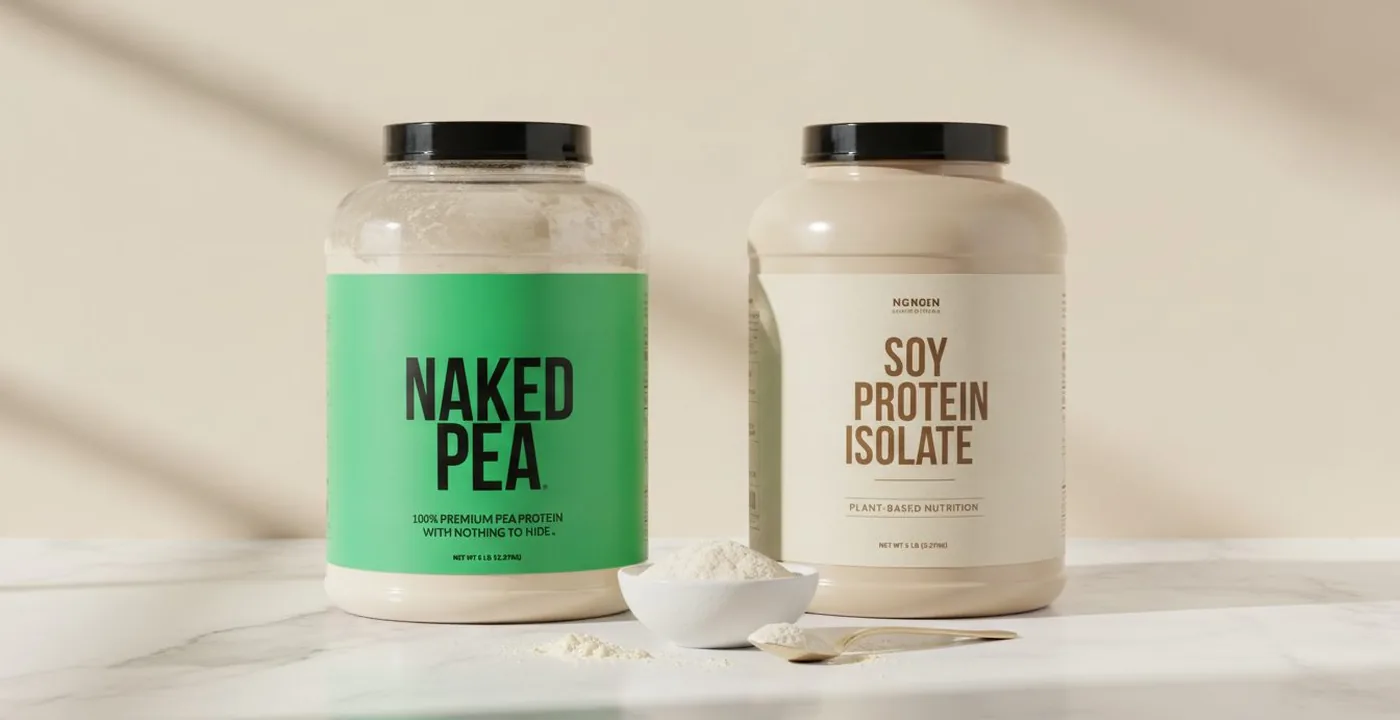
Table of Contents
Some of the links in this article are affiliate links, which help fund our independent review work at no extra cost to you. Every recommendation is based on hands-on testing through The Editor Lab methodology. No brand pays to appear, and no placement is guaranteed.
Soy protein has the more complete amino-acid profile; pea protein wins on allergen safety and digestibility - and the hormone concern is not supported by the clinical evidence.
A lot of people cut soy from their routine because they heard it raises oestrogen. I understand why. The concern sounds credible, and it spreads fast across fitness communities. But when you look at the clinical evidence, the reality is more reassuring than the forum threads suggest.
Both pea and soy protein are legitimate plant protein sources. This comparison is based on the available amino-acid data and human clinical trials, and is designed to help you decide which fits your goals, your digestion, and any genuine concerns you have.
I am Clemmie Rose, a registered Nutritional Therapist and BANT member, with clinical experience spanning Google DeepMind's Kyros Project and The Wellness Clinic at Harrods. I specialise in gut health, hormones, and performance nutrition - and the soy-hormone question is one I address in clinic regularly.
Quick Verdict: Pea Protein vs Soy Protein
Soy wins on amino-acid completeness. It has the fullest essential amino-acid profile of any common plant protein and the strongest base of muscle-building research.
Pea wins on digestibility and allergen safety. It is hypoallergenic, gentler on the gut for most people, and the amino gap (lower methionine) is easily closed by pairing it with rice protein.
The soy-hormone concern is largely unsupported by the evidence. Soy isoflavones are phyto-oestrogens, not oestrogen. In the quantities consumed through normal protein supplementation, the clinical literature does not support a meaningful hormonal effect in healthy adults.
| Criteria | Pea Protein | Soy Protein |
|---|---|---|
| Amino-acid completeness | Near-complete (low methionine) | Complete |
| PDCAAS score | ~0.82 | ~1.0 |
| Digestibility | High - generally easy on gut | High - well-studied |
| Allergen status | Hypoallergenic | Top-14 allergen (soy) |
| Hormone concern | None | Largely unsupported by evidence |
| Muscle research base | Growing | Strong, long-established |
| Taste | Mild, earthy | Neutral, some find it beany |
| Best for | Gut-sensitive or dairy-avoiding lifters | Maximum amino-acid coverage |
Amino Acids and Muscle Building
Protein quality is measured, in part, by how complete the amino-acid profile is. The two most widely used scoring tools are PDCAAS (Protein Digestibility-Corrected Amino Acid Score) and the newer DIAAS (Digestible Indispensable Amino Acid Score). Both reward proteins that supply every essential amino acid in sufficient quantities, and both are summarised clearly by the British Nutrition Foundation.
Soy protein is a complete protein. It contains all nine essential amino acids and scores at or near 1.0 on the PDCAAS scale - the maximum achievable rating, which it shares with whey. For plant-based muscle building, that is a meaningful advantage.
Pea protein is close, but not quite complete. Its limiting amino acid is methionine, which it supplies in lower quantities than soy. However, its leucine content - the amino acid most directly linked to triggering muscle protein synthesis - is strong. A 2015 study published in the Journal of the International Society of Sports Nutrition found comparable gains in muscle thickness between pea protein and whey over a 12-week resistance training programme. The methionine gap is real, but it does not automatically translate into inferior results.
If you are relying on pea protein as your primary source, the practical fix is straightforward: blend it with rice protein, which is rich in methionine. Together, they replicate the complete amino-acid profile of soy.
For pure muscle-building efficiency from a single-ingredient source, soy protein has the stronger evidence base. But pea protein, used correctly, is a genuine alternative and not a second-rate option. For anyone optimising muscle growth, it is worth considering both protein source and creatine supplementation together - the two work through different mechanisms and are commonly stacked.
The Soy and Hormones Question
This is the section most people come here for. Let me be direct about what the evidence shows.
Soy contains isoflavones, which are phyto-oestrogens. These are plant compounds with a chemical structure similar to oestrogen. Because of that similarity, there was early concern that they could bind to oestrogen receptors and disrupt hormone balance in both men and women.
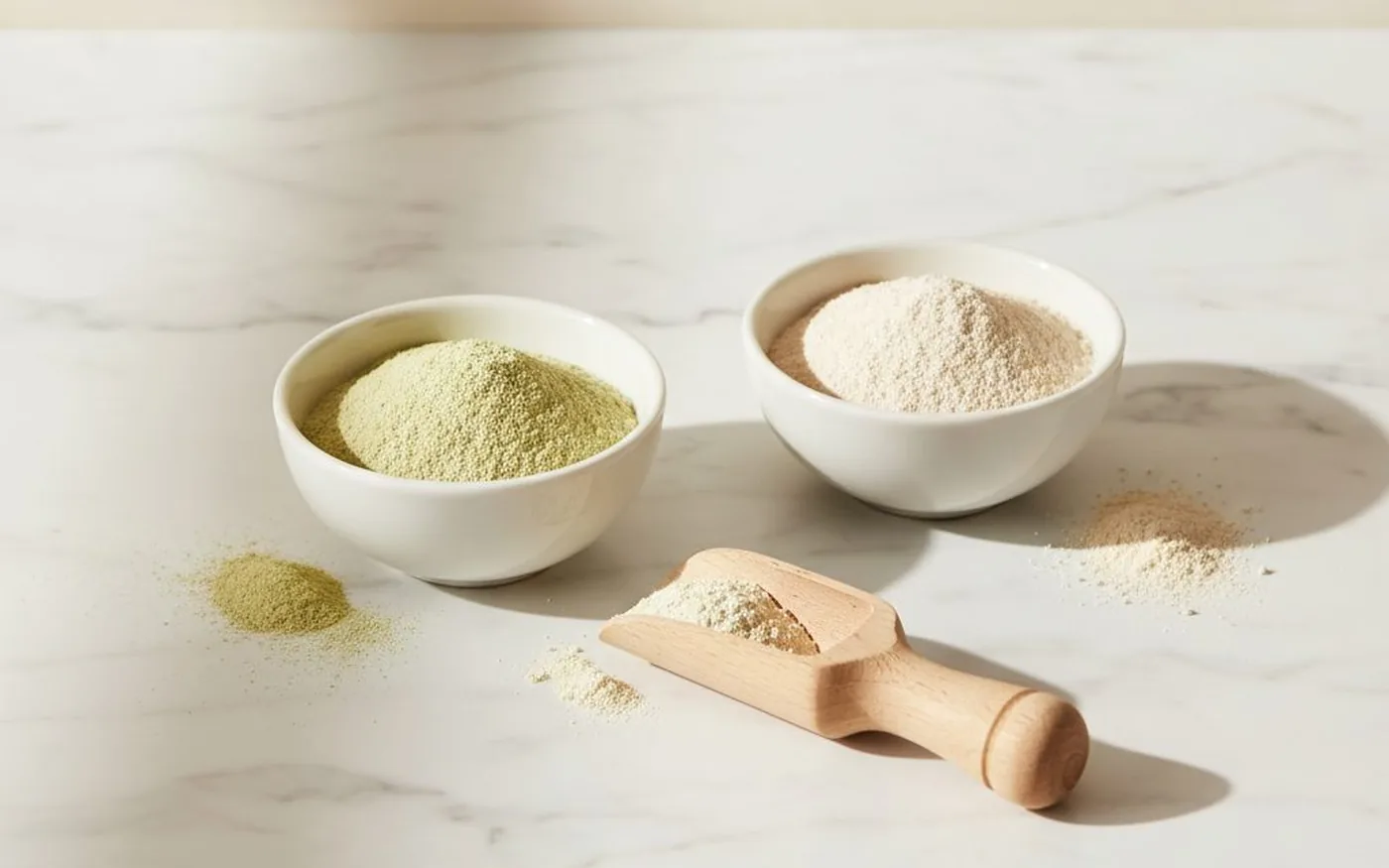
The clinical evidence does not support that concern at normal supplementation levels. A 2021 meta-analysis published in Reproductive Toxicology reviewed 41 clinical studies on soy isoflavones and reproductive hormone levels in men. It found no significant effect on testosterone, oestrogen, or other reproductive hormones at the consumption levels associated with typical soy protein supplementation.
Pea protein contains no phyto-oestrogens. If you have a clinical reason to avoid them - such as a personal or family history of oestrogen-sensitive conditions - pea protein is the straightforward choice. Not because soy is dangerous, but because eliminating the variable is a reasonable, low-cost decision.
For everyone else, the evidence does not support avoiding soy protein on hormonal grounds. The concern is understandable, but it is not well-supported by the current research.
Digestion and Allergies
This is where pea protein has a genuine, practical advantage over soy for many people.
Soy is one of the 14 major allergens recognised by UK food law. If you have a known soy allergy, or if you are avoiding soy in your diet for other reasons, soy protein is simply not an option.
Even without an allergy, some people find soy protein harder to digest. Soy contains oligosaccharides - fermentable carbohydrates that can cause bloating in individuals with sensitive guts. Soy protein isolate has significantly lower oligosaccharide levels than whole soy foods, but if you have noticed digestive difficulty with other legumes, it is worth being cautious.
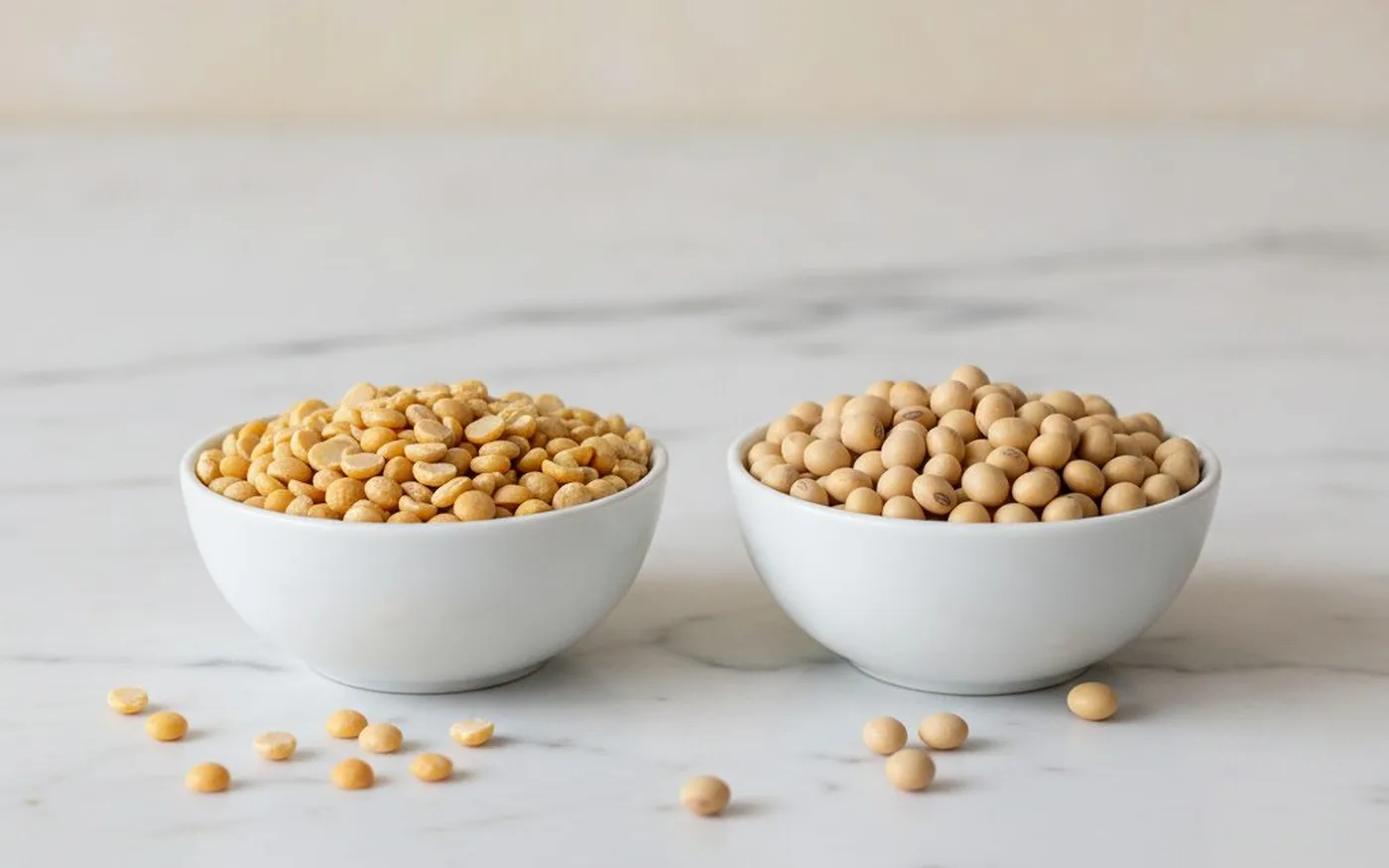
Pea protein is hypoallergenic. It is free from the major allergens - dairy, soy, gluten - and generally well-tolerated across a wide range of gut types. In my clinical experience, it is the protein source I recommend most often for people who have ruled out whey on sensitivity grounds and are uncertain about soy.
One honest note: pea protein can cause bloating in some people too, particularly at higher serving sizes. If you are introducing any new protein supplement, start at a lower dose and build up. For people managing gut health conditions or digestive sensitivities, pea protein is the lower-risk starting point.
Taste and Mixability
Neither pea nor soy protein will be mistaken for a milkshake, but there are real differences worth knowing before you buy.
Pea protein has a mild, earthy flavour that most people find easy to mask with fruit, oat milk, or flavoured powder. It mixes cleanly but has a thicker texture at equivalent doses than soy.
Soy protein isolate tends to be more neutral in flavour but can carry a faint beany or grassy note in unflavoured versions. It mixes very smoothly - generally better than pea - and works well in both shakes and cooking applications.
In flavoured formulations - chocolate, vanilla, and similar - the gap between the two largely disappears. If you are mixing with plain water, soy is typically less noticeable. If you are blending with fruit or oat milk, pea protein performs well and the earthy note is masked.
Which Should You Choose?
Here is the honest answer, split by what actually matters to you.
Choose soy if:
- You want the most complete amino-acid profile from a single plant protein
- Muscle building is your primary goal and you want the most evidence-backed option
- You have no soy allergy or digestive sensitivity to soy
- The hormone concern has been your main barrier and you are satisfied the evidence does not support it
Choose pea if:
- You have or suspect a soy allergy or intolerance
- You are managing a sensitive gut, IBS, or a diagnosed gut health condition
- You are pregnant, breastfeeding, or have a personal reason to minimise phyto-oestrogen exposure, however small the actual risk
- You want to build a complete amino-acid profile by blending with rice protein
- You prefer a cleaner allergen label
Neither is wrong. Both are legitimate plant protein sources. The correct choice is the one you will actually take consistently, that your body tolerates well, and that fits your specific health context.
If you are looking for specific product recommendations for either type, our guide to the best protein powder for women UK reviews both pea and soy options with full ingredient audits and dose analysis.
Frequently Asked Questions
Which is better, pea protein or soy protein?
Soy has the more complete amino-acid profile and the stronger muscle-building research base. Pea is hypoallergenic and gentler on most guts, and the amino gap closes easily by blending with rice protein. If your gut tolerates both, soy has the edge on completeness. If you have soy sensitivity, pea protein is entirely capable of supporting your goals.
Is soy protein bad for your hormones or does it raise oestrogen?
The evidence does not support this concern at normal supplementation levels. Soy contains isoflavones, which are phyto-oestrogens, but a 2021 meta-analysis of 41 studies found no meaningful effect on testosterone or oestrogen in healthy adults consuming typical amounts. Very high isoflavone doses in some isolated studies showed a signal, but those doses exceed what protein powder provides.
What is the main drawback of pea protein?
The main nutritional drawback is that pea protein is low in methionine, one of the nine essential amino acids, making it technically incomplete on its own. This is resolved by blending with rice protein, which is methionine-rich. Some people also experience bloating at higher serving sizes, particularly those with sensitive digestion. Starting at a lower dose and building up gradually helps most people adjust.
Is pea protein a complete protein?
Not technically. Pea protein is low in methionine and scores approximately 0.82 on the PDCAAS scale, below the 1.0 scored by soy and whey. In practice, combining pea protein with rice protein produces a complete amino-acid profile comparable to soy. Many commercial plant protein blends already use this pea-plus-rice combination for exactly that reason.
Which is easier to digest, pea or soy protein?
For most people, pea protein is the gentler option. It is hypoallergenic and free from the oligosaccharides found in whole soy that can trigger bloating in sensitive individuals. Soy protein isolate is well-tolerated by most, but if you have a soy intolerance, IBS, or digestive sensitivity to legumes, pea is the lower-risk starting point. Start at a lower dose with either.
Pea vs soy protein - which is better for building muscle?
Both are effective, and the gap is smaller than many expect. Soy has a complete amino-acid profile and a strong research base. Pea has strong leucine content - the key trigger for muscle protein synthesis - and a 2015 study comparing pea to whey found comparable muscle thickness gains over 12 weeks. For most plant-based lifters eating a varied diet, both options deliver meaningful results.
Does pea or soy protein taste better and mix better?
Soy protein isolate is generally smoother and more neutral in flavour. Pea protein has a mild earthy note in unflavoured versions and a thicker texture at equivalent doses. In flavoured formulations - chocolate or vanilla - the gap largely disappears and most people cannot identify which base protein they are using. If mixing with plain water, soy is typically the less noticeable of the two.
What are the top five healthiest proteins?
Assessed on completeness and digestibility: (1) whey protein isolate - complete, fast-absorbing; (2) soy protein - complete plant source, PDCAAS 1.0; (3) pea plus rice blend - complete profile, hypoallergenic; (4) egg white protein - complete, minimal fat; (5) hemp protein - lower PDCAAS but rich in omega-3 and fibre. For a fully plant-based diet, soy and the pea-plus-rice blend are the most evidence-supported options.
Why do dietitians say no to protein powder?
Most do not say no categorically. The concern is that whole food sources provide a broader nutrient package - fibre, vitamins, minerals - that isolated powders do not. Supplements are considered unnecessary for people already meeting protein targets through diet. Where they are genuinely useful is for athletes, older adults managing muscle loss, and those on restricted diets. Supplements fill gaps; they do not replace food.
For a practical guide on where to find the best plant-based protein powders in the UK, see our plant-based protein guide, which covers ingredient quality, dosing, and brand transparency across the full market.
A registered Nutritional Therapist and member of BANT, Clemmie blends science with a holistic approach to wellbeing.