Magnesium Threonate vs Glycinate: Which for Sleep and Focus?
The marketing for threonate runs ahead of the evidence. A nutritionist cuts through the noise.

Table of Contents
Some of the links in this article are affiliate links, which help fund our independent review work at no extra cost to you. Every recommendation is based on hands-on testing through The Editor Lab methodology. No brand pays to appear, and no placement is guaranteed.
For most people, glycinate is the better choice - threonate is only worth the premium if cognitive support is your primary goal and you are comfortable acting on limited human evidence. Magnesium threonate and glycinate are both chelated forms of magnesium - meaning the mineral is bound to an organic compound to improve absorption. What separates them is where that organic compound takes the magnesium, and what that journey is likely to do for you.
Glycinate has a well-established record. It is gentle on the stomach, highly bioavailable, and the form most often recommended for sleep and relaxation. Threonate is newer, and the marketing around it has run considerably ahead of the human evidence: most of the brain-boosting claims trace back to animal studies, not clinical trials in people.
That gap between the promise and the proof is exactly what this article addresses.
Editor's Note
Clemmie Rose is a registered Nutritional Therapist and BANT member with clinical experience spanning Google DeepMind, Harrods, and international longevity summits. Her assessment: threonate has genuine scientific interest, but the evidence is not strong enough to justify the premium for most people.
The Short Answer
Magnesium glycinate is the better default choice for most people. It is well-absorbed, clinically studied in humans, easy on the digestive system, and costs around £10-20 per month in the UK. It is the form to choose if your goal is sleep quality, anxiety management, or general magnesium repletion.
If cognition and focus are your goal, threonate is the more targeted option - though the marketing has outpaced the evidence. The proposed mechanism is plausible: the threonate carrier appears to help magnesium cross the blood-brain barrier more effectively than other forms, at least in animal models. There is one small human pilot study (Liu et al., 2016) and early data is encouraging, but the evidence base is thin. UK prices run to £30-50 per month for branded Magtein-containing products.
If your goal is brain health, threonate is the more targeted choice - with realistic expectations on what the current science can promise. If your goal is anything else, glycinate delivers reliably and costs less.
At a Glance: Magnesium Threonate vs Glycinate
| Magnesium Glycinate | Magnesium L-Threonate | |
|---|---|---|
| Chemical form | Magnesium bound to glycine (amino acid) | Magnesium bound to L-threonic acid (vitamin C metabolite) |
| Best for | Sleep, relaxation, general repletion | Cognition, focus, brain magnesium levels |
| Bioavailability | High - glycine enhances intestinal absorption | Moderate overall, with preferential CNS uptake in animal models |
| Human evidence quality | Strong - multiple RCTs for sleep and anxiety | Limited - one small pilot study, mostly animal data |
| GI tolerance | Excellent - glycine buffers gut irritation | Good - no common GI complaints reported |
| Elemental magnesium | 14-16% by weight | Approximately 8% by weight |
| Typical UK price | £10-20 per month | £30-50 per month |
| Notable brands | Pure Encapsulations, Solgar, Nature’s Best | Life Extension Neuro-Mag, Jarrow MagMind |

Magnesium Glycinate Explained
The chelated form most widely used in clinical nutritional therapy, glycinate (also labelled bisglycinate when each magnesium atom is bound to two glycine molecules) owes much of its effectiveness to its binding molecule. Glycine is a non-essential amino acid that plays its own role in sleep regulation - it acts on glycine receptors in the central nervous system and has been shown in separate research to support sleep onset when taken before bed.
The combination means you are effectively supplementing two sleep-supportive compounds in a single pill. That dual-action mechanism is why glycinate is the form most consistently recommended in clinical settings for sleep support and anxiety management, and why the evidence base is comparatively solid. Magnesium contributes to normal psychological function and the reduction of tiredness, according to the authorised claim from the European Food Safety Authority (EFSA) - and glycinate is one of the most reliable ways to increase magnesium status.
Bioavailability for glycinate is high. Studies comparing chelated forms to magnesium oxide consistently show chelates are absorbed more efficiently in the gut, with less magnesium excreted unused. For people who have experienced diarrhoea or stomach discomfort with magnesium citrate or oxide, glycinate is almost always well-tolerated. The glycine buffering mechanism limits the osmotic pull that causes loose stools in higher-dose magnesium supplementation.
The elemental magnesium content is approximately 14-16% by weight, which means a standard 400mg glycinate capsule delivers around 56-64mg of elemental magnesium. Most people need 300-400mg of elemental magnesium daily, so typical doses run to two to four capsules depending on the brand’s formulation. The NHS lists the recommended daily intake as 300mg for men and 270mg for women, with a supplemental upper limit of 400mg/day from supplements alone.
A key point that often gets overlooked: magnesium glycinate is highly unlikely to cause the ‘magnesium laxative effect’ that puts people off supplementation. If you have abandoned magnesium before because of digestive side effects, glycinate is almost certainly the form to try.
Magnesium L-Threonate Explained

Magnesium L-threonate was developed by researchers at MIT and first synthesised specifically to investigate whether magnesium could be delivered to the brain more effectively than existing forms allowed. The original research, published by Slutsky et al. in 2010, demonstrated that magnesium L-threonate significantly increased brain magnesium concentrations in rats and improved cognitive performance markers including learning, memory, and synaptic plasticity. That study generated significant interest in neuroscience and supplement circles alike.
The proposed mechanism is that L-threonic acid - a metabolite of vitamin C - acts as a carrier that helps magnesium cross the blood-brain barrier more effectively than glycine or citrate. Brain cells maintain their own tightly regulated magnesium levels, and standard supplementation does not necessarily raise brain magnesium even when serum levels increase. The threonate hypothesis is that by using the right carrier, you can specifically target the central nervous system rather than just correcting a systemic deficiency.
The friction to address honestly: most of this evidence is from animal models. The key human pilot study (Liu et al., 2016, published in the Journal of Alzheimer’s Disease) involved 50 participants over 12 weeks and showed statistically significant improvements in overall cognitive ability, particularly in older adults. The study is promising, but 50 people over 12 weeks is a small evidence base. There are no large-scale, independently funded human RCTs to confirm these results at the time of writing (July 2026).
Magtein is the proprietary form of magnesium L-threonate patented by MIT, and it is the version used in most branded products. The elemental magnesium content is lower than glycinate - approximately 8% by weight - which means you need higher doses of the compound to deliver equivalent elemental magnesium. That is part of why costs run higher.
The honest summary: the science is interesting and the mechanism is plausible. But ‘interesting animal data plus one small human pilot’ is not the same as the established clinical record glycinate carries. If you are paying the premium, go in with accurate expectations.
Which Should You Choose?
The decision is simpler than the marketing suggests. Ask what problem you are actually trying to solve. At Harrods Wellness Clinic, the magnesium form question comes up almost weekly - and the answer is almost always glycinate until there is a clear, specific cognitive goal on the table.

- Choose magnesium glycinate if: your main goal is sleep quality or getting to sleep more easily
- You experience anxiety, muscle tension, or stress-related fatigue
- You want to correct a general magnesium deficiency confirmed by diet or testing
- You have had digestive issues with other magnesium forms
- Budget is a consideration (glycinate is significantly cheaper per month)
- Choose magnesium L-threonate if: cognition, focus, or memory is your specific goal rather than sleep or stress
- You are an older adult interested in cognitive support and willing to monitor effects over 8-12 weeks
- You have already corrected any systemic magnesium deficiency and are looking for a targeted top-up aimed at brain levels specifically
- You understand that the human evidence is limited and are comfortable supplementing on the basis of plausible mechanism plus early-stage data
What most people should do: start with glycinate. It has the better evidence base, costs less, and addresses the most common reasons people supplement magnesium - sleep, stress, and muscle recovery. If after three months you have resolved those issues and want to explore cognitive support specifically, threonate can be added or substituted. You do not need to choose threonate as your first magnesium supplement.
For the reader wondering whether influencer recommendations for ‘brain magnesium’ reflect the science: they do, partially. The mechanism is real. The human evidence is early. The premium is real. Factor all three into your decision.
If you are comparing forms more broadly, our guide to magnesium glycinate vs malate covers the glycinate and malate comparison in more detail, and the magnesium pillar guide compares all major forms side by side.
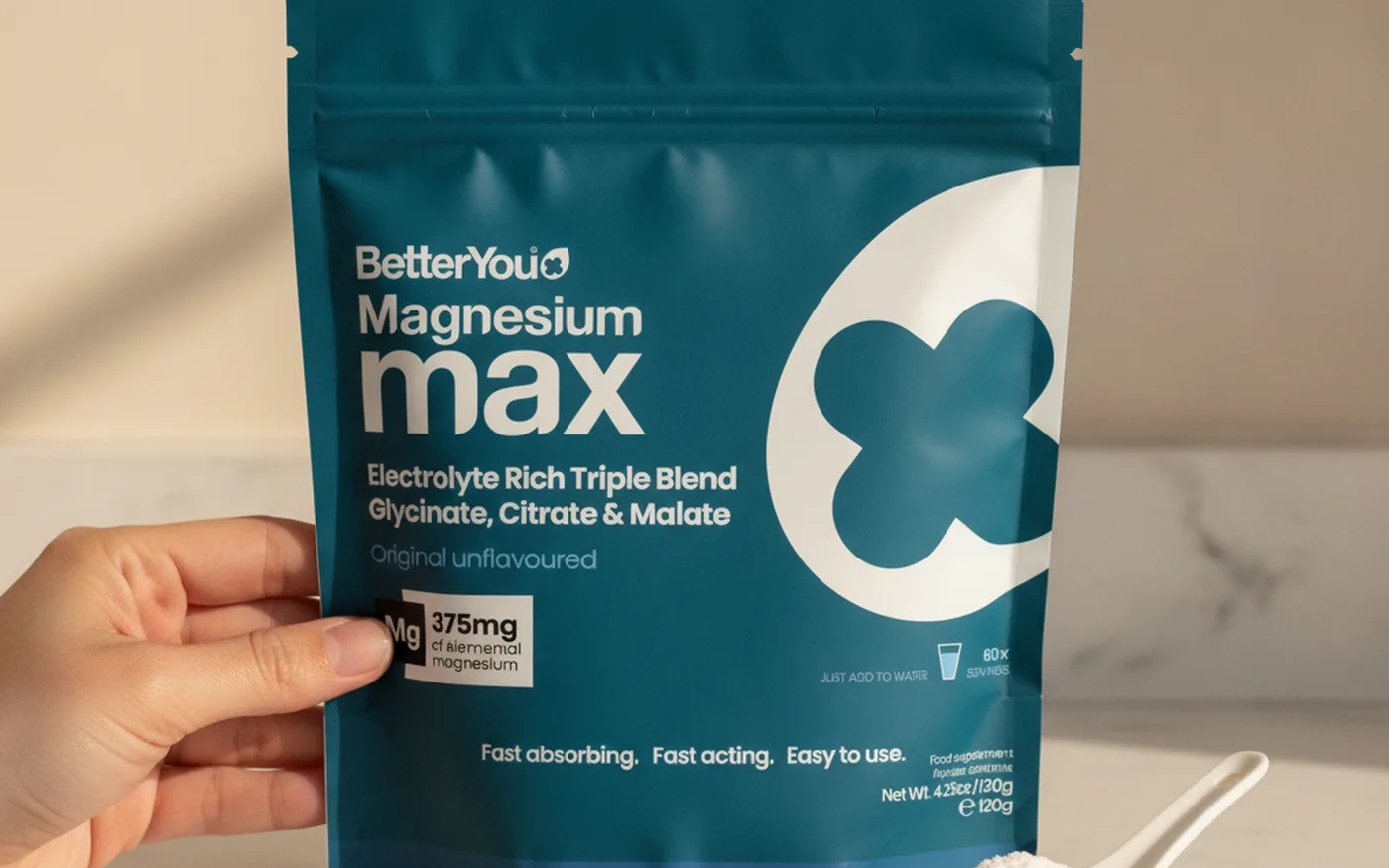
BetterYou Magnesium 3-in-1 Glycinate, Citrate & Malate Powder
- + Contains glycinate, the form the article recommends first for sleep, stress and general repletion
- + Glycinate is well tolerated and unlikely to cause the magnesium laxative effect
- + Powder lets you adjust the serving to stay inside the 400mg supplemental upper limit
- - A blend of glycinate, citrate and malate, not pure glycinate
- - The citrate portion is the form linked with loose stools in people who are sensitive
- - Contains no threonate, so it does not target cognition
A practical glycinate-based option if you want to start with the form most people should try first. Check the elemental magnesium on the label against your daily limit.
Check price on Amazon UKCan You Take Magnesium Threonate and Glycinate Together?
This question comes up often, and the answer is yes - with one caveat.
There is no interaction between magnesium L-threonate and magnesium glycinate. They are the same mineral in different forms, and the body processes both without conflict. Some practitioners suggest taking glycinate in the evening for sleep support and threonate during the day for cognitive effects - that split is logical if you want to target both outcomes.
The caveat is total elemental magnesium. The NHS supplemental upper limit is 400mg of elemental magnesium per day from supplements. If you are stacking both forms, the combined elemental magnesium across your full supplement stack needs to stay within that threshold. High doses above the limit can cause diarrhoea, and in rare cases more significant adverse effects.
Check the label of each product for elemental magnesium content rather than the listed compound weight. A 2,000mg threonate capsule and a 400mg glycinate capsule do not both deliver 2,000mg and 400mg of elemental magnesium - the actual elemental figures are much lower (approximately 8% and 14-16% respectively). Add the elemental figures from both products, not the compound weights.
If you are also eating a magnesium-rich diet (dark leafy greens, nuts, seeds, legumes), dietary magnesium is not included in the 400mg supplemental cap - that applies to supplements only. But it is worth keeping dietary intake in mind when setting your supplemental dose.
Doses and How to Take Each

Magnesium Glycinate Dose
Standard doses run from 200mg to 400mg of elemental magnesium daily, depending on your current intake from food and any confirmed deficiency. Most glycinate products are dosed at 100-200mg of elemental magnesium per capsule, meaning two to four capsules to reach the therapeutic range.
Take glycinate in the evening, ideally 30-60 minutes before bed. The glycine component supports sleep onset, and evening dosing aligns with the body’s natural drop in cortisol. If you experience any mild stomach discomfort, take it with food - though this is uncommon with glycinate.
Who should be cautious: people with kidney disease, as the kidneys are responsible for excreting excess magnesium, and impaired kidney function raises the risk of magnesium accumulation. Anyone on medications including antibiotics, blood pressure drugs, or diuretics should check with their GP before supplementing. The NHS guidance confirms this is the standard caution for all magnesium forms.
Magnesium L-Threonate Dose

The dose used in the Liu et al. human pilot study was 1,500-2,000mg of magnesium L-threonate per day (delivering approximately 144mg of elemental magnesium). Most Magtein-branded products replicate this dose range. Unlike glycinate, threonate is often split across morning and midday doses rather than taken all at once in the evening - the rationale being that cognitive support is better matched to waking hours.
Allow eight to 12 weeks of consistent dosing before assessing effect. Cognitive benefits, where they appear, are not felt acutely like caffeine - they reflect changes in synaptic density and brain magnesium status that develop over time.
Who should not take magnesium L-threonate: the same kidney and medication cautions apply as for any magnesium form. There is insufficient data on use during pregnancy or breastfeeding - avoid during these periods unless directed by a healthcare professional. People with existing cognitive conditions or taking medications affecting the central nervous system should seek medical advice before using threonate specifically.
Is it okay to take magnesium L-threonate every night? Yes, at the recommended dose. Some people do take it in the evening rather than morning, and there is no evidence of harm from daily use at standard doses. The Liu et al. study ran 12 weeks of daily supplementation without notable adverse events.
For context on how magnesium compares to other nootropic-adjacent supplements, the focus angle also connects to the lion’s mane coffee category - if you are exploring cognitive support from multiple angles, our guide to the best lion’s mane coffee in the UK covers the functional mushroom side of that conversation.
Frequently Asked Questions
Should I take magnesium threonate or glycinate?
For most people, glycinate is the better starting point. It has a stronger human evidence base, supports sleep and stress management effectively, and costs significantly less. Threonate is the logical choice only if cognition is your specific goal and you understand that human evidence is limited to one small pilot study. Glycinate is the safer, better-supported default.
Who should not take magnesium L-threonate?
People with kidney disease should avoid any magnesium supplementation without medical supervision. Anyone taking antibiotics (tetracyclines, fluoroquinolones), diuretics, or blood pressure medications should check for interactions with their GP first. Avoid threonate during pregnancy or breastfeeding due to insufficient safety data. People with existing neurological conditions should seek medical advice before taking a supplement designed to affect brain function.
Is magnesium L-threonate good for ADHD?
There is no published clinical evidence specifically linking magnesium L-threonate to ADHD outcomes. The interest stems from the broader magnesium-attention connection and threonate’s proposed brain-magnesium mechanism. ADHD is a neurodevelopmental condition requiring clinical diagnosis and evidence-based treatment. Magnesium may be a useful adjunct but should not replace medical assessment or prescribed treatment. Always speak to a doctor first.
What are the downsides of magnesium threonate?
The main downsides are cost (£30-50 per month versus £10-20 for glycinate), limited human evidence (one small 50-person pilot study), and lower elemental magnesium content per capsule. Standard cautions apply: kidney disease, drug interactions, and avoiding use in pregnancy. The core downside is paying a significant premium for cognitive benefits not yet confirmed in large independent trials.
Why avoid magnesium glycinate?
Glycinate has very few downsides for most healthy adults. Standard cautions apply: people with kidney disease should not supplement without medical guidance, and it can interact with certain antibiotics and medications. The only scenario where you might look elsewhere is if cognition is your sole goal, where threonate’s proposed blood-brain barrier advantage makes it more relevant. Glycinate is actually the best choice for digestive tolerance.
Is it okay to take magnesium L-threonate every night?
Yes. The Liu et al. 2016 human pilot study ran participants on daily magnesium L-threonate for 12 weeks without significant adverse events. Daily use at the standard dose range (1,500-2,000mg of the compound) is considered safe for healthy adults. The important check is that your total elemental magnesium from all supplements stays within the NHS supplemental upper limit of 400mg per day.
Can you take magnesium threonate and glycinate together?
Yes, there is no interaction between them. A common approach is glycinate in the evening for sleep support and threonate in the morning for cognitive focus. The key check is combined elemental magnesium intake across both products, which should not exceed 400mg per day from supplements. Use the elemental magnesium figure on each label, not the total compound weight, to calculate this accurately.
Magnesium threonate vs glycinate vs malate - which is best overall?
Each form has a different strength. Glycinate is best for sleep, relaxation, and digestive tolerance - the most versatile daily form. Malate is best for energy and muscle recovery, particularly for those with fatigue or fibromyalgia-type symptoms. Threonate is most targeted for brain health and cognition. For a full comparison of glycinate and malate specifically, see our guide to magnesium glycinate vs malate.

A registered Nutritional Therapist and member of BANT, Clemmie blends science with a holistic approach to wellbeing.