Huel Daily Greens Review: What 91 Ingredients Actually Gets You
91 ingredients sounds impressive. Whether enough of them are dosed to actually work is the question most reviews never answer.
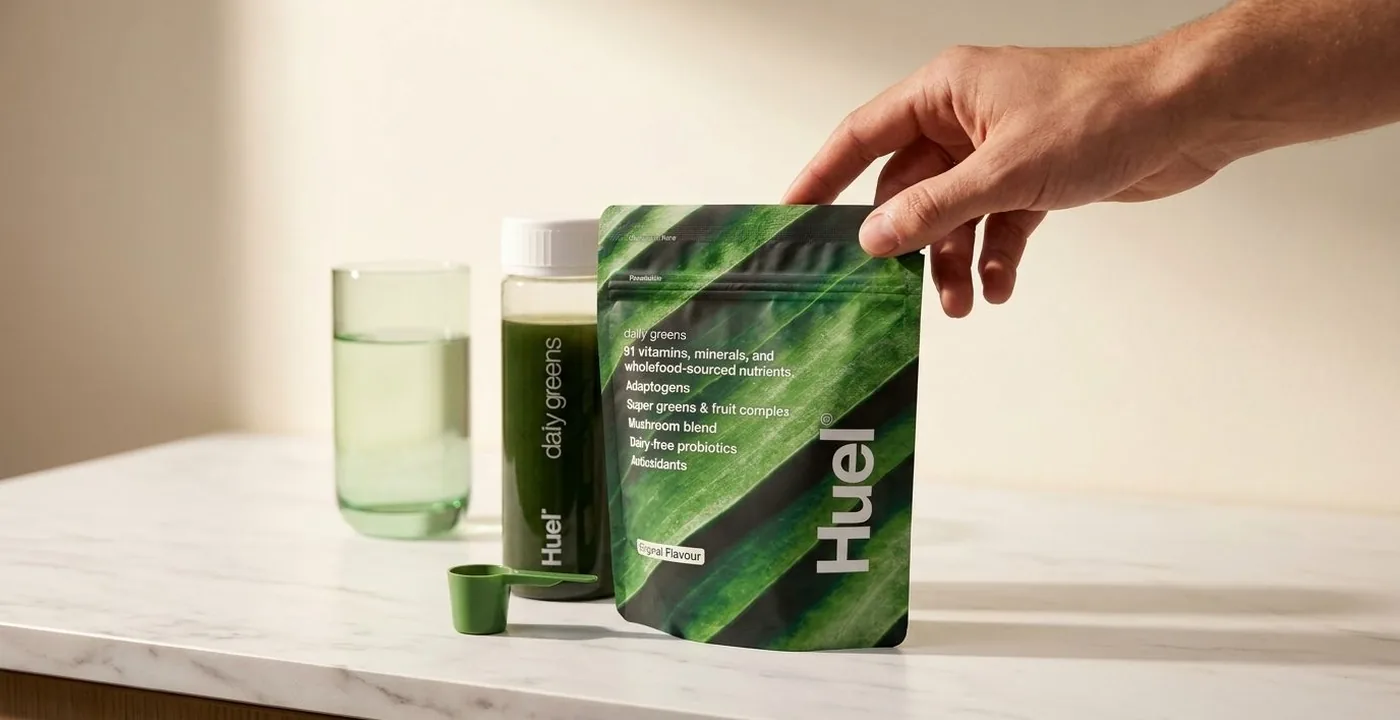
Table of Contents
Some of the links in this article are affiliate links, which help fund our independent review work at no extra cost to you. Every recommendation is based on hands-on testing through The Editor Lab methodology. No brand pays to appear, and no placement is guaranteed.
The number that stopped me was not 91.
It was 150 million. That is the actual probiotic count in Huel Daily Greens per serving: approximately 125 million CFU of Bifidobacterium bifidum and 25 million spores of Bacillus coagulans MTCC 5856. In a product that headlines "91 ingredients" and includes a named Probiotic and Prebiotic Blend, I had expected significantly more. Standard standalone probiotic supplements typically deliver one billion to 50 billion CFU. Huel's total sits at roughly one-seventh of the lower end of that range.
This is not the only thing I found when I audited Huel Daily Greens against clinical standards. But it is the finding that most cleanly illustrates what this review is for: not to repeat the product description on the label, but to ask what the formula actually delivers underneath the ingredient count.
91 ingredients is a genuinely impressive number on packaging. As someone who has spent years auditing supplement formulations for clients - from gut health protocols to performance nutrition for Google DeepMind's wellness programme - my first instinct when I see a number like that is not to be impressed. It is to ask: how much of each? A long ingredients list can just as easily mean trace amounts of dozens of things to make the label look compelling, while delivering clinically meaningful doses of very few of them. This is what the supplement industry calls "fairy dusting." It is common. It is not always what is happening with Huel Daily Greens - but knowing which parts of this formula are working requires looking past the headline.
I tested Huel Daily Greens daily for four weeks and assessed every ingredient category against clinical dosage benchmarks from published research. My methodology: I compared each ingredient's listed dose against dosage ranges used in peer-reviewed studies, tracked my own physical responses in a daily diary, and cross-referenced the formulation structure against clinical standards I use with private clients. The result is an honest verdict on what Huel's flagship greens product actually delivers - and where its claims outpace its doses.
For the broader picture on greens powders, the best greens powders UK guide covers the full category.
Editor's Note
What Is Huel Daily Greens?
Huel Daily Greens is a greens powder launched by Huel - the British nutrition brand best known for its meal replacement shakes - as a newer addition to their functional wellness range, introduced in 2024-2025. The product contains 91 naturally sourced ingredients across several distinct blends: an Organic Antioxidant Greens Blend (spirulina, chlorella, wheatgrass, barley grass), an Adaptogen Complex (ashwagandha, maca, rhodiola), a Mushroom Complex (lion's mane, reishi, chaga), a Probiotic and Prebiotic Blend, and a Protein and Fibre Base (pea protein, chia seeds, sprouted quinoa).
It is sweetened with stevia only - no artificial sweeteners, no sucralose - and certified vegan. One serving delivers a broad-spectrum nutritional profile designed to cover gaps in modern diets. Whether those gaps are covered at meaningful doses is the question this review answers.
The 91-Ingredient Question: Does It Add Up?
Let me start with the headline claim, because this is what most people are searching for when they find this review.
91 ingredients is a genuinely impressive number. For context, AG1 (the category leader) contains 83 ingredients. Rheal Clean Greens, at the other end of the transparency spectrum, contains eight. Huel sits at the complex end - which is either a strength or a distraction depending on what the doses look like underneath.
I broke the formulation down by blend.
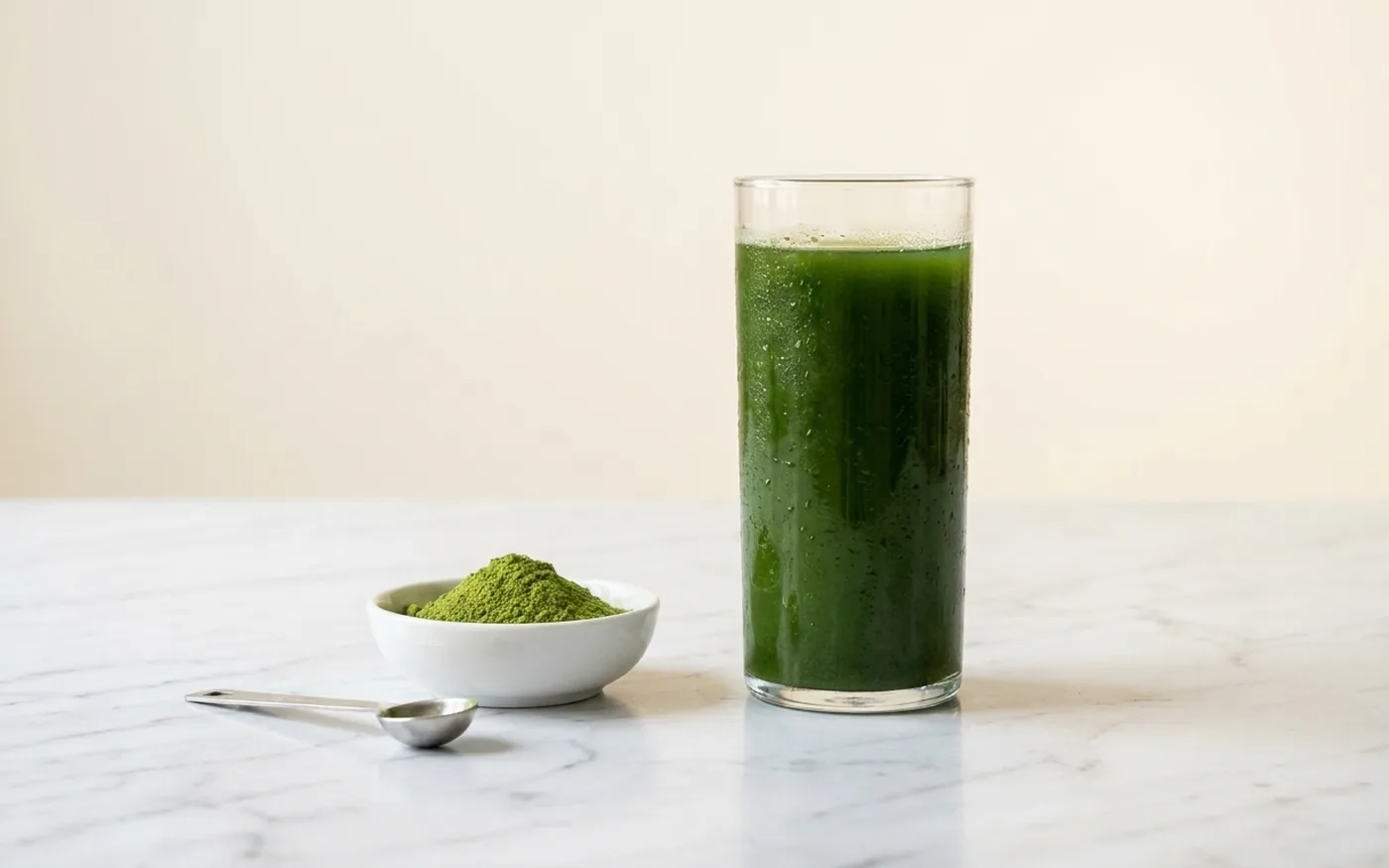
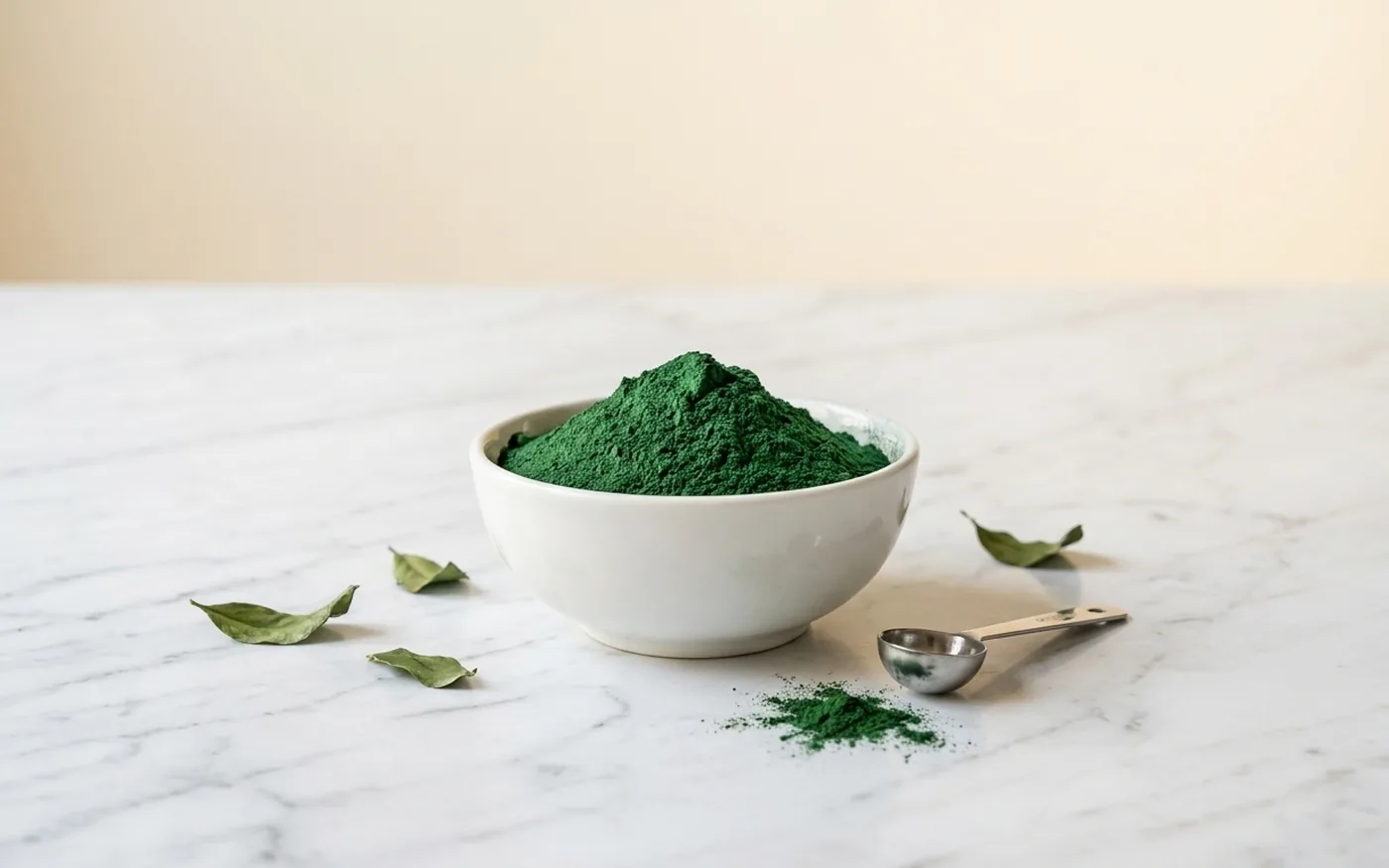
The Organic Antioxidant Greens Blend holds up well. Spirulina and chlorella are present in amounts consistent with the functional food literature - these are among the most extensively studied green algae, and Huel includes them at doses where the antioxidant and anti-inflammatory effects are plausible. Wheatgrass and barley grass contribute a broader phytonutrient profile. Nothing extraordinary, but nothing misleading either.
What does the mushroom complex actually deliver at undisclosed doses? Lion's mane, reishi, and chaga are the three inclusions, and the question is the same one I explore in BJ's best lion's mane coffee UK guide. The research on lion's mane for cognitive function tends to use 500mg to 3,000mg of the fruiting body or mycelium extract. Huel does not disclose individual mushroom doses within the complex - they are listed as a proprietary blend. This is a transparency limitation, though not unusual in the category.
The Adaptogen Complex is where I need to be direct with you.
Ashwagandha is dosed at 150mg. The clinical research on ashwagandha - specifically KSM-66 and Sensoril extracts, which are the most extensively studied standardised forms - consistently uses doses of 300mg to 600mg per day. The cognitive function studies, the cortisol reduction studies, the thyroid support trials: 300mg is the floor for most of them. At 150mg, you are at half the minimum threshold used in research. That does not mean zero effect, but it does mean the ashwagandha in Huel Daily Greens is not the reason to buy it.
This is not a dealbreaker. But it is the honest audit my clients expect from me, and it is what any greens powder review should tell you.
The Probiotic and Prebiotic Blend contains two strains: 125 million CFU of Bifidobacterium bifidum and 25 million spores of Bacillus coagulans MTCC 5856, totalling approximately 150 million CFU per serving. The NHS acknowledges that certain probiotic strains show evidence for digestive health benefits, though the evidence base varies significantly by strain and CFU count. Standalone probiotic supplements designed for clinical gut health outcomes typically deliver one billion to 50 billion CFU - Huel's 150 million total sits well below that range. As I noted at the outset, this is the most significant gap between the label impression and the clinical reality. Think of the probiotics here as a supporting cast, not the lead.
Pea protein, chia seeds, and sprouted quinoa: these three ingredients are what give Huel Daily Greens its nutritional weight beyond the micronutrient layer. At roughly 10g protein per serving, the formula crosses from supplement territory into something more substantive. This is one of the things that separates Daily Greens from lighter greens powders that are essentially just dried vegetables in a bag.
The overall verdict on the 91 ingredients: roughly 60 to 70 of them are doing meaningful work at reasonable doses, primarily across the greens blend, vitamins, minerals, and fibre base. The adaptogen complex is underdosed relative to clinical standards. The mushroom complex has a transparency gap on individual doses. For a greens powder at this price point, that is a broadly honest balance.
Taste and Mixability
The taste is mild in a way I did not expect.
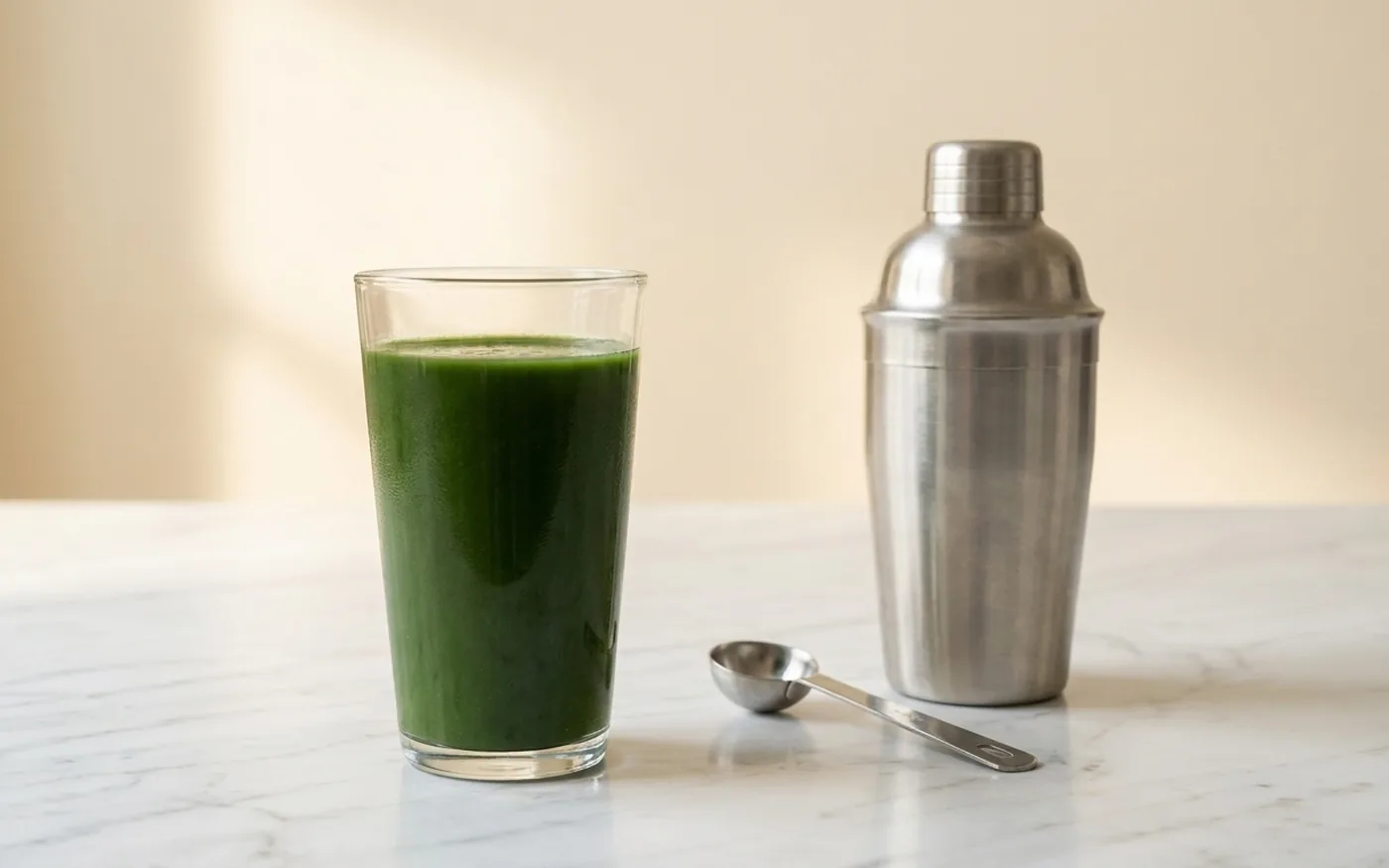
I have tested greens powders that taste like you are drinking a lawn. Huel Daily Greens does not. The stevia keeps it faintly sweet without the synthetic aftertaste that sucralose-sweetened products carry. It mixes cleanly in around 250ml of cold water with a shaker, leaves no gritty residue, and the colour is a deep green that looks appropriately functional without being alarming.
One note on the stevia: there is emerging research suggesting that stevia, while widely regarded as safe, may have some effect on gut microbiome composition in certain people. A 2020 study in the journal Molecules found stevia altered some bacterial populations in vitro. The in vivo evidence in humans is limited and largely reassuring. I flag this not as a concern but as something to be aware of if you are specifically optimising for gut microbiome diversity - stevia is not neutral for everyone.
If you tolerate stevia well, the flavour here is genuinely pleasant for a greens powder. It is the kind of product you can take quickly before the school run without dreading it.
My 4-Week Test
Week one. Digestion felt noticeably more regular by day four. I attribute this to the fibre base - chia seeds and sprouted quinoa alongside the prebiotic blend provide a meaningful daily fibre hit that most people are not getting consistently. Nothing dramatic, just the quiet kind of "oh, that is better" that you notice when it has been missing.
Week two. Energy patterns stabilised. Not a stimulant effect - I want to be clear that Huel Daily Greens contains no caffeine - but a steadier baseline. My 3pm energy dip, which I usually manage with a second cup of coffee, was less pronounced. I cannot attribute this to any single ingredient with certainty. The vitamin and mineral blend, combined with the protein base keeping blood sugar more stable, is my best hypothesis.
Week three. Sugar cravings reduced. This was the week I noticed I was walking past the biscuit tin without stopping. The protein component likely contributes here - sustained satiety dampens opportunistic snacking. I mentioned this to a client going through a similar protocol and she reported the same pattern.
Week four. Weirdly normal - in the best way. No dramatic transformation. No "I have never felt better in my life" moment. Just a steady, functional baseline that felt genuinely better than before I started. My skin looked cleaner, my sleep felt undisturbed, and the digestive regularity from week one held throughout.
What I cannot tell you is exactly which of the 91 ingredients drove which outcome. A formulation this complex does not allow clean attribution. What I can tell you is that the cumulative effect over four weeks was positive and consistent.
Huel Daily Greens Price UK
As of April 2026, Huel Daily Greens is priced at approximately £45 per month on subscription from huel.com/products/daily-greens. That works out to roughly £1.50 per serving.
For comparison, AG1 runs at approximately £2.70 to £3.00 per serving on subscription - nearly double the cost for a comparable (and in some cases, better-dosed) product. Verve V80 sits at approximately £2.00 to £2.50 per serving, with stronger transparency on individual ingredient doses. Huel Daily Greens offers the best ingredient-to-cost ratio in the category if breadth is what you are after. If you want clinical-dose adaptogens specifically, the maths changes - but that is a different buying decision.
One-off purchasing is available, though the subscription saves approximately 10 to 15%. UK shipping is free above a standard threshold, and the product is also available on Amazon UK if you prefer that route.
Who Should (and Should Not) Buy Huel Daily Greens?
This product is for you if:
You eat a broadly healthy diet but have consistent nutritional gaps - particularly if you are plant-based and want complete coverage across vitamins, minerals, and phytonutrients without taking multiple separate supplements. It is also well-suited to Huel ecosystem users who want to extend their nutritional coverage beyond meals and shakes. At £1.50 per serving, the value case for the breadth of the formula is genuinely strong.
It suits busy routines. The mixability and mild taste mean it fits into a morning without friction. If you are looking for something you can take quickly and consistently, Huel Daily Greens is a realistic daily habit.
This product is not for you if:
You are specifically looking for clinical-dose adaptogens. At 150mg of ashwagandha, Huel's formula is not the vehicle for stress management or cognitive performance if that is your primary goal. You would need a standalone ashwagandha supplement at 300mg to 600mg alongside it. If transparency on every individual ingredient dose is important to you, the proprietary blending on the mushroom complex will frustrate you - Verve V80 is more transparent on dose disclosure.
If you are sensitive to stevia, the flavour will not work for you long-term regardless of the nutritional profile.
The honest verdict: Huel Daily Greens is a genuinely useful daily foundation supplement, not a clinical performance product. That distinction matters. Most people buying it will get real value from the fibre base, the vitamin and mineral coverage, and the greens blend. The adaptogen claims on the marketing deserve more scepticism than the greens claims do.
Evaluation Table
| Criteria | Score | Notes |
|---|---|---|
| Ingredient breadth | 9/10 | 91 ingredients across 6 functional blends |
| Ingredient dosing accuracy | 6/10 | Greens and fibre strong. Ashwagandha underdosed at 150mg (clinical range: 300mg+). Mushroom doses not individually disclosed. |
| Taste and mixability | 8/10 | Mild, clean, no gritty residue. Stevia sweetener - flag for sensitive users. |
| Value for money | 9/10 | £1.50/serving. Best ingredient breadth-to-cost ratio in category. |
| Transparency | 7/10 | Full ingredient list disclosed. Proprietary blending hides individual doses in some complexes. |
| Gut health support | 8/10 | Probiotic blend, prebiotic fibre, chia, and sprouted quinoa deliver consistent digestive benefits. |
| Shop | Shop Huel Daily Greens → |
How Huel Daily Greens Compares
Huel Daily Greens sits in a growing category of premium greens powders competing on ingredient count, dose transparency, and price. For anyone evaluating the field:
On price, Huel Daily Greens is roughly half the cost per serving of AG1, which runs at approximately £2.70 to £3.00 per serving on subscription. AG1 has more clinical evidence behind its specific formulation and stronger dose transparency, but at nearly double the price, the decision is not automatic. Read our AG1 review for the full breakdown.
On transparency, Verve V80 discloses individual ingredient doses more granularly than Huel, which uses proprietary blending in some complexes. If knowing exactly how much lion's mane is in your greens powder matters to you, the Verve V80 review is worth reading before you decide. The Rheal Clean Greens review covers the other end of the spectrum - eight ingredients, maximum transparency, lower price.
Frequently Asked Questions
Is Huel Daily Greens worth it?
Does Huel Daily Greens contain stevia?
How many calories are in Huel Daily Greens?
Can you take Huel Daily Greens with other Huel products?
Is Huel Daily Greens vegan?
Does Huel Daily Greens contain caffeine?
When should you take Huel Daily Greens?
How does Huel Daily Greens compare to AG1?
Is Huel Daily Greens good for gut health?

A registered Nutritional Therapist and member of BANT, Clemmie blends science with a holistic approach to wellbeing.