Best Mushroom Tinctures UK 2026 - 7 Brands Tested and Compared

Coffee & Wellness Writer
We tested 7 mushroom tinctures for extraction method, mushroom source, third-party testing, and price per ml. These are the best mushroom tinctures in the UK.
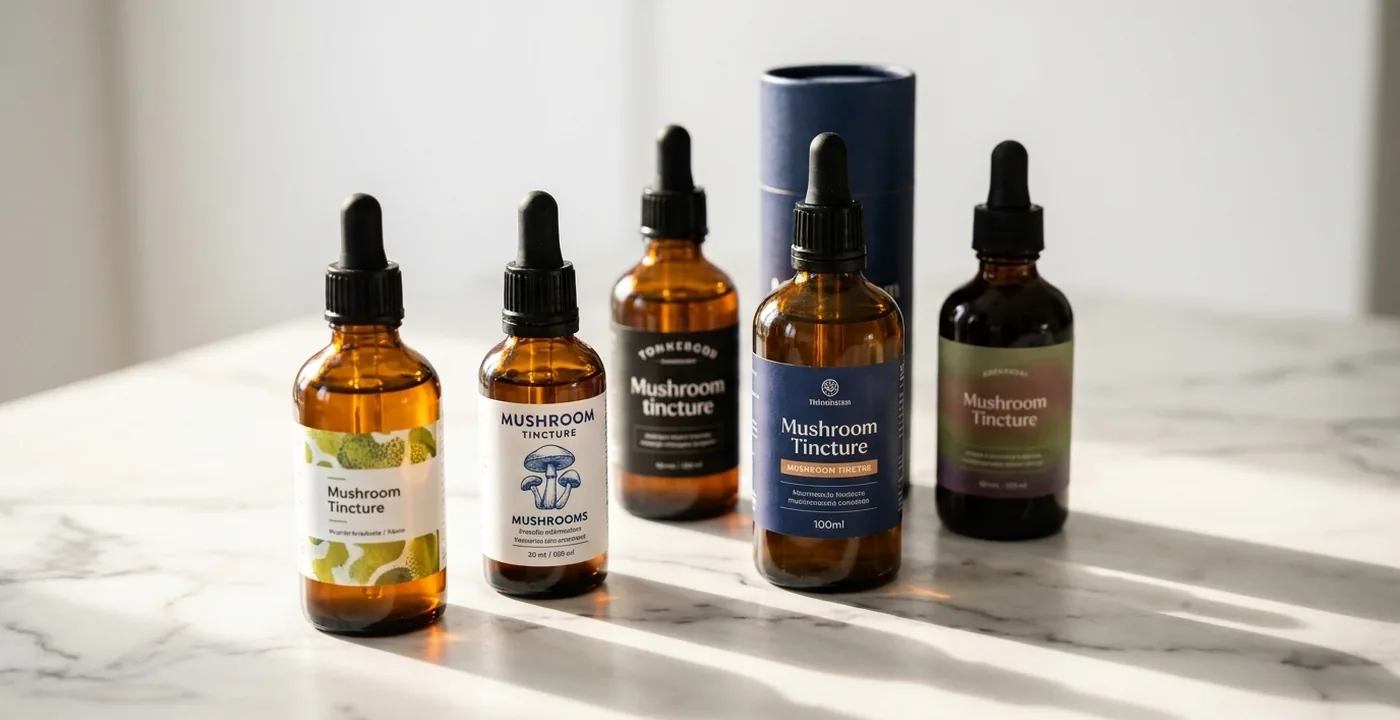
Table of Contents
Some of the links in this article are affiliate links, which help fund our independent review work at no extra cost to you. Every recommendation is based on hands-on testing through The Editor Lab methodology. No brand pays to appear, and no placement is guaranteed.
The UK mushroom tincture market has grown sharply over the past two years. More brands, more extraction claims, more promises on the label. But having spent six months testing tinctures alongside capsules, powders, and mushroom coffee, the liquid format still stands apart for one reason: speed of absorption. A well-made tincture, taken under the tongue, delivers its active compounds into the bloodstream faster than any capsule can dissolve.
That matters when the compounds in question are hericenones, erinacines, beta-glucans, and triterpenoids, each requiring different extraction methods to become bioavailable. Not every brand gets this right. Some use single water extraction and miss the alcohol-soluble compounds entirely. Others bulk out their formulas with mycelium grown on grain, diluting the active ingredient with starch filler the label will never mention.
“Editor's Insight: Our Editor Lab team tested seven mushroom tincture brands across extraction method, mushroom source (fruiting body vs mycelium), organic certification, third-party lab testing, taste, and price per ml. Three brands stood out. One disappointed.”
Editor's Note - James Bellis, Health and Wellness Editor
Full disclosure: Balance Coffee is our parent brand. I founded Balance Coffee in 2020, and I also founded Balance Journal. We have tested these products ourselves and hold them to the same standard as every other brand on this list. I started in coffee back in 2012, spent five years on the road between UK roasteries selling espresso machines for Sanremo, and visited almost 300 roasteries across the country. When I launched Balance Coffee, the idea was straightforward: apply the same transparency standard to coffee and functional supplements that I applied to everything else I consumed. That means independent lab testing for every batch, published results, and no vague sourcing claims. Our tinctures exist because I could not find a lion's mane tincture on the market that met that standard. Clemmie Rose, our nutritional therapist and BANT-registered reviewer, has consulted on formulation and dosage throughout.
| Evaluation Criteria | Our Findings |
|---|---|
| Full Review | Read our Balance Coffee review |
| Best For | Best overall mushroom tincture - published lab testing, organic, 2,000mg per serving |
| Extraction Method | Dual extraction (organic triple-distilled ethanol + distilled spring water) |
| Flavour Profile | Clean earthiness, faint alcohol warmth, slightly woody, minimal bitterness |
| Certification | Soil Association organic, independent lab tested (published CoAs) |
| Price | £35 / 50ml (£0.70 per ml) |
| Shop | Shop Balance Coffee → |
| Evaluation Criteria | Our Findings |
|---|---|
| Full Review | Read our Bristol Fungarium review (coming soon) |
| Best For | Best UK-grown reishi tincture - triple extraction, 1:4 super-strength ratio |
| Extraction Method | Triple extraction (ethanol + hot water + ultrasonic), 1:4 ratio |
| Flavour Profile | Intensely earthy, bitter woody depth, thick and resinous, lingering bitterness |
| Certification | Soil Association organic, third-party tested (US and UK labs) |
| Price | £35 / 50ml (£0.70 per ml) |
| Shop | Shop Bristol Fungarium → |
| Evaluation Criteria | Our Findings |
|---|---|
| Full Review | Read our IW Mushrooms review (coming soon) |
| Best For | Best range - four mushroom types, all UK-grown and dual-extracted |
| Extraction Method | Dual extraction (ethanol + distilled water) |
| Flavour Profile | Subtle umami, mild alcohol notes, clean mushroom, gentle earthiness |
| Certification | Organic certification not prominently displayed, quality standards referenced |
| Price | £30 / 50ml (£0.60 per ml) |
| Shop | Shop IW Mushrooms → |
What Is a Mushroom Tincture (and Why Choose Liquid Over Capsules)?
A mushroom tincture is a concentrated liquid extract made by soaking medicinal mushroom fruiting bodies in a solvent, typically alcohol, water, or both, to draw out the bioactive compounds. The resulting liquid is taken by mouth, usually via a pipette dropper, either directly under the tongue or added to a drink.
The format matters more than most buyers realise. Tinctures bypass the digestive breakdown that capsules and powders must survive. According to a 2020 study published in the Journal of Food and Drug Analysis, dual-extracted mushroom preparations showed higher bioavailability of polysaccharides and triterpenes compared to single-extraction methods, enhancing immune modulation and therapeutic potential. When you place a tincture under the tongue, the sublingual tissue absorbs the active compounds directly into the bloodstream. No stomach acid. No waiting 30 to 45 minutes for a capsule shell to dissolve.
This does not mean tinctures are universally superior. Capsules offer convenience, consistent dosing, and longer shelf life. Powders mix into food. But for anyone prioritising rapid absorption and bioavailability, the tincture format, done properly, wins.
How Mushroom Tinctures Are Made (Single vs Dual vs Triple Extraction)
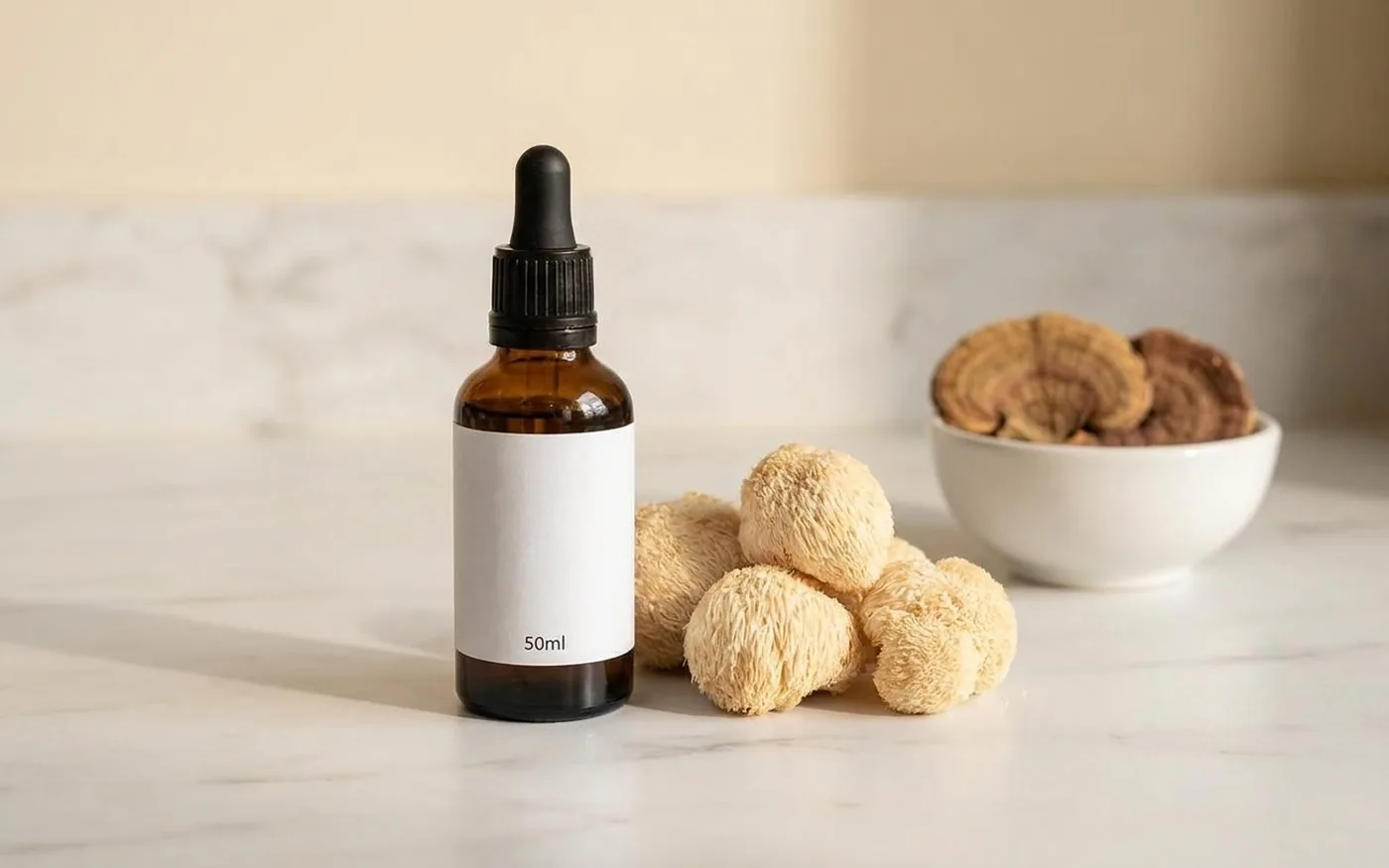
The extraction method determines what ends up in the bottle. Different compounds dissolve in different solvents, and a tincture that only uses one method leaves active ingredients behind.
Single extraction uses one solvent only, usually hot water. This pulls out water-soluble polysaccharides and beta-glucans but misses alcohol-soluble compounds like triterpenoids and hericenones. Most budget tinctures use this method.
Dual extraction combines alcohol and hot water in sequence. The alcohol phase captures triterpenoids, hericenones, and other fat-soluble compounds. The water phase captures beta-glucans and polysaccharides. This is considered the gold standard for most medicinal mushroom tinctures, and the method used by the majority of brands in our testing.
Triple extraction adds a third stage, often ultrasonic or cold-water extraction, to break down chitin cell walls further and release additional compounds. Bristol Fungarium uses this method for their reishi tincture, producing a 1:4 super-strength concentrate.
The key question to ask any brand: what extraction method do you use, and does it capture both water-soluble and alcohol-soluble compounds? If the label does not say, assume single extraction.
Tincture vs Powder vs Capsule - Which Absorbs Best?
Tinctures absorb faster than capsules because the liquid bypasses digestion entirely when taken sublingually. Capsules must first dissolve in the stomach, then pass through the intestinal wall. Powders fall somewhere in between, absorbing faster than capsules but slower than a sublingual tincture.
For lion's mane specifically, the hericenones (found in fruiting bodies) and erinacines (found in mycelium) promote nerve growth factor synthesis. A 2025 double-blind, randomised, placebo-controlled study published in Frontiers in Nutrition confirmed that a standardised Hericium erinaceus extract improved cognitive function and mood in healthy younger adults (aged 19 to 45). The speed at which these compounds reach the brain matters, and that favours the tincture format.
That said, the best mushroom supplements are the ones you will actually take consistently. If you prefer capsules, a high-quality dual-extracted capsule from fruiting body material will outperform a cheap single-extraction tincture every time. Format is secondary to extraction quality and mushroom source.
How We Tested and Compared These Tinctures
Every tincture in this guide was evaluated through The Editor Lab, our structured product testing framework. We assessed seven brands across six criteria, each weighted equally.
Extraction method. Does the brand use dual or triple extraction? Single extraction products were marked down. We verified extraction claims against published information on each brand's website.
Mushroom source. Fruiting body only, or mycelium on grain? Fruiting body extracts contain higher concentrations of beta-glucans and the target bioactive compounds. Mycelium-on-grain products contain significant starch filler, sometimes exceeding 50% of the dry weight.
Third-party testing. Does the brand publish independent lab results or Certificates of Analysis? We checked for published CoAs, named testing laboratories, and specific compounds tested (beta-glucans, heavy metals, microbial contamination).
Organic certification. We verified certifications against the issuing body: Soil Association for UK brands, Organic Food Federation where applicable, and USDA Organic for US imports.
Price per ml. Calculated from the retail price and bottle volume as of May 2026. Where subscription pricing was available, we noted both one-off and recurring prices.
Taste and usability. Taken neat under the tongue and mixed into coffee. We noted bitterness, alcohol burn, and whether the tincture altered the flavour of the drink.
Under EFSA regulations, no mushroom supplement sold in the UK can make direct health claims. Every benefit statement in this article reflects published peer-reviewed research or our own first-hand testing experience, not marketing copy from the brands.
Best Mushroom Tinctures UK - Our Top Picks
| Rank | Brand | Best For | Price | Shop |
|---|---|---|---|---|
| 1 | 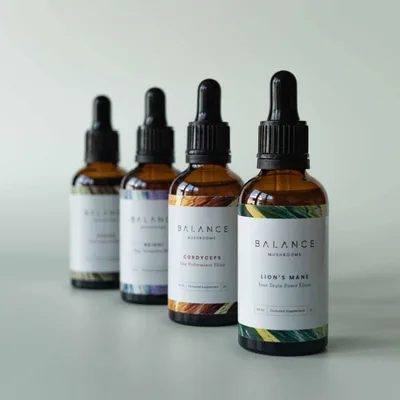
| Best Overall Published lab results, 2,000mg per serving | £0.70 per ml | Save 20% |
| 2 |
Bristol Fungarium
★★
★★
★★
★★
★★
| Best UK-Grown Triple extraction, 1:4 super-strength | £0.70 per ml | Explore |
| 3 |
IW Mushrooms
★★
★★
★★
★★
★★
| Best Range 4 mushroom types, mild flavour | £0.60 per ml | Explore |
1. Balance Coffee Lion's Mane Tincture - Best Overall
Location: London | Founded: 2020
The Balance Coffee Lion’s Mane Tincture is a 50ml glass bottle containing 2,000mg of lion’s mane per 2ml serving, dual-extracted from fruiting bodies with published third-party lab results confirming the beta-glucan content. I have taken it daily for four months. Balance Coffee is our parent brand, so the conflict of interest is declared - I applied the same testing criteria here as to every other brand on this list.
The Balance Coffee Lion's Mane Tincture is a 50ml glass bottle containing 2,000mg of lion's mane per 2ml serving. It uses dual extraction with organic triple-distilled ethanol at 30% concentration and distilled spring water. The mushrooms are Soil Association organic certified, and every batch is independently lab tested for beta-glucans, heavy metals, mycotoxins, and microbial contamination. Those results are published on the Balance Coffee website.
On the nose, there is a clean earthiness with a faint alcohol warmth. Through the body, the flavour is mild and slightly woody. On the finish, minimal bitterness and no lingering burn. Mixed into black coffee, it disappears almost entirely, which is exactly what you want from a daily-use tincture.
What separates this from most competitors is the testing transparency. Publishing batch-specific lab results is not standard practice in the UK mushroom supplement market. Most brands claim third-party testing but do not show the results. Balance Coffee does, and that alone moved it to the top of our list.
The range also includes Cordyceps and Reishi tinctures in the same 50ml format, making it the only brand in our testing that covers the three most popular mushroom types in tincture form.
Pros:
Soil Association organic. Independent lab testing with published results for every batch. 2,000mg lion's mane per serving. Three mushroom types available (lion's mane, cordyceps, reishi). Clean taste that mixes well with coffee.
Cons:
50ml bottle lasts approximately 25 days at recommended dosage. Only available direct from Balance Coffee (not stocked in health food shops). Premium price point.
2. Bristol Fungarium Reishi Tincture - Best UK-Grown
Location: Somerset | Founded: N/A
Walk into a health food shop anywhere in the South West and you will find Bristol Fungarium on the shelf. There is a reason for that. This is the only organic-certified medicinal mushroom producer currently growing and extracting entirely in the UK, from their farm in Somerset.
Their Reishi tincture uses a triple extraction process at a 1:4 ratio, meaning four parts solvent to one part dried fruiting body. That is stronger than the standard 1:2 or 1:3 ratios most competitors use. The triple extraction combines alcohol, hot water, and ultrasonic extraction to break down the chitin cell walls and release triterpenoids, beta-glucans, and ganoderic acids.
Reishi is not a tincture you take for a quick cognitive boost. It is the slow-burn adaptogen, traditionally used for sleep support, immune modulation, and stress resilience. On the nose, Bristol Fungarium's version is intensely earthy with a bitter woody depth. Through the body, it is thick, resinous, and unmistakably medicinal. On the finish, the bitterness lingers. This is not one you take neat if you dislike strong flavours. Mixed into herbal tea with honey, it works far better.
The Soil Association organic certification covers the full chain, from growing through to extraction. That level of traceability is rare. Most UK brands source mushrooms from China or Eastern Europe and extract domestically. Bristol Fungarium does the entire process under one roof.
They also produce a Lion's Mane tincture, though the Reishi remains their flagship product and the one that earned this placement.
Pros:
100% UK-grown and extracted (Somerset). Triple extraction, 1:4 super-strength ratio. Soil Association organic. Third-party tested (US and UK labs). Stocked in Holland and Barrett, Napiers, Planet Organic.
Cons:
Reishi flavour is intensely bitter (not beginner-friendly). Only reishi and lion's mane tinctures available (no cordyceps). Premium price comparable to Balance Coffee.
3. IW Mushrooms Lion's Mane Tincture - Best Range
Location: Isle of Wight | Founded: 2019
Isle of Wight Mushrooms calls itself the original UK cultivator of functional mushroom tinctures, and the claim is hard to dispute. Founded in 2019 in the Arreton Valley, they were making tinctures before most UK consumers had heard of lion's mane. They hold position one in Google for 'mushroom tincture' at the time of writing, and that SERP dominance is not accidental.
Their range covers four mushroom types in tincture form: Lion's Mane, Reishi, Cordyceps, and Turkey Tail. All four use dual extraction (alcohol followed by distilled water), all four use fruiting body only, and all four are grown on-site on the Isle of Wight. That end-to-end control, from cultivation through extraction, is something only a handful of UK producers can claim.
The Lion's Mane tincture is their strongest seller. On the nose, it carries a subtle umami quality with mild alcohol notes. Through the body, it is lighter than Bristol Fungarium's reishi, with a clean mushroom flavour that does not overwhelm. On the finish, a gentle earthiness fades within seconds. This is the easiest tincture in our lineup to take neat.
Where IW Mushrooms falls slightly short is testing transparency. They reference quality standards on their website but do not publish batch-specific CoAs in the way Balance Coffee does. For a brand at this price point and quality level, that is the obvious next step.
Pros:
Widest range of UK-grown tinctures (4 mushroom types). Dual extraction, fruiting body only. Grown and extracted on-site (Isle of Wight). Mild flavour profile, easy to take neat. Available through multiple UK retailers (Baldwin's, Healthy Supplies).
Cons:
No published Certificates of Analysis. Website could communicate extraction methodology more clearly. Organic certification status not prominently displayed.
4. Mogo Farm Lion's Mane Tincture - Best Tested
Location: Derbyshire | Founded: N/A
Mogo Farm operates from a small farm in the Derbyshire Peak District, and they are arguably the most transparent tincture producer in our lineup after Balance Coffee. Every batch comes with a published Certificate of Analysis, available on their website. Over 30,000 customers have purchased from them, which for a niche UK mushroom brand is significant volume.
Their dual extraction uses a 1:3 ratio (three parts solvent to one part dried mushroom), which is stronger than standard 1:2 formulas but not as concentrated as Bristol Fungarium's 1:4. They use UK-grown fruiting bodies only, no mycelium, no grain, no fillers, and the extraction uses alcohol and purified water.
The 100ml bottle is a useful differentiator. Most competitors sell 50ml, meaning Mogo Farm's bottle lasts roughly twice as long at the same daily dose. The recommended dosage is 2ml per day, providing 400mg of dried mushroom equivalent. That is lower per-serving than Balance Coffee's 2,000mg, though direct comparison is difficult because extraction ratios and mushroom concentrations differ between brands.
On the nose, earthy with a mellow warmth. Through the body, smooth and lighter than expected. On the finish, clean with almost no bitterness. This is a well-made tincture that does not require mixing to be palatable.
Their range extends to six mushroom types: Lion's Mane, Reishi, Cordyceps, Chaga, Shiitake, and Birch Polypore, plus a five-mushroom blend. That is the broadest range of any brand in this guide.
Pros:
Published Certificates of Analysis for every batch. 100ml bottle (double the standard volume). Six individual mushroom types plus a blend. UK-grown, fruiting body only, no fillers. Free UK shipping over £40. Excellent Trustpilot reviews.
Cons:
Lower mg per serving compared to some competitors. Derbyshire farm is smaller-scale (may affect stock availability). No organic certification displayed.
| Evaluation Criteria | Our Findings |
|---|---|
| Full Review | Read our Mogo Farm review (coming soon) |
| Best For | Best tested - published CoAs, 100ml bottle, excellent value per ml |
| Extraction Method | Dual extraction (ethanol + purified water), 1:3 ratio |
| Flavour Profile | Earthy, mellow warmth, smooth and light, clean with almost no bitterness |
| Certification | No organic certification displayed, third-party tested (published CoAs) |
| Price | £30 / 100ml (£0.30 per ml) |
| Shop | Shop Mogo Farm → |
5. No Ordinary Moments Lion's Mane Tincture - Best Extraction Process
Location: South of England | Founded: N/A
Most tincture brands use a two-stage process and call it a day. No Ordinary Moments runs five. Their proprietary Penta Extraction takes approximately five months per batch, combining long-term suspension in 70% grain alcohol, ultrasonic extraction, freeze-based distilled water extraction, hot and cold water presses, and multiple rounds of filtration.
Is that overkill? Possibly. But the result is a tincture with a noticeably fuller body and deeper colour than dual-extracted competitors. The extended extraction window allows more time for the solvent to penetrate the chitin cell walls, potentially releasing compounds that a faster process leaves trapped.
Their mushrooms are grown in the South of England (Lion's Mane, Reishi, Cordyceps), with Chaga wild-harvested in the Scottish Highlands. All products use fruiting body only. No grain filler, no mycelium bulk.
On the nose, rich and complex with layered earthiness. Through the body, the texture is thick, almost syrupy compared to lighter tinctures. On the finish, there is a prolonged warmth that speaks to the alcohol concentration and the density of extracted compounds. This is not a subtle tincture. It tastes like it has been through something, which, to be fair, it has.
The five-month production cycle means batch sizes are limited and restocks are not always immediate. If you find it in stock, that is worth noting.
Pros:
Five-stage Penta Extraction (most thorough process in our testing). UK-grown, fruiting body only. Noticeably fuller body and richer flavour profile. Small-batch production.
Cons:
Frequently out of stock due to long production cycles. Premium price point reflecting the extended extraction process. Strong flavour may not suit everyone. Smaller brand with less consumer awareness.
| Evaluation Criteria | Our Findings |
|---|---|
| Full Review | Read our No Ordinary Moments review (coming soon) |
| Best For | Best extraction process - five-stage Penta Extraction, small-batch production |
| Extraction Method | Penta Extraction (5-stage, around 5 months per batch) |
| Flavour Profile | Rich, complex, layered earthiness, thick and syrupy, prolonged warmth |
| Certification | Not certified organic, third-party tested |
| Price | £35-40 / 50ml (£0.70-0.80 per ml) |
| Shop | Shop No Ordinary Moments → |
6. Freshly Fermented Lion's Mane Tincture - Best Budget
Location: UK | Founded: N/A
Freshly Fermented takes a different approach to production. Before extraction, they freeze-dry all their mushrooms to lock in beneficial compounds. The tincture itself uses dual extraction (alcohol and water), and the mushrooms, Lion's Mane, Reishi, and Cordyceps, are grown in the UK and certified organic by the Organic Food Federation.
Their Chaga and Tremella are the exceptions, sourced from EU-based suppliers in Ukraine rather than grown domestically. They are transparent about this, stating clearly on their website that none of their mushrooms come from outside the EU or from China. In a market where vague origin claims are common, that specificity is welcome.
The price point is the main draw. Freshly Fermented consistently sits below the Bristol Fungarium and Balance Coffee price tier, making it the most accessible entry point for someone who wants a quality organic tincture without the premium cost.
On the nose, mild and slightly sweet with a faint herbal note. Through the body, thin compared to the triple or penta-extracted products, but clean and easy to take. On the finish, no bitterness, no burn. This is the tincture for someone who has never tried one before and does not want to grimace through their first dose.
The brand also holds position two in Google for 'mushroom tincture' at the time of writing, which reflects the strength of their product page SEO and their established presence in this category.
Pros:
Organic Food Federation certified. UK-grown mushrooms (Chaga and Tremella from EU). Freeze-dried before extraction (preserves compounds). Lower price point than premium competitors. Mild flavour, beginner-friendly.
Cons:
Dual extraction only (no triple or penta). Not all mushrooms are UK-grown. No published CoAs found on website. Thinner body compared to premium tinctures.
| Evaluation Criteria | Our Findings |
|---|---|
| Full Review | Read our Freshly Fermented review (coming soon) |
| Best For | Best budget - organic, freeze-dried, beginner-friendly flavour |
| Extraction Method | Dual extraction (ethanol + water), freeze-dried before extraction |
| Flavour Profile | Mild, slightly sweet, faint herbal note, thin body, no bitterness |
| Certification | Organic Food Federation certified |
| Price | £22-25 / 50ml (£0.44-0.50 per ml) |
| Shop | Shop Freshly Fermented → |
7. Host Defense Lion's Mane Extract - Most Recognised (Paul Stamets)
Location: Washington State, USA | Founded: N/A
Host Defense is the brand founded by Paul Stamets, arguably the most famous mycologist alive. His TED talks, Joe Rogan appearances, and the documentary Fantastic Fungi have made him the public face of medicinal mushrooms worldwide. If you have heard of mushroom supplements at all, there is a reasonable chance Stamets is the reason.
The Lion's Mane Extract is triple-extracted from organic mushroom mycelium and fruiting bodies, grown on their certified organic farm in Washington State. The recommended dose is 1ml twice daily.
Here is where it gets complicated. Host Defense uses mycelium grown on grain as a primary ingredient, not fruiting body alone. The mycology community remains split on this. Stamets argues that mycelium contains unique compounds (particularly erinacines) not found in fruiting bodies. Critics counter that mycelium-on-grain products contain substantial starch filler, sometimes 50% or more of the dry weight, diluting the active compounds. Independent beta-glucan testing of Host Defense products has historically shown lower beta-glucan percentages than fruiting-body-only brands.
On the nose, light and mild with a faint sweetness. Through the body, watery compared to the UK dual and triple-extracted tinctures. On the finish, almost nothing. It is the lightest-tasting tincture in our lineup.
I include Host Defense because Stamets' contribution to mycology is genuine and significant, and many UK consumers will search for this brand specifically. But on extraction strength and testing transparency, the UK-grown brands in positions one through six outperform it.
Pros:
Founded by Paul Stamets (world-leading mycologist). Triple extraction, USDA organic. Widely available on Amazon UK. Includes both mycelium and fruiting body.
Cons:
Uses mycelium on grain (starch filler concerns). Lower beta-glucan concentrations than fruiting-body-only brands. Imported from the US (higher price, longer supply chain). Limited UK retail presence outside Amazon.
| Evaluation Criteria | Our Findings |
|---|---|
| Full Review | Read our Host Defense review (coming soon) |
| Best For | Most recognised brand - Paul Stamets, USDA organic, Amazon UK availability |
| Extraction Method | Triple extraction (ethanol + water + additional) |
| Flavour Profile | Light, mild, faint sweetness, watery body, almost no finish |
| Certification | USDA Organic, internal testing |
| Price | £30-35 / 60ml (£0.50-0.58 per ml, Amazon UK) |
| Shop | Shop Host Defense → |
Best Mushroom Tinctures by Type
Best Lion's Mane Tincture
Balance Coffee. The combination of 2,000mg per serving, dual extraction from organic fruiting body, and published lab results makes it the strongest overall pick. For a UK-grown alternative at a lower price point, Mogo Farm offers excellent value with its 100ml bottle and published CoAs.
Best Reishi Tincture
Bristol Fungarium. Their triple-extracted, 1:4 ratio Reishi is the most concentrated reishi tincture we tested. The Soil Association organic certification and full UK production chain are unmatched. If the intense bitterness is too much, Balance Coffee's Reishi tincture offers a milder alternative.
Best Cordyceps Tincture
IW Mushrooms. They were one of the first UK producers to offer a cordyceps tincture made from fruiting body rather than the CS-4 mycelium culture that dominates the budget end of the market. Balance Coffee's Cordyceps tincture is a close second, with the added advantage of published lab testing.
Best Chaga Tincture
Mogo Farm. Chaga grows wild on birch trees and cannot be cultivated indoors in the same way as lion's mane or reishi. Mogo Farm's chaga mushroom tincture uses sustainably harvested chaga with dual extraction. Freshly Fermented also offers a chaga tincture sourced from the EU.
Best Multi-Mushroom Blend Tincture
Mogo Farm 5 Mushroom Blend. Combines Lion's Mane, Reishi, Cordyceps, Chaga, and Turkey Tail in a single 100ml bottle with dual extraction. Useful for anyone who wants broad-spectrum mushroom support without buying five separate bottles.
What to Look for in a Mushroom Tincture (and What to Avoid)
Red Flags - Mycelium on Grain, No Testing, Vague Sourcing
Mycelium on grain. If the label says 'mycelium biomass' or 'full spectrum mycelium' without specifying fruiting body, the product likely contains significant grain starch filler. This is not inherently dangerous, but it dilutes the concentration of beta-glucans and other target compounds. Ask the brand directly. If they cannot tell you the percentage of fruiting body versus mycelium, move on.
No third-party testing. Any brand can claim 'lab tested'. The question is whether they name the laboratory, specify what was tested, and publish the results. Brands that test but do not publish are hiding something or have nothing worth showing. Either way, that is not transparency.
Vague sourcing. 'Sourced from premium farms' means nothing without a country of origin. 'Organic ingredients' without a certifying body is meaningless. Look for named certifications: Soil Association, Organic Food Federation, USDA Organic. If none are listed, the product is not certified.
Green Flags - Dual Extraction, Fruiting Body, Published CoAs
Dual or triple extraction. At minimum, the tincture should use both alcohol and water extraction. This captures both water-soluble beta-glucans and alcohol-soluble compounds like triterpenoids and hericenones. Single extraction leaves compounds on the table.
Fruiting body only. The fruiting body is the part of the mushroom you would recognise: the cap and stem that grows above the substrate. It contains higher concentrations of beta-glucans than mycelium. Every top-performing brand in our testing uses fruiting body exclusively, with the exception of Host Defense.
Published Certificates of Analysis. The gold standard. A CoA from a named, independent laboratory showing specific beta-glucan content, heavy metal levels, microbial contamination results, and mycotoxin screening. Balance Coffee and Mogo Farm both publish these. If more brands followed, the entire market would improve.
Do Mushroom Tinctures Actually Work?
The honest answer: it depends on the mushroom, the extraction quality, and what you mean by 'work'.
For lion's mane, the evidence is the most compelling. A 2025 randomised controlled trial published in Frontiers in Nutrition found that a standardised Hericium erinaceus extract improved measures of cognitive function and mood in healthy adults aged 19 to 45. The Memorial Sloan Kettering Cancer Center monograph notes that lion's mane contains compounds that stimulate nerve growth factor (NGF) synthesis, though it cautions that most human evidence remains preliminary.
For reishi, the evidence centres on immune modulation and sleep quality. Reishi contains ganoderic acids and polysaccharides associated with reduced inflammation markers in clinical studies, though Examine.com notes that much of the human evidence is small-scale or short-duration.
For cordyceps, the traditional claim is energy and endurance support. Published research, including a 2017 randomised trial in the Journal of Dietary Supplements, found modest improvements in exercise performance in older adults taking CS-4 cordyceps. The effect in younger, trained individuals is less clear.
Here is the friction moment. The UK supplement market operates under EFSA regulations, which prohibit specific health claims on mushroom product labels. That means brands cannot legally say 'improves focus' or 'boosts immunity' on packaging, even where published research supports those effects. The result is a market where the best products cannot tell you what they do, and the worst products imply things they cannot prove. The research exists. The regulatory framework has not caught up. Read the studies yourself. The Memorial Sloan Kettering aboutherbs database is a reliable starting point.
How to Take a Mushroom Tincture (Dosage and Timing)
Most tinctures recommend 1 to 2ml per day, taken via the pipette dropper. The standard method is sublingual: place the liquid under your tongue, hold for 30 to 60 seconds, then swallow. This allows the active compounds to absorb through the sublingual tissue before reaching the digestive system.
If you dislike the taste, add the tincture to coffee, tea, or a smoothie. The heat from a hot drink will not destroy the active compounds at normal drinking temperatures. Balance Coffee's tinctures are specifically designed to mix into coffee without altering the flavour.
Timing matters. Lion's mane is best taken in the morning or early afternoon for cognitive support. Reishi is traditionally taken in the evening for sleep and recovery. Cordyceps is often taken pre-workout or in the morning for energy. These are guidelines, not rules. Consistency matters more than timing. As of May 2026, there is no published evidence suggesting that time of day significantly alters the efficacy of mushroom tinctures, only that daily use over several weeks produces the most consistent results.
Start with the recommended dose on the bottle. Increase only after two to four weeks if you notice no effect. More is not necessarily better with adaptogenic mushrooms, and the research that shows positive results typically uses moderate, consistent doses.
Brand Verification Notes
Brands excluded from this guide after verification:
Three brands from the initial research phase were excluded because they do not sell mushroom tinctures (liquid extract in dropper bottle format):
Hifas da Terra (Mico-Leo) - Sells capsule extracts only. No liquid tincture available despite being positioned as 'clinical grade'. Excellent product, wrong format for this roundup.
Four Sigmatic - Sells powder blends and mushroom coffee, not liquid tinctures. Available in the UK through Planet Organic and Dolphin Fitness, but not in tincture format.
Real Mushrooms - Sells capsules and powders only. No liquid tincture available on their website or Amazon UK. Strong brand for capsule-format mushroom supplements, but outside the scope of this guide.
These brands may appear in our upcoming best mushroom supplements uk guide, which covers all supplement formats including capsules, powders, and tinctures.
This article was last updated in May 2026. Prices and product availability were verified at the time of writing. For the latest best mushroom coffee brands uk, see our dedicated guide on balancejournal.co.
Frequently Asked Questions
Are mushroom tinctures effective?
The published evidence supports specific benefits for specific mushrooms. Lion's mane has the strongest human evidence for cognitive function, with a 2025 trial in Frontiers in Nutrition showing improved cognition and mood in healthy adults. Reishi has evidence for immune modulation and sleep. Effectiveness depends on extraction quality, mushroom source, and consistent daily use over several weeks.
Is mushroom tincture better than powder?
Tinctures absorb faster than powders when taken sublingually because the liquid enters the bloodstream through the tissue under the tongue. Powders must pass through the digestive system first. However, a high-quality dual-extracted powder from fruiting body material can contain comparable levels of active compounds. The format is less important than the extraction method and mushroom source. Choose the format you will take consistently.
What is a mushroom tincture?
A mushroom tincture is a concentrated liquid extract made by soaking medicinal mushroom fruiting bodies in alcohol, water, or both. The extraction process draws out bioactive compounds including beta-glucans, triterpenoids, and species-specific compounds like hericenones (lion's mane) and ganoderic acids (reishi). The liquid is taken orally via a pipette dropper, typically 1 to 2ml per day.
How long do mushroom tinctures last?
An unopened tincture stored in a cool, dark place typically lasts 12 to 24 months. The alcohol acts as a natural preservative. Once opened, most brands recommend using the tincture within six months. A 50ml bottle at 2ml per day lasts approximately 25 days. A 100ml bottle, like Mogo Farm's, lasts roughly 50 days.
Do mushroom tinctures work?
They work for specific, evidence-backed outcomes when extraction quality and mushroom source are adequate. They are not miracle cures. Choose one mushroom aligned with your goal, use a dual-extracted fruiting body tincture, and take it daily for four to six weeks before evaluating the effect. Consistency matters more than dose size.
Can you take multiple mushroom tinctures together?
Yes. There is no published evidence of harmful interactions between common medicinal mushroom species at recommended doses. Many practitioners suggest lion's mane in the morning and reishi in the evening. If you take prescription medication, consult your GP or a qualified nutritional therapist before adding any supplement to your routine.
Are mushroom tinctures safe during pregnancy?
There is insufficient human research to confirm safety during pregnancy or breastfeeding. Most brands advise against use. The alcohol content, typically 25 to 30%, is a further consideration, though the amount per dose is minimal. Speak to your midwife or GP before taking any supplement during pregnancy. Do not rely on an article for this decision.
Do mushroom tinctures contain alcohol?
Most dual and triple-extracted tinctures contain 25 to 30% alcohol, used as a solvent to pull out alcohol-soluble compounds like triterpenoids and hericenones. The amount per dose is small, typically under 0.5ml of pure alcohol in a 2ml serving. Alcohol-free versions exist but usually use only water extraction, which misses the alcohol-soluble compounds and reduces the potency of the final product.
Where can you buy mushroom tinctures in the UK?
UK-made tinctures are available direct from brand websites (Balance Coffee, Bristol Fungarium, IW Mushrooms, Mogo Farm), through Holland and Barrett, Planet Organic, and independent health food shops. Amazon UK stocks Host Defense and some smaller brands. Buying direct from the producer usually gives you access to published lab results and fresher stock than retailer warehouses.
What is the difference between lion's mane, reishi, and cordyceps tinctures?
Lion's mane targets cognitive function and nerve growth factor synthesis. Reishi is an adaptogen used for sleep support, immune modulation, and stress resilience. Cordyceps is traditionally used for energy and exercise performance. Each contains different active compounds requiring the same dual extraction method. They can be taken together, but starting with one mushroom makes it easier to assess whether it is having an effect.
A wellness entrepreneur and biohacker, James explores the intersection of hospitality and health - from clean fuel and recovery tools to mindful routines that build balance into daily life.