teapigs Matcha Review UK 2026: Tested and Rated
A food writer tested teapigs matcha against ceremonial rivals. Is the price justified, or are you buying the label?
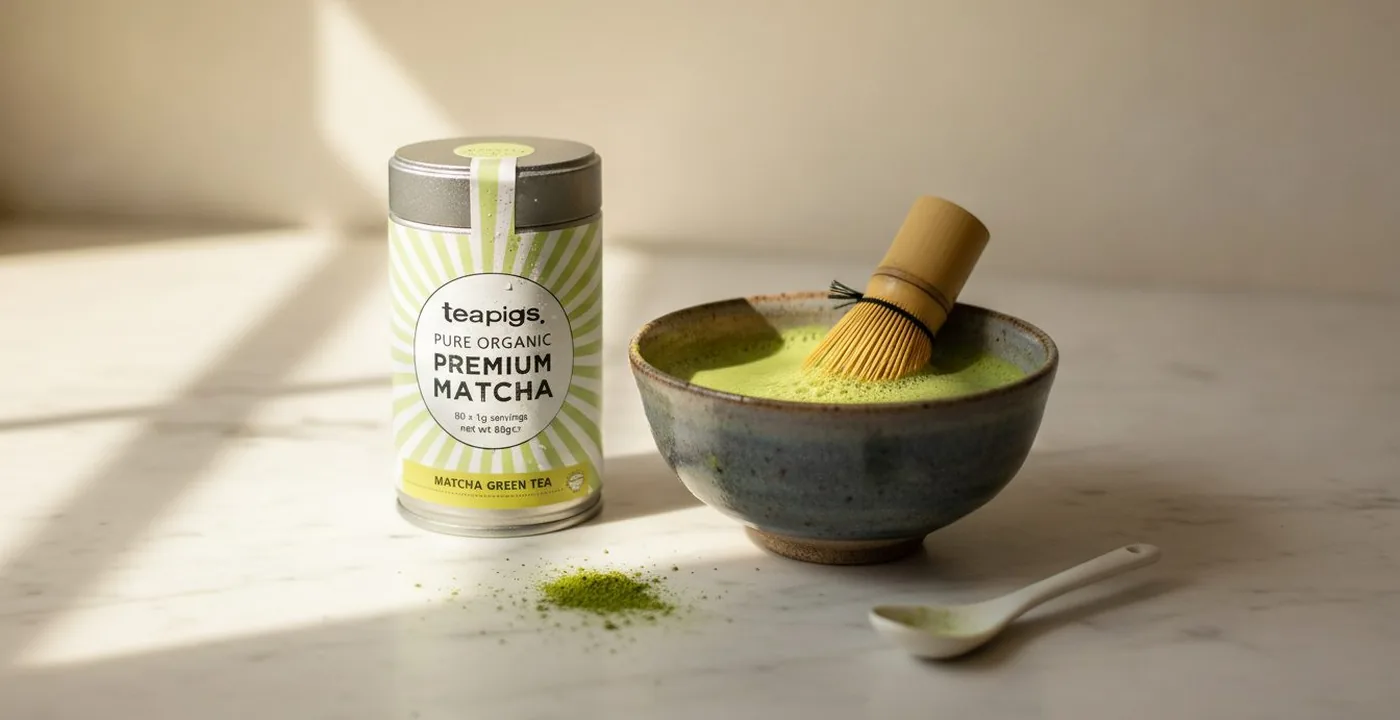
Table of Contents
Some of the links in this article are affiliate links, which help fund our independent review work at no extra cost to you. Every recommendation is based on hands-on testing through The Editor Lab methodology. No brand pays to appear, and no placement is guaranteed.
The question most people bring to teapigs matcha is not really about the brand. It is about whether this is genuinely good matcha, or whether you are buying the label.
That question matters more now than it did five years ago. Matcha is everywhere: in supermarket baking aisles, in oat milk lattes, in powders on Ocado sitting at very different price points. teapigs sits in the middle of that range, priced above supermarket own-brand and stocked alongside brands that cost twice as much. A food writer whose work spans over a decade of London dining, I have spent a significant part of the past year working through the UK's matcha market for Balance Journal - testing more than two dozen powders across whisked, latte, and cold preparations. teapigs was one of the first we pulled out of the tin.
Here is what we found.
Verdict at a Glance
teapigs Premium Organic Matcha is a consistent, accessible everyday matcha with good colour, low bitterness, and reliable latte performance. It is not the deepest umami in our tested set, and it is not sold as top-tier ceremonial grade - the brand markets it for everyday drinking, and that framing is honest. For the price (around £8.99 for 30g, around £26.99 for 80g), it delivers more than cheaper supermarket powders and competes respectably with reviewed siblings in the matcha cluster.
Overall: 7.5/10 - Recommended for everyday drinkers and coffee switchers. Not the right pick if your priority is ceremonial-grade depth.
| Criteria | Rating |
|---|---|
| Colour | 8/10 - vivid jade green, good visual signal |
| Umami depth | 6/10 - present and pleasant, not complex |
| Bitterness | 8/10 - very low bitterness, well-suited to latte prep |
| Latte performance | 9/10 - mixes cleanly, no clumping with a bamboo whisk |
| Value (30g tin) | 6/10 - fair for the quality, better per gram on 80g |
| Value (80g tin) | 8/10 - price-per-gram becomes genuinely competitive |
What Is teapigs Matcha and What Do They Sell?
teapigs is a UK tea brand founded in 2006 and now stocked in most major supermarkets, on Ocado, and through their own site at teapigs.co.uk. Their matcha line centres on a single hero product: Premium Organic Matcha, sold in two formats.
The 30g tin costs around £8.99 at the time of writing and yields approximately 15 servings at 2g per serving. The 80g tin costs around £26.99, yielding roughly 40 servings, which brings the cost-per-serving down from around £0.60 to around £0.67 - actually slightly higher per gram on the 80g, though availability varies across retailers and prices shift. Verify current pricing at teapigs.co.uk and Amazon UK before buying.
A secondary format - matcha latte sachets - exists for convenience. These are pre-sweetened and do not offer the same quality control as the tin. The primary product for anyone serious about everyday matcha is the loose tin.
On sourcing: teapigs states their matcha comes from the Nishio region of Japan, and the packaging carries organic certification. Nishio is a well-established Japanese matcha-growing area, distinct from Uji - the Kyoto-adjacent region associated with Japan's highest-grade ceremonial powders. Compared to brands like Ritual and Flow or Jade Leaf, both of which source from Uji, teapigs uses Nishio - a different sub-region with its own growing tradition, typically associated with everyday and premium-everyday grade matcha rather than the top ceremonial tier.
On grade: teapigs does not label their matcha as 'ceremonial grade'. They call it 'premium organic matcha' - which is more accurate than many brands. Ceremonial grade matcha is not a regulated term: any producer can apply it. The Nihoncha (Japanese Tea) Academy provides reference standards for Japanese tea classification, which illustrate how loosely commercial grade labels map to actual production standards. That teapigs avoids it is a small point in their favour on transparency.
How We Tested
We prepared teapigs matcha three ways over multiple sessions: whisked in a bowl with hot water (70-75C), made as a latte with oat milk (steamed to around 60C), and as an iced preparation with cold water and ice.
Equipment: bamboo whisk (chasen), ceramic matcha bowl, kitchen thermometer. Sieve used for the whisked preparation only - standard guidance for any matcha powder.
Friction moment 1 - clumping without sieving. Like most matcha powders, teapigs clumps if you add water directly to unsieved powder. A 30-second sieve pass before whisking eliminates this. Without it, the texture in a latte becomes uneven and small green lumps persist. This is not a product defect - it is standard matcha behaviour - but it is worth stating clearly for first-time buyers.
Friction moment 2 - cold preparation. Whisking in cold water does not work without a good chasen or a shaker bottle. We found a shaker bottle with some cold water worked well. The flavour in cold prep is lighter and grassier than whisked hot.
Taste, Colour, and Texture
The colour of teapigs matcha is a genuine indicator of quality. When whisked with hot water, it produces a vivid jade green liquid - not the khaki-olive shade you get from budget powders. Colour matters in matcha because it reflects the quality of shading and processing: vivid green indicates younger leaves, more chlorophyll, and careful stone-grinding. The teapigs tin passes this test clearly.
In the bowl - whisked neat at 70C with around 60ml water - the flavour is grassy and gently sweet with a mild umami finish. Bitterness is very low, which will suit most UK drinkers coming from a coffee or black tea background. What it lacks compared to single-origin ceremonial powders like those from Bird and Blend is layered complexity - the kind of second-wave umami that develops as the liquor cools. With teapigs, what you taste at first is what you get throughout.
In a latte - the format most buyers will use daily - it performs well. Whisked into a small amount of hot water first, then topped with steamed oat milk, it integrates cleanly without the sour-grassy note that some cheaper powders carry. The sweetness of oat milk works with teapigs rather than masking a weak base.
Tasting notes: fresh-cut grass on the nose, gentle vegetal sweetness through the body, clean finish with low residual bitterness.
Quality and Caffeine: Where teapigs Sits
Grade. teapigs positions their matcha as 'premium organic' for everyday drinking. Based on colour, texture, and flavour, we would class this as high-quality everyday matcha - above culinary grade (which is intended for baking and cooking), but below the top tier of ceremonial powders. It is an honest middle ground for a daily drink.
Ceremonial-grade matcha - the top 5-10% of harvest, from youngest shaded leaves, stone-ground slowly - typically produces a more intense colour and deeper umami. Whether that difference justifies the cost premium depends entirely on your use case. For a daily morning latte, teapigs is a more than adequate base.
Caffeine and L-theanine. Matcha contains both caffeine and L-theanine. According to the European Food Safety Authority's caffeine opinion (2015), caffeine has been shown to contribute to increased alertness and attention at a dose of 75mg or above. A 2g serving of matcha typically yields 50-70mg of caffeine - below the EFSA threshold for the alertness claim, but in the same ballpark as an espresso when consumed as a double preparation.
The L-theanine in matcha is what makes it a genuinely useful coffee alternative for many drinkers: it moderates the caffeine response and reduces the spike-and-crash pattern associated with black coffee. The combination is the reason matcha has meaningful overlap with the functional coffee audience - people looking for a steadier energy lift without the cortisol-driven stress response some report from espresso. For more on this, see our comparison of matcha vs green tea.
| Property | teapigs Premium Organic Matcha |
|---|---|
| Grade | Everyday premium (not top ceremonial) |
| Origin | Nishio, Japan (organic certified) |
| Caffeine per 2g serving | Around 50-70mg (estimate - verify on current packaging) |
| L-theanine | Present; no specific mg claim from brand |
| Format | 30g tin / 80g tin / latte sachets |
| Organic certification | Yes |
Price and Value: Is teapigs Worth It?
The 30g tin at around £8.99 yields approximately 15 servings at 2g, making the cost-per-serving around £0.60. That is meaningfully cheaper than the £1.20-1.80 per serving you pay for top-tier ceremonial imports, and around three to four times the cost of budget supermarket powders.
Whether it is 'worth it' depends on the comparison you are making.
Vs cheaper supermarket matcha (under £5 for 30g): teapigs wins clearly on colour and taste. Budget powders often produce a dull, bitter latte. The quality gap is noticeable and justifies the price difference.
Vs pricier ceremonial matcha (£15+ for 30g): The gap narrows in a latte because oat milk masks nuance. Whisked neat, the ceremonial tier produces more complexity. For daily latte drinkers, paying ceremonial prices is unlikely to produce a proportional daily experience improvement.
The 80g tin case. At around £26.99 for 80g, the cost-per-gram is better than two 30g tins at £8.99 each. If you drink matcha daily, the 80g tin is the sensible buy.
How teapigs Compares to Other Reviewed Matcha Brands
| Brand | Grade positioning | Colour | Umami depth | Latte score | Price per 10g |
|---|---|---|---|---|---|
| teapigs | Everyday premium | 8/10 | 6/10 | 9/10 | Around £3.00 (30g tin) |
| Ritual and Flow | Ceremonial | 9/10 | 8/10 | 8/10 | Around £5.00 |
| Bird and Blend | Ceremonial | 9/10 | 8/10 | 9/10 | Around £4.50 |
| Jade Leaf | Ceremonial | 9/10 | 9/10 | 8/10 | Around £4.00 |
teapigs competes well on latte performance and value. Where it falls behind is umami depth in whisked, neat preparation - an important distinction if you intend to drink matcha as a meditative bowl rather than a morning latte. See our full best matcha brands UK guide for the wider market view.
Who Should Buy teapigs Matcha (and Who Should Skip It)
- Buy teapigs if you want a reliable everyday matcha latte powder without ceremony-grade pricing
- You are new to matcha and want an accessible starting point with low bitterness
- You are switching from coffee and prioritising the matcha caffeine + L-theanine combination over depth of flavour
- The 80g tin represents good value for daily drinkers on a budget
- You want supermarket and Ocado availability without ordering from a specialist
- Skip teapigs if you plan to drink matcha whisked neat and want maximum umami complexity
- Sub-region matters to your buying decision - Uji is the benchmark region for top ceremonial matcha, and teapigs sources from Nishio rather than Uji
- You are comparing on ceremonial grade and want a brand that commits to that claim explicitly
- You want the deepest flavour experience in the matcha cluster - for that, Jade Leaf or Ritual and Flow are better picks
If you are exploring functional alternatives to coffee more broadly, our guide to the best lions mane coffee UK options covers the functional coffee side of that same audience.
Frequently Asked Questions
Is teapigs matcha ceremonial grade?
teapigs does not market their matcha as ceremonial grade - they call it 'premium organic matcha', which is a more honest description. Based on colour, umami depth, and texture, it sits above culinary grade (intended for cooking and baking) but below the top tier of ceremonial powders from single-origin Uji producers. For everyday latte preparation, the distinction matters less than it does for whisked, neat drinking. It is a genuine everyday premium, not a top ceremonial.
Is teapigs a good tea brand?
teapigs has a strong reputation for quality across their tea range and their matcha carries an Amazon rating of 4.3/5 from 194 reviews at the time of writing - a solid signal of consistent quality across buyers. Brand-level Trustpilot is more mixed at 3.1/5 from 340 reviews, though this covers their full product range and customer service experience, not matcha specifically. As a matcha product, the quality is good for the price point and positioning.
Why is teapigs matcha so expensive compared to supermarket own-brand?
The premium reflects organic certification, Japanese sourcing, quality-controlled stone-grinding, and brand distribution through premium retailers. The 30g tin at around £8.99 is positioned between supermarket own-brand (often under £5) and specialist ceremonial imports (often £15-25 for 30g). The price-per-gram is better on the 80g tin, which is worth considering if you drink matcha regularly.
Is teapigs matcha worth it?
For everyday matcha latte drinkers, yes - teapigs is worth it relative to cheaper supermarket powders, which often produce a bitter, dull-coloured result. Relative to pricier ceremonial brands, the value case is strongest for latte prep where the nuance gap closes. If you drink matcha neat and whisked, the ceremonial tier at £4.00-5.00 per 10g delivers more complexity than teapigs' around £3.00 per 10g. Match your choice to your preparation style.
How can you tell if matcha is high quality?
The clearest indicators are colour, fineness, and taste. High-quality matcha should be a vivid jade green - dull olive or yellow-green powder signals lower grade, poor shading, or age. The powder should be extremely fine, almost silky. On taste, good matcha has a forward umami with low bitterness; culinary-grade matcha tends to be grassy and bitter when whisked neat. Apply these tests to teapigs: the colour is vivid, the texture is fine, and bitterness is low - it passes on all three markers for its positioning.
Is matcha a good coffee alternative?
For many people, yes. Matcha provides caffeine alongside L-theanine, an amino acid that moderates the stimulant effect and reduces the anxiety and crash some coffee drinkers report. The European Food Safety Authority notes that caffeine contributes to increased alertness at 75mg and above; a 2g matcha serving provides less than this individually, but a double preparation or a longer steep brings it closer. The L-theanine combination means the energy lift feels steadier for most people. Whether matcha fully replaces coffee depends on individual response to caffeine and personal taste preference.
Where can I buy teapigs matcha in the UK?
teapigs matcha is widely available: on the teapigs website (teapigs.co.uk), on Amazon UK (both 30g and 80g tins), Ocado, Waitrose, Sainsbury's, and many health food retailers. Availability of the 80g tin varies by retailer - Amazon and the teapigs website typically stock both sizes. Prices vary across channels, so it is worth comparing before buying.
Is teapigs matcha being discontinued?
No - teapigs matcha is an active, widely stocked product as of July 2026. The 'discontinued' search query likely reflects confusion from temporary stock-outs at individual retailers, which have occurred periodically due to demand spikes. The product is live on teapigs.co.uk and Amazon UK at the time of writing. If you see it out of stock at one retailer, check another.

A seasoned food and lifestyle writer with over a decade in London's hospitality scene, Snita explores the culture of dining, drink, and connection.