Plenish Oat Milk Review: The No-Oil Oat Milk Reviewed
Plenish oat milk reviewed by a BANT nutritionist: clean-label claims verified, barista performance, Oatly comparison, Trustpilot caution, and honest verdict.
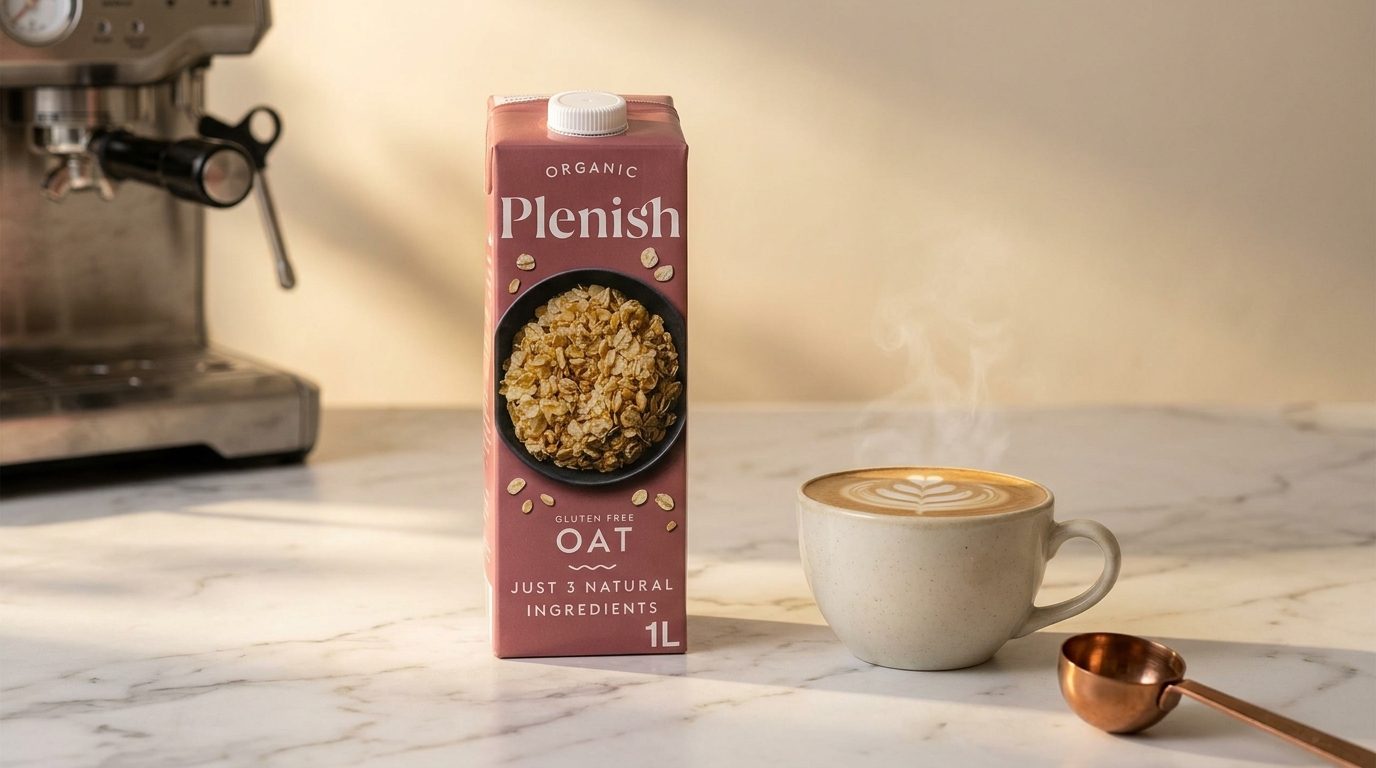
Table of Contents
Some of the links in this article are affiliate links, which help fund our independent review work at no extra cost to you. Every recommendation is based on hands-on testing through The Editor Lab methodology. No brand pays to appear, and no placement is guaranteed.
If you turn over a Plenish oat milk carton and read the ingredient list, something is immediately different. There are no oils. No rapeseed, no sunflower, no added emulsifiers derived from pressing seeds. It is water, organic oats, and a small number of additives depending on the variant. For a product category where most major brands have normalised adding vegetable oils to improve foam and mouthfeel, that absence is significant - and it is why so many people searching for a seed oil free milk end up at this brand.
I am a BANT-registered Nutritional Therapist, and the first question my clients ask when they want to reduce seed oils from their diet is not which supplement to take - it is which milk to buy. Plenish comes up repeatedly. I have assessed it against the brand's own health claims and against the leading alternatives to give you an honest answer to that question.
“I audited the ingredient panels of four Plenish oat variants against Nova food processing categories and verified the organic and no-added-sugar claims. Clemmie Rose, Nutritional Therapist (BANT)”
The verdict in 30 seconds
Plenish Organic Oat is the cleanest-label mainstream oat milk available in UK supermarkets. The no-oil formula is genuine - no rapeseed, no sunflower, no added emulsifiers - and the organic certification and no-added-sugar claims both stand up to label scrutiny. The trade-off is honest: the Unsweetened variant is thinner (Olive magazine noted its watery body) and, without oil, foams less than oil-containing rivals. For coffee, you need the Barista or Enriched SKU. The Trustpilot score (2.5 out of 5) reflects delivery and customer-service problems on direct orders - buy it from a supermarket and you sidestep that entirely.
Overall rating: 7.5 / 10 (reflects formulation, sourcing, value and availability, with Olive magazine's taste score)
| Criterion | Rating |
|---|---|
| Clean-label credentials | 9/10 |
| Taste standalone (Olive magazine) | 7/10 |
| Value vs alternatives | 6/10 |
| Availability (UK supermarkets) | 8/10 |
Who is Plenish?
Plenish is a UK brand founded in 2012, originally built around cold-pressed organic juices. The oat milk range - branded as oat m'lk to reflect plant-based positioning - arrived as part of a broader move into dairy-free drinks. The brand trades on a clean, organic proposition: the visual identity is deliberately minimal, the ingredient lists are short by category standards, and the marketing speaks directly to consumers who read labels.
It is not a startup. Plenish is listed at Waitrose, Sainsbury's, Tesco, Amazon, and Ocado, and the range has expanded from a single oat variant to five distinct SKUs. In the alternative-milks category, it occupies the space between mass-market brands (Oatly, Alpro) and specialist artisan producers - broadly available, meaningfully differentiated on the clean-label claim, but priced accordingly.
The brand is primarily known for its juice range. The oat milk line has grown steadily on the back of the seed-oil-free conversation on Reddit, particularly in communities focused on ultra-processed food avoidance.
The Plenish oat range decoded
Five variants are currently available in the UK:
| Variant | Key claims | Best for |
|---|---|---|
| Organic Unsweetened Oat | No oils, no added sugar, organic | Cereals, cooking, label purists |
| Enriched Oat | Calcium + chicory root fibre added, no oils | Everyday nutrition, coffee (better body than unsweetened) |
| Zero Sugar Oat | No added or naturally occurring sugars (enzyme-treated) | Low-sugar diets |
| Barista Oat | Formulated for steaming and frothing, no oils | Espresso drinks, flat whites, lattes |
| Almond M'lk | Different base - organic almond | Context only; not reviewed in depth here |
Which variant for coffee? The Unsweetened is the one most people buy first, and the one reviewers most often find disappointing in espresso drinks, citing thin body and modest foam. The Barista SKU is reformulated specifically for heat and pressure. If you drink espresso-based coffee at home, start there. The Enriched is a solid middle ground if you want calcium and fibre fortification alongside improved body.
The Almond M'lk is a separate product category - referenced here only for context, as the oat variants are the subject of this plenish oat milk review.
Does a no-oil oat milk froth?
This is the question that defines Plenish in coffee circles, and the honest answer is: it depends entirely on which SKU you use.
Unsweetened Oat in espresso: Multiple reviewers note that in a flat white the drink looks and tastes thinner than you expect. Without oil, expect less stable, less voluminous foam than Oatly Barista or Minor Figures, and a lighter body in the cup. Olive magazine's taste test gave the Plenish a 7 out of 10 and noted the watery body as the primary limitation.
Why does this happen? Oat milk manufacturers add oils - typically rapeseed or sunflower - because fat content improves foam stability and gives the drink a fuller mouthfeel. Without oil, the natural beta-glucan in oats does some of that work, but not all of it. This is the honest trade-off for the clean-label formulation.
Barista Oat in espresso: Better suited. Plenish have reformulated the Barista SKU with additional oat beta-glucan and a different preparation process to compensate for the absent oil. The brand formulates it for a more stable foam and a fuller body. I would not put it ahead of Oatly Barista on pure foam performance - Oatly's oil-assisted formula is built for a tighter, silkier microfoam - but the Plenish Barista is a credible option for home espresso drinks without seed oils.
Cafetiere and filter coffee: Without the foam requirement, the lighter body of the Unsweetened and Enriched is less of an issue. The Enriched adds chicory root fibre, which suits a long black or filter pour. For anyone interested in best lions mane coffee uk, a functional clean-label filter coffee suits Plenish's ingredient ethos and the Enriched variant suits a longer, less milk-dominant drink.
The clean-label audit
Plenish's core marketing claim is that it is the cleaner oat milk - no seed oils, no added sugar, organic. I verified all three.
No oils: confirmed. Plenish Organic Unsweetened, Enriched, and Barista all omit rapeseed oil, sunflower oil, and any emulsifier derived from vegetable oil pressing. Oatly Barista contains rapeseed oil. Alpro Oat contains rapeseed oil. Plenish does not. This is the primary differentiator.
No added sugar: confirmed for Unsweetened and Barista. Oats naturally contain sugars released during the enzyme hydrolysis process used to make oat milk. These appear on the label as sugars (typically 3-4g per 100ml for Plenish Unsweetened) but are not added. The NHS guidance on food labels distinguishes between intrinsic sugars (naturally occurring) and free sugars (added) - the 3.6g per 100ml on the Plenish Unsweetened panel is intrinsic, not added.
Organic: confirmed. Certified organic oats are used throughout the standard range.
Nutrition per 100ml:
| Metric | Plenish Unsweetened | Plenish Enriched | Oatly Original |
|---|---|---|---|
| Energy (kcal) | 44 | 44 | 47 |
| Fat (g) | 1.0 | 1.0 | 1.5 |
| Saturated fat (g) | 0.1 | 0.1 | 0.2 |
| Sugars (g) | 3.6 | 3.7 | 4.0 |
| Protein (g) | 1.1 | 1.2 | 1.0 |
| Fibre (g) | 0.5 | 1.6 | 0.3 |
| Calcium (mg) | 12 | 120 | 120 |
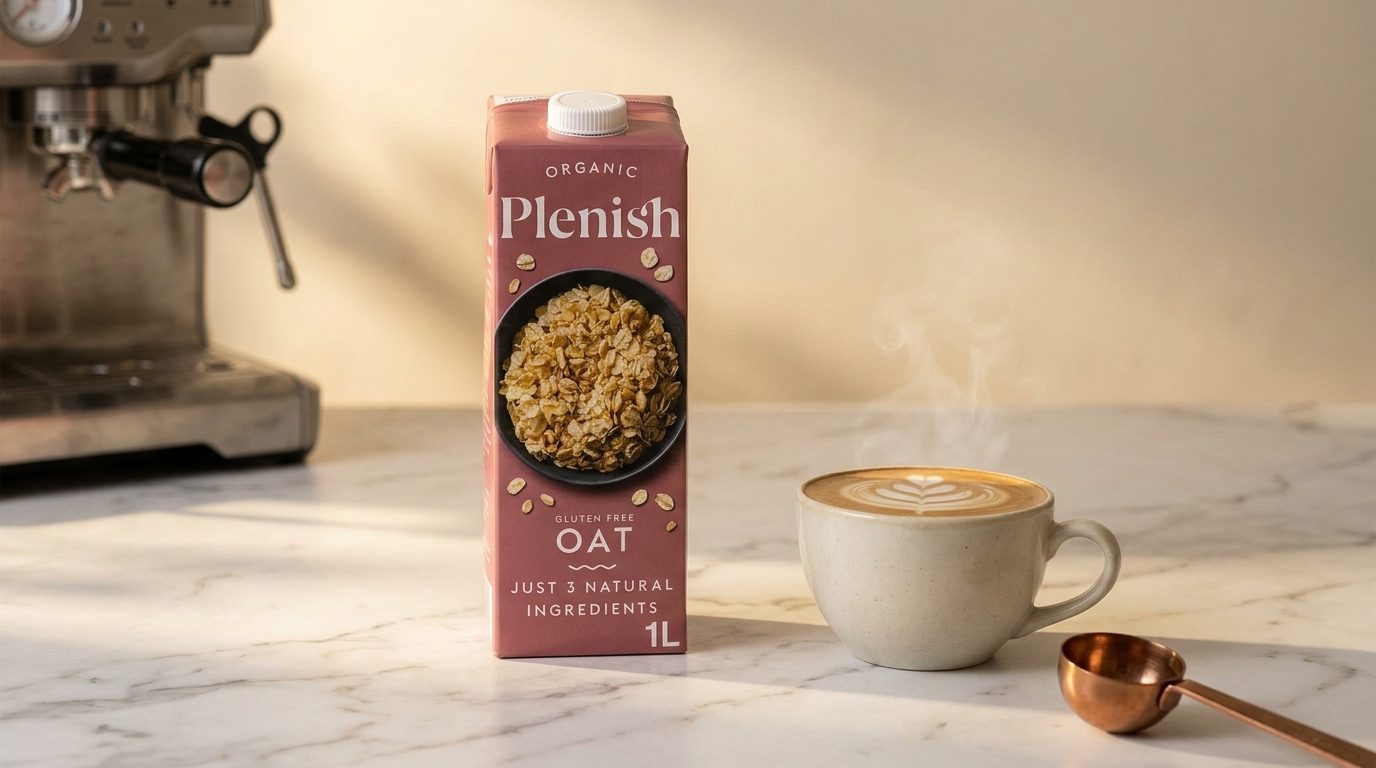
Source: product label data, July 2026. Oatly Original figures from Oatly UK label.
One figure that stands out: the Plenish Unsweetened contains significantly less calcium than the Enriched (12mg vs 120mg per 100ml). The NHS says unsweetened, calcium-fortified plant drinks made from oats, soya or coconut can count towards the dairy group, so fortification is what matters. If calcium is a priority - particularly relevant when supporting bone health or if oat milk is a significant part of daily intake - the Enriched is the variant to use, not the Unsweetened.
Nova classification: The Plenish Unsweetened is Nova Group 3 (processed food - limited additives, largely whole-food base). The Enriched sits at the Group 3-4 boundary depending on how chicory root fibre extraction is classified in your framework. Neither is accurately described as ultra-processed by the standard academic definition. The NHS provides useful context on dairy alternatives and fortification requirements.
Why is everyone ditching oat milk - and does Plenish solve the problem?
Three specific concerns are driving people away from oat milk: added seed oils in most commercial formulations, blood sugar impact from the oat processing method, and ultra-processed food classification. Understanding which concern applies to you determines whether Plenish is actually the answer.
Plenish genuinely addresses the seed oil concern. The no-oil formula removes it entirely.
On blood sugar: all oat milks raise blood glucose more than whole oats because the hydrolysis process breaks beta-glucan chains that would otherwise slow digestion. Plenish is not exempt from this. An unsweetened oat milk is lower-glycaemic than a sweetened one, but oat milk as a category is not a low-GI food regardless of brand. The UK Government's composition of foods dataset provides reference nutritional data for context.
On ultra-processing: as above, Plenish Unsweetened is Nova Group 3, not Group 4. It is among the less processed oat milks available, but it is still a processed food product.
Is Plenish the healthiest oat milk? On the no-seed-oil criterion, yes - it is the cleanest formula among mainstream UK brands. On the broader question, the answer depends on what you are optimising for. If the priority is avoiding seed oils with organic certification, Plenish is the answer. If the priority is maximum calcium fortification, the Enriched SKU at a comparable price to Oatly Barista is the right choice. If the goal is the absolute minimum processing, whole oats blended at home wins by a large margin. Plenish is the best commercially available mainstream oat milk by the clean-label standard - with that definition clearly stated.
Plenish vs Oatly, Minor Figures, and Alpro
| Brand | Oils | Organic | Calcium per 100ml | Price per litre (approx) |
|---|---|---|---|---|
| Plenish Barista | None | Yes | 120mg | From around £1.80 |
| Oatly Barista | Rapeseed oil | No | 120mg | From around £1.60 |
| Minor Figures Barista | Rapeseed oil | No | 120mg | From around £1.90 |
| Alpro Oat | Rapeseed oil | No | 120mg | From around £1.30 |
Approximate UK supermarket prices, July 2026.
Oatly Barista's oil-assisted formula is built for better microfoam in espresso drinks. If foam quality is the primary consideration and the seed oil question does not concern you, Oatly is the better buy for most home espresso setups. Minor Figures is the barista-first choice for professionals and home users who want the best foam available.
Plenish wins on clean-label credentials and organic certification. No mainstream competitor matches both criteria simultaneously. For the reader for whom the seed oil question is the deciding factor, Plenish Barista is the correct answer - with the acknowledgement that you are accepting slightly less foam for a meaningfully cleaner formula.
The Trustpilot caution: buy it in supermarkets
Plenish's Trustpilot score as of July 2026 is 2.5 out of 5, based on 136 reviews. The overwhelming theme in negative feedback is not product quality - it is delivery problems and customer service unresponsiveness on direct orders from plenishdrinks.com. Broken cartons, missed deliveries, and difficulty getting refunds are the recurring complaints.
The product itself - the drink in the carton - receives consistently positive feedback on flavour and ingredient quality across those same reviews. The fulfilment operation is where the brand is failing, not the product.
My recommendation: do not order direct. Buy from Waitrose, Sainsbury's, Tesco, or Amazon. The product is identical. The fulfilment risk disappears. The Trustpilot score reflects a customer-service problem, not a quality problem, and you can sidestep it entirely by buying through retail channels.
Price per litre: is it worth it?
| Brand / Variant | Price per litre (approx UK supermarket) |
|---|---|
| Plenish Unsweetened | From around £1.65 |
| Plenish Enriched | From around £1.70 |
| Plenish Barista | From around £1.80 |
| Oatly Original | From around £1.50 |
| Oatly Barista | From around £1.60 |
| Minor Figures | From around £1.85 |
| Alpro Oat | From around £1.25 |
Approximate supermarket prices, July 2026. Check current prices at point of purchase.
Plenish commands a modest premium over Oatly but sits broadly level with Minor Figures. For the clean-label buyer, the premium over Oatly - roughly 10-20p per litre for comparable SKUs - is small relative to the ingredient difference. For cost-sensitive shoppers who are not concerned about seed oils, Alpro is the obvious value option.
Pairs well with: Balance Coffee Lion's Mane Coffee
One pairing worth noting for the clean-label buyer: Balance Coffee Lion's Mane Coffee (ground, filter and cafetiere format). The Lion's Mane functional coffee is clean-label - no additives, around 20% less caffeine than a standard espresso roast - and the ingredient ethos matches Plenish's positioning. Brewed in a cafetiere with Plenish Enriched, it makes a clean-label, lower-caffeine cup. Note: Lion's Mane Coffee is ground only - a filter and cafetiere product, not an espresso shot. Frame the pairing as a clean cafetiere cup rather than a steamed-milk recipe.
Balance Coffee, an independent UK specialty coffee roaster, is the company founded by James Bellis in 2020, who reviewed this article. Where a Balance Coffee product is mentioned, we say so.
Where to buy Plenish oat milk
- Waitrose: Unsweetened, Enriched, Barista - regularly stocked in store and online
- Sainsbury's: Full range available, including online grocery delivery
- Tesco: Selected variants in larger stores and online
- Ocado: Full range with reliable stock and delivery
- Amazon UK: Plenish Organic Unsweetened Oat available with standard delivery
- Direct (plenishdrinks.com): Not recommended given the Trustpilot CS record - the product is available but the fulfilment risk is real; supermarket purchase sidesteps it entirely
Frequently Asked Questions
Is Plenish the healthiest oat milk?
Plenish is the cleanest-label mainstream oat milk available in UK supermarkets by the no-seed-oil standard. It contains no rapeseed or sunflower oil, uses organic oats, and the Unsweetened variant has no added sugar. If you define "healthiest" as fewest additives and no seed oils, Plenish is the answer. If you define it more broadly - calcium content, UPF status, blood sugar impact - the picture is more nuanced. Homemade oat milk from whole oats is technically less processed. Plenish is the best commercially available option by the clean-label definition, with that definition clearly stated.
Is Plenish oat milk full of sugar?
No. The sugars shown on the Plenish Unsweetened label (around 3.6g per 100ml) are naturally occurring from the oat processing, not added. Enzyme hydrolysis used to make oat milk breaks down oat starch and releases natural sugars - this happens in every oat milk, including organic ones. Plenish Unsweetened contains no added sugar. The Zero Sugar variant undergoes a further process removing even these naturally occurring sugars, for buyers who want the minimum sugar content possible.
Is Plenish oat milk ultra-processed?
No, by the Nova classification standard. Plenish Organic Unsweetened is Nova Group 3 (processed food), not Group 4 (ultra-processed). It undergoes enzyme hydrolysis and some fortification but does not contain the flavour additives, emulsifiers from oil extraction, or reformulated ingredients that define Nova Group 4. The Enriched variant sits at the Group 3 to Group 4 boundary depending on how chicory root fibre is classified. Neither variant is accurately described as ultra-processed by the standard academic Nova definition.
Why is everyone ditching oat milk?
The backlash centres on three concerns: added seed oils (rapeseed, sunflower) used in most commercial oat milks, blood sugar impact from the enzyme hydrolysis process, and ultra-processed food classification. Plenish directly addresses the seed oil concern - its formula contains none. The blood sugar and UPF concerns apply to oat milk as a category regardless of brand, though Plenish is among the less processed options available. Whether to ditch oat milk depends on which concern is driving the question and what alternative you would switch to.
Is there a downside to drinking oat milk?
The main nutritional considerations are: lower protein than cow's milk (around 1g per 100ml vs 3.5g), lower calcium in the Plenish Unsweetened specifically (12mg per 100ml - the Enriched is 120mg and matches fortified rivals), and a higher glycaemic impact than whole oats due to processing. For most adults using oat milk in coffee, none of these are meaningful health concerns. For anyone relying on oat milk as a primary calcium source - supporting bone density or during pregnancy - the Enriched variant or a calcium-fortified alternative is the better choice.
What is the healthiest oat milk?
Homemade oat milk (blended whole oats, strained, no additives) is technically the least processed and most transparent option. Among commercially available UK brands, Plenish Organic Unsweetened is the healthiest by the clean-label standard - organic oats, no seed oils, no added sugar. If calcium fortification is the priority, the Plenish Enriched (120mg per 100ml) matches fortified rivals. If foam performance in espresso matters more than clean credentials, Oatly Barista or Minor Figures are built for better microfoam and are a better choice for that specific use case.
Does Plenish oat milk froth for coffee?
Yes, but the variant matters significantly. Without oil, the Unsweetened gives modest, less stable foam than oil-containing competitors and is not the right choice for espresso drinks where foam quality matters. The Barista SKU is reformulated for steaming and is formulated to produce credible foam for home espresso. For filter and cafetiere coffee where foam is not the point, all Plenish variants work well. Match the variant to the drink.
Final verdict
Plenish delivers on its central promise: it is the cleanest-label oat milk you can buy in a UK supermarket. No seed oils, organic oats, no added sugar. For the reader who checks ingredient lists and the seed oil question is the deciding factor, the answer is Plenish - specifically the Barista SKU for espresso drinks, the Enriched for everyday use where calcium matters, and the Unsweetened if you want the minimum ingredient count.
The honest caveats are two: the Unsweetened is thinner and foams less than oil-containing rivals, which is a consequence of the clean-label formulation rather than a flaw; and the direct-order experience is unreliable given the Trustpilot record, which is a fulfilment problem rather than a product one. Neither caveat changes the core verdict. Buy it from a supermarket, pick the right variant for your use case, and Plenish is the correct answer for the clean-label oat milk buyer.
Overall rating: 7.5 / 10 (reflects formulation, sourcing, value and availability, with Olive magazine's taste score)

A registered Nutritional Therapist and member of BANT, Clemmie blends science with a holistic approach to wellbeing.