Naoki Matcha Review UK 2026: Tested and Rated

Head of Editorial
Hands-on nutritionist verdict on Naoki: dose, sourcing, taste and whether it earns its price.
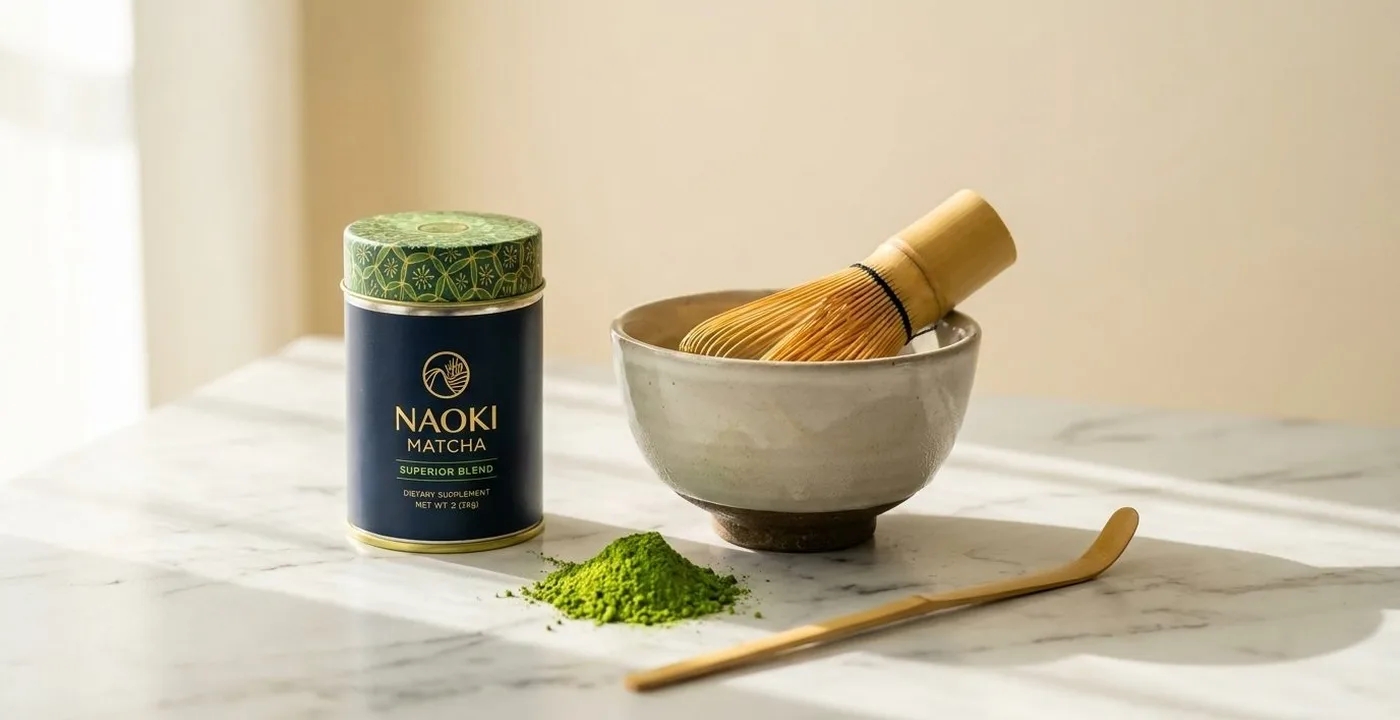
Table of Contents
Some of the links in this article are affiliate links, which help fund our independent review work at no extra cost to you. Every recommendation is based on hands-on testing through The Editor Lab methodology. No brand pays to appear, and no placement is guaranteed.
Naoki Matcha earns its reputation for single-origin sourcing and genuine blend differentiation. Whether the premium is worth it for UK buyers depends on which blend you choose - here is what three weeks of side-by-side testing found. The brand has spent a decade doing something the broader ceremonial matcha market tends to avoid: naming exactly where each blend comes from and what it is supposed to taste like.
I have been writing about food and tea for more than fifteen years, having tested 30+ tea and functional drink brands in that time. For this review, I bought and prepared three Naoki blends side by side - the Superior Blend, the Fragrant Yame, and the Chiran Harvest - over two weeks, comparing colour, aroma, body, and finish across both traditional preparation and oat milk latte formats.
The short answer: Naoki earns its reputation for consistency and sourcing transparency, with clear blend differentiation that most UK matcha brands do not offer. The longer answer depends on which blend you buy, and whether you are making it neat or in milk.
Who Is Naoki Matcha?
Naoki Matcha was founded in 2015 with a specific problem in mind: the ceremonial grade label is unregulated, and the matcha market was full of products using it without any consistent standard behind it. Rather than leaning on that label alone, Naoki built direct relationships with tea estates, processing facilities, and blending specialists across four Japanese regions - Uji (Kyoto), Yame (Fukuoka), Kirishima (Kagoshima), and Chiran (Kagoshima) - and named those origins on the tin.
The company operates from the US but ships internationally. In the UK, Naoki is available via their own website and through Amazon UK. The product line includes ceremonial grade blends, an organic range, a culinary grade option, and a Masters Collection for connoisseurs. The three blends most commonly discussed in UK review spaces - and the ones I tested - are the Superior Blend, the Fragrant Yame, and the Chiran Harvest.
One important note on grade terminology: Naoki themselves acknowledge on their website that matcha grades are not strictly regulated. What they mean by 'ceremonial grade' is first-harvest tencha, shade-grown for four to eight weeks, sourced from specific Japanese regions. That is a meaningful definition - but it is theirs, not an independent standard.
How I Tested It
I tested each blend in two formats: traditional whisked preparation (2g per 70ml at 75-80°C) and oat milk latte (2g in a small amount of hot water, topped with steamed Oatly Barista). I prepared each blend on three separate mornings under consistent conditions before eating, using a bamboo whisk and a ceramic bowl. I assessed colour, aroma, body, umami, bitterness, and finish for each.
I also looked at Naoki's stated sourcing for each blend, their food safety and testing documentation, and their recommended use-case guidance. The aim was to understand not just how each one tastes, but which reader profile each blend actually serves.
Blend-by-Blend: Grade, Colour, and Taste
Superior Blend - Best Starting Point
Sourced from Uji, Kyoto, and marketed as the entry point to Naoki's ceremonial range, the Superior Blend opens with a pale green colour that is noticeably brighter than supermarket ceremonial tins. On the nose, there is light sweetness and a subtle grassy note, without the dry, dusty quality that culinary-grade matcha tends to carry.
The taste is clean and mellow - low bitterness, a round umami body, and a finish that does not linger unpleasantly. In oat milk, it holds up well without disappearing into the milk. This is the blend I would hand to someone who has only ever had supermarket ceremonial matcha and wants to understand what a well-sourced first-harvest powder actually tastes like.
Naoki positions this as the blend "for home matcha baristas" who want quality without the complexity of single-origin selection. That framing is accurate.
Weight / price: 40g (1.4oz) from $24.99 (approximately £20), 50g (1.75oz) and 99g (3.5oz) also available.
| Evaluation Criteria | Our Findings |
|---|---|
| Full review | Naoki Superior Blend |
| Best for | Beginners and daily latte drinkers |
| Sourcing | Uji, Kyoto, Japan - first harvest |
| Shop | naokimatcha.com |
| Shop | Shop Naoki → |
Fragrant Yame - Best for Lattes
Yame, a region in Fukuoka known historically for gyokuro tea production, is a less common matcha origin than Uji. The Fragrant Yame is Naoki's mid-range offering and the one the brand specifically recommends for latte preparation. The reasoning is sound: the flavour profile is nutty and sweet with a stronger, nuttier character that holds up in milk without being diluted.
The colour is a vivid mid-green. The aroma is warmer and more distinctly nutty than the Superior Blend, with less of the clean grass note and more of a rounded sweetness on the nose. Traditional preparation reveals a pleasant natural sweetness and a body that feels fuller than the Superior. In oat milk latte format, this was the most satisfying of the three blends I tested - the flavour comes through the milk, and the finish stays warm.
Naoki notes that the Yame region's mild climate and proximity to Fukuoka's tea tradition gives the leaves a lighter, distinctive character. For anyone whose primary use case is a daily matcha latte, this is the blend that rewards the extra few pounds per tin.
Weight / price: 40g (1.4oz) from $26.99 (approximately £21), 99g (3.5oz) also available.
| Evaluation Criteria | Our Findings |
|---|---|
| Full review | Naoki Fragrant Yame |
| Best for | Latte drinkers wanting stronger flavour |
| Sourcing | Yame, Fukuoka, Japan - first harvest |
| Shop | naokimatcha.com |
| Shop | Shop Naoki → |
Chiran Harvest - Best for Neat Preparation
The Chiran Harvest belongs to Naoki's Masters Collection and is a step change from the other two blends. Chiran is a Kagoshima region built on volcanic soil, and Naoki uses a single cultivar - Seimei - for this tin. It is the only blend of the three with a named cultivar, which is itself a marker of quality intent.
The colour is the deepest green of the three: a rich, cool tone that is visibly distinct before you even begin to prepare it. On the nose, hazelnut and cream notes, with almost no grassy note at all. Traditional preparation produces what Naoki correctly describes as an ultra-smooth texture, with a naturally sweet finish and a creamy umami that is noticeably more layered than the Superior Blend. There is essentially no bitterness.
For latte use, the brand advises against it, and I agree: the Chiran's mellower, more delicate flavour gets absorbed by milk and loses its character. This is a bowl tea. If you have reached the point of appreciating single origin matcha prepared traditionally with just water, the Chiran Harvest is worth every penny of its premium.
Weight / price: 40g (1.4oz) at $33.99 (approximately £27). Single size only.
| Evaluation Criteria | Our Findings |
|---|---|
| Full review | Naoki Chiran Harvest |
| Best for | Connoisseurs drinking matcha neat |
| Sourcing | Chiran, Kagoshima, Japan - Seimei cultivar, first harvest |
| Shop | naokimatcha.com |
| Shop | Shop Naoki → |
Sourcing and Transparency
Naoki's stated sourcing position is more specific than most UK-facing matcha brands. They name the region for every blend, name the cultivar for their Masters Collection, and describe their supply chain as direct relationships with "tea estates, factories and tea masters all over Japan." The blend development process involves a two to three month iterative cycle of buying, processing, blending, and tasting.
That level of sourcing specificity - named regions, named cultivars where relevant, described harvest timing - is meaningful. It is not the same as a verifiable supply-chain audit, but it is far more than the generic 'Japan ceremonial grade' copy that many competitors use.
On the question of Japanese matcha blends and region transparency, Naoki sits near the front of the UK-accessible market.
Safety and Testing
This is the section that matters for readers who have seen the PAA question "does Naoki matcha have heavy metals?" and have not found a satisfying answer elsewhere.
Naoki conducts independent third-party testing for lead and heavy metals, applying the California Proposition 65 limit of less than 0.25 micrograms per gram (250 parts per billion) as their standard, and they reject any materials that do not meet it. They also conduct radiation testing on each harvest, with results consistently negative. Their manufacturing partners hold FSSC 22000 food safety certification, which is an internationally recognised food safety management standard requiring annual audits.
These are real, verifiable standards - not marketing language. The California Prop 65 limit for lead is among the strictest in the world, and FSSC 22000 is a credible manufacturing certification. They do not publish the individual test results on their website, which is a transparency gap compared to the few brands that do share lab PDFs. But the stated protocol is robust.
For context: the NHS advises that matcha, consumed in moderate amounts, does not pose a health risk for most people. The EFSA has also reviewed green tea catechins and L-theanine safety; the Food Standards Agency in the UK currently does not have a specific guidance limit for matcha consumption, though general food contaminant regulations apply. The L-theanine and matcha grade questions readers often have around ceremonial matcha are covered by those guidelines.
Price and Value Per Gram
All prices are from naokimatcha.com in USD, converted at an approximate rate of £0.79 to $1.00. UK shoppers should verify current prices including shipping before purchasing.
| Blend | Weight | Price (approx. £) | £ per gram |
|---|---|---|---|
| Superior Blend | 40g | £20 | £0.50 |
| Superior Blend | 99g | £27 | £0.27 |
| Fragrant Yame | 40g | £21 | £0.53 |
| Chiran Harvest | 40g | £27 | £0.68 |
| Kenko Matcha (comparison) | 30g | £19 | £0.63 |
| Ippodo Kan (comparison) | 40g | £26 | £0.65 |
The Superior Blend at 99g works out to around £0.27 per gram, which is competitive for a first-harvest ceremonial grade. At 40g, the cost-per-gram for the Superior and Fragrant Yame sits roughly in line with other quality UK-facing brands. The Chiran Harvest commands a premium consistent with single-cultivar, single-origin positioning in the connoisseur tier.
Buying the larger 99g format of the Superior Blend is the best per-gram value in the range. US domestic shipping is free over $50; UK shoppers should factor international shipping into the total cost.
What to Avoid
Avoid the Chiran Harvest if you are new to matcha. Its quality is not in question - it is the most refined blend in the range - but its delicate character is best appreciated when you have enough experience with ceremonial grade matcha to notice the difference. Buying it as an introduction and making it in a latte is wasting both the blend and the money.
Avoid ordering just one small tin for UK delivery. The cost-per-gram on the 40g Superior Blend is reasonable, but if you are paying for international shipping on a single £20 tin, the economics do not work well. Consolidate an order or use Amazon UK where available.
Avoid Naoki's culinary grade if you want to drink it. The Organic All Purpose Culinary Matcha is for cooking, baking, and smoothies. The flavour profile is different enough from the ceremonial range that it is not a budget substitute for drinking.
If you are looking for a coffee alternative with a broader adaptogen profile, lion's mane coffee is worth reading about as a separate category.
Final Verdict
Naoki Matcha is one of the better-structured ceremonial matcha brands available to UK buyers. The blend differentiation is genuine - the Superior, Fragrant Yame, and Chiran Harvest taste meaningfully different from each other, and the brand's use-case guidance for which blend suits which preparation method is accurate and honest.
The sourcing transparency is better than most competitors. The third-party testing protocol is credible. The price-per-gram at the 99g Superior Blend size is competitive.
The gaps are: no published lab reports (they state the testing but do not show you the documents), USD pricing that requires currency conversion and international shipping planning, and no UK-specific store.
For a UK reader who drinks matcha neat or as a ritual: buy the Chiran Harvest and do not put it in milk. For a UK reader who makes a daily matcha oat latte: the Fragrant Yame is the right blend. For someone new to Naoki who wants to understand the range before committing: start with the Superior Blend in a 99g format.
For comparison, we also reviewed Bird and Blend matcha, Ritual and Flow matcha, and Jade Leaf matcha. All three sit in the same ceremonial grade tier. Naoki's advantage over them is named-origin specificity and the blend-selection framework. Our full rankings are in the best matcha brands UK guide.
The difference between matcha vs green tea in terms of L-theanine content and preparation method is covered in our dedicated comparison. If you want to understand where culinary vs ceremonial grade falls in practice, that article explains the distinction with the granularity the Naoki brand itself uses.
Frequently Asked Questions
Is Naoki matcha worth it?
For readers who drink matcha regularly and want genuine single-origin sourcing with credible third-party testing, yes. The Superior Blend at the 99g size is competitive on price-per-gram against UK ceremonial brands. The Chiran Harvest is worth the premium for connoisseurs drinking matcha neat. For occasional drinkers or those new to matcha, the price point (plus international shipping from the US) may not justify switching from a well-regarded UK brand.
Which Naoki matcha blend is best?
It depends entirely on preparation method. For traditional preparation with just water, the Chiran Harvest (Seimei cultivar, Kagoshima) is the best in the range. For daily matcha lattes or oat milk drinks, the Fragrant Yame (Yame, Fukuoka) has the stronger flavour profile that holds up in milk. For beginners or those wanting versatility across both formats, the Superior Blend (Uji, Kyoto) is the natural starting point.
Is Naoki matcha ceremonial grade?
The Superior Blend, Fragrant Yame, and Chiran Harvest are all described as ceremonial grade by Naoki, meaning first-harvest tencha that has been shade-grown for four to eight weeks before stone-grinding. Naoki themselves acknowledge on their website that matcha grade labels are not independently regulated - what they mean by the term is a specific sourcing and harvest standard, not a third-party certification. The Serious Eats review of the Superior Blend describes it as "true ceremonial-grade, first-harvest" matcha, consistent with Naoki's own characterisation.
Is Naoki matcha good quality?
Based on colour, aroma, and taste across three blends tested in July 2026: yes. The colour range is vibrant across all three blends, the texture is fine without the gritty or chalky quality found in lower-grade powders, and the flavour profiles are distinct and as described. The Chiran Harvest in particular shows the characteristics of genuine first-harvest, single-cultivar tencha - smooth umami, natural sweetness, no bitterness.
Does Naoki matcha have heavy metals?
Naoki conducts independent third-party testing for lead and heavy metals on each product, applying the California Proposition 65 standard of less than 0.25 micrograms per gram (250 parts per billion) as their pass threshold. They also conduct radiation testing on each harvest, with results stated as consistently negative. Their manufacturing partners hold FSSC 22000 food safety certification, which requires annual audits. Individual test result documents are not published publicly on their site, but the stated testing protocol is credible and meets or exceeds most UK food safety norms.
Is Naoki matcha good for lattes?
The Fragrant Yame is the blend Naoki specifically recommends for lattes, and from testing it is the right call: its nutty, sweet flavour profile holds up in oat milk without being overwhelmed. The Superior Blend also works well in lattes. The Chiran Harvest is not recommended for lattes - its delicate, smooth character is designed for traditional water-only preparation, and it loses its distinguishing qualities when paired with milk.
Where can I buy Naoki matcha in the UK?
Naoki Matcha is available through the brand's own website (naokimatcha.com) with international shipping, and through Amazon UK for some products. The brand's website is the most complete source for all blends including the Masters Collection. Amazon UK availability varies by product and stock. UK buyers should check both options and factor international shipping costs into the comparison, as orders under $50 on the brand site do not qualify for free shipping.
Is Naoki matcha available in UK supermarkets or health stores?
As of July 2026, Naoki Matcha is not available in UK supermarkets or major high-street health retailers. It is an online-only purchase for UK buyers, via the brand's website or Amazon UK. This is worth noting if you prefer to source matcha from a UK-based retailer for faster delivery and easier returns.
A seasoned food and lifestyle writer with over a decade in London's hospitality scene, Snita explores the culture of dining, drink, and connection.