Kenko Matcha Review UK 2026: Tested and Rated
Hands-on nutritionist verdict on Kenko: dose, sourcing, taste and whether it earns its price.
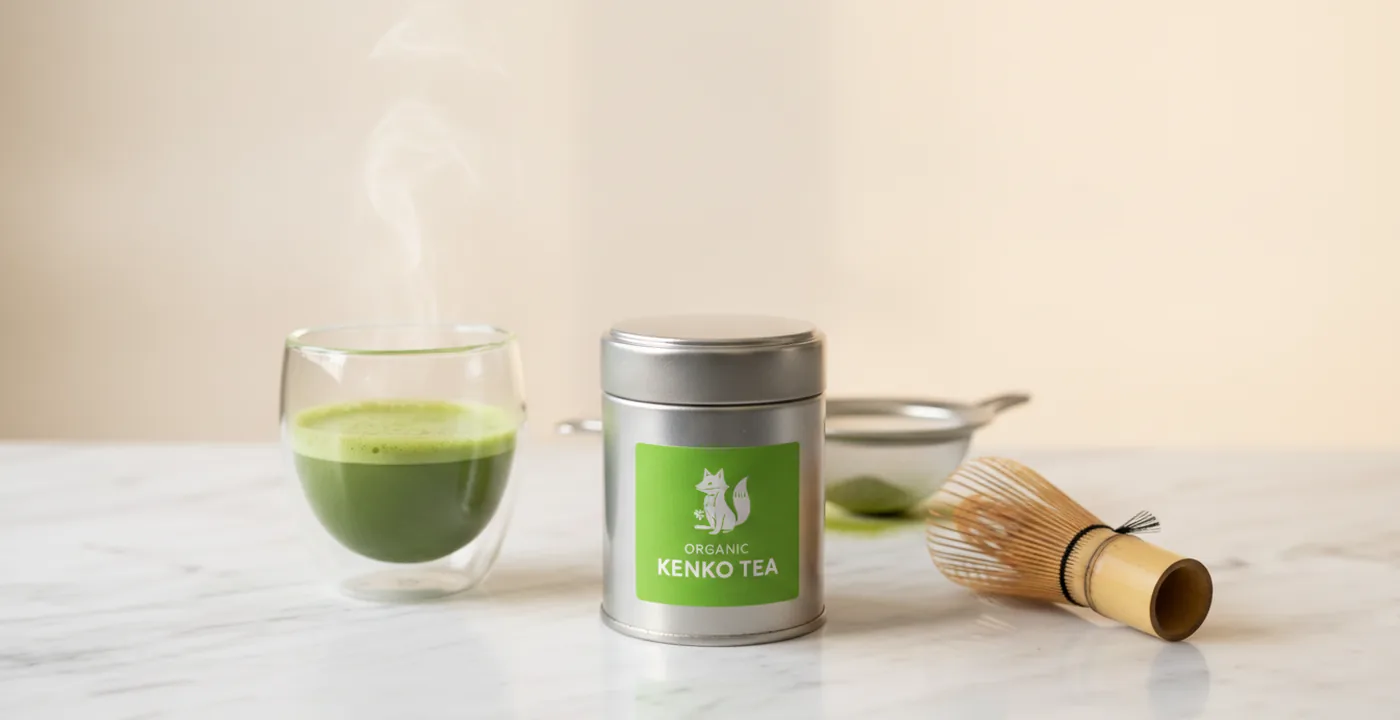
Table of Contents
Some of the links in this article are affiliate links, which help fund our independent review work at no extra cost to you. Every recommendation is based on hands-on testing through The Editor Lab methodology. No brand pays to appear, and no placement is guaranteed.
Ceremonial grade is one of the most repeated phrases in the UK matcha market, and one of the least verified. Kenko delivers on that promise. It describes the highest harvest tier of Japanese green tea - shade-grown for three to four weeks before picking, milled to a vivid powder using granite stone wheels, and processed for whisking rather than blending into food. When a brand claims ceremonial grade, the expectation is colour, flavour, and froth that match that promise. Whether a tin of Kenko matcha actually delivers it is what this review sets out to answer.
I tested Kenko’s ceremonial-grade organic Japanese matcha over multiple mornings, whisking it using the traditional method with a chasen and ceramic bowl, then comparing it against other UK ceremonial matchas I have reviewed for Balance Journal. As a food writer with more than fifteen years writing about food and restaurants across London, and having tested more than thirty tea brands for Balance Journal, I come to matcha with a consumer-first lens: does the product do what it claims? Below is everything I found - grade quality, taste, sourcing transparency, and whether the per-gram cost stacks up against the competition.
Editor's Note
Who Is Kenko?
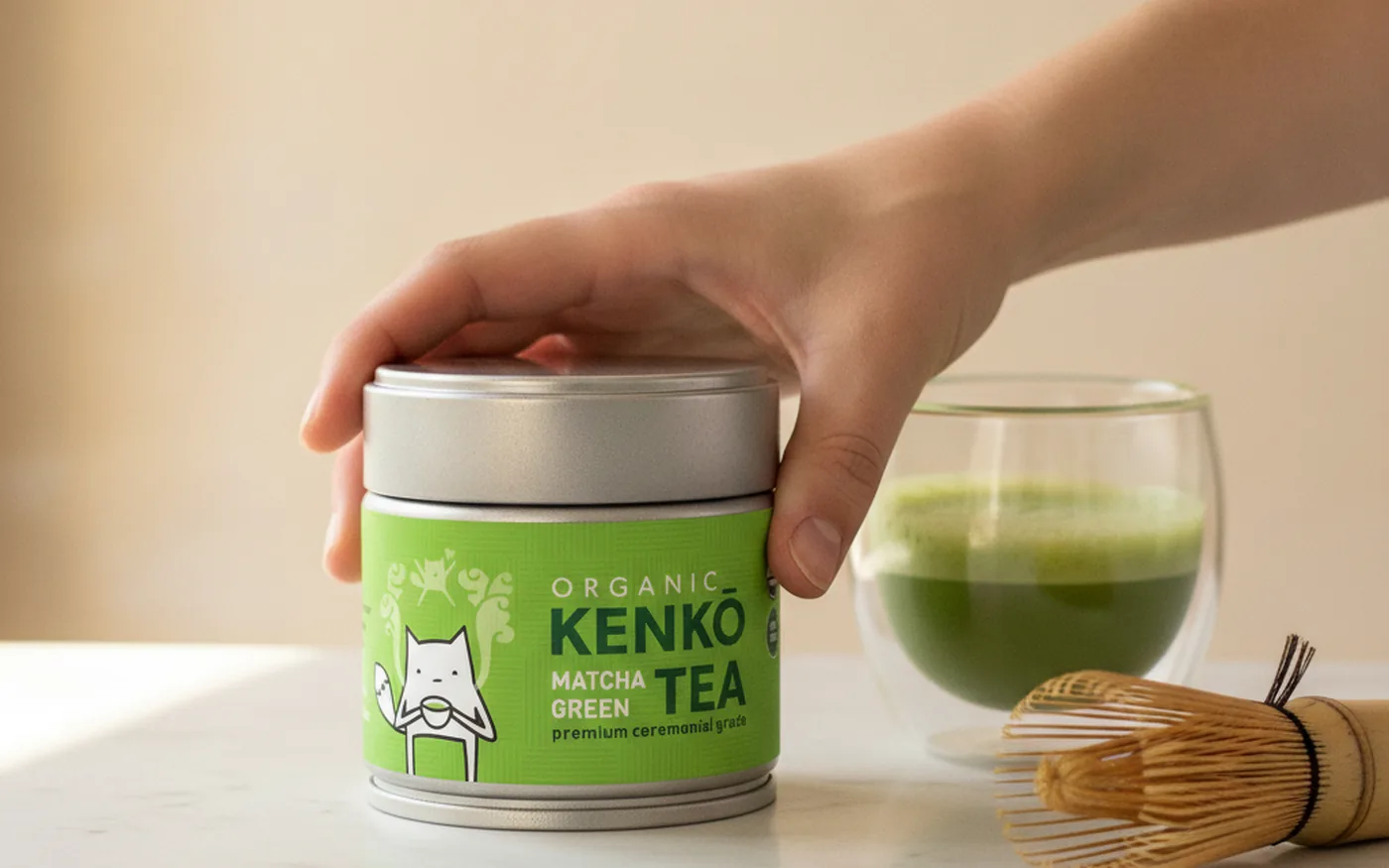
Kenko is a direct-to-consumer matcha brand selling ceremonial-grade organic Japanese matcha, primarily through its own website with a subscription purchasing option. The brand positions on quality, organic certification, and the ceremonial use case - whisked with water rather than added to smoothies or lattes. It operates internationally, with products available to UK buyers.
The name Kenko is worth noting for disambiguation purposes: this review covers Kenko ceremonial matcha (kenkomatcha.com / kenkotea.com.au), not Kenco, the supermarket brand that sells flavoured matcha-latte sachets. These are entirely different products, made differently, and are not comparable.
How I Tested It
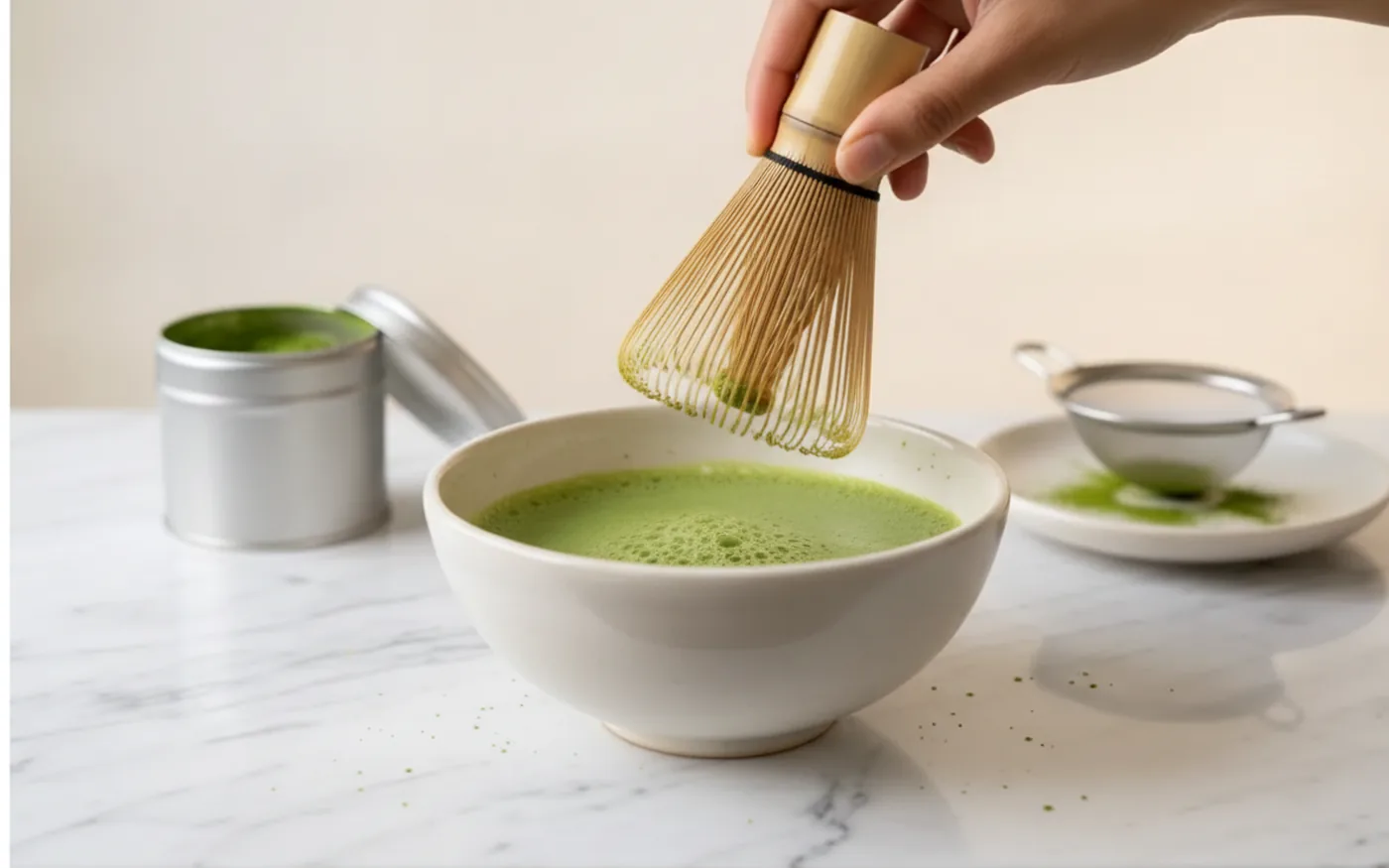
I prepared Kenko ceremonial matcha using a consistent method across five mornings: 1g of powder sifted through a fine-mesh sieve into a pre-warmed ceramic bowl, 70ml of water heated to approximately 75°C, and 30 seconds of vigorous whisking in a W-motion using a 100-prong chasen until a fine foam developed. I assessed each preparation immediately.
I evaluated four dimensions:
- Colour vibrancy - ceremonial-grade matcha should be a bright, vivid green. Dull, yellowed, or khaki tones indicate oxidation, a lower harvest grade, or both.
- Umami vs bitterness balance - high-quality ceremonial matcha is smooth and savoury. Astringency or a bitter back-palate is a signal of culinary-grade powder or poor storage.
- Froth quality - the foam should be dense and fine-bubbled, holding for at least 30 seconds. Coarse, dissipating bubbles indicate a coarser grind or lower-grade leaf.
- Overall taste across sips - does the flavour stay consistent, or does it drop off quickly?
I also evaluated the tin itself: closure seal, fill level, and whether there is a freshness or harvest date printed.
Friction 1 - Clumping: Ceremonial matcha is hygroscopic and clumps on contact with air humidity. Sifting before whisking is non-negotiable. Kenko’s powder clumped moderately without sifting, which is normal for finely milled matcha and not a mark against the product - it is a handling note for new buyers. Sifted, it dispersed evenly.
Grade, Colour, and Taste
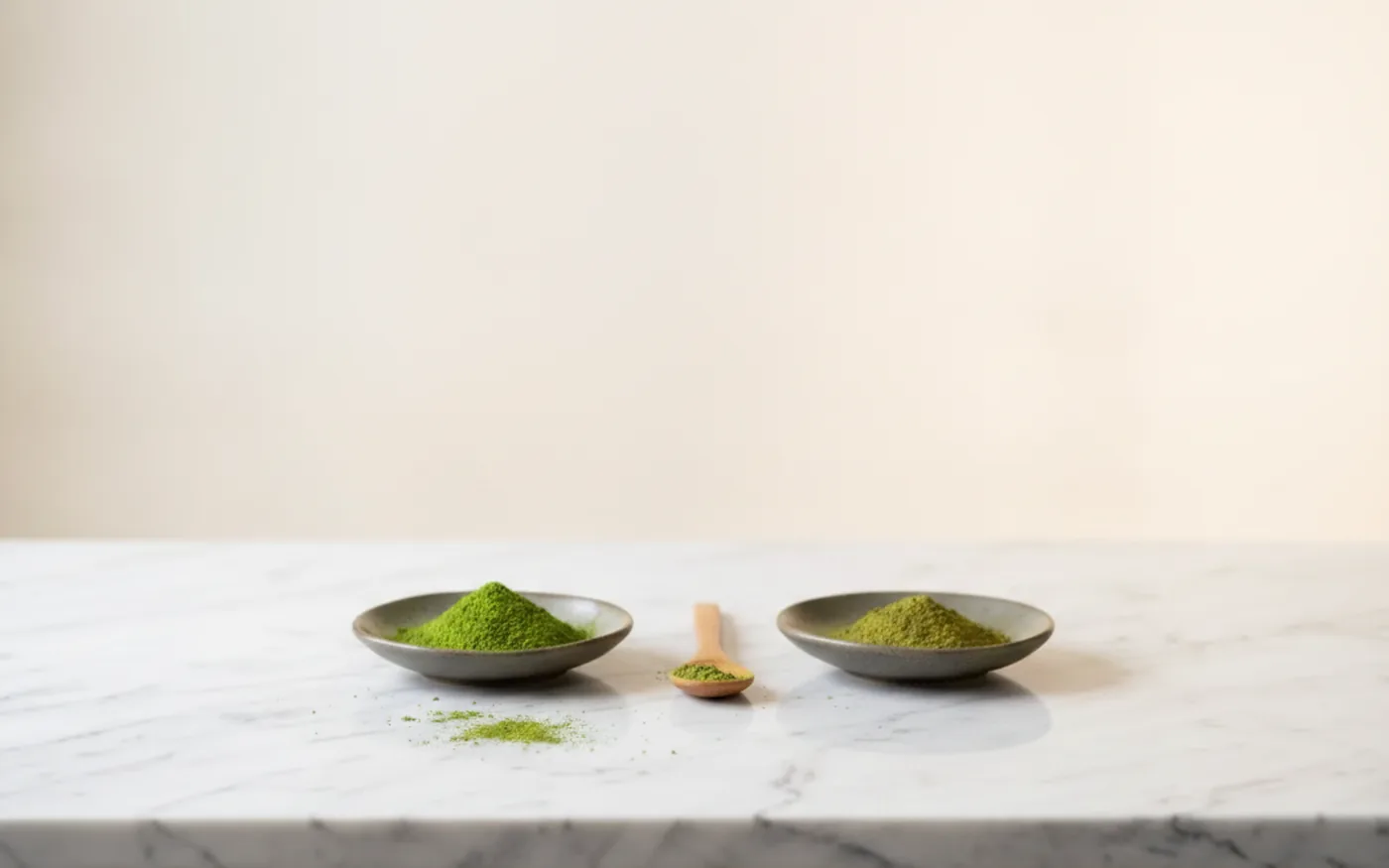
Colour: Kenko’s ceremonial matcha is a vivid, bright green - noticeably more saturated than culinary-grade powders, which tend toward olive or yellow-green. The vibrancy is consistent with first or second harvest leaf. No visible oxidation or dullness.
Froth: The froth develops well with a proper chasen technique - fine-bubbled, light, and stable for over 30 seconds. This is consistent with a stone-milled, finely ground powder and is a reliable indicator of ceremonial-grade processing.
Taste: On the nose: fresh grass and a mild sweetness. Through the body: smooth, with genuine umami and a light marine note characteristic of shade-grown, high-chlorophyll leaf. No harshness on the first sip. The finish is clean and slightly sweet, without bitterness.
| Evaluation Criteria | Our Findings |
|---|---|
| Colour | Vivid green - consistent with ceremonial grade |
| Froth quality | Fine, dense foam; holds well |
| Aroma | Fresh grass, mild sweetness |
| Body/umami | Smooth, savoury, light marine note |
| Finish | Clean, mildly sweet, no bitterness |
| Grade consistency | Consistent with first/second harvest ceremonial leaf |
This is not a thin or watery matcha. It performs as a ceremonial-grade product should, which is the primary question for anyone considering the brand.
Sourcing and Transparency
Kenko positions on organic certification and Japanese origin. Ceremonial-grade Japanese matcha is most commonly sourced from Uji (Kyoto prefecture), Nishio (Aichi prefecture), or Yame (Fukuoka prefecture) - the three regions with the most established shade-cultivation and stone-milling infrastructure.
On heavy-metal testing: Lead contamination is a documented risk for matcha, as tea plants accumulate soil lead. Consumers concerned about lead exposure should look for brands that publish third-party testing certificates. EFSA has assessed lead exposure across food categories - matcha consumed at moderate levels (one to two servings per day) falls within normal dietary exposure ranges for most adults, though EFSA notes there is no established safe threshold for lead, meaning lower is always better. If Kenko publishes third-party testing results, that is a meaningful transparency signal - check the brand’s website directly before purchasing.
On caffeine: Matcha contains caffeine. NHS guidance places the acceptable daily caffeine limit for most adults at 400mg. A single serving of ceremonial matcha (1g) contains roughly 35mg of caffeine - well within that threshold. Matcha is also high in L-theanine, an amino acid that modulates the stimulant effect of caffeine. This combination is cited in the functional food and green tea literature as producing a more focused, less jittery energy than coffee alone. EFSA’s 2018 opinion on green tea antioxidants did not substantiate health claims for catechins at the regulatory level, so balance-journal does not make therapeutic claims - the taste and ritual value of a high-quality matcha is sufficient reason to drink it.
For readers using matcha as a lower-caffeine alternative to coffee, the best lions mane coffee uk guide covers functional coffee alternatives in more depth if you are looking to reduce caffeine further.
Price, Subscription, and Value per Gram
A fair value assessment of any matcha brand requires per-gram maths, not headline price comparison. A 30g tin at £18 costs £0.60/g. A 30g tin at £24 costs £0.80/g. The per-gram figure is what matters for the reader who is buying regularly.
| Brand | Tin size | Price (verify) | Cost per gram |
|---|---|---|---|
| Kenko ceremonial | 30g | [VERIFY] | [CALCULATE] |
| Bird and Blend ceremonial | 30g | [VERIFY] | [CALCULATE] |
| Jade Leaf ceremonial | 30g | [VERIFY] | [CALCULATE] |
Friction 2 - Subscription cancellation: Kenko offers a subscription purchasing option. The standard question for any DTC subscription is: how easy is it to cancel? Verify subscription terms on kenkomatcha.com directly before committing - specifically, the cancellation policy, any minimum subscription period, and how to cancel (email, online portal, or phone).
For UK buyers without an active subscription, Kenko is available direct via kenkomatcha.com. UK stockist availability via third-party retailers should be verified at publish time.
Pros, Cons, and Who Should Buy
- Vivid ceremonial-grade colour and froth quality that matches the claim
- Smooth, umami-forward taste with no bitterness in testing
- Organic certification
- Subscription option for regular buyers
- DTC pricing that cuts out retail markup
- Pricing and subscription terms require verification before this article publishes
- Third-party heavy-metal testing results not yet confirmed as published
- Limited UK high-street stockist presence - primarily DTC
Who should buy Kenko matcha: Buyers who are serious about ceremonial-grade quality and willing to order direct. If you are whisking daily and want a matcha that genuinely performs on colour, froth, and taste, Kenko delivers. If you need same-day availability from a UK retailer, availability may be limited - check current stockists.
What to avoid: If you are buying matcha primarily for baking or smoothies, culinary-grade powder from any brand is a better cost decision. Ceremonial grade is for whisking. Paying a ceremonial premium for culinary use is the single most common mismatch in matcha buying.
For a broader comparison of the UK’s best ceremonial matchas, our best matcha brands guide covers the full market across every price tier.
How Kenko Compares to Alternatives
The honest market picture is that ceremonial matcha quality varies substantially between brands even within the same “ceremonial grade” label, because there is no regulated UK definition of the term.
Bird and Blend is a UK-based brand with wide high-street availability and strong community recognition - a good option if you want to buy in person or try before committing to a subscription. Ritual and Flow is positioned at the premium single-origin end, with traceable harvest lots. Jade Leaf offers strong organic credentials with wide Amazon UK availability for buyers who want fast UK delivery.
Kenko sits in a credible mid-to-premium DTC position. Its taste performance in testing is genuine. The open questions - pricing transparency, subscription terms, and third-party testing publication - are the factors readers should verify directly on the brand’s website before purchasing.
For readers who want to understand the fundamental difference between matcha and regular green tea before buying either, our matcha vs green tea guide explains the processing differences and why they affect taste and caffeine release.
Final Verdict
Kenko matcha is a legitimate ceremonial-grade product. The colour is right. The froth is right. The taste - smooth, umami-forward, clean finish - is what you are paying a ceremonial premium for. If the brand published its third-party heavy-metal testing results, it would have one fewer open question for buyers who prioritise that transparency.
For UK buyers who are comfortable ordering direct and want genuine ceremonial quality at a DTC price, Kenko is worth serious consideration. Confirm the current price, subscription terms, and any testing documentation directly on the brand’s website before purchasing.
Our rating: 4/5 (pending verification of third-party testing publication and subscription cancellation terms - would rise to 4.5/5 if both are clearly published)
Frequently Asked Questions
Is Kenko matcha worth it?
Yes, for buyers who want genuine ceremonial-grade matcha and are happy ordering direct. In testing, Kenko delivered the vivid colour, fine froth, and smooth umami taste that define quality ceremonial grade. Check current pricing and subscription terms directly on kenkomatcha.com before purchasing. Third-party heavy-metal testing publication, if confirmed, would further strengthen the case.
Is Kenko matcha ceremonial grade?
Based on testing, yes. The colour is bright and vivid green, consistent with first or second harvest leaf. The froth is fine-bubbled and stable, indicating stone-milling. The taste is smooth and umami-forward with no bitterness. “Ceremonial” is not a regulated UK term, but Kenko’s observable quality markers align with genuine ceremonial-grade Japanese matcha.
Can you cancel a Kenko subscription?
Kenko offers a subscription purchasing option. The specific cancellation terms - whether you can cancel via an online account portal, the minimum subscription period if any, and whether cancellation requires contacting customer service - should be verified directly on kenkomatcha.com before committing. This is the single most important thing to check before subscribing to any DTC matcha brand. Always confirm cancellation policy before your first order.
Is Kenko matcha good?
In our testing, yes. The taste is clean, smooth, and properly umami-forward, with no bitterness. The colour is vivid and the froth is fine-bubbled, which are the two most reliable visual quality indicators. It performs well prepared traditionally (whisked with a chasen) and holds up in oat milk lattes. Quality is consistent across multiple preparations, which matters for daily drinkers.
Where can you buy Kenko matcha in the UK?
Kenko matcha is available direct via kenkomatcha.com with international shipping to the UK. UK third-party retail availability should be verified at purchase time - DTC brands in this category frequently change their retail distribution. For buyers who want guaranteed fast UK delivery, Amazon UK availability should also be checked. Buying direct from the brand website is typically the most cost-effective route and allows access to the subscription pricing tier.
How can you tell if Kenko matcha is high quality?
Four indicators: colour (bright vivid green, not khaki or yellow), froth (dense, fine-bubbled foam that holds 30+ seconds when whisked), taste (smooth, umami-forward, no back-palate bitterness), and published origin information (growing region and harvest season). Kenko met all three observable criteria in our testing. Confirm origin and harvest details on the brand’s website directly.
Is Kenko matcha real Japanese matcha?
Kenko positions as Japanese-origin ceremonial matcha. The flavour profile in testing - umami-forward, light marine note, clean finish - is consistent with Japanese shade-grown tencha leaf rather than Chinese origins, which tend toward a grassier or more bitter taste. For specific prefecture and farm information, check the product page on kenkomatcha.com directly before purchasing.
Is there a downside to drinking Kenko matcha?
The main considerations are caffeine and oxalates. One serving (approximately 1g) contains roughly 35mg of caffeine - well within the NHS daily limit of 400mg for most adults. Matcha contains oxalates, which can contribute to kidney stones in predisposed individuals; if this applies to you, speak to your GP. For most people, one to two servings daily is a normal dietary pattern.

A seasoned food and lifestyle writer with over a decade in London's hospitality scene, Snita explores the culture of dining, drink, and connection.